2025-07-30 11:57
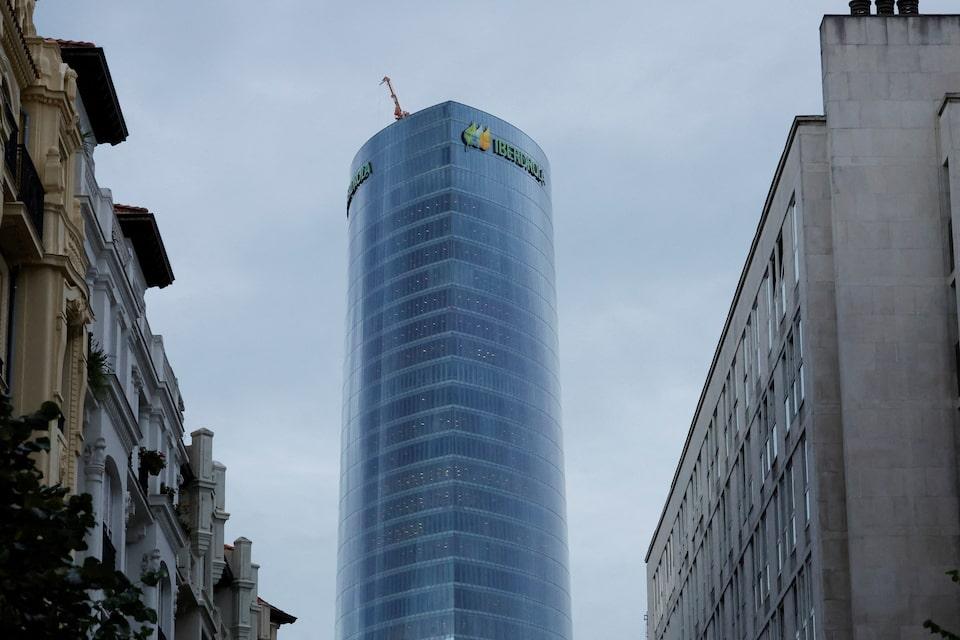
MADRID, July 30 (Reuters) - Spanish water and renewable energy company Cox (COXGA.MC) , opens new tab is considering buying Iberdrola's (IBE.MC) , opens new tab assets in Mexico, CEO Nacho Moreno told Reuters on Wednesday, as part of the company's strategy to pursue growth through acquisitions. "What I can tell you is that it's true they are running a process to sell their Mexican business," Moreno said in an interview. Sign up here. "It's true that that business is absolutely amazing. And it's true that we're looking into that business as much as we are looking into some other businesses." Moreno added that Cox regarded Mexico as "one of our strategic regions". Iberdrola did not immediately reply to a request for comment on Wednesday. The company controls six wind parks and three solar parks in Mexico, according to its website, as well as other power plants including gas and cogeneration. Earlier this week, Spanish newspaper El Confidencial reported that Cox had put forward an offer worth around 4 billion euros ($4.62 billion) for the Mexican assets. Iberdrola Executive Chairman Ignacio Sanchez Galan said last week reports of a possible sale were rumours, and declined to comment during the presentation of the company results and a 5 billion euro capital increase. In 2023, Iberdrola agreed to sell $6 billion worth of assets in Mexico - mostly gas-fired power plants - and is focusing on building and upgrading power grids in countries including Britain and the United States. DEALS AND INVESTMENTS Cox is seeking growth in its water and renewable energy division and to this end will boost investments in coming years and buy assets, Moreno said. "Within that division, growth should come from inorganic opportunities as well as organic," he said. "And I would rather bet on inorganic." It is analysing the potential acquisition of a couple of water desalination plants in the north of Africa, Moreno said. Cox plans to invest at least 600 million euros this year and increase investments to around 1 billion euros a year in 2026 and 2027. The company posted a profit of 13 million euros for the first six months of the year, a 71% increase from a year earlier when excluding one-offs last year. Revenue rose 62% in the same period. ($1 = 0.8656 euros) https://www.reuters.com/sustainability/climate-energy/spains-cox-eyes-iberdrolas-mexican-assets-other-deals-fuel-growth-ceo-says-2025-07-30/
2025-07-30 11:52
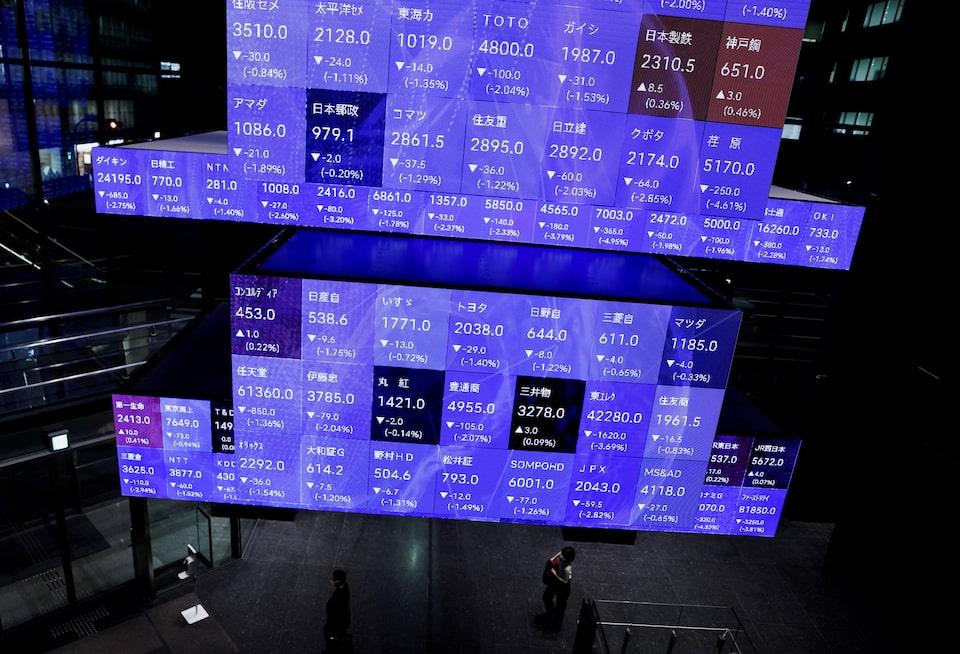
European stocks mixed before Fed U.S.-China trade talks end without major breakthroughs Investors await central bank decisions and corporate earnings LONDON, July 30 (Reuters) - Global stocks struggled for clear direction ahead of the Federal Reserve's policy announcement later on Wednesday, with investors cautious after two days of trade talks between the U.S. and China concluded without any major breakthroughs. Treasury yields and the dollar were also little changed as the market anticipated the Fed will keep rates on hold despite pressure from the White House to lower borrowing costs. Sign up here. Europe's STOXX 600 (.STOXX) , opens new tab was up 0.1%, with blue-chip indexes rising slightly in Frankfurt (.GDAXI) , opens new tab and Paris (.FCHI) , opens new tab and falling in London (.FTSE) , opens new tab. S&P 500 and Nasdaq futures were pointing to a slightly higher open when Wall Street trading gets underway. Early gains for MSCI's broadest index of Asia-Pacific shares outside Japan (.MIAPJ0000PUS) , opens new tab petered out to trade flat. Japan's Nikkei 225 (.N225) , opens new tab ended the session little changed. Investors await several central bank decisions, economic reports and corporate earnings over the coming days, as well as U.S. President Donald Trump's August 1 tariff deadline. Although the Federal Reserve is expected to leave interest rates unchanged at the conclusion of its two-day policy meeting later on Wednesday, analysts have predicted some central bank officials who favour lower borrowing costs could voice rare dissent, signalling that a rate cut could happen soon. "I'm not expecting a rate cut," said George Lagarias, chief economist at Forvis Mazars. "They're going to hint a rate cut in September, but they're not going to commit themselves to it." The yield on the benchmark 10-year U.S. Treasury note was flat at 4.324, having briefly dropped to its lowest since July 3 at 4.314%. The two-year yield , which is more sensitive to change in interest rate expectations, was little changed at 3.869%. With the Bank of Japan expected to keep policy unchanged on Thursday, the markets will analyse its comments to gauge when the next rate increase will come after a trade deal between Japan and the U.S. cleared the way for the bank to resume rate hikes. Some of the negotiations with countries seeking to avert Trump's punitive tariffs are expected to continue up to the deadline. India is among those bracing for higher U.S. tariffs - likely between 20% and 25% - on some exports as it holds off on fresh trade concessions ahead of the deadline, two Indian government sources said. Meanwhile, three South Korean cabinet-level officials met with U.S. Commerce Secretary Howard Lutnick in a last-ditch push for a deal. CORPORATE EARNINGS CONTINUE Earnings were mixed on Wednesday. UBS Group (UBSG.S) , opens new tab reported profits that exceeded analysts' expectations, while HSBC profits missed estimates as its losses from China mounted. German sportswear maker Adidas (ADSGn.DE) , opens new tab and French luxury group Kering (PRTP.PA) , opens new tab both flagged that tariffs were having an impact on costs and pricing. U.S. tech megacaps Microsoft (MSFT.O) , opens new tab and Meta (META.O) , opens new tab are due to report earnings on Wednesday that will set the tone for the rest of the week and the earnings season. "It's been a solid U.S. reporting season so far, but these megacap names need to run it hot and blow the lights out, given the bar to please has been sufficiently raised," said Chris Weston, head of research at Pepperstone. In currency markets, the dollar index , which measures the currency against six others, rose less than 0.1% to 98.986, just below a five-week high of 99.143 reached on Tuesday. The euro was down 0.1% against the dollar. The U.S. currency dropped 0.2% to 148.26 yen . Brent crude futures eased 0.8% to $71.96 a barrel and U.S. crude futures were down 0.8% at $68.68. Spot gold was up 0.1% to $3,327.85 after hitting a 2-1/2 week low on Monday. https://www.reuters.com/world/china/global-markets-wrapup-4-2025-07-30/
2025-07-30 11:42
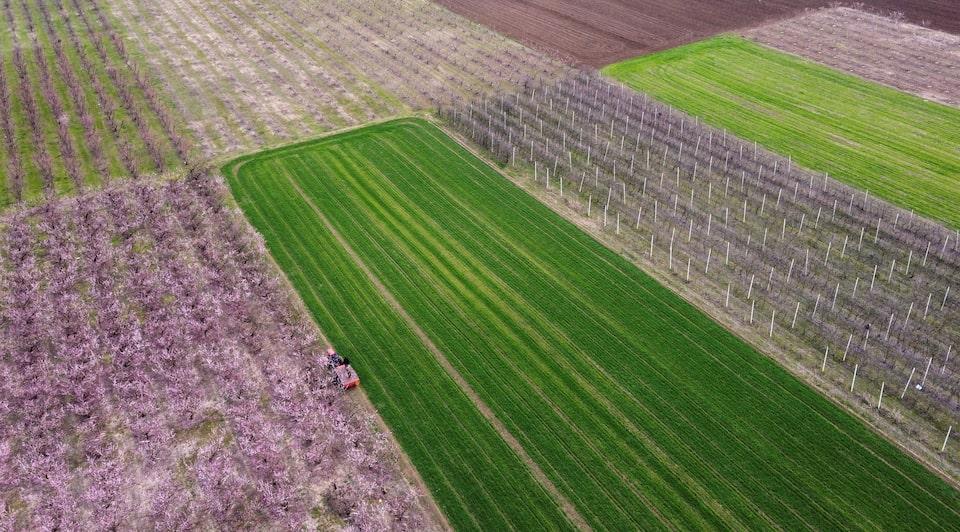
Fraud involving farmers, officials suspected at least since 2019 Opposition criticizes government's handling Opposition fears statute limitations could protect ex-ministers ATHENS, July 30 (Reuters) - Greek parliament has voted in favour of setting up a committee that will investigate a government agency handling EU agricultural subsidies since 1998, following a scandal in which Greek farmers for years faked land ownership to receive the aid. European prosecutors have found indications that farmers and state officials allegedly defrauded the European Union of subsidies for the use of pastureland at least since 2019. Sign up here. In June, they referred the case to parliament - the only body that can investigate politicians - on suspicion that two former agriculture ministers from the ruling, centre-right New Democracy party, were involved in the case. They have both denied wrongdoing. The case is hurting the popularity of Prime Minister Kyriakos Mitsotakis' government, which came to power in 2019 and was re-elected in 2023 with a majority, polls show. Greek media reports have pointed to clientelism, or the trading of resources for political loyalty, as possibly motivating the fraud. Late on Tuesday, parliament approved the government's proposal to set up the committee to investigate the agency OPEKEPE, founded in 1998. The government controls 155 lawmakers in the 300-seat parliament. The main opposition, the Socialist PASOK party, which has 33 seats, and other leftist parties rejected the plan, accusing the government of stalling and digging up the past to cover up its responsibility. They want a more powerful committee set up, that can directly charge ex-ministers and will focus on the European prosecutors' case, instead of OPEKEPE's operations over the years. They fear that delays could lead to the write-off of potential crimes under a statute of limitations. Mitsotakis told parliament Greece has paid nearly 3 billion euros in EU fines related to the misuse of the farm subsidies over the past decades, calling OPEKEPE an "open wound" whose ills were timeless. https://www.reuters.com/world/greek-parliament-set-probe-agency-linked-eu-farm-aid-fraud-2025-07-30/
2025-07-30 11:37
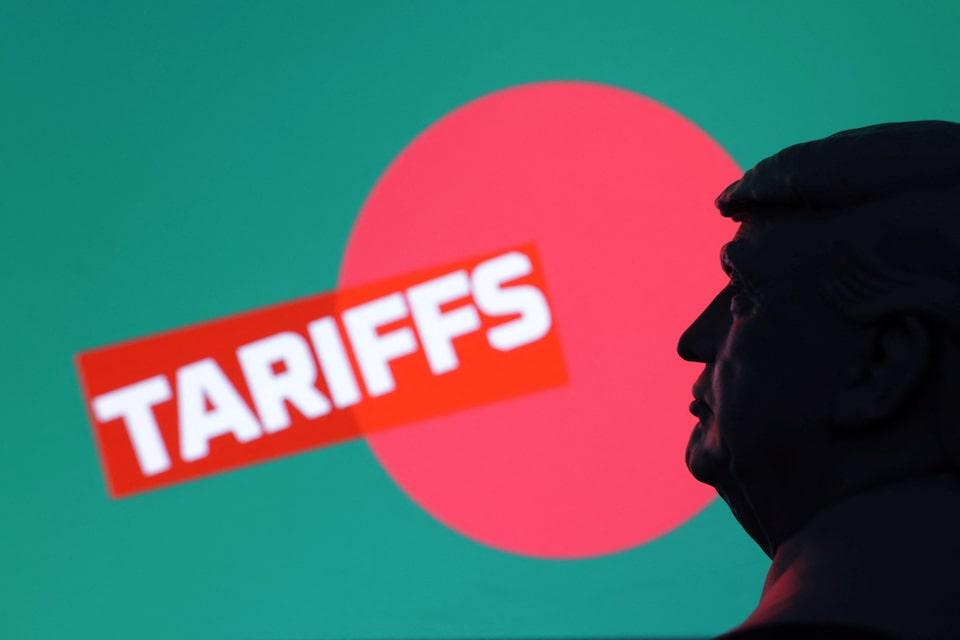
DHAKA, July 30 (Reuters) - Bangladesh's government has approved the purchase of about 220,000 metric tons of wheat from the United States as part of efforts to cool U.S. trade tensions and reduce steep import tariffs imposed by the Trump administration, a Dhaka official said on Wednesday. Bangladesh has approved the purchase from the United States under a government-to-government deal at a price of $302.75 per ton, the food ministry official said. It will be supplied by a Singapore-based trading house. Sign up here. Earlier in July, Bangladesh signed a memorandum of understanding to import 700,000 tons of wheat annually from the United States over the next five years. Bangladesh currently relies heavily on imports from the Black Sea region for lower-cost wheat, while importing smaller volumes of higher-grade grain from countries like the United States and Canada for blending purposes. However, a Dhaka-based trader said U.S. wheat won’t replace imports from the Black Sea. “Previously, the Bangladeshi government was importing lower-cost wheat from the Black Sea region to run programmes like food-for-work,” he said. “But now that they’re bringing in U.S. high-protein wheat, it’ll eventually find its way into the local market and when it does, it will directly compete with the high-protein Canadian wheat that private millers rely on.” There was about a $30 to $40 price difference between U.S. and Black Sea wheat, but "that premium is for the protein and gluten that’s essential in good flour”, he said. “So the price makes sense if you want quality.” On July 27, Bangladesh also ordered 25 aircraft from Boeing (BA.N) , opens new tab and ramped up imports of key American goods in an effort to defuse trade tensions. A Bangladesh government delegation is in the United States for trade talks this week, officials in Dhaka said. https://www.reuters.com/world/asia-pacific/bangladesh-buy-220000-t-wheat-us-bid-tariff-relief-official-says-2025-07-30/
2025-07-30 11:33
SAO PAULO, July 30 (Reuters) - Banco Santander Brasil's (SANB3.SA) , opens new tab second-quarter net profit rose 9.8% from a year earlier but landed slightly below market expectations, a securities filing showed on Wednesday, amid global trade tensions and high local interest rates. WHY IT'S IMPORTANT Brazil is a key market for Spanish parent Banco Santander (SAN.MC) , opens new tab, which reported its own quarterly results earlier in the day, maintaining its guidance for higher profits this year despite some weakness in Latin America. Sign up here. BY THE NUMBERS Santander Brasil's net profit reached 3.66 billion reais ($656.6 million) in the April-June quarter, the bank said, while analysts polled by LSEG expected it to come in at 3.73 billion reais. Net interest income - earnings on loans minus deposit costs - rose 4.4% to 15.4 billion reais. Return on average equity (ROAE), a gauge of profitability, hit 16.4%, up from 15.5% a year earlier but slowing from the first quarter's 17.4%. Allowance for loan losses grew 16.4% on a yearly basis to 6.86 billion reais, while the expanded loan portfolio rose 1.5% to 675.5 billion reais. KEY QUOTES CEO Mario Leao said in a statement that a "more challenging macroeconomic environment" led Santander Brasil's net profit and return on equity to expand versus 2024 but decline compared to the previous three-month period. "Non-performing loan ratios are still challenged by the macro environment, but are already showing improvement this quarter," he added. Leao pledged to keep a "disciplined approach to capital allocation". ($1 = 5.5741 reais) https://www.reuters.com/business/finance/santander-brasils-second-quarter-net-profit-up-98-slightly-below-forecasts-2025-07-30/
2025-07-30 11:31
JDE Peet's CEO sees small direct impact from US tariffs Its coffee supplies are less exposed to Brazil than peers Shares soar 11% after earnings beat and outlook hike July 30 (Reuters) - The CEO of JDE Peet's (JDEP.AS) , opens new tab said on Wednesday that U.S. coffee prices would have to go up if President Donald Trump's threatened tariffs on Brazil included coffee from the world's top exporter. However, the direct impact from U.S. tariffs on the Jacobs coffee maker would be small, CEO Rafael Oliveira told analysts in a post-earnings call. Sign up here. Trump said earlier this month that he would raise duties on Brazilian imports to 50%, effective August 1, prompting Brazil's government to plead with the U.S. administration to exclude food products. U.S. Commerce Secretary Howard Lutnick said on Tuesday that natural resources that are not grown in the United States, including coffee and cocoa, could be exempt from the tariffs. JDE Peet's, also known for its L'Or, Tassimo and Douwe Egberts brands, is less exposed to these risks than many of its rivals, as its supplies are less dependent on Brazil, and it has no plans to change suppliers. "The proportion that we use of Brazilian coffee is significantly smaller than most other coffee players ... less than 30% of what we consume," added Oliveira, who became the CEO of the Dutch coffee and tea company last October. JDE Peet's lifted its annual forecasts on Wednesday after reporting consensus-beating half-year adjusted operating earnings of 709 million euros ($813.33 million), thanks to sales growth that defied already high coffee prices. It expects 2025 organic sales to grow in a high-teens percentage, compared with a previous forecast for high single-digit growth. It also forecast stable adjusted operating profit for the year. Soaring coffee prices are a thorn in the side of both suppliers and retailers, with JDE Peet's flagging an average yearly rise of 60% in green coffee prices in the first half of 2025. "Price volatility (is) expected to remain high, due to supply concerns ... and speculative activity," JDE Peet's said in its half-year presentation. Its shares rose more than 11% by early afternoon in Amsterdam, leading gains on Europe's benchmark STOXX 600 index (.STOXX) , opens new tab. ($1 = 0.8656 euros) (This story has been refiled to remove an extraneous word in paragraph 1) https://www.reuters.com/markets/europe/jde-peets-sees-small-impact-tariffs-duties-hang-over-brazil-coffee-2025-07-30/