2025-07-30 10:57
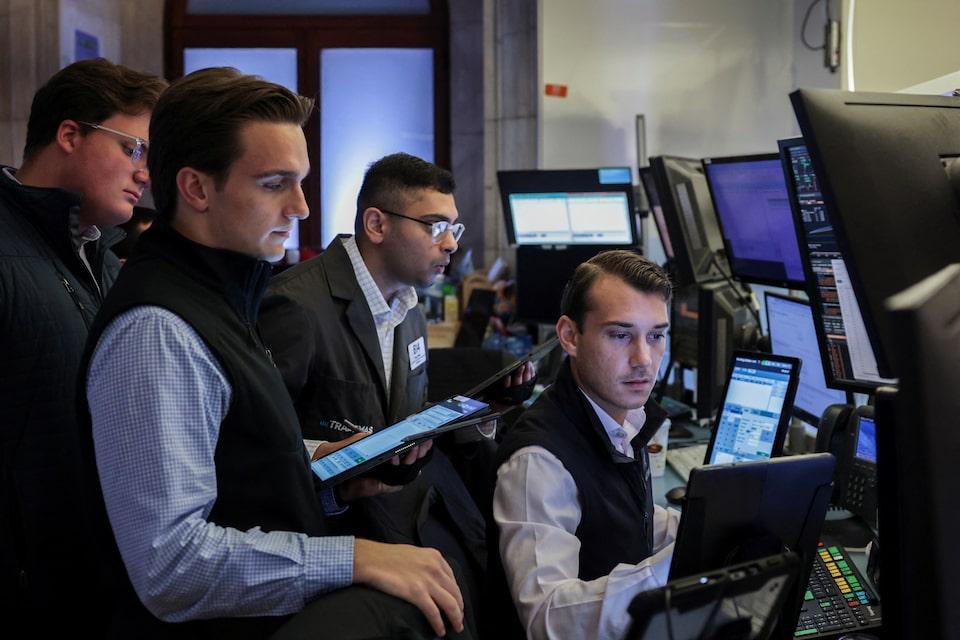
LONDON, July 30 (Reuters) - What matters in U.S. and global markets today By Mike Dolan , opens new tab, Editor-At-Large, Finance and Markets Sign up here. World markets have hunkered down for three days of economic health checks, corporate readouts and policy decisions that may define the remainder of the summer, with U.S. trade worries easing somewhat following a series of framework deals that should enable better planning ahead. Global stocks and U.S. futures flatlined on Wednesday, with the Federal Reserve due to hold the line in interest rates again later in the day just as U.S. GDP and jobs updates stream in alongside the first set of megacap earnings from Microsoft and Meta. The dollar took a breather too after a strong two-day rally. I’ll review today’s news and then discuss why the International Monetary Fund's upgraded forecast for the global economy on Tuesday suggests the world is navigating Washington's trade war better than many had feared, for better or worse. * The big macro market mover late Tuesday was a sharp drop in Treasury yields ahead of Wednesday's Fed meeting and the Treasury's quarterly refunding announcement. This followed strong demand at a series of hefty debt auctions this week, most notably record take-up of 7-year notes on Tuesday. The drop in 10-year yields to their lowest point since July 3 was all the more impressive against the surge in crude oil prices to their highest level in over a month. * The second quarter U.S. GDP estimate now takes center stage, with the narrower-than-forecast June trade deficit released on Tuesday pushing up the Atlanta Fed's estimate , opens new tab of growth to 2.9% from 2.4% earlier. Other releases showed U.S. June job openings softening but consumer confidence brightening this month, with the monthly payrolls and June PCE inflation gauge due on Friday * The Fed is expected to stand pat later despite likely dissents from President Donald Trump's two appointees on the board. The Bank of Canada is likely to hold steady too. The Bank of Japan delivers its verdict on Thursday. While the trade picture appears to be clearing up for monetary policymakers ahead of Friday's deadline for trade deals, the inflation fallout remains foggy. * With investors deep in the weeds of the earnings season, attention turns squarely to the artificial intelligence theme after the bell on Wednesday with Microsoft and Meta's updates. Apple and Amazon are due Thursday. UPS and Whirlpool lost more than 10% on Tuesday amid tariff-related hits. In Europe, pharma giant Novo Nordisk was still reeling from a near 25% share price plunge on Tuesday - its biggest ever one-day drop - after it slashed its outlook amid the stiff competition facing its main obesity drug. Today's Market Minute * U.S. and Chinese officials agreed to seek an extension of their 90-day tariff truce on Tuesday, following two days of what both sides described as constructive talks aimed at defusing an escalating trade war between the world's two biggest economies. * U.S. President Donald Trump said a trade deal with India has yet to be finalised and warned of possible higher tariffs ahead of an August 1 deadline to seal an agreement. * Trump's trade tariffs are ramping up the cost of importing already-pricey cocoa and hurting the competitiveness of local factories versus Canadian and Mexican outfits that supply the U.S., according to conversations with 11 industry executives, representatives, experts and traders. * Retail investors are often late to Wall Street parties, only catching the rally once "smart money" is looking for the exit. But that doesn't appear to be the case this time around, claims ROI columnist Jamie McGeever. * If you consider it good practice to consult more than one news source, you may have been confused by the reporting of the latest U.S. Consumer Price Index release. And, writes Income Securities Advisor publisher Marty Fridson, the various interpretations of how that report affected stock prices might have truly left you scratching your head. Chart of the day U.S. President Donald Trump's approval rating dropped another one percentage point to 40% over the second half of July, the lowest of his second term in office, a Reuters/Ipsos poll found. As ever, the partisan split was extreme - with 83% of Republicans and just 3% of Democrats approving of his performance. About one-third of independents approved. Overall, 38% of respondents approved of Trump's handling of the economy and 43% of respondents approved of his record on immigration. Today's events to watch * ADP's U.S. July private sector payrolls (8:15 AM EDT), US Q2 GDP estimate (8:30 AM EDT) June pending home sales (10:00 AM EDT); Mexico Q2 GDP (8:00 AM EDT) * Bank of Canada policy decision (9:45 AM EDT) * Federal Reserve's Federal Open Market Committee policy decision (2:00 PM EDT) and press conference from Fed Chair Jerome Powell (2:30 PM EDT) * U.S. Treasury's quarterly refunding announcement (8:30 AM EDT) * U.S. corporate earnings: Microsoft, Meta, Qualcomm, Ford, Kraft Heinz, eBay, Prudential Financial, Verisk, MGM Resorts, Hershey, Humana, Ventas, Equinix, Altria, Western Digital, Cognizant, Lam Research, Smurfit Westrock, Albermarle, Everest, Align, AvalonBay, FirstEnergy, Bunge, Fortive, ADP, IDEX, F5, Garmin Want to receive the Morning Bid in your inbox every weekday morning? Sign up for the newsletter here. You can find ROI on the Reuters website , opens new tab, and you can follow us on LinkedIn , opens new tab and X. , opens new tab Opinions expressed are those of the author. They do not reflect the views of Reuters News, which, under the Trust Principles , opens new tab, is committed to integrity, independence, and freedom from bias. https://www.reuters.com/business/finance/global-markets-view-usa-2025-07-30/
2025-07-30 10:38
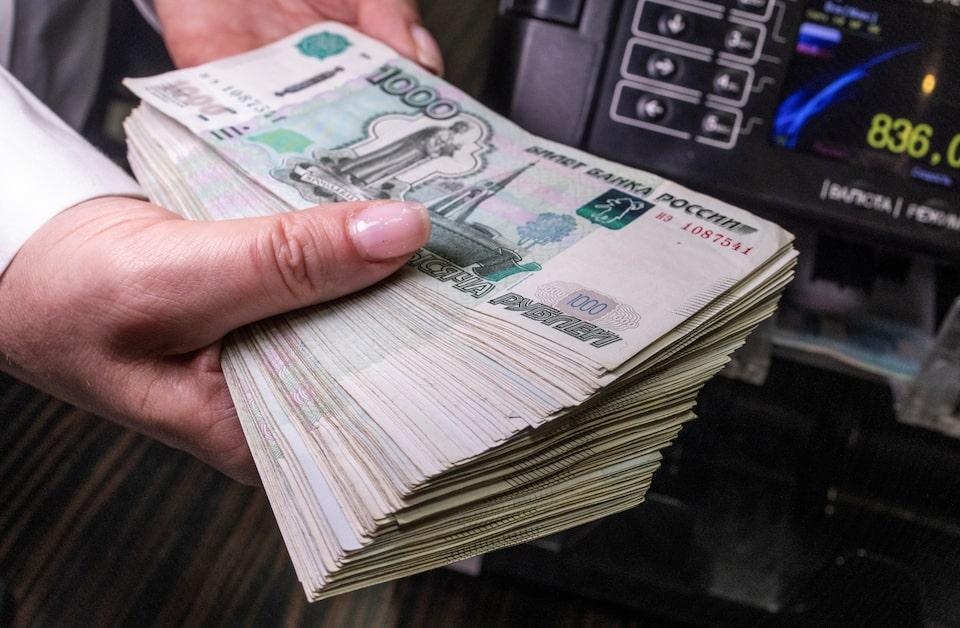
Rouble, stock market fall after Trump comments Falling rouble lifted shares in some exporting firms Investors are lining up to buy forex Some weakening of the rouble is welcomed by markets MOSCOW, July 30 (Reuters) - Russian markets reacted cautiously to U.S. President Donald Trump's threat to impose new sanctions, with analysts saying on Wednesday a weaker rouble and higher oil prices as a result of his measures may support the economy in the short term. Trump said on Tuesday the United States would start imposing tariffs and other measures on Russia "10 days from today" if Moscow showed no progress toward a peaceful settlement in Ukraine. Oil prices gained more than 3% on his remarks. Sign up here. The rouble has dropped 4.3% since July 24 to 81.9 to the U.S. dollar on Wednesday. Russia's stock market has fallen by 3.4% since July 24. A weaker rouble boosts export competitiveness by making Russian goods cheaper globally and increases revenue from oil exports priced in dollars. "The uncertainty of new U.S. sanctions will continue to weigh on the sentiment of Russian investors," said Alexei Antonov from Alor brokerage. The rouble has rallied by up to 45% against the dollar this year, thanks to the central bank's tight monetary policy and hopes for easing tensions between Russia and the U.S. after talks held in Saudi Arabia in February. The rouble's appreciation lowered the revenue of Russian commodity firms from oil and gas majors to metals and fertilizer exporters. Such firms make up about 60% of the stock market, which is off-limits to Western investors because of sanctions. FUNDAMENTAL SUPPORT Shares in some exporting companies rose after the rouble started sliding, with oil firm Rosneft, Russia's biggest, gaining over 2% since the start of the week, and nickel producer Nornickel rising by over 5% on July 29. "Fundamental support for the Russian exporters' stocks is provided by soaring oil prices and a significantly weakened rouble," said BCS brokerage analyst Mikhail Zeltser. The central bank's decision on July 25 to cut its key interest rate as inflation eased also helped the rouble's fall. A weaker rouble will support the state budget, the main target of Trump's measures, by increasing the rouble-denominated value of Russia's energy revenue even if that shrinks due to new sanctions. Energy made up 27% of Russia's state budget revenue in the first half, down from around 30% in 2023 and 2024. Although some weakening of the rouble to around 90 to the dollar is welcomed by the market, a more significant slide towards 100 and beyond is seen as harmful for the economy. Some analysts recalled November 2024, when the rouble weakened sharply after the U.S. imposed new sanctions. The rouble lost 11% between November 22 and November 27. Finam analysts said Russian investors were lining up to buy foreign currency to hedge the risk of falling export revenues in case Trump imposes secondary sanctions on buyers of Russian oil, such as China and India. "In part, the concerns are not unfounded. It was precisely (former U.S. President Joe) Biden's farewell sanctions package at the end of last year that caused the rouble to plummet," Finam analysts wrote in their research note. https://www.reuters.com/business/weak-rouble-higher-oil-may-help-russia-if-trumps-tariffs-hit-analysts-say-2025-07-30/
2025-07-30 10:33
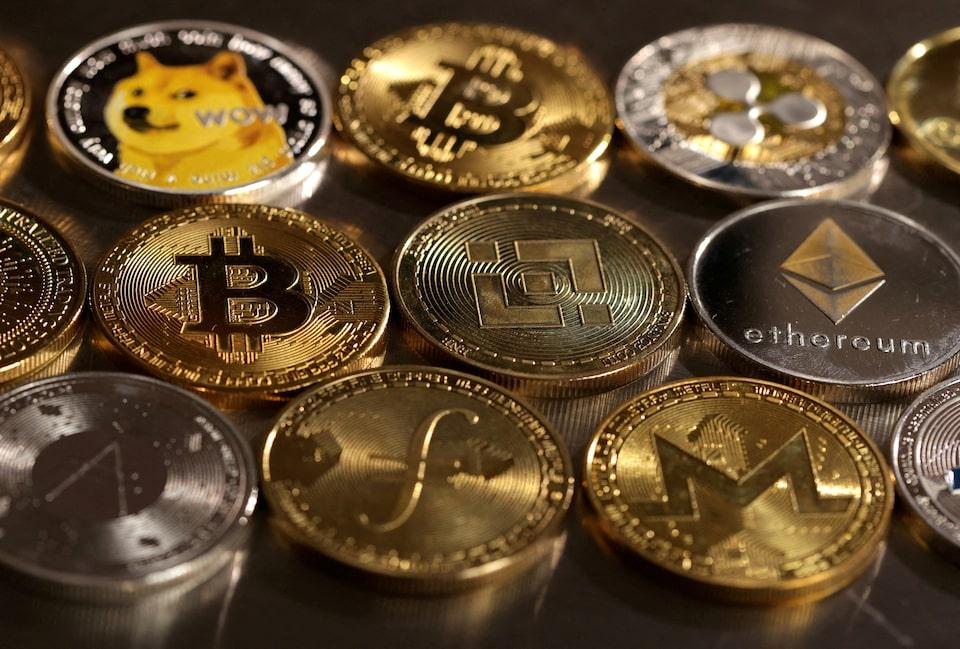
Crypto report to outline administration's views on tokenization Report will lay out regulatory, legislative proposals Trump courted cash from crypto industry on the campaign trail July 30 (Reuters) - A cryptocurrency working group formed by President Donald Trump is set to release a report on Wednesday that is expected to outline the administration's stances on tokenization and market-defining crypto legislation, among other issues critically important to the digital asset industry. Shortly after taking office in January, Trump ordered the creation of a crypto working group tasked with proposing new regulations, making good on his campaign promise to overhaul U.S. crypto policy. Sign up here. Wednesday's report is a culmination of the task force's work so far and its first public findings. In line with Trump's January executive order, it will lay out what rules and laws should be enacted to advance the policy goals of the pro-crypto White House. Those include making sure that the Securities and Exchange Commission has a framework in place for firms to offer blockchain-based stocks and bonds, according to one person familiar with the discussions. The report is also expected to discuss the administration's wish list for legislation Congress is currently debating to create broad regulatory guidelines for cryptocurrency, according to a second person familiar with the report. The working group led by Trump official Bo Hines is composed of several administration officials including Treasury Secretary Scott Bessent, SEC Chair Paul Atkins and Director of the Office of Management and Budget Russell Vought. The White House, Treasury Department and the SEC did not immediately respond to requests for comment on the report. "While there have been regulatory regimes in place that have maybe been piecemeal or have allowed the industry to grow in certain ways, the recommendations that we expect to see in the report will be a good roadmap for how to build out crypto as a continued important part of the economy going forward," said Rebecca Rettig, chief legal officer at crypto firm Jito Labs. On the campaign trail, Trump courted crypto cash by pledging to be a "crypto president" and promote the adoption of digital assets. That is in stark contrast to former President Joe Biden's regulators which, in a bid to protect Americans from fraud and money laundering, cracked down on the industry. The Biden administration sued exchanges Coinbase COIN.O, Binance and dozens more, alleging they were flouting U.S. laws. Trump's SEC has since dropped those cases. TOKENIZATION, STABLECOINS, MARKET STRUCTURE Industry participants will be looking closely at what the report says about tokenization, the process of turning financial assets - such as bank deposits, stocks, bonds, funds and even real estate - into crypto assets. Crypto firms and others have been increasingly discussing the prospect of tokenizing securities as a new way to facilitate trading. Coinbase recently told Reuters it was seeking a U.S. green light from the SEC to offer blockchain-based stocks. The SEC has yet to weigh in publicly on that request. Wednesday's report is expected to recognize the need for the SEC to develop a framework for tokenization, according to a source familiar with the discussions, but the details of the language were not immediately clear. The report will also lay out what the White House would like to see from market structure legislation working its way through Congress, according to a separate person with knowledge of the report. The House of Representatives passed a bill called the Clarity Act earlier this month that would create a formal regulatory regime for crypto, and the U.S. Senate is considering its own version of the measure. Earlier this month, Trump signed into law a bill to create federal rules for stablecoins, a type of cryptocurrency pegged to the U.S. dollar. That move was hailed as a major win for the digital asset industry, and the White House has said it wants Congress to pass market structure legislation next, which would have far wider repercussions for the industry. The crypto sector has for years argued that existing U.S. regulations are inappropriate for cryptocurrencies and has called for Congress and regulators to write new ones that clarify when a crypto token is a security, commodity or falls into another category, like stablecoins. The president's support for the crypto industry has sparked conflict-of-interest concerns, which at times have threatened to derail congressional crypto legislation. Trump's family has launched cryptocurrency meme coins, and the president also holds a stake in World Liberty Financial, a crypto platform. The White House has denied that any conflicts of interest are present. https://www.reuters.com/legal/government/white-house-set-unveil-closely-watched-crypto-policy-report-2025-07-30/
2025-07-30 10:18
MUMBAI, July 30 (Reuters) - The Indian rupee posted its steepest one-day drop since May and hit a five-month low on Wednesday, hurt by worries over steep U.S. tariffs on Indian exports alongside dollar demand from foreign banks and importers. The rupee hit a low of 87.5125 against the U.S. dollar before closing at 87.42, down 0.7% on the day. Sign up here. Traders said that while the Reserve Bank of India likely stepped in to support the local currency, the intervention was not very aggressive. A 20%-25% tariff may be imposed on India's exports in the absence of a trade deal and as the Asian country holds off on offering fresh concessions ahead of Friday's deadline, Reuters reported on Tuesday. U.S. President Donald Trump said on Tuesday that a trade deal with India had not been finalised and higher tariffs were possible. Trump's tariff threats, the psychological impact of the rupee breaching the 87 mark, and urgency among importers to hedge before the August 1 deadline has weighed on the rupee, said Dilip Parmar, a foreign exchange analyst at HDFC Securities. If conditions remain the same, the rupee could fall below 88 in the coming weeks, Parmar said. The local unit had hit an all-time low of 87.95 in February. In addition to trade uncertainty, persistent foreign portfolio outflows have also been a pain point for the rupee. Overseas investors have net sold over $1.5 billion of local stocks in July. Caution among importers and the absence of inflows have kept the currency under pressure and that may persist in the near-term, a trader at a foreign bank said. Meanwhile, Asian currencies were trading mixed and the dollar index was little changed at 98.8 as investors await the Federal Reserve's policy decision later in the day. The Fed is widely expected to keep rates unchanged, with the focus on commentary from Chair Jerome Powell and whether the decision is unanimous. https://www.reuters.com/world/india/tariff-worries-trigger-rupees-steepest-fall-nearly-three-months-2025-07-30/

2025-07-30 10:01
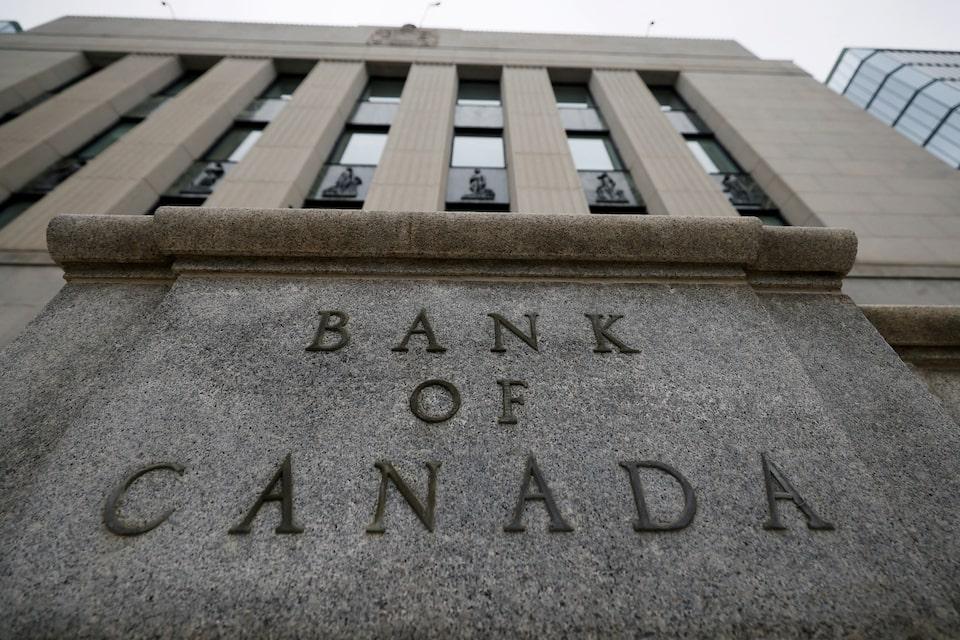
BoC likely to hold rates at 2.75% amid trade war impact Economists warn rate cuts could increase inflationary pressures BoC awaits US-Canada trade deal outcome before policy change OTTAWA, July 30 (Reuters) - The Bank of Canada will most likely keep rates on hold at 2.75% on Wednesday for the third time, reflecting a softer-than-expected impact of the trade war with the U.S. on the Canadian economy, which has kept the need for monetary stimulus at bay. Signs of inflationary pressures, especially of the measures that are closely tracked by the central bank, have also stirred concerns that further cuts could stoke price pressures, economists said. Sign up here. The BoC would also want to see the result of trade negotiations between Canada and the U.S. before changing its monetary policy stance, said Pedro Antunes, chief economist at Conference Board of Canada, an independent economic think tank. The United States has set an August 1 deadline to reach a trade deal with its northern neighbor. "The Bank of Canada doesn't want to necessarily push too hard on the accelerator," he said. The central bank needs some gunpowder after the trade deal, he added. The BoC started to ease interest rates aggressively in June 2024, cutting rates by 225 basis points to 2.75% in March. That is the so-called middle of its neutral rate range, when the monetary policy is not stimulating or restricting economic growth. Data in the last one month has shown that core inflationary pressures remain above 3%, the top end of its 1% to 3% inflation target range. The economy added 83,100 new jobs in June, signaling that tariffs imposed by the United States this year might not have had much of an impact so far. Money markets are betting the odds for a rate cut at barely 7% on Wednesday and a less than 100% chance of another cut through the year. A Reuters poll of 28 economists showed that the lack of clarity around tariffs, combined with recent data on inflation and jobs, will keep the BoC on the sidelines this week. The poll was conducted from July 21 to July 25. BoC Governor Tiff Macklem will announce the governing council's decision at 9:45 a.m. ET (1345 GMT) on Wednesday. The bank will also release its quarterly monetary policy report (MPR), which usually contains its forecasts for the economy and inflation. Doug Porter, chief economist at BMO Capital Markets, said that since the last monetary policy report, the economy has gradually moved closer to the first scenario projected by the bank, which presented an optimistic outlook for tariffs and the economy. The second, worse-case scenario assumed high tariffs and a global recession as a result. "The range of possibilities has narrowed. So I'm anticipating that the bank will have a single forecast," he said. https://www.reuters.com/world/americas/bank-canada-seen-holding-rates-steady-third-time-row-2025-07-30/
2025-07-30 09:27
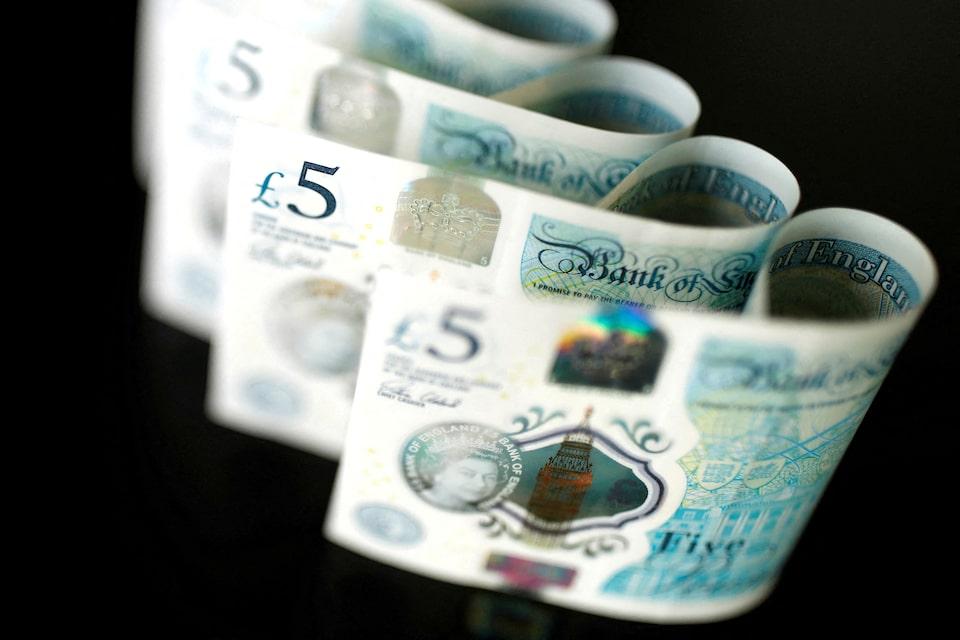
July 30 (Reuters) - Sterling was marginally higher on Wednesday as investors awaited the outcome of the Federal Reserve's policy meeting, after digesting news this week of a trade deal between the United States and the European Union. The greenback edged lower as investors shifted their focus to the Federal Open Market Committee meeting later in the session and upcoming economic data. Sign up here. The pound was up 0.15% to $1.3374 , after hitting $1.33079 on Tuesday, its lowest level since May 19. The euro was down 0.12% at 86.38 pence per pound , its lowest since July 11. On Monday, it hit 87.69 pence - its highest level in over two years - before falling 0.78% in its largest one-day drop since April. Investors are divided on sterling, partly due to disagreement on whether the Bank of England will step up the pace of its rate cuts later this year. Inflation in Britain has proven sticky, meaning policymakers could be unwilling to ease monetary policy, but soft economic data has not yet definitively answered that question. “The rapid deterioration in the economy puts the Bank of England in a quandary, and begs the question as to whether the Monetary Policy Committee will prioritise propping up growth and the jobs market, or maintaining price stability,” said Enrique Diaz-Alvarez, chief economist at Ebury. “Sterling may instead be driven by expectations for next week’s Bank of England meeting,” he added, noting that this week offers limited macroeconomic news aside from some second-tier housing data due on Friday. Last week’s economic figures showed the British economy was struggling to grow, while retail sales grew less than expected. Britain's economy will keep the BoE on course to cut rates in August and November despite inflation remaining above target, according to most economists polled by Reuters. Money markets priced in nearly two 25-basis-point rate cuts by year-end, and a cumulative 80 basis points by December 2026. https://www.reuters.com/world/uk/sterling-edges-up-ahead-fed-investors-uncertain-about-boe-policy-path-2025-07-30/