2025-07-30 06:17
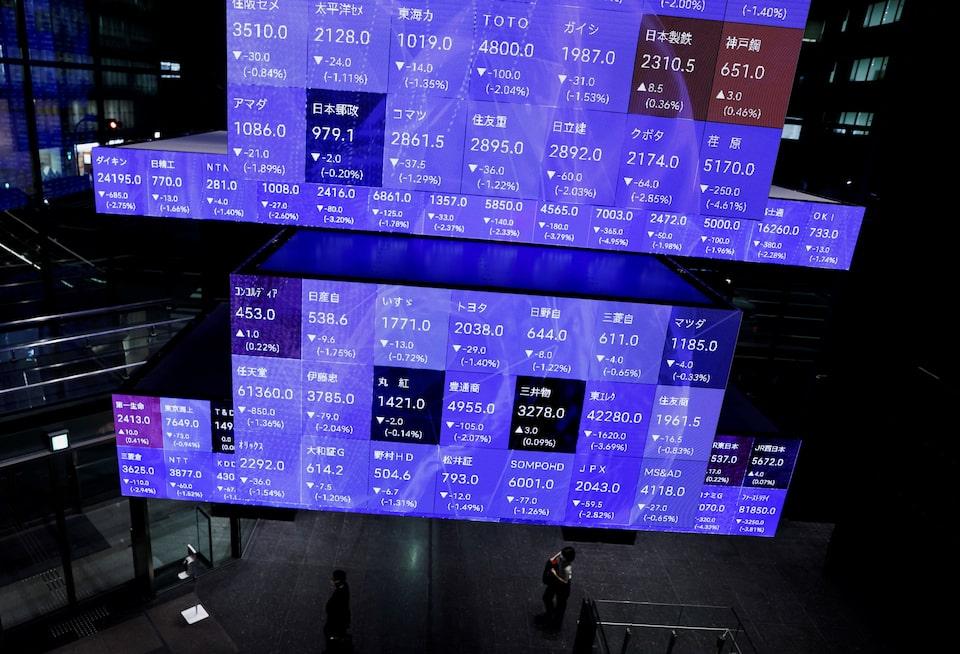
Asian stocks nudge higher ahead of Fed policy announcement U.S.-China trade talks end without major breakthroughs Investors await central bank decisions and corporate earnings SINGAPORE, July 30 (Reuters) - Asian stocks struggled for clear direction on Wednesday, with investors cautious after trade talks between the U.S. and China ended without any substantive agreement and ahead of the Federal Reserve's policy announcement. Early gains for MSCI's broadest index of Asia-Pacific shares outside Japan (.MIAPJ0000PUS) , opens new tab petered out, leaving the index trading flat in the afternoon as traders digested corporate earnings results. Sign up here. In early European trade, pan-region futures were up 0.15%, German DAX futures rose 0.31% and FTSE futures were flat. Australian shares (.AXJO) , opens new tab closed up 0.7%, while Japan's Nikkei stock index (.N225) , opens new tab dipped 0.1% and Hong Kong's Hang Seng Index (.HSI) , opens new tab skidded 1.3%. The euro edged up from a one-month low, rising 0.1% to $1.1555, as markets weighed the EU's trade deal with the Trump administration. Traders are preparing for several central bank decisions, key economic reports and corporate earnings during the next few days, culminating in U.S. President Donald Trump's August 1 tariff deadline. The Federal Reserve is expected to leave interest rates unchanged at its policy meeting later on Wednesday, though it could see rare dissent by some central bank officials in favour of lower borrowing costs. "With labour market conditions near full employment, most Fed officials want to wait and see how tariffs impact inflation," said Tom Kenny, senior international economist at ANZ in Sydney. Some officials are concerned that tariffs could drive higher inflation expectations, leading to more persistent price pressures rather than a one-off hit, he said on a podcast. "Our expectation is that the Fed should be in a position to cut rates at the September meeting." U.S. Treasury bonds advanced ahead of the Fed's meeting, pushing yields to the lowest in almost four weeks following a strong auction of seven-year notes that quelled concerns about diminishing demand for government debt. The yield on benchmark 10-year Treasury notes was last 4.328%, the lowest level since July 3. The two-year yield , which rises with traders' expectations of higher Fed fund rates, was little changed at 3.873%. TARIFFS, CORPORATE EARNINGS The Bank of Japan is expected to keep policy unchanged on Thursday and the focus will be on its comments to gauge when the next rate increase will come after a trade deal between Japan and the U.S. cleared the way for the bank to resume rate hikes. Ahead of Trump's deadline to reach a deal to avert "Liberation Day" tariffs, some countries' talks with the U.S. looked set to go down to the wire. U.S. and Chinese officials agreed to seek an extension of their 90-day tariff truce on Tuesday, though no major breakthroughs were announced. U.S. officials said it was up to Trump to decide whether to extend a trade truce that expires on August 12 or potentially let tariffs shoot back up to triple-digits. India is also bracing for higher U.S. tariffs — likely between 20% and 25% — on some exports as it holds off on fresh trade concessions ahead of the August 1 deadline, two Indian government sources said. Meanwhile, three South Korean cabinet-level officials met with U.S. Commerce Secretary Howard Lutnick in a last-ditch push for a deal. Oil prices rose as potential supply shortages came into focus after Trump gave Moscow an abbreviated deadline toward ending the war in Ukraine. Brent crude futures rose 14 cents, or 0.2%, to $72.40 a barrel. Earnings were a mixed bag on Wednesday. UBS Group (UBSG.S) , opens new tab reported profits , opens new tab that exceeded analysts' expectations, while HSBC profits missed estimates as its losses from China mounted, while German sportswear maker Adidas (ADSGn.DE) , opens new tab warned of the impact to its earnings from U.S. tariffs. U.S. tech megacaps Microsoft (MSFT.O) , opens new tab and Meta (META.O) , opens new tab are due to report earnings on Wednesday that will set the tone for the rest of the week and the earnings season. "It's been a solid U.S. reporting season so far, but these megacap names need to run it hot and blow the lights out, given the bar to please has been sufficiently raised," said Chris Weston, head of research at Pepperstone. https://www.reuters.com/world/china/global-markets-wrapup-2-2025-07-30/
2025-07-30 05:42
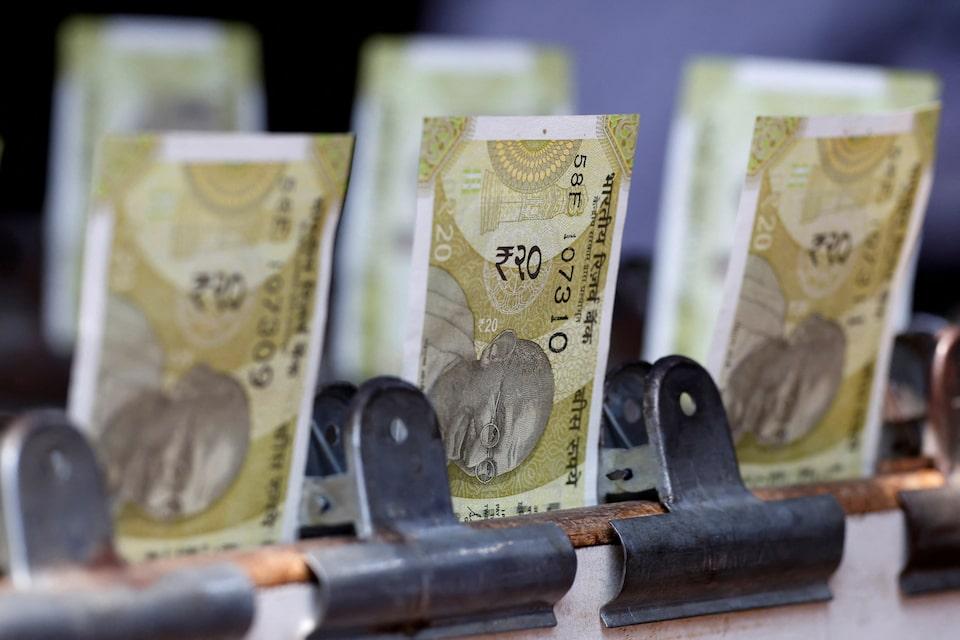
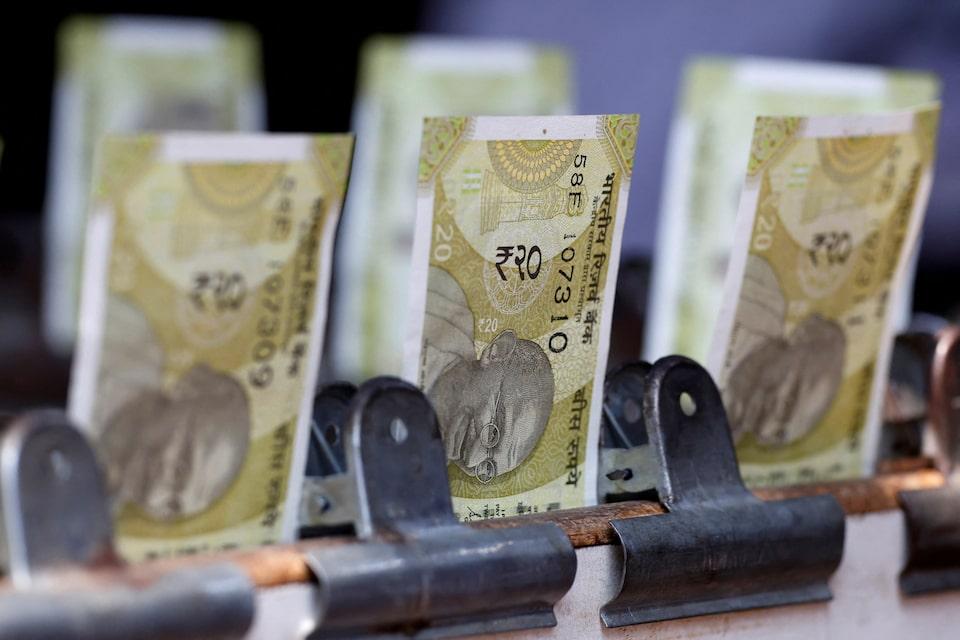
MUMBAI, July 30 (Reuters) - The Indian rupee fell to its weakest level since mid-March on Wednesday, hurt by worries over the U.S. potentially imposing a steep tariff rate on Indian exports, though likely intervention by the Reserve Bank of India helped limit the currency's losses. The rupee was down nearly 0.5% on the day to 86.23 against the U.S. dollar as of 10:10 a.m. IST. Sign up here. U.S. President Donald Trump said Indian exports to the U.S. would likely see 20%-25% tariffs while speaking to reporters on Tuesday, compounding pressure on the currency from sustained portfolio outflows. India is holding off on fresh trade concessions ahead of the August 1 deadline and instead aims to wrap up a comprehensive bilateral deal by September or October, a government official told Reuters. The developments come as other nations including Indonesia and Japan have finalised trade deals with the U.S. over the last few weeks. While the rupee seemed poised for steeper losses on Wednesday, the central bank's likely intervention helped it avert those, an FX salesperson at a large foreign bank said. In the near-term, "expect RBI to continue smoothening volatility while chances of firm intervention to lift the currency are low due to the uncertain environment," the salesperson added. On the day, Asian currencies were mostly rangebound while the dollar index eased slightly to 98.8. As long as the dollar-rupee pair "stays above 86.62, the trend looks positive and buying on dips is favorable," said Ritesh Bhansali, deputy chief executive at FX advisory firm Mecklai Financial. In addition to uncertainty on trade, foreign portfolio outflows have been a persistent drag for the rupee. Overseas investors have net sold over $1.5 billion worth of local stocks over July. https://www.reuters.com/world/india/rupees-fall-past-87usd-tariff-worries-prompts-likely-intervention-2025-07-30/
2025-07-30 05:24
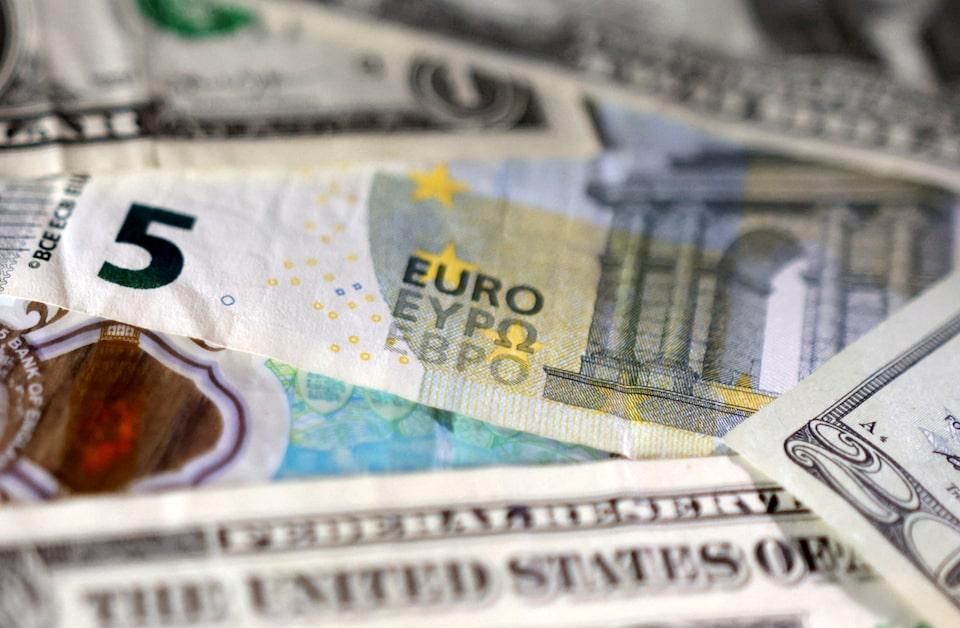
Euro down 1.9% in July, dollar index set for monthly gain U.S.-China talks constructive but no major breakthroughs Spotlight on Fed and Powell later on Wednesday Yen firms after tsunami warning, BOJ due on Thursday SINGAPORE, July 30 (Reuters) - The U.S. dollar wobbled near a one-month high on Wednesday ahead of the Federal Reserve's policy decision, while the euro was poised to snap its run of six straight monthly gains as investors counted the cost of the U.S.-EU trade pact. The Japanese yen firmed against the dollar after a powerful earthquake struck off Russia's Far Eastern Kamchatka Peninsula and generated a tsunami, prompting evacuation warnings in the area and across most of Japan's east coast. Sign up here. Currency markets were mostly steady as investors were hesitant to place bets before crucial economic reports and central bank meetings in Canada, Japan and the United States. U.S. and Chinese officials agreed to seek an extension of their 90-day tariff truce, following two days of what both sides described as constructive talks in Stockholm. No major breakthroughs were announced and U.S. officials said it was up to President Donald Trump to decide whether to extend a truce that expires on August 12. The Sino-U.S. talks come after a framework deal between the U.S. and EU was announced on Sunday. The accord has evoked a mix of relief and concern from Europe, as the agreement was lopsided and skewed towards the United States. Investors have been keeping an eye on the trade pacts as countries scramble to get deals over the line before the August 1 deadline set by U.S. President Donald Trump. "Markets seem to be increasingly interpreting trade agreements as symbolic and tactical rather than structural resolution," said Charu Chanana, chief investment strategist at Saxo in Singapore. "With terms often vague and enforcement mechanisms weak, investors are assigning lower market beta to these negotiations unless backed by concrete detail." The euro firmed a bit to $1.1555 after dropping for the first two days of the week and hitting a one-month low of $1.15185 on Tuesday. The euro is up 11.7% since the start of the year but on course for its first monthly drop this year. The single currency has benefited this year from the dollar losing its lustre due to Trump's erratic trade policies, prompting investors to look for alternatives. Sterling was at $1.3355. The Australian dollar last bought $0.6514, steady on the day, after a set of surprisingly soft inflation figures that only cemented expectations for an interest-rate cut next month. The dollar index , which measures the U.S. currency against six others, was at 98.823, hovering near a one-month high and on course to post its first month of gains this year. Investor focus will now switch to central bank meetings, with the Fed widely expected to stand pat on rates later on Wednesday, making comments from Chair Jerome Powell crucial to gauge the policy path. The meeting comes in the wake of Trump's constant demands for rate cuts, which have coincided with an unrelenting campaign of attacks on Powell by the president and administration officials. There is speculation that Governor Christopher Waller and Vice Chair for Supervision Michelle Bowman could issue dissents if the Fed on Wednesday holds the policy rate steady for the fifth time since December. Both were appointed by Trump as was Powell. "While dissenting isn't uncommon, the dissents at this week's meeting may get more focus because Trump has made it crystal clear that he thinks the FOMC should be lowering interest rates," said Kristina Clifton, a senior economist at the Commonwealth Bank of Australia in Sydney. "Dissents at this meeting may be judged as political and put a dent in perceptions of the FOMC's independence." The BOJ is also expected to stand pat and the spotlight will be on comments from Governor Kazuo Ueda as investors hope the recent trade deal between Japan and the U.S. paves the way for the central bank to raise interest rates again this year. The yen firmed 0.4% to 147.85 per dollar and was last at 148.06 after news broke about the Pacific earthquake and tsunami, with investors on alert for any damage to key infrastructure in Japan. Christopher Wong, currency strategist at OCBC, said the yen strength was in reaction to earthquake-related headlines and probably exacerbated by thin market liquidity. "The Nightmare of 2011 Tohoku earthquake lingers," he said, referring to the earthquake and tsunami that devastated northeastern Japan in March 2011. In cryptocurrencies, bitcoin was 0.5% higher at $118,042.85, while ether rose 1.2% to $3,808.81. https://www.reuters.com/world/middle-east/dollar-drifts-before-fed-euro-set-first-monthly-drop-this-year-2025-07-30/
2025-07-30 04:47
A look at the day ahead in European and global markets from Gregor Stuart Hunter: Hope you've had your coffee. We have a lot to get through. Sign up here. The next 72 hours will see traders run a gauntlet of risk events that features central bank decisions from the Federal Reserve, Bank of Canada and Bank of Japan, corporate earnings, and culminates in U.S. President Donald Trump's August 1 tariff deadline. Markets are displaying cautious optimism ahead of the data deluge and after trade talks between the U.S. and China ended on an upbeat note - though without any substantive agreement. Asian stocks are pushing higher, led by gains in Korea (.KS11) , opens new tab, while the Shanghai Composite (.SSEC) , opens new tab is on track to enter a technical bull market, up 20% from a low in April. Elsewhere, a powerful magnitude 8.8 earthquake struck Russia's Far Eastern Kamchatka Peninsula - the strongest to hit the region in more than seven decades - prompting warnings and evacuations stretching across the Pacific Ocean as far as California. Some safe haven currencies rallied after the news, with the Japanese yen as much as 0.4% stronger and the Swiss franc appreciating up to 0.3%. The euro is 0.2% firmer against the dollar, recovering some ground as the European single currency closes in on its first monthly loss of this year as markets weigh up the EU's trade deal with the U.S.. Traders are also braced for a slew of corporate earnings, including from tech megacaps Microsoft (MSFT.O) , opens new tab and Meta (META.O) , opens new tab and European stocks, including UBS Group (UBSG.S) , opens new tab and GSK (GSK.L) , opens new tab. The Federal Reserve is expected to leave interest rates unchanged at its policy meeting later on Wednesday, though it could see a rare dissent by some central bank officials in favour of lower borrowing costs. And ahead of Trump's deadline to reach a deal to avert the imposition of "Liberation Day" tariffs, some countries' talks with the U.S. - including China, India and South Korea - look set to go down to the wire. Buckle up. Key developments that could influence markets on Wednesday: European earnings: UBS Group, Banco Santander, GSK, Telefonica US earnings: Microsoft, Meta, Qualcomm, ARM, Ford French: Consumer spending for June and preliminary GDP for Q2 German: Retail sales for June, GDP flash for Q2 Euro zone: GDP flash for Q2 UK: 27-year government debt auction US: Federal Reserve interest rate decision, GDP growth rate for Q2 Canada: Bank of Canada interest rate decision Trying to keep up with the latest tariff news? Our new daily news digest offers a rundown of the top market-moving headlines impacting global trade. Sign up for Tariff Watch here. https://www.reuters.com/world/europe/global-markets-view-europe-2025-07-30/
2025-07-30 04:12
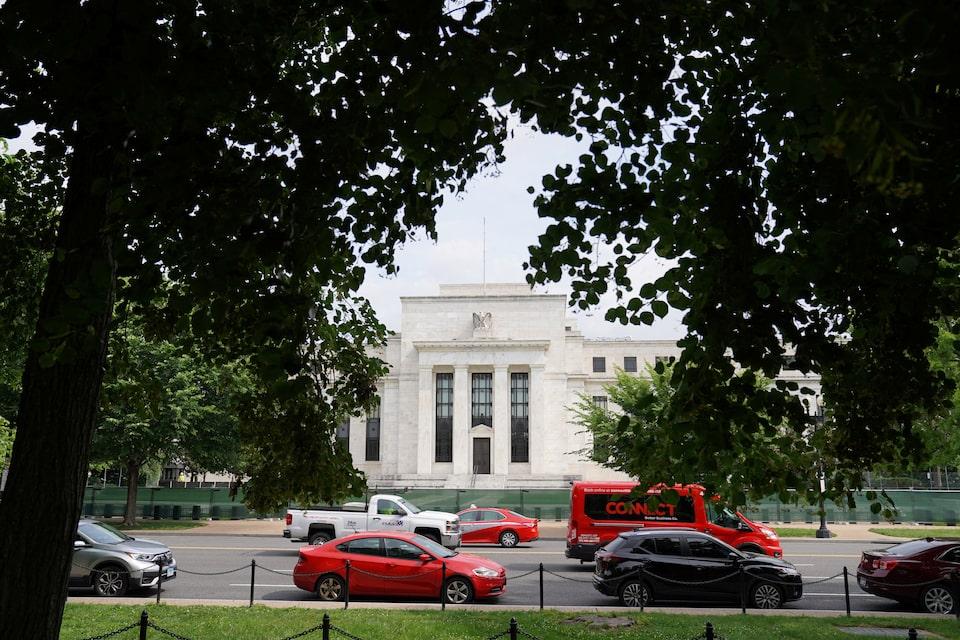
MUMBAI, July 30 (Reuters) - The Indian central bank likely stepped in to support the rupee on Wednesday, five traders told Reuters, as worries over higher U.S. tariff rates on Indian exports pushed the currency to an over four-month low. The rupee was last quoted at 87.11 per U.S. dollar, down 0.3% on the day. The currency was a tad above the day's low of 87.13 hit in early trading. Sign up here. Traders pointed to dollar sales from Indian banks, most likely on behalf of the Reserve Bank of India, which helped limit the rupee's losses. The dollar offers were "not unusually large and intermittent," a trader at a private sector lender said. The dollar index was down 0.1% while Asian currencies were mostly rangebound. (This story has been refiled to say dollars, not dollar, in the headline) https://www.reuters.com/world/india/indian-central-bank-likely-selling-dollars-cap-rupees-losses-traders-say-2025-07-30/
2025-07-30 02:54
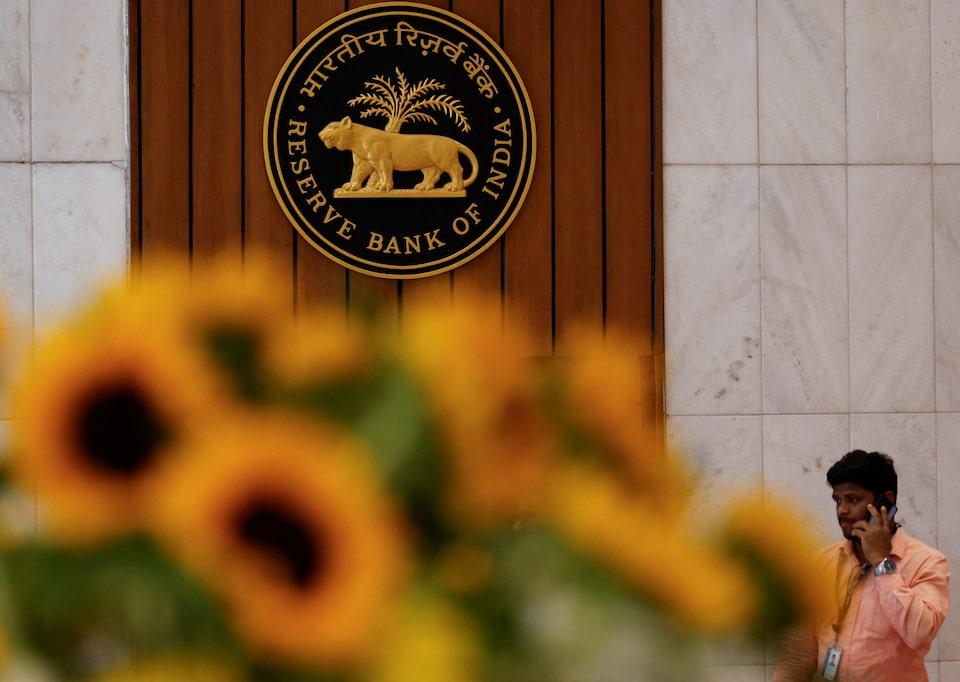
MUMBAI, July 30 (Reuters) - The Indian rupee is poised to weaken past the psychologically important 87-per-dollar level on Wednesday after U.S. President Donald Trump pointed to a likely 20%-25% tariff on Indian exports to the U.S., compounding pressure from sustained portfolio outflows. The 1-month non-deliverable forward indicated the rupee will open in the 87.11-87.13 range versus the U.S. dollar, its weakest level in four months. It had closed at 86.8150 on Tuesday. Sign up here. India is preparing to face higher U.S. tariffs, likely between 20% and 25%, on some of its exports, as it holds off on fresh trade concessions ahead of Washington's August 1 deadline, Reuters reported post market-hours on Tuesday. Speaking to reporters, Trump pointed to similar level of tariffs but said that the deal has not been finalised yet. New Delhi plans to resume the trade negotiations when a U.S. delegation visits next month, aiming to finalise a comprehensive bilateral deal by September or October, a government official told Reuters. Trump's remark will cause a "knee-jerk reaction," with traders likely reading it as a negative cue, a trader at a state-run bank said, adding that while India was expected to crack one of the first deals, it now appears to be a laggard. Regional peers like Indonesia and Vietnam and the U.S.'s bigger trading partners like Japan and the European Union have already finalised trade deals with Washington in July. It's "quite likely" the Reserve Bank of India may step in to support the rupee if the early losses extend, the trader said. On the day, the dollar index was a tad lower at 98.7, while most Asian currencies nudged higher. The Federal Reserve's monetary policy decision is due during U.S. market hours later in the day. KEY INDICATORS: ** One-month non-deliverable rupee forward at 87.27; onshore one-month forward premium at 13.25 paise ** Dollar index down 0.1% at 98.75 ** Brent crude futures rises 0.2% to $72.6 per barrel ** Ten-year U.S. note yield at 4.33% ** As per NSDL data, foreign investors sold a net $689 mln worth of Indian shares on July 28 ** NSDL data shows foreign investors sold a net $66.4 mln worth of Indian bonds on July 28 https://www.reuters.com/world/india/rupee-set-deepen-losses-india-braces-higher-us-tariffs-2025-07-30/