2025-07-28 10:23
Interactive Brokers looks to enable 24/7 stablecoin funding for brokerage accounts Trading platform looking to allow customers to use stablecoins issued by other firms, depending on credibility of issuer NEW YORK, July 28 (Reuters) - Interactive Brokers Group (IBKR.O) , opens new tab is considering launching a stablecoin for customers, joining a number of large financial firms that are betting big on the digital token boom as the U.S. eases regulations around the crypto industry. The deliberations come at a time when the underlying infrastructure of global financial markets is undergoing a once-in-a-generation transformation due to the proliferation of blockchain-based assets like stablecoins. Sign up here. In an interview with Reuters, Interactive Brokers' billionaire founder Thomas Peterffy said the company is working on potentially issuing stablecoins, but has yet to make a final decision on how that will be offered to customers. Interactive Brokers, which is one of the world's leading discount brokers with a market value of about $110 billion, currently has a partnership with crypto platform Paxos and is also an investor in crypto exchange Zero Hash. Through these tie-ups, Interactive Brokers offers trading in various cryptocurrencies to customers. The popular trading platform is now working on enabling instant, 24/7 stablecoin funding for brokerage accounts, as well as supporting asset transfers for commonly traded cryptocurrencies, said Peterffy, who also sounded a note of caution on the risks of rapid widespread adoption of crypto. "It’s basically hard to grasp its fundamental value. If we see people adopting it and ascribing a value to it, I'm okay with that, but I'm still not convinced," said Peterffy. Among the options being considered, the Greenwich, Connecticut-based firm could allow customers to use stablecoins issued by other financial institutions to fund their accounts, depending upon the credibility of the issuer. Stablecoins are blockchain-based tokens acting as a proxy for an asset that allow people to move money across borders without interacting with the banking system. Critics have warned that this makes them useful for criminals who want to avoid banks' anti-money laundering checks. Online brokerage firm Robinhood recently launched a stablecoin pegged to the U.S. dollar called the Global Dollar Network through a consortium that included other crypto platforms like Kraken and Galaxy Digital. The Global Dollar Network is based around a stablecoin called USDG, which is issued by Paxos. Interactive Brokers, which last year launched a predictions market called ForecastEx that allows investors to buy "yes" or "no" contracts in response to questions, is one of the largest U.S. trading platforms with about 3.87 million customer accounts at the end of June, a jump of 32% from last year. Like other brokerages, Interactive Brokers has benefited from elevated levels of trading due to market volatility this year that was triggered by U.S. tariff policy. Its shares have surged about 47% since the start of the year, outperforming the S&P 500 Investment Banking & Brokerage index (.SPLRCINVB) , opens new tab, which has risen roughly 20% during the same period. "We view the two innovations (prediction markets and crypto investments) as an effective hedge to any disruption in the firm's core equity, futures, and derivatives businesses," Morningstar analysts said in a note dated July 18. https://www.reuters.com/legal/government/interactive-brokers-considers-launching-new-stablecoin-customers-2025-07-28/

2025-07-28 10:08
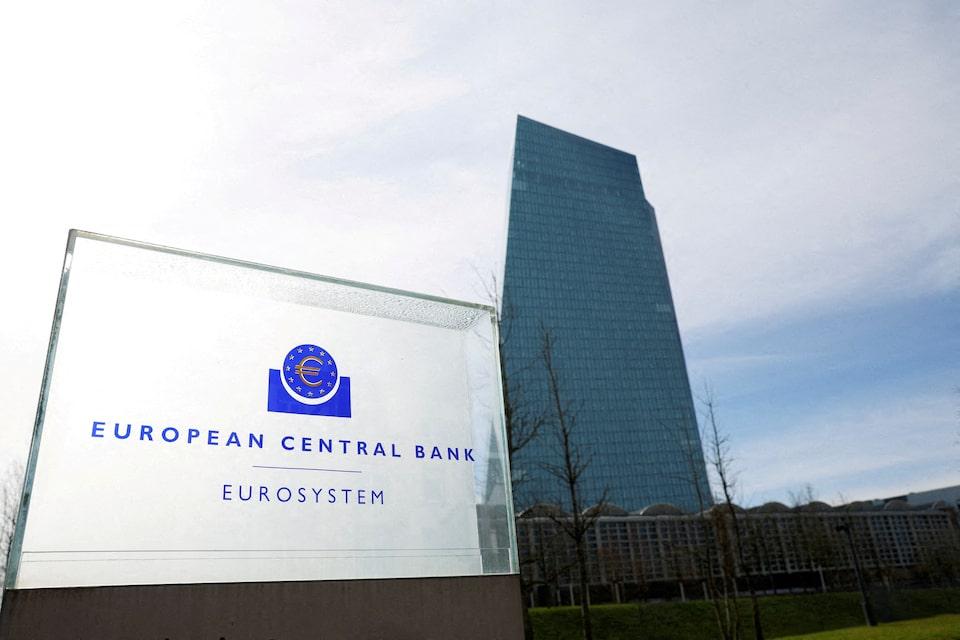
FRANKFURT, July 28 (Reuters) - The dollar's early dominance of stablecoins gives the U.S. an advantage that could ultimately push up borrowing costs for Europe, reduce the ECB's autonomy and increase geopolitical dependency on the U.S., an ECB blog post argued on Monday. Stablecoins, crypto assets pegged to a currency such as the dollar, have gained popularity in recent years and got a big boost earlier this month when U.S. President Donald Trump signed a law to create a regulatory regime, aimed at cementing the dollar's status as the global reserve currency. Sign up here. "Such dominance of the U.S. dollar would provide the United States with strategic and economic advantages, allowing it to finance its debt more cheaply while exerting global influence," ECB adviser Jürgen Schaaf said in a post that does not necessarily reflect the ECB's own views. "For Europe, this would mean higher financing costs relative to the United States, reduced monetary policy autonomy and geopolitical dependency," he added. If dollar-based stablecoins become widely used in the euro area, for payments, savings or settlement, the ECB’s control over monetary conditions could be weakened, Schaaf argued. Dollar-pegged stablecoins issued by Tether and Circle (CRCL.N) , opens new tab have dominated the global market and the share of euro-denominated stablecoins remains marginal, with market capitalisation of less than 350 million euros, the blog post said. Europe should thus act quickly, creating the digital version of its euro currency, a project, that is being held up by legislative delays, and should foster the creation of more euro-based stablecoins. The EU should also foster the use of distributed ledger technology to speed up cheap cross-border payments, the blog argued. "Finally, stronger global coordination on stablecoin regulation is pivotal," the blog said. "If we forgo a common approach, we risk fuelling instability, regulatory arbitrage and global U.S. dollar dominance." https://www.reuters.com/business/dollar-stablecoins-threaten-europes-monetary-autonomy-ecb-blog-argues-2025-07-28/
2025-07-28 10:03
LONDON, July 28 (Reuters) - A downturn in British retail sales extended into its 10th month in July as rising prices weighed on consumers, although the pace of the fall was less severe than in June, a Confederation of British Industry survey showed on Monday. The CBI's monthly gauge of how retail sales compared with a year earlier stood at -34 this month, an improvement on June's -46 but still a sign of weakness in demand. Sign up here. A measure of expected sales for August rose to -31 from -49, the CBI said. "Firms reported that elevated price pressures – driven by rising labour costs – and economic uncertainty continue to weigh on household demand, which has contributed to sales volumes falling since October 2024," Martin Sartorius, principal economist at the CBI said. Employers groups have said finance minister Rachel Reeves' decision to increase the social security contributions they pay for their staff, as well as an increase in the minimum wage, is contributing to higher prices. Weak demand was mirrored across the distribution sector, with wholesale and motor trades also seeing declining sales, Sartorius said. Official data published last week showed British consumers shopped more in June after May's big fall with hot weather helping to increase sales of drinks, clothes and car fuel. However, in the three months to June, sales volumes rose by 0.2%, the weakest increase since the three months to February. Many households are feeling the squeeze again from an inflation rate that rose to 3.6% in June. While the CBI's overall sales gauge remained in negative territory, online sales volume rose for a third month in a row, albeit marginally. The data was collected between June 27 and July 15 and was based on responses from 56 retailers and 91 wholesalers. https://www.reuters.com/business/retail-consumer/uk-retail-downturn-stretches-into-10th-month-cbi-says-2025-07-28/

2025-07-28 09:23
LONDON, July 28 (Reuters) - Hedge funds fled technology stocks at the fastest pace in 12 months in the latest week, just as the S&P 500 (.SPX) , opens new tab reached all-time highs, a note to Goldman Sachs (GS.N) , opens new tab clients and seen by Reuters said. The S&P 500, which includes seven tech stocks in its top 10 largest constituents by market value, has surged roughly 28% since its 2025 low, while the Nasdaq Composite (.IXIC) , opens new tab has jumped 38% in that time. Sign up here. As of Friday, the S&P 500's forward price to earnings ratio, which reflects the value of a company's stock relative to its projected future earnings, was 23.11, around five-month highs, according to LSEG/Datastream. "U.S. equities valuations (such as price earnings ratios) are now 30% higher than their recent decade average, while 10-year yields remain stubbornly high and volatile. The future path of equities may depend partly on a decline in long-term rates; however, we do not seem to be there yet," Lombard Odier Investment Managers head of macro Florian Ielpo said in a note on Friday. Globally, hedge funds sold tech stocks, some of the most richly valued equities, more than any other sector last week, the Goldman Sachs note said. Rather than shorting the sector, hedge funds tended to ditch long bets and exit trades, the bank said. A short bet is designed to profit from a drop in an asset price. This week's exodus was the largest the bank had seen since July 2024, Goldman Sachs said. Hedge funds fleeing tech stocks centered on trading in North America and Europe. Every kind of tech stock was sold, including semiconductor chip companies, as well as those in software and IT services, the bank said. Meanwhile, shares in consumer staples - companies that sell items that people purchase regardless of economic conditions - were among the most net bought U.S. stock sectors this week, Goldman said. Hedge funds piled into these stocks for the fourth straight week and their trades were almost entirely long positions - those that will profit if the stock prices rise. The kind of companies whose shares hedge funds bought included those that sell food and beverages and personal care products. https://www.reuters.com/business/finance/hedge-flow-hedge-funds-ditch-tech-buy-essentials-goldman-sachs-says-2025-07-28/
2025-07-28 07:58
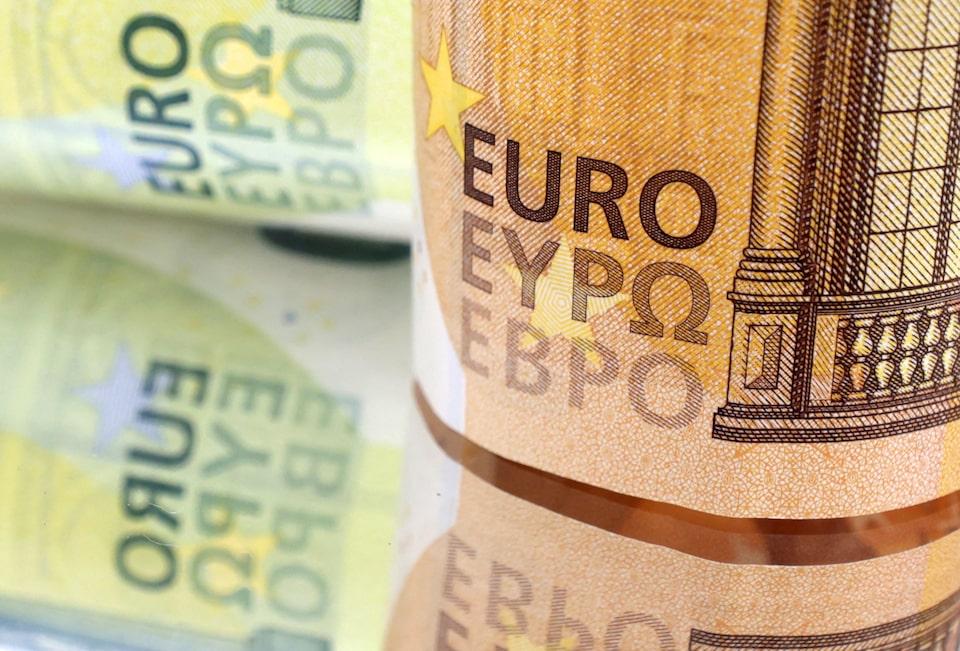
Euro down against most peers after initial, knee-jerk rise Fed, Bank of Japan expected to hold rates steady this week China and US negotiating ahead of August 12 deadline TOKYO/LONDON, July 28 (Reuters) - The dollar rose against major currencies on Monday after the U.S. and the EU struck a framework trade pact, the latest in a flurry of deals to avert a global trade war, with investors also looking to this week's U.S. and Japanese central bank meetings. Meeting in Scotland on Sunday, U.S. President Donald Trump and European Commission President Ursula von der Leyen said the deal provided for an import tariff of 15% on EU goods, half the rate Trump had threatened from August 1. Sign up here. That follows last week's U.S. agreement with Japan, while top U.S. and Chinese economic officials will resume talks in Stockholm on Monday aiming to extend a truce by three months and keep sharply higher tariffs at bay. The euro was last down 0.7% at $1.16530 , set for its biggest daily fall in 10 weeks, reversing an initial knee-jerk rise in Asia trade as investors' focus shifted to what an easing in global trade tensions meant for the dollar overall. "The mood music on U.S. trade negotiations has been a little brighter following agreements with Japan and the EU," said Paul Mackel, global head of FX research at HSBC. "If more ‘trade deals’ are reached, this could help to reduce this source of policy uncertainty that has weighed against the dollar, at least for now. It could also see other factors such as relative yields becoming more influential." The dollar tumbled sharply earlier this year, particularly against the euro, as fears that dramatically higher tariffs on trade with most of its major partners would hurt the U.S. economy caused investors to consider shifting out of U.S. assets. Normally the gap between yields on government bonds is a major factor for currency moves, but at present the euro is significantly higher than the gap between U.S. and euro zone yields would imply. The euro also fell against the yen and sterling, having hit a one-year high on the Japanese currency and a two-year high on the pound at the start of trade. , The dollar was stronger elsewhere, up 0.5% on the yen at 148.37, and strengthening against the pound, which was 0.24% lower at $1.3413. As concerns subside about the economic fallout from punishing tariffs, investor attention is shifting to corporate earnings and central bank meetings in the United States and Japan in the next few days. Both the Fed and the Bank of Japan are expected to hold rates steady at policy meetings this week, but traders will watch subsequent comments to gauge the timing of the next moves. Investors will also be watching to see Trump's reaction to the Fed's decision. The U.S. president has been putting the Fed under heavy pressure to make significant rate cuts, and Trump appeared close to trying to fire Powell last week, but backed off with a nod to the market disruption that would likely follow. In addition, quarterly results are due in coming days from Apple, Microsoft, Amazon and Facebook parent Meta Platforms META.O , opens new tab, four of the whose stocks heavily influence benchmark indexes. They matter for currency investors if strong results cause an acceleration of flows back into U.S. assets. The dollar also climbed against the safe-haven Swiss franc, up 0.74% at 0.8011 francs. https://www.reuters.com/world/middle-east/dollar-strengthens-after-us-eu-agree-tariff-deal-2025-07-28/
2025-07-28 07:26
HAMBURG, July 28 (Reuters) - Rain has raised water levels on the river Rhine in Germany, with much of the river around normal levels, allowing cargo vessels to sail with full loads, commodity traders said on Monday. Dry weather and a heatwave in June and July meant the river became too shallow for vessels to sail fully loaded. Ship operators imposed surcharges on freight rates to compensate for vessels sailing partly empty, increasing costs for cargo owners. Sign up here. Shallow water continues to hinder shipping on some northern river sections, including around Duisburg and Cologne. But the picture has improved and vessels are able to sail about 70% full in Cologne and 90% full in Duisburg. More rain is forecast in the coming days, which traders said could raise water levels enough to allow ships to sail fully loaded later this week. The impact of a recent heatwave had been stronger than expected, drying fields that drain into smaller streams and rivers feeding into the Rhine. The Rhine is an important shipping route for commodities such as grains, minerals, ores, chemicals, coal and oil products, including heating oil. German companies faced supply bottlenecks and production problems in summer 2022 after a drought led to unusually low water levels on the river. https://www.reuters.com/business/environment/most-rhine-river-back-normal-levels-after-rain-2025-07-28/