2025-07-28 05:45
Heavy rain causes landslides and flooding in northern China Over 4,400 people relocated due to extreme weather conditions China allocates 50 million yuan for disaster recovery in Hebei HONG KONG, July 28 (Reuters) - Heavy rain intensified around Beijing and nearby provinces on Monday, with four people killed in a landslide in northern Hebei and eight people missing, as authorities warned of intensifying conditions and heightened disaster risks in the coming days. Authorities relocated more than 4,400 people as colossal rain continued to pound the suburban area of Miyun in Beijing causing flash floods and landslides, impacting many villages, state broadcaster CCTV reported. Sign up here. Images circulated on China's Wechat app showed areas of Miyun where cars and trucks were floating on a flooded road where water levels had risen so high that it had submerged part of a residential building. Electricity cuts are also affecting more than 10,000 people, in the area, CCTV said. Northern China has seen record precipitation in recent years, exposing densely populated cities, including Beijing, to flood risks. Some scientists link the increased rainfall in China’s usually arid north to global warming. China's Central Meteorological Observatory said that heavy rainfall would continue to drench northern China over the next three days. Beijing issued its highest level flood alert on Monday, the official Xinhua news agency said. The storms are part of the broader pattern of extreme weather across China due to the East Asian monsoon, which has caused disruptions in the world's second-largest economy. Xiwanzi Village in Shicheng Town, near Miyun Reservoir, was severely affected, CCTV said on Monday with an additional 100 villagers transferred to a primary school for shelter. It comes after the maximum flood peak flow into the Miyun reservoir reached a record high of 6550 cubic meters per second, Beijing authorities said on Sunday. In neighbouring Shanxi province, videos from state media showed roads inundated by strong gushing currents and submerged vegetation including crops and trees. Shaanxi province, home to China's historic city of Xian, also issued flash flood disaster risk warnings on Monday. In Beijing's Pinggu District, two high-risk road sections have been sealed, authorities said. Authorities are carrying out search and rescue work across cities including Datong, where a driver in a Ford car has lost contact while driving in the floods, the People's Daily reported. China’s Water Resources Ministry has issued targeted flood warnings to 11 provinces and regions, including Beijing and neighbouring Hebei, for floods from small and midsize rivers and mountain torrents. Two were dead and two missing in Hebei province, CCTV said on Sunday morning. Overnight rain dumped a record 145 mm (5.7 inches) per hour on Fuping in the industrial city of Baoding. China's National Development and Reform Commission said on Monday that it was urgently arranging 50 million yuan ($6.98 million) to support Hebei. The funds would be used to repair damaged roads and bridges, water conservancy embankments, schools and hospitals in the disaster area. The NDRC said it was "promoting the restoration of normal life and production as soon as possible." Chinese authorities closely monitor extreme rainfall and severe flooding are, as they challenge the country's ageing flood defences, threaten to displace millions and wreak havoc on China's $2.8 trillion agricultural sector. ($1 = 7.1675 Chinese yuan renminbi) https://www.reuters.com/sustainability/climate-energy/four-killed-eight-missing-heavy-rain-soaks-northern-china-2025-07-28/

2025-07-28 05:39
A look at the day ahead in European and global markets from Gregor Stuart Hunter We may be hearing a lot about the art of the deal this week. Sign up here. With the U.S. tariff deadline bearing down on the global economy at the end of this week, it's the EU's turn to announce a trade deal with the White House, albeit one that is skewed in the U.S.'s favour. The agreement lowers the baseline tariff on most European imports to 15% from the Trump administration's earlier threat of a 30% rate, while committing the EU to invest some $600 billion in the United States. Governments around the world are racing to reach trade agreements with the U.S. to avert the imposition of the Liberation Day tariffs that were first announced on April 2. Talks are also taking place between the U.S. and China in Stockholm on Monday, with reports indicating another 90-day extension to the tariff deadline may be in the works. As Vasu Menon, managing director for investment strategy at OCBC in Singapore, puts it: "The 15% tariff is a pleasant surprise as it is half of what the U.S. threatened to impose on the EU, and it offers hope that other major trading partners of the U.S. could also strike deals of this nature soon." The deal appears to mirror the one struck between the U.S. and Japan last week, with a pattern emerging of unilateral investment in exchange for a lower tariff. That could indicate what to expect as talks go down to the wire with other big economies like China, South Korea and Taiwan. The new U.S. tariff rate on the EU extends to medicinal and pharmaceutical products and motor vehicles, which were the bloc's biggest exports to the U.S. last year. Aircraft and their components, the next biggest segment, will have zero-for-zero tariffs, though the U.S. will keep in place a 50% tariff on steel and aluminium. Investors welcomed the trade deal that avoids a trade war and could bring clarity for companies. Pan-region futures climbed 1%, German DAX futures rose 1%, and FTSE futures gained 0.5%. U.S. equity futures rose 0.4% following the deal, putting the S&P 500 on track for a sixth consecutive day of gains and potentially a new peak. Earnings from Heineken (HEIN.AS) , opens new tab will headline the corporate diary on Monday as the world's second-largest brewer counts the cost of tariffs. However, the firm's shares will likely get a boost from the newly-agreed framework deal along with automakers (.SXAP) , opens new tab and drugmakers (.SXDP) , opens new tab in the region. Key developments that could influence markets on Monday: Earnings: Heineken NV, Wise PLC, EssilorLuxottica SA UK data: CBI Distributive Trades for July Debt auctions: France 3-month, 7-month, 9-month and 1-year Trying to keep up with the latest tariff news? Our new daily news digest offers a rundown of the top market-moving headlines impacting global trade. Sign up for Tariff Watch here. https://www.reuters.com/world/europe/global-markets-view-europe-2025-07-28/
2025-07-28 05:31
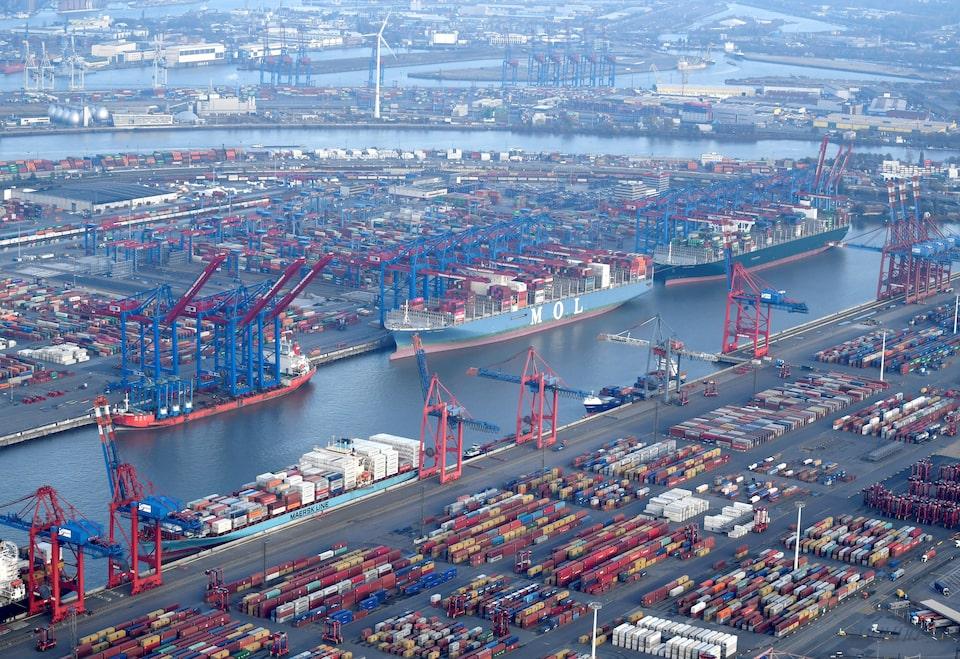
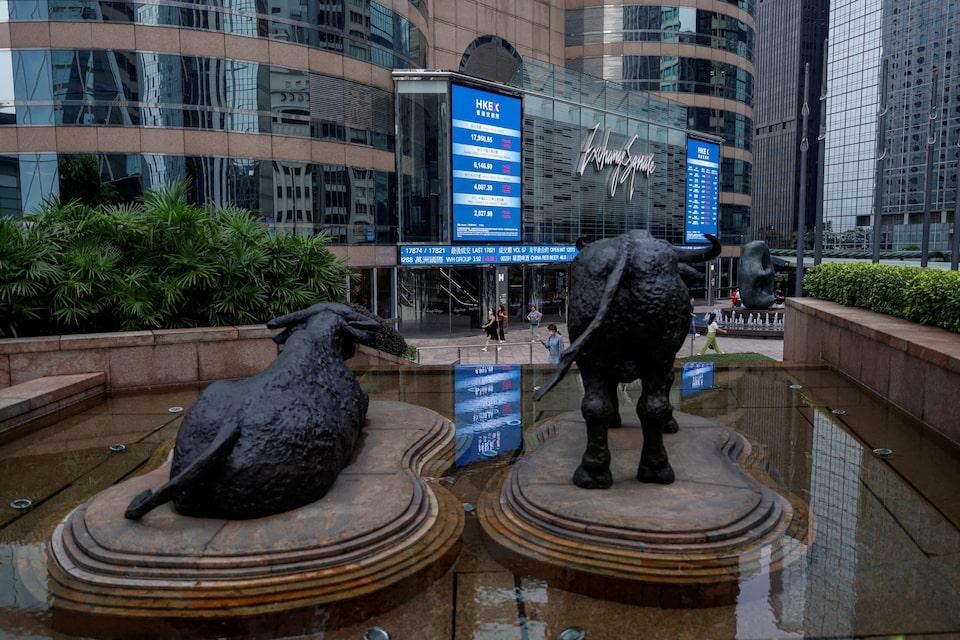
US, European stock futures jump, euro stable after agreement US-China talks to continue with truce likely to be extended Megacap earnings and Fed, BOJ meetings due this week SINGAPORE, July 28 (Reuters) - Global stocks rose and the euro appreciated on Monday after a tradeagreement between the United States and the EU lifted sentiment and provided some clarity in a week of key policy meetings by the Federal Reserve and the Bank of Japan. The U.S. struck a framework trade agreement with the European Union, imposing a 15% import tariff on most EU goods - half the threatened rate, a week after agreeing to a similar trade deal with Japan. Sign up here. Countries are scrambling to finalise trade deals ahead of an August 1 deadline set by U.S. President Donald Trump, with talks between the U.S. and China set for Monday in Stockholm amid expectations of another 90-day extension to the truce between the world's top two economies. "A 15% tariff on European goods, forced purchases of U.S. energy and military equipment and zero tariff retaliation by Europe, that's not negotiation, that's the art of the deal," said Prashant Newnaha, senior Asia-Pacific rates strategist at TD Securities. "A big win for the U.S." European futures surged more than 1%, while S&P 500 futures rose 0.5% and Nasdaq futures advanced 0.6%. The euro strengthened across the board, rising against the dollar, sterling and yen. "We have to be a bit cautious from here," said Sim Moh Siong, currency strategist at Bank of Singapore, of the broader risk-on rally. "A lot of good news is already in the price." MSCI's broadest index of Asia-Pacific shares outside Japan (.MIAPJ0000PUS) , opens new tab was up 0.32%, just shy of the almost four-year high it touched last week. Japan's Nikkei fell 1% after hitting a one-year high last week. While the baseline 15% tariff will still be seen by many in Europe as too high, compared with Europe's initial hopes to secure a zero-for-zero tariff deal, it is better than the threatened 30% rate. The U.S.-EU deal provides clarity to companies and averts a bigger trade war between the two allies that account for almost a third of global trade. "A major tail-risk has now been defused," said Marc Velan, head of investments at Lucerne Asset Management in Singapore. "Markets are interpreting this as a sign of stability and predictability returning to trade policy," he added. "The China delay fits the same pattern: the administration is opting for controlled diplomacy over confrontation." Gains for China's blue-chip stocks (.CSI300) , opens new tab petered out towards the midday break, while Hong Kong's Hang Seng index (.HSI) , opens new tab gained 0.5%. The Australian dollar , often seen as a proxy for risk appetite, was at $0.657, hovering around the near eight-month peak scaled last week. FED, BOJ AWAIT In an action-packed week, investors will watch out for the monetary policy meetings from the Fed and the BOJ as well as the monthly U.S. employment report and earnings from megacap companies Apple (AAPL.O) , opens new tab, Microsoft (MSFT.O) , opens new tab and Amazon (AMZN.O) , opens new tab. While the Fed and the BOJ are expected to maintain rates, comments from the officials will be crucial for investors to gauge the interest rate path. The trade deal with Japan has opened the door for the BOJ to raise rates again this year. Meanwhile, the Fed is likely to be cautious on any rate cuts as officials seek more data to determine tariffs' impact on inflation before they ease rates further. But tensions between the White House and the central bank over monetary policy have increased, with Trump repeatedly lashing out at Fed Chair Jerome Powell for not cutting rates. Two of the Fed Board's Trump appointees have articulated reasons for supporting a rate cut this month. In commodities, oil prices rose after the U.S.-EU trade agreement. Brent crude futures and U.S. West Texas Intermediate crude both rose 0.5%. Gold prices fell on Monday to their lowest in nearly two weeks on reduced appetite for safe havens. https://www.reuters.com/world/china/global-markets-wrapup-3-2025-07-28/
2025-07-28 05:07
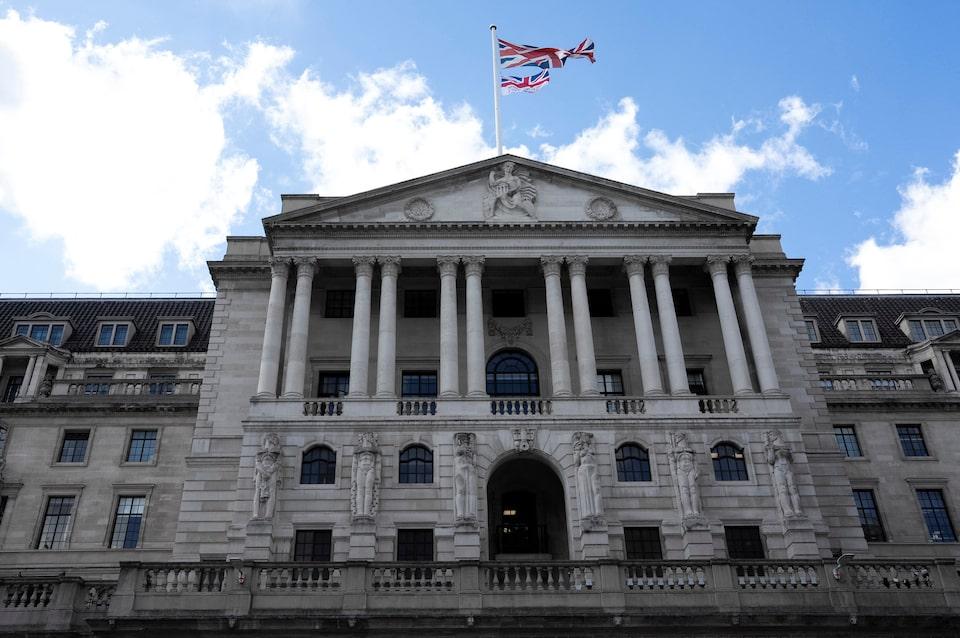
QT pace seen slowing to 75 billion pounds from 100 billion Faster QT risks pushing UK government borrowing costs higher BoE gilt sales still to rise as fewer bonds mature in 2026 Economists hope for clarity on BoE's long-term QT goals BoE gilt holdings down by a third from 875 billion pound peak LONDON, July 28 (Reuters) - The Bank of England is expected to soon slow the pace at which it shrinks its 558 billion-pound ($754 billion) holdings of government bonds, and economists hope next week will shed some light on its longer-term goals for the stockpile. Alongside a predicted quarter-point interest rate cut to 4%, the BoE's Aug. 7 policy statement will assess the past year's quantitative tightening, or QT, before policymakers decide in September on the pace of bond sales for the following 12 months. Sign up here. There is greater uncertainty over QT than usual due to recent bond market ructions and because liquidity in Britain's financial system is approaching a balanced level for the first time since before the 2008 financial crisis. Adding to the mix is political pressure over the hefty losses the BoE has made when selling bonds. "The official view from the Bank ... is that they see this as an operation that works almost in the background. But clearly it has come to their attention that they are not operating in a vacuum," said Peter Schaffrik, global macro strategist at RBC. Unlike other big central banks, the BoE's QT programme involves bond auctions as well as letting existing holdings mature. Over the past year, it has sold 13 billion pounds of gilts and let 87 billion pounds mature. Keeping up that 100 billion-pound pace for the next 12 months would require it to sell a record 51 billion pounds though, due to fewer redemptions. Schaffrik said market conditions had changed since it last sold close to 50 billion pounds of gilts, however, which was in the year to September 2024. "The market would probably take it quite negatively if they sold such a large amount," Schaffrik said. The BoE itself has said its sales so far have barely pushed up government bond yields. A BoE survey published in May showed investors mostly expected QT to slow to a yearly 75 billion-pound pace from September and to 50 billion in 2026-27 before active sales effectively end in 2028. EARLY END TO BOND SALES? One outlier is BNP Paribas' Europe economist Dani Stoilova, who expects the BoE to stop gilt sales from October onward to avoid impacting the market. British 30-year government bond yields hit their highest levels since 1998 in April after President Donald Trump's tariff bombshell rocked the markets and the BoE had to postpone a bond sale. Despite four BoE rate cuts over the past year, the difference between five- and 30-year gilt yields has doubled to 1.4 percentage points and the 2/10-year yield curve has steepened to 0.75 percentage points from near zero. "Active QT has never been done in this environment where Bank Rate has been falling. And so there is the potential that there are interaction effects that haven't been caught," Stoilova said. Last week BoE Governor Andrew Bailey said QT was not to blame for higher government borrowing costs. "We do need to look, however, at the interaction of those yield curve movements with the QT programme and with market functioning and with monetary policy impact," he said. The BoE might focus more on shorter-dated gilt sales or even halt sales of gilts with a maturity of 20 years or longer, former Monetary Policy Committee member Michael Saunders said. Equally, the BoE could decide that extra rate cuts are a better option, or that there is little it can do to offset the steeper yield curve, said Adam Dent, chief UK rates strategist at Santander CIB. "We believe that QT is only responsible for a small part of the steepness, so trying to use QT to control the slope should also have little lasting effect," he said. LONG-TERM PLANS UNCLEAR The BoE has said little about its long-term plans for its gilts. One of Bailey's original reasons for QT - which drains money from the financial system - was to lower banks' reserve holdings from excess levels. Reserves stand at around 680 billion pounds, well above the 385-540 billion-pound range bankers gave to the BoE as an estimate of the system's preferred minimum range of reserves. Once reserves hit this minimum level, the BoE might still see financial or market stability reasons to keep selling gilts and require banks to make greater use of its repos. But growing take-up of the BoE's repo operations - where banks temporarily borrow money from the BoE - suggests the floor could be nearer than the BoE thinks. "They could slow things down or feel their way to that level," Schaffrik said, noting the BoE had never given a steer on its ideal position. "But everything indicates they want to go quite a bit below it." https://www.reuters.com/world/uk/bank-england-poised-slow-qt-after-rise-yields-2025-07-28/
2025-07-28 05:02
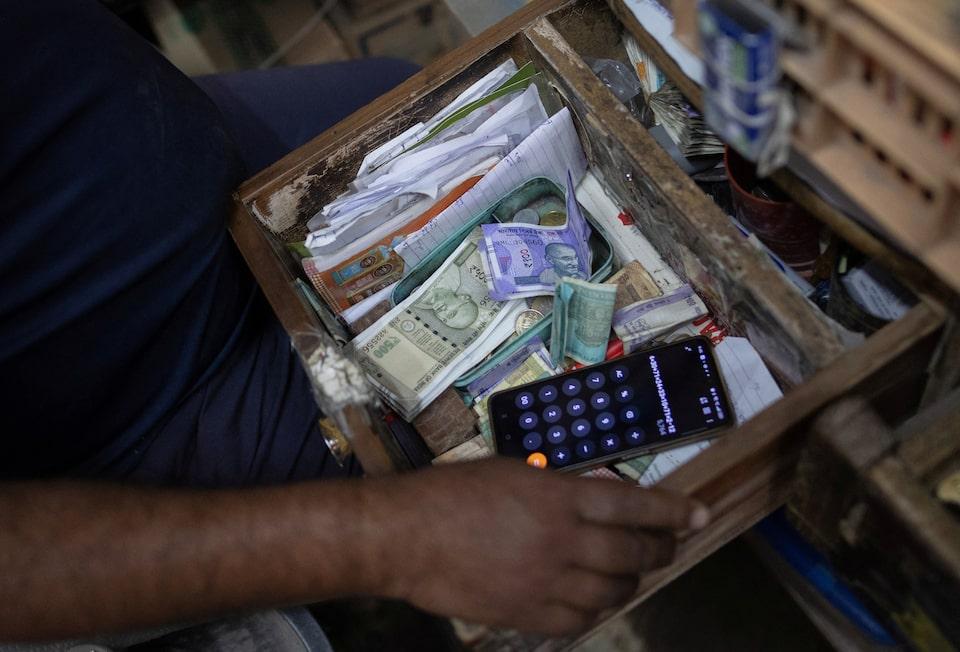
MUMBAI, July 28 (Reuters) - The Indian rupee nudged higher in early trading on Monday, aided by improved risk appetite, but gains were restricted by dollar demand related to importers' month-end payments and from foreign banks. The rupee was at 86.4675 against the U.S. dollar as of 10:20 a.m. IST, up slightly from its close at 86.5150 in the previous session. Sign up here. The local currency has weakened about 0.8% over July so far, hit by outflows from local equities alongside uncertainty about the timing of a U.S.-India trade deal, even as economies such as the European Union, Japan, Indonesia and Vietnam secured deals. Over the weekend, the U.S. struck a framework trade agreement with the EU, imposing a 15% import tariff on most EU goods. The EU also plans to invest some $600 billion in the United States and dramatically increase its purchases of U.S. energy and military equipment, President Donald Trump said on Sunday. The euro strengthened slightly against the dollar after the deal was announced. Meanwhile, the dollar index was little changed at 97.6 on the day while Asian currencies were trading mixed. The rupee is likely to hold an 86.38-86.57 range on Monday and trade with a slight depreciation bias, a trader at a state-run bank said. India's benchmark equity indexes, the BSE Sensex (.BSESN) , opens new tab and Nifty 50 (.NSEI) , opens new tab, nudged higher on Monday but are nursing losses of over 2.5% each on the month so far, troubled by tepid quarterly earnings and foreign portfolio outflows. A lack of strong foreign inflows, the Reserve Bank of India's ongoing unwinding of short forward dollar positions, and a quiet return to FX reserve accumulation have all weighed on the rupee, said Amit Pabari, managing director at FX advisory firm CR Forex. https://www.reuters.com/world/india/rupees-modest-uptick-runs-into-dollar-bids-importers-foreign-banks-2025-07-28/
2025-07-28 04:48
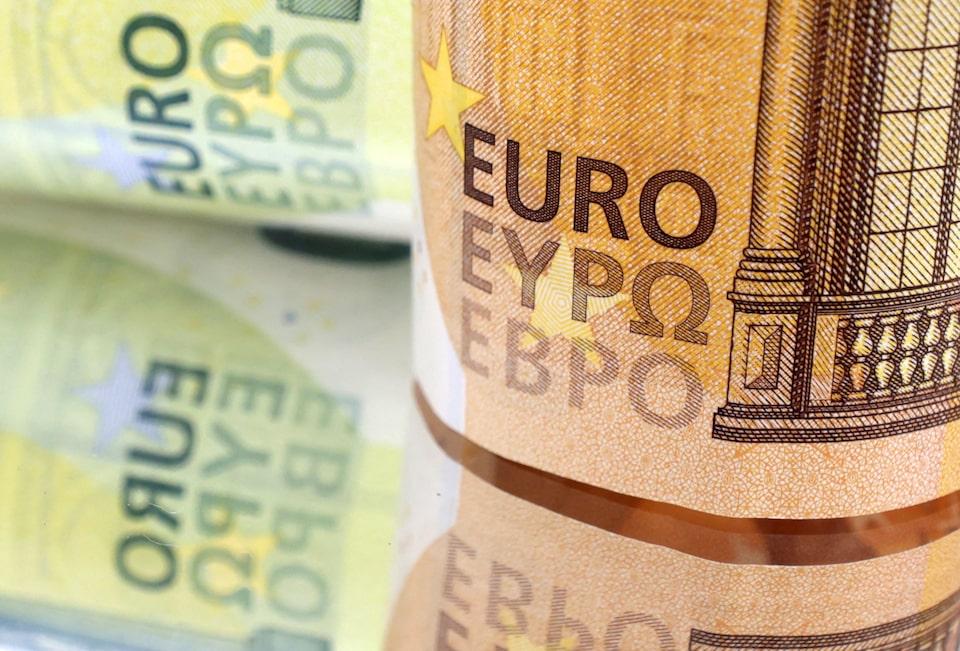
Fed, Bank of Japan expected to hold rates steady this week Ethereum stands at highest since December 2024 China faces August 12 deadline for U.S. trade pact TOKYO, July 28 (Reuters) - The euro edged higher on Monday after news of a framework trade pact stuck between the United States and the European Union, the latest in a flurry of deals to avert a global trade war, while central bank meetings in the US and Japan also come into focus. Meeting in Scotland on Sunday, U.S. President Donald Trump and European Commission President Ursula von der Leyen said the deal provided for an import tariff of 15% on EU goods, half the rate Trump had threatened from August 1. Sign up here. The euro stood at $1.1753 , up 0.1% after initially rising 0.3%. The common currency strengthened 0.2% to 173.64 yen , climbing for a fifth straight session to a fresh one-year high. As concerns subside about the economic fallout from punishing tariffs, investor attention is shifting to corporate earnings and central bank meetings in the United States and Japan in the next few days. "It could be a positive week, just purely from the fact that now we know the rules of the game, if you like," Rodrigo Catril, senior currency strategist at National Australia Bank, said on a bank podcast. "Now that there is more clarity, you would think that not only in the United States, but around the globe, there will be a little bit more willingness to look at investment, to look at expansions, and to look at where the opportunities are." Still, a detailed trade deal between the two biggest economies remains elusive, though senior negotiators from the United States and China are set to meet in Stockholm on Monday. The dollar was little changed at 147.65 yen . The dollar index , which tracks the greenback against major peers, was flat at 97.582. Both the Fed and the Bank of Japan are expected to hold rates steady at policy meetings this week, but traders will watch subsequent comments to gauge the timing of the next moves. Trump said the EU planned to invest about $600 billion in the United States and dramatically step up purchases of American energy and military equipment. The pact is similar to one forged with Tokyo negotiators last week for Japan to invest some $550 billion in the United States and a 15% tariff imposed on its cars and other imports. Many in Europe will still see the baseline 15% tariff as too high, versus initial the bloc's hopes of a zero-for-zero tariff deal. The deal's investment provision will draw capital flows out of Europe, strengthening the dollar overall against the euro, said Shoki Omori, chief desk strategist at Mizuho Securities. "Taken together, weaker relative growth prospects and a deteriorating balance of payments argue for a gradual depreciation of EUR/USD once the initial relief fades, notwithstanding the overnight uptick," he said. China faces an August 12 deadline for a durable trade pact with the United States. The two are expected to extend their tariff truce by three more months at the , the South China Morning Post newspaper said on Sunday, citing people familiar with the matter. Shares and other risk-sensitive assets were supported ahead of a packed week of corporate results. Quarterly results are due in coming days from Apple, Microsoft, Amazon and Facebook parent Meta Platforms META.O , opens new tab, four of the whose stocks heavily influence benchmark indexes. In cryptocurrencies, ethereum ETH= , opens new tab jumped 1.5% and reached as high as $3,905.79, the most since December 2024. The U.S. dollar advanced on Friday, bolstered by solid economic data that suggested the Federal Reserve could take its time in resuming interest rate cuts. Sterling traded at $1.3443 , nearly unchanged. The Australian dollar fetched $0.6568 , while New Zealand's kiwi dollar was at $0.6014 , both little changed. https://www.reuters.com/world/middle-east/euro-rises-after-us-eu-agree-tariff-deal-2025-07-28/