2026-01-26 11:38
Jan 26 (Reuters) - Zijin Gold (2259.HK) , opens new tab will buy Canada's Allied Gold (AAUC.TO) , opens new tab for about C$5.5 billion ($4.02 billion) in cash, the companies said on Monday, as the Chinese miner ramps up its global expansion against the backdrop of record high prices of the yellow metal. A surge in gold prices has boosted margins and cash flows for miners, fuelling consolidation in the industry as large producers seek to secure long-life assets and boost output through acquisitions rather than developing new mines. Sign up here. The deal also comes as Canada and China move to mend ties, having reached a preliminary agreement earlier this month to cut tariffs on electric vehicles and canola, while vowing to ease trade barriers and strengthen strategic cooperation. Zijin will pay C$44 per share, implying a premium of about 5.4% to Allied stock's last close. U.S.-listed shares of Allied were up nearly 4% in premarket trading. Allied CEO Peter Marrone said the deal offers significant value for shareholders and showcases the depth of the company's portfolio of gold assets across Africa. Zijin, one of the world's largest gold miners with operations across nine countries, enjoyed a strong debut in Hong Kong last year amid a sustained rally in bullion's prices and a September fundraising boom. Under the agreement, Allied will have to pay C$220 million to Zijin, if the deal is terminated under certain conditions. The companies expect the transaction to close by late April 2026. ($1 = 1.3676 Canadian dollars) https://www.reuters.com/world/chinas-zijin-gold-buy-canadian-miner-allied-gold-about-4-billion-2026-01-26/
2026-01-26 11:37
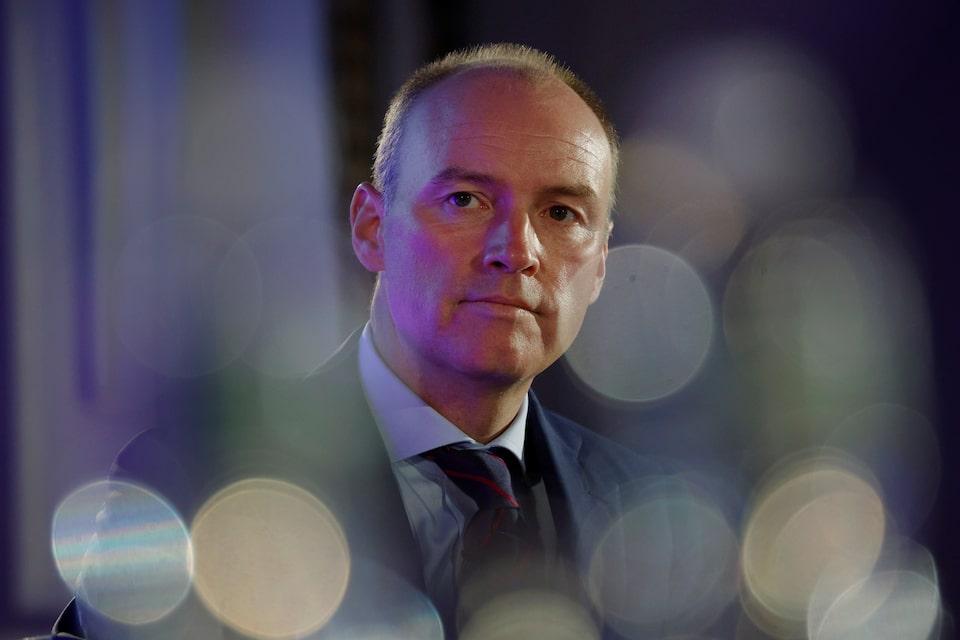
DUBLIN, Jan 26 (Reuters) - The head of the world's largest aircraft leasing company, AerCap (AER.N) , opens new tab, cautioned on Monday against overreacting to recent geopolitical and economic uncertainty and said the aviation financing industry worked on secure long-term cycles. Speaking to Reuters at the industry's largest annual gathering, CEO Aengus Kelly said soaring gold prices reflected currency movements as much as wider risk and that he saw "absolutely no sign" of weaker appetite for dollar-based assets. Sign up here. "You have to stay to True North. This is a very long-term business, with long-cycle 25-year assets, leases that are 12 years. You just can't react to what's happening on a day-to-day basis in the media or in the political spectrum." "I'm not saying there aren't risks out there, but you do have to remember you're looking at a very long-term business." The Airline Economics event brings more than 5,000 delegates, underscoring the sector's emergence as an alternative asset class as well as a barometer of economic risks and trade flows across the globe. The gathering once again tests the mood of investors after last week's Davos summit exposed an array of political and economic tensions that have pounded the dollar, sending gold prices past $5,000 an ounce for the first time on Monday. "Some would say about the price of gold that we've had a depreciating major currency for many years... but I know that gold is often seen as a hedge for risk too," Kelly said. However, he added that other risk indicators like U.S. Treasury yields were still "reasonably low". Asked whether investors appeared less eager to invest in dollar-denominated assets like aircraft - an appetite seen as underpinning the sector in recent years - Kelly said: "We see absolutely no sign of that. There's no alternative." https://www.reuters.com/business/aerospace-defense/aercap-ceo-warns-against-overreacting-geopolitical-turmoil-2026-01-26/
2026-01-26 11:33
LONDON/MOSCOW, Jan 26 (Reuters) - OPEC+ is expected to keep its pause on oil output increases for March at a meeting on Sunday, three OPEC+ delegates told Reuters, with prices rising due to a drop in Kazakhstan's oil production. The meeting of eight members of OPEC+, which pumps about half the world's oil, follows an 8% jump in oil prices so far this month to exceed $66 a barrel despite concern that a supply glut would push prices down. Sign up here. The eight members - Saudi Arabia, Russia, UAE, Kazakhstan, Kuwait, Iraq, Algeria and Oman - are due to meet on February 1. They raised oil output targets by around 2.9 million barrels per day from April to December 2025, equal to almost 3% of world demand, and paused monthly hikes for January-March amid weak demand forecasts. OPEC and authorities in Saudi Arabia and Russia did not immediately respond to Reuters' requests for comment on the upcoming meeting. Bloomberg earlier reported that OPEC+ would keep oil policy steady. Commenting on Venezuelan output, one of the three delegates said a recovery would take time, and was not yet likely to have a major impact on the global oil market balance. The U.S. captured President Nicolas Maduro early in January and urged oil companies to invest in Venezuela to boost production. Threats of possible have raised the prospect of reduced supplies, while drone attacks and technical issues have reduced output in JP Morgan expects Kazakhstan's Tengiz oilfield to remain offline for the rest of January. Kazakhstan's crude output will average 1.0-1.1 million bpd in January, versus the usual level of around 1.8 million bpd, JPM said. https://www.reuters.com/business/energy/opec-likely-maintain-oil-production-pause-march-prices-climb-sources-say-2026-01-26/
2026-01-26 11:27
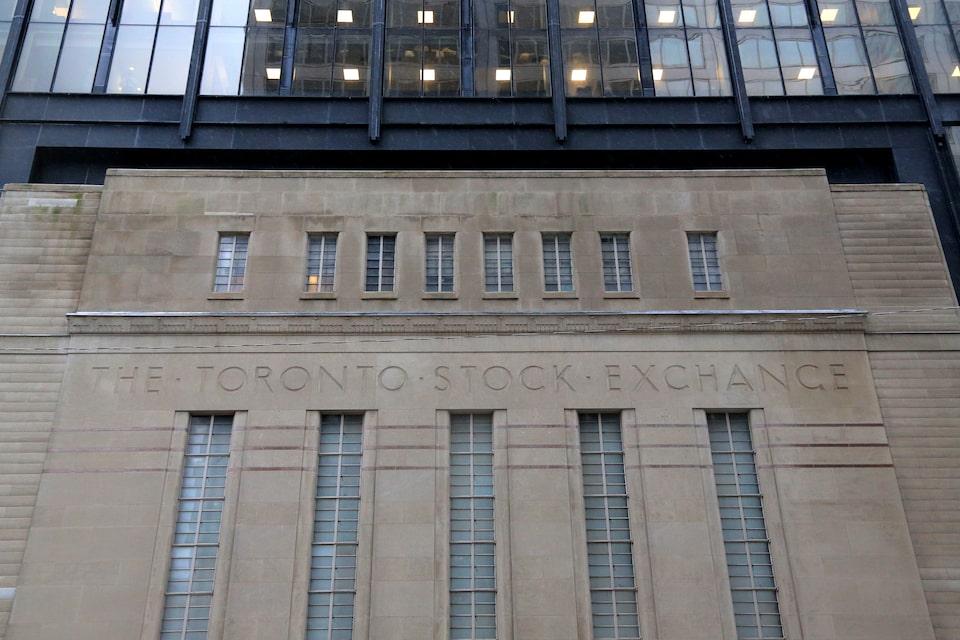
Futures linked to Canada's main stock index rose on Monday as precious metals extended their record run, outweighing uncertainty sparked by U.S. President Donald Trump's threat of 100% tariffs on Canada. March futures on Toronto's S&P/TSX Composite Index were up 0.37% as of 6:04 a.m. ET. Sign up here. Toronto's benchmark stock index (.GSPTSE) , opens new tab closed at a record high on Friday, gaining for the third straight week as gold extended its run even as investors paused after the threat of U.S. tariffs on eight European countries receded. On Monday, spot gold was up 2.2% after briefly moving past $5,100 per ounce, while silver jumped 6% to hit a record high. Gold prices have rallied this year after last year's stellar 64.4% jump, as geopolitical tensions, U.S.–NATO friction over Greenland and uncertainty about the Federal Reserve's autonomy have further increased safe-haven demand. Moreover, trade uncertainty gripped Canada after Trump on Saturday threatened a 100% tariff on the country if it follows through on a trade deal with China. In response, Prime Minister Mark Carney said on Sunday that Canada respects its commitments under the United States-Mexico-Canada (USMCA) trade agreement to not pursue free trade agreements with non-market economies. U.S.-Canada tensions have grown in recent days following Carney's criticism of Trump's pursuit of Greenland. Meanwhile, oil prices , gained on Monday as output disruptions in major U.S. crude-producing regions and U.S.-Iran tensions boosted prices. On the macroeconomic front, interest rate decisions from the U.S. Federal Reserve and Bank of Canada are due later this week. Major economists polled by Reuters expect the Canadian economy to grow steadily, reinforcing expectations that the central bank will keep policy rates unchanged through 2026. FOR CANADIAN MARKETS NEWS, CLICK ON CODES: TSX market report Canadian dollar and bonds report CA/ Reuters global stocks poll for Canada , Canadian markets directory https://www.reuters.com/business/tsx-futures-rise-precious-metals-rally-offsets-us-tariff-threat-2026-01-26/
2026-01-26 11:25
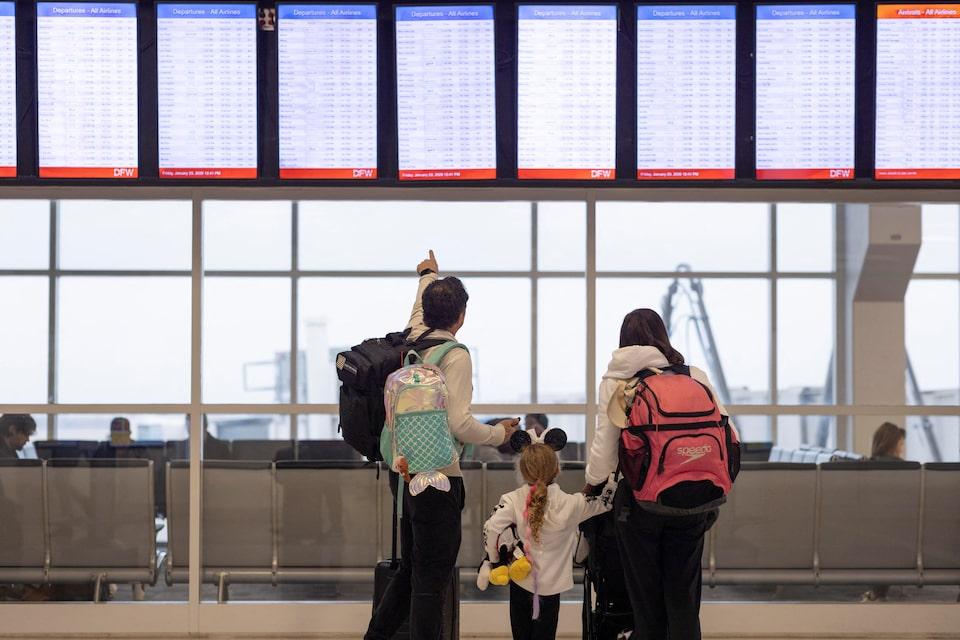
About 5,220 flights canceled, 6,500 delayed, FlightAware data show American Airlines leads in flight disruptions FAA warns of potential ground stops at major airports AccuWeather estimates storm damage & economic loss at $105-$115 billion Jan 26 (Reuters) - A powerful winter storm that pummeled much of the United States with freezing rain and heavy snowfall forced airlines to cancel and delay thousands of flights on Monday. Nearly 19% of scheduled flights were canceled by late afternoon, according to data from aviation analytics firm Cirium. Sign up here. Separate data from FlightAware found about 5,220 U.S flights were canceled and more than 6,500 delayed by early evening. That followed 11,000 flights scrapped on Sunday - the highest daily total since the pandemic, according to Cirium. A monster winter storm that dumped a foot of snow from New Mexico to New England paralyzed much of the eastern U.S., causing at least 18 deaths. Extreme cold was expected to persist in some places through the week. Among carriers, American Airlines (AAL.O) , opens new tab accounted for the largest share of flight disruptions on Monday, with nearly 1,180 flights canceled and about 1,130 delayed, followed by Republic Airways, JetBlue Airways (JBLU.O) , opens new tab and Delta Air Lines (DAL.N) , opens new tab. The Federal Aviation Administration said in an advisory that snow, freezing rain and low visibility had hit major hubs such as Boston and the New York area. Boston Logan International Airport had the highest rate of canceled flights on Monday at 71%, Cirium said. American said the storm disrupted five of its nine hub airports, including its largest base at Dallas–Fort Worth, where freezing temperatures and ice halted flights. American Airlines requested ground stops from FAA for all of its flights at Dallas–Fort Worth and Ronald Reagan Washington National Airport to manage gate capacity constraints. The carrier said teams were working around the clock to restore operations. Passengers inundated carriers with queries on social media platforms as they sought to get to their destinations. United Airlines (UAL.O) , opens new tab said it would begin restoring flights, and its cancellations had dropped sharply from 1,019 on Sunday to 320 on Monday by the evening, according to FlightAware. The storm was set to become the costliest severe weather event since the Los Angeles-area wildfires in early 2025, with preliminary damage and economic losses estimated at $105 billion to $115 billion, AccuWeather said. Airline operations are highly interconnected, meaning cancellations can leave aircraft and crews out of position, complicating efforts to restore normal flight schedules. About 285 scheduled flights on Tuesday have already been canceled, according to data from FlightAware. https://www.reuters.com/business/winter-storm-snarls-us-travel-forces-mass-flight-cancellations-2026-01-26/
2026-01-26 11:20
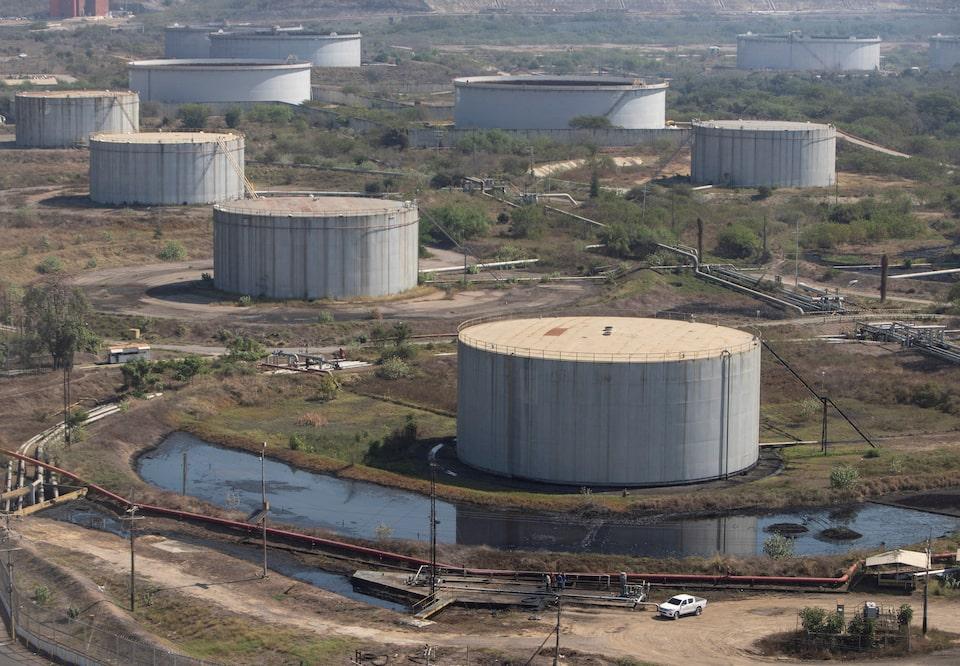
Houston firms eye Venezuela's vast oil reserves amid political uncertainty Smaller investors see Venezuela as high-risk, high-reward opportunity US sanctions complicate oil trade, investment in Venezuela HOUSTON, Jan 26 (Reuters) - In a downtown Houston bar, Matthew Goitia, a director at Pelorus Terminals, lays out his early idea to refurbish and build marine terminals that can blend and export crude and ship chemical products in Venezuela. The ambitious plan he estimates would cost $250 million to $1 billion requires him to refurbish an existing crude oil marine terminal in Venezuela, build a new oil one and then convert the older facility to move chemicals and other products. He is also considering adding storage tanks, overhauling the docks and will have to ensure power supply, all of which could take between three and 10 years. Sign up here. There is plenty to iron out, and it's not yet clear how to get U.S. government permission to do any of it. Any move into the country will also likely need lots of support from local officials and state oil company PDVSA, but that's not stopping early ideas from emerging. In offices across the city at the heart of the U.S. oil industry, executives, entrepreneurs and chancers are looking for a way to get a piece of the work to plumb Venezuela's huge crude oil reserves - estimated as the world's largest. "The small guys are willing to take the risk, Venezuela is the lost world," Goitia said. He has already held talks with two private equity investors and is setting up meetings with like-minded wildcatters - smaller, independent drillers who risk their own capital to drill unproven wells - exploring ways to enter the South American country. Less than a month after the U.S. incursion into Caracas to capture Venezuelan President Nicolas Maduro, visions of a new oil rush are galvanizing the industry in Houston, as U.S. President Donald Trump seeks $100 billion in investment to rebuild the country's dilapidated oil industry. That excitement is also percolating at much larger firms. Jeff Miller, the CEO of Houston-based oil services giant Halliburton (HAL.N) , opens new tab told analysts on a Wednesday earnings call that his phone was "ringing off the hook" with Venezuela inquiries. The company exited Venezuela in 2020 following U.S. sanctions, but it's now working on securing licenses that would allow it to return, he said. Miller participated in a January meeting at the White House and told Trump that Halliburton was "very interested" in returning and that he had lived in Venezuela for four years and in part raised his children there. He told investors this week that there "are opportunities for us sooner rather than later." "There is a lot of initial excitement - everyone wants to be on the move," said Francisco Monaldi, director of the Latin America Energy Program at Rice University's Baker Institute in Houston. Monaldi said the Department of Energy has organized meetings with wildcatters, including Continental Resources founder Harold Hamm and Hilcorp Energy founder Jeff Hildebrand. The billionaire oil tycoons also attended the January 9 Venezuela roundtable with Trump at the White House. Continental and Hilcorp did not immediately reply to emailed requests for comment on the status of any talks or proposals. MEETINGS EXTEND TO NEW YORK, DENVER Ali Moshiri, Chevron's former head for Africa and Latin America who is now CEO of Houston-based Amos Global Energy, has been preparing for years to enter Venezuela and has been in early-stage talks to raise as much as $2 billion. He told Reuters he has had recent meetings with potential investors in Houston and New York. Enthusiasm for a quick entry has been tempered by the fact that nobody knows the rules for investing and operating in Venezuela under U.S. supervision. Some companies want to see firmer plans from the U.S. for an eventual transition to democracy in Venezuela that would provide a more stable political environment for their long-term investments. "There are two groups of companies. Some of them are cautious and waiting for reforms, and even for a no-risk scenario to go there, and others are acting as if this is another 'gold rush'," Moshiri said. "Those who have been involved with Venezuela for a long time are trying to find a middle ground." J.P. Hanson, the global head of investment bank Houlihan Lokey's oil and gas group, said lots of conversations about Venezuela were happening, but public and private investors still faced a significant amount of uncertainty. "They will need a clear opportunity to own assets, know what they are investing in and know that you can protect your assets," he said on the sidelines of an industry event in Houston on Thursday. Venezuela's National Assembly began discussing a sweeping reform to its hydrocarbons law last week that would allow foreign and local companies to operate oilfields on their own through a new contract model. The changes, pending approval, could be an initial step toward allowing wildcatters and independents to enter the country with updated contracts that allow for increased flexibility over the current joint venture model. THE DENVER CONNECTION Denver, Colorado, meanwhile, is also emerging as a hub of Venezuela-related activity after several companies based there participated in the Trump roundtable. Among them was Raisa Energy, which acquires non-operated stakes in energy assets and has a Venezuelan CEO; Tallgrass Energy, a midstream company with pipeline and terminal assets, and Aspect Holdings. American oil companies could help restore Venezuelan production and prosperity and are prepared to begin "real work, quickly," said Alex Cranberg, Aspect's chairman. "The prize is enormous, but it requires durable contracts and long-term confidence-building," he said in an emailed response to questions from Reuters, referring to the potential for development in the country's prolific Orinoco heavy crude belt. He also said there is potential for onshore and offshore wildcat exploration, as modern technology could unlock oil and gas resources that are not reflected in current reserve estimates. "We need contractual and security arrangements that are realistic and dependable. We need technical data and lots of it," Cranberg continued. Trump has told executives they would be "dealing with us directly" and not with Venezuela, but it is unclear which U.S. agencies would do what, who would handle licenses and approve deals – or when U.S. sanctions that prohibit facilitating Venezuelan oil trade might be lifted. Any U.S. company wanting to work in Venezuela's oil sector currently needs a license or sanctions waiver from the U.S. Treasury Department, and international banks cannot work there either under current sanctions. Many Venezuelan laws would also need changing before companies could invest, lawyers have said. PRESSURE FROM WASHINGTON TO GET MOVING Trump and his Energy Secretary Chris Wright, meanwhile, want the industry to get moving. "They are in a hurry, because the president told Wright to be in a hurry, and Wright, of course, is trying to deliver," Monaldi said. Realistically, though, most quick gains in Venezuelan oil production would likely come from operations run by U.S. oil major Chevron (CVX.N) , opens new tab - the only U.S. energy producer with a license to operate there. There is a similar buzz inside PDVSA offices in Caracas and operational sites across the country, company sources, who requested anonymity, said. The mood there has changed rapidly since the company said it was progressing in negotiations with the U.S. Some company executives are rushing to arrange meetings with foreign oil executives about production, exports, power supply and business opportunities, the sources said. There has been a flurry of interest from companies studying potential opportunities in Venezuela, said Emil Calles Lossada, CEO of Caracas-based Venergy Global, which collects commercial intelligence for companies wanting to invest. Current sanctions are holding most of them back, however, so easing the restrictions and making legal reforms in the South American country are needed, he added. Back in Houston, Goitia estimates returns of at least 20% when the two systems are fully placed into service. He anticipates significant potential for higher returns if a larger company has an interest in acquiring them after a few years. In a nearby office, meanwhile, an aspiring energy developer looking for investors laid out a different pitch: $70 million a year to revive abandoned oil wells in eastern Venezuela. He reckoned he could turn it into an $800 million windfall. He's trying to raise the money from Texas wildcatters and wants to rework existing wells that need an overhaul. The infrastructure, even if run down, should be good enough, and he says the math works out. All he needs is to ramp up to 50,000 barrels per day, which could take about seven months. Texas dreams are big, and Venezuela is once again as hot as the mythical El Dorado. https://www.reuters.com/business/energy/us-oil-capital-houston-buzzes-industry-limbers-up-venezuela-oil-rush-2026-01-26/