2025-07-25 06:44
Focus on Fed policy meeting due next week Dollar heads for biggest weekly drop in a month Silver on track for a weekly gain July 25 (Reuters) - Gold prices edged lower on Friday, as signs of progress in trade negotiations between the U.S. and its trading partners weighed on safe-haven demand, although an overall weaker dollar limited losses for bullion. Spot gold was down 0.3% at $3,356.75 per ounce, as of 0623 GMT. U.S. gold futures fell 0.4% to $3,358.60. Sign up here. "Basically we are seeing some profit-taking from short-term bullish speculators due to the fact that we now start to see this trade-deal optimism in the market," OANDA senior market analyst Kelvin Wong said. "However, the dollar is in a weakening bias and on top of that, we still have the Fed rate cuts pretty much alive at this juncture, which are supporting gold near $3,360 level." The European Union and the United States now appear to be heading towards a possible trade deal, according to EU diplomats, which would result in a broad 15% tariff on EU goods imported into the U.S., mirroring a framework agreement Washington struck with Japan. The S&P 500 and the Nasdaq notched record closing highs overnight as signs of easing global trade tensions lifted risk sentiment among investors. Offering respite to gold, the U.S. dollar index (.DXY) , opens new tab was headed for its worst week in a month, making greenback-priced gold less expensive for other currency holders. Data showed U.S. jobless claims unexpectedly fell last week, signalling a steady labour market despite sluggish hiring making it harder for the unemployed to find work. The Federal Reserve is also widely expected to leave rates unchanged at its July 29–30 meeting, but markets continue to price in a potential rate cut in September. Elsewhere, spot silver eased 0.3% to $38.96 per ounce, but was on track for a weekly gain, up 2% for the week. Platinum fell 0.7% to $1,398.17 and palladium slipped 0.1% to $1,226.64. https://www.reuters.com/world/china/gold-subdued-trade-optimism-weighs-soft-dollar-caps-losses-2025-07-25/

2025-07-25 06:32
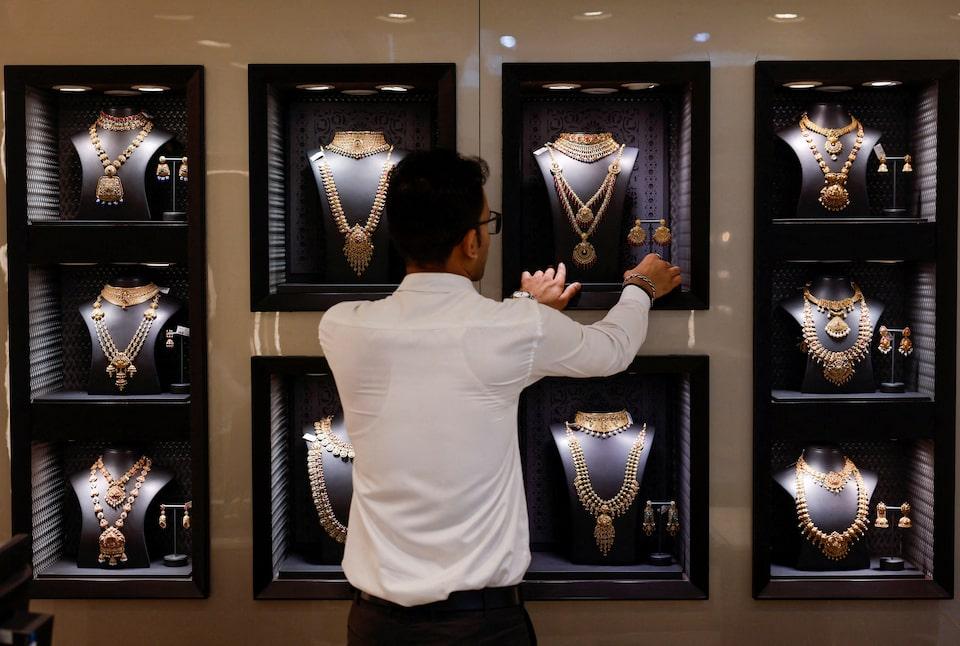
India dealers widen discount to $15/oz this week China's imports of gold fall in June from prior month Indian buyers are awaiting a bigger drop in prices July 25 (Reuters) - Physical gold demand in key Asian hubs was subdued this week, as rising prices dampened sentiment, prompting dealers in top consumer China and India to offer steep discounts to attract buyers. Indian dealers offered discounts of up to $15 an ounce over official domestic prices this week, which include a 6% import and 3% sales tax, up from a discount of up to $10 last week. Sign up here. "Buyers are struggling to understand the broader trend. Prices were rallying at the beginning of the week but suddenly corrected mid-week," said a Chennai-based jeweller. Domestic gold prices were trading around 98,500 rupees per 10 grams on Friday after rising to 100,555 rupees earlier this week. Jewellers were reluctant to purchase gold at current prices or even place orders for jewellery production, as retail demand has remained negligible for more than a month, said a Mumbai-based bullion dealer at a private bank. In China, dealers offered gold between a discount of $5 and a premium of $4 per ounce above international rates. "The physical demand is quite low because prices rose above $3,400. Price are too high, we are seeing some liquidation, selling interest. People are hesitant to buy at the moment," said Peter Fung, head of dealing at Wing Fung Precious Metals. China's imports of gold extended declines for a second successive month in June, customs data showed on Sunday. In Hong Kong, gold was sold at par to a premium of $1.50, while in Singapore gold traded between at-par prices and a $2.50 premium. "We've seen some clients who came to purchase, reason being they're worried that the prices will continue to shoot further up. But I think more of a selling at this point of time," said Brian Lan, managing director at Singapore-based GoldSilver Central. In Japan, bullion was sold at a discount of $0.50 to a $0.70 premium over spot prices. https://www.reuters.com/markets/asia/asia-gold-high-prices-stifle-gold-demand-top-asian-hubs-india-widens-discount-2025-07-25/
2025-07-25 06:31
LONDON, July 25 (Reuters) - British consumers shopped more in June after a sharp drop in May as hot weather helped to boost the sales of drinks, clothes and car fuel, official figures showed on Friday. Retail sales volumes rose by a month-on-month 0.9%, a partial rebound from May's 2.8% plunge which was the biggest fall since December 2023. Sign up here. However, the increase was smaller than the median forecast of 1.2% in a Reuters poll of economists. Many British households are feeling the squeeze again from an inflation rate that rose to 3.6% in June with food prices rising faster. A survey published earlier on Friday showed consumer confidence dipped this month ahead of possible tax increases later this year and households added to their savings. In the three months to June, sales volumes rose by 0.2%, the weakest such increase since the three months to February, the Office for National Statistics said. ONS senior statistician Hannah Finselbach said the warm weather last month helped supermarket retailers who reported an increase in drink purchases and fuel sales rose. "Looking at broader trends, retail sales are up slightly across the latest quarter but are down when compared with pre-pandemic levels," Finselbach said. British retailers have highlighted the impact of the country's weather on their sales recently. Supermarket group Sainsbury's (SBRY.L) , opens new tab reported better-than-expected quarterly trading with food and clothing boosted by warm temperatures. But fast food retailer Greggs (GRG.L) , opens new tab warned on profit complaining that June's heatwave hit overall footfall. Sterling was little changed against the U.S. dollar immediately after the data was published. Britain's economy has stumbled after a strong start to 2025 with overall output contracting in April and May. The Bank of England is expected to cut interest rates by a quarter of a percentage point on August 7 as it responds to a jobs market slowdown. However, inflation pressures have thwarted bets on faster cuts to borrowing costs in the coming months. https://www.reuters.com/business/retail-consumer/uk-sunshine-warmed-up-retail-sales-june-ons-says-2025-07-25/

2025-07-25 06:22
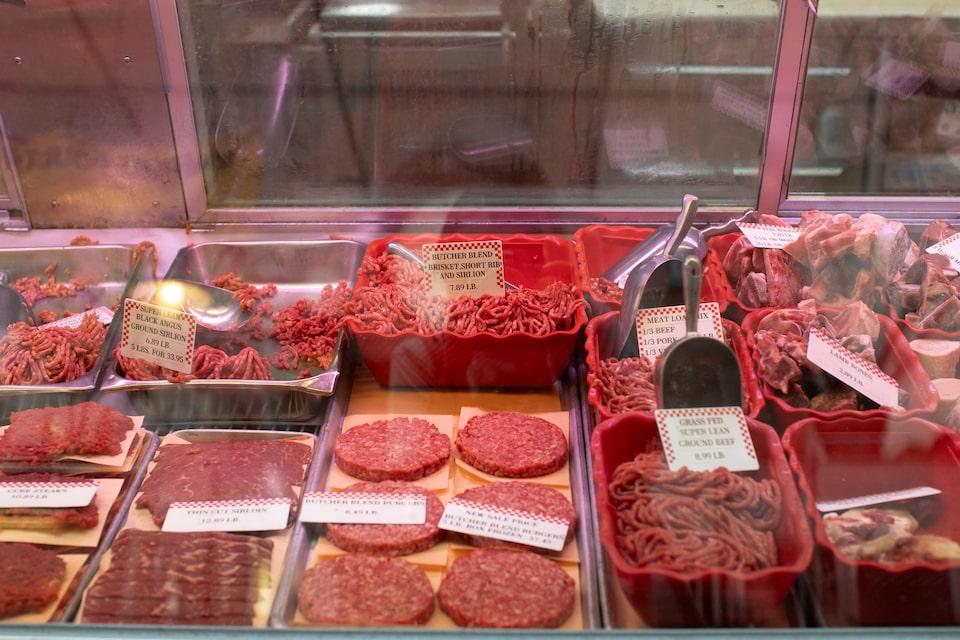
Australia relaxed curbs on US beef imports Canberra says decision not related to trade talks Trump says other countries are on notice Australian opposition concerned about biosecurity risk WASHINGTON/CANBERRA, July 24 (Reuters) - The United States will sell "so much" beef to Australia, U.S. President Donald Trump said on Thursday after Canberra relaxed import restrictions, adding that other countries that refused U.S. beef products were on notice. Australia on Thursday said it would loosen biosecurity rules for U.S. beef, something analysts predicted would not significantly increase U.S. shipments because Australia is a major beef producer and exporter whose prices are much lower. Sign up here. "We are going to sell so much to Australia because this is undeniable and irrefutable Proof that U.S. Beef is the Safest and Best in the entire World," Trump said in a post on Truth Social. "The other Countries that refuse our magnificent Beef are ON NOTICE," the post continued. Trump has attempted to renegotiate trade deals with numerous countries he says have taken advantage of the United States – a characterisation many economists dispute. "For decades, Australia imposed unjustified barriers on U.S. beef," U.S. Trade Representative Jamieson Greer said in a statement, calling Australia's decision a "major milestone in lowering trade barriers and securing market access for U.S. farmers and ranchers." Australia is not a significant importer of beef but the United States is and a production slump is forcing it to step up purchases. Last year, Australia shipped almost 400,000 metric tons of beef worth $2.9 billion to the United States, with just 269 tons of U.S. product moving the other way. Australian officials say the relaxation of restrictions was not part of any trade negotiations but the result of a years-long assessment of U.S. biosecurity practices. Canberra has restricted U.S. beef imports since 2003 due to concerns about bovine spongiform encephalopathy (BSE), or mad cow disease. Since 2019, it has allowed in meat from animals born, raised and slaughtered in the U.S. but few suppliers were able to prove that their cattle had not been in Canada and Mexico. On Wednesday, Australia's agriculture ministry said U.S. cattle traceability and control systems had improved enough that Australia could accept beef from cattle born in Canada or Mexico and slaughtered in the United States. The decision has caused some concern in Australia, where biosecurity is seen as essential to prevent diseases and pests from ravaging the farm sector. "We need to know if (the government) is sacrificing our high biosecurity standards just so Prime Minister Anthony Albanese can obtain a meeting with U.S. President Donald Trump," shadow agriculture minister David Littleproud said in a statement. Australia, which imports more from the U.S. than it exports, faces a 10% across-the-board U.S. tariff, as well 50% tariffs on steel and aluminium. Trump has also threatened to impose a 200% tariff on pharmaceuticals. Asked whether the change would help achieve a trade deal, Australian Trade Minister Don Farrell said: "I'm not too sure." "We haven't done this in order to entice the Americans into a trade agreement," he said. "We think that they should do that anyway." https://www.reuters.com/world/asia-pacific/trump-says-us-will-sell-so-much-beef-australia-2025-07-25/
2025-07-25 06:21
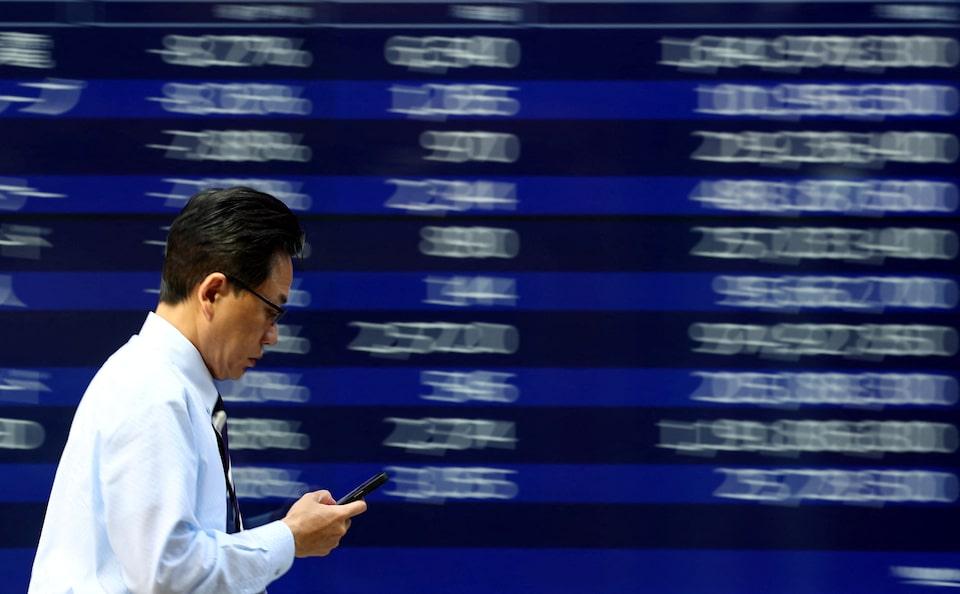
Tariff deadline looms, with Fed, BOJ also meeting Global stocks hit record high this week on trade deal optimism Alphabet earnings buoy Wall Street; Amazon, Apple, Meta due next week TOKYO, July 25 (Reuters) - Asian shares eased from highs on Friday, with Japan retreating from a record, as investors locked in profits ahead of a bumper week that includes U.S. President Donald Trump's tariff deadline and a host of central bank meetings. The dollar gained against major peers after bouncing off a two-week low on Thursday, helped by some firm U.S. economic data. Sign up here. Japan's currency, in particular, was weighed by political uncertainty amid media reports Prime Minister Shigeru Ishiba will step down. Benchmark Japanese government bond yields hovered just below the highest since 2008. Japan's broad Topix index (.TOPX) , opens new tab, which has jumped more than 5% over the previous two sessions to an all-time high, pulled back 0.8%. The Nikkei (.N225) , opens new tab slipped 0.9% from Thursday's one-year high. Hong Kong's Hang Seng (.HSI) , opens new tab lost 0.9% and mainland Chinese blue chips (.CSI300) , opens new tab declined 0.5%. Australia's equity benchmark (.AXJO) , opens new tab eased 0.5%. At the same time, U.S. S&P 500 futures added 0.2%, after the cash index (.SPX) , opens new tab edged up slightly to a record closing high overnight, buoyed by robust earnings from Google parent Alphabet (GOOGL.O) , opens new tab. The tech-heavy Nasdaq (.IXIC) , opens new tab also marked a record high. MSCI's gauge of stocks across the globe (.MIWD00000PUS) , opens new tab edged down 0.2%, but remained just below an all-time peak from Thursday. The index is on course for a 1.3% weekly advance, buoyed in large part by optimism for U.S. trade deals with the European Union and China, following an agreement with Japan this week. "Trade agreements will help mitigate some of the downside risks to the global economic outlook. However, while the global tariff rate looks likely to be lower than previously feared, it will likely settle at a much higher level than it was at the end of 2024," Commonwealth Bank of Australia analysts wrote in a client note. "We expect higher tariff costs to raise U.S. consumer price inflation and dampen overall U.S. economic growth." Next week - in the U.S. alone - investors contend with Trump's August 1 deadline for trade deals, a Federal Reserve policy meeting, the closely watched monthly payrolls report, and earnings from the likes of Amazon, Apple, Meta and Microsoft. The Bank of Japan has its own policy announcement on Thursday, and Prime Minister Ishiba's Liberal Democratic Party holds a meeting the same day. That's after the European Central Bank held rates steady on Thursday, pausing its easing campaign as it waits to assess any impact from U.S. tariffs. The euro ended the session down 0.2% against a buoyant dollar and was little changed on Friday at $1.1744 . The U.S. currency advanced 0.1% to 147.10 yen , adding to Thursday's 0.4% gain. Trump kept the pressure on Fed Chair Jerome Powell to cut rates after a rare presidential visit to the central bank on Thursday, although he said he did not intend to fire Powell, as he has frequently suggested he would. "While growth is possibly a bit lumpy, there's little evidence for the need for immediate rate cuts from the Fed," said Kyle Rodda, senior financial markets analyst at Capital.com. U.S. 10-year Treasury yields edged down to 4.39% on Friday, effectively erasing an advance on Thursday. Equivalent Japanese government bond yields eased 1 basis point to 1.59%, just off this week's high of 1.6%, a level last seen in October 2008. JGB yields have been rising on concerns the political scale is tilting more towards fiscal stimulus, after big gains for opposition parties backing consumption tax cuts in Sunday's upper house election. Pressure is building on the more fiscally hawkish Ishiba to quit after his coalition lost its majority in the vote, after doing the same in lower house elections last October. Gold eased 0.3% to around $3,356 per ounce. Brent crude futures gained 0.5% to $69.53 a barrel, while U.S. West Texas Intermediate crude futures added 0.5% to $66.36 per barrel. https://www.reuters.com/world/china/global-markets-wrapup-2-2025-07-25/
2025-07-25 06:00
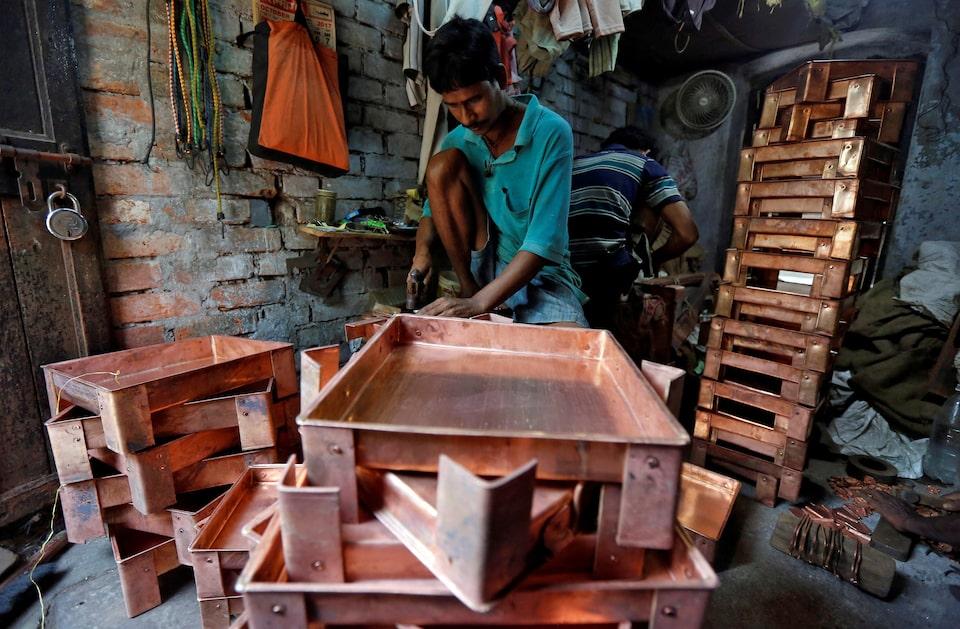
LONDON, July 24 (Reuters) - U.S. President Donald Trump sprang a double surprise on the copper market when he announced import tariffs of 50% effective next month. The market was betting that tariffs would be set lower and come with a longer lead-time. Sign up here. The futures market is rapidly readjusting, with the CME copper contract punching out record highs as it prices in the higher tariff differential with the London Metal Exchange (LME) contract. So too is the physical supply chain. The August 1 start date signals the end of the race to ship physical metal to the United States to capture the tariff arbitrage. A lucky few with cargoes already afloat may yet cross the finishing line in time, but the physical tariff trade is rapidly unwinding. That's already manifest in rising inventory and loosening time-spreads on the London market. BONANZA TRADE The tariff trade has been a bonanza for merchants and traders ever since the Trump administration announced the launch of a national security investigation into U.S. copper import dependency back in February. It's been such a money-spinner that they've stripped both the physical supply chain and markets of last resort, such as the LME and the Shanghai Futures Exchange (ShFE), for available copper. U.S. imports of refined copper surged to 541,600 metric tons between March and May, equivalent to 60% of imports over the whole of 2024. Flows from traditional sources such as Chile and Peru have accelerated, and they've been supplemented by arrivals of Australian, Asian and European brands of copper. CME inventory has more than doubled since the start of March and at 222,723 tons is now just shy of the 2018 peak. More copper is sitting in the off-market shadows. Analysts are pegging the excess at somewhere between 400,000 and 500,000 tons, which in the view of Citi would "negate U.S. copper import demand for the rest of 2025." Allowing for continued flows of metal under long-term supply contracts, it could take up to nine months to work off the mountain of metal, according to Macquarie Bank. HONG KONG ACCELERATOR It won't take that long for the global supply chain to adjust, judging by rising stocks and looser spreads on the London market. Indeed, the benchmark cash to three months period flipped from backwardation to contango almost immediately on the tariff confirmation, as 25,000 tons of copper earmarked for physical load-out were dumped back in the market. With the shipping window to the United States now closed, LME inventory has jumped by 33,525 tons this month, thanks in large part to shipments by Chinese producers. Chinese exports of refined copper have been accelerating since March in response to the U.S. drain on LME stocks and the resulting spread tightness. LME warehouses in Taiwan and South Korea have traditionally been the prime locations for receiving Chinese metal, but the opening of exchange warehouses in Hong Kong now allows for faster delivery. Exchange warehouses on the island have already received 5,975 tons of copper since opening for business on July 15. There may be more to come. The LME benchmark spread is now in a comfortable contango of $66 per ton, compared with a backwardation of more than $300 per ton at the end of June. WHO'S THE REAL DOCTOR COPPER? Trump's tariffs have split global copper pricing between the United States and the rest of the world. Copper bulls are cheering CME's rise to new historic highs, but this is a direct reaction to higher than expected import tariffs rather than a reflection of global market dynamics. The CME spot premium over the LME price has jumped from $1,233 per ton on July 7 to $3,095. In terms of the implied tariff impact on U.S. pricing, the CME price differential has widened from 13% to 31% since Trump pulled the tariff trigger. The LME three-month price , by contrast, remains locked in a sideways range just below $10,000 per ton, still a good way short of the record highs above $11,000 per ton seen in May 2024. Despite the mass relocation of global inventory towards the United States, total exchange stocks are little changed on the start of the year. Including both LME off-warrant stocks and copper registered with ShFE's international INE arm, global exchange inventory is currently down by just 18,000 tons on the start of January. The stable LME price, rather than the overheated U.S. price, captures that ambiguous reality. The devilish detail in the new tariffs is conspicuously lacking. Will copper product imports be included? Will there be restrictions on U.S. exports of copper scrap? Will there be exemptions for favoured suppliers? We don't yet know, but it's clear that global pricing has just fractured. Doctor Copper now has a transatlantic double, but the real reflector of global manufacturing activity is the one in London, not the U.S. doppelganger. The opinions expressed here are those of the author, a columnist for Reuters. https://www.reuters.com/markets/commodities/coppers-physical-tariff-trade-is-rapidly-unwinding-2025-07-24/