2026-01-26 10:40
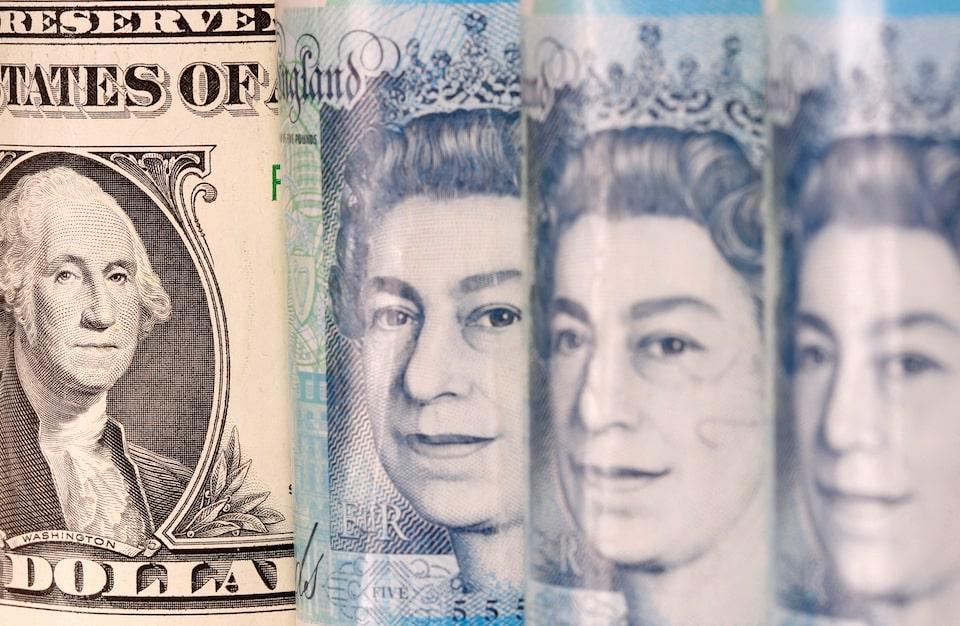
Pound touches four-month high against weak dollar Sterling slides vs. yen as intervention risks mount BoE seen keeping rates unchanged next week LONDON, Jan 26 (Reuters) - The British pound rose to a four-month high against a softening dollar on Monday, extending gains from last week when strong domestic data pushed the currency higher. British businesses reported their fastest upturn in activity since April 2024 in January, while retail sales rose unexpectedly last month, data showed on Friday, adding to signs of a pickup in the economy. Sign up here. That helped push the pound 2% higher last week, its biggest weekly gain since March last year, although the broad dollar fell by a similar amount. The pound was last 0.2% higher versus the dollar at $1.3675, its highest level since September 17. "Cable (sterling-dollar) is going to be at the mercy of the U.S. story, more so than the UK story," said Dominic Bunning, head of G10 FX strategy at Nomura. The dollar , which measures the currency against six others including the pound, slipped 1.9% last week, its biggest weekly drop since April as investors revived the "sell America" trade following U.S. President Donald Trump's threat to impose tariffs on European allies over Greenland. Against the euro the pound was down around 0.1% at 86.79 pence. The pound was also down 1% to 210.17 yen , with the Japanese currency strengthening across the board as speculation mounted of coordinated currency intervention by Japanese and U.S. authorities to strengthen the yen. Nomura's Bunning believes the pound could weaken further against the euro given the challenges facing the UK economy. "We think base effects will really bring inflation down below target by the April print," Bunning said. "We expect disinflation coming through in the next few months in the headline rates and that can potentially lead to a risk that the Bank of England cuts more than is priced." The BoE meets next week but is widely expected to keep interest rates unchanged. Money market traders are pricing in around 36 basis points of easing by year-end, implying one quarter-point rate cut and around a 45% chance of a second. The pound also remains sensitive to large swings in government bond yields, which fell slightly on Monday after the Labour Party blocked the return to parliament of Manchester mayor Andy Burnham, seen as a potential challenger to Prime Minister Keir Starmer. Britain's benchmark 10-year gilt yield was last down 3 basis points at 4.49%. https://www.reuters.com/world/uk/pound-touches-four-month-high-against-weaker-dollar-2026-01-26/
2026-01-26 10:38
SEOUL, Jan 26 (Reuters) - South Korea's Hyundai Steel (004020.KS) , opens new tab said in a regulatory filing on Monday its affiliate Hyundai-POSCO Louisiana LLC plans a capital increase worth $2.9 billion for facilities investment in a US steel plant. The move follows Hyundai Steel's announcement last year it and its parent Hyundai Motor (005380.KS) , opens new tab Group would invest to build a steel plant in Louisiana, United States with an annual capacity of 2.7 million tonnes. Sign up here. Hyundai Motor Group had also signed a memorandum of understanding with South Korean steelmaker Posco Holdings (005490.KS) , opens new tab for cooperation on its planned US steel plant. Hyundai-POSCO Louisiana LLC is an U.S.-based subsidiary of Hyundai Steel USA, which is wholly owned by Hyundai Steel. Hyundai Steel said it plans to finance the total investment of $5.8 billion with $2.9 billion in equity and $2.9 billion in external borrowing, meaning that the equity ownership will comprise Hyundai Steel USA Corp with a 50% stake, POS-Louisiana Inc with 20%, and Hyundai Motor America and Kia America with 15% each. https://www.reuters.com/world/asia-pacific/south-koreas-hyundai-steel-says-plans-29-bln-capital-increase-us-steel-plant-2026-01-26/

2026-01-26 09:57
TOKYO, Jan 26 (Reuters) - Bank of Japan money market data on Monday indicated that a spike in the yen rate against the dollar on Friday was not likely the product of official Japanese intervention. The central bank's projection for Tuesday's money market conditions indicated a 630 billion yen ($4.09 billion) net outflow of funds. That exceeded brokerage forecasts of between plus 100 billion yen to minus 300 billion yen, although still below levels seen during actual bouts of intervention. Sign up here. "The size of the projected treasury-related flows and the net change in current account balances are well below the multi-trillion-yen magnitudes typically associated with decisive intervention once settlement effects appear," said Shoki Omori, chief desk strategist at Mizuho Securities. "This suggests that the recent sharp moves in the yen were driven mainly by position adjustments, liquidity conditions, and heightened sensitivity to official signalling, rather than by actual reserve deployment," he added. ($1 = 153.9200 yen) https://www.reuters.com/world/asia-pacific/boj-money-market-data-suggests-japan-did-not-intervene-currency-market-friday-2026-01-26/
2026-01-26 08:37
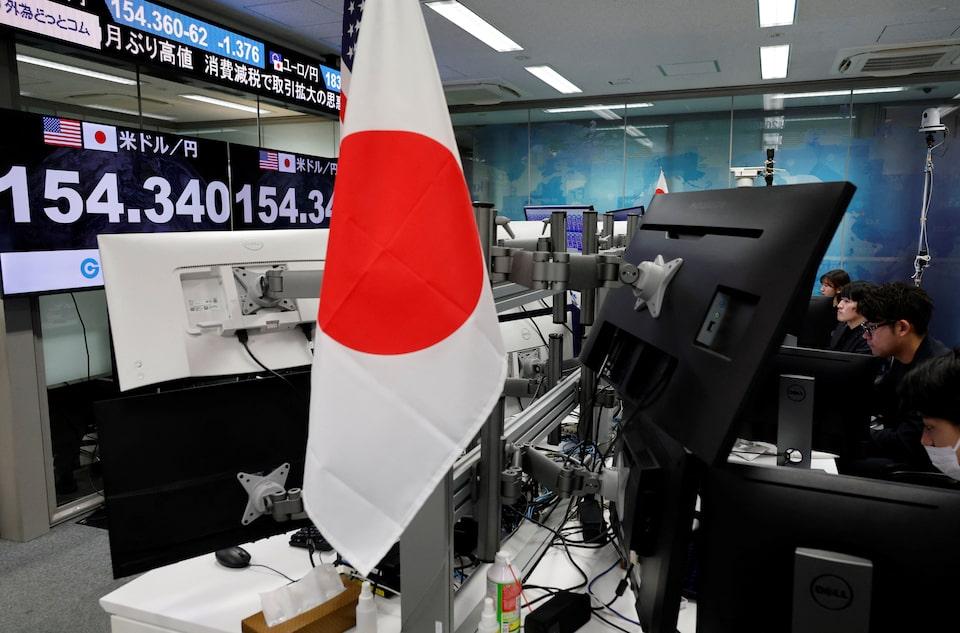
U.S. rate check signals Tokyo, Washington action possible but not imminent Threshold high for direct solo, joint intervention, analysts say U.S. has own reasons to avoid joint action Japan would need to sell US Treasuries to intervene TOKYO, Jan 26 (Reuters) - (This Jan 26 story was refiled to correct the title of Junya Tanase to chief Japan FX strategist from chief Japan currency strategist, in paragraph 4) The unusual rate check by the New York Federal Reserve that triggered a spike in the stubbornly weak yen has lowered the threshold for intervention, but coordinated Japan-U.S. selling of dollars still looks highly unlikely at this stage. Sign up here. The Fed's action late on Friday was the strongest signal to date that Japanese and U.S. authorities were working closely together to stem the currency's decline, keeping markets on high alert for intervention. Yet, direct coordinated intervention may not happen as quickly as markets may be expecting, analysts say, partly due to domestic considerations in the U.S. - suggesting Washington's support for Japan's concerns over an excessively weak yen is likely to extend only to rate checks for now. "Past coordinated intervention came in very rare circumstances such as during a financial crisis or a big natural disaster," said Junya Tanase, chief Japan FX strategist at JP Morgan. "We think the distance between joint rate checks to coordinated intervention is quite big." For now, fears of intervention alone have pushed the yen off 18-month lows, offering some relief to Japanese policymakers fretting about the inflationary impact of the currency's declines. To be sure, the Fed's rate check didn't happen in isolation. It was a culmination of a five-year effort by Japan to persuade the U.S. into signing last year a bilateral statement authorising use of currency intervention to combat excessive volatility, say officials involved in the negotiations. Japanese Finance Minister Satsuki Katayama has repeatedly stressed that she was aligned with U.S. Treasury Secretary Scott Bessent on currency issues. Her warning against yen bears reached a peak on January 16, when she said Japan will take decisive action against speculative yen moves. When asked about the chance of joint Japan-U.S. action, she said "no options are excluded." Washington also had reason to join Japan's efforts to combat the market rout that pushed down not just the yen but Japanese government bonds with spillover into the U.S. Treasury market. Bessent signalled Washington's displeasure over the repercussions from the rising Japanese yields, saying in Davos on January 20 that it was "very hard to disaggregate the market reaction from what's going on endogenously in Japan." Days later, BOJ Governor Kazuo Ueda underscored the bank's readiness to work closely with the government to contain sharp rises in yields, including via emergency bond-buying operations. TRUMP ADMINISTRATION WARY OF 'SELL AMERICA' TRADE The tough talk seems to be working for now. The yen rose to a two-month high of 153.89 per dollar on Monday, well off the 160 level seen as authorities' line-in-the-sand for intervention. The yield on the 10-year bond fell 1 basis point to 2.225%. But the big question for markets is whether joint U.S.-Japan intervention is imminent, and whether the U.S. sees a compelling reason to engage in coordinated action. "In reality, the U.S. probably doesn't want to buy a currency like the yen that has seen its value depreciate for five straight years," said Shota Ryu, FX strategist at Mitsubishi UFJ Morgan Stanley Securities. "Washington could possibly cooperate with one small intervention. But it won't help in a way that could have a lasting effect in turning around the yen's downtrend." Actual intervention is not without cost. Japan would need to sell a portion of its U.S. Treasury holdings if it were to conduct yen-buying intervention continuously, a move that may push up U.S. yields - something Washington may not like happening with markets already volatile. The threshold for joint intervention is even higher. While President Donald Trump may favour a weak dollar that gives U.S. exports a boost, further dollar falls could add fuel to the "Sell America" trade that regained momentum last week. "It's unlikely the U.S., worried about global de-dollarization, will conduct direct dollar-selling intervention," said Takuya Kanda, an analyst at Gaitame.com Research Institute. BOJ IN A BIND Even if the U.S. is on board, Japan by protocol would need to get consent from other G7 nations to step into the market. The last time G7 nations, which include Japan, took coordinated action on the yen was in 2011, when Japan's huge earthquake and tsunami triggered a spike in the currency. "The situation is very different now" with the yen falling on market concern over Japan's handling of fiscal policy, said Yoshihiko Noda, who was Japan's finance minister when the coordinated action took place. The BOJ is also in a tricky position, sandwiched between the need to keep sharp yen falls in check and making sure to avoid sparking a jump in bond yields with overly hawkish comments. Governor Ueda said on Friday that long-term rates were rising at "quite a fast pace," but he was mum on whether the BOJ could carry out emergency bond-buying operations or tweak its scheduled taper plan to weather extreme market stress. He had good reason to keep markets guessing. "By signalling readiness to ramp up bond buying in times of emergency, the BOJ would push down long-term rates which then weakens the yen," said Hiroyuki Machida, director of Japan FX and commodities sales at ANZ. "On top of that, you have almost all ruling and opposition parties calling for tax cuts. This all keeps the yen weak." https://www.reuters.com/world/asia-pacific/us-rate-check-masks-stiff-hurdle-coordinated-yen-intervention-2026-01-26/
2026-01-26 07:34
Adani billed Indian corporate taxes to Bangladesh, panel says Panel found 'serious anomalies' in contract award procedures Coal is 'excessively priced,' committee says Adani says it is continuing to supply power, owed large dues DHAKA/SINGAPORE, Jan 26 (Reuters) - An Adani Power (ADAN.NS) , opens new tab coal-fired plant that exports electricity passes on Indian corporate taxes to Bangladesh and charges more than market rates, according to a recent report from a government-appointed committee in Bangladesh. Adani's Godda plant in India's Jharkhand state priced power at a 39.7% premium over its nearest private-sector competitor and had the steepest cost escalation among electricity import arrangements from India, the National Review Committee (NRC) said in a report dated January 20. Sign up here. Reuters reviewed the report, which has yet to be made public. The NRC said the price divergence was an "outcome of specific contractual choices," adding that it had found evidence of "serious anomalies in the procedures through which the contract was awarded." Adani Power said it could not comment on the review as the committee had neither consulted the company nor provided it with a copy of the report. It also said it was continuing to supply electricity despite large payment dues, adding that other generators had cut back or stopped their supplies. "We urge Bangladesh government to liquidate our dues at the earliest as this is impacting our operations," the company said in a statement. The report called for electricity contracts to be reviewed to identify opportunities for "renegotiation of the most fiscally damaging provisions." The report also said the Adani plant, which supplies more than 10% of Bangladesh's power, used "excessively priced" coal and billed Indian corporate taxes to Bangladesh. "The price being paid is roughly 50% higher than what it should be," the NRC said, calling it the "most significant statistical outlier" in Bangladesh's cross-border electricity procurement portfolio. "Standard international practice usually requires independent power plants to bear their own corporate taxes in their home jurisdiction," the NRC report said. "The Adani power purchase agreement deviates by including Indian corporate tax components in the tariff charged to Bangladesh." ($1 = 121.7000 taka) https://www.reuters.com/business/energy/bangladesh-panel-says-adani-power-deal-overpriced-flags-procedural-flaws-2026-01-26/
2026-01-26 07:33
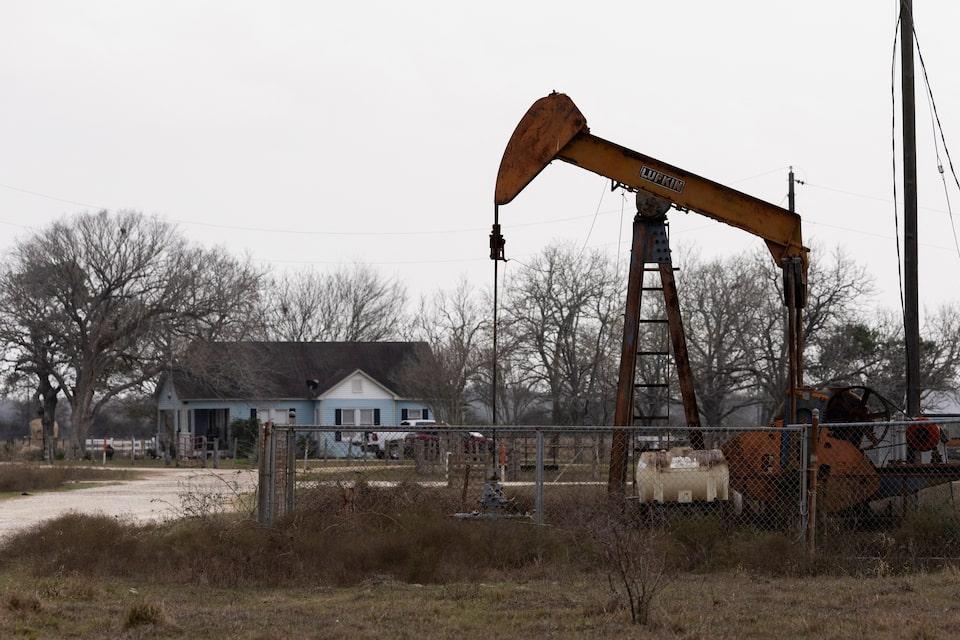
US winter storm disrupts crude production US-Iran tensions add to market uncertainty Kazakhstan's Caspian Pipeline Consortium back at full capacity Tengiz oilfield poised to resume output, Kazakh ministry says HOUSTON, Jan 26 (Reuters) - Oil prices settled slightly lower on Monday after climbing more than 2% in the previous session as investors assessed the impact on output in U.S. crude-producing regions from winter storms and the impact of any tensions between the U.S. and Iran. Brent crude futures closed down 29 cents, or 0.4%, at $65.59 a barrel, while U.S. West Texas Intermediate crude was down 44 cents, or 0.7%, at $60.63. Sign up here. Both benchmarks notched weekly gains of 2.7% to close on Friday at their highest since January 14. U.S. oil producers lost up to 2 million barrels per day or roughly 15% of national production over the weekend, analysts and traders estimated, as a winter storm swept across the country, straining energy infrastructure and power grids. Oil production outages peaked on Saturday, consultancy Energy Aspects estimated, with the Permian Basin likely to have experienced the largest share of that decline at around 1.5 million bpd. Production losses eased on Monday, with Permian shut-ins estimated at about 700,000 bpd and production set to be fully restored by January 30. There were around two dozen reports of upsets at natural gas processing plants and compressor stations in Texas, according to regulatory filings over the weekend, but that paled in comparison to the more than 200 reported upsets during the first five days of a severe winter storm in 2021, TACenergy analysts said in a note on Monday. Kazakhstan, meanwhile, was poised to resume production at its biggest oilfield, the energy ministry said on Monday, but industry sources said volumes were still low and a force majeure on CPC Blend exports was still in place. The Caspian Pipeline Consortium, which operates Kazakhstan's main exporting pipeline, said on Sunday that its Black Sea terminal had returned to full loading capacity after maintenance was completed at one of its three mooring points. Traders were also wary of geopolitical risks, analysts said, as tensions between the U.S. and Iran kept investors on edge. U.S. President Donald Trump said last week that the U.S. has an "armada" heading toward Iran but hoped he would not have to use it, renewing warnings to Tehran against killing protesters or restarting its nuclear programme. On Friday, a senior Iranian official said Iran would treat any attack "as an all-out war against us". "All in all, crude remains in a holding type trade pattern until more is known about how the Trump Administration will handle Iran," said Dennis Kissler, senior vice president of trading at BOK Financial. "Ukraine/Russian/U.S. peace talks continuing, and OPEC stating they will likely stay the current course of production at their next meetings, remain the pressure points for prices," Kissler added. OPEC+ is expected to keep its pause on oil output increases for March at a meeting on Sunday, three OPEC+ delegates told Reuters. U.S. shale production could fall by as much as 400,000 barrels of oil per day in 2026 if OPEC countries try to increase market share and oil prices fall to as low as $40 a barrel, according to Rystad Energy CEO Jarand Rystad. https://www.reuters.com/business/energy/oil-holds-onto-gains-iran-keeps-investors-edge-2026-01-26/