2025-07-24 15:36
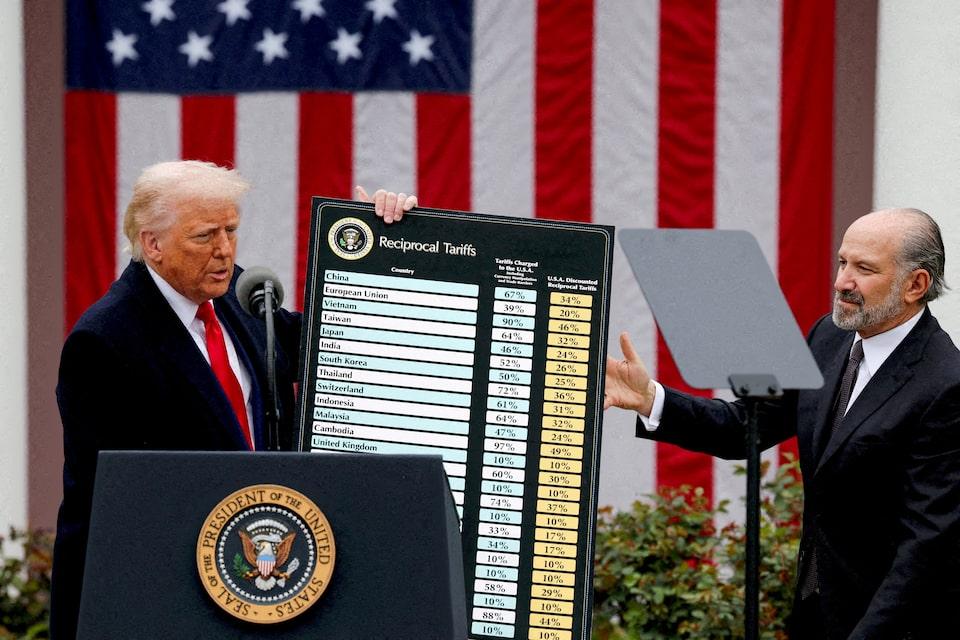
SAO PAULO, July 24 (Reuters) - Brazilian motor maker WEG (WEGE3.SA) , opens new tab said on Thursday it expects to offset most of the impact from the 50% tariff U.S. President Donald Trump said he would impose on Brazilian goods partly by adjusting some export routes. Analysts have cited WEG - whose motors are used in vehicles, wind turbines and power transmission lines - among the most exposed firms to the steep tariffs, which are due to take effect on August 1. Sign up here. The company on Wednesday reported lower-than-expected second-quarter results, noting that geopolitical uncertainties have limited long-term visibility and led some clients to postpone investment decisions for large projects. Chief Financial Officer Andre Rodrigues suggested on Thursday the firm could use its Brazilian operations to supply countries such as Mexico and India, whose products would in turn meet U.S. demand. "The execution may take a few months, but once the change is implemented, we expect to be able to mitigate most of these impacts," he told a call with analysts, though warning the move would also depend on the levies Trump imposes on other nations. WEG has plants in over a dozen countries, including the United States and Mexico, and has touted its global presence and broad product portfolio as factors that might help shield it from the tariffs' impacts. Rodrigues said that products made in Brazil currently account for less than a third of WEG's U.S. sales. He noted that the effects on WEG's second-quarter results of the 10% tariff Trump had initially imposed in April were small, saying that the firm made some price adjustments in the U.S. to offset the impact of those levies. "Looking ahead, at this point it's not possible to have a firm stance, given the many uncertainties and volatility in the trade structures being discussed," Rodrigues added. "But if the current situation persists, WEG does have an action plan." https://www.reuters.com/world/americas/brazils-weg-expects-mitigate-most-impacts-trump-tariffs-2025-07-24/

2025-07-24 15:32
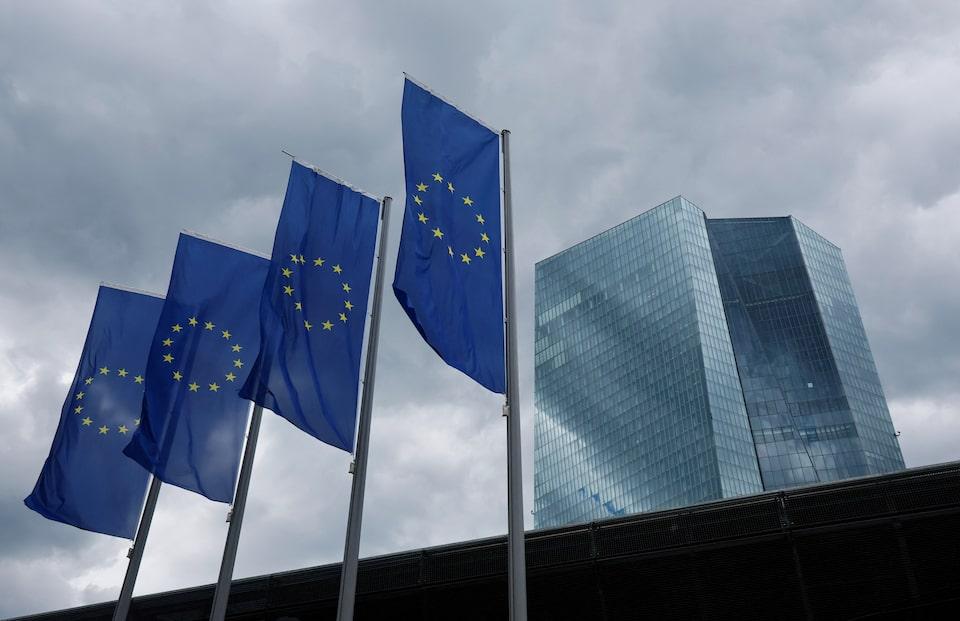
FRANKFURT, July 24 (Reuters) - European Central Bank policymakers are setting a high bar for an interest rate cut in September and they would need to see a significant deterioration in growth and inflation before backing further easing, two sources told Reuters. The European Central Bank left interest rates unchanged on Thursday after cutting eight times in a year, biding its time while Brussels and Washington try to negotiate a trade deal that could ease persistent uncertainty over tariffs. Sign up here. But sources at the meeting said that policymakers would not be spurred into action by the mere announcement of U.S. duties on European Union imports. Instead, they would need to see an actual weakening in the inflation and growth data as well as lower projections from ECB staff in September if they are to back a rate cut. An ECB spokesperson declined to comment. While the discussion on Thursday was harmonious, a few policymakers wanted to send out a warning about inflation coming in lower than expected. Instead, the ECB said that risks to economic growth were "tilted to the downside" while "the outlook for inflation (was) more uncertain than usual". ECB President Christine Lagarde hinted at this division, saying that, while the decision to keep rates on hold was unanimous, the risk assessment was "broadly shared". The sources said that policymakers mostly agreed on how the economy would behave in the ECB's baseline scenario, in which the U.S. administration imposes a 10% tariff rate on European Union imports. But they differed about the adverse scenario, in which the tariff rate is higher. Policy hawks, who favour higher interest rates, saw risks that inflation would get a boost from supply disruptions related to tariffs and possible retaliation. Doves saw downside risks from slower economic activity prevailing. Lagarde, who said her job was to present the view of the Governing Council rather than her own, listed both types of risks in her news conference. https://www.reuters.com/business/finance/ecb-policymakers-set-high-bar-sept-rate-cut-sources-say-2025-07-24/
2025-07-24 15:15
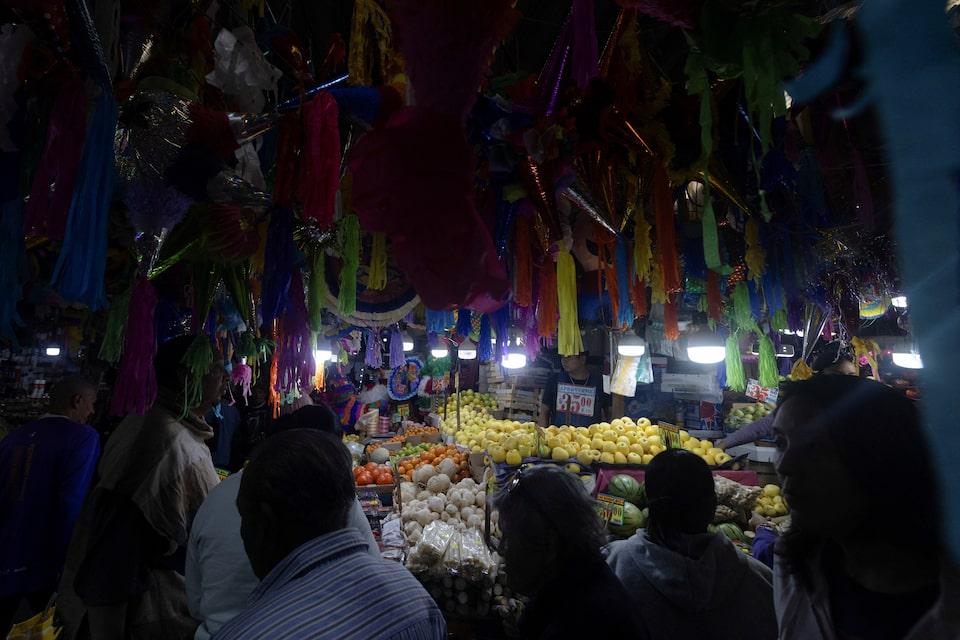
MEXICO CITY, July 24 (Reuters) - Mexico's headline inflation slowed in the first half of July, falling back within the central bank's target range and fueling expectations that the bank will continue to cut interest rates in Latin America's second-largest economy. Consumer prices rose 3.55% in the 12 months through mid-July, data from the national statistics agency showed on Thursday, slowing down from the 4.51% reported a month earlier. Sign up here. The figure also undershot the 3.64% expected by economists polled by Reuters. The slowdown in inflation "shows that the Bank of Mexico has room to keep cutting interest rates," President Claudia Sheinbaum said at her regular morning press conference. The Bank of Mexico, which targets an inflation rate of 3% plus or minus one percentage point, lowered its benchmark interest rate by 50 basis points in June - its third straight cut of that magnitude - bringing it to 8.5%, the lowest since August 2022. In the first half of July alone, Mexican consumer prices rose 0.15% compared to the prior two weeks, also below expectations of a 0.27% increase. Analysts at brokerage Monex said the data was a surprise as inflation in the first half of July reached its lowest level for this period in a decade, but emphasized challenges on core inflation. The closely watched core price index, which strips out some volatile food and energy prices, climbed 0.15% in early July, compared with 0.22% a month earlier. The 12-month core rate came in at 4.25%. "Given the stubbornness of core inflation, we expect Banxico to reduce the scale of its cuts: for the August 7 meeting, we estimate that it will cut the benchmark interest rate by 25 basis points to 7.75%," Monex analysts added. https://www.reuters.com/world/americas/mexico-inflation-fall-early-july-reignites-rate-cut-expectations-2025-07-24/
2025-07-24 14:33
BRASILIA, July 24 (Reuters) - Brazil's federal tax revenue hit a record high in the first half of the year, lifted by strong June collections, revenue service data showed on Thursday, as President Luiz Inacio Lula da Silva seeks to boost public income to shore up fiscal accounts. Federal tax revenue rose 6.62% in June from a year earlier in real terms, reaching 234.594 billion reais ($42.51 billion). Sign up here. From January to June, revenue totaled 1.426 trillion reais, up 4.38% in real terms from the same period last year. Both the monthly and year-to-date figures were the highest ever recorded for their respective periods, the tax authority said. Revenue from the IOF tax on financial operations increased in June after the government raised the levy on several transactions via decree in late May. Although Congress later overturned the measure, it was reinstated earlier this month following a Supreme Court decision. The revenue service also highlighted a rise in income tax collection on financial investments, driven by the elevated benchmark interest rate, Selic, "which contributed to the performance of fixed income funds and securities." Policymakers have raised the Selic by 450 basis points since last September to fight inflation, taking the rate to a nearly 20-year high of 15%. Despite strong tax revenue, the government projected earlier this month a primary deficit of 26.3 billion reais for the year, excluding nearly 50 billion reais in court-ordered payments that the Supreme Court ruled should not count toward the fiscal target. While the figure remains within the zero-deficit goal's tolerance band of 0.25% of GDP, it underscores the challenge of balancing the budget amid rising mandatory spending, including pensions and social benefits. ($1 = 5.5187 reais) https://www.reuters.com/world/americas/brazils-tax-revenue-surges-record-h1-2025-07-24/

2025-07-24 14:06
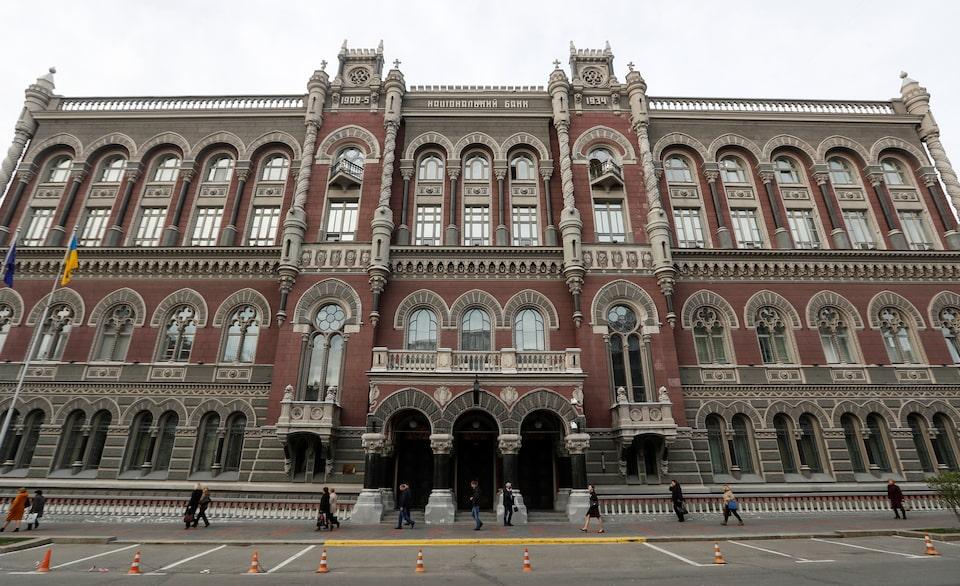
Economic growth forecast cut due to Russian attacks Public spending, foreign aid support Ukraine's economy Government, IMF work on new lending program KYIV, July 24 (Reuters) - Ukraine's central bank left its key interest rate steady at 15.5% on Thursday for the third consecutive meeting, saying it expects inflation to continue to ease but wartime risks will constrain economic growth. Economic growth will slow to 2.1% this year compared with 2.9% in 2024, it said in a statement. Sign up here. The central bank previously predicted 2025 growth at 3.1% but it cut its forecast due to more intense Russian attacks in recent months. "Going forward, the pace of recovery will depend on the course of the war," the bank's governor, Andriy Pyshnyi, told media. Russia's full-scale invasion in February 2022 devastated the economy, with gross domestic product plunging by about one-third in 2022. The economy posted modest growth in 2023 and 2024, but it is still about 20% smaller than before the war. Pyshnyi said that public spending and a steady inflow of international aid had helped the economy in the first half of the year. But more intense Russian air attacks and further destruction of production facilities, infrastructure and housing had restrained growth, he said. The war has heated up in recent months with swarms of drones launched by both Moscow and Kyiv, fighting raging along more than 1,000 km (600 miles) and dim prospects for peace. Officials said the war was also causing staff shortages amid persistent emigration. GDP grew by 0.9% year-on-year in the first quarter of the year, data showed. Bad weather also weighed on growth prospects, delaying crop sowing and hampering future harvests in the farm business that is a major sector of the economy, the bank said. Another key risk for the economy was an insufficient level of international financial aid, Pyshnyi said. The bulk of Ukraine's revenues goes to defence, and aid from allies is crucial for Kyiv's ability to finance social and humanitarian spending. The government has received $24 billion out of $54 billion expected in aid in 2025. He also said the government worked with the International Monetary Fund, the country's key lender, on approaches for a new support program. The central bank also said it expects inflation to reach 9.7% at the end of 2025 and forecasts it to slow to 6.6% in 2026. https://www.reuters.com/world/europe/ukraines-central-bank-holds-key-rate-steady-says-war-risks-will-curb-2025-growth-2025-07-24/
2025-07-24 13:30
ECB keeps rates steady as it awaits clarity over trade Fed, Bank of Japan meet next week After spate of rate cuts, easing is slowing down LONDON, July 24 (Reuters) - The pace of central bank rate cuts is slowing as early movers near the end of their easing cycles while sticky inflation keeps others cautious. Politics both domestic and international is another complication for central bankers, particularly in the United States, where President Donald Trump continues to muse publicly about firing Federal Reserve chair Jerome Powell. Sign up here. Here's where 10 big central banks stand on the monetary policy path. 1/ SWITZERLAND Bets that the Swiss National Bank will use negative interest rates to tackle the seemingly unstoppable rise of the safe haven franc have faded after it kept benchmark borrowing costs on hold at 0% in June. Traders have since put 75% odds on another pause in September and speculate the SNB has started intervening to weaken the franc. 2/ CANADA The Bank of Canada is widely expected to hold steady for now as U.S. tariff tensions contribute to a baffling economic outlook, with growth contracting as inflation rises and trade war disruptions to consumer behaviour muddle the outlook further. Money markets expect that the formerly dovish central bank, which implemented 225 basis points (bps) of cuts in the nine months to April, will keep rates at 2.75% on July 30. 3/ SWEDEN Sweden's central bank cut its key rate to 2% from 2.25% last month, and minutes from that meeting said policy could be eased again this year if growth disappoints and inflation remains tame. The Riksbank has been one of the more aggressive central banks, with 200 bps of cuts since May 2024. 4/ NEW ZEALAND The Reserve Bank of New Zealand held rates steady earlier this month but said it expected to loosen monetary policy if price pressures continued to ease as forecast. The RBNZ has cut rates by 225 bps already this cycle. 5/ EURO ZONE The European Central Bank left interest rates unchanged on Thursday after cutting eight times in a year, biding its time while Brussels and Washington negotiate over trade. Its main policy rate is currently at 2% down from 4% a year ago, and inflation is back at the ECB's 2% goal. Markets see around an 80% chance of a final 25 bp cut by year end but that depends on whether policymakers fear inflation might fall too far below target. That in turn depends on a trade deal and whether the euro continues to appreciate. 6/ UNITED STATES The Fed meets next week, with markets all but certain it will remain on hold despite heavy pressure from Trump to make significant rate cuts. Trump appeared close to trying to fire Powell last week, but backed off with a nod to the market disruption that would likely follow. Further rate cuts are anticipated later this year and investors see roughly a 50% chance of a 25 bps reduction in September. A move then had been seen as likely until last week's data showed inflation rose to 2.7% year-on-year in June. 7/ BRITAIN The Bank of England meets on Aug 7. Markets expect a 25 bps rate cut even after data last week showed a surprise jump in inflation and a less-dramatic-than-feared cooling in the labour market. Sticky inflation means the Bank of England has been more cautious than most with easing. Markets price two, 25 bps rate cuts by year-end -- including an August move. 8/ AUSTRALIA The Reserve Bank of Australia is cautious too and surprised markets earlier this month by holding rates steady at 3.85%, saying it wanted to wait to confirm inflation will continue to slow. It was a rare split decision, but Governor Michele Bullock said the disagreement was more about timing and, if inflation continues to slow, the bank remains on an easing path. At least two more 25 bps cuts are priced by year end. 9/ NORWAY Norway's central bank cut rates by 25 bps to 4.25% last month, its first reduction since 2020. The Norges Bank has been the most cautious among developed market central banks, and data this month showing core inflation at 3.1% reinforced this stance. Only one more cut this year is fully priced. 10/ JAPAN The Bank of Japan, the sole central bank in hiking mode, has had its task complicated by uncertainty around U.S. tariffs and Japanese politics. Prime Minister Shigeru Ishiba has denied media reports he decided to quit. However, after Japan and the U.S. struck a trade deal this week, BOJ governor, Shinichi Uchida, signalled conditions for resuming hikes may start to fall into place. Uchida said the deal had reduced uncertainty and increased the likelihood Japan will sustainably hit its 2% inflation goal - a requirement for further rate increases some policymakers say. https://www.reuters.com/business/finance/global-markets-cenbank-graphics-2025-07-24/