2026-01-26 07:31
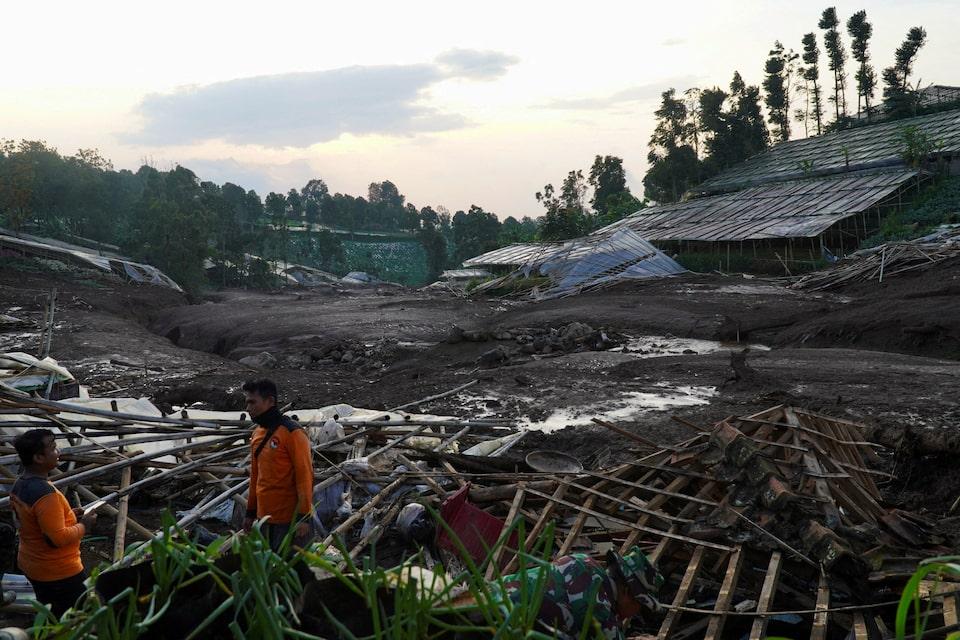
JAKARTA, Jan 26 (Reuters) - The death toll from a landslide that hit Indonesia's West Java province at the weekend rose to 17 on Monday, the country's disaster mitigation agency said, with dozens still missing. The landslide that hit a residential area in the Bandung Barat region early on Saturday was triggered by heavy rains starting the day before, which the weather agency warned could continue in the province and several other regions for another week. Sign up here. The impacted Pasir Langu village is located in a hilly area of the province about 100 km (60 miles) southeast of Indonesia's capital, Jakarta. More than 30 houses were buried by the landslide, the agency said. At least 17 people have died, agency spokesperson Abdul Muhari told Reuters on Monday, with 73 still missing. Indonesia's navy chief Muhammad Ali said on Monday that 23 navy officers were among those trapped. The officers were involved in border patrol training at the time of the landslide, he said, adding that heavy equipment was not able to reach the disaster zone due to bad weather. The agency said on Sunday that a smaller landslide together with bad weather had also hindered the search, which requires drones and heavy equipment. Flash floods hit several parts of Indonesia last week, including West Java and Jakarta, forcing residents to flee their homes and evacuate to higher ground. The landslide occurred two months after cyclone-induced floods and landslides on the island of Sumatra killed 1,200 people, destroyed homes and displaced over a million residents. https://www.reuters.com/business/environment/death-toll-landslide-indonesias-west-java-rises-17-2026-01-26/
2026-01-26 07:12
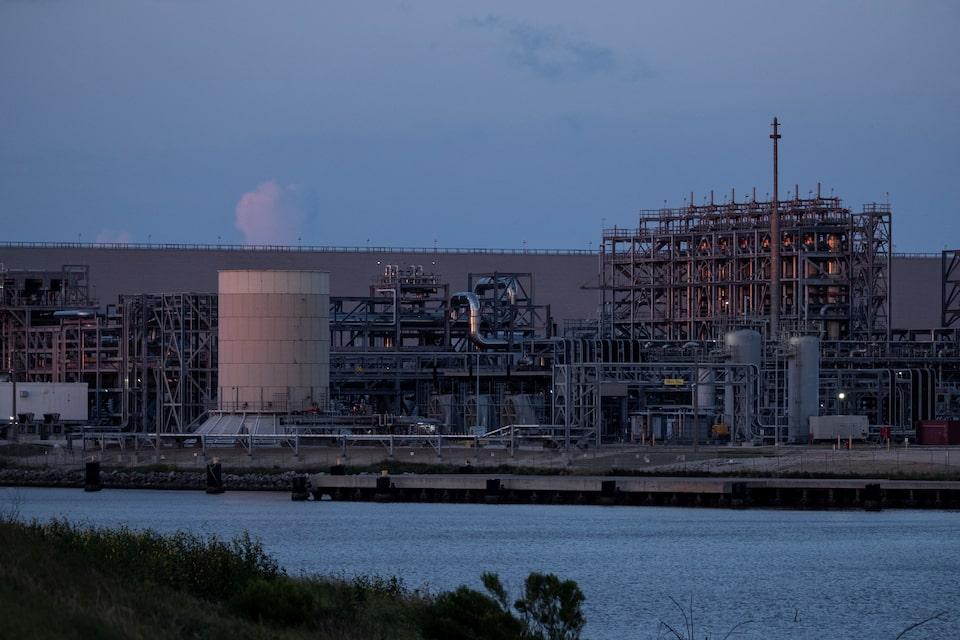
LONDON, Jan 26 (Reuters) - An Arctic blast sweeping across the U.S. Northeast and Midwest has triggered a sharp rally in natural gas prices on fears of production disruptions. The spike has reverberated across overseas markets, underlining the growing globalization of the U.S.-dominated liquefied natural gas trade. U.S. natural gas futures have surged by almost 70% over the last week to $5.35 per million British thermal units (mmBtu), their highest since December 2022. The cold spell is set to lift domestic gas demand this week to 156 billion cubic feet per day (bcfd), compared with a five-year January average of 137 bcfd, according to LSEG forecasts. Sign up here. At the same time, icy conditions are forcing drillers in regions such as the Permian shale basin in Texas and New Mexico to curb output due to “freeze‑offs,” when water and other liquids in the gas stream freeze. The trend will likely intensify as temperatures drop further. Average gas output in the U.S. has already slipped to 108.4 bcfd so far in January, down from a record 109.7 bcfd in December, LSEG data showed, partly due to the cold weather. Tighter U.S. supply could reduce LNG exports, as liquefaction plants receive less feedgas. Severe cold has curtailed oil and gas production several times in recent years. A 10-day cold spell in January 2024 led to a 3% drop in average monthly dry gas output, according to U.S. Energy Information Administration data. And three years earlier in February 2021, Winter Storm Uri led to a drop of over 20% in gas output at the lowest point compared with pre-storm levels. LNG feedgas fell by as much as 75% during the storm, leading to a 30% drop in February LNG exports that year, according to Kpler. In each of these past Arctic blasts, output generally rebounded within a month or two. But since Uri, the U.S. has nearly doubled its liquefaction capacity, becoming the world's top LNG exporter, meaning a disruption today could create a much larger shortfall. GLOBAL KNOCK-ON EFFECT What has changed in recent years is that cold weather conditions in the U.S. can now lead to higher gas prices in Asia and especially Europe, which is heavily dependent on U.S. LNG after Russia slashed pipeline flows following its invasion of Ukraine in 2022. The U.S. has since 2023 dominated the LNG market, becoming the first country to export over 100 million metric tons per year in 2025. Around two-thirds of that was delivered to Europe, according to data analytics firm Kpler. Benchmark European TTF gas prices gained over 6% last week to almost 40 euros per megawatt hour, or $13.75 per mmBtu, the highest since June 2025. Prices have risen by 38% so far this month, driven by a rapid depletion of regional gas stocks, which are currently 48% of capacity, far below last year's level of roughly 58%. Europe is expected to import a record amount of LNG this year, the International Energy Agency said on Friday, with the bulk of the increase expected to come from the U.S. To be sure, the current rally pales in comparison to the post-invasion spike in 2022, when TTF prices quadrupled to more than 300 euros per MWh. Global LNG prices eventually returned to near pre‑invasion levels, helped by surging new supply that is expected to keep prices relatively low in coming years. Between 2025 and 2030, new LNG export capacity is expected to grow some 50%, or by 300 billion cubic meters (bcm) per year globally, driven mainly by the U.S. and Qatar, according to the IEA. INTERCONNECTED MARKET Yet, the increasingly interconnected LNG market means that when sudden shifts in supply or demand do occur in major producing areas, whether due to outages or extreme weather, the global impact will be more pronounced than in the past. And, importantly, climate change is likely to make such extreme weather events more frequent. "The global gas market has become far more interconnected," said Mashal Jaffery, partner at gas and LNG commercial advisory Baringa. "Regardless of their absolute price levels, markets such as TTF and (U.S.) Henry Hub are now structurally more volatile and increasingly exposed to supply, demand, and geopolitical dynamics originating outside their own regions." Of course, the global gas market has adapted. A larger number of LNG cargoes are now held at sea, enabling traders to respond more quickly to regional price swings. This can help the market respond to short‑term demand spikes and ultimately smooth volatility. In other words, the gas market – which has long been highly regional in nature – is now starting to look like the modern, highly liquid oil market. (The opinions expressed here are those of the author, a columnist for Reuters) Enjoying this column? Check out Reuters Open Interest (ROI), , opens new tab your essential new source for global financial commentary. Follow ROI on LinkedIn, , opens new tab and X. , opens new tab And listen to the Morning Bid daily podcast on Apple , opens new tab, Spotify , opens new tab, or the Reuters app , opens new tab. Subscribe to hear Reuters journalists discuss the biggest news in markets and finance seven days a week. https://www.reuters.com/markets/commodities/when-us-freezes-global-lng-market-catches-cold-2026-01-26/
2026-01-26 07:11
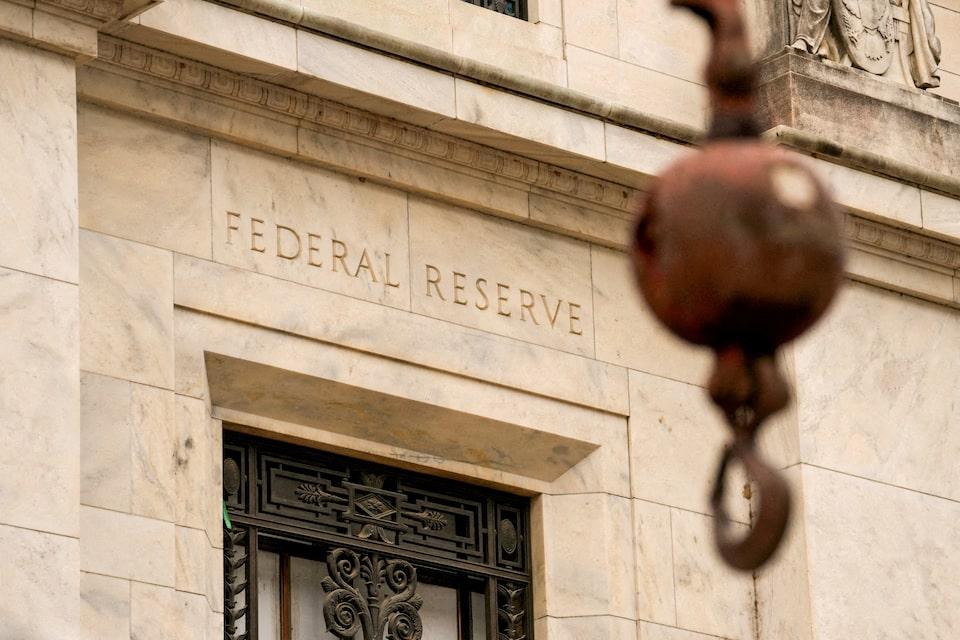
LONDON, Jan 26 (Reuters) - The battle for Federal Reserve independence has already gone up several gears this year, yet the central bank is showing little sign of capitulation - and now it has support from the Supreme Court and senior politicians. Whether that has emboldened the Fed to push back hard on pressure for faster rate cuts will be the key test this week. Sign up here. Clearly angered by this month's threat of a criminal case against him over Fed building renovations, outgoing Fed Chair Jerome Powell has sharpened his tone on Fed independence, calling the Trump administration's attack on him a mere "pretext" to pressure the Fed into deeper interest rate cuts. An acceleration of easing almost certainly won't begin at this week's Federal Open Market Committee (FOMC) meeting. But how Powell maps out the policy path going forward and addresses questions about political pressure may be the main takeaway - especially with a real chance U.S. President Donald Trump announces his pick to replace Powell as the two-day gathering unfolds. It's the first Fed policy decision of the year on Wednesday, with little or no market speculation that the bank will lower borrowing costs again so soon in 2026. After three additional rate cuts late last year, another pause is widely expected. Brisk growth, still above target inflation, stable unemployment, buoyant financial markets and loose overall financial conditions all underscore the case for holding steady. With many Fed policymakers assuming the central bank is at or close to a neutral policy setting, the arguments for it to start stimulating the economy right now are thin - not least with fiscal policy jets kicking in this year and lingering uncertainty around the price impact of tariff rises. The median view of Fed policymakers , opens new tab last month was that just one more rate cut was likely in 2026. And despite the political noise, financial markets - which had started the year betting on two cuts - are slowly starting to chime with that view. Futures have pared back their full-year easing tally to just 44 basis points - with another cut not fully priced until July. That's far from the deep cuts demanded by Trump or the 150 bps of additional cuts this year called for by Trump's latest appointee to the Fed board - his former economic adviser Stephen Miran. REACTION FUNCTION All of which raises the persistent question about why concerns about a new Trump chair or further administration appointees to the board have not seen rate futures markets reprice more dramatically. After all, possible vacancies may emerge if the embattled Fed Governor Lisa Cook is eventually forced out or indeed if Powell stands down from the board when his term as chair ends in May. But as it stands, markets still don't see the current 3.62% Fed policy rate getting below 3.2% through the end of 2027. The heat of GDP growth and ebbing worries about a big fracture in the labor market remain the big factors - although Trump's team also sees these and concludes faster cuts are required regardless. However, the calm market picture was underscored by the Supreme Court hearings on the Cook case last week, where justices repeatedly warned about damaging Fed independence if she was fired while still defending a legal case against her. Even conservative Justice Brett Kavanaugh said that such a low bar for the president to remove her would "weaken, if not shatter, the independence of the Federal Reserve." Significantly in an election year, some Republicans in Congress are also balking at the risks to Fed independence of the possible criminal case against Powell. Powell now takes center stage this week with his new, outspoken take on independence - a stance that may even stoke speculation about him refusing to stand down from the board in May. That would be within his rights, because his regular board term lasts until 2028, though it would be unusual for an outgoing chair. All of this supports an argument in markets that the political pressure won't change the existing approach of the Fed any time soon and that only a major shift in the economic picture will warrant that. Curiously, market easing bets only pick up again when Powell's term on the board ends in January 2028. Writing before the Cook hearings last week, Morgan Stanley's Chief Global Economist Seth Carpenter said that, short of a Supreme Court ruling that allowed Trump to make wholesale changes at the board, the Fed's "reaction function" was unlikely to change abruptly or materially. But he added that "we should not lose focus on the importance of a new Fed chair". "The bigger question is how a new Fed chair steers the Committee when the economic data are much more difficult to read, especially if strong growth continues with tepid labor markets." Rarely has a Fed meeting decision taken such a back seat to the machinations around the future of the institution itself. The opinions expressed here are those of the author, a columnist for Reuters. Enjoying this column? Check out Reuters Open Interest (ROI), , opens new tab your essential new source for global financial commentary. Follow ROI on LinkedIn, , opens new tab and X. , opens new tab Plus, sign up for my weekday newsletter, Morning Bid U.S. and listen to the Morning Bid daily podcast on Apple , opens new tab, Spotify , opens new tab, or the Reuters app , opens new tab. Subscribe to hear Reuters journalists discuss the biggest news in markets and finance seven days a week. https://www.reuters.com/markets/battle-fed-heats-up-challenge-rate-horizon-2026-01-26/
2026-01-26 07:07
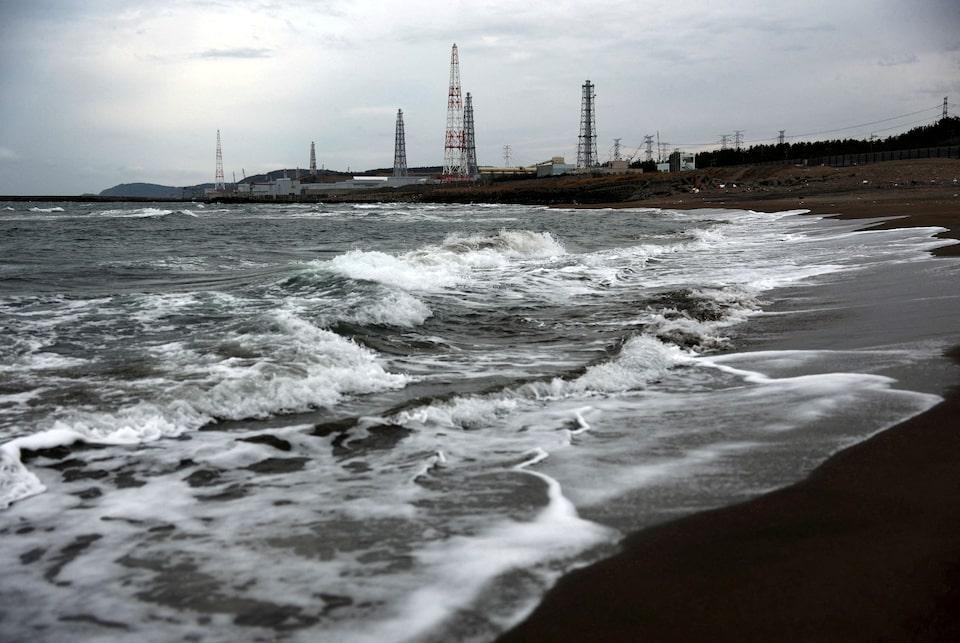
Aims to raise 200 billion yen in next 3 years by selling assets Will seek alliance partners to advance reforms Plans to enhance capabilities to meet rising data centre demand TOKYO, Jan 26 (Reuters) - Japanese utility Tokyo Electric Power (Tepco) (9501.T) , opens new tab on Monday said it would cut about 3.1 trillion yen ($20 billion) in costs over 10 years through restructuring measures, adding that it expected to swing to a loss for the fiscal year that ends in March. The government has approved the Japanese utility's revised business plan, which calls for raising about 200 billion yen over the next three years by selling assets. The firm also intends to pursue alliances to advance its intended reforms, saying it will seek partners capable of growing with it. Sign up here. Tepco, the operator of the Fukushima Daiichi nuclear power plant which in 2011 suffered one of the world's worst nuclear disasters, faces mounting costs to decommission the plant, clean up surrounding areas and pay compensation. It is borrowing government funds to cover costs related to the disaster. Potential asset sales include equity stakes and real estate holdings. The Nikkei newspaper has reported that it could sell shares in Kandenko (1942.T) , opens new tab, an electrical and plant equipment company that is 46% owned by Tepco. Tepco declined to comment on specific assets. To meet growing demand to build data centres in Tokyo, Tepco said it wanted to get stronger in developing data centres by collaborating with firms focused on securing suitable sites as well as manufacturers and construction companies. On Monday, Tepco said it expected a loss of 641 billion yen for the fiscal year that ends in March, compared with a year-earlier profit of 161.2 billion yen. The company attributed its expected shortfall to a one-time loss related to the Fukushima Daiichi disaster. Tepco shares closed down 3.8% in Tokyo; the overall Nikkei index (.N225) , opens new tab ended the day 1.8% lower. The utility is targeting recurring profit of 342 billion yen in fiscal 2034, up from 135 billion yen in fiscal 2024. That assumes the No. 6 reactor at the Kashiwazaki-Kariwa nuclear power station will restart in fiscal 2025 and the No. 7 unit will restart in fiscal 2029. It stopped the No. 6 reactor on Thursday to investigate a malfunction after restarting it briefly earlier in the week. That was Tepco's first restart of a nuclear power plant since the Fukushima disaster. Tepco revises its business plan every few years, a process that requires government approval. The latest plan is the first revision in more than four years. Tepco reduced its costs by 8 trillion yen and raised 1.1 trillion yen with asset sales from fiscal 2012 to 2024. ($1 = 154.9800 yen) https://www.reuters.com/business/energy/tepco-targets-20-billion-cost-cuts-between-fiscal-2025-2034-2026-01-26/
2026-01-26 06:57
Jan 26 (Reuters) - Gold vaulted above $5,100 an ounce on Monday to an all-time peak, keeping up a historic rally as heightened geopolitical tensions lifted safe-haven demand. Sign up here. https://www.reuters.com/business/gold-blazes-past-5100-all-time-high-2026-01-26/

2026-01-26 06:55
Energy ministry: output at Korolev restarted, Tengiz to restart in near future TCO says oil output slowly restarting after January 18 outage Tengiz accounts for nearly half of Kazakhstan's oil output CPC restored full loading capacity after completing maintenance ASTANA/ALMATY/MOSCOW, Jan 26 (Reuters) - Kazakhstan is poised to resume production from its biggest oil field, the energy ministry said on Monday, but industry sources said volumes were still low and a force majeure on CPC Blend exports was still in place. The world's number 12 oil producer has been recently plagued by several incidents, including drone attacks on a crucial exporting facility and a fire and power outage at Kazakhstan's largest oilfield, Tengiz, which hurt its output and exports. Sign up here. Tengizchevroil, led by Chevron (CVX.N) , opens new tab, had temporarily halted production at the Tengiz and Korolev oilfields on January 18. Chevron said on Monday that the company has restarted oil production, without naming the field. POWER SUPPLY RESTORED TO OIL FIELDS "Tengizchevroil (TCO) confirms safe commencement of the site power distribution system and the resumption of initial crude oil production," a Chevron spokesperson said on Monday. Separately, Kazakhstan's energy ministry said on Monday that Tengiz was preparing to resume oil output soon, and that production at the Korolev oilfield was already in operation. "The safe start-up of the power supply system has now been confirmed, and the Tengiz field will be brought back online in the near future," the ministry said. However, at least two industry sources expressed their scepticism about the scale of the initial oil production, noting that TCO has yet to lift a force majeure on CPC Blend supplies issued after the field's shutdown. Chevron said it does not comment on specific details of its operations. One source said that the fields now produced only around 8,000 metric tons per day, an equivalent of about 60,000 barrels per day, only about 6% of its usual levels. JPMorgan said on Friday that Tengiz might remain offline for the rest of the month, and estimated Kazakhstan's January crude was likely to average between 1 million and 1.1 million barrels per day, compared with a usual level of around 1.8 million bpd. KAZAKHSTAN'S GOVERNMENT MEETS EXXON Kazakhstan's government said earlier on Monday that Prime Minister Olzhas Bektenov had met ExxonMobil (XOM.N) , opens new tab Vice President Peter Larden and urged the U.S. energy company to accelerate work to deal with the outage and prevent similar incidents in future. With a 25% stake, ExxonMobil is the second-largest shareholder in the TCO consortium behind Chevron, which holds 50%. Kazakhstan's KazMunayGaz has 20%, and Russia's Lukoil 5% of the group. CASPIAN PIPELINE CONSORTIUM RESUMES SPM-3 OPERATIONS The Caspian Pipeline Consortium (CPC), which operates Kazakhstan's main exporting pipeline said on Sunday that it returned to full loading capacity at its terminal on the Russian Black Sea coast after maintenance was completed at one of its three mooring points, known as SPMs. An industry source said that the crude oil tanker Paschalis DD is scheduled to dock at the terminal for loadings from the repaired SPM-3 on Monday at 2 p.m. (1100 GMT). Oil exports via the CPC dropped by 24% in December from the previous month, according to an industry source, to 3.98 million metric tons, or around 1.02 million barrels per day. https://www.reuters.com/business/energy/kazakhstan-urges-exxonmobil-speed-up-work-fix-tengiz-outage-2026-01-26/