2025-07-24 05:00
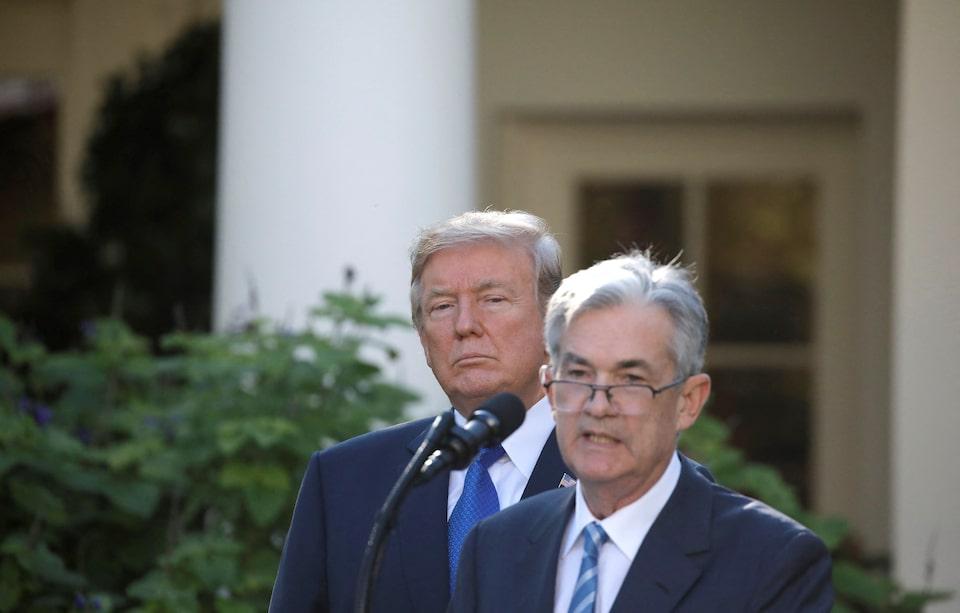
Trump has criticized Fed Chair Powell over interest rates White House accuses Fed of mismanaging building renovations Trump's actions challenge central bank independence norms July 23 (Reuters) - U.S. President Donald Trump, a robust critic of Federal Reserve Chair Jerome Powell, will visit the central bank on Thursday, the White House said, a surprise move that escalates tension between the administration and the Fed. Trump has lambasted Powell repeatedly for not cutting U.S. interest rates more aggressively, calling him a "numbskull" on Tuesday and musing publicly about firing him. Sign up here. The Republican president, during his first term, nominated Powell to lead the bank but has since soured on his pick over disagreements about interest rates and the economy. Between Trump's stints in office, Democratic President Joe Biden nominated Powell for a second term. Adding fuel to Trump's ire, White House officials have accused the Fed of mismanaging the renovation of two historic buildings in Washington, D.C., suggesting poor oversight and potential fraud. White House budget director Russell Vought has pegged the cost overrun at "$700 million and counting." White House deputy chief of staff James Blair said this week that administration officials would be visiting the Fed on Thursday but did not say the president would join. In a schedule released to the media on Wednesday night, the White House said Trump would visit the Fed at 4 p.m. (2000 GMT) on Thursday. It did not say whether Trump would meet with Powell. A Federal Reserve official did not respond to a request for comment. 'INTIMIDATION TACTIC' Initial market reaction to the news of Trump's visit was subdued, with the yield on benchmark 10-year Treasury bonds steady at 4.387% in Asian trading hours and the dollar weakening slightly. Trump's public criticism of Powell and flirtation with firing him have previously upset financial markets and threatened a key underpinning of the global financial system - that central banks are independent and free from political meddling. Treasury Secretary Scott Bessent said on Wednesday the Trump administration was not in a rush to nominate a new chair to replace Powell, whose term as head of the bank ends in May 2026. Bessent has said the administration would likely announce a successor in December or January. "A little excitement of Trump's visit may have been lost, given Bessent's claims that Trump has no intention of firing Powell," said Matt Simpson, a senior market analyst at City Index in Brisbane. "But that doesn't mean Powell is off the hook either. Trump announcing a personal visit to the Fed HQ just days after railing against Powell and the renovation feels less like a policy move and more like an intimidation tactic." Typically U.S. presidents refrain from commenting on Fed policy altogether in deference to the bank's autonomy, but Trump, whose governing style blasts through political norms, has not followed that example. Since returning to office in January, Trump has attacked institutions from law firms to universities to media organizations in an effort to reshape U.S. society in line with his vision. He has used the same verbal sledgehammer against the Fed, pressuring Powell to cut rates and knocking him for not stimulating the economy further. PRESSURE TO SLASH RATES The Supreme Court in a recent opinion appeared to signal that Trump could not fire Powell other than for cause. Since then, the cost overruns at the Fed's headquarters renovation project have become a focus for the administration in its pressure campaign on the Fed chair. Trump has said he would like the Fed to cut its benchmark interest rate to as low as 1% from the current 4.25%-4.50% target range to reduce government borrowing costs. This would allow the administration to finance rising deficits expected from his spending and tax-cut law. But a Fed policy rate that low is typically a sign of a country in economic trouble. None of the Fed's 19 policymakers sees interest rates falling as low as Trump would like. Their latest projections last month showed most expected the federal funds rate to fall no lower than a 3.25%-3.50% range by the end of next year. Even the most dovish policymakers forecast a fall to 2.25%-2.50% in the next two years. The Fed meets next week and is expected to keep rates in the current range. Investors expect the bank to resume cutting rates in September. As Trump increased pressure on Powell this week, the Fed chief's immediate predecessors, Ben Bernanke and Janet Yellen, said Trump's demands for "radical" interest rate cuts and threats to fire Powell "risk lasting and serious economic harm." In an opinion piece in the New York Times on Monday, they wrote, "The Fed’s credibility - its perceived willingness to make hard decisions based on data and nonpartisan analysis - is an important national asset. It is hard to acquire and easy to lose." https://www.reuters.com/world/us/trump-visit-fed-thursday-ramping-up-pressure-powell-2025-07-24/
2025-07-24 04:35
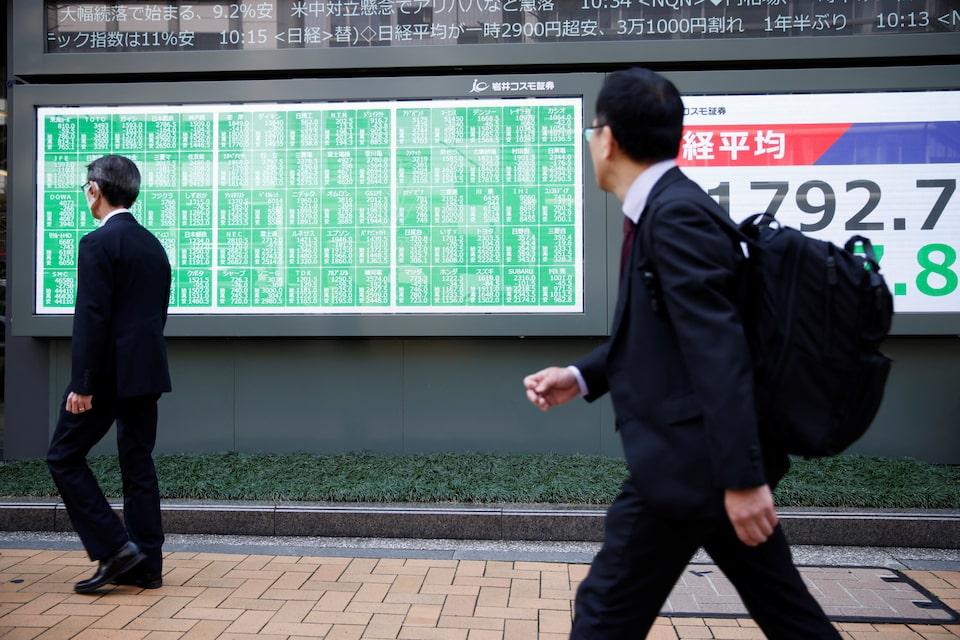
A look at the day ahead in European and global markets from Rocky Swift You get a trade deal! You get a trade deal! Everybody gets a trade deal! Sign up here. Well, it's not quite like Oprah doling out new cars, but trade agreements to avert the punishing tariffs from U.S. President Donald Trump are popping up all over the place, and markets are welcoming each with relief and enthusiasm. Stock indexes in Tokyo and Singapore followed in the footsteps of Wall Street to chart new all-time highs. The Trump administration reached trade pacts with Japan, the Philippines and Indonesia, and the European Union and South Korea could be next in line. The EU and U.S. are closing in on a deal that would impose 15% tariffs on European imports, while waiving duties on some items, according to officials from the European Commission. Meanwhile, Treasury Secretary Scott Bessent said U.S. and Chinese officials will meet in Stockholm next week. Earnings season is under way in the U.S., with 23% of the companies in the S&P 500 having reported. Of those, 85% have beaten Wall Street expectations, according to LSEG data. Results from Magnificent Seven members - a group of high-performing tech stocks that powered Wall Street's rally for years - are in the spotlight for guidance on spending and returns surrounding artificial intelligence (AI). Nasdaq and S&P futures rose after Google parent Alphabet (GOOGL.O) , opens new tab posted a beat on earnings after the bell and outlined an expanded capital spending plan. Equity futures are pointing to strong openings across Europe. But it's not all sunshine and lollipops. Luxury goods giant LVMH (LVMH.PA) , opens new tab is expected to report another drop in quarterly sales, deepening investor worries about a prolonged downturn in the $400 billion market in the face of U.S. tariffs. The results will likely show that any revival in demand for pricey fashion in the key U.S. and Chinese markets remains elusive. French luxury group Kering (PRTP.PA) , opens new tab will report next week. And the White House said overnight that Trump will go to the Federal Reserve on Thursday, a visit that follows his threats to fire Fed Chair Jerome Powell that have rattled U.S. bonds markets. Key developments that could influence markets on Thursday: - European earnings: LVMH, Deutsche Bank, BNP Paribas, Roche Holding, Nestle, Lloyds Banking Group - U.S. earnings: Blackstone, Honeywell International, American Airlines - European Central Bank monetary policy meeting, followed by comments from President Christine Lagarde - July flash PMIs for the euro zone, Britain and the U.S. - European data: Germany GfK consumer sentiment for August, UK GfK consumer confidence for July - U.S. data: initial jobless claims, new home sales - Canada retail sales Trying to keep up with the latest tariff news? Our new daily news digest offers a rundown of the top market-moving headlines impacting global trade. Sign up for Tariff Watch here. https://www.reuters.com/world/europe/global-markets-view-europe-2025-07-24/
2025-07-24 03:19
Full impact of U.S. tariffs still highly uncertain Tariffs to impact business investment, household spending Import prices may fall, likely easing NZ inflation WELLINGTON, July 24 (Reuters) - A top New Zealand central banker said on Thursday that while the full impact of U.S. tariffs remains uncertain, they could ease medium-term inflation pressures in the country, although the tariffs might dampen business investment and household spending. As countries redirect exports away from the United States, falling import prices may help lower domestic inflation, Reserve Bank of New Zealand (RBNZ) Chief Economist Paul Conway said in a speech at Business New Zealand. Sign up here. "There's a whole lot of 'wait and see' going on out there right now," Conway said. Conway said the central bank, as outlined in the monetary policy review in July, continues to see scope to lower the interest rates further if medium-term inflation pressures ease as projected. New Zealand's central bank held the benchmark interest rate at 3.25% this month, the first pause since it started cutting rates in August 2024, citing near-term inflation risks. Conway said the New Zealand economy is currently supported by high export prices and lower interest rates though "as a small, open economy," the country would still be significantly impacted by global economic developments. "Being tied in with the global economy helps us prosper. It also means that when something big happens offshore, such as the imposition of tariffs, its ripple effects impact the New Zealand economy," Conway said. In April, U.S. President Donald Trump placed a 10% baseline tariff on several countries, including New Zealand. Early data suggests New Zealand's economic growth has slowed in the June quarter, Conway added, adding that tariffs could increase inflation pressures in the United States, but New Zealand may face weaker global growth that reduces demand for its exports. "On net, these developments are expected to slow New Zealand's economic recovery over mid-2026," he said. https://www.reuters.com/world/asia-pacific/tariffs-may-lower-medium-term-inflation-risks-curb-spending-says-new-zealand-2025-07-24/

2025-07-24 02:33
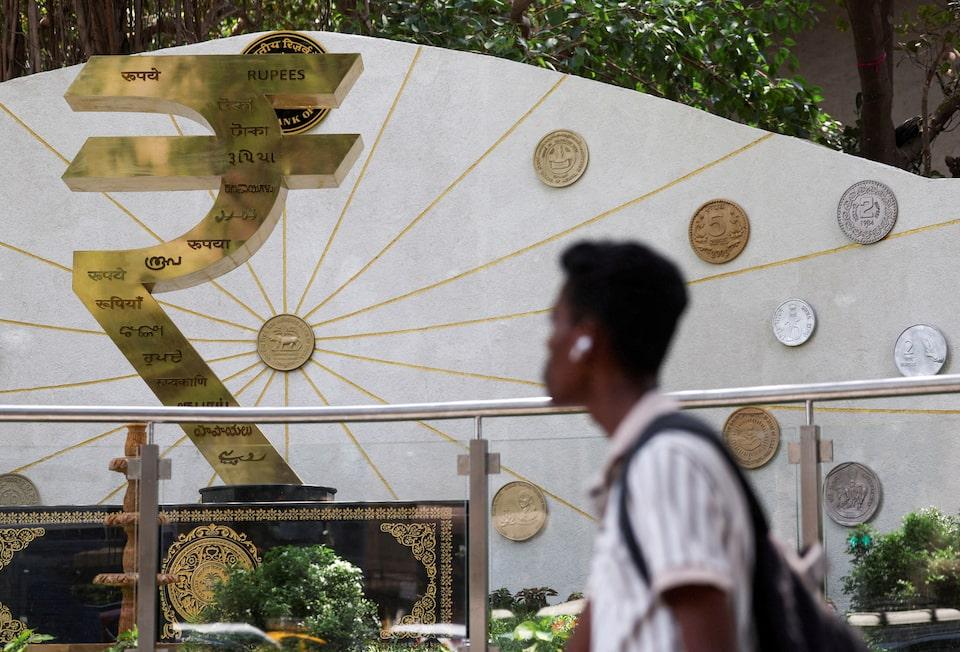
MUMBAI, July 24 (Reuters) - The Indian rupee is poised to open higher on Wednesday, supported by upbeat risk appetite following progress on U.S. trade deals, although traders expect the move to be short-lived based on recent price action. The 1-month non-deliverable forward indicated the rupee will open in the 86.34-86.36 range versus the U.S. dollar, compared with the close of 86.4075 in the previous session. Sign up here. Recent sessions have shown that the rupee’s opening strength often fades quickly. Tepid inflows, one-off dollar outflows, importer hedging, and weak near-term technicals have been cited as factors behind the currency’s subdued performance by bankers. "Intraday fades (on dollar/rupee) have not been sticking - importers are lying in wait and speculators are not showing up on the sell side," a currency trader at a Mumbai-based bank said. "It's hard to build a case for a move lower, no matter how positive the Asian cues are." The rupee has been depreciating in a slow, orderly fashion, with volatility remaining subdued. Despite slipping to a near one-month low, the 10-day realised volatility has dropped to 2%, the lowest since January. ASIA RALLIES Asian currencies and equities climbed on Thursday following more positive developments on the U.S. trade front. After the U.S. and Japan reached a deal to reduce tariffs, Washington and the European Union are reportedly moving toward a similar agreement that could include a 15% baseline U.S. tariff on EU goods—mirroring the terms of the Tokyo deal. Japanese shares extended Wednesday's rally and the euro crept toward its highest level in nearly four years on Thursday. Announcements of U.S. trade deals with Japan have boosted optimism that more agreements will be finalised ahead of the August 1 deadline, ANZ said in a note, pointing to an upcoming meeting between U.S. Treasury Secretary Scott Bessent and China’s trade delegation next week. Trade negotiations aside, markets will also be focused on a rate decision from the European Central Bank later in the day. KEY INDICATORS: ** One-month non-deliverable rupee forward at 86.46; onshore one-month forward premium at 11.75 paise ** Dollar index down at 97.14 ** Brent crude futures up 0.3% at $68.7 per barrel ** Ten-year U.S. note yield at 4.38% ** As per NSDL data, foreign investors bought a net $535.4 million worth of Indian shares on July 22 ** NSDL data shows foreign investors sold a net $9.4 million worth of Indian bonds on July 22 https://www.reuters.com/world/india/indian-rupee-likely-get-fleeting-lift-us-trade-deals-driven-risk-rally-2025-07-24/
2025-07-24 00:32
MUMBAI, July 24 (Reuters) - India's exports are increasingly vulnerable to climate-linked risks, with over two-thirds of outbound shipments exposed to tightening net-zero regulations in major markets, a study by Net Zero Tracker, a coalition of research groups at the University of Oxford, showed on Thursday. In 2024-25, India exported goods and services worth $824.9 billion, according to data from the Reserve Bank of India. The exports accounted for about a fifth of India's GDP. Sign up here. The UK and European Union are rolling out stricter carbon policies, including carbon border adjustment mechanisms, which are tariffs on greenhouse gas emissions associated with production of certain imported goods. "High carbon emissions are fast becoming a trade risk and India's exports are already under pressure to decarbonise," Net Zero Tracker said. "For India, the challenge is clear: maintain and grow export competitiveness while slashing embodied emissions across sectors." Coal powers nearly three-fourth of India's electricity grid, which inflates emissions across both goods and services, including its flagship IT and professional services sectors, said Net Zero Tracker. Meanwhile, rival exporting countries are supplying the same markets up to 20 times more efficiently in carbon terms, largely due to cleaner energy systems, as per the study. India is in the midst of negotiating trade deals with key partners, including the UK and the U.S. But carbon border adjustment mechanisms, set to take effect in Europe from 2026, could impose tariffs on carbon-intensive imports, threatening India's access to these markets, said Net Zero Tracker. India has pledged to reach net zero emissions by 2070, and earlier this year released a draft sustainable finance taxonomy to channel investment into low-carbon sectors. A new national emissions-reduction target is also expected ahead of the COP30 climate summit in Brazil this November. https://www.reuters.com/sustainability/cop/indias-export-engine-faces-carbon-headwinds-net-zero-rules-tighten-study-says-2025-07-24/
2025-07-23 23:48
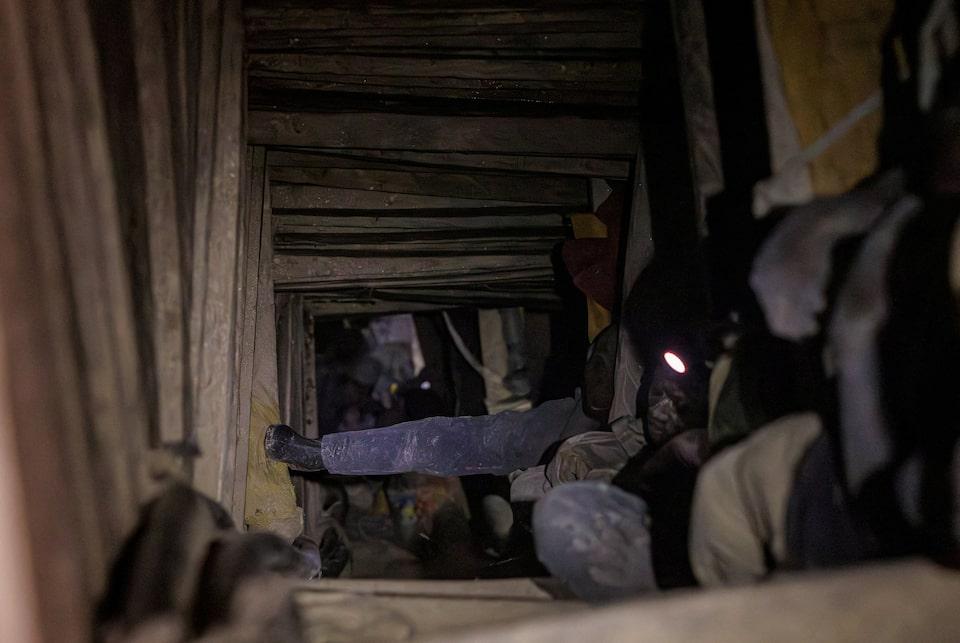
Hutu rebels' future complicates US-brokered peace in Congo Rwanda cites group as major threat, analysts downplay risk Rebel leader appeals to Trump to avoid offensive Trump eyes major minerals investments in war-hit region July 23 (Reuters) - Moves to end fighting in eastern Congo that are essential to U.S. President Donald Trump's plans for a mining bonanza in the region are meant to get underway by Sunday, but the future of a small rebel group has emerged as one of the major obstacles. A U.S.-brokered peace agreement signed last month by the Congolese and Rwandan foreign ministers was designed to halt violence that escalated this year with a lightning advance in the Democratic Republic of Congo by M23 rebels. Sign up here. Rwanda denies allegations from the U.N. and Western governments that it is fighting alongside the M23 rebels to gain access to Congo's minerals. Rwanda says its troops are there to tackle what it describes as an existential threat from thousands of Rwandan Hutu rebels known as the Democratic Forces for the Liberation of Rwanda (FDLR). Security experts and diplomats say the FDLR, which includes remnants of Rwanda's former army and militias that carried out the 1994 Rwandan genocide, boasts only a few hundred combatants and is not a significant battlefield force. But the peace agreement explicitly requires Congo to "neutralise" the FDLR as Rwanda withdraws from Congolese territory, underscoring the group's importance to the fate of Trump's diplomacy. Both the Congolese operations against the FDLR and the Rwandan withdrawal are supposed to start by Sunday and conclude by the end of September. U.N. experts said in a report this month that Rwanda, along with M23, is trying to seize control of mineral-rich territory. Kigali responded that the presence of the "genocidal" FDLR "necessitates the defence posture in our border areas." The U.N. experts also accused the Congolese military of relying on the FDLR in its fight against M23. A spokesperson for Congo's government did not respond to a request for comment on that question, but Kinshasa has said it is on board with ensuring any threat posed by the FDLR is "definitively eradicated", including by voluntary disarmament. It has also accused Rwanda of using the FDLR as a pretext for deploying on Congolese territory. A State Department spokesperson said on Wednesday that Washington had urged Congo "to cease any engagement with this U.S.- and UN-sanctioned armed group and to ensure accountability for any such collaboration." Congolese researcher Josaphat Musamba said it was not possible for Congo to rid the region of FDLR fighters given that M23 holds much of the territory where the FDLR now operates. "It would be feasible if the Rwandan-backed rebellion were not active and threatening to conquer other territories," said Musamba, a Ph.D. candidate at Ghent University who is from eastern Congo and studies the conflict there. Jason Stearns, a political scientist at Simon Fraser University in Canada who specialises in Africa's Great Lakes region, said lack of progress against the FDLR could be cited by Rwanda as a reason to keep its troops deployed in eastern Congo past September, throwing off Washington's timeline. "It would be fairly easy for Rwanda to claim that Congo is not abiding by its side of the deal - that its operations against the FDLR are not serious enough, have not been successful enough - and therefore to drag its feet," Stearns said. A spokesperson for Rwanda's government did not respond to a request for comment on its approach to the FDLR. Rwandan President Paul Kagame said on July 4 that Rwanda was committed to implementing the deal, but that it could fail if Congo did not live up to its promises to neutralise the FDLR. APPEAL TO TRUMP Trump said on July 9 the Congolese and Rwandan presidents would travel to the United States in the "next couple of weeks" to sign the peace agreement. They are also expected to sign bilateral economic packages that would bring billions of dollars of investment into countries rich in tantalum, gold, cobalt, copper, lithium and other minerals. There has been no further word on a date. While Washington has hosted negotiations between Congo and Rwanda, Qatar has hosted separate direct talks between Congo and M23. On Saturday the two sides agreed to sign a separate peace deal by August 18. M23 currently has no concrete plans to withdraw from the territory it controls. The FDLR has urged Trump not to green-light a Congolese offensive against it. A July 2 letter to Trump from Victor Byiringiro, the FDLR's acting president, said attacking the FDLR would jeopardise the safety of Congolese civilians as well as more than 200,000 Rwandan refugees. In written responses to questions from Reuters, FDLR spokesperson Cure Ngoma said only "a frank, sincere, and inclusive dialogue among Rwandans" could bring peace, though Rwanda has repeatedly ruled out such talks with the group. Trump expects Congo and Rwanda to abide by the peace deal "which will foster lasting stability and prosperity in the region," Anna Kelly, a White House spokesperson, said in response to Reuters questions about the FDLR's future. "All armed groups must lay down their arms and work within the framework of the peace process." The State Department spokesperson said the U.S. had "consistently advocated for action against the FDLR." The fighting has killed thousands and displaced hundreds of thousands more this year, while escalating the risk of a return to the kind of full-scale regional war which led to the deaths of millions of Congolese in 1998-2003. https://www.reuters.com/world/africa/rwandan-rebels-fate-clouds-trumps-vision-mineral-rich-congo-2025-07-23/