2025-07-23 23:39
July 24 (Reuters) - Australia's Fortescue (FMG.AX) , opens new tab on Thursday posted record fourth-quarter shipments that helped the miner meet the top end of its full-year guidance, and said it would scrap its U.S. and Australian green hydrogen projects. The Perth-based company said it would not proceed with its Arizona Hydrogen Project in the U.S. and the PEM50 Project in Gladstone, Australia, following a review. It is assessing options to repurpose the land and assets. Sign up here. Fortescue also expects a preliminary pre-tax writedown of about $150 million in its second-half results, linked to spending on the PEM50 Project, electrolyser manufacturing equipment in Gladstone, and engineering costs for the Arizona Hydrogen Project. The mining giant expects to ship between 195 million and 205 million metric tons of iron ore in fiscal 2026, including 10 million to 12 million tons for Iron Bridge on a 100% basis. Iron Bridge is Fortescue's sole magnetite operation, located in Western Australia's Pilbara region. The company forecast metals capital expenditure of $3.3 billion to $4 billion in fiscal 2026. It posted quarterly iron ore shipments of 55.2 million metric tons (Mt), up from 53.7 Mt a year earlier and above a Visible Alpha estimate of 52.5 Mt, supported by improved processing of the steel-making commodity. Fortescue, chaired by billionaire founder Andrew Forrest, shipped 198.4 Mt of iron ore in fiscal 2025 - its highest on record - and met the top end of its 190–200 Mt annual guidance. Larger rival BHP (BHP.AX) , opens new tab last week reported record copper output in fiscal 2025 while iron ore mining giant Rio Tinto (RIO.AX) , opens new tab logged its strongest second-quarter iron ore production since 2018. https://www.reuters.com/business/energy/fortescue-iron-ore-shipments-rise-scraps-us-aussie-green-hydrogen-projects-2025-07-23/
2025-07-23 23:28
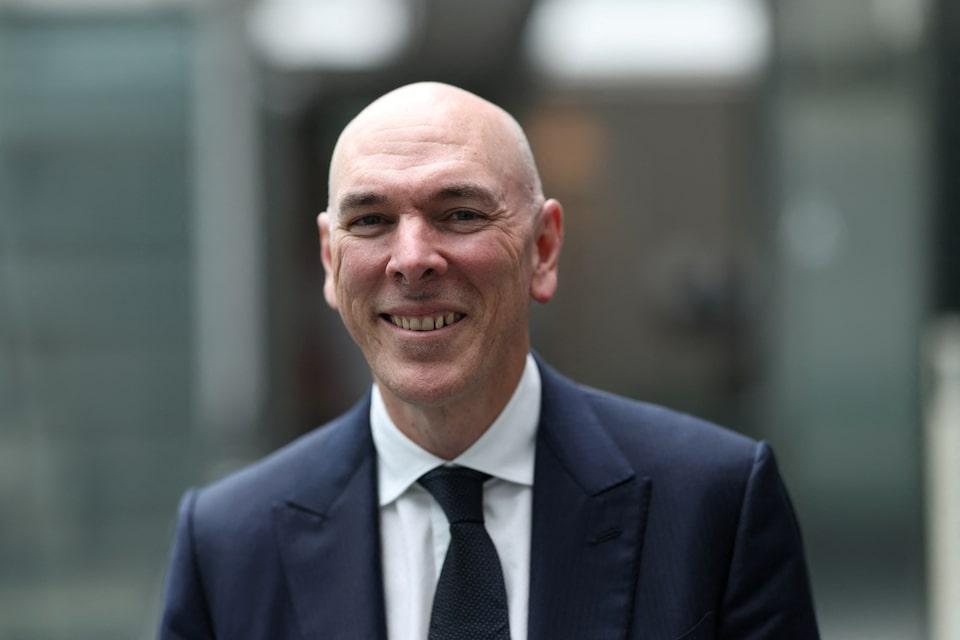
July 24 (Reuters) - Australia's top investment bank, Macquarie Group (MQG.AX) , opens new tab, reported a decline in first-quarter net profit on Thursday and announced that Chief Financial Officer Alex Harvey will step down at the end of 2025. Harvey will retire mid-2026 after completing an extended handover to his successor, Frank Kwok, who has been with Macquarie for 28 years and currently serves as deputy CFO, the company said. Sign up here. The leadership changes come as Australia's corporate regulator (ASIC) has sued Macquarie, alleging it misreported up to A$1.5 billion worth of short sales over a 15-year period, misleading the market and violating transparency rules put in place following the global financial crisis. Macquarie indicated it may adjust executive bonuses following the ASIC lawsuit, stating, "So far as remuneration impacts are concerned, this will be an FY26 matter, about which the board will come to a view over the period ahead." "As CFO for the last eight years, Alex has delivered a significant transformation in Macquarie's financial management and stakeholder engagement activities, playing a key role in driving the global growth of the Group," Macquarie said. The bank's first-quarter net profit declined due to lower contributions from its Asset Management arm and Commodities and Global Markets unit. Macquarie Asset Management experienced a softer quarter compared to last year, with net profit contribution down primarily due to timing of investment-related income from asset realisations. Meanwhile, Commodities and Global Markets unit's net profit contribution fell due to reduced contribution from Commodities, which recorded lower net interest and trading income in North American Gas and Power. https://www.reuters.com/business/finance/macquaries-quarterly-profit-falls-cfo-harvey-decides-step-down-2025-07-23/
2025-07-23 23:07
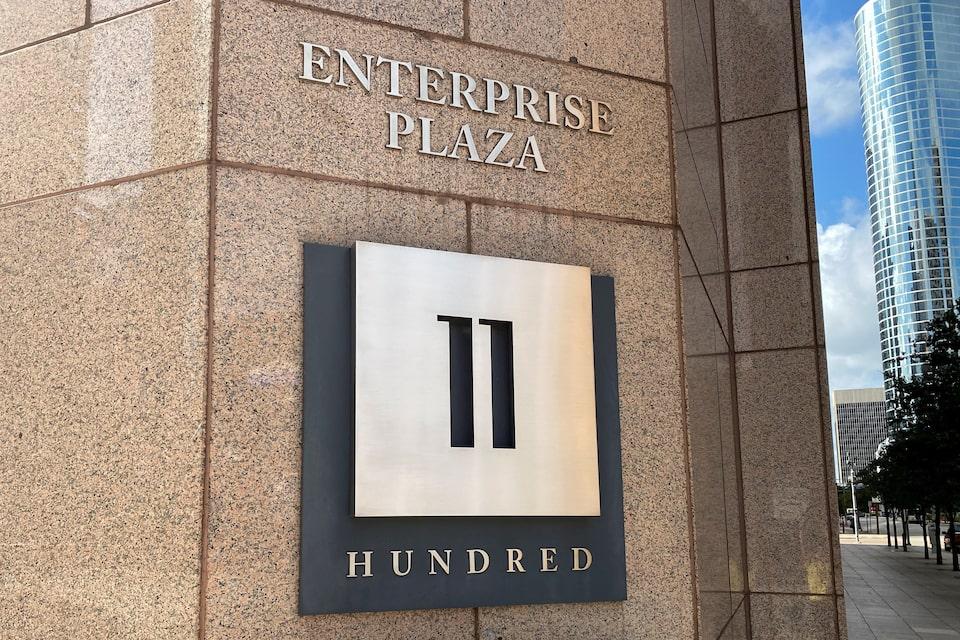
HOUSTON, July 23 (Reuters) - A liquefied petroleum gas tanker moored at the Enterprise Products Partners (EPD.N) , opens new tab terminal along the Neches river in Texas, ship tracking data showed on Wednesday, the first vessel to arrive for loading at the facility. Energy research firm Vortexa said the mooring signaled the commissioning of the plant. Enterprise did not immediately reply to a request for a comment. Sign up here. Enterprise, one of the top U.S. ethane producers and exporters, has been adding to its natural gas liquids business by building and expanding facilities to export ethane and propane to meet growing global demand. The company announced in April plans to construct a new export facility, which could load either ethane or propane, located on the Neches River in Orange County, Texas. Ethane and propane are byproducts of oil and gas production. Ethane is primarily used to make plastics, while propane is used for heating and cooking. Phase 1 of Enterprise's Neches River project has a nameplate capacity of 120,000 barrels per day and will accommodate loading rates of up to 45,000 barrels per hour. It was expected to begin service in the second half of 2025. Medium-sized gas tanker Navigator Eclipse entered the Enterprise Beaumont dock late on Tuesday and was moored on Wednesday, according to ship tracking data on LSEG and Kpler. The vessel has only moved ethane between U.S. and China since May 2021, according to Kpler. The vessel is likely to head to Satellite Chemical's (002648.SZ) , opens new tab Lianyungang import terminal in China with the commissioning cargo, Vortexa's Samantha Hartke wrote in a note. Satellite could not immediately be reached outside of office hours. A company uses the commissioning stage to test and ensure all aspects of a plant are working before moving to commercial operations. Phase 2 of the terminal, which will allow Enterprise to load up to 180,000 bpd of ethane and 360,000 bpd of propane, or a combination of the two, is expected to begin service in the first half of 2026. https://www.reuters.com/business/energy/first-lpg-tanker-docks-enterprise-products-neches-river-terminal-texas-2025-07-23/
2025-07-23 22:37
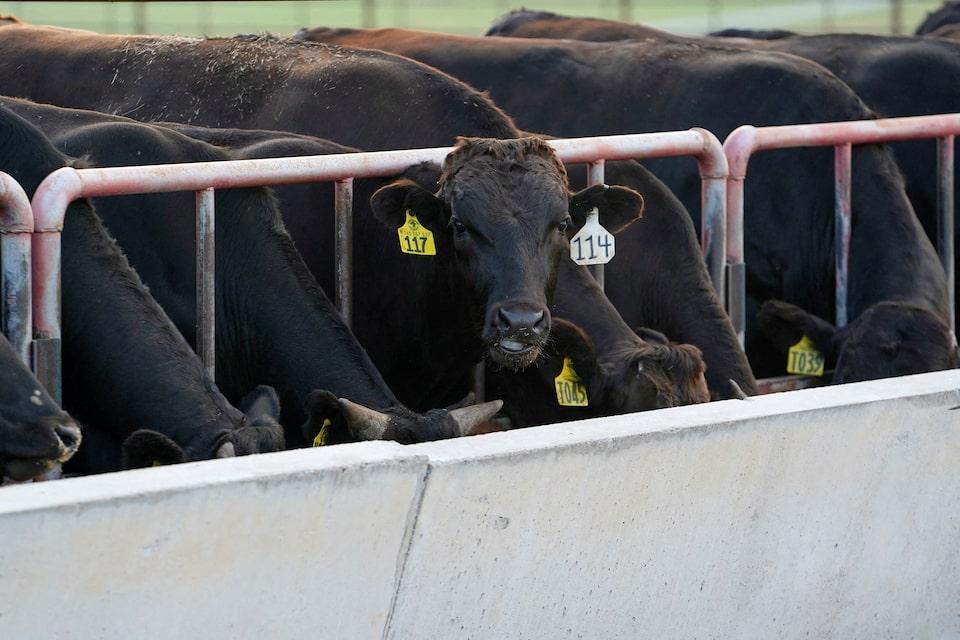
Australia satisfied with US measures, minister says Curbs lifted after extensive risk review Trump in April singled out trade disparity with Australian beef SYDNEY, July 24 (Reuters) - Australia lifted on Thursday strict biosecurity restrictions on beef imports from the U.S. after an extensive scientific and risk review, likely removing a key concern for U.S. President Donald Trump's administration over bilateral trade. Agriculture Minister Julie Collins said Australia was satisfied with the measures put in place by the United States to effectively manage biosecurity risks. Sign up here. "The U.S. Beef Imports Review has undergone a rigorous science and risk-based assessment over the past decade," Collins said in a statement. "The ... government will never compromise on biosecurity." News of Australia lifting the curbs was first reported by the Australian Financial Review. The report said Australia will use the easing of rules to argue its case for the United States to wind back 50% tariffs on steel and aluminium and Trump's threat to impose a 200% tariff on pharmaceuticals. Trump in April singled out the beef trade disparity after Australia's beef exports to the United States surged last year, reaching A$4 billion ($2.64 billion) amid a slump in U.S. beef production. Prime Minister Anthony Albanese in April had ruled out relaxing Australia's strict biosecurity rules during tariff talks with the United States. Since 2003, Australia has curbed entry of U.S. beef after detecting bovine spongiform encephalopathy, or mad cow disease. It lifted some restrictions in 2019. Australia allows entry if the cattle were born, raised, and slaughtered in the United States, though few shippers can prove these requirements, as cattle frequently move between the United States, Canada, and Mexico. The United States has introduced more tracking methods since last year to identify and trace all cattle from Mexico and Canada to the farm and through the supply chain. Australia views its strict biosecurity rules as safeguarding its disease-free cattle, helping it preserve access to lucrative markets such as Japan and South Korea, while Australian beef is prized by U.S. fast-food chains for its lower fat content and competitive prices. ($1 = 1.5152 Australian dollars) https://www.reuters.com/world/americas/australia-lifts-biosecurity-curbs-us-beef-amid-tariff-talks-2025-07-23/
2025-07-23 22:29
July 23 (Reuters) - Packaging Corp of America (PKG.N) , opens new tab forecast third-quarter profit below Wall Street estimates on Wednesday, hurt by rising freight costs and weak export containerboard sales amid global trade uncertainty. The Lake Forest, Illinois-based company specializes in delivering paper and packaging products catering to a range of sectors, including the food and beverage industry, paper manufacturing, and retail commerce. Sign up here. While demand for packaging goods is recovering from a post-pandemic slowdown, sticky inflation and cautious consumer sentiment have pressured sales, especially while its customers navigate trade uncertainties due to tariffs. CEO Mark Kowlzan said pricing in both packaging and paper will remain flat in the third quarter, while freight costs will rise due to higher rail rates. The company expects third-quarter profit of $2.80 per share, compared with analysts' average estimate of $2.92 per share, according to LSEG data. Packaging Corp's net sales rose slightly to $2.17 billion in the quarter ended June 30, from $2.07 billion a year earlier. Analysts on average estimated $2.19 billion, according to data compiled by LSEG. Its adjusted profit for the second quarter came in at $2.48 per share, compared with estimates of $2.44. https://www.reuters.com/markets/commodities/packaging-corp-forecasts-profit-below-estimates-export-freight-pressures-2025-07-23/

2025-07-23 22:05
July 23 (Reuters) - Canadian miner First Quantum Minerals (FM.TO) , opens new tab said on Wednesday it expects costs associated with the maintenance plan for its closed copper mine in Panama will increase to roughly $17 million to $18 million per month. In May, Panama approved the company's preservation and safe management plan (P&SM), which allowed it to export copper concentrate stored at the site as well as to restart a power plant at Cobre Panama. Sign up here. The site had been shut in 2023 after massive protests from local residents over environmental issues. The mine's closure, which had contributed 1% to global copper production, has had an impact on both Panama's and the company's financial prospects. First Quantum began shipments of the 120,000 metric tons of copper left at the site in June. The final shipment is expected to be dispatched soon, the company said on Wednesday, putting an end to uncertainty over the stockpiled copper. During the second quarter, maintenance costs related to the Cobre Panama mine averaged roughly $15 million per month. The plan also allows for import of fuel to help restart Cobre Panama's thermoelectric power plant, which is expected in the fourth quarter of 2025. First Quantum said that the up to $3 million rise in P&SM costs could be partially offset by the potential sale of excess power to support Panama's national grid. https://www.reuters.com/business/energy/first-quantum-expects-rise-cobre-panama-maintenance-costs-2025-07-23/