2025-07-23 20:34
TSX ends up 0.2% at 27,416.41 Eclipses Thursday's record closing high Energy adds 1.1%, financials end up 0.6% Canadian National Railway falls 4.1% on revenue miss July 23 (Reuters) - Canada's main stock index posted a record high on Wednesday, helped by gains for energy and financial shares, as investors cheered signs that countries are reaching trade deals with the United States ahead of an August 1 deadline. The Toronto Stock Exchange's S&P/TSX composite index (.GSPTSE) , opens new tab ended up 51.98 points, or 0.2%, at 27,416.41, eclipsing Thursday's record closing high. Sign up here. "It looks like deals are getting done," said Allan Small, senior investment advisor of the Allan Small Financial Group with iA Private Wealth. "This fear of August 1 may not materialize." Wall Street also rose as the European Union and the U.S. appeared headed toward a trade deal similar to an agreement U.S. President Donald Trump struck with Japan. The energy sector (.SPTTEN) , opens new tab added 1.1% and heavily weighted financials (.SPTTFS) , opens new tab, which include bank stocks, were up 0.6%. "Banks are the bloodline of any economy," Small said, adding that they would benefit if trade certainty were to improve the economic outlook. Rogers Communications Inc (RCIb.TO) , opens new tab shares advanced 1.2% after the company raised its annual service revenue forecast, banking on a boost from its stake acquisition in Maple Leaf Sports. Not all sectors notched gains. The materials sector (.GSPTTMT) , opens new tab, which includes metal mining shares, fell 0.5% as the price of gold, a traditional safe haven, declined. Industrials also ended lower, losing 0.6%. Shares of Canadian National Railway Co (CNR.TO) , opens new tab dropped 4.1% after the company's second-quarter revenue missed expectations. https://www.reuters.com/markets/europe/tsx-climbs-record-high-global-trade-deal-optimism-2025-07-23/

2025-07-23 20:24
U.S., European shares rise on potential U.S.-EU trade deal U.S.-Japan tariff agreement boosts investor sentiment Treasury yields rise, gold softens as risk-on sentiment grows NEW YORK, July 23 (Reuters) - U.S. stocks advanced on Wednesday and Treasury yields reversed their three-day slide after word of a trade deal between the United States and Japan, while a report of a similar deal with the European Union provided welcome signs of progress in President Donald Trump's multi-front tariff negotiations. All three major U.S. stock indexes closed in positive territory ahead of hotly anticipated quarterly reports from Alphabet (GOOGL.O) , opens new tab and Tesla (TSLA.O) , opens new tab. Sign up here. Gold prices backed away from a five-week high as risk-on sentiment lured investors away from the safe-haven metal. Trump reached a trade agreement with Japan with just over a week remaining before an August 1 deadline. The deal spares Japan from bruising new levies on autos and other goods in exchange for a $500 billion package of investment and loans bound for the United States, and stands as the most significant trade deal yet to emerge since Trump's market-rattling "liberation day" tariff announcement in April. The European Union and the United States are nearing an agreement on a similar trade deal that would impose 15% tariffs on European imports, while waiving duties on some items, according to officials from the European Commission. This follows a deal with the Philippines, and raises hopes that more deals could be in the offing. "The storm clouds parting and the macro situation looks to be improving," said Sam Stovall, chief investment strategist of CFRA Research in New York. "Japan has signed a trade agreement, fingers are crossed for the EU, and investors are feeling optimistic that either more trade agreements will be announced before the August 1st deadline or postponements will be granted." Second-quarter earnings season is underway, with 23% of the companies in the S&P 500 having reported. Of those, 85% have beaten Wall Street expectations, according to LSEG data. Analysts currently predict year-on-year S&P 500 earnings growth, on aggregate, of 7.5%, marking a solid improvement over the 5.8% growth estimates as of July 1. High-profile results from Magnificent 7 members Alphabet (GOOGL.O) , opens new tab and Tesla (TSLA.O) , opens new tab will be closely scrutinized by investors, particularly any forward guidance that might shed light on expenditures and payoffs surrounding Artificial Intelligence (AI). As major tech and tech-related megacaps post results, Wall Street's reliance on a small number of momentum stocks will be put to the test. The Dow Jones Industrial Average (.DJI) , opens new tab rose 507.85 points, or 1.14%, to 45,010.29, the S&P 500 (.SPX) , opens new tab rose 49.35 points, or 0.78%, to 6,358.97 and the Nasdaq Composite (.IXIC) , opens new tab rose 127.33 points, or 0.61%, to 21,020.02. Optimism over a potential U.S.-EU trade deal lifted European shares, with automakers leading the rally. Should the talks fail, the European Union is preparing to unveil retaliatory measures. MSCI's gauge of stocks across the globe (.MIWD00000PUS) , opens new tab rose 10.16 points, or 1.09%, to 939.94. The pan-European STOXX 600 (.STOXX) , opens new tab index rose 1.08%, while Europe's broad FTSEurofirst 300 index (.FTEU3) , opens new tab rose 23.70 points, or 1.10%. Emerging market stocks (.MSCIEF) , opens new tab rose 19.23 points, or 1.54%, to 1,267.28. MSCI's broadest index of Asia-Pacific shares outside Japan (.MIAPJ0000PUS) , opens new tab closed higher by 1.53%, to 666.81, while Japan's Nikkei (.N225) , opens new tab rose 1,396.40 points, or 3.51%, to 41,171.32. U.S. Treasury yields moved higher after three straight days of declines as trade optimism fueled risk-on sentiment. The yield on benchmark U.S. 10-year notes rose 5.2 basis points to 4.388%, from 4.336% late on Tuesday. The 30-year bond yield rose 4.1 basis points to 4.944% from 4.903% late on Tuesday. The 2-year note yield, which typically moves in step with interest rate expectations for the Federal Reserve, rose 5.5 basis points to 3.886%, from 3.831% late on Tuesday. The dollar eased as the yen gathered strength and the euro inched higher as trade negotiations progressed. The dollar index , which measures the greenback against a basket of currencies including the yen and the euro, fell 0.27% to 97.20, with the euro up 0.18% at $1.1774. Against the Japanese yen , the dollar weakened 0.1% to 146.48. In cryptocurrencies, bitcoin fell 1.08% to $118,485.91. Ethereum declined 2.99% to $3,596.61. Oil prices dropped as trade uncertainties ebbed. U.S. crude dipped 0.09% to $65.25 per barrel, while Brent settled at $68.51 per barrel, down 0.12% on the day. Spot gold fell 1.19% to $3,390.12 an ounce. U.S. gold futures fell 1.29% to $3,395.00 an ounce. https://www.reuters.com/business/autos-transportation/global-markets-update-8-graphics-2025-07-23/
2025-07-23 20:17
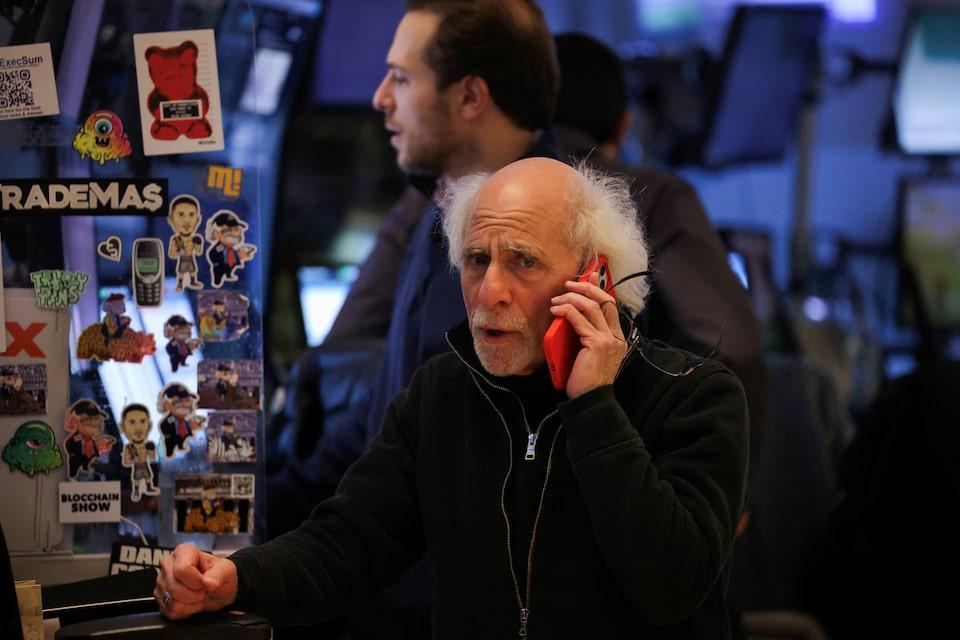
Tariffs on Japanese autos cut to 15% from 27.5% Thermo Fisher surges after beating Street estimates Texas Instruments slumps as tariff uncertainty hits demand Tesla reports after the bell, investors brace for revenue fall S&P 500 +0.78%, Nasdaq +0.61%, Dow +1.14% July 23 (Reuters) - The S&P 500 and Nasdaq notched record high closes on Wednesday, lifted by Nvidia and GE Vernova, as the European Union and the U.S. appeared headed toward a trade deal similar to an agreement President Donald Trump struck with Japan. The White House's deal with the European Union would include a broad tariff of 15% on EU goods imported into the U.S., two diplomats said. The rate, which could also extend to cars, would mirror the framework agreement the U.S. has struck with Japan. Sign up here. The benchmark S&P 500 has now climbed about 8% in 2025, while the Nasdaq has gained almost 9%. "The key thing is the markets have confidence that the White House is going to continue to work through these trade deals," said Larry Tentarelli, chief technical strategist for Blue Chip Daily Trend Report. Shares of GE Vernova (GEV.N) , opens new tab surged to 14.6% an all-time high after the power equipment maker raised its revenue and free cash flow forecasts and beat Wall Street estimates for second-quarter profit. GE Vernova has gained over 80% so far in 2025, with power consumption on track to hit due to growing demand from AI and cryptocurrency data centers. Heavyweight AI chipmaker Nvidia (NVDA.O) , opens new tab climbed 2.25% and fueled gains in the S&P 500 and Nasdaq. Tesla (TSLA.O) , opens new tab edged up 0.14% ahead of its quarterly report due after the closing bell. Investors will focus on the electric vehicle maker's analyst conference call. They have braced for Tesla to report a steep drop in revenue related to mounting competition, a lack of new car models and a consumer backlash against CEO Elon Musk. "What you will hear is an awful lot of discussion about the future and a broad acknowledgement that this was a terrible quarter," said Michael Green, chief strategist at Simplify Asset Management in Philadelphia. Alphabet (GOOGL.O) , opens new tab dipped 0.58%, with the Google parent also set to report results after the close of trading. The S&P 500 climbed 0.78% to end the session at 6,358.91 points. The Nasdaq gained 0.61% to 21,020.02 points, while the Dow Jones Industrial Average rose 1.14% to 45,010.29 points, just short of its December 4 record high close. Volume on U.S. exchanges was relatively heavy, with 19.1 billion shares traded, compared to an average of 17.7 billion shares over the previous 20 sessions. Wall Street's "fear gauge", the CBOE Volatility Index (.VIX) , opens new tab, dipped to its lowest level in over five months. Analysts on average expect S&P 500 companies to report a 7.5% increase in earnings for the second quarter, according to LSEG I/B/E/S. Microsoft (MSFT.O) , opens new tab, Nvidia and other technology heavyweights that have seen their valuations soar due to their leadership in AI are expected to drive much of that quarterly earnings growth. Medical equipment maker Thermo Fisher (TMO.N) , opens new tab surged over 9% after beating Wall Street's estimates for second-quarter profit and revenue. Texas Instruments (TXN.O) , opens new tab tumbled 13% after its quarterly profit forecast pointed to weaker-than-expected demand for its analog chips and underscored tariff-related uncertainty. Texas Instruments' report weighed on other analog chipmakers, with NXP Semiconductors (NXPI.O) , opens new tab, Analog Devices (ADI.O) , opens new tab and ON Semiconductor (ON.O) , opens new tab losing between 1% and 4.6%. In economic data, U.S. existing home sales fell more than expected in June. Focus now shifts to Thursday's weekly jobless claims numbers and S&P Global's flash PMI data to gauge economic health in the wake of tariff uncertainties. Following a mixed set of economic data last week, traders have ruled out an interest rate cut by the Federal Reserve next week. Odds for a September reduction stand at about 58%, according to the CME FedWatch tool. Advancing issues outnumbered falling ones within the S&P 500 (.AD.SPX) , opens new tab by a 2.1-to-one ratio. The S&P 500 posted 50 new highs and 2 new lows; the Nasdaq recorded 96 new highs and 20 new lows. https://www.reuters.com/business/sp-500-nasdaq-rally-record-highs-on-optimism-about-trade-deals-2025-07-23/
2025-07-23 19:29
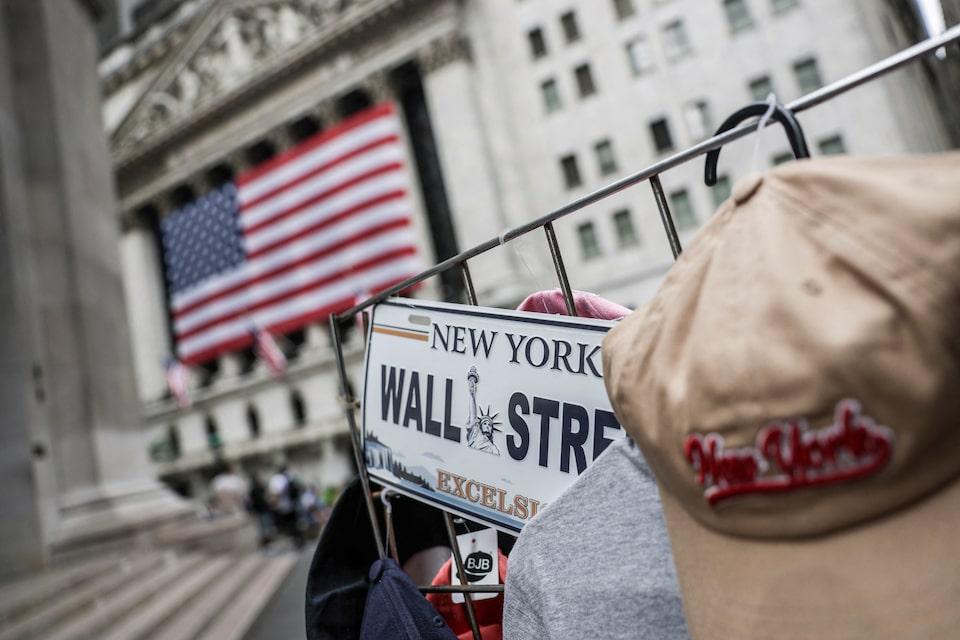
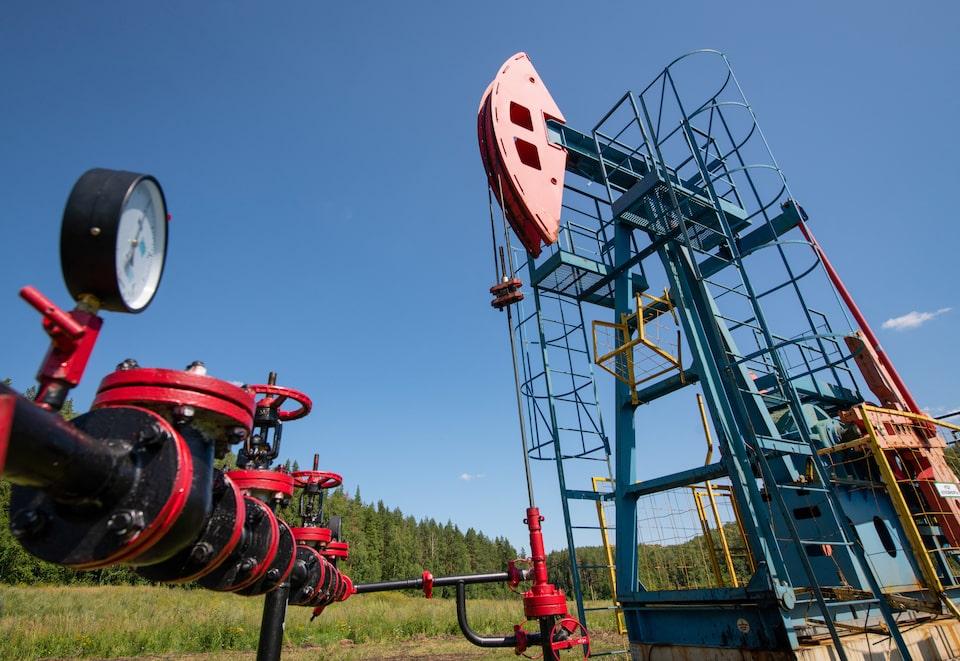
US-Japan trade deal puts brakes on oil's three-day slide Market cautious ahead of EU-China summit EIA reports US crude inventories fell last week NEW YORK, July 23 (Reuters) - Oil prices were little changed on Wednesday as investors assessed trade developments between the European Union and the U.S. after President Donald Trump reached a tariff deal , opens new tab with Japan. Brent crude futures settled 8 cents, or 0.12%, lower at $68.51 a barrel, while U.S. West Texas Intermediate crude futures were down 6 cents, or 0.09%, at $65.25 per barrel. Sign up here. On Wednesday, EU officials said they were heading towards a trade deal with Washington that would result in a broad 15% tariff on EU goods imported into the U.S., avoiding a harsher 30% levy slated to be implemented from August 1. Just hours earlier, Trump said the U.S. and Japan had struck a trade deal that lowers tariffs on auto imports and spares Tokyo from punishing new levies on other goods in exchange for a $550 billion package of U.S.-bound investment and loans. "The trade deal with Japan might be a template for trade deals with other countries," said Andrew Lipow, president of Lipow Oil Associates. "On the other hand, the market is still concerned about the U.S. coming to an agreement with the European Union and China." The European Commission planned to submit counter-tariffs on 93 billion euros ($109 billion) of U.S. goods for approval to EU members. A vote is expected on Thursday, though no measures would be imposed until August 7. Both benchmarks lost about 1% on Tuesday after the EU said it was considering countermeasures against U.S. tariffs. "The slide (in prices) of the past three sessions appears to have abated, but I don’t expect much of an upward impetus from news of the U.S.-Japan trade deal as the hurdles and delays being reported in talks with the EU and China will remain a drag on sentiment," said Vandana Hari, founder of oil market analysis provider Vanda Insights. On the supply side, U.S. Energy Information Administration data showed U.S. crude inventories fell last week by 3.2 million barrels to 419 million barrels, compared with analysts' expectations in a Reuters poll for a 1.6 million-barrel draw. "That’s a bullish swing," said Bob Yawger, director of energy futures at Mizuho. "It was largely a function of import-export dynamics." U.S. crude exports were up by 337,000 barrels per day (bpd) to 3.86 million bpd, while net U.S. crude imports fell last week by 740,000 barrels per day, the EIA said. In another bullish sign for the crude market, the U.S. energy secretary said on Tuesday that the U.S. would consider sanctioning Russian oil to end the war in Ukraine. The EU on Friday agreed its 18th sanctions package against Russia, lowering the price cap for Russian crude. https://www.reuters.com/business/energy/oil-prices-steady-with-trade-talks-focus-2025-07-23/
2025-07-23 19:20
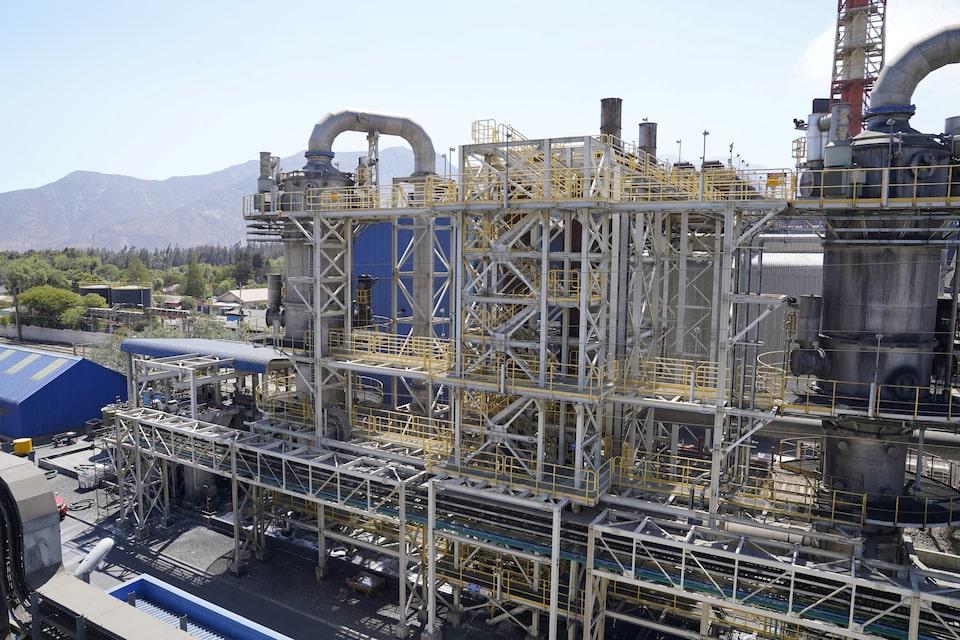
SANTIAGO, July 23 (Reuters) - Top copper supplier Chile on Wednesday bumped up its outlook for prices of the red metal, though it flagged lagging output from a major mine operated by Glencore (GLEN.L) , opens new tab and Anglo American (AAL.L) , opens new tab as weighing on economic growth. Finance Minister Mario Marcel, in a presentation to Congress, upped the government forecast for average copper prices for this year to $4.28 per pound, from $4.26 per pound previously. Sign up here. Marcel maintained the official estimate for gross domestic product (GDP) growth for this year at 2.5%, though he said non-mining GDP had compensated for a drop in the mining sector's contribution. "In recent months we've seen a moderation in production, primarily due to a drop in Collahuasi's output," he said, referring to the mine operated by Glencore and Anglo American. Earlier on Wednesday, the chair of Chilean state miner Codelco, the world's largest copper producer, told Reuters that the 50% tariffs on copper set to go into effect on August 1 from the United States had influenced record prices there with global uncertainty causing price volatility. Chile's finance ministry maintained its average copper price forecast for next year, at $4.30 per pound. It also held its inflation outlook for this year and next, along with next year's GDP growth forecast. https://www.reuters.com/business/energy/chile-bumps-up-copper-price-forecast-flags-lagging-collahuasi-output-2025-07-23/
2025-07-23 19:16
NICOSIA, July 23 (Reuters) - Firefighters in Cyprus were battling on Wednesday to contain a huge wildfire forcing the evacuation of at least four villages on the first day of a heatwave which sent temperatures soaring. Authorities said the fire was raging in terrain north of the southern city of Limassol, stoked by strong winds and high temperatures. A fire brigade spokesperson said there had been 'considerable damage' to homes in the region, known for its vineyards. Sign up here. Cyprus said it had requested assistance to contain the fire under a European Union assistance scheme, while neighbouring Jordan would be sending help, President Nikos Christodoulides said. "The situation is very difficult and the fire front is huge. All forces have been mobilised," he told reporters at the scene. Authorities said 14 aircraft and workers on the ground were trying to extinguish the blaze, which broke out around midday on Wednesday. The cause of the blaze was not immediately clear. Temperatures on the east Mediterranean island hit 43 degrees Celsius (109.4 degrees Fahrenheit) inland on Wednesday, forcing authorities to issue an amber weather warning. It was expected to climb further to 44 C on Thursday, making it the hottest day of the year. Although heatwaves and forest fires are common, the impact on human life and the damage have become more pronounced in recent years. Four men from Egypt died in a fire in 2021. https://www.reuters.com/business/environment/cyprus-struggles-contain-wildfire-homes-damaged-2025-07-23/