2026-01-26 06:26
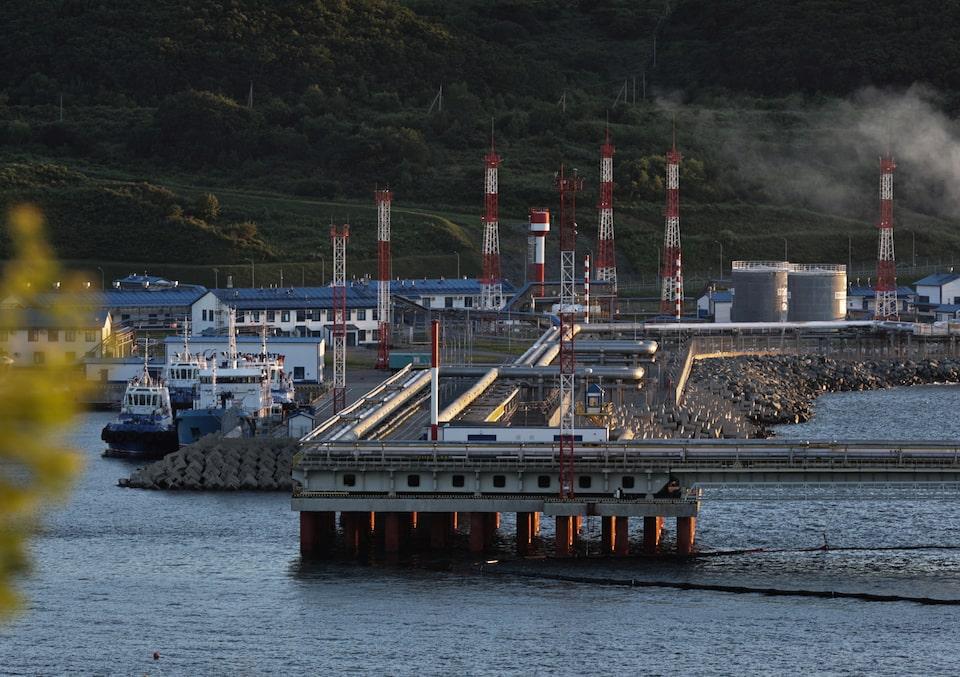
Sanctions on Russian oil majors hamper trade and demand Attacks on Russian oil infrastructure crimp production Asia still set to be key destination for Russian barrels SINGAPORE/MOSCOW, Jan 26 (Reuters) - Russian fuel oil exports to Asia slowed in early 2026 as rising scrutiny due to tighter Western sanctions hampered trade while Ukrainian drone attacks on refining facilities in Russia reduced output, according to shipping data and industry sources. The slowdown in Russian exports combined with falling Venezuelan shipments to China after the U.S. capture of President Nicolas Maduro could tighten Asia's supply of the high-sulphur fuel oil, used as a refinery feedstock and bunker fuel, and support prices. Sign up here. Russian fuel oil exports to Asia have totalled about 1.2 million metric tons (about 246,000 barrels per day) so far in January and are on track to slide for a third straight month, ship-tracking data from Kpler showed on Friday. The slump comes as some cargoes are diverted to storage facilities before re-exporting and compares with 2.5 million tons of exports in January 2025. Output of Russian refined products has fallen since October as several refineries have shut for repairs following Ukrainian drone attacks. Stormy winter weather in December and January has also impacted cargo loadings. SANCTIONS, LONGER ROUTES "Buyers are unwilling to take on risks given the strong sanction monitoring and penalties," said Emril Jamil, senior analyst at LSEG, following U.S. sanctions on Russian producers Rosneft (ROSN.MM) , opens new tab and Lukoil in October. A fuel oil trader said it was now more complicated to move cargoes from the sanctioned refiners as there were multiple layers involved, such as ship-to-ship transfers. Some cargoes are being held at Port Said anchorage in Egypt awaiting buyers, market sources said. The sources declined to be named as they are not authorised to speak to media. About 360,000 tons loaded in November and December are shipped to Asia via longer routes around Africa, trade estimates showed. Of these, roughly 300,000 tons do not have a final destination. KARIMUN RESUMES RUSSIAN FUEL OIL IMPORTS Indonesia's Karimun oil terminal also resumed imports in December and January, receiving more than 300,000 tons of Russian fuel oil, after a near six-month halt, according to Kpler data and market sources. Operator Oil Terminal Karimun did not immediately respond to a request for comment. The terminal became a key transshipment hub for Russian oil products in recent years. Asia will likely remain the top destination for Russian fuel oil this year unless Western sanctions are lifted, market sources said. Key outlets include Southeast Asia and China, while some cargoes are continuing to flow to the Middle East, the sources said. Fuel oil exports from Russia to Singapore totalled 491,000 tons so far in January, down from December, Kpler data showed. Other cargoes continued to end up in China ports including those in Shandong, where independent refineries import fuel oil as an alternative feedstock to crude oil. https://www.reuters.com/business/energy/russias-fuel-oil-exports-asia-slow-early-2026-sanctions-hamper-trade-2026-01-26/
2026-01-26 06:09
LONDON, Jan 26 (Reuters) - Britain's economy has shown signs of picking up since finance minister Rachel Reeves' annual budget statement in November, following months of uncertainty for employers and households. Surveys published last week indicated that businesses had their best month in January since before Keir Starmer became prime minister in July 2024, while consumer confidence reached its highest since August that year. Sign up here. Retail sales volumes rose in December at the fastest annual pace since April, according to official data. However, the labour market remains weak - partly due to a payroll tax increase introduced by Reeves last year - and Britain still has the highest inflation among Group of Seven rich economies. Following are graphics summarising the state of the world's sixth-biggest economy. BUSINESS BOUNCE-BACK Businesses reported the fastest upturn this month since April 2024, led by services firms, while factory order books expanded at the quickest pace in almost four years, according to purchasing managers' surveys. Analysts cautioned the recovery may not be sustained. Despite January's jump, the S&P Global Purchasing Managers' Index remains below its pre-COVID average under Starmer. CONSUMERS TURN MORE POSITIVE Britons remain cautious, but GfK's consumer confidence index edged up this month week to its highest since August 2024. By contrast, S&P Global said its shorter January survey showed consumer sentiment dipping to a nine-month low. Retail sales volumes rose unexpectedly in December after a weak October and November, official data showed. Other gauges of spending have been softer, and some major retailers have reported underwhelming end-of-year sales. GDP DATA SURPRISED IN NOVEMBER Britain's economy grew by a stronger-than-expected 0.3% in November, its strongest monthly rise since June. Output was boosted by the return to full production at Jaguar Land Rover after a cyberattack and by stronger-than-expected services activity. INFLATION TICKS UP, BUT SEEN FALLING Inflation rose more than forecast to 3.4% in December but is expected to slow sharply soon. Bank of England Governor Andrew Bailey has said it is likely to be close to the central bank's 2% target by April or May. Some other BoE policymakers have sounded less relaxed. Megan Greene said on Friday she remained concerned about lingering wage-driven inflation pressures. JOBS MARKET STAYS WEAK The labour market remains subdued, with the number of payrolled workers falling in December by the most since November 2020 - although, in that period, some large preliminary drops were revised up. Last week's PMI survey showed businesses remained wary of hiring, with employment in the services sector declining at a faster rate in January than in December. https://www.reuters.com/world/uk/uk-businesses-consumers-show-signs-recovery-budget-worries-recede-2026-01-26/

2026-01-26 06:00
LONDON, Jan 23 (Reuters) - Nickel prices have been on an explosive rally as the market bets that Indonesia, the world's largest producer of the battery metal, will hit the brakes on its runaway output growth. London Metal Exchange (LME) three-month metal has motored higher from a mid-December low of $14,235 per metric ton to a January 14 peak of $18,905, a level last traded in 2022. Sign up here. Indonesia's Energy and Mineral Resources Minister Bahlil Lahadalia triggered the nickel resurgence mid-December with a promise to cut production. This year's annual mining permits will be cut to 250-260 million wet tons of ore from 379 million tons in 2025, an energy ministry official confirmed on January 14. Given Indonesia accounts for some 65% of global nickel supply and has created the glut weighing on prices over the last two years, this is obviously big news. Hence the market reaction. But there's a lot of devilish detail behind those headline numbers. NUMBER-CRUNCHING Firstly, Indonesia's mining quotas are in wet tons. As analysts at Macquarie Bank point out, the headline numbers are "difficult to convert into actual recoverable nickel units due to the wide variation of moisture content of ores." Moisture levels can be up to 40% of the wet tonnage. Moreover, neither operators nor government formally report either quotas or production levels, which doesn't help anyone trying to figure out what is going on in Indonesia's giant nickel sector, the bank adds. What is certain, though, is that last year's quota was far higher than actual output. Total ore demand from Indonesia's processing plants was only 300 million wet tons last year, according to the country's nickel smelter association FINI. And that includes imports of ore from the Philippines, which reached 14 million tons in the first 11 months of 2025, according to the World Bureau of Metal Statistics. This year's mooted quota will indeed mean production cuts, just not of the size implied by the "slashing" of quotas. Smelter demand for ore is forecast by FINI to rise to 340-350 million tons this year, creating a significant gap that can only partly be filled by imports and destocking. COME BACK IN JUNE FINI's ore demand forecast tells you how much processing capacity is still ramping up in Indonesia. Which presents the government with a thorny problem: how to restrain ore supply without harming smelters that are already under construction or in the process of ramping up? The whole thrust of Indonesian resource policy is to create greater value by moving down the processing chain from ore to intermediate products to finished nickel. Depriving new projects of feed isn't going to help. The stated ambition is to match ore supply with smelter demand but the latter is still growing fast, even if Jakarta has stopped approving some new projects. If the tensions between quota-capped ore production and smelter demand grow too acute, there is a safety valve in the form of a mid-year review of how things are going. The headline annual mining permit number, in other words, may be a moving target as the year progresses. TAKING BACK CONTROL There's no doubt that Jakarta is serious about taking more control of a sector that has grown too big too fast. It's cracked down on illegal mining and on operators working in breach of environmental rules. In November it halted the approval of new smelters producing intermediate products such as nickel pig iron and matte used primarily by the stainless steel rather than the electric vehicle battery sector. Reducing the annual quota is another part of the strategy but don't expect the Indonesian nickel juggernaut to come to a shuddering halt. This could be a slow process and the numbers are most likely going to change again. Andy Home is a Reuters columnist. The opinions expressed are his own. Enjoying this column? Check out Reuters Open Interest (ROI), , opens new tab your essential new source for global financial commentary. Follow ROI on LinkedIn, , opens new tab and X. , opens new tab And listen to the Morning Bid daily podcast on Apple , opens new tab, Spotify , opens new tab, or the Reuters app , opens new tab. Subscribe to hear Reuters journalists discuss the biggest news in markets and finance seven days a week. https://www.reuters.com/markets/nickel-market-plays-indonesias-numbers-game-2026-01-23/

2026-01-26 05:48
Gold expected to climb toward $6,000 this year, analysts say Gold surged 64% in 2025, up more than 17% so far this year Gold ETFs witnessed record inflows in 2025 Jan 26 (Reuters) - Analysts expect spot gold prices, which hit a record high above $5,000 per ounce on Monday, to climb further toward $6,000 this year on mounting global tensions as well as strong central-bank and retail demand. Gold raced to a peak of $5,092.70 as geopolitical and economic risks rattled markets. The safe-haven metal is up more than 17% this year, after soaring 64% in 2025. Sign up here. The London Bullion Market Association's annual precious metals forecast survey shows analysts projecting gold rising as high as $7,150 and averaging $4,742 in 2026. Goldman Sachs has raised its December 2026 gold price forecast to $5,400 from $4,900. Independent analyst Ross Norman expects a high of $6,400 this year, with an average of $5,375. "The only certainty at the moment seems to be uncertainty, and that's playing very much into gold's hands," Norman said. GEOPOLITICAL TENSIONS Gold's recent rally has been fuelled by geopolitical tensions, from the U.S.–NATO friction over Greenland and tariff uncertainty to rising doubts over the independence of the U.S. Federal Reserve, among others. "With the upcoming U.S. mid-term elections, political uncertainty may increase further. At the same time, persistent concerns about over-valued equity markets are likely to reinforce portfolio diversification flows into gold," said Philip Newman, a director at Metals Focus. "After crossing the $5,000/ounce milestone, we expect further upside," he added. ROBUST CENTRAL BANK PURCHASES Central-bank gold buying, a key driver of prices in 2025, is expected to stay strong this year. Goldman Sachs forecasts purchases to average 60 metric tons a month as emerging-market central banks continue diversifying reserves into gold. Poland's central bank, which held 550 tons of gold at end-2025, aims to lift reserves to 700 tons, Governor Adam Glapinski said this month. These plans reaffirm the view that the key driver behind the spike in gold is central banks "looking to de-dollarise ... and where else could you go except into gold?" Norman said. China's central bank extended its gold-buying spree for a 14th month in December. ETF INFLOWS, RETAIL DEMAND Inflows into gold-backed ETFs, which store bullion for investors and account for a significant amount of investment demand for the metal, are also underpinning prices as markets expect further U.S. rate cuts this year. "There's an opportunity cost to holding gold which has no yield. As interest rates decline, so does this opportunity cost. If the Fed continues to lower rates in 2026, demand for gold should rise," said Chris Mancini, co-portfolio manager of the Gabelli Gold Fund. Gold ETFs saw record inflows in 2025, led by North American funds, according to World Gold Council data, with annual inflows surging to $89 billion. In tonnage terms, inflows totalled 801 metric tons, the highest since their record in 2020. Gold demand for jewellery has weakened amid high prices, partly offset by a strong appetite for small bars and coins in key markets such as India. Bar-and-coin buying is also evident in Europe, though some investors are taking profit, analysts said. For many retail investors, gold's appeal lies in its simplicity, said Frederic Panizzutti, global head of sales at Numismatica Genevensis, which trades precious metals coins. "You don't need to analyse a balance sheet, assess credit risk or worry about a country or sovereign risk," he said. "Your only risk with physical gold is the price direction. And as geopolitics and geoeconomics have become more complicated ... that simplicity has become more attractive." WHAT'S NEXT FOR GOLD? Analysts say several factors could trigger a correction, including a pullback in U.S. rate-cut expectations, margin calls in equities, and easing concerns about Fed independence. However, most expect any pullback to be short-lived and treated as a buying opportunity. "A meaningful and sustained decline in gold would require a return to a more stable economic and geopolitical backdrop, which currently appears unlikely," Newman added. https://www.reuters.com/world/india/gold-has-more-room-run-geopolitics-cenbank-buying-fuel-gains-analysts-say-2026-01-26/

2026-01-26 05:34
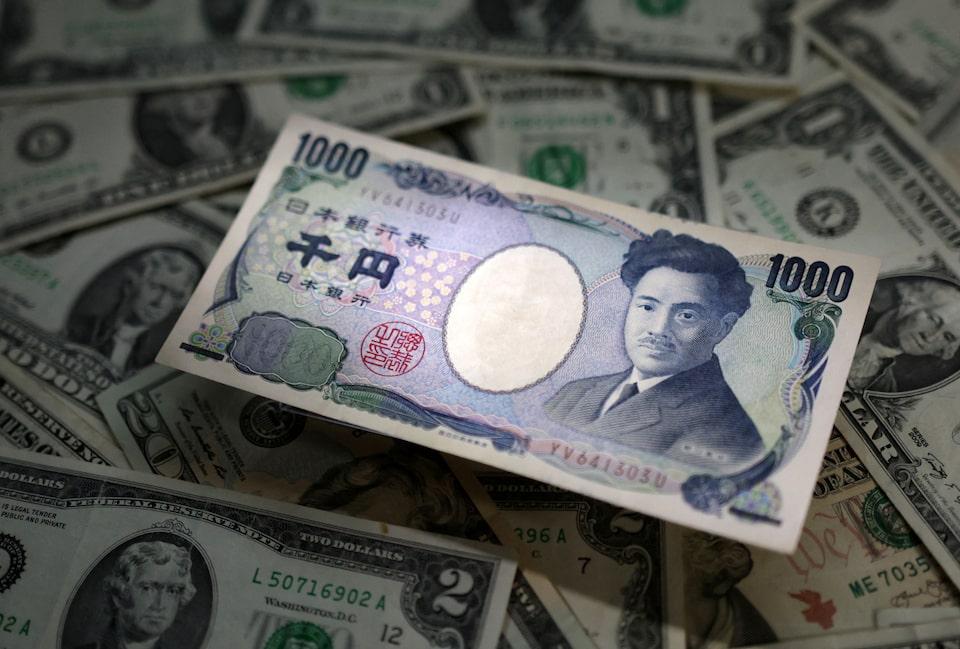
A look at the day ahead in European and global markets from Ankur Banerjee The Japanese yen is set to hog the limelight again as the spectre of the first joint U.S.-Japan currency intervention in 15 years looms large, although investors are none the wiser on when and how authorities may step in. Sign up here. The volatile spikes on Friday have been followed by a much more orderly gallop on Monday, taking the yen to a four-month high of 153.81 per U.S. dollar from as low as 159.23 on Friday. Sources told Reuters on Friday the New York Federal Reserve contacted traders to check rates, often a precursor to an actual intervention. But markets also focused on the U.S. collaboration and have been broadly selling the dollar through Asian hours. That kind of a big yen move without an actual intervention speaks to investor skittishness and relatively light positioning, with traders possibly unwinding short yen position lest they get in the way of authorities stepping into the market. Top Japanese authorities said on Monday they have been in close coordination with the United States on foreign exchange. The yen's move has cast a pall over global markets, dragging the U.S. dollar lower and pushing some of the struggling Asian FX, including South Korean won , higher. The strong yen weighed on the Nikkei (.N225) , opens new tab, which slid about 2%. Precious metals, buoyed by safe-haven flows due to growing geopolitical rifts, also got a lift from the soft dollar as gold breached $5,000 per ounce for the first time and silver surged over 4% to another record high. Markets are also awaiting a Federal Reserve meeting later in the week where the central bank is expected to stand pat on rates although much of the focus will be on concerns over central bank independence. U.S. President Donald Trump has repeatedly criticized Fed Chair Jerome Powell for not lowering rates more aggressively and the Justice Department has now threatened a criminal investigation against Powell related to building renovations on the Fed's new headquarters. Trump's attempt to remove Fed Governor Lisa Cook also awaits a Supreme Court hearing. In corporate news, earnings from Ryanair (RYA.I) , opens new tab will be of interest to investors as it comes amid a social-media feud between Elon Musk and Ryanair boss Michael O'Leary. Key developments that could influence markets on Monday: Economic events: Germany lfo survey data for January https://www.reuters.com/world/china/global-markets-view-europe-2026-01-26/
2026-01-26 05:13
MOSCOW, Jan 26 (Reuters) - Two enterprises caught fire and one person was injured in the city of Slavyansk-on-Kuban in Russia's Krasnodar region after drone fragments fell on them, the regional emergencies centre said on Monday. The centre did not specify what enterprises were affected. The city hosts a private refinery with a capacity of around 100,000 barrels per day, supplying fuel for both domestic use and export. Sign up here. Russia's defence ministry said air defence systems had intercepted and destroyed 40 Ukrainian drones overnight, including 34 in the Krasnodar region. https://www.reuters.com/world/europe/drone-debris-spark-fire-two-enterprises-russias-krasnodar-region-authorities-say-2026-01-26/