2025-07-22 11:23
July 22 (Reuters) - Energy infrastructure company Enbridge (ENB.TO) , opens new tab said on Tuesday it had reached a final investment decision to invest $900 million on a 600 megawatt solar power project in Texas, as demand for clean energy from tech companies drives growth in renewables. Meta Platforms (META.O) , opens new tab has signed a long-term contract to purchase 100% of the project's renewable output to help power its regional operations. Sign up here. Meta is among the several large tech firms investing in renewable energy to power their data centers. The Clear Fork project, located near San Antonio, is expected to become operational by 2027. "Clear Fork demonstrates the growing demand for renewable power across North America from blue-chip companies who are involved in technology and data center operations," said Matthew Akman, Enbridge's executive vice president of corporate strategy and president of power. Project construction is already underway and Enbridge expects the project to be accretive to its cash flow and earnings starting 2027. https://www.reuters.com/business/energy/canadas-enbridge-invest-900-mln-texas-solar-project-2025-07-22/
2025-07-22 11:14
SEOUL, July 22 (Reuters) - South Korea's President Lee Jae Myung declared six districts as special disaster zones on Tuesday after days of torrential rains left a trail of destruction in parts of the country. The wet weather has now subsided, though media reports said heavy rainfall was drenching parts of North Korea. Sign up here. Around 19 people have died and nine were still missing in South Korea as of Tuesday morning, while 2,549 people were still displaced, the Ministry of the Interior and Safety said. Around 3,776 facilities, including homes, shops and factories, needing to be cleared of water, debris and earth, the ministry added. President Lee's declaration of special disaster zones - including in Gapeyeong on the outskirts of Seoul - gave authorities access to emergency administrative and financial support to aid victims. He earlier told public officials to "spare no effort" in the search for missing people. The president's approval rating slipped to 62.2% from 64.6% in a survey conducted last week during the rains, according to pollster Realmeter. https://www.reuters.com/business/environment/south-koreas-lee-declares-disaster-zones-after-floods-2025-07-22/

2025-07-22 10:38
LONDON, July 22 (Reuters) - What matters in U.S. and global markets today By Mike Dolan , opens new tab, Editor-At-Large, Finance and Markets Sign up here. Despite the edgy political and policy backdrop, world markets seem to be doing just fine, eking out new records for stocks as bonds are being bought to boot. I'll discuss all the market news below, and then I'll explore how the Trump administration’s push to reform the Fed might have deeper and longer-lasting impacts than the removal of Jerome Powell. Today's Market Minute * Japan's election outcome may put the central bank in a double bind as prospects of big spending could keep inflation elevated while potentially prolonged political paralysis and a global trade war provide compelling reasons to go slow on rate hikes. * A growing number of European Union member states, including Germany, are considering using wide-ranging "anti-coercion" measures targeting U.S. services if the EU cannot reach a trade deal with U.S. President Donald Trump, EU diplomats say. * If U.S. President Donald Trump's public attacks on Federal Reserve Chair Jerome Powell have achieved one thing, it has been to thrust the issue of central bank independence firmly into the spotlight. But this raises the question, what does 'independence' really mean? Read the latest from ROI markets columnist Jamie McGeever. * The European Union's latest effort to restrict Russia's oil revenue is unlikely to hurt Moscow's war effort severely, leaving U.S. President Donald Trump's threat of secondary sanctions one of the few remaining economic levers to pressure the Kremlin, writes ROI energy columnist Ron Bousso. * A key difference in crude oil demand forecasts between this year and 2024 is that both OPEC and the International Energy Agency are being far more cautious in their growth expectations. ROI Asia Commodities columnist Clyde Russell explains why this matters. Markets oddly serene U.S. tariff hikes are likely coming next week, public debt is rising and Federal Reserve independence is being questioned - but the U.S. and world economies seem to be chugging on regardless, well through the northern summer. Annualized U.S. economic growth is running about 2.4% at midyear and U.S. economic surprise indexes are more positive than they have been for a couple of months, with global equivalents at their most positive in more than a year. U.S. financial conditions indexes are the loosest in three years. With big-tech megacaps due to start reporting Wednesday with Alphabet and Tesla updates, the earnings season just unfolding is already ahead of low-bar expectations. With about 12% of S&P500 firms now reported, the blended estimate of annual profit growth is running at 6.7% - about a point faster than was seen at the start of July. The new highs for the S&P500 and Nasdaq on Monday were less surprising given all that, even though the daily moves were marginal and futures basically flat ahead of Tuesday's bell. There's been little new on the trade tariff front, even though European Union warnings late Monday of its willingness to use a range of retaliatory measures if faced with higher levies dampened the equity market mood somewhat on Tuesday. Relief that weekend Japanese upper house elections did not force an immediate resignation of Prime Minister Shigeru Ishiba saw the yen pop higher on Monday and 10-year Japanese government yields fell sharply as Tokyo markets reopened on Tuesday. The Nikkei lost early gains. The drop in U.S. and European short- and long-term Treasury yields on Monday was perhaps more surprising, pulling the dollar back down in the process as the focus switched to Japan. While some of that was given back on Tuesday, the buoyancy of the long end of the U.S. curve was remarkable given Fed independence concerns. Even though Fed policymakers are in a blackout period on policy statements ahead of next week's meeting, embattled Fed boss Jerome Powell is due to give opening remarks to a Fed regulatory conference on Tuesday. All of which brings us back to the Fed poser, the political pressure on the central bank to accelerate interest rate cuts and threats to Powell's position over anything from historical Fed policy performance and its involvement in non-monetary issues to how he managed rennovations of the headquarters. Chart of the day Reuters is tracking how companies are responding to the threat posed by U.S. President Donald Trump’s tariffs. As of July 22, Reuters has counted 273 companies worldwide that have reacted to the tariffs in some manner. The estimated cost to the companies stood at over $34 billion, as of end May. Our tally is based on various sources, including quarterly financial reports, interviews and statements from company officials. Today's events to watch * Richmond Federal Reserve July business survey (10:00 AM EDT) * Federal Reserve Chair Jerome Powell gives welcome remarks before hybrid "Integrated Review of the Capital Framework for Large Banks" Conference hosted by the Fed * U.S. corporate earnings: Lockheed Martin, General Motors, Pentair, Paccar, Halliburton, Texas Instruments, Invesco, MSCI, Capital One, Equifax, Synchrony, Pultegroup, Danaher, Philip Morris, Sherwin-Williams, EQT, RTX, CoStar, Chubb, Intuitive Surgical, DR Horton, Interpublic, Baker Hughes, Enphase, Quest Diagnostics, IQVIA, Genuine Parts, KeyCorp * UK finance minister Rachel Reeves testifies before House of Lords' Economic Affairs Committee Want to receive the Morning Bid in your inbox every weekday morning? Sign up for the newsletter here. You can find ROI on the Reuters website , opens new tab, and you can follow us on LinkedIn , opens new tab and X. , opens new tab Opinions expressed are those of the author. They do not reflect the views of Reuters News, which, under the Trust Principles , opens new tab, is committed to integrity, independence, and freedom from bias. https://www.reuters.com/business/finance/global-markets-view-usa-2025-07-22/
2025-07-22 10:00
LONDON, July 22 (Reuters) - The pound steadied on Tuesday, consolidating after the previous day's rally, as investors took stock of data that showed UK government borrowing soared in June, a reminder of the fragility of Britain's public finances. Sterling , which rose 0.6% on Monday, its biggest one-day gain in a month, was last at $1.3493, showing little change on the day. It was also steady against the euro , which was at 86.7 pence. Sign up here. Britain borrowed more than expected in June as high inflation added to the government's debt costs, according to official data that is likely to add to speculation about the need for fresh tax increases later this year. Public sector net borrowing totalled 20.7 billion pounds ($27.9 billion) last month, the data showed. This compares with a forecast of 17.1 billion pounds for June from the Office for Budget Responsibility, the budget watchdog. "These overshot expectations yet again, a fact that should refocus minds on UK fiscal sustainability risks, especially after warnings by the ONS that the 20.7 billion pound figure recorded represents 'the second-highest June borrowing since monthly records began in 1993, after that of June 2020'," analysts at Monex said. "As we have noted previously, this is not a sterling positive dynamic, leaving risks to the pound tilted to the downside ahead of Thursday’s PMI release," they said. The borrowing figures added to a sense among investors that finance minister Rachel Reeves may have to raise taxes again later this year to remain on track to meet her targets for fixing the public finances. A separate report on Tuesday showed grocery inflation in Britain rose to 5.2% in the four weeks to July 13, up from 4.7% in last month's report and the highest since January last year, heaping more pressure on UK households. Market researcher Worldpanel by Numerator, which published the report, said just under two-thirds of households say they are "very concerned" about the cost of their groceries, and are switching to supermarket own-label products. The numbers align with data last week that showed nationwide consumer price inflation picked up more than expected in June, also hitting the fastest pace since January 2024. The Bank of England is expected to cut rates by a quarter point next week and at least one more time before the end of the year. https://www.reuters.com/world/uk/sterling-holds-gains-investors-mull-rise-borrowing-2025-07-22/
2025-07-22 09:18
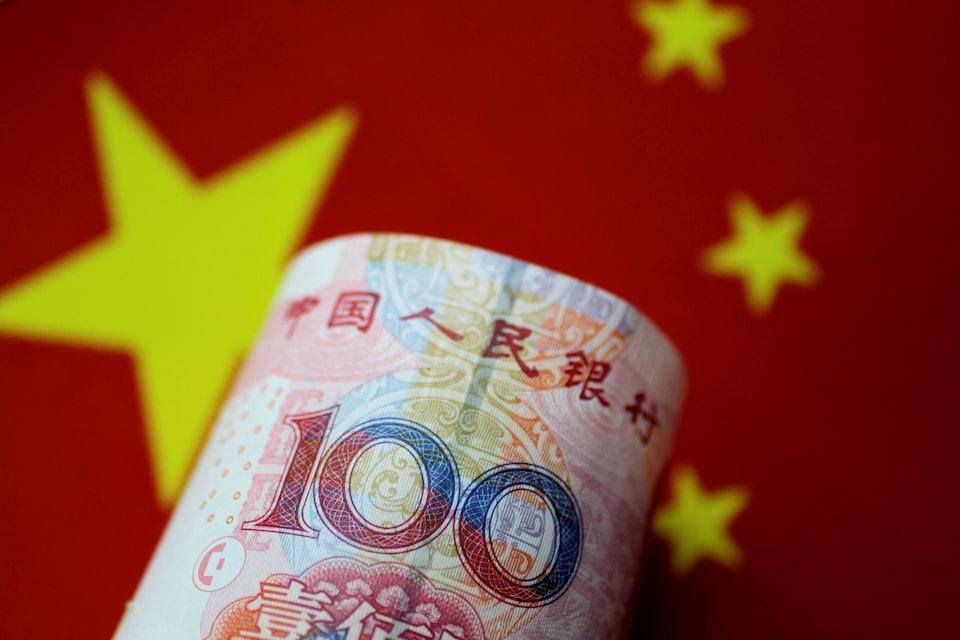
BEIJING, July 22 (Reuters) - China has the conditions to keep the yuan stable, the country's foreign exchange regulator said on Tuesday, even as trade relations with Washington remain uncertain and deflationary pressures continue to weigh on the domestic economy. Li Bin, the deputy head of the State Administration of Foreign Exchange (SAFE), said that the yuan has been trading at reasonable and balanced levels so far this year and had the conditions to remain stable. Sign up here. "From a policy perspective, China has accumulated rich experiences in counter-cyclical adjustments in the foreign exchange market and has ample reserves of policy tools," Li said. He added that the regulator's ability to "prevent and resolve external shocks and risks" had been enhanced. "We have the confidence and ability to continue to maintain the stable operation of the foreign exchange market," he said. Overseas investors in general have increased their net holdings of onshore equities and bonds in the second quarter of this year, Li told a press conference in Beijing. He added that supply and demand in the foreign exchange market were basically stable. China's yuan has strengthened about 1.7% against the U.S. dollar so far this year. Chinese businesses and investors expect the yuan to remain steady in the near term, a rise in currency swaps and growing foreign exchange deposits suggest they are expecting the yuan to depreciate as U.S. trade tensions drag on. China reported slightly better-than-expected second-quarter gross domestic product (GDP) data last week, though analysts warn that weak demand at home and rising global trade risks will ramp up pressure on Beijing to roll out more stimulus. The 90-day tariff truce agreed by Washington and Beijing during trade talks in Switzerland is due to end on August 12. Official data on Tuesday showed that foreign investors sold China's onshore yuan bonds for the second consecutive month in June. https://www.reuters.com/sustainability/boards-policy-regulation/china-has-conditions-maintain-yuan-stability-fx-regulator-says-2025-07-22/
2025-07-22 08:49
Foreign appetite for Indian bonds expected to pick up More rate cuts expected as inflation slows, growth concerns rise Foreign investors net buy $1.5 billion in a month MUMBAI, July 22 (Reuters) - Foreign appetite for Indian government bonds is back, with inflows picking up steadily over the last month, as investors gauge fresh expectations of a rate cut by the Reserve Bank of India as early as August. The RBI cut rates by a larger-than-expected 50 basis points in June and changed the stance to "neutral", prompting investors to bet on a prolonged pause. Sign up here. But a sharp drop in June retail inflation has some investors reassessing the likelihood of another rate cut. The RBI could implement a modest 25 basis point cut in August if inflation remains subdued and growth concerns persist, said Singapore-based Manish Bhargava, CEO of Straits Investment Management, adding that bond yields are attractive at current levels. Over the last one month, foreign investors have net bought 129 billion rupees ($1.5 billion) of Indian bonds linked to global indexes after selling more than 330 billion rupees in the first two-and-a-half months of the financial year that started on April 1, clearing house data showed. Analysts said concerns on the growth front are also likely to prompt the central bank to lower rates further. With recent high-frequency data disappointing and indicating the possibility of a further slowdown in growth, "there is potential for more support from the RBI further down the line," said London-based Giulia Pellegrini, lead portfolio manager, emerging market debt at AllianzGI. India's overall economic fundamentals remain solid, keeping the country on investors' radar, she said. A wider gap between interest rates in India and the U.S. would add to the appeal of Indian debt, investors said. That's why a Federal Reserve rate cut could act as a positive catalyst for Indian bonds, as they have historically helped local currency debt markets, said Nigel Foo, Singapore-based head of Asian fixed income at First Sentier Investors. However, current Indian bond yields are lower than where they were in the past at similar policy rate levels, and so are relatively unattractive, he added. The 10-year U.S. yield was around 4.35%, with the Fed expected to cut rates by at least 50 bps in 2025. The Indian 10-year benchmark bond yield was at 6.30%. "India's local debt story remains very compelling on both FX and rates," said Jean‑Charles Sambor, head of emerging markets debt at TT International Asset Management in London, who expects bond yields to decline through this year and next, and finds the middle of the yield curve attractive. ($1 = 86.2470 Indian rupees) https://www.reuters.com/world/india/resurgence-india-rate-cut-wagers-revives-foreign-investor-interest-bonds-2025-07-22/