2025-07-22 08:34
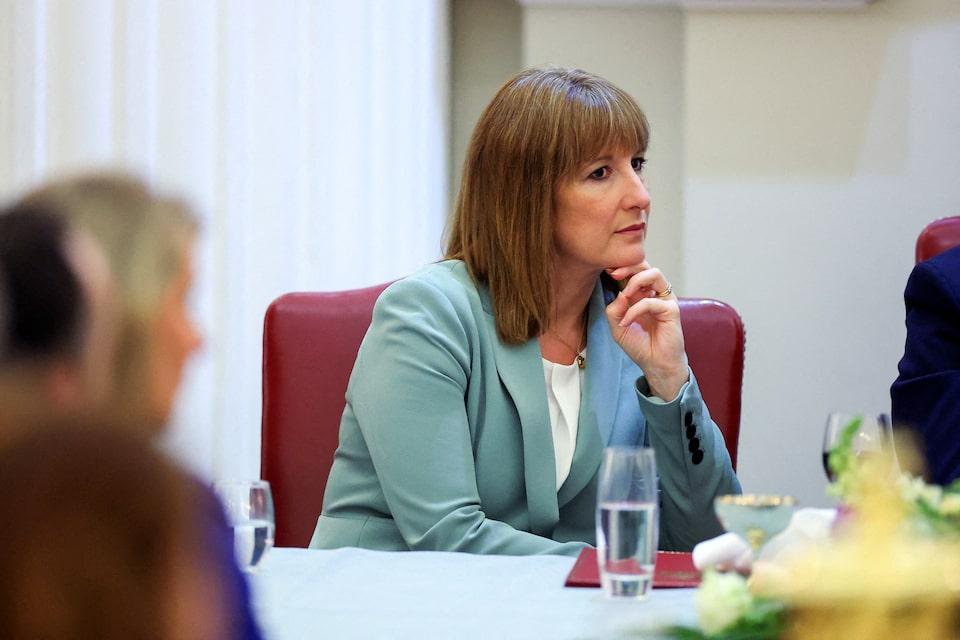
UK borrowing in June 20.7 bln pounds Deficit pushed up by jump in inflation in April Finance minister Reeves struggling to hit fiscal targets Borrowing in April-June came to 57.8 billion pounds Year-to-date deficit back in line with official forecasts LONDON, July 22 (Reuters) - Britain borrowed more than expected in June as a jump in inflation pushed up the government's debt costs, adding to speculation about the need for new tax hikes by finance minister Rachel Reeves later this year. Public sector net borrowing totalled 20.7 billion pounds ($27.9 billion) last month, official data showed on Tuesday, above a median forecast of 16.5 billion pounds in a Reuters poll of economists, and the second highest amount for June on record. Sign up here. The borrowing was also bigger than expected by Britain's budget watchdog, which forecast June borrowing of 17.1 billion pounds when it published its outlook in March. Since then, a strong inflation reading in April had the effect of pushing up inflation-linked government bond payments. Tuesday's data from the Office for National Statistics showed the government's debt interest bill was 16.4 billion pounds in June, the third highest since records began in 1997. Having pushed up taxes by the most in decades last year, Reeves is expected to raise them again in a budget statement towards the end of 2025 in order to remain on track to meet her own targets for fixing the public finances. That job was made harder this month when the government dropped its plans to reduce the welfare bill in the face of stiff opposition within the ruling Labour Party. Slow economic growth is also adding to Reeves' problems. She has said she will balance day-to-day spending with tax revenues by the end of the decade. The latest ONS data showed the current budget was in deficit by 44.5 billion pounds in the first three months of the financial year that began in April - 5 billion pounds more than expected by the Office for Budget Responsibility watchdog. "There is no denying that fiscal developments have been very disappointing so far this financial year and Rachel Reeves will almost certainly be investigating potential revenue raising measures," said Philip Shaw, chief UK economist at Investec. Reeves will probably need to raise taxes by 20 billion pounds - about half the size of last year's package - with future increases in defence spending only likely to add to the bill further ahead, said Rob Wood, chief UK economist at Pantheon Macroeconomics. Darren Jones, a deputy to Reeves at the Treasury, said the government remained committed to its fiscal rules. Over the first three months of the fiscal year which began in April, Britain borrowed 57.8 billion pounds, 15% more than in the same period last year and the third-highest April-to-June deficit on record. The figure was back in line with the year-to-date forecast by the OBR, whose projections underpin the government's tax and spending plans, after two months of lower-than-expected borrowing by the government. The public finances have been aided by Reeves' increase in social security payments by employers. Compulsory social contributions - mostly National Insurance Contributions - jumped by 18% in the April-to-June period to 48 billion pounds. ($1 = 0.7425 pounds) https://www.reuters.com/world/uk/uk-borrows-more-inflation-adds-debt-bill-reeves-headache-2025-07-22/
2025-07-22 07:51
July 22 (Reuters) - A court in The Hague has lifted a seizure order on Russian energy giant Gazprom's (GAZP.MM) , opens new tab assets in the Netherlands, a ruling published on the court's website showed. The ruling last week shows that the assets in question were Gazprom's shares in gas producers Wintershall Noordzee and Gazprom International Projects B.V.. Sign up here. The seizure was introduced under two separate cases lodged by Ukrainian companies called Slavutich-Invest and Zhniva over losses related to Russia's actions in Ukraine. However, the Dutch court ruled that seizing Gazprom's assets may interfere with the principle of state immunity, which means Dutch courts cannot judge the actions of another state or state entity. Gazprom did not reply to a request for comment. https://www.reuters.com/business/energy/dutch-court-lifts-seizure-gazproms-local-assets-2025-07-22/
2025-07-22 07:51
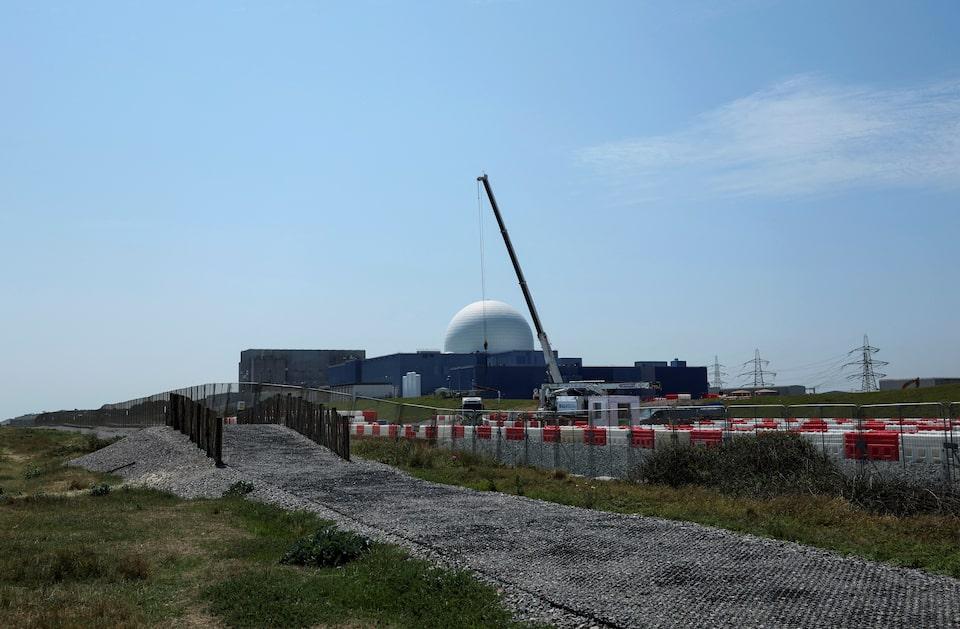
UK reaches final investment decision Canadian pension fund La Caisse takes 20% stake UK to hold 44.9% in 38 billion pound project LONDON, July 22 (Reuters) - Britain gave the final go-ahead for the 38 billion pound ($51 billion) Sizewell C nuclear plant in eastern England on Tuesday after it secured investment from British and international investors including Canadian pension fund La Caisse. Under the deal, the British state will be the largest shareholder in the project with a 44.9% stake, La Caisse will hold 20%, UK energy firm Centrica 15% and London-based Amber Infrastructure will take an initial 7.6%, joining France's state-owned EDF which had already announced its 12.5% stake. Sign up here. The decision to go ahead with Sizewell C is another sign of a nuclear revival in Europe as several countries look to build new plants to replace ageing fleets, boost energy security and reach climate goals. The plant in Suffolk will be only the second new nuclear plant built in Britain in more than two decades. It is expected to create around 10,000 jobs during the peak of construction, and produce enough electricity to power around 6 million homes when built. EDF expects Sizewell C to be operational by around the mid to late 2030s. "Delivering next generation, publicly-owned clean power is vital to our energy security and growth," UK finance minister Rachel Reeves said in a statement. State loans are part of the financing mechanisms for most nuclear power plants in Europe, giving governments ownership stakes, while power price guarantees help companies to fund construction. The last nuclear power plant built in Britain, French state-owned EDF's Hinkley Point C, has been beset by delays and cost overruns, and is not due to start operating until about 2030. EDF had initially said it would be powering British homes in 2017. Sizewell C was first proposed in the early 2010s, when the plan was for it to be developed by EDF with China General Nuclear Power Group, but the UK government bought out the Chinese firm's stake in 2022 amid security concerns. The announcement of La Caisse as the second biggest shareholder comes as a surprise after months of speculation that Canadian investor Brookfield was in pole position to invest. The 38 billion pound total cost estimated by the government compared with initial estimates of a price tag of around 20 billion pounds. France's EDF has said it is investing around 1.1 billion pounds in Sizewell, while Centrica said in its statement it had committed to construction funding of 1.3 billion pounds. The government statement said Britain's National Wealth Fund would provide the majority of the debt finance for the project, alongside a debt guarantee from France’s export credit agency, Bpifrance Assurance Export. ($1 = 0.7424 pounds) https://www.reuters.com/business/energy/uk-approves-sizewell-c-nuclear-plant-after-la-caisse-investment-2025-07-22/
2025-07-22 07:44
EU sanctions disrupt Nayara's refined product exports BP releases tanker for charter in India or Middle East Nayara condemns EU sanctions, India opposes unilateral sanctions SINGAPORE/NEW DELHI, July 22 (Reuters) - A tanker chartered by energy major BP left a port run by newly sanctioned Indian refiner Nayara Energy without loading, according to five industry sources and LSEG shipping data, a sign fresh European Union curbs on Russia are beginning to bite. The vessel Talara was supposed to load 60,000 metric tons (447,000 barrels) of ultra-low sulphur diesel on July 21 at Nayara's Vadinar port in western India, with the cargo bound for Africa, LSEG data showed. Sign up here. Nayara, partly-owned by Russia's largest oil producer Rosneft (ROSN.MM) , opens new tab, and BP (BP.L) , opens new tab did not immediately respond to requests for comment. The sources declined to be named as they were not authorised to speak to the media. The change in loading plan suggests that EU sanctions imposed on Nayara on Friday are disrupting refined products exports from the Russia-backed refiner, one of the two private fuel exporters in India. The Talara did not load the cargo after the EU imposed the sanctions, one of the sources said. The sanctions package against Russia over its war in Ukraine is aimed at dealing further blows to Russia's oil and energy industry. BP subsequently released the ship, making it available for charter within India or the Middle East region, two of the sources said. On Monday, Nayara said in a statement that it condemned the EU's "unjust and unilateral" decision to impose sanctions on the company, while India said on Friday it did not support the EU's "unilateral sanctions". Following the EU sanctions, Nayara Energy amended the terms of a naphtha tender issued on Monday to obtain payment in advance, a tender document seen by Reuters showed. Another vessel, Panamax-sized tanker Pacific Martina, chartered by Shell (SHEL.L) , opens new tab, arrived at Vadinar on July 18 to load jet fuel, LSEG and Kpler data showed. After loading jet fuel from Nayara, the partially loaded Pacific Martina has been anchored off the port next to Talara, LSEG data showed on Tuesday. PetroChina has also provisionally chartered medium-ranged tanker Chang Hang Xing Yun to load 35,000 tons of gasoil on July 29-31 from Vadinar port with the option to discharge the cargo at Singapore or Chittagong, Bangladesh, shipping fixtures from shipbrokers showed. Shell and PetroChina did not immediately respond to a request for comment. https://www.reuters.com/business/energy/bp-chartered-tanker-leaves-port-sanctioned-nayara-without-loading-sources-say-2025-07-22/
2025-07-22 07:40
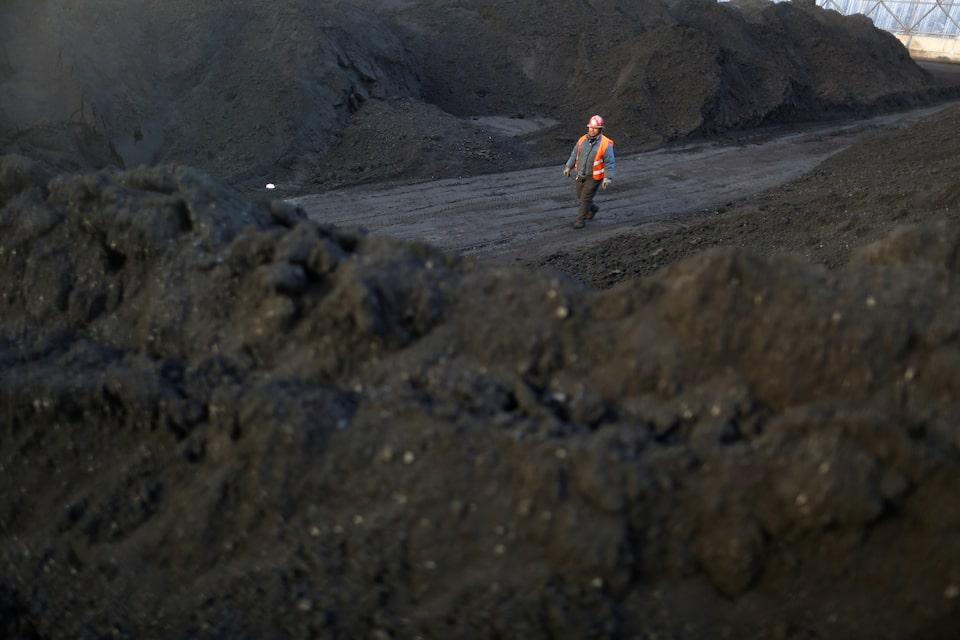
BEIJING, July 22 (Reuters) - Prices of coking coal futures in China hit their ceiling for a second successive session on Tuesday, amid market chatter about potential government inspections in China's major coal production hubs that might lead to supply disruptions. The most active China coking coal contract on the Dalian Commodity Exchange jumped nearly 8% to its highest price since March 19 at 1,048.5 yuan ($146.19) a metric ton. Sign up here. A document purported to be from the National Bureau of Energy calling for inspections at coal mines in eight provinces to determine whether production exceeded licensed capacity played a part in the price rise, said Simon Wu, a senior consultant at Wood Mackenzie. "This could potentially reduce the effective supply to the market," he said. Reuters could not verify the authenticity of a document circulating on social media from the Henan provincial government which contained inspection orders from the NBE. A phone call to a number in the document was answered by someone who said they were following instructions from the NBE and not to call again. The NBE did not immediately respond to a request for comment. Coking coal prices have gained 28% so far in July after a visit to Shanxi, China's top coal production hub, by President Xi Jinping earlier this month sparked speculation about a fresh wave of supply reform. ($1 = 7.1723 Chinese yuan) https://www.reuters.com/business/energy/chinas-coking-coal-prices-hit-daily-limit-again-chatter-about-government-mine-2025-07-22/
2025-07-22 07:37
BEIJING, July 22 (Reuters) - China's foreign exchange regulator said on Tuesday that it has not seen "irrational" trading activities for now. Li Bin, the deputy head of the State Administration of Foreign Exchange (SAFE), said that the yuan has been trading basically stable at reasonable and balanced levels so far this year. Sign up here. Overseas investors in general have increased their net holdings of onshore equities and bonds in the second quarter of this year, Li told a press conference in Beijing. He added that supply and demand in the foreign exchange market are basically stable. https://www.reuters.com/sustainability/boards-policy-regulation/china-does-not-see-irrational-trading-activities-yuan-stable-fx-regulator-says-2025-07-22/