2026-01-25 23:43
Gold hits record high of $5,110.50/ounce Silver hits all-time high of $109.44/ounce Analysts expect gold prices to climb toward $6,000 this year Jan 26 (Reuters) - Gold surged to a record high above $5,100 an ounce on Monday, extending a historic rally as investors piled into the safe-haven asset amid rising geopolitical uncertainties. Spot gold were up 2.2% at $5,089.78 per ounce by 0656 GMT, after earlier touching an all-time high of $5,110.50. U.S. gold futures for February delivery also gained the same amount to $5,086.30 per ounce. Sign up here. The metal soared 64% in 2025, its biggest annual gain since 1979, driven by safe-haven demand, U.S. monetary policy easing, robust central bank purchases including China's fourteenth straight month of buying in December, and record inflows into exchange-traded funds. Prices have set consecutive record peaks over the past week and have already risen more than 18% this year. The latest catalyst "is effectively this crisis of confidence in the U.S. administration and U.S. assets, that was set off by some of the erratic decision-making from the Trump administration last week", said Kyle Rodda, a senior market analyst at Capital.com. U.S. President Donald Trump abruptly stepped back on Wednesday from threats to impose tariffs on European allies as leverage to seize Greenland. Over the weekend, he said he would impose a 100% tariff on Canada if it followed through on a trade deal with China. He has also threatened to hit French wines and champagnes with 200% tariffs in an apparent effort to pressure French President Emmanuel Macron into joining his Board of Peace initiative. Some observers fear the board could undermine the United Nations' role as the main global platform for conflict resolution, though Trump has said it will work with the U.N. "This Trump administration has caused a permanent rupture in the way things are done, and so now everyone's kind of running to gold as the only alternative," Rodda added. Meanwhile, a rising yen dragged the dollar broadly lower on Monday, with markets on alert for possible intervention in the yen and investors cutting dollar positions ahead of this week's Federal Reserve meeting. A weaker dollar makes greenback-priced gold more affordable for holders of other currencies. Analysts expect gold prices to climb further toward $6,000 this year on mounting global tensions as well as strong central-bank and retail demand. "We expect further upside (for gold). Our current forecast suggests that prices will peak at around $5,500 later this year," said Philip Newman, director at Metals Focus. "Periodic pullbacks are likely as investors take profits, but we expect each correction to be short-lived and met with strong buying interest," Newman added. Spot silver advanced 4.8% to $107.903, after hitting a record of $109.44. Spot platinum climbed 3.4% to $2,861.91 per ounce, after hitting a record high of $2,891.6 earlier in the session, while spot palladium was 2.5% higher at $2,060.70, having touched a more than three-year high. Silver climbed above the $100 mark for the first time on Friday, building on its 147% rise last year as retail-investor flows and momentum-driven buying compounded a prolonged spell of tightness in physical markets for the metal. https://www.reuters.com/business/finance/gold-rushes-record-high-above-5000oz-2026-01-25/
2026-01-25 23:35
Yen rallies to two-month high NY Fed rate check drove Friday surge in Japanese currency Investors await Federal Reserve meeting, possible chair announcement Worries about US government shutdown pressure USD NEW YORK, Jan 26 (Reuters) - The U.S. dollar fell across the board and the Japanese yen jumped to a more than two-month high on Monday as speculation mounted about joint U.S.-Japan currency intervention after remarks from Tokyo's prime minister and Japan's leading currency diplomat. Investors also scaled back their dollar positions ahead of a Federal Reserve meeting and a possible announcement by the Trump administration of a new Fed chair. Worries about another U.S. government shutdown also pressured the dollar. Sign up here. The dollar was 1% lower against the yen at 154.15, on pace for a nearly 3% slide over the last two trading sessions, the worst such weakening since April 2025 following the "Liberation Day" tariff-related market upheaval. Tokyo continued to preoccupy investors after Japan's Prime Minister Sanae Takaichi said on Sunday her government would take the "necessary steps" against speculative market moves. PRECURSOR TO INTERVENTION A source on Friday told Reuters that the New York Federal Reserve had checked dollar/yen rates with dealers, which is considered to be a precursor to intervention. The rush to exit short yen positions has lifted the currency by over 3% off Friday's low. "Clearly if you've got both the MOF (Japanese Ministry of Finance) and the U.S. Treasury looking to limit the upside in dollar-yen, that's going to be a more powerful driver," said Dominic Bunning, head of G10 FX strategy at Nomura. Japanese Finance Minister Satsuki Katayama declined to comment on the rate checks, while currency diplomat Atsushi Mimura said the government would maintain close coordination with the United States on foreign exchange and act appropriately. The U.S. has not joined a coordinated effort to intervene in the Japanese currency since March 2011, when it sold yen following the Fukushima earthquake. "We think the signal for intervention is even stronger than in 2022 or 2024 given U.S. participation, making it likely that any actual intervention would be coordinated," analysts at Goldman Sachs said in a note. "However, the impact of direct operations is often only temporary when the broader backdrop justifies the pressures on the currency, as it does today," they said. The yen is under pressure in part because of concerns over Japan's government debt that stands at more than double its economic output. A historic rise in market interest rates has raised fears for Japan's ability to service its debt, but Takaichi has said she will cut taxes as she campaigns for a snap election on February 8. Bank of Japan money market data on Monday indicated that a spike in the yen rate against the dollar on Friday was unlikely to be the product of official Japanese intervention. DOLLAR SELLOFF BOOSTS EURO AND STERLING Dollar selling on Monday helped push the euro and the British pound to four-month highs, while the Australian dollar hit its strongest since October 2024. The euro was last up 0.4% at $1.18585, sterling was 0.3% higher at $1.3691, while the Aussie advanced 0.5% to $0.6931. "This is a reinvigorated 'Sell America trade,' and it has to do with prediction markets showing that government shutdown is back on the table," Jonathan Petersen, macro strategist at investment research firm Variant Perception. The top Democrat in the U.S. Senate, Chuck Schumer, said his party would vote against funding legislation that includes money for the Homeland Security Department that oversees ICE, the federal immigration agency. U.S. immigration agents shot and killed a U.S. citizen in Minneapolis on Saturday, sparking fierce protests and condemnations from local leaders in the second such incident this month. Congress faces a January 30 deadline to fund the government or risk a partial government shutdown. "There are a lot of things going on right now in the U.S. like the protests against the latest Minnesota shooting. Trump could also be naming the successor to Jay Powell this week. So the markets are nervous about both," said Marc Chandler, chief market strategist at Bannockburn Capital Markets in New York. U.S. President Donald Trump said on Thursday he would soon announce his pick for the next Federal Reserve chair, to replace Chair Jerome Powell, with BlackRock's Rick Rieder now favourite on betting site Polymarket with a 48% probability. The U.S. Federal Reserve sets interest rates on Wednesday, with markets expecting no changes but for policymakers to flag further cuts, with about 50 basis points of easing priced in for the year. https://www.reuters.com/world/asia-pacific/yen-firms-markets-watch-intervention-2026-01-25/
2026-01-25 23:14
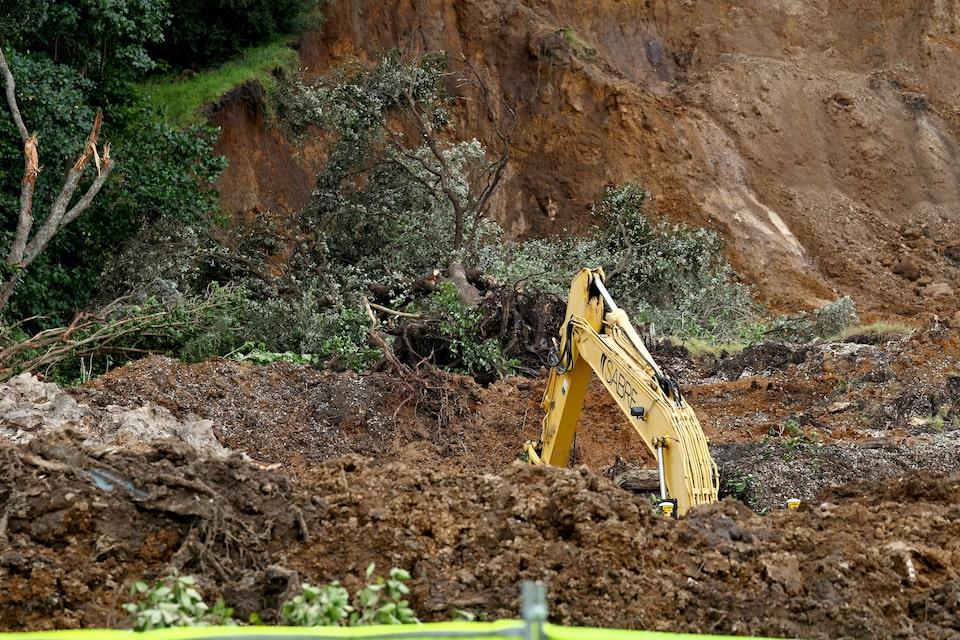
WELLINGTON, Jan 26 (Reuters) - New Zealand police on Monday restarted recovery efforts for the victims of a landslide that hit a busy campground on the country's North Island last week. Six people, including two teenagers, are presumed dead after heavy rains triggered Thursday's landslide at Mount Maunganui on the island's east coast, bringing down soil and rubble at the site in the city of Tauranga, crowded with families on summer holidays. Sign up here. Human remains were found at the site on Saturday, but police have yet to confirm if they had been identified. On Sunday, efforts to recover the victims were suspended after a contractor driver noticed potential instability on the face of the landslide. Bay of Plenty District Commander Tim Anderson said in a statement on Monday that the recovery effort resumed at 10:30 a.m. local time (2130 GMT on Sunday). "Additional monitoring equipment has been brought in and specialist crews removed loose material that was of concern above the slip area this morning," Anderson said. A vigil was held for the victims at a nearby park on Sunday, which was attended by around 200 locals as well as Prime Minister Christopher Luxon and Emergency Management Minister Mark Mitchell, according to Radio New Zealand. Luxon said in a post on X that it had been "very special to join the Mt Maunganui community" to remember the precious lives lost. https://www.reuters.com/business/environment/new-zealand-resumes-victim-recovery-efforts-after-fatal-landslide-2026-01-25/
2026-01-25 23:05
SINGAPORE, Jan 26 (Reuters) - Singapore's central bank has a unique method of managing monetary policy, tweaking the exchange rate of its currency instead of changing domestic interest rates like many economies. The Monetary Authority of Singapore (MAS) sets the path of what it calls the policy band of the Singapore dollar nominal effective exchange rate (S$NEER), thus strengthening or weakening the local currency against those of its main trading partners. Sign up here. WHY DOES SINGAPORE USE THIS METHOD? Singapore is a small and trade-reliant economy. Gross exports and imports of goods and services are more than three times its gross domestic product (GDP). Almost 40 cents of every Singapore dollar spent domestically is on imports. That means the exchange rate has a much bigger influence on inflation than domestic interest rates. For example, an appreciation of the Singapore dollar against the currencies of its major trading partners will reduce prices of imported goods and services. This dampens the prices that households have to pay. WHAT IS THE S$NEER? The S$NEER is an index of the Singapore dollar's trade-weighted exchange rate against the currencies of the island's major trading partners. The central bank says this allows the Singapore dollar to perform collectively in relation to its major trading partners, which is what matters for general price levels in Singapore. HOW DOES THE S$NEER POLICY BAND WORK? MAS does not set the precise level of the exchange rate or control it in real time. Instead, the S$NEER is allowed to move up and down within a policy band, the exact levels of which are not disclosed. If it goes out of this band, the MAS steps in by buying or selling Singapore dollars. The policy band has three parameters that the MAS can adjust. Until 2024, these parameters were reviewed at least twice a year, typically in April and October. Additional reviews can be held if conditions demand an immediate change in settings, such as in 2022 when high inflation triggered two off-cycle moves. From 2024, the central bank started making monetary policy announcements every quarter, saying it allowed policymakers to provide their assessment of the economic outlook in a more timely fashion. The three policy levers are the slope, the level and the width of the band. Adjusting the slope will influence the pace at which the Singapore dollar strengthens or weakens. Adjusting the level, or mid-point, of the policy band allows for an immediate strengthening or weakening of the S$NEER, making this a tool for drastic situations such as a recession. By widening the policy band, the MAS can allow for more volatility of the S$NEER. https://www.reuters.com/world/asia-pacific/how-singapores-unique-monetary-policy-works-2026-01-25/
2026-01-25 23:01
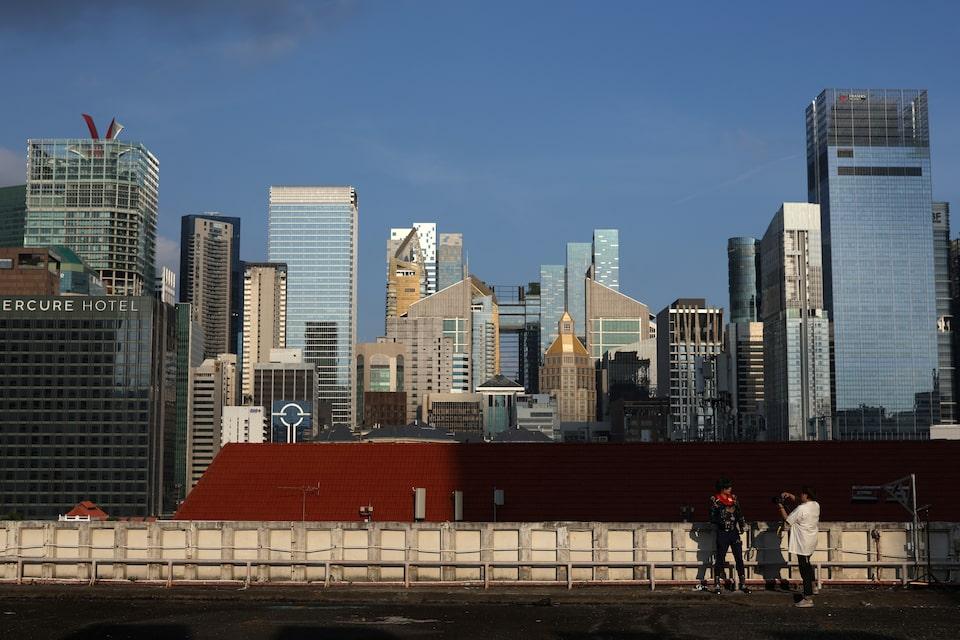
Analysts expect MAS to maintain current monetary policy settings Strong semiconductor demand supports economic growth MAS may tighten policy in April as inflation bottoms out: analyst Central banks globally expected to hold rates steady in near term SINGAPORE, Jan 26 (Reuters) - Singapore is expected to leave monetary policy unchanged at a review on Thursday, with the growth outlook supported by strong demand for semiconductor exports and inflation seen under control. Out of 16 analysts polled by Reuters, 15 expect the Monetary Authority of Singapore (MAS) to hold off making any changes this week. MAS left settings unchanged in July and October last year after easing in January and April. Sign up here. Singapore's GDP rose 4.8% in 2025, above a government forecast in November of around 4.0% and its previous estimate of 1.5% to 2.5%. Singapore's strong electronics purchasing managers' index reading of 50.9 in December showed that the tech cycle had retained momentum, Economist Intelligence Unit Asia analyst Tay Qi Hang said. AI-related demand and rising memory chip prices should continue to benefit the semiconductor sector in coming months, he said. "The Q4 2025 growth outperformance coupled with stable core inflation at just above 1% in November has reduced near-term pressure to ease", he said. Standard Chartered chief economist Edward Lee said there was no urgency to act this month with inflation under control. However, Lee said he expected MAS to tighten policy at its April review as the inflation cycle bottoms out and trade uncertainties ease. However, Bank of American economists said in a report on Friday that MAS could tighten policy as soon as Thursday's review on signs that inflation is strengthening following December's data, also released on Friday. They said MAS could raise its core inflation forecast range for 2026 by 50 basis points to 1% to 2%, from its current forecast range of 0.5% to 1.5%. The economists noted the data showed price increases of travel-related and other components more than offset a fall in raw food and beverage prices. MAS will update its inflation forecasts in Thursday's monetary policy statement. Singapore manages monetary conditions by letting the local dollar rise or fall against the currencies of its main trading partners within an undisclosed trading band, known as the Singapore dollar nominal effective exchange rate (S$NEER). It adjusts settings via three levers: the slope, mid-point and width of the band. Major central banks are expected to hold rates steady in the near term, although uncertainties about the U.S. Federal Reserve's independence remain a financial market concern. The sharply-divided Federal Reserve cut interest rates by 25 basis points at its December meeting but signalled that easing will be paused as it awaited clarity on the state of the job market, inflation and the economy. U.S. President Donald Trump has repeatedly criticised Fed chair Jerome Powell for not lowering rates more aggressively. The European Central Bank's chief economist Philip Lane said in January that it will not debate any rate change in the near term if the economy stays on course. https://www.reuters.com/world/asia-pacific/singapore-expected-keep-monetary-policy-unchanged-growth-outperforms-2026-01-25/
2026-01-25 23:00
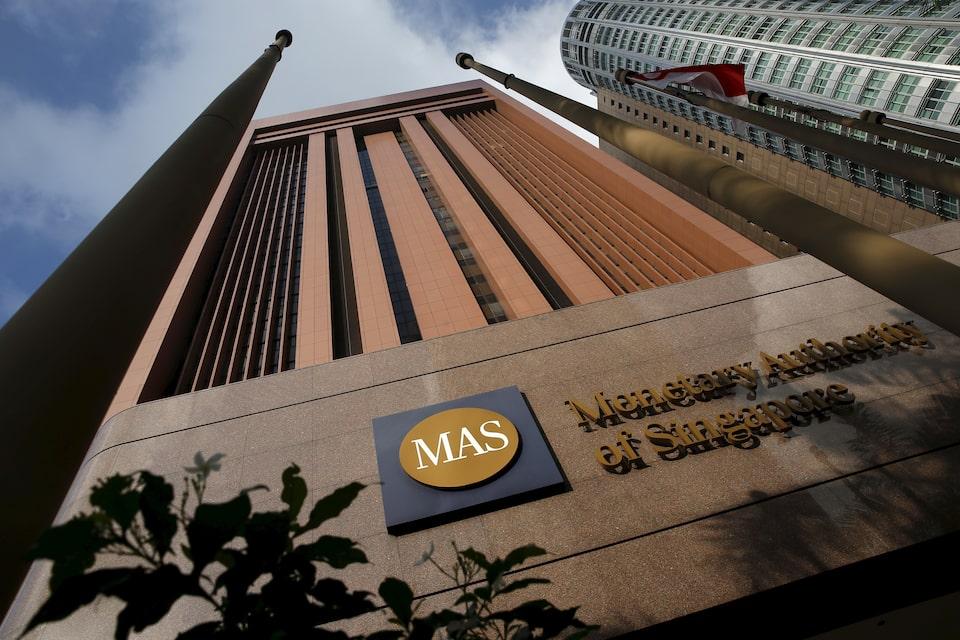
BHP seeking alternative buyers amid China iron ore contract dispute BHP Jimblebar iron ore shipments to Malaysia, Vietnam are unusual BHP offers more discounts to facilitate sales, stocks rise at Chinese ports Jan 23 (Reuters) - BHP Group (BHP.AX) , opens new tab has shipped iron ore cargoes barred from sale in China to Malaysia and Vietnam, seeking alternative buyers as its stocks of Jimblebar pile up at Chinese ports amid a protracted contract dispute with Beijing. China Mineral Resources Group (CMRG), set up in 2022 to centralise iron ore purchasing and win better terms from miners, barred Chinese steel mills and traders from buying BHP's Jimblebar Blend Fines (JMBF), a type of medium-grade iron ore, last September during talks over a new contract that have still not concluded. Sign up here. As talks drag on, a vessel, Lowlands Blue, laden with around 95,000 metric tons of BHP's JMBF, docked in Malaysia on January 14, the first such cargo discharged in Malaysia since shipping data tracker Kpler's records began in 2019. Meanwhile, the Cape Yamabuki shipped roughly 75,000 tons of JMBF to Vietnam in December, according to Kpler data and two traders with knowledge of the matter. It was the first such cargo to Vietnam since at least 2024, Kpler data showed. BHP DIVERSIFIES IRON ORE BUYERS While the shipments are small compared to BHP's annual production of more than 60 million tons of JMBF, the unusual trades demonstrate the Australian mining group's efforts to diversify its buyers to mitigate its China difficulties. The world's No. 3 iron ore supplier said on Tuesday it was still hammering out annual contract terms with the state iron ore buyer and "optimising distribution channels" in the meantime. It declined to comment on the reported shipments. Stocks of BHP's Jimblebar fines at major Chinese ports were up 360% from late September to 8.1 million tons as of January 13, according to two separate traders. Chinese steelmakers are not allowed to take delivery of JMBF cargoes already at ports, sources told Reuters. Meanwhile, daily global exports of JMBF are down 74% from January 2025, according to a Reuters calculation based on Kpler data. BHP has been offering more discounts for its iron ore including the Jimblebar fines to try to facilitate sales in China, several trade sources said. For example, discounts of BHP's Newman fines, a type of medium-grade iron ore, for February shipments have widened to $4.73 a ton against the average of Argus and Mysteel's benchmark 61% indices, versus $2.48 for January shipments, according to two of the traders. The deep discount prompted the Vietnamese steel mill order, according to a trader with knowledge of the deal. All sources requested anonymity given the sensitivity of the matter. https://www.reuters.com/world/asia-pacific/bhp-ships-jimblebar-iron-ore-malaysia-vietnam-china-ban-stalls-sales-2026-01-23/