2025-07-18 22:19
July 18 (Reuters) - Cryptocurrency exchange Bullish on Friday disclosed a quarterly loss compared to a year-ago profit in its paperwork for a U.S. initial public offering, amid rising investor interest in the sector. Bullish joins crypto exchange Gemini and crypto-focused asset manager Grayscale — both of which have confidentially filed for potential U.S. listings. Sign up here. Uncertainty surrounding President Donald Trump's tariff policies had slowed down the IPO market, but sentiment has recently shifted. Stablecoin giant Circle Internet's (CRCL.N) , opens new tab blockbuster debut highlights pent-up demand and renewed vigor in the capital markets. Bullish, in its filing , opens new tab with the U.S. securities regulator, reported a net loss attributable of $348.6 million for the three months ended March 31, compared to a profit of $104.8 million last year. The Peter Thiel-backed company had attempted to go public through a special purpose acquisition company in 2021 but that deal fell through in 2022 amid a regulatory crackdown and a sudden rise in interest rates. Bullish is expected to list on the NYSE under the symbol "BLSH". J.P Morgan, Jefferies and Citigroup are among the underwriters for the offering. https://www.reuters.com/business/crypto-exchange-bullishs-us-ipo-filing-reveals-quarterly-loss-2025-07-18/
2025-07-18 21:46
Ecuador can access $600 million immediately, IMF says Ecuador's foreign dollar debt rises IMF praises Ecuador's fiscal efforts amid challenging circumstances QUITO, July 18 (Reuters) - The International Monetary Fund said on Friday it has completed its second review of Ecuador's Extended Fund Facility and approved an augmentation of the program by about $1 billion. The approval will allow Ecuador to immediately access around $600 million, the IMF said. Sign up here. The approved augmentation for Ecuador increases access under the program to $5 billion from $4 billion, the IMF said. "Despite challenging circumstances, Ecuadorian authorities have successfully mobilized non-oil revenues, strengthened fiscal and external buffers, and cleared domestic arrears while protecting vulnerable groups," said IMF Deputy Managing Director Nigel Clarke. Ecuador's foreign dollar debt rose on Friday, with the 2030 note up 1.375 cents to trade at 85.5 cents on the dollar to edge higher for the week. Ecuador's economy ministry hailed the news, saying it reflected government efforts to respond to challenges including insecurity and drought. The IMF highlighted that the government of President Daniel Noboa satisfactorily met the quantitative goals. https://www.reuters.com/world/americas/imf-approves-1-billion-augmentation-ecuador-program-2025-07-18/

2025-07-18 21:33
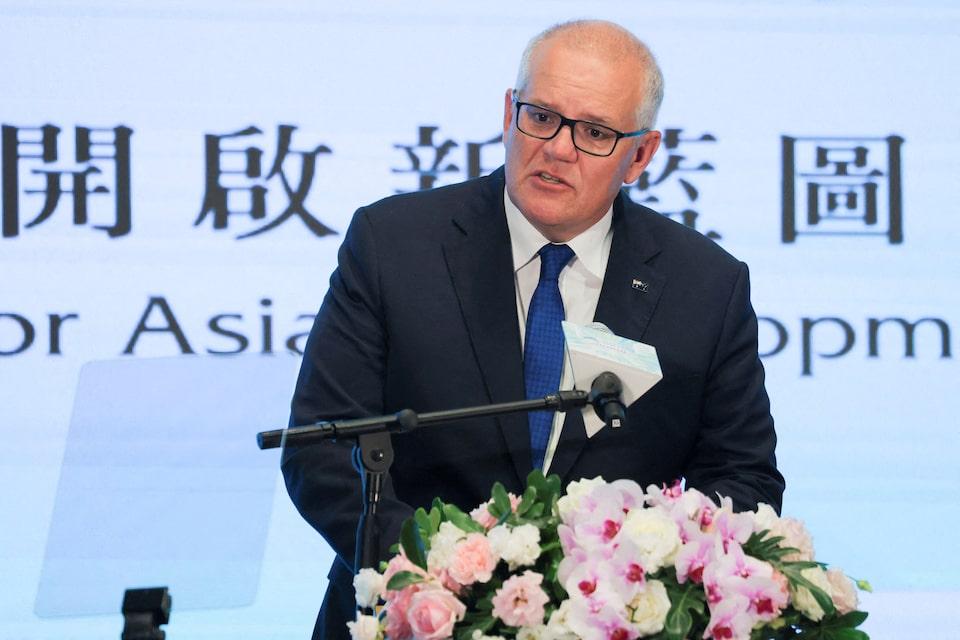
WASHINGTON, July 18 (Reuters) - Former Australian Prime Minister Scott Morrison will testify at a U.S. House panel hearing on Wednesday about countering China's "economic coercion against democracies," the committee said on Friday. Former U.S. ambassador to Japan Rahm Emanuel will also testify before the House Select Committee on China. Sign up here. Relations with China, already rocky after Australia banned Huawei from its 5G broadband network in 2018, cooled further after Canberra called for an independent investigation into the origins of COVID-19. China responded by imposing tariffs on Australian commodities, including wine and barley and limited imports of Australian beef, coal and grapes, moves described by the United States as "economic coercion." Morrison was defeated in a bid for reelection in 2022. Reuters reported this week Canberra is close to an agreement with Beijing that would allow Australian suppliers to ship five trial canola cargoes to China, sources familiar with the matter said, a move towards ending a years-long freeze in the trade. China imposed 100% tariffs on Canadian canola meal and oil this year amid strained diplomatic ties. Australian Prime Minister Anthony Albanese visited China this week, underscoring a warming of ties. Emanuel, who told a Chicago news outlet last month he is considering a run for president in 2028, has been a harsh critic of China, saying last year Beijing constantly uses coercion and pressures other countries, including Japan and the Philippines. "Economic coercion by China is their most persistent and pernicious tool in their toolbox," Emanuel said in a separate speech in 2023. The Chinese Embassy in Washington did not immediately comment. https://www.reuters.com/world/china/ex-australian-pm-morrison-testify-before-us-house-panel-china-2025-07-18/
2025-07-18 21:29
July 18 (Reuters) - Cryptocurrency firm Bullish on Friday filed for an initial public offering in the United States. Uncertainty surrounding President Donald Trump's tariff policies slowed down the IPO market amid heightened volatility, but sentiment is shifting as new listings gain traction. Sign up here. Bullish is expected to list on the NYSE under the symbol "BLSH". J.P Morgan, Jefferies and Citigroup are among the underwriters for the offering. https://www.reuters.com/business/cryptocurrency-firm-bullish-files-us-ipo-2025-07-18/
2025-07-18 21:15
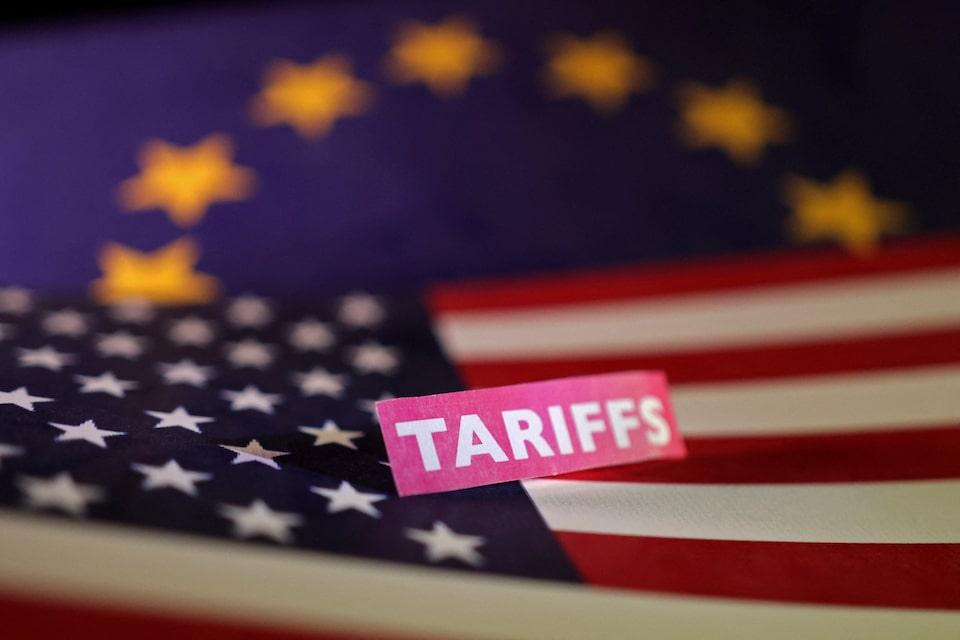
US stocks barely changed after mixed economic data, earnings Wall Street had hit records after solid data on Thursday Oil settles down as investors weigh impact of fresh EU sanctions on Russia NEW YORK/LONDON, July 18 (Reuters) - MSCI's global equity index advanced slightly while U.S. Treasury yields dipped and Wall Street equities were barely changed on Friday as investors waited for corporate earnings and monitored the latest U.S. tariff threats while they digested a mixed economic picture. U.S. consumer sentiment improved in July and inflation expectations declined, but households still saw substantial risk of price pressures increasing, the University of Michigan's Surveys of Consumers released on Friday showed. Sign up here. Another report showed U.S. single-family homebuilding dropped to an 11-month low in June as high mortgage rates and economic uncertainty hindered home purchases, suggesting residential investment contracted again in the second quarter. On Thursday, news of stronger-than-expected U.S. retail sales and a drop in jobless claims suggested modest improvements in economic activity and helped push the S&P 500 and Nasdaq to record closing highs. On Friday, the mood dimmed after the Financial Times reported that U.S. President Donald Trump is pushing for a minimum tariff of 15% to 20% on the European Union. The report said he was unmoved by the latest EU offer to reduce car tariffs and would keep those duties at 25% as planned. "Tariff headlines this afternoon reminded investors that volatility is likely to persist through the start of August." said Lindsey Bell, chief investment strategist at 248 Ventures. "Investors may be taking some money off the table going into the weekend given lingering tariff uncertainty and a market that has a premium valuation after reaching new highs." She noted that these concerns were on display in shares of American Express (AXP.N) , opens new tab and Netflix (NFLX.O) , opens new tab, which both fell on solid earnings reports and forecasts after reaching high valuations ahead of the results. Netflix ended down 5% while Amex fell 2.3%. Still, many investors had high hopes for upcoming earnings and made bullish bets ahead of July equity option expirations, said Bruce Zaro, managing director at Granite Wealth Management in Plymouth, Massachusetts. "Today's action is all about option expiration as investors make bets on the meat of earnings season, which comes in the next few weeks when all the growth and technology companies report," said Zaro, noting that beyond earnings, investors want to benefit from a strong performance trend in megacap names. "There's a fear of missing out." On Wall Street the Dow Jones Industrial Average (.DJI) , opens new tab fell 142.30 points, or 0.32%, to 44,342.19, the S&P 500 (.SPX) , opens new tab fell 0.57 points, or 0.01%, to 6,296.79 and the Nasdaq Composite (.IXIC) , opens new tab rose 10.01 points, or 0.05%, to 20,895.66. For the week, the S&P 500 gained 0.59%, the Nasdaq rose 1.51%, and the Dow fell 0.07%. MSCI's gauge of stocks across the globe (.MIWD00000PUS) , opens new tab rose 1.18 points, or 0.13%, to 927.47, hitting a record high earlier in the day. Earlier, Europe's STOXX 600 (.STOXX) , opens new tab index closed down 0.01%, and was off 0.06% for the week. In currencies, the U.S. dollar slipped against the euro but was showing a weekly gain, as investors weighed central bank policy amid signs that tariffs may be starting to fuel inflation pressures and as Trump continued to publicly criticize Fed Chair Jerome Powell. The euro pared some gains after a Financial Times report on a toughening U.S. stance on European import tariffs. The dollar index , which measures the greenback against a basket of currencies including the yen and the euro, fell 0.05% to 98.46. The euro was last up 0.27% at $1.1626. Against the Japanese yen , the dollar strengthened 0.09% to 148.73 as polls showed Japanese Prime Minister Shigeru Ishiba's coalition was in danger of losing its majority in an election on Sunday. In government bonds, U.S. Treasuries prices rose, dragging their yields lower, after comments from Federal Reserve Governor Christopher Waller pushed for a rate cut later this month, while technical buying also contributed to the move higher. In contrast, most officials who have spoken publicly have indicated a desire to hold rates steady and traders are betting on a 95.3% probability that rates will stay where they are after the month-end meeting, according to CME Group's FedWatch , opens new tab tool. The yield on benchmark U.S. 10-year notes fell 3.9 basis points to 4.424%, from 4.463% late on Thursday while the 30-year bond yield fell 1.8 basis points to 4.9958% from 5.014%. The 2-year note yield, which typically moves in step with interest rate expectations for the Federal Reserve, fell 4.4 basis points to 3.873%, from 3.917% late on Thursday. In commodities, crude oil futures held steady as mixed U.S. economic news offset worries the European Union's latest for its war in Ukraine could reduce oil supplies. U.S. crude settled down 0.3%, or 20 cents at $67.34 a barrel while Brent ended at $69.28 per barrel, down 0.35% or 24 cents on the day. Gold prices rose on Friday as a weaker U.S. dollar and ongoing geopolitical and economic uncertainty boosted demand for the safe-haven metal, while platinum prices eased after reaching their highest level since 2014. Spot gold rose 0.33% to $3,349.66 an ounce. https://www.reuters.com/world/china/global-markets-wrapup-7-2025-07-18/
2025-07-18 20:32
ORLANDO, Florida, July 18 (Reuters) - - TRADING DAY Making sense of the forces driving global markets Sign up here. By Jamie McGeever, Markets Columnist I'd love to hear from you, so please reach out to me with comments at [email protected] , opens new tab. You can also follow me at @ReutersJamie and @reutersjamie.bsky.social. The S&P 500 and Nasdaq touched new highs on Friday before cooling off following a report that U.S. President Donald Trump is pushing for a minimum 15-20% tariff on goods from Europe. But Wall Street and most global benchmark indices rose on the week, as upbeat U.S. economic data more than compensated for the heightened trade uncertainty and Trump ramping up his verbal attacks on Fed Chair Jerome Powell. This Week's Key Market Moves Yet another choppy and event-filled trading week ended on a more subdued note on Friday, with trade and the Trump administration's hefty tariffs on major trading partners again at the forefront of investors' minds. Trump's call for a minimum 15-20% tariff on imports from the European Union, as reported by the Financial Times, is a reminder that global trade tensions are still alive and could yet hit growth and fuel inflation. Elsewhere in the global trade war, Trump's deepening spat with Brazil will be worth monitoring next week, while Treasury Secretary Scott Bessent is in Japan this weekend. Economists at ratings agency Fitch on Friday raised their projected effective U.S. tariff rate to 19.4% from 14.1%. There's still a great deal of uncertainty over who will end up eating the tariffs, but levies of that magnitude will not be cost-free. As well as trade, investors' focus next week will turn to U.S. corporate earnings, with more than a fifth of the S&P 500 companies reporting, and the European Central Bank's policy decision. Chart of the Week Following Friday's latest Japanese inflation data and ahead of Sunday's potentially crucial upper house election, it's worth reminding ourselves of how much of an outlier Japanese interest rates are in real terms. The Bank of Japan's inflation-adjusted policy rate is almost -3%. The BOJ wants to continue raising rates, but it's not so simple. Sunday's election could pave the way for a wave of public spending and tax cuts, putting the developed world's worst public finances under even more strain and weakening the yen further. Yet long bond yields are already the highest on record. Raising rates and driving bond yields even higher could have a negative impact on growth. Maybe a very serious impact. Policymakers are in a bind. Here are some of the best things I read this week: What could move markets on Monday? Opinions expressed are those of the author. They do not reflect the views of Reuters News, which, under the Trust Principles , opens new tab, is committed to integrity, independence, and freedom from bias. Trading Day is also sent by email every weekday morning. Think your friend or colleague should know about us? Forward this newsletter to them. They can also sign up here. https://www.reuters.com/business/autos-transportation/global-markets-trading-day-graphic-2025-07-18/