2025-07-18 17:51
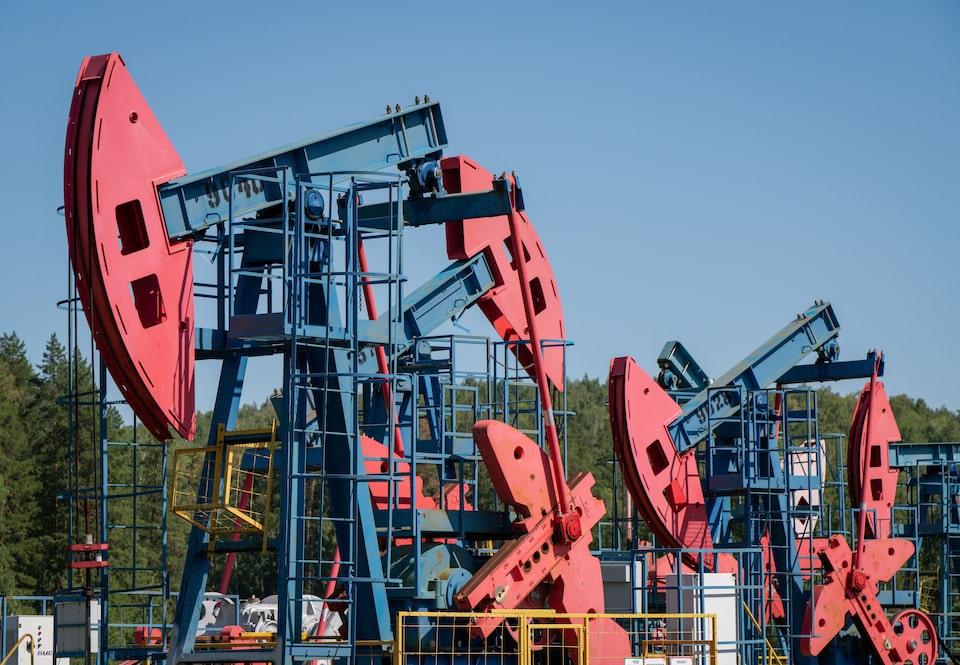
July 18 (Reuters) - U.S. energy firms this week added oil and natural gas rigs for the first time in 12 weeks, energy services firm Baker Hughes (BKR.O) , opens new tab said in its closely followed report on Friday. The oil and gas rig count, an early indicator of future output, rose by seven, its biggest weekly increase since December, to 544 in the week to July 18. , , Sign up here. Despite this week's rig increase, Baker Hughes said the total count was still down 42 rigs, or 7% below this time last year. Baker Hughes said oil rigs fell by two to 422 this week, their lowest since September 2021, while gas rigs rose by nine, the biggest weekly increase since July 2023, to 117, their most since March 2024. In Texas, the biggest oil and gas-producing state, the rig count fell by two to 253, the lowest since October 2021. In the Permian basin in West Texas and eastern New Mexico, the biggest U.S. oil-producing shale formation, the rig count fell by two to 263, also the lowest since October 2021. But in the Haynesville shale in Arkansas, Louisiana and Texas, one of the nation's biggest and fastest-growing gas-producing regions, the rig count rose by three to 41, the most since March 2024. The oil and gas rig count declined by about 5% in 2024 and 20% in 2023 as lower U.S. oil and gas prices over the past couple of years prompted energy firms to focus more on boosting shareholder returns and paying down debt rather than increasing output. The independent exploration and production (E&P) companies tracked by U.S. financial services firm TD Cowen said they planned to cut capital expenditures by around 3% in 2025 from levels seen in 2024. That compares with roughly flat year-over-year spending in 2024, and increases of 27% in 2023, 40% in 2022 and 4% in 2021. Even though analysts forecast U.S. spot crude prices would decline for a third year in a row in 2025, the U.S. Energy Information Administration (EIA) projected crude output would rise from a record 13.2 million barrels per day (bpd) in 2024 to around 13.4 million bpd in 2025. On the gas side, the EIA projected a 68% increase in spot gas prices in 2025 would prompt producers to boost drilling activity this year after a 14% price drop in 2024 caused several energy firms to cut output for the first time since the COVID-19 pandemic reduced demand for the fuel in 2020. The EIA projected gas output would rise to 105.9 billion cubic feet per day (bcfd) in 2025, up from 103.2 bcfd in 2024 and a record 103.6 bcfd in 2023. https://www.reuters.com/business/energy/us-drillers-add-oilgas-rigs-first-time-12-weeks-baker-hughes-says-2025-07-18/
2025-07-18 14:48
Stablecoin growth boosts Ethereum demand, says Astronaut Capital's Dibb Ether-linked stocks rise after stablecoin bill passes July 18 (Reuters) - Crypto-focused stocks rose on Friday, after ether hit a six-month high on the passage of a stablecoin bill by the U.S. House of Representatives. The bill, expected to be signed into law by President Donald Trump, marks a watershed for the digital asset industry, which has long pushed lawmakers to create rules for digital assets, arguing that a clear framework could drive a wider usage of stablecoins and other crypto tokens. Sign up here. Ether benefits from an increased usage of U.S. dollar-pegged tokens known as stablecoins. Most stablecoins are issued and transacted on the underlying Ethereum blockchain, driving up demand for ether to pay for transaction fees. Shares of BitMine (BMNR.A) , opens new tab, where tech billionaire Peter Thiel is the top investor and whose chairman is Fundstrat's Tom Lee, soared 12.7%. Other ether holding firms Bit Digital (BTBT.O) , opens new tab and BTCS (BTCS.O) , opens new tab added 6.5% and 22.9%, respectively. SharpLink shares dipped 0.6%. The $3.5 billion SharpLink Gaming (SBET.O) , opens new tab, which has funded its ether treasury through stock sales in recent weeks, said on Thursday that it had added $5 billion to its current $1 billion share sale plan. "The standout proposition of institutional Ethereum accumulation seems to be stablecoin growth which has been further accelerated by the recent success of Circle IPO," said Matthew Dibb, CIO at Astronaut Capital, a Singapore-based crypto asset manager. "Ethereum is by far the biggest beneficiary of stablecoin usage." Stablecoin issuer Circle Internet (CRCL.N) , opens new tab added 6%, while crypto exchange Coinbase Global (COIN.O) , opens new tab gained 7.6% and hit an all-time high for the first since its IPO in 2021. ETHER TREASURY STRATEGY Ether climbed to $3,675.81, its highest since January 6, and was last up 6.6% at $3,643.09, outperforming bitcoin , which eased 0.5% to $118,870 after hitting a record high of $123,153 this week. Ether has also got a boost from a number of companies adding the digital asset to their balance sheets recently, following the example of Strategy (MSTR.O) , opens new tab. Shares of the largest corporate holder of bitcoin have skyrocketed more than 3,000% since 2000 as its underlying asset has ballooned in value. "Time will tell whether these treasury companies outperform the core ETH ETF, but given the success of (Strategy) in recent years, it won't stop them from trying," Astronaut Capital's Dibb said. While many companies have launched copycat strategies with bitcoin, which is capped at 21 million coins and is often viewed as a digital store of value, the pivot to ether has raised some eyebrows as it does not have a cap on maximum supply. "It is hard to comprehend why so many speculators are denying themselves that cardinal benefit by buying their crypto exposure in an equity wrapper that issues new shares regularly," said Michael O'Rourke, chief market strategist at JonesTrading. "While the fixed supply cap is bitcoin's cardinal trait, the cardinal trait of a digital treasury company business model is perpetual dilution through share issuance." https://www.reuters.com/business/media-telecom/crypto-stocks-jump-ether-scales-six-month-high-2025-07-18/

2025-07-18 13:10
July 18 (Reuters) - German chemicals company Wacker Chemie (WCHG.DE) , opens new tab on Friday cut its sales outlook for the 2025 financial year, pointing to weak customer demand stemming from global economic and trade policy uncertainty. "There are no signs of a recovery so far," said Chief Executive Christian Hartel in a statement. Sign up here. Wacker, which supplies polysilicon for roughly half of the world's chips, had expected a resolution to the tariff-related uncertainty that would have allowed demand to recover. "This development has so far not materialised," the company said. It now expects annual sales of between 5.5 billion and 5.9 billion euros ($6.41 billion and $6.87 billion), down from previous guidance of between 6.1 billion and 6.4 billion euros. Wacker said that the change in its guidance had also been prompted by a stronger euro since the beginning of the second quarter of the year, and the expectation that the current exchange rate level will remain unchanged. The euro has gained 12% against the dollar this year on the tariff turmoil and more recently due to worries about U.S. President Donald Trump's massive spending and tax-cut bill, and his relentless criticism of Federal Reserve Chair Jerome Powell for not cutting rates. Wacker posted second-quarter revenue of 1.41 billion euros, in line with expectations in a company provided poll compiled by Vara Research. Its shares fell by as much as 3% but pared losses to stand 1% lower by 1240 GMT. ($1 = 0.8586 euros) https://www.reuters.com/en/wacker-chemie-cuts-guidance-amid-prolonged-tariff-uncertainty-2025-07-18/
2025-07-18 12:46
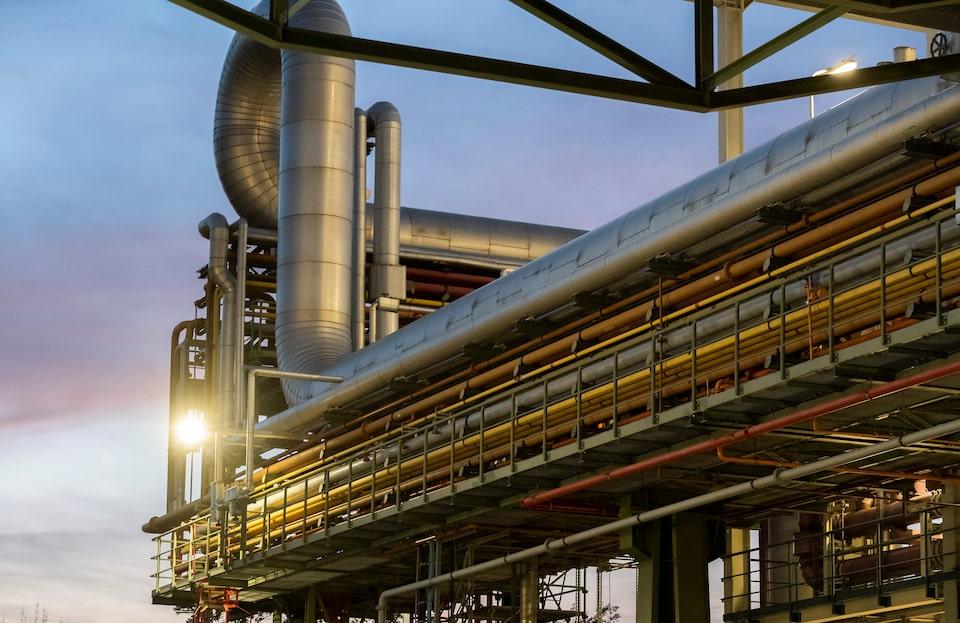
BRUSSELS, LONDON July 18 (Reuters) - Following are details of the European Union's 18th sanctions package against Russia over its war in Ukraine, approved on Friday and aimed at dealing further blows to Russia's oil and energy industry. OIL PRICE CAP Central to the package is a lower price cap on Russian oil - a move designed to shrink Moscow's energy revenues without disrupting global markets by severing Russian supply entirely. Sign up here. The EU will impose a moving price cap on Russian crude at 15% below its average market price, EU diplomats said. That means a cap of roughly $47.60 per barrel at present, well below the $60 maximum that the Group of Seven major economies have tried to impose since December 2022. The measure aims to ban trade in Russian crude bought at a higher price by prohibiting shipping, insurance and reinsurance companies from handling tankers carrying such crude. The European Union and Britain have been pushing the G7 to lower the cap since a fall in oil futures made the $60 cap largely irrelevant. However, the United States has resisted, leaving the EU to move forward on its own, with only limited power to enforce the measure because oil is largely traded in dollars, for which payment clearing is controlled by U.S. banks. SHADOW FLEET AND ENERGY TRADE The EU will no longer import any petroleum products made from Russian crude, although the ban will not apply to imports from Norway, Britain, the U.S., Canada and Switzerland, EU diplomats said. The EU sanctions also targeted India's Nayara oil refinery with Russia's largest oil producer Rosneft as its main shareholder. An additional 105 vessels are banned from accessing EU ports and locks, or undertaking ship-to-ship transfers of oil - an effort to shut down the so-called "shadow fleet" of older oil tankers used to transport Russian oil and circumvent sanctions. The EU also put sanctions on a private operator of an international flag registry and a captain of a shadow fleet vessel, according to a press release. In total, the EU has now imposed sanctions on more than 400 shadow fleet ships. NORD STREAM Transactions related to Russia's Nord Stream gas pipelines under the Baltic Sea will be banned, including any provision of goods or services to these projects. FINANCIAL SECTOR The EU will ban all transactions with Russian financial institutions - already excluded from the global financial messaging system SWIFT. The ban will include transactions with Russia’s sovereign wealth fund - the Russian Direct Investment Fund (RDIF) - as well as its investments. This aims to further restrict Russia's access to international financial markets and foreign currency. EU countries also agreed to lower the threshold for imposing further sanctions on foreign financial and credit institutions that undermine the sanctions or support Russia's war effort - for example, by circumventing the oil price cap. EXPORT BANS, NEW BLACKLIST ENTRIES The EU will blacklist 26 new entities for circumventing sanctions, including seven in China, three in Hong Kong and four in Turkey, diplomats said. A number of chemicals, plastics and items of machinery have been added to the list of goods EU countries cannot export to Russia. DELAYED APPROVAL The package of sanctions on Russia is the EU's 18th since Moscow's full-scale invasion of Ukraine in 2022. Approval was held up for weeks by repeated vetoes by Slovakia and Malta. Slovakia had demanded guarantees against potential losses from a separate EU plan to ban imports of Russian gas by 2028, and dropped its veto only once Prime Minister Robert Fico said it had achieved as much as it could at this point. https://www.reuters.com/sustainability/boards-policy-regulation/whats-eus-18th-sanctions-package-against-russia-2025-07-18/
2025-07-18 12:33
MOSCOW, July 18 (Reuters) - Rescuers ferried more than 100 people to safety this week, along with their farm animals and pets, after floodwaters caused by heavy rain engulfed villages in a sparsely-populated part of eastern Russia. Emergency crews piloted rubber dinghies down flooded streets in settlements in Russia's Sakha Republic, also known as Yakutia, a vast region larger than Argentina. Sign up here. Some villagers clambered out of windows and were taken on piggyback into waiting boats. Rescuers also took in cows, hens and at least one pet hamster, video released by the region's emergencies ministry showed. Yakutia, a swampy and forested region, has been hit by a string of floods and fires in recent years - extreme weather-related events that scientists say are exacerbated by climate change. Authorities have put out 169 forest fires in this fire season alone, which runs roughly from the beginning of May until the end of September. This week, aerial footage showed villages submerged in brackish floods, with just roofs showing among the water. Around a third of those rescued were children, the ministry said. In all, 93 residential buildings were flooded in eight villages, it added. https://www.reuters.com/sustainability/climate-energy/rescuers-save-families-farm-animals-one-pet-hamster-after-russian-floods-2025-07-18/

2025-07-18 12:33
Brent and WTI rise 1% Gasoil futures at highest since February 2024 EU to stop importing fuels from Russia LONDON, July 18 (Reuters) - Crude oil futures rose on Friday while gasoil futures jumped to a 17-month high as investors weighed new European Union sanctions against Russia. Brent crude futures climbed 73 cents, or 1.05%, to $70.25 a barrel by 1151 GMT. U.S. West Texas Intermediate crude futures gained 83 cents, or 1.23%, to $68.37. Sign up here. The premium on low-sulphur gasoil futures to Brent crude was up $3.50 at $27.27, the almost 15% increase lifting the spread to its highest since February 2024. The EU reached an agreement on an 18th sanctions package against Russia over its war in Ukraine, which includes measures aimed at dealing further blows to Russia's oil and energy industries. Its latest sanctions package will lower the G7's price cap for buying Russian crude oil to $47.6 a barrel, diplomats told Reuters. The EU will also no longer import any petroleum products made from Russian crude, though the ban will not apply to imports from Norway, Britain, the U.S., Canada and Switzerland, EU diplomats said. EU foreign policy chief Kaja Kallas also said on X that the EU has designated the largest Rosneft (ROSN.MM) , opens new tab oil refinery in India as part of the measures. Higher gasoil futures could be driven by an EU ban on fuel imports derived from Russian crude, UBS analyst Giovanni Staunovo said, as well as low inventories in northwest Europe. The EU and UK have imported about 196,000 barrels per day of refined fuel from India so far this year, the majority of which was diesel, gasoil and jet fuel, according to data from analytics business Kpler. Europe produces less diesel and jet fuel than it consumes, making it reliant on imports from other regions. "This shows the market fears the loss of diesel supply into Europe, as India had been a source of barrels," said Rystad Energy's vice president of oil markets, Janiv Shah. Investors were considering the potential impact of the price cap change and vessel designations on crude markets. Investors are awaiting news from the U.S. on possible further sanctions after President Donald Trump this week threatened sanctions on buyers of Russian exports unless Moscow agrees a peace deal in 50 days. "Ultimately, it is now a matter of waiting for possible major changes in U.S. sanctions and tariff policy," Commerzbank analysts said in a note. The U.S. has not backed Europe on the latest sanctions package, leaving the EU with limited power to enforce the measures. "We expect limited impact from the lower price cap and tanker sanctions; landed prices for diesel in Europe could increase somewhat due to larger logistics issues to get products into Europe, but we think enforcement challenges limit the impact on flows,” said BNP Paribas analyst Aldo Spanjer. Prices could also have received support after Reuters reported that a restart of Iraq's Kurdish oil exports is not imminent despite Iraq's federal government saying on Thursday that shipments would resume immediately. https://www.reuters.com/business/energy/oil-prices-rise-after-eu-new-sanctions-russia-2025-07-18/