2025-07-18 07:25
July 18 (Reuters) - South Africa's Valterra Platinum (VALJ.J) , opens new tab expects to report a sharp fall in first half profit by as much as 88% due to lower output and sales as well as one-off costs related to its demerger from Anglo American Plc (AAL.L) , opens new tab group, it said on Friday. Valterra, formerly Anglo American Platinum, said it expects headline earnings between 800 million rand and 1.6 billion rand ($44.97 million-$89.94 million) in the six months to June 30, down from 6.5 billion rand during the same period last year. Sign up here. Platinum group metal (PGM) sales volumes fell 25% after heavy rainfall and flooding disrupted operations at Valterra's Tumela mine within its Amandelbult complex, the company said in a trading statement. Demerger costs amounted to 1.4 billion rand during the first half. Valterra demerged from Anglo in June and is now separately listed in Johannesburg and London, as the global mining giant restructures its business to primarily focus on energy metal copper. Cost savings of about 2.1 billion rand helped offset the decline in earnings over the period, Valterra said. The company said its refined production guidance of 3.0 million-3.4 million PGM ounces for the year remains unchanged. Valterra will release its half-year financial results on July 28, its first as a standalone company. ($1 = 17.7897 rand) https://www.reuters.com/world/africa/south-africas-valterra-platinum-flags-fall-first-half-profit-2025-07-18/
2025-07-18 07:15
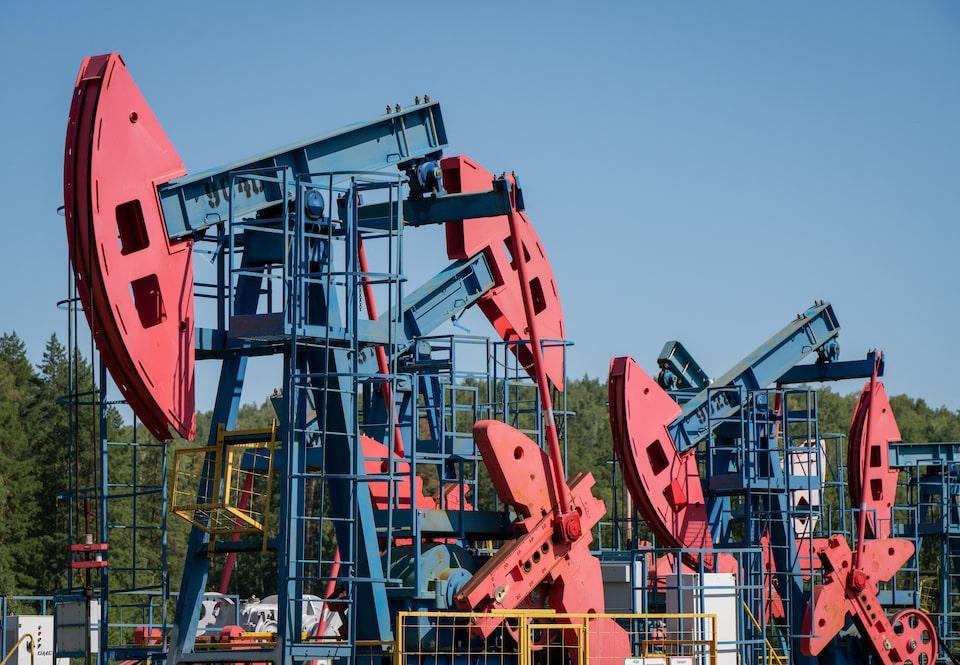
Brent, WTI up 0.8% after $1 gain on Thursday Both head for slight weekly decline EU lowers price cap for Russian crude Drone attacks cut Kurdistan oil output by half SINGAPORE, July 18 (Reuters) - Oil prices rose on Friday after the European Union agreed to new sanctions against Russia, also underpinned by supply concerns following drone attacks on northern Iraqi oilfields and tight market fundamentals. Brent crude futures climbed 62 cents, or 0.89%, to $70.14 a barrel as of 0652 GMT, U.S. West Texas Intermediate crude futures advanced 64 cents, or 0.95%, to $68.18 a barrel. Sign up here. The EU reached an agreement on an 18th sanctions package against Russia over its war in Ukraine, with measures aimed at dealing further blows to Russia's oil and energy industries. Its latest sanctions package will lower the G7's price cap for Russian crude oil to $47.6 per barrel, diplomats told Reuters. Four days of drone attacks on oilfields in Iraqi Kurdistan that shut down half the region's output have supported prices, pushing both contracts up by $1 on Thursday. Additionally, seasonal travel demand has propped up the market. In the first two weeks of July, global oil demand has averaged 105.2 million barrels per day (bpd), up by 600,000 bpd from a year earlier and largely in line with forecasts, JPMorgan analysts said in a research note. "Crude prices have been broadly stable this week, with no significant moves as the impact of OPEC+ supply increases has been offset by strong seasonal demand in the U.S.," said LSEG analyst Anh Pham. U.S. crude inventories fell by a larger-than-expected 3.9 million barrels last week compared with analysts' expectations in a Reuters poll for a 552,000-barrel draw, government data on Wednesday showed. Demand in Asia also firmed as refineries came back from maintenance amid peak seasonal demand. Near-term oil fundamentals are likely to remain supportive, with the market set to remain fairly tight through this quarter, before becoming better supplied from the last three months of the year, ING analysts said in a note on Friday. Still, the uncertainty around U.S. tariff policy, which appears unlikely to be settled until after August 1, is weighing on the market. Plans by major oil producers to remove output cuts will also add to supply as the seasonal Northern Hemisphere summer demand ends. For this week, both Brent and WTI were down by 0.30% and 0.42% respectively. Oil output in the semi-autonomous Kurdistan region has been slashed from about 280,000 bpd to between 140,000 bpd and 150,000 bpd, two energy officials said. Officials pointed to Iran-backed militias as the likely source of attacks this week on the region's oilfields, although no group has claimed responsibility. Despite the attack, Iraq's federal government said on Thursday that Iraqi Kurdistan will resume oil exports through a pipeline to Turkey after a two-year halt. https://www.reuters.com/business/energy/oil-rises-after-eu-new-sanctions-russia-tight-market-supports-2025-07-18/
2025-07-18 07:00
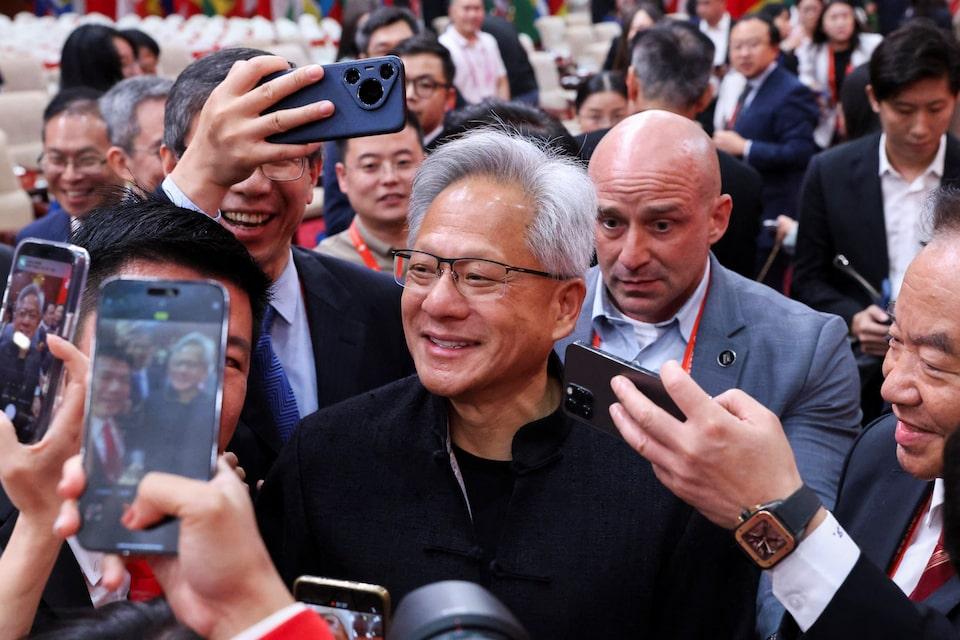
BEIJING, July 18 (Reuters) - China's Commerce Minister Wang Wentao told Nvidia (NVDA.O) , opens new tab CEO Jensen Huang on Thursday that he hoped multinational companies, including Nvidia, would provide high-quality and reliable products and services to Chinese customers, the ministry said in a statement. Huang said the Chinese market was very attractive, and Nvidia was willing to deepen cooperation with Chinese partners in the field of artificial intelligence, according to the commerce ministry's statement released on Friday. Sign up here. Wang said China's policy of attracting foreign investment would not change and the door to openness would only open wider. Nvidia declined to comment further. During his third China visit this year, Huang, the founder and CEO of the world's most valuable company, also met with Ren Hongbin, chairman of China Council for the Promotion of International Trade and the country's Vice Premier He Lifeng. Chinese officials told Huang they welcomed foreign companies to continue to invest in the country, the Nvidia CEO said at a press conference in Beijing on Wednesday. At the event, Huang described AI models from Chinese firms Deepseek, Alibaba (9988.HK) , opens new tab and Tencent (0700.HK) , opens new tab as "world class" and said AI was "revolutionising" supply chains. China's commerce ministry said in a separate statement on Friday that the U.S. had told Beijing that it would approve sales of Nvidia's H20 AI chips to Chinese customers. Huang said on Wednesday that Chinese customers' demand for the H20, which was released from U.S. export controls this week, is high but no purchase orders have been fulfilled yet as it awaits U.S. government approval for export licences. Nvidia has also announced it is developing a new chip for Chinese clients called the RTX Pro GPU, which would be compliant with U.S. export restrictions and designed specifically for smart factories and for robot training purposes. https://www.reuters.com/world/china/china-commerce-minister-discussed-foreign-investment-ai-meet-with-nvidia-ceo-2025-07-18/
2025-07-18 06:54
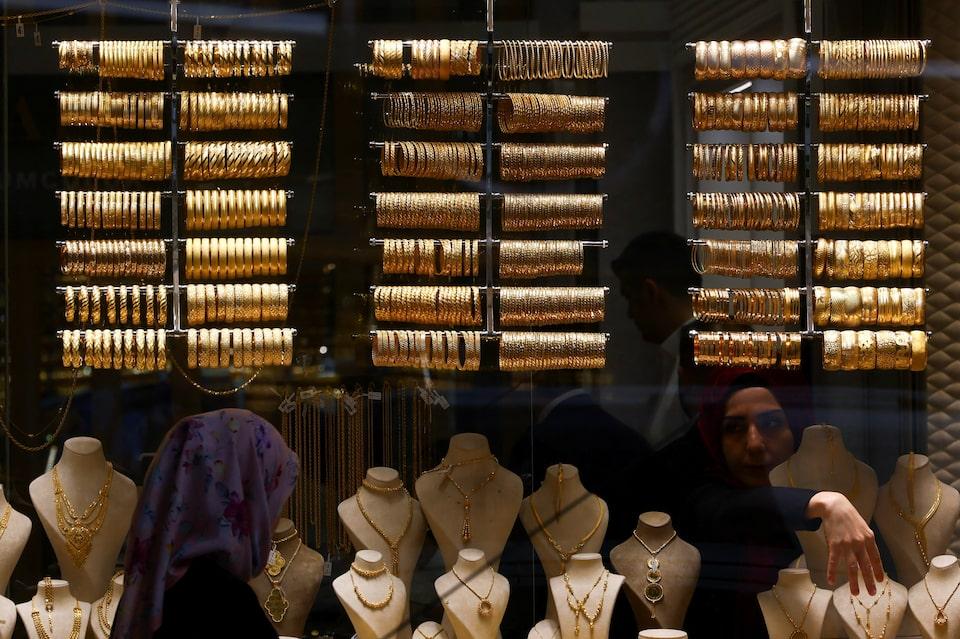
Palladium scales near two-year peak Dollar heads for second weekly rise Investors monitor trade negotiations Gold down 0.5% so far this week July 18 (Reuters) - Gold prices traded flat on Friday and were headed for a weekly drop, weighed down by an overall stronger dollar and solid U.S. economic data, while platinum scaled to its highest level since August 2014. Spot gold held its ground at $3,339.20 per ounce, as of 0640 GMT. U.S. gold futures were flat at $3,344.60. Bullion has declined 0.5% so far this week. Sign up here. The dollar edged 0.1% lower against its rivals on Friday, but was headed for a second straight weekly gain. A stronger dollar makes greenback-priced bullion more expensive for other currency holders. "We are starting to see data coming in that is still supporting a rather vigilant U.S. economy and potentially market participants are still looking at a situation where we are not expecting a very dovish Fed," OANDA senior market analyst Kelvin Wong said. Data showed on Thursday that U.S. retail sales rose more than expected in June, advancing 0.6% last month after an unrevised 0.9% drop in May. U.S. initial jobless claims were better than expected, dropping 7,000 to a seasonally adjusted 221,000 for the week ended July 12. Economists polled by Reuters had forecast 235,000 claims for the week. The strong data showed the world's largest economy remained on a stable footing, supporting the Federal Reserve's hesitance to resume monetary policy easing. Gold, often considered a safe-haven asset during times of economic uncertainty, tends to do well in a low-interest-rate environment. "We expect the U.S. Fed's rate-cut announcements later in 2025 and 2026 to hold the key to gold price increases going forward," BMI analysts said in a note. Meanwhile, investors closely watched trade negotiations as U.S. President Donald Trump broadened his tariff war. Spot platinum eased 0.3% to $1,453.23 per ounce, after hitting its highest point in more than a decade earlier in the session. Palladium climbed 1.5% to $1,293.32 to mark its highest level since August 2023. Silver was up 0.2% at $38.20. https://www.reuters.com/world/china/gold-heads-weekly-dip-firm-dollar-platinum-highest-since-2014-2025-07-18/
2025-07-18 06:53
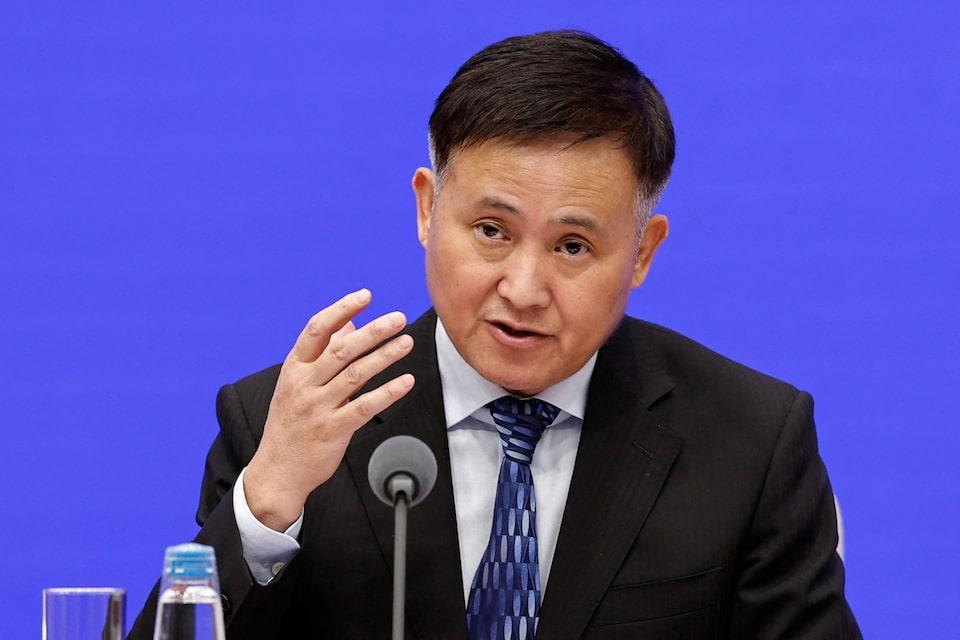
BEIJING, July 18 (Reuters) - China's central bank governor Pan Gongsheng met Bank of America's president of international business Bernard Mensah earlier this week to discuss economic and financial matters, the People's Bank of China said in a statement on Friday. The Tuesday meeting included an exchange of views on the global economic and financial situation, China's macroeconomic policies, and its financial markets, the PBOC said. Sign up here. https://www.reuters.com/business/finance/pboc-governor-bank-america-senior-executive-discuss-economy-financial-markets-2025-07-18/
2025-07-18 06:38
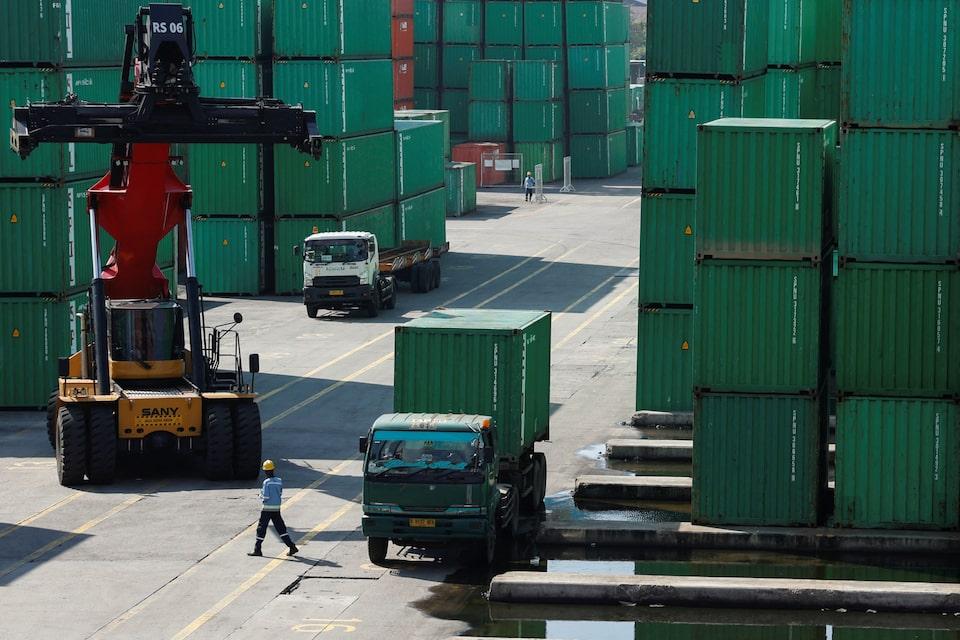
JAKARTA, July 18 (Reuters) - Indonesia is still negotiating details of its recently-reached trade deal with the United States after Washington lowered tariff rates on the Southeast Asian country, and is pursuing exemptions for its exports of palm oil and nickel, an official said on Friday. The two countries reached a trade deal this week that led to a reduction in the threatened U.S. proposed tariff rate to 19% from 32%. The deal was one of only a handful reached so far by the Trump administration ahead of the August 1 negotiation deadline with numerous countries. Sign up here. Susiwijono Moegiarso, a senior official at the country's economic ministry, told reporters that the two sides were still negotiating the finer details of the agreement, adding that the 19% rate will be imposed on top of existing sectoral tariffs. Indonesia has asked the United States to exempt its exports of cocoa, rubber, crude palm oil, coffee and nickel from the levy, he said, adding that U.S. technology products will also be exempted from Indonesia's "local content" rules, which require companies to use locally-made components in its manufacturing. Indonesia is the world's biggest palm oil producer and the biggest supplier to the United States, accounting for 85% of its total imports in 2024. "This is a good opportunity, this will become a good factor for us," Susiwijono said. "The deal should be good to support our exports." Indonesia will also buy jets for its flag carrier Garuda Indonesia (GIAA.JK) , opens new tab from Boeing, and its state energy firm Pertamina (PERTM.UL) will also import energy from the United States, subject to business reviews, Susiwijono said. He added that all U.S. goods imported into Indonesia will face zero tariffs, with the exception of alcoholic drinks and pork, and some U.S. goods will be exempted from import quota rules. A statement from Indonesia's economic ministry said the trade deal with U.S. included agreement of easier import permits for U.S. goods, protection of intellectual property rights, and for Indonesia to comply with international standard on export and import of goods with nuclear components. https://www.reuters.com/business/aerospace-defense/indonesia-still-negotiating-details-exemptions-us-tariff-deal-official-says-2025-07-18/