2025-07-18 03:03
MUMBAI, July 18 (Reuters) - The Indian rupee is set to open higher on Friday, tracking a broader recovery in Asian peers and supported by a pause in the U.S. dollar index's near-term uptrend. The 1-month non-deliverable forward indicated an open in the 86.00-86.02 range versus 86.0750 on Thursday, marking the rupee's first sub-86 finish in nearly a month. Sign up here. "Asia will help (the rupee) at the open. However, I'd fade any downside (on USD/INR)," a currency trader at a bank said. "Positioning and risk-reward favour upside, and this looks (like a) buy-on-dips market right now." The dollar index fell about 0.2% in Asia to 98.40, helping most Asian currencies climb higher. The dollar index had rallied on Thursday, approaching the 99 mark, after robust U.S. data spurred expectations that the Federal Reserve will be in no rush to resume rate cuts. Upbeat U.S. retail sales in June pointed to a pickup in economic activity, while job claims fell to a three-month low, reinforcing signs of steady labour market strength. U.S. economic data released on Thursday "continues to signal resilience," MUFG Bank said, while noting the muted reaction in U.S. Treasury yields. Markets were largely unchanged about the Fed outlook, with no major shift in pricing for a September rate cut or the cumulative rate cuts expected in 2025. Despite the dip in the dollar index on Friday, the gauge is up 0.6% this week after last week's near 1% rally. Markets continue to hold net short positions on the U.S. dollar, and an unwinding of those short dollar positions could provide support for the U.S. currency, MUFG Bank noted. KEY INDICATORS: ** One-month non-deliverable rupee forward at 86.08; onshore one-month forward premium at 10 paise ** Dollar index down at 98.41 ** Brent crude futures down 0.1% at $69.5 per barrel ** Ten-year U.S. note yield at 4.44 ** As per NSDL data, foreign investors sold a net $121.3 million worth of Indian shares on July 16 ** NSDL data shows foreign investors bought a net $3.5 million worth of Indian bonds on July 16 https://www.reuters.com/world/india/pause-dollar-rally-offers-relief-rupee-after-86-breach-2025-07-18/
2025-07-18 01:56
US plans 50% tariff on Brazilian imports from August Brazil plans regulation and taxation of US tech firms Lula open to talks with Trump, minister says SAO PAULO, July 17 (Reuters) - Brazilian President Luiz Inacio Lula da Silva on Thursday said he would not take orders over tariffs from a foreigner, referring to U.S. President Donald Trump, and later called the United States' threatened duty "unacceptable blackmail." The comments, made during two separate events, mark a continuation of a spat between the two leaders that escalated when the U.S. announced a 50% tariff on Brazil last week. Sign up here. Trump attributed the tariff, set to start in August, to Brazil's treatment of former President Jair Bolsonaro and to trade practices against U.S. companies that he said are unfair. The tariff announcement came days after Lula called Trump an "emperor" the world does not want. Lula and members of his cabinet have rejected the reasoning behind the tariffs and insisted on Brazil's sovereignty, while calling for trade negotiations with the United States. "No foreigner is going to give orders to this president," Lula said in a speech, using the slang word 'gringo', which in Brazil is a common term for foreigners without the pejorative sense it carries in other parts of Latin America. He added that Brazil would go ahead with regulation and taxation of U.S. tech firms, telling a gathering of leftist student activists in the state of Goias that tech firms are conduits of violence and fake news disguised as freedom of expression. Later on Thursday, during an evening TV and radio address to the nation, Lula said the defense of Brazil's sovereignty extends to protecting itself against the actions of foreign digital platforms. During the near five-minute address, Lula said Brazil has been negotiating with the U.S. over tariffs, and repeated that the Latin America country had sent a proposal in May. "We expected a response, and what we received was unacceptable blackmail, in the form of threats to Brazilian institutions and false information about trade between Brazil and the United States," Lula said. Brasilia has been holding discussions with industry groups and companies that will be affected by the U.S. tariff, while also readying potential retaliatory measures if talks fall through. Foreign Minister Mauro Vieira told CNN Brasil separately on Thursday that Lula was open to talks with Trump, who had not yet met each other. "If the circumstances are given, they will speak," he added. Lula, who is in his third non-consecutive term as president of Latin America's largest economy, saw his approval ratings start to rebound after the trade spat with Trump last week. https://www.reuters.com/world/americas/lula-says-he-wont-take-orders-foreigner-trump-calls-tariffs-blackmail-2025-07-17/
2025-07-17 23:50
July 18 (Reuters) - BHP (BHP.AX) , opens new tab reported on Friday annual copper production above 2 million metric tonnes for the first time but warned of lower output next year while separately flagging delays and cost blowouts of up to 29% for its key Jansen Stage 1 potash project. The world's largest listed miner achieved copper production of 2.02 Mt in fiscal 2025, at the upper end of its forecast range. However, it expects output to drop to between 1.8 Mt and 2.0 Mt in fiscal 2026, reflecting planned lower grades at its flagship Escondida mine in Chile. Sign up here. BHP also reported record annual iron ore production of 290 Mt, at the upper end of its guidance, while its fourth-quarter output of 77.5 Mt beat a Visible Alpha consensus estimate of 75.90 Mt. The miner said first production from its Jansen Stage 1 potash project in Canada has been pushed back to mid-2027 from the previously targeted end-2026, while capital expenditure estimates have surged to $7.0 billion-$7.4 billion from $5.7 billion - a cost increase of up to 29%. "The estimated cost increase is driven by inflationary and real cost escalation pressures, design development and scope changes, and our current assessment of lower productivity outcomes over the construction period," BHP said in a statement. Strong iron ore production in the June quarter helped offset a weak March quarter that was impacted by two tropical cyclones. BHP had undergone a debottlenecking exercise at its Pilbara operations after ramping up the South Flank mine last year. For fiscal 2026, BHP expects iron ore production between 284 Mt and 296 Mt. The company is also assessing a potential divestment of its Western Australia Nickel assets as part of an ongoing review, citing balance sheet impacts from the nickel business. "Any decision to divest will be subject to an assessment against other options, including continuing temporary suspension, restart or closure," it said. https://www.reuters.com/business/bhp-logs-record-copper-output-flags-jansen-delay-cost-blowout-2025-07-17/
2025-07-17 23:18
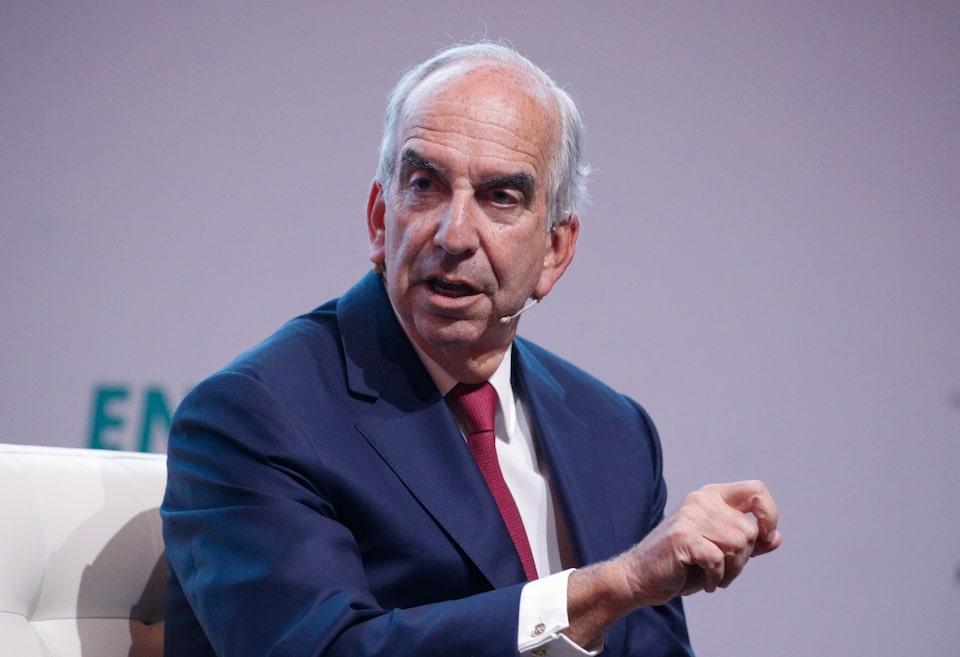
WASHINGTON, July 17 (Reuters) - The U.S. Federal Trade Commission on Thursday reversed bans on the CEOs of takeover targets joining the boards of Chevron (CVX.N) , opens new tab and Exxon Mobil (XOM.N) , opens new tab that the Biden administration made a condition of clearing the oil giants' deals to buy two oil producers. The FTC released Exxon, which acquired Pioneer Natural Resources last year, from an order barring former Pioneer CEO Scott Sheffield from its board. Chevron, which agreed to buy Hess (HES.N) , opens new tab in 2023 for $53 billion, was released from a similar order keeping that company's CEO, John Hess, off its board. Sign up here. The decisions are the latest move by FTC Chairman Andrew Ferguson to reverse actions by his Democratic predecessor, Lina Khan. Khan and her Democratic colleagues had raised concerned Hess and Sheffield would coordinate with members of the Organization of the Petroleum Exporting Countries. Ferguson and Republican Commissioner Melissa Holyoak dissented at the time, saying the orders exceeded the FTC's authority. "We are very pleased with the FTC's unanimous decision," a Chevron spokesperson told Reuters. "I appreciate the current commissioners for their willingness to review this case, and I’m obviously pleased that objectivity and fairness has carried the day in their decision to vacate the prior order," Sheffield said. Exxon and Hess did not immediately respond to Reuters requests for comments. While the FTC's three Republican commissioners voted unanimously to reverse the decisions, Commissioner Mark Meador said in a statement that OPEC and OPEC+ "operate as a de facto cartel," making oil markets highly concentrated. The FTC "should not hesitate to bring enforcement actions against actual collusion as well as invitations to collude," he said. Chevron struck a deal to acquire smaller U.S. oil producer Hess in October 2023, with an eye on the latter's 30% stake in the prolific Stabroek Block in Guyana that is operated by ExxonMobil with a 45% interest. ExxonMobil and Hess are locked in an arbitration case, with a ruling related to a major oilfield project in Guyana set to determine whether Chevron can move forward with its planned acquisition of Hess. https://www.reuters.com/legal/transactional/ftc-reverses-bans-two-executives-joining-chevron-exxon-boards-2025-07-17/
2025-07-17 23:15
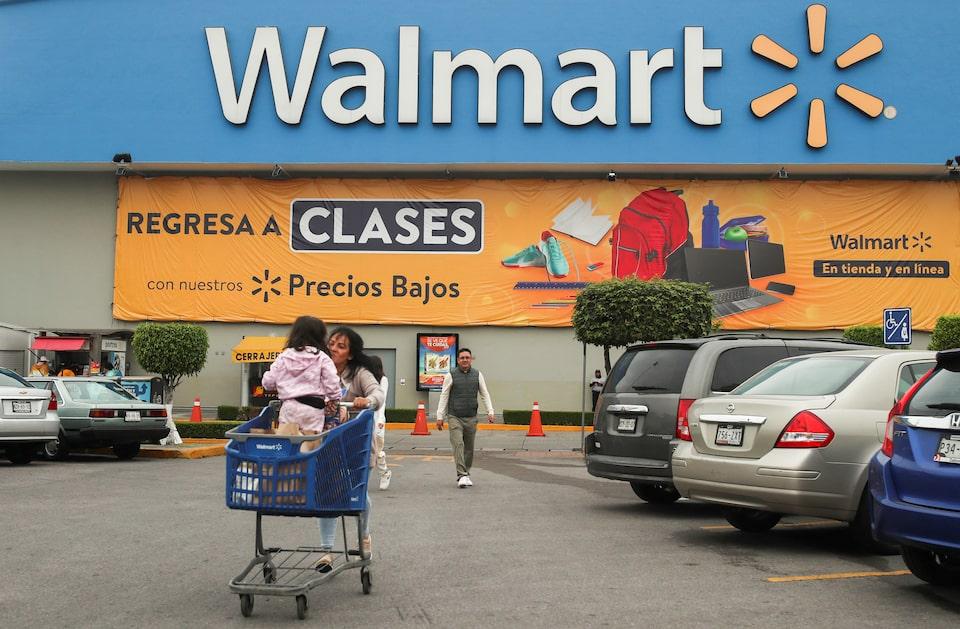
MEXICO CITY, July 17 (Reuters) - Walmart's Mexico and Central America unit, known as Walmex (WALMEX.MX) , opens new tab, saw some $3.7 billion wiped from its market value on Thursday after the retailer posted weaker-than-expected margins for its second quarter, although revenues grew. The stock tumbled 7.4% on Thursday, its steepest daily decline since 2020, decreasing Walmex's market capitalization by 68.6 billion Mexican pesos ($3.7 billion). Sign up here. Mexico's largest retailer, which operates Walmart, Sam's Club and Bodega Aurrera stores across six countries, on Wednesday posted a 10% drop in net profit, although sales were up 8%, as Walmex spent more than analysts expected. Net profit was 11.2 billion pesos ($598 million) in the quarter, below analysts' expectation of close to 13 billion pesos, while the core earnings margin hit 9.5%, the lowest level for that quarter since 2020. "The company faces a very important challenge: regaining profitability," analysts at financial group Banorte said. Actinver analyst Antonio Hernandez said in a note to clients that the margin pressure came from investments in tech, e-commerce, store openings and labor expenses. "The benefits of these investments will continue to translate into stronger growth and accelerated market share gains," Chief Financial Officer Paulo Garcia said in a call with analysts on Thursday. "We're prioritizing investments with the highest returns and dropping those with lower returns," he added. Walmex has made a push in recent years to consolidate its market share, particularly in online sales. CEO Ignacio Caride, who in a pre-recorded webcast on Wednesday said he was unhappy with the results, said he believed the group's overall strategy was on track and reiterated the company's guidance and share buyback plans. Caride took the job last year after more than a decade at e-commerce powerhouse MercadoLibre (MELI.O) , opens new tab. Executives noted that Walmex would continue to expand its store footprint, with 4,124 stores currently and 25 new openings over the quarter, and push on with a remodeling campaign for a wave of stores that opened more than a decade ago. Executives said on the call that unusually torrential rains in June in Mexico City - its wettest June in over 20 years - had "a big impact" on food and drinks sales. Built on a lake, Mexico City is prone to floods in and around its metropolitan area. ($1 = 18.7500 Mexican pesos) https://www.reuters.com/business/retail-consumer/walmart-mexicos-market-value-sheds-37-billion-after-q2-profit-dip-2025-07-17/
2025-07-17 23:01
Japan remains largest non-U.S. holder of Treasuries at $1.135 trillion China reduces holdings to $756.3 billion, lowest since February 2009 Net capital inflow to U.S. hits $311.1 billion in May NEW YORK, July 17 (Reuters) - Foreign holdings of U.S. Treasuries increased in May to top $9 trillion for a third straight month, data from the Treasury Department showed on Thursday, with buyers, other than China, flocking back in after tariff turmoil led to outflows in April. Holdings of U.S. Treasuries rose to $9.045 trillion, up from April's level of $9.013 trillion, and up 11.2% from a year earlier. In March, Treasuries held by foreigners hit a record $9.049 trillion. Sign up here. On a transaction basis, foreigners bought $146 billion worth of U.S. Treasuries in May, compared with an outflow of $40.8 billion in April as President Donald Trump's back-and-forth tariff policy roiled markets. Tariffs were announced on April 2, causing a tumble in equities and the dollar and massive volatility in U.S. Treasuries. Treasury debt buying by foreigners in May was the largest since August 2022. China, the third largest Treasuries holder, further reduced its holdings to $756.3 billion in May, the lowest since February 2009 when the country's stock of Treasuries dropped to $744.2 billion. Its holdings declined for a fourth straight month and were far below their peak of more than $1.3 trillion between 2012 and 2016. The world's second largest economy has been selling Treasuries to bolster its currency, the yuan. Analysts said a slowing Chinese economy, post-COVID industrial challenges, and trade barriers have reduced China's dollar inflows from exports. Japan remained the largest non-U.S. holder of Treasuries, with a record $1.135 trillion in May. UK investors, the second largest owner of U.S. government debt, raised their pool of Treasuries to an all-time peak of $809.4 billion, up from $807.7 billion in April. The UK overtook China as the second largest non-U.S. holder of Treasuries in March. The UK is typically viewed as a custody country, which is generally a proxy for hedge fund investments. Other countries used by hedge funds for custody services include the Cayman Islands and the Bahamas. In May, Canadians increased their Treasuries holdings to $430.1 billion from $368.4 billion. That was a turnaround from April when they were the biggest sellers of U.S. government debt as Trump hit Canada with tariffs on steel, aluminum and automobiles. Foreign investors also poured back into U.S. equities, with massive inflows of $114.3 billion in May, from an outflow of $18.8 billion in April. Data also showed the net capital inflow into the United States totaled $311.1 billion in May, compared with an outflow of $14.6 billion in April. The May inflow was the largest since September 2024. After including adjustments, such as estimated foreign portfolio acquisitions of U.S. stocks through stock swaps, overall net foreign inflows into long-term securities hit a record $259.4 billion in May. https://www.reuters.com/world/china/foreign-holdings-us-treasuries-rise-may-despite-china-drop-2025-07-17/