2025-07-17 21:43
July 17 (Reuters) - The New York State Public Service Commission has terminated its offshore wind transmission planning process due to stalled federal permitting, to protect state ratepayers from premature infrastructure costs, it said on Thursday. This halts the Public Policy Transmission Need process of seeking proposals to deliver up to 8 gigawatts of offshore wind power into New York City by 2033. Sign up here. The commission cited recent federal actions halting new offshore wind leasing and permitting, which it said make short-term project execution unfeasible. "Given the uncertainty coming out of Washington, we must act to protect consumers," said Commission Chair Rory M. Christian. "This is not the end — we'll move forward once the federal government resumes permitting." New York's commitment to offshore wind remains strong, the commission noted. Existing projects like South Fork Wind, Empire Wind and Sunrise Wind are unaffected and continue to move forward. "Shovel-ready offshore wind projects are poised to add major capacity to the U.S. grid just when it’s needed most," said Hillary Bright, executive director at Turn Forward, a nonprofit organization aiming to advance offshore wind power. "Experts across the board are warning that the U.S. will soon face a shortfall in power supplies due to escalating demand from AI, cryptocurrency, and other digital economy drivers." The commission has directed its staff to apply lessons from the PPTN process to future planning, focusing on affordability, reliability and risk-reduction. Further guidance will be incorporated into the 2026 Clean Energy Standard Biennial Review. "Now is not the time for us to hold back the potential contribution of any energy source. For the U.S. to foster the energy resources it needs to stay competitive in the future, we must support continued development of all power resources," Bright added. https://www.reuters.com/business/energy/new-york-halts-offshore-wind-transmission-plan-amid-federal-uncertainty-2025-07-17/

2025-07-17 21:23
July 17 (Reuters) - Moody's on Thursday hiked its rating for the government of Argentina's long-term foreign currency and local currency issuer ratings to "Caa1" from "Caa3", up two notches though it remains in so-called junk, or non-investment grade, territory. The ratings agency also changed its outlook to stable from positive. Sign up here. "The upgrade reflects our view that the extensive liberalization of exchange and (to a lesser extent) capital controls, alongside a new International Monetary Fund (IMF) program, support the availability of hard currency liquidity and ease pressure on external finances," Moody's said in a statement. "This reduces the likelihood of a credit event." The outlook, it added, balances positive developments against continued credit challenges and a so far limited structural rebalancing of the external accounts, as well as less favorable trade terms that could narrow the trade surplus. Moody's had taken the rating up to "Caa3" in January of this year, its first upgrade for South America's No. 2 economy in more than five years, after a 2020 downgrade over disrupted debt restructuring talks as the global pandemic increased its risk of slipping into default. https://www.reuters.com/world/americas/moodys-hikes-argentina-ratings-up-two-notches-outlook-stable-2025-07-17/
2025-07-17 21:16
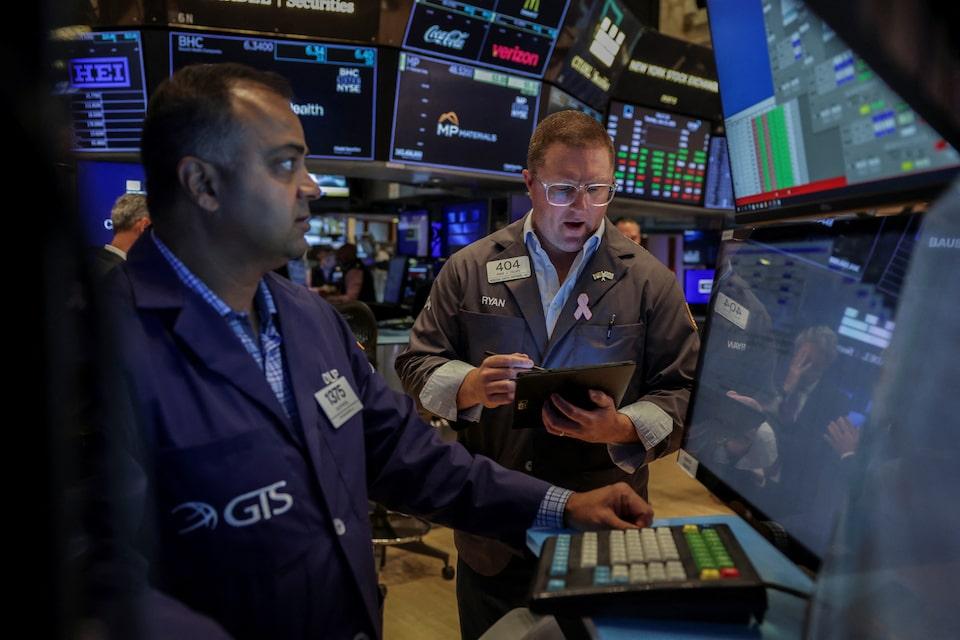
ORLANDO, Florida, July 17 (Reuters) - TRADING DAY Making sense of the forces driving global markets Sign up here. By Jamie McGeever, Markets Columnist Another batch of upbeat U.S. economic data including solid retail sales boosted risk appetite on Thursday, pushing to the back of investors' minds President Donald Trump's attacks on Fed Chair Jerome Powell and lifting the S&P 500 and Nasdaq to fresh record highs. More on that below. In my column today I pose the question: Would Powell's enforced departure, a monumental event in Fed history, crater markets or is such an eventuality actually largely priced in already? If you have more time to read, here are a few articles I recommend to help you make sense of what happened in markets today. Today's Key Market Moves Econ surprise, Wall Street's new highs Amid the frenzied Trump-Powell drama and heightened uncertainty around tariffs, U.S. economic data has quietly been coming in on the strong side. Thursday's figures reinforced that view, with the Philly Fed business index, producer price inflation, import prices and retail sales all pointing to an economy humming along at a solid clip with little sign of accelerating inflation. The Atlanta Fed GDPNow model estimate is signaling 2.4% growth in the second quarter, comfortably above blue chip consensus forecasts of 2.0%. Perhaps expectations were set so low following the post-Liberation Day chaos and market scare, but Citi's economic surprises index is now the highest since late May. Either way, the data broadly appears to be holding up, and the early indications from the earnings season getting under way are that U.S. corporate profits continue to beat expectations too. The highlights on Thursday were from United Airlines and PepsiCo. Friday's spotlight falls on American Express. That's the backdrop against which U.S. rates traders are pushing out the expected timing of the first rate cut to October from September. San Francisco Fed President Mary Daly on Thursday signaled two rate cuts this year are a reasonable projection. The global equity picture was also brightened on Thursday by Taiwan's TSMC, the world's main producer of advanced AI chips. It posted a record quarterly profit and said demand for artificial intelligence was getting stronger. TSMC's domestic shares hit a six-month peak, and its U.S.-listed shares leaped over 4% to a new high. On the trade front, Trump says a deal with India is "very close" and one with Europe is "possible", while Commerce Secretary Howard Lutnick held a 45-minute phone call with Japan's top trade negotiator Ryosei Akazawa on Thursday. Treasury Secretary Scott Bessent will travel to Tokyo to meet with Prime Minister Shigeru Ishiba on Friday for a separate event, but trade will surely be discussed, if not formally. Japan is very much on investors' minds ahead of Sunday's Upper House election which could see the Liberal Democratic Party ruling coalition lose its majority, heightening calls for the government to boost spending and cut taxes. The prospect of further fiscal slippage in the world's most indebted major economy and complications that would bring for the Bank of Japan have pushed the yen to a three-month low against the dollar and long Japanese Government Bond yields to record highs. The yen fell on Thursday, swept aside in the dollar's broad rebound, but bonds got a reprieve. The weakness in 20- and 30-year JGBs has added to the downward pressure on long-dated U.S. and European bonds. Sunday's vote will be key to whether the yen retests 150.00 per dollar and whether JGB yields make fresh highs next week. Trump has already crossed Fed independence Rubicon Whether Federal Reserve Chair Jerome Powell is fired next week, forced to resign in six months or allowed to muddle through to the end of his term next May, the supposedly sacrosanct notion of Fed independence has already been shattered. Yet what's nearly as remarkable as President Donald Trump's attacks on Powell for not cutting interest rates is financial markets' resilience in the face of this extraordinary degree of political interference in monetary policy, unprecedented in recent decades. Equity investors are known for being optimists, but today's Wall Street is veritably Teflon-coated. Of course, Trump's attacks on Powell have not been without consequence. The dollar has clocked its worst start to a year since the United States dropped the gold standard in the early 1970s. Long-dated Treasury yields are the highest in 20 years, and the "term premium" on U.S. debt is the highest in over a decade. Consumers' inflation expectations, by some measures, are also the highest in decades. Inflation has been above the Fed's 2% target for over four years, and the prospect of a dovish Fed under the stewardship of a new Trump-friendly Chair could keep it that way. But that's not solely down to Fed policy and credibility risks. The Trump administration's fiscal and trade policies, and unilateralist position on the world political stage, have also tempted some investors to trim their exposure to U.S. debt and the dollar. Still, Wall Street seems immune to all that, and it closed in the green on Wednesday after Trump played down a Bloomberg report that he will soon fire Powell, a step he says is "highly unlikely". Even at the point of maximum selling before that rebuttal, the big U.S. equity indices were down less than 1%. Given the magnitude of the news investors were reacting to, that's barely a ripple, especially when you remember that the S&P 500 and Nasdaq hit record highs only 24 hours earlier. Indeed, the S&P 500 is enjoying its third-fastest rebound from a 20% drawdown in history, according to Fidelity's Jurrien Timmer. Goldman Sachs analysts also note that the index's price-to-earnings ratio of 22 times forward earnings is in the 97th percentile since 1980. And the Nasdaq is up 40% in barely three months. Taking all this into account, there's plenty of space for a correction. What's needed is a catalyst. Threatening the foundation of the financial system would seem to qualify, but will it? BECOMING IMMUNE One might argue that investors are simply skeptical that Trump really will oust Powell, even were it "for cause", ostensibly the Trump administration's ire over the $2.4 billion cost of renovating the Fed's building in Washington. But Trump has made it clear for months that he wants Powell replaced by someone more malleable, so whether it happens in the coming weeks, months, or May next year, the new Fed Chair will almost certainly be someone strongly influenced by the president. Of course, the Fed Chair is only one of 19 members of the Federal Open Market Committee and just one of 12 voting members at any given rate-setting meeting. He or she does not decide policy unilaterally. Still, the negative reaction to Powell leaving before his term is up could be powerful, even though you would expect it to be priced in to some extent by now. All else being equal, a more dovish-leaning Fed will reasonably be expected to weigh on short-dated yields, steepen the yield curve, and weaken the dollar as bond investors price in more rate cuts, and keep inflation closer to 3% than 2%. In the short term, stocks could benefit from expectations of a lower policy rate, although higher long-dated yields would increase the discount rate, which could be particularly negative for Big Tech and other growth stocks. JP Morgan CEO Jamie Dimon on Tuesday warned of the dangers of political interference in Fed policymaking, telling reporters on a conference call: "The independence of the Fed is absolutely critical. Playing around with the Fed can often have adverse consequences, absolutely opposite of what you might be hoping for." That Rubicon has already been crossed, and for now at least, markets appear to have accepted that. What could move markets tomorrow? Want to receive Trading Day in your inbox every weekday morning? Sign up for my newsletter here. Opinions expressed are those of the author. They do not reflect the views of Reuters News, which, under the Trust Principles , opens new tab, is committed to integrity, independence, and freedom from bias. https://www.reuters.com/world/china/global-markets-trading-day-repeat-2025-07-17/
2025-07-17 21:05
July 17 (Reuters) - The U.S. House of Representatives on Thursday passed a bill to create a regulatory framework for U.S.-dollar-pegged cryptocurrency tokens known as stablecoins, sending the bill to President Donald Trump, who is expected to sign it into law. The vote marks a watershed moment for the digital asset industry, which has been pushing for federal legislation for years and poured money into last year's elections in order to promote pro-crypto candidates. Sign up here. Shares of crypto-related companies were mostly higher after passage of the bill, dubbed the Genius Act, that would expand the Commodity Futures Trading Commission's oversight of the industry. Bitcoin , the largest crypto currency, was down 0.54% at $119,298.87, trading near a record high reached earlier this week. Rival ethereum rose 1.42% to $3,429.47. COMMENTS STEVE SOSNICK, CHIEF STRATEGIST, INTERACTIVE BROKERS, CONNECTICUT: "We had already run up over the past week-plus in anticipation of “crypto week”, so a certain level of expectation was already built in. At least we’re not seeing a “sell the news” reaction, perhaps because traders remain hopeful about all the legislation gets passed." JAKE DOLLARHIDE, CHIEF EXECUTIVE OFFICER, LONGBOW ASSET MANAGEMENT, TULSA, OKLAHOMA: "The crypto stocks have been on a run leading up to this hopeful outcome, and they got exactly what they wanted. The Trump administration said they were going to be a champion for the crypto industry, and this is a huge step in that direction. I look for bitcoin to make new highs from here. I look for Ethereum... to make a rebound. Crypto is going to have a moment in the weeks and months ahead as people who have missed out pile in and chase bigger returns." "Regarding the late trimming of gains in crypto-related shares, he said: "We assumed five days ago it was going to happen. So there's not really a reason to rally. So, it's a relief pause." BILL STRAZZULLO, CHIEF MARKET STRATEGIST, BELL CURVE TRADING, BOSTON: “I think [this bill] is positive in the sense that you’d want to have some infrastructure and some regulation. That invites a much broader audience to participate. So, I think it's a positive. But when you look at the correlation of crypto to the S&P 500, it's very high. In order words, people are buying crypto; because I hear this all the time: 'I wanted to diversify my portfolio, it's a hedge against inflation if the bottom falls out on the economy.' No! With crypto, I think the correlation is up around 90% or something and it moves with the S&P 500. I mean when you buy something you need to know what you really own. And with crypto, you are basically just increasing your exposure to the stock market. You need to know that. This notion that it's going to be kind of countertrend or countercyclical or not correlated, that's just not factual. So, I think any regulation and any structure is good because it gives the general public more confidence that it's not a scam and they’d be protected in some way. That's a positive thing for sure. But if you were thinking that buying crypto is some way going to be a magic bullet that hedges you against inflation or geopolitical or market downturn, it’s not. That’s why the short-term momentum is positive. I don't want to go overboard with crypto either because I still think the [stock] market somewhere around here is going to end up putting a top in. My guess is that as we get closer to the midterms, there’s some sort of significant move lower and I don't think crypto will protect you from any of that.” ANDREW FORSON, PRESIDENT, DEFI TECHNOLOGIES (by email): “It signals the start of a new era for digital assets and public companies. We’re seeing an unprecedented wave of corporations embracing digital assets, diversifying beyond Bitcoin into Ethereum, Solana, and more. But for many institutions, education gaps and regulatory uncertainty have been real barriers.” “By establishing clear, actionable rules for stablecoins and digital assets, the Genius Act unlocks broader adoption by traditional institutions and brings much-needed trust and transparency to the sector. This paves the way for compliant, bank-backed digital money and new solutions for corporate treasuries, helping to bridge the gap between innovation and investor protection.” DANTE DISPARTE, CHIEF STRATEGY OFFICER, CIRCLE, NEW YORK: “The House vote to clear the GENIUS Act for the President’s signature is a defining moment for the future of money and the internet financial system. It signals strong bipartisan support for responsible innovation and sends a clear message that the U.S. will lead in the regulation of dollar-backed payment stablecoins. We commend Congressional leaders for delivering a regulatory foundation that puts consumer protection, financial integrity, and U.S. competitiveness at the forefront.” SUMMER MERSINGER, CEO, BLOCKCHAIN ASSOCIATION (press release): “The bipartisan passage of the GENIUS Act is a watershed moment for digital assets in the United States. For the first time, Congress has moved comprehensive legislation that provides enforceable, tailored rules for stablecoins — a foundational technology for the future of finance. This marks real momentum toward regulatory clarity that protects consumers, supports innovation, and reinforces the strength of the U.S. dollar in the digital economy. We now call on President Trump to swiftly sign the bill into law, ensuring that the United States continues to lead in shaping the global standards for digital assets.” MICHAEL JAMES, EQUITY SALES TRADER, ROSENBLATT SECURITIES, LOS ANGELES: "Crypto stocks have been strong the past two days in expectation that the bill, which didn't pass on Tuesday, would eventually get the necessary votes to pass, which it has done this afternoon. That is part of the reason that crypto stocks have been outperformers in the last two days." https://www.reuters.com/legal/government/us-house-sends-genius-act-stablecoin-bill-trump-sign-2025-07-17/
2025-07-17 21:03
House lawmakers pass trio of crypto bills Votes mark pivotal moment for digital assets sector Stablecoin bill would require tokens to be backed by liquid assets July 17 (Reuters) - The U.S. House of Representatives on Thursday passed a bill to create a regulatory framework for U.S.-dollar-pegged cryptocurrency tokens known as stablecoins, sending the bill to President Donald Trump, who is expected to sign it into law. The vote marks a watershed moment for the digital asset industry, which has been pushing for federal legislation for years and poured money into last year's elections to promote pro-crypto candidates. Sign up here. House lawmakers also passed two other crypto bills, sending them next to the Senate for consideration. One lays out a regulatory framework for crypto, and the other would ban the U.S. from issuing a central bank digital currency. The stablecoin bill, known as the Genius Act, and the crypto market structure bill, known as the Clarity Act, both received notable bipartisan support. Democratic lawmakers joined with Republicans to pass the stablecoin bill 308-122. Stablecoins, a type of cryptocurrency designed to maintain a constant value, usually a 1:1 dollar peg, are commonly used by crypto traders to move funds between tokens. Their use has grown rapidly in recent years, and proponents say that they could be used to send payments instantly. If signed into law, the stablecoin bill would require tokens to be backed by liquid assets - such as U.S. dollars and short-term Treasury bills - and for issuers to publicly disclose the composition of their reserves on a monthly basis. Blockchain Association CEO and former Commodity Futures Trading Commission official Summer Mersinger described Thursday's votes as a "defining moment in the evolution of U.S. digital asset policy." The crypto sector has long pushed for lawmakers to pass legislation creating rules for digital assets, arguing that a clear framework could enable stablecoins and other crypto tokens to become more widely used. The sector spent more than $119 million backing pro-crypto congressional candidates in last year's elections and has worked to paint the issue as bipartisan. The House of Representatives passed a stablecoin bill last year, but the Senate - in which Democrats held the majority at the time - did not take up that bill. Trump has sought to broadly overhaul U.S. cryptocurrency policies after courting cash from the industry during his presidential campaign. Tensions on Capitol Hill over Trump's various crypto ventures at one point threatened to derail the digital asset sector's hope of legislation this year, as Democrats have grown increasingly frustrated with Trump and his family members promoting their personal crypto projects. Trump's crypto ventures include a meme coin called $TRUMP, launched in January, and a business called World Liberty Financial, a crypto company owned partly by the president. The White House has said there are no conflicts of interest present for Trump and that his assets are in a trust managed by his children. CLARITY ACT SENT TO SENATE The Clarity Act, which passed 294-134, would critically define when a cryptocurrency is a security or a commodity and clarify the Securities and Exchange Commission's jurisdiction over the sector, something crypto companies aggressively disputed during the Biden administration. Crypto companies have argued that most tokens should be classified as commodities instead of securities, which would enable platforms to more easily offer those tokens to their customers by not having to comply with a raft of securities laws. That bill would need to pass through the Senate before heading to Trump's desk for final approval. Some Democrats fiercely opposed the Clarity Act, arguing it could be a giveaway to Trump's crypto ventures by enabling softer-touch regulation. The House also passed a bill prohibiting a central bank digital currency, which Republicans say could violate Americans' privacy. The issue had been a sticking point in House discussions this week. https://www.reuters.com/legal/government/us-house-passes-stablecoin-legislation-sending-bill-trump-2025-07-17/
2025-07-17 21:01
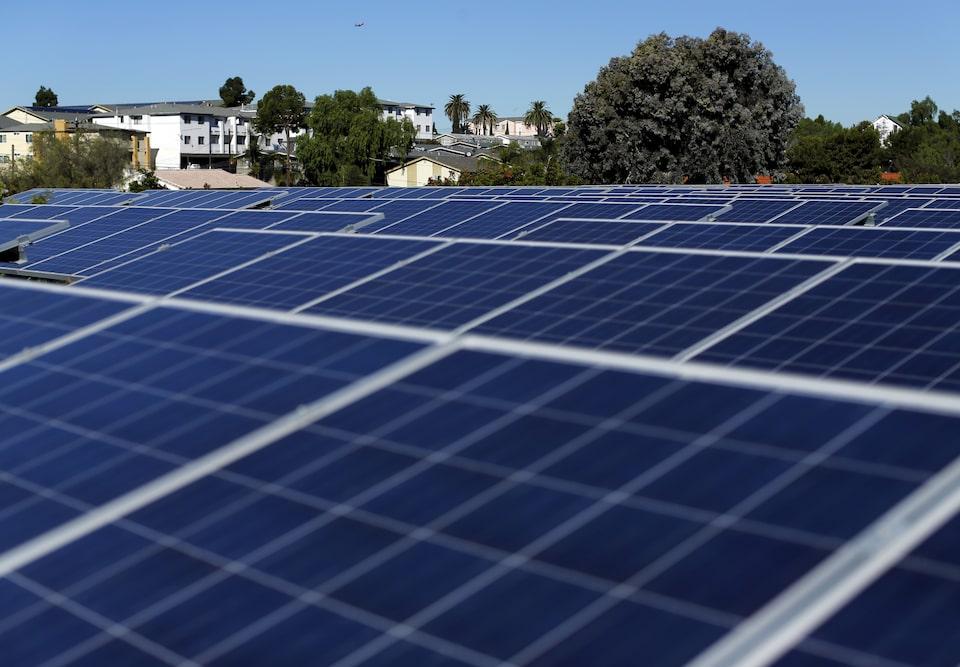
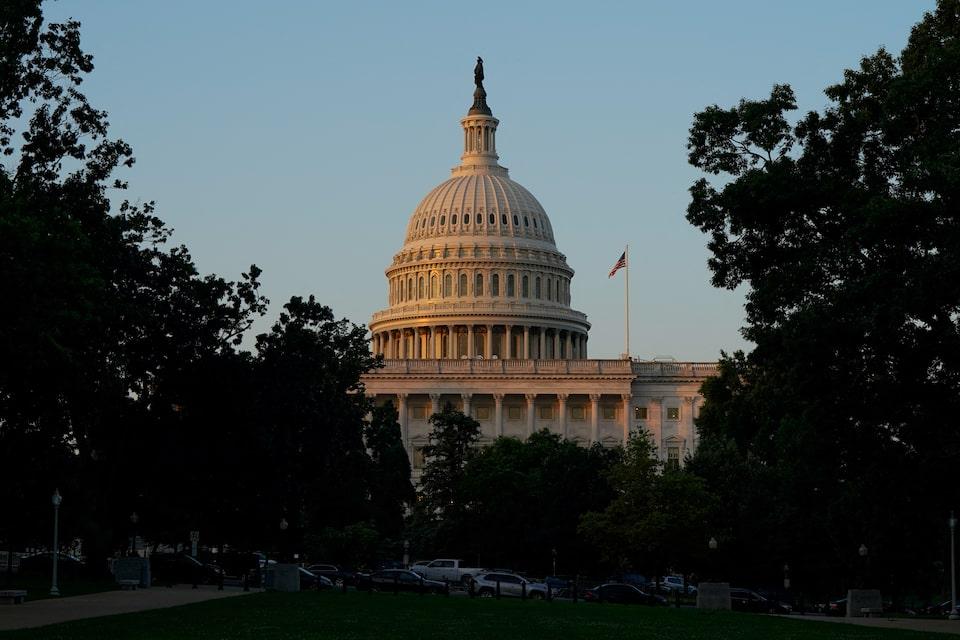
July 17 (Reuters) - A group of U.S. solar panel manufacturers asked the Commerce Department on Thursday to impose tariffs on imports from Indonesia, India and Laos, accusing companies there of dumping cheap goods in the market to undercut new American factories. The petition is the latest effort by the small U.S. solar manufacturing industry to seek trade relief to protect billions of dollars of recent investment and compete with goods produced mainly by Chinese companies overseas. Sign up here. The Alliance for American Solar Manufacturing and Trade, which filed the petition, includes Tempe, Arizona-based First Solar (FSLR.O) , opens new tab, Qcells, the solar division of Korea's Hanwha (000880.KS) , opens new tab, and private companies Talon PV and Mission Solar. The group has succeeded previously in winning tariffs on imports from countries in Southeast Asia including Malaysia, Cambodia, Vietnam and Thailand. Those tariffs were finalized earlier this year. The petition accuses companies of receiving unfair government subsidies and of selling their products below the cost of production in the United States. It says Chinese-owned companies shifted production from nations that received U.S. tariffs to Indonesia and Laos and also accuses Indian-headquartered manufacturers of dumping cheap goods in the United States. Imports from the three nations combined were $1.6 billion last year, up from $289 million in 2022, according to the petitioners. "We have always said, vigorous enforcement of our trade laws is critical to the success of this industry,” Tim Brightbill, lead attorney for the petitioners, said in a statement. Most of the solar panels installed in the United States are produced overseas. But U.S. solar manufacturing capacity has grown meaningfully since the 2022 Inflation Reduction Act provided tax credits as an incentive to reduce reliance on Chinese-made goods. Panel capacity reached 50 gigawatts this year, up from 7 GW in 2020, according to the Solar Energy Industries Association. That is still not enough capacity to supply the U.S. solar market, which is expected to install nearly 43 GW of projects per year through 2030, according to SEIA. The Commerce Department has 20 days to decide whether to initiate an investigation into whether to impose tariffs. The agency was not immediately available for comment. Anti-dumping and countervailing trade cases typically take about a year to result in finalized tariffs. https://www.reuters.com/sustainability/climate-energy/us-solar-panel-makers-seek-tariffs-imports-indonesia-india-laos-2025-07-17/