2025-07-17 20:23
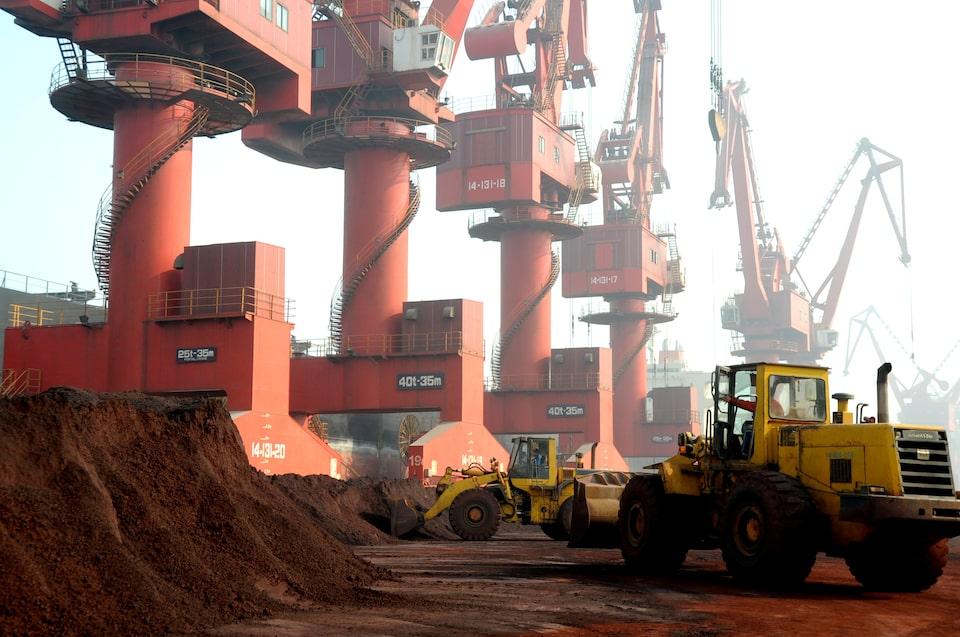
July 17 (Reuters) - Japan and the European Union will consider joint public-private partnerships as they look to reduce their reliance on China in areas such as the procurement of rare earths, the Nikkei newspaper reported on Thursday. As China, the dominant supplier of rare earths, tightens export controls, global manufacturers are concerned that Beijing's decision to curb exports of rare-earth alloys, mixtures and magnets could slow production and disrupt supply chains. Sign up here. Globally, countries have been trying to secure rare earth supply chains to loosen China's grip on the materials used to build weapons, electric vehicles and many electronics. Japan and the EU will launch a new "economic two-plus-two" dialogue to bring together their foreign and economy ministers, expected to be announced at the Japan-EU leaders' summit scheduled for July 23, according to the report. The talks aim to identify specific areas of cooperation between the parties from this summer onwards, it said. The countries will jointly develop supply chains for critical minerals such as rare earths, after the two sides agreed to a new dialogue at the working level. They will focus on simplifying EU regulations and discuss how Japanese companies can take part in EU projects under the new framework, which seeks to deepen Japan-EU ties, Nikkei said. The framework will also add Stephane Sejourne, the European Commission's executive vice president for prosperity and industrial strategy, to the talks. Earlier this month, the U.S. Department of Defense signed a multibillion-dollar deal with MP Materials (MP.N) , opens new tab that will make the Pentagon its largest shareholder, to boost rare earths output. India is holding talks with Chile and Peru to source critical minerals under ongoing free trade pact negotiations, Reuters reported earlier this week, citing a trade ministry source. https://www.reuters.com/world/china/japan-eu-explore-joint-rare-earths-procurement-nikkei-reports-2025-07-17/
2025-07-17 20:23
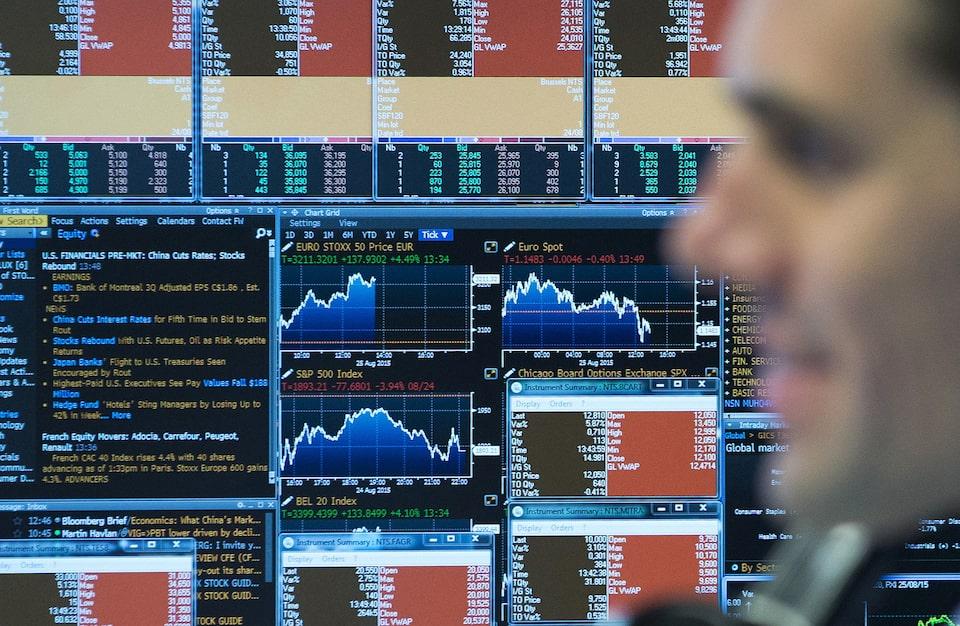
US companies are buying put options to hedge euro revenue FX options market shows mixed sentiment on euro's outlook Narrative of fading US exceptionalism not playing out Options market unwinding short dollar positions NEW YORK, July 17 (Reuters) - Some U.S. companies are taking advantage of more attractive pricing in euro options to protect the revenues they expect from Europe against losses, fearing the common currency may have strengthened a bit too far. The euro rose against the dollar after the U.S. rolled out larger-than-expected tariffs in April, knocking the buck to a three-year low and raising concerns about U.S. assets, its exceptionalism and economic growth. Sign up here. That rationale is being challenged with U.S. stocks (.SPX) , opens new tab staging a 26% recovery from their April lows to rise 6.4% for the year, aided by postponements to the implementation of import tariffs, better-than-feared first-quarter earnings and positive economic data. The options market reflects how investors and traders expect currencies to perform. Right now they are signaling less conviction in further dollar weakness, and some companies have been buying up euro put options that will appreciate if the euro weakens, to hedge their cash flow against euro weakness. A weak euro could dampen earnings for U.S. companies if profits made overseas are repatriated at unfavorable exchange rates. "Companies with euro revenues are saying, 'we got a great run, let's just make sure that we don't get hit hard on the downside'," said Eric Merlis, co-head of global markets, at Citizens in Boston, explaining some of his clients' thinking. "There is not as much conviction around a continued run in the euro, so a little bit of protection is helpful." Holders of put options have the right to sell the underlying currencies at a fixed price and date. They are typically bought to express a bearish view. With currencies quoted in pairs, a bearish position on the euro indicates a view of dollar strength. Conversely, a euro call would gain value if the euro rises and is the same as a dollar put. UNWINDING SHORT DOLLAR TRADES Euro/dollar options activity continued to surge in June, with $803 billion notional reported, but down from the previous high of $907 billion in April, according to data from Clarus, an ION company. Traders and advisors said over the past three weeks, U.S. corporates expressed more interest in euro puts to set up for future earnings, reversing some of the short dollar trades that populated the market since tariffs were announced. Traders said the market sees a lid on the euro between $1.18 and $1.20, compared to its current level around $1.16. "The options market is unwinding to a lot of the short dollar positioning," said Garth Appelt, head of foreign exchange trading at Mizuho Americas, whose desk sold off all those trades last week. "This whole theory of the U.S. exceptionalism not in play has not worked out since April," he added. "The dollar should weaken for many reasons, which are very centric to the U.S., but we don't have an alternative to growth pickup." COLLARS IN FASHION Data from CME Group showed the bulk of demand has switched to euro puts so far in July. Since March there had been more interest in euro call options on the exchange. Meanwhile, the over-the-counter market showed that euro calls made up 58.73% of euro/dollar options transactions in June, down from the high of 60% seen in April, according to Clarus data. Euro puts were 41.26% in June, up from 39.96% in April. Paula Comings, head of FX sales at U.S. Bank, said some of her healthcare clients started using zero-cost collars in late June to shield the revenues from Europe as persistent strength in the U.S. economy and robust employment numbers continue to defy earlier concerns about U.S. exceptionalism. In this case, the collars involve the sale of euro call options to finance the purchase of euro puts up to two years out. As Comings explained, a company wanting to sell euros for dollars a year from now can lock in a forward rate of $1.188, or use a zero-cost collar to cap the range between $1.2518 and a worst case $1.1338. In late February, it could have locked in a forward of $1.058, or used a collar between $1.0991 and $1.0049. "It's really blown up in recent weeks. The dynamics are some of the best we've seen in 20 years," said Comings. "We have several others that are noodling on this." Chris King, co-founder at advisory Dukes & King in London, is also seeing clients move to protect next year's budget with some of these strategies. "If you're an American business, you haven't previously had a favorable spot rate," King said. "Now you've got the benefit of that spot move, combined with that yield curve benefit. So, if you're a U.S. seller of euros you can get a very favorable profile, particularly if longer dated." The dollar has fallen 12% against the euro for the year. With U.S. President Donald Trump delaying reciprocal tariffs to August 1, and remaining on the offensive with the European Union and other trading partners, currency markets could see more gyrations in coming weeks. Conversely, Jackie Bowie, head of EMEA at Chatham Financial, a hedge adviser in the UK, said with the dollar historically low, U.S. companies could benefit the most from just buying in the forward market when converting cash flows back to dollars. Still, a head of corporate derivatives at a large U.S. bank said of the zero-cost collars: "You're at this very attractive point for corporates who haven't seen a rate like this in many years." https://www.reuters.com/business/us-companies-adopt-options-strategies-shield-euro-revenues-case-dollar-recovers-2025-07-17/
2025-07-17 20:17
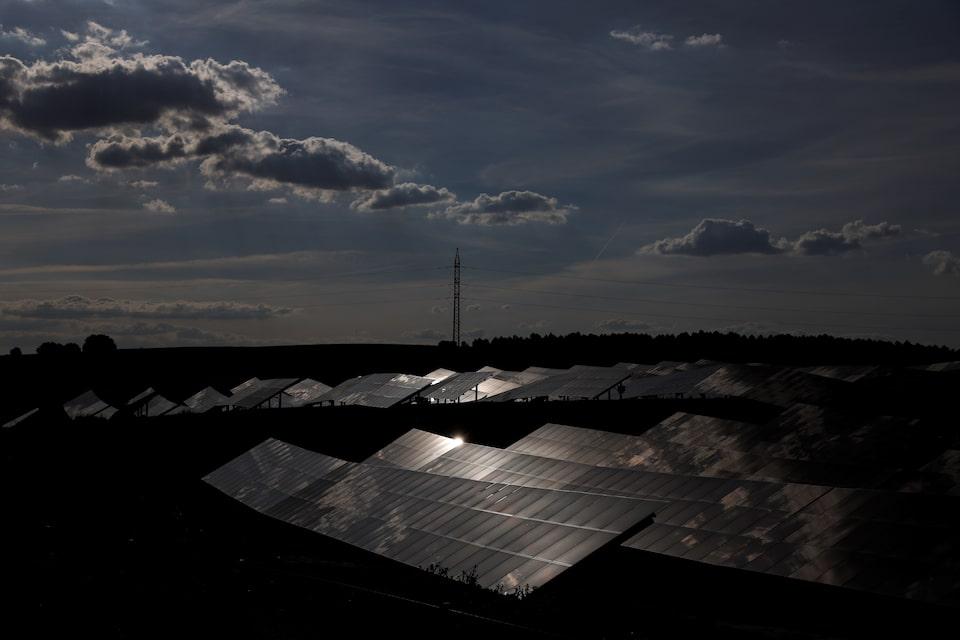
Zelestra to invest at least $1 billion in Peru renewable energy Plans to power mining sector with 1 GW in new generation Peru's nascent renewable sector dominated by hydroelectric LIMA, July 17 (Reuters) - Spain's Zelestra plans to invest at least $1 billion in renewable energy plants over the next five years powering mines in copper-rich southern Peru, the company's CEO for Latin America told Reuters. Zelestra, owned by Swedish firm EQT (EQTAB.ST) , opens new tab, is aiming to produce 1 gigawatt (GW) of renewable energy in Peru as part of its expansion in Latin America, Jose Luis Garcia said in an interview on Tuesday. Sign up here. "I'm convinced that most, if not all, of the energy projects we build in Peru will be used to supply mining companies," Garcia said, adding that the estimated investment would be between $1 billion and $1.5 billion over the next five years. "The mining companies have very long-term contracts, and they're going to have to renew them in the next three years," he said, adding that lenders have shown strong interest in financing the projects. Peru is the world's third-largest copper producer and most of its mines are in the country's south, including Freeport-McMoRan's (FCX.N) , opens new tab Cerro Verde mine, the country's largest, as well as others operated by MMG Ltd (1208.HK) , opens new tab, Glencore (GLEN.L) , opens new tab, Anglo American (AAL.L) , opens new tab and Mexico Group (GMEXICOB.MX) , opens new tab. Renewable energy is still a nascent technology in Peru, with hydroelectric plants accounting for 45% of the sector's output, according to government data. In recent years, Chinese firms have made major acquisitions in the power industry raising concerns of business concentration. China Southern Power Grid International controls just over half of Lima's power distribution while China Three Gorges Corporation (CYTGP.UL) covers the other half and controls Peru's third-largest power generator. Zelestra on Thursday inaugurated its $177 million San Martin solar park in the Arequipa region, the largest solar plant in Peru, with approximately 300 megawatts. The next project is the 238-megawatt Babilonia solar plant, also in Arequipa, with an estimated investment of $140 million. Data from the Ministry of Energy and Mines shows Zelestra has at least three other renewable energy generation projects in the south, totaling approximately 450 megawatts. Garcia said there are already agreements with transmission companies such as Kallpa Energy to deliver energy to mining clients. Regionally, Garcia said Zelestra's goal is to have renewable energy plants - including solar, hybrid and battery-powered - generating about 3 gigawatts within five years. Half of that generation is planned in Chile, 30% in Peru and the rest in Colombia. https://www.reuters.com/sustainability/climate-energy/spains-zelestra-aims-power-peru-mines-with-1-billion-renewables-investment-2025-07-17/
2025-07-17 19:54
July 17 (Reuters) - The U.S. House of Representatives passed a bill on Thursday that would develop a regulatory framework for cryptocurrencies and expand the Commodity Futures Trading Commission's oversight of the industry. The move is a major win for the digital asset industry, which has pushed for federal legislation for years and spent heavily in last year's elections to promote pro-crypto candidates. Sign up here. https://www.reuters.com/world/us/us-house-passes-crypto-industry-backed-market-structure-bill-2025-07-17/

2025-07-17 19:52
BUENOS AIRES, July 17 (Reuters) - Vicuña Corp, a joint venture of Australia's BHP and Canada's Lundin Mining (LUN.TO) , opens new tab, on Thursday said it was extending the useful life of its Josemaria copper, gold and silver project in Argentina by six years. It attributed the longer useful life of the mine, now 25 years instead of 19 years previously, to higher levels of exploitable resources. Sign up here. Vicuña also predicted an ore processing rate at the site, located in Argentina's north-western San Juan province, near the Chilean border, at 175,000 metric tons per day. Argentina's government is seeking to promote mining in its provinces along the Chilean border, which have so far seen limited development, to boost foreign-currency flows and shore up its economy. Vicuña cited new studies it presented to provincial authorities this week, in a second update of its environmental impact report during which it also discussed water management measures. The Josemaria mine is currently in the pre-construction stage and the miner expects production to start in 2030 after submitting a technical report in the first half of 2026, which will determine exact time-frames and projections. Thursday's data could help Vicuña's plans to apply to join Argentina's Large Investment Incentives Regime (RIGI), promoted by libertarian President Javier Milei's government to attract investments. Earlier this year, the deposits at Josemaria and Vicuña's Filo del Sol mines were estimated to contain 13 million metric tons of measured copper and 25 million tons of inferred copper. While Argentina has not produced copper since 2018, a sizeable pipeline of projects in the works could propel it to rank among the top 10 producers worldwide. https://www.reuters.com/markets/commodities/bhp-lundin-jv-extends-useful-life-argentina-copper-mine-2025-07-17/
2025-07-17 19:43
Burgundy suspends Point Lake mine due to low diamond prices Misery underground site operations remain unaffected NWT community seeks projects to offset future job losses from mine closures TORONTO, July 17 (Reuters) - Australian miner Burgundy Diamond Mines laid off several hundred employees and contractors and suspended operations at its Point Lake diamond mine in Canada due to record-low diamond prices, a company spokesperson said on Thursday. The Point Lake site in Canada's Northwest Territories is part of the company's Ekati mine. Burgundy said its other site in the remote Arctic region is still operating. Sign up here. "Burgundy Diamond Mines made the decision to temporarily suspend open pit mining at Point Lake, which constitutes a shift from surface mining operations in the short term," said Ariella Calin, corporate communications manager at Burgundy Diamonds. With global diamond prices at record lows, the Point Lake project is proving to be sub-economic. Mining operations at the Misery underground mine, Calin said, are unaffected. Northwest Territories is home to three diamond mines: Diavik, owned by Rio Tinto, De Beers' ; and Burgundy's Ekati. As falling diamond sales globally have reduced profitability, companies are trying to stay afloat or are suspending their operations. Rio Tinto has planned a closure of its Diavik mine in early 2026. De Beers owner Anglo American is looking to spin off its entire diamond business. Burgundy halted trading at the Australian Stock Exchange (ASX) pending an operational update from the company. Production rates at Misery have significantly improved in recent months, and Burgundy will provide a quarterly production update toward the end of July, Calin said. As Canada's diamond mines reach the end of their productive life, the NWT community has been pitching for projects and asking for infrastructure improvements to replace future job losses. "The Northern mining industry has been around for over 90 years," said Karen D. Costello, executive director at NWT & Nunavut Chamber of Mines. "And it has been recognized that we do have incredible mineral potential, but we do need robust exploration to make the discoveries, and we do need the known projects to advance to become the next generation of minds." https://www.reuters.com/markets/commodities/burgundy-diamonds-lays-off-employees-canada-diamond-prices-tank-2025-07-17/