2025-07-17 17:38
July 17 (Reuters) - Crypto firm Bitcoin Standard Treasury Company said on Thursday it is aiming to list on the Nasdaq, with over 30,000 bitcoin on its balance sheet, through a merger with a Cantor Fitzgerald-backed blank check vehicle. The company will merge with Cantor Equity Partners I (CEPO.O) , opens new tab, a special purpose acquisition company backed by Cantor Fitzgerald, which is chaired by Brandon Lutnick, the son of U.S. Secretary of Commerce Howard Lutnick. Sign up here. Bitcoin Standard will be the fourth-largest listed bitcoin treasury, the company said. It is expected to raise up to $1.5 billion in private investment in public equity financing. The move comes months after another Cantor-backed SPAC teamed up with Japanese technology investor SoftBank Group (9984.T) , opens new tab and Tether, the company behind the world's largest stablecoin, for a $3.6 billion crypto venture to buy bitcoin. Several public companies — including Trump Media & Technology (DJT.O) , opens new tab, founded by U.S. President Donald Trump — are now buying cryptocurrencies amid a rally fueled by rising adoption and favorable regulatory changes. Bitcoin, the most popular crypto among corporations, has gained more than 26% this year and vaulted past $120,000 for the first time on Monday. "Crypto treasury strategies are a hot topic we've been strategizing about with some of our family clients," said Michael Ashley Schulman, partner at Running Point Capital Advisors. Strategy (MSTR.O) , opens new tab Chairman Michael Saylor pioneered the treasury approach, which involves hoarding the world's biggest cryptocurrency. As of July 14, Strategy held 601,550 units of bitcoin, making it the biggest corporate holder. In a watershed moment for crypto, the U.S. House of Representatives is expected to soon pass a bill to establish a federal framework for stablecoins, a type of cryptocurrency designed to maintain a constant value, usually a 1:1 dollar peg. The combined company will trade on the Nasdaq under the symbol "BSTR" upon deal close, which is expected in the fourth quarter of 2025. https://www.reuters.com/business/crypto-firm-bitcoin-standard-go-public-deal-with-cantor-backed-spac-2025-07-17/
2025-07-17 16:20
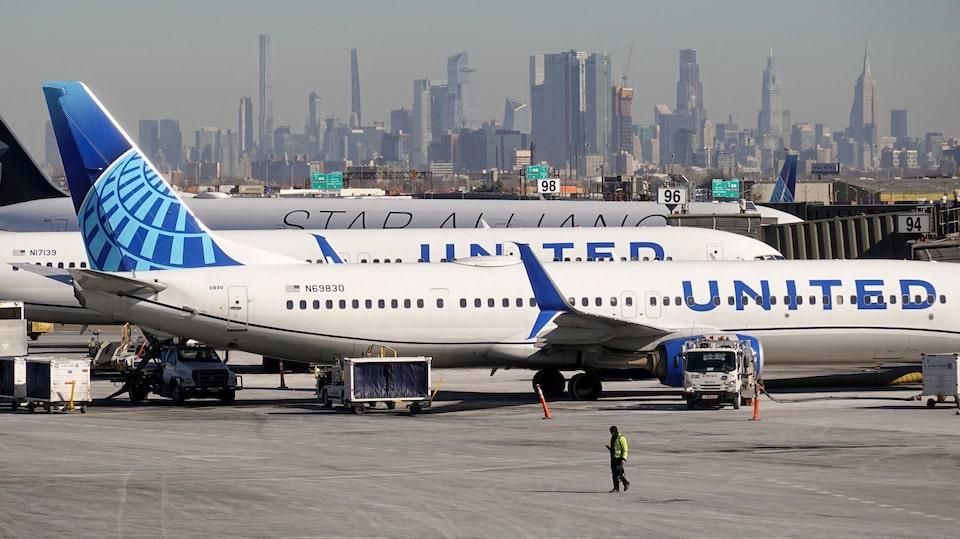
United shares rise 3% after upbeat demand commentary Improved geopolitics, economics boosts travel demand outlook Airline industry cuts unprofitable flights to boost fares United plans increased investment in premium products, capacity July 17 (Reuters) - United Airlines (UAL.O) , opens new tab executives said on Thursday the company has seen strong bookings in the past three weeks, with the carrier gaining pricing power for the first time since February. If the trend continues, they expect the company's revised full-year profit estimate would prove to be conservative. Sign up here. On Wednesday, the Chicago-based carrier forecast an adjusted 2025 profit in the range of $9 to $11 per share. "Demand feels to us like it has inflected upward and is returning toward the normal trend line," CEO Scott Kirby told analysts on an earnings call. The upbeat commentary drove up the company's shares 3% higher in mid-day trade. Shares of rivals Delta Air (DAL.N) , opens new tab, American Airlines (AAL.O) , opens new tab and Alaska Airlines (ALK.N) , opens new tab also rose. In April, United took an unusual step of offering two different earnings forecasts as U.S. President Donald Trump's trade war dented consumer and business confidence, making it harder for carriers to predict their business. Kirby said while demand stabilized after the pullback in March and April, it finished the first half about 5 percentage points weaker than the airline's original estimate. Passage of Trump's tax and spending bill and improvements in the geopolitical situation in the Middle East have boosted the travel demand outlook, he said. While there is still little clarity on the tariff front, Kirby said most businesses now have a much better plan to deal with it. "As uncertainty has declined, we've seen an improvement in book revenue, including a double-digit acceleration in business demand," he said. United executives said the industry's efforts to slash unprofitable flights would boost airfares in the second half of the year. Kirby likened the situation to last year when reduced supply of airline seats drove up ticket prices, fueling a rally in airline stocks. "From a supply perspective, it's deja vu all over again," he said. "This is almost the exact same setup that we had a year ago." Still, Kirby expects United and rival Delta to generate the bulk of the industry's profits this year, thanks to a diversified revenue stream, including premium cabins. United's premium cabin revenue was up 6% in the second quarter from a year ago. The gap in premium and non-premium passenger revenue per available seat mile was 6 percentage points. Encouraged by the results, company officials said they plan to further ramp up investments in premium products and capacity in coming years. https://www.reuters.com/business/united-airlines-reports-recovery-bookings-pricing-power-shares-climb-2025-07-17/
2025-07-17 16:02
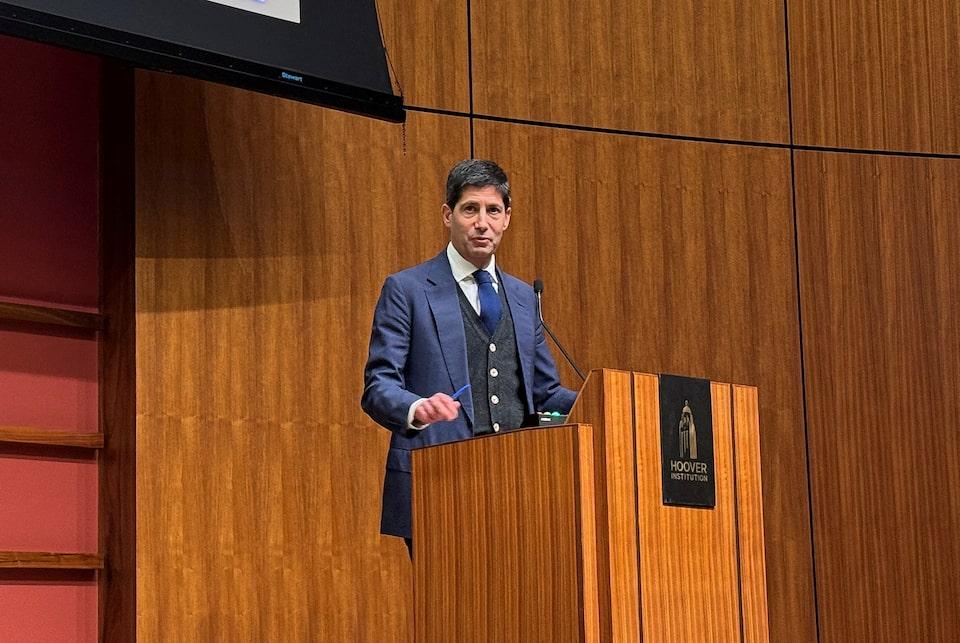
July 17 (Reuters) - Former Federal Reserve Governor Kevin Warsh, seen as a potential successor to Fed Chair Jerome Powell, said on Thursday there needs to be a new accord between the Treasury Department and U.S. central bank, referencing a 1951 pact that separated federal debt management from monetary policy. Warsh, now a fellow at Stanford University's Hoover Institution, said on CNBC that such an agreement between the two agencies could smooth the process of reducing the Fed's balance sheet by communicating intentions jointly. Sign up here. "If we have a new accord, and ... the Fed chair and the Treasury secretary can describe to the markets plainly and with deliberation this is our objective for the size of the Fed's balance sheet, the Treasury can say this is our issuing calendar, and by the end of, let's say, this administration we'll be at an equilibrium rate on the balance sheet, so that markets will know what is coming," he said. The original accord, struck in March 1951, ended a period when the Fed had committed to a policy of low interest rates at Treasury's request to allow for lower-cost federal borrowing to finance the war effort during World War Two. It is seen by Fed historians as a critical moment that established its practical independence from presidential administrations and laid the ground for how monetary policy would be set in the future. Warsh made his remarks at a time when President Donald Trump is demanding the Fed cut rates, in part to lower the federal government's debt service costs, which topped $1 trillion last year for the first time. Trump has said he will not pick a candidate to succeed Powell who is not on board with the president's desire for rate cuts. The Fed last cut rates in December, before Trump's return to the White House in January. Warsh, who served as a Fed governor from 2006 to 2011, said his idea would not represent a return to the pre-1951 way of operating. "That would not be working in conjunction with the administration," he said. "It would be working with Treasury on goals that the Fed thinks are important to try and pursue and how would you present that to markets, as such, will be in conjunction." https://www.reuters.com/business/ex-fed-governor-warsh-says-new-accord-between-treasury-central-bank-needed-2025-07-17/
2025-07-17 15:12
SANTIAGO, July 17 (Reuters) - Foreign direct investment (FDI) in Latin America grew by 7.1% in 2024 to $188.96 billion, but new investment interest has stagnated, the Economic Commission for Latin America and the Caribbean (ECLAC) said on Thursday. WHY IT'S IMPORTANT FDI is a key driver of economic growth in Latin America, but lack of new investment has raised concerns about the region’s long-term competitiveness and appeal to foreign investors. Sign up here. KEY QUOTE "It is expected that changes in tariff and trade policies in the United States will influence medium- and long-term investment decisions," ECLAC said in its report. BY THE NUMBERS FDI inflows in 2024 rose 7.1% from 2023, representing 13.7% of gross fixed capital formation and 2.8% of GDP. However, these figures remained below the 16.8% and 3.3%, respectively, recorded during the 2010s. Brazil received the largest share of FDI at 38%, followed by Mexico with 24%. Argentina saw a 44% increase in natural resource investments, while Guyana experienced a 43% rise due to more spending in its hydrocarbon sector. WHAT'S NEXT ECLAC urged Latin American governments to focus on strategies that sustain investor interest, particularly as manufacturing investment rises and services decline. The region may need to adapt to global tariff changes and reconfigure value chains to stay competitive. https://www.reuters.com/world/americas/latin-americas-foreign-direct-investment-rose-7-last-year-new-flows-stagnate-2025-07-17/
2025-07-17 14:32
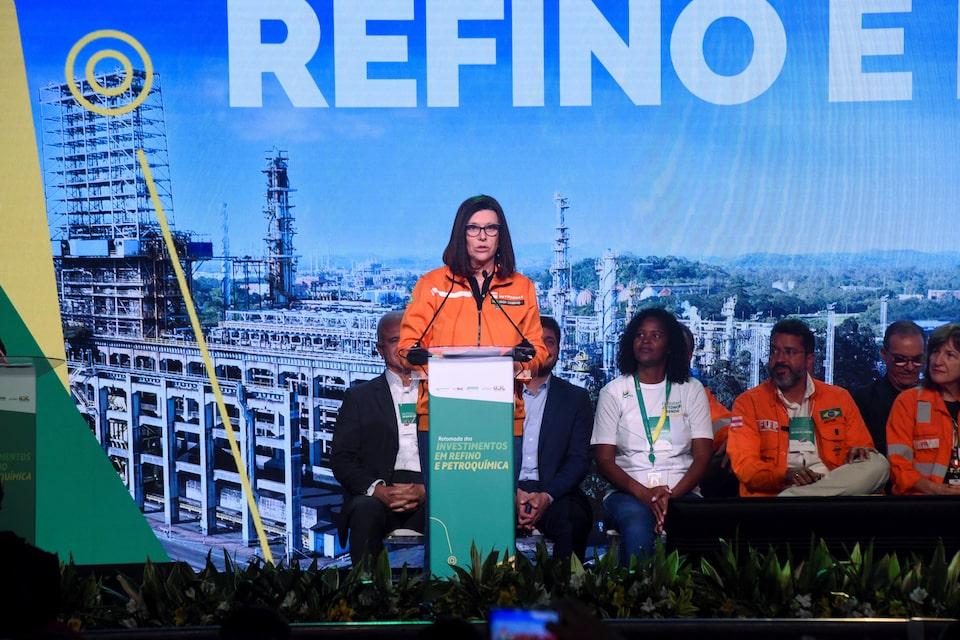
RIO DE JANEIRO, July 17 (Reuters) - Brazilian state-run oil firm Petrobras (PETR4.SA) , opens new tab may redirect the oil it sells to the United States, sending more to Asia and Pacific markets due to higher tariffs the U.S. announced on Brazil, its chief executive told Reuters on Thursday. Although oil and gas exports make up a hefty share of Brazil's exports to the United States, Petrobras CEO Magda Chambriard said it is not an essential market for the firm. Sign up here. "It is not much that we export (to the U.S.). In general, we are not very worried," she said in her first public comments about the 50% tariff U.S. President Donald Trump announced last week. Exports to the U.S. represented about 4% of Petrobras' total oil shipments in its first quarter. The U.S. is also unlikely to feel a major impact if Brazil ceases exports, as the South American country has supplied less than 3% of the oil the country has consumed so far in 2025, according to consultancy StoneX. Chambriard's remarks come amid uncertainty in Brazil over whether the new round of tariffs, due to take effect on August 1, would impact oil. The commodity had been exempt from Trump's previous 10% tariffs. In terms of oil products, Petrobras' exports to the U.S. accounted for 37% of a total of 209,000 barrels per day in the first quarter, but analysts told Reuters that the volume could also be redirected to other countries with ease. https://www.reuters.com/business/energy/petrobras-may-redirect-oil-asia-due-us-tariff-brazil-ceo-says-2025-07-17/
2025-07-17 12:46
WASHINGTON, July 17 (Reuters) - U.S. retail sales rebounded more than expected in June, but some of the increase likely reflected higher prices for some goods exposed to tariffs. Retail sales increased 0.6% last month after an unrevised 0.9% drop in May, the Commerce Department's Census Bureau said on Thursday. Economists polled by Reuters had forecast retail sales, which are mostly goods and are not adjusted for inflation, edging up 0.1%. Sign up here. Part of the rise in retail sales last month could be due to tariff-driven price increases rather than volumes. Inflation data this week showed solid increases in June in the prices of tariff-sensitive goods like household furnishings and supplies, appliances, sporting goods and toys. Retail sales excluding automobiles, gasoline, building materials and food services increased 0.5% last month after a downwardly revised 0.2% in May. These so-called core retail sales, which correspond most closely with the consumer spending component of gross domestic product, were previously reported to have increased 0.4% in May. "All told, the household sector still appears to be holding up, but a moderation in consumer spending appears under way," said Sam Bullard, a senior economist at Wells Fargo. https://www.reuters.com/business/retail-consumer/us-retail-sales-beat-expectations-june-2025-07-17/