2025-07-17 08:38
DURBAN, South Africa, July 17 (Reuters) - German Finance Minister Lars Klingbeil doubled down on Berlin's criticism of the European Commission's proposed budget on Thursday, taking aim at corporate tax under the plan which he said sends "the wrong signal". "Everyone should come to us, we want investments to take place in Germany and in Europe," Klingbeil said in Durban, South Africa, on the sidelines of a gathering of G20 finance ministers. Sign up here. "And in this regard, the corporate taxation now proposed by the European Commission, in this form, sends the wrong signal." His comments echoed a statement from the German government on Wednesday expressing its opposition. "A comprehensive increase in the EU budget is unacceptable at a time when all member states are making considerable efforts to consolidate their national budgets," government spokesperson Stefan Kornelius said, also taking aim at the corporate tax element. The European Commission on Wednesday proposed a 2-trillion-euro ($2.31-trillion) EU budget for 2028 to 2034, with a new emphasis on economic competitiveness and defence and plans to overhaul traditional spending on farming and regional development. The Commission proposed several ways to raise more funds directly, including a new tax on companies doing business in Europe that have an annual net turnover exceeding 100 million euros in an EU country. "At first glance, much of what has now been proposed by the Commission does not meet with our approval," Klingbeil said, mentioning a tobacco duty estimated to raise 11.2 billion euros annually, which he said Germany also cannot support. https://www.reuters.com/markets/europe/taxation-eu-budget-proposal-sends-wrong-signal-german-minister-says-2025-07-17/

2025-07-17 07:13
SPDR Gold Trust holdings rise 0.3% on Wednesday Investors focus on U.S. tariff negotiations July 17 (Reuters) - Gold prices dipped on Thursday, pressured by a firmer dollar and easing market tensions after U.S. President Donald Trump said it was "highly unlikely" he would dismiss Federal Reserve Chair Jerome Powell. Spot gold was down 0.4% at $3,334.19 per ounce, as of 0655 GMT. U.S. gold futures fell 0.6% to $3,340.30. Sign up here. The dollar index (.DXY) , opens new tab rose 0.4% against its rivals, making greenback-priced bullion more expensive for other currency holders. "Gold dropped (to) $3,340/oz as the U.S. dollar regained ground following eased uncertainty over the Federal Reserve chair's position" said Jigar Trivedi, senior commodity analyst at Reliance Securities. Trump is open to the idea of firing Fed's Powell, a source told Reuters on Wednesday. However, Trump said on Wednesday that he is not planning to fire Powell, but kept the door open to the possibility and renewed his criticism of the central bank chief for not lowering interest rates. Data showed that U.S. producer prices were unexpectedly unchanged in June as an increase in the cost of goods because of tariffs on imports was offset by weakness in services. "June's flat U.S. PPI reading indicated steady wholesale prices, suggesting tariffs may be impacting the economy less than initially feared," Trivedi said. On the trade front, EU trade chief Maros Sefcovic headed to Washington for tariff talks, an EU spokesperson told Reuters, adding that he will meet U.S. Commerce Secretary Howard Lutnick and Trade Representative Jamieson Greer. SPDR Gold Trust , the world's largest gold-backed exchange-traded fund, said its holdings rose 0.33% to 950.79 tons on Wednesday from 947.64 tons in the prior session. Elsewhere, spot silver edged 0.2% lower to $37.87 per ounce. Platinum fell 0.6% to $1,408.85 and palladium slipped 1.3% to $1,214.53. https://www.reuters.com/world/china/gold-prices-slip-dollar-firms-trump-eases-powell-uncertainty-2025-07-17/

2025-07-17 07:03
HAMBURG, July 17 (Reuters) - Low water levels following dry weather continue to hamper Rhine river cargo shipping in Germany, with rain in past days causing only a moderate rise in water levels, commodity traders said on Thursday. Low water is hampering shipping on all the river south of Duisburg and Cologne, including the chokepoint of Kaub. Sign up here. Cargo vessels are generally only able to sail about half full. But freight is still being delivered, with loads being carried by several vessels instead of one, traders said. The volumes vessels can load have risen slightly, traders said. Shallow water means vessel operators impose surcharges on freight rates to compensate for vessels not sailing fully loaded, increasing costs for cargo owners. Some rain is forecast in river catchment areas in the next week, which could at least prevent a further fall in water levels, traders said. The Rhine is an important shipping route for commodities such as grains, minerals, ores, coal and oil products, including heating oil. German companies faced supply bottlenecks and production problems in summer 2022 after a drought and heat wave led to unusually low water levels on the Rhine. https://www.reuters.com/business/environment/low-water-hinders-rhine-river-shipping-germany-despite-rain-2025-07-17/

2025-07-17 06:49
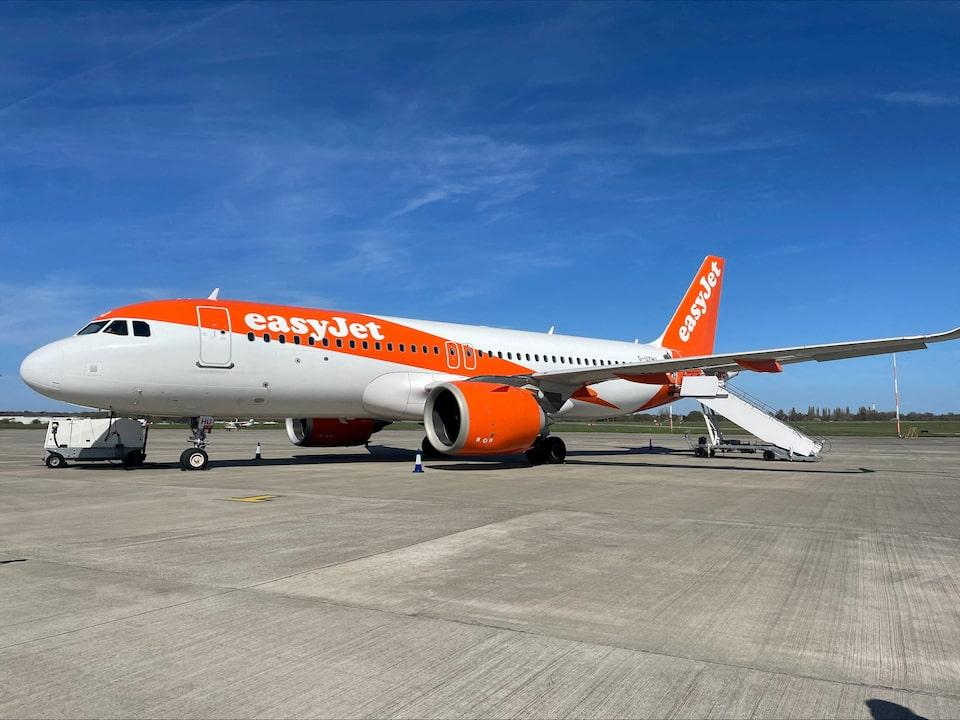
EasyJet sees 25 million pound hit to annual profit due to French strike, jet fuel costs Says demand for travel strong but people taking longer to book Reports rise in Q3 net profit Shares drop 8.1% in early trade July 17 (Reuters) - EasyJet (EZJ.L) , opens new tab warned on Thursday that a strike by French air traffic controllers earlier this month and rising fuel costs would hit its annual profit, sending the airline's shares down 8%. The low-cost carrier said it still expects "good profit growth" for the year ending September, but forecast a hit of about 25 million pounds ($33.47 million) from the French strike on July 3 and 4, at the start of Europe's peak travel season, and higher fuel costs. Sign up here. EasyJet reported pretax profit for the third quarter rose by about 50 million pounds to 286 million pounds, in line with expectations. Its shares fell as much 8.1% to 483.3 pence by 0729 GMT and were the top loser on London's blue-chip FTSE 100 index. "We are extremely unhappy with the strike action by the French ATC in early July, which as well as presenting unacceptable challenges for customers and crew also created unexpected and significant costs for all airlines," easyJet CEO Kenton Jarvis said in a statement. Some analysts said they cut forecasts for the year based on Thursday's results. While demand has remained strong for easyJet's budget-friendly flights and holiday packages, travellers overall are taking longer to book tickets amid worsening global macroeconomic sentiment, which the British-based airline said has continued. Jarvis told reporters on a media call that the later booking trend "could have something to do with hot weather" because travellers are waiting to see how heatwaves, which have seen temperatures top 40 degrees Celsius in some parts of Europe, play out. RESILIENCE Still, European airlines have continued to report relatively solid results this year, with few signs that travel demand in the summer is substantially lagging last year. Bernstein analyst Alex Irving said the results showed "another reassuringly surprise-free quarter" as easyJet has remained one of the more stable carriers compared to some of its European competitors like Wizz Air (WIZZ.L) , opens new tab. Jarvis also told reporters that worsening conflict in the Middle East had had a slight impact on services to destinations like Egypt and Turkey for a few weeks, but that demand has since recovered and the carrier had no plans to change routes as a result of the conflict. Some airlines have cancelled flights to several Middle Eastern destinations, including major international hubs such as Dubai and Doha, and paused or shut operations in the region in the wake of escalating geopolitical tensions. "With 67% of our airline's fourth-quarter capacity sold, the final outcome for FY25 will, as always, depend on late summer bookings and the associated yields," easyJet said in a statement. The airline said it would issue new mid-term targets at the end of the year. ($1 = 0.7470 pounds) https://www.reuters.com/markets/europe/easyjets-third-quarter-profit-rises-strong-demand-2025-07-17/
2025-07-17 06:46
SEOUL, July 17 (Reuters) - Four people died and more than 1,000 have been evacuated in South Korea after the country was lashed by torrential rain on Thursday, the safety ministry said. A driver was killed after a 10-metre-high (33 ft) roadside wall collapsed on top of a moving vehicle on Wednesday in Osan, some 44 kilometres (27 miles) south of Seoul, fire agency officials said. Sign up here. Another person was found with no heartbeat in a flooded car in Seosan, South Chungcheong province, and could not be revived. As of 5 p.m. (0800 GMT), some parts of the South Chungcheong region further south of the capital had seen more than 400 millimetres (15.7 inches) of rain since Wednesday, the Ministry of the Interior and Safety said. The downpours resulted in record rainfall in the area and more wet weather was forecast for Thursday night, the Korea Meteorological Administration said. Landslide alerts were raised to the highest level for several regions including Chungcheong as the heavy rains continued, according to the Korea Forest Service. In the city of Gwangju, some 267 kilometres (166 miles) south of Seoul, 87 roads and 38 buildings were submerged within about two hours after torrential rain warnings were issued, according to the Yonhap News Agency. Some 403 schools were closed and 166 reported property damage from the heavy rain on Thursday, the Ministry of Education said. https://www.reuters.com/business/environment/south-korea-lashed-by-heavy-rain-four-dead-more-than-1000-evacuated-2025-07-17/

2025-07-17 06:37
BEIJING, July 17 (Reuters) - Lithium futures in China climbed on Thursday to a nearly three-month high after a production halt at a major lithium producer boosted sentiment for the electric vehicle battery material. Miner Zangge Mining (000408.SZ) , opens new tab said in an exchange filing that it had halted lithium production at a mine in Qinghai province following orders from local officials. Sign up here. The most active lithium carbonate futures on the Guangzhou Futures Exchange jumped more than 4% in afternoon trade to hit 69,980 yuan ($9,749.51) per metric ton, the highest since April 21. "Speculative sentiment is pretty strong right now but the actual impact will be limited, said Chen Jing, a Beijing-based analyst at Galaxy Futures, referring to the production suspension of a subsidiary of Zangge. ($1 = 7.1778 Chinese yuan) https://www.reuters.com/markets/commodities/china-lithium-futures-near-3-month-high-after-zangge-announces-production-halt-2025-07-17/