2025-07-16 22:25
HOUSTON, July 16 (Reuters) - Oil major Exxon Mobil (XOM.N) , opens new tab bought Mars crude for August delivery, two sources said on Wednesday, after briefly halting purchases of the flagship offshore grade due to a zinc contamination issue. The zinc contamination in the Mars crude oil stream had pushed Exxon to borrow up to 1 million barrels of crude oil from the Strategic Petroleum Reserve for its Baton Rouge refinery in Louisiana. Sign up here. The start-up of an offshore well caused the zinc contamination in Mars crude, Chevron (CVX.N) , opens new tab said last week. Chevron was actively working to resolve the issue, the company said on Tuesday. Exxon and Chevron did not immediately reply to requests for comment on Wednesday. The crude grade was trading at a 30-cent discount to U.S. crude at the Cushing, Oklahoma, hub, due to the persistent quality issue. That compared with a $1 premium at the end of June. https://www.reuters.com/business/energy/exxon-restarts-purchases-mars-crude-after-brief-pause-over-zinc-issues-sources-2025-07-16/
2025-07-16 21:59
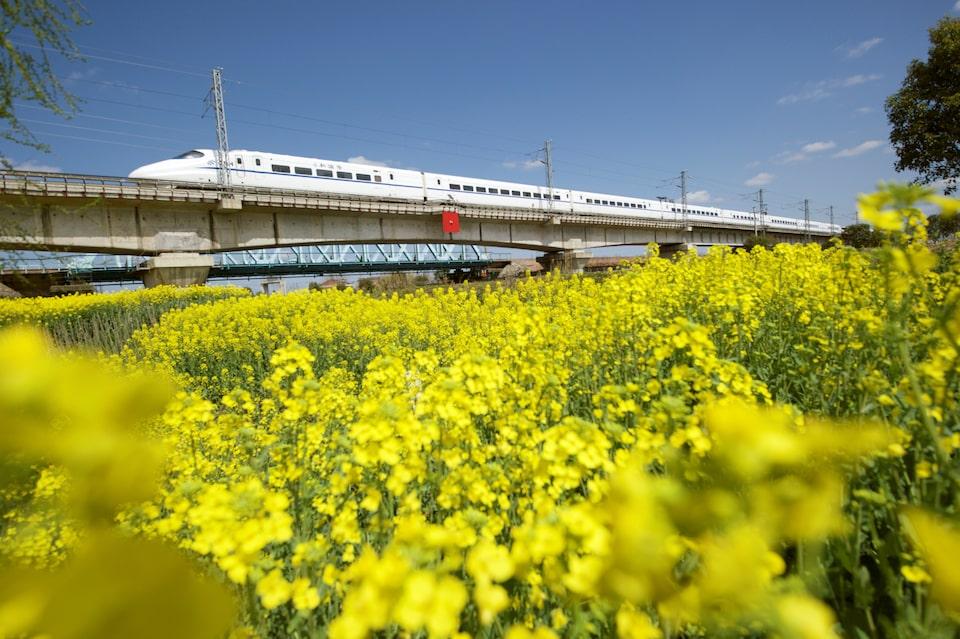
Australia nears deal with China to ship five trial canola cargoes Shipments will total 150,000-250,000 tons, industry sources say Phytosanitary rules have restricted Australia's canola exports to China Australian canola prices may rise with increased Chinese demand CANBERRA/BEIJING, July 16 (Reuters) - Canberra is close to an agreement with Beijing that would allow Australian suppliers to ship five trial canola cargoes to China, sources familiar with the matter said, a move towards ending a years-long freeze in the trade. China, the world's largest canola importer, sources nearly all of its imports from Canada but those supplies could be limited by an anti-dumping probe Beijing is conducting. China imposed 100% tariffs on Canadian canola meal and oil this year amid strained diplomatic ties. Sign up here. Australia, the second-largest canola exporter, has been shut out of the Chinese market since 2020, mainly due to Chinese rules to stop the spread of fungal plant disease, but the trial cargoes could reopen trade and reduce Canada's market share. Chinese and Australian officials are finalising a framework to address Beijing's phytosanitary requirements aimed at preventing the spread of blackleg disease, according to two Australian agriculture industry sources briefed on the negotiations. "It looks like we've found a pathway that works for everyone," said one of the sources. "Now we need to run a few ships and see if it all works." The five trial cargoes will be handled by trading companies once the framework is agreed, the sources said. Two trading company sources familiar with the negotiations said the shipments would carry between 150,000 and 250,000 metric tons of Australian canola, also known as rapeseed, to China. The sources declined to be named as they were not authorised to speak publicly on the matter. In response to a query from Reuters, Australia's agriculture ministry said: "This is an active and ongoing government-government discussion and details have not yet been finalised." China's Ministry of Commerce and General Administration of Customs did not immediately respond to a request for comment. China has bought an average of 4 million metric tons of canola, worth over $2 billion, each year for the last five years, for use in cooking oil, renewable fuels, and animal feed. Australian Prime Minister Anthony Albanese is currently visiting China, underscoring a warming of ties since his Labor government won power in 2022. The planned shipments follow smaller test deliveries last year, when Australia exported 500 tons of canola to China in both June and July 2024, according to Australian trade data. The negotiations have focused on addressing China's requirement that canola shipments contain less than 1% admixture — impurities such as chaff and broken seeds - and its concerns of blackleg contamination, the two sources briefed on the talks said. Unlike Canadian exporters, who clean their canola before shipping, Australian suppliers often exceed this limit. Additional demand from China should lift Australian canola prices, traders said, but Australia may not be able to fully replace Canadian canola in China. The Australian government expects the upcoming harvest later this year to produce 5.7 million tons of canola, the least in five years, due to unfavourable weather and a smaller planted area. Of that, Australia will likely export around 4 million tons of canola, much of which may be earmarked for longstanding customers in Europe and elsewhere, said one of the trade sources. "China might struggle to get more than their trial volume depending on how quick they move," the person said. China had 159,000 tons of imported canola in its stockpiles as of July 4, the lowest level for this time of year in nearly four years, said Zhang Deqiang, an analyst at Shandong-based Sublime China Information. https://www.reuters.com/world/china/australia-nears-breakthrough-canola-deal-with-china-sources-say-2025-07-16/
2025-07-16 21:39
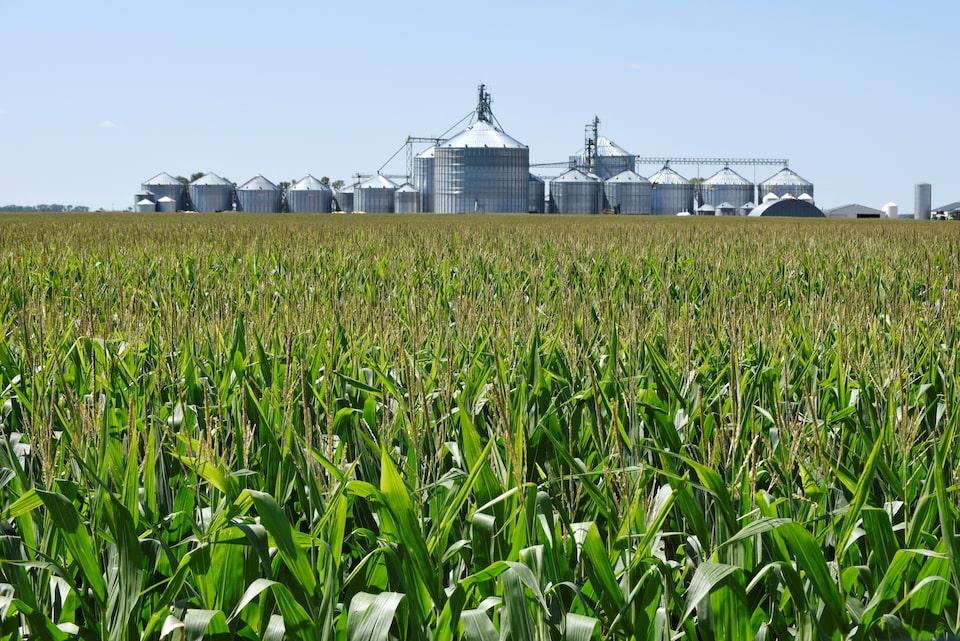
NAPERVILLE, Illinois, July 16 (Reuters) - Chicago corn futures hit contract lows yet again this week and soybeans have been flirting with single-digit prices as ample U.S. harvests are on the docket. December corn still hovers just above last year’s levels and November soybeans are at five-year lows for the date. But adjusting for inflation puts month-to-date averages for both corn and soybeans at the lowest July levels since 2006. Sign up here. This grim milestone comes as U.S. exporters struggle to defend their once-impenetrable global grain and oilseed market share against ever-expanding Brazilian production. Sagging prices are especially painful for U.S. farmers since input costs remain relatively high. Corn prices have tumbled at least 30% since mid-2022, both in nominal and adjusted terms. But the national average cost to produce corn this year is only 3% lower than in 2022, and 11% lower if inflation is considered. This means that $4-per-bushel corn is not the same as the years-ago $4 corn, even though current U.S. supply predictions are historically modest. 2006 BENCHMARK So far this month, CBOT December corn and November soybeans have averaged $4.21 and $10.20 per bushel, respectively. That compares with full-month 2024 averages of $4.12 and $10.67. U.S. data on Tuesday showed the June Consumer Price Index up 2.7% on the year, lifting the average July 2024 corn price to $4.23 in real terms, just above the current levels and matching July 2020’s adjusted price. In nominal dollars, there have been 11 Julys since and inclusive of 2006 in which average corn prices were lower than the current ones. But inflation-adjusted, today’s $4.21 is the lowest since $4.19 per bushel in 2006 ($2.65 nominal). There have been nine Julys since 2006 in which nominal soybean prices were lower than this month’s running average of $10.20. Once again, after adjustment, this is the lowest since 2006 ($9.74 per bushel; $6.15 nominal). Both corn and soybeans have enjoyed a bounce so far this week. But prices are well off yearly highs set back in February, when insurance guarantees to U.S. farmers are set for the upcoming harvest. However, price weakness since then has not been out of the ordinary, a potentially unfriendly factor for hopeful bulls. December corn so far this month is trading 10% lower than the average February price, a smaller loss than in the previous two years. November soybeans are about 3% lower than in February, though larger declines were observed over this period in four of the last seven years, including 2024. JUSTIFIED BY SUPPLY? The U.S. Department of Agriculture predicts 2025-26 U.S. corn ending stocks to rise 24% on the year. This follows a projected 24% decline throughout 2024-25, which ends on August 31. A year ago, a 12% increase was projected for 2024-25, similar to the comparable 2020-21 forecast for an 18% rise. Recall that adjusted corn prices in July 2020 and 2024 were nearly identical with the current ones, at least partly validating the current supply-price dynamic. The argument is weaker when comparing the volumes. Predicted 2025-26 corn carryout of 1.66 billion bushels is 21% and 37%, respectively, below the 2024-25 and 2020-21 outlooks at this same point. But the market may very well be trading a 2025-26 carryout closer to 2 billion bushels given the huge upside considerations for corn yield, aiding the case for low prices. 2025-26 U.S. soybean ending stocks are pegged to fall 11% on the year, the first year-on-year supply decline projected in July since 2020 (-32%). A 24% reduction was predicted in July 2019, though the adjusted average soybean prices during those two Julys exceed $11 per bushel. The July predictions for 2019-20 and 2020-21 U.S. soy carryout, 795 million and 425 million bushels, respectively, safely exceed the 2025-26 estimate of 310 million. This could be a supportive factor for bean prices, particularly if August weather forecasts turn unfavorable. Karen Braun is a market analyst for Reuters. Views expressed above are her own. Enjoying this column? Check out Reuters Open Interest (ROI) , opens new tab, your essential new source for global financial commentary. ROI delivers thought-provoking, data-driven analysis of everything from swap rates to soybeans. Markets are moving faster than ever. ROI , opens new tab can help you keep up. Follow ROI on LinkedIn , opens new tab and X. , opens new tab https://www.reuters.com/markets/commodities/chicago-corn-soybeans-sink-effective-19-year-lows-2025-07-16/
2025-07-16 21:36
SINGAPORE, July 16 (Reuters) - The International Air Transport Association on Wednesday stepped up criticism of the European Union's sustainable aviation fuel mandate as a costly initiative that is not helping the environment as regional supplies there remain low. "The idea that you're buying sustainable fuel and then transporting it to use in Europe isn't the right way to do it, because you're clearly increasing the carbon footprint of that fuel as a result of the transportation costs," IATA's director-general Willie Walsh said at a media roundtable in Singapore. Sign up here. IATA estimated in June that production of SAF, which is considered a low-carbon replacement for traditional jet fuel, is expected to reach 2 million metric tons, or 0.7% of airlines' fuel consumption, in 2025. "Mandating the use of a product that isn't available doesn't lead to any environmental benefit," Walsh said, adding that fuel companies that have an obligation to produce SAF are also increasing the cost of traditional jet fuel. By IATA's assessment, he said "the cost that they're charging is way in excess of the actual cost of the limited supplies of sustainable fuel." "The EU in effect has facilitated monopoly suppliers to increase prices with no environmental benefit," said Walsh, adding that the region needs to re-evaluate its SAF targets. Under the ReFuelEU Aviation requirement, airlines need to have a 6% SAF blend in their jet fuel usage by 2030. The EU is offering some subsidies for SAF purchases by airlines, Reuters reported in June. On the supply front, at least five SAF projects in Asia, outside of China, have started up or are earmarked to start production this year, targeting exports regionally and to Europe. Singapore is among key exporters of the green fuel to the EU. Walsh also questioned the use of palm oil as a means to produce sustainable fuel. "I think that you could argue there is sustainable palm oil and there is palm oil that wouldn't be considered sustainable, and I think in some parts of the world there it's too black and white," Walsh said. We need to have a much more "nuanced approach" to the usage of palm oil as a feedstock and "much more detailed assessment of the sustainability of the feedstock", he added. https://www.reuters.com/sustainability/eus-buying-green-fuel-outside-meet-its-targets-is-not-making-sense-iata-says-2025-07-16/

2025-07-16 21:18
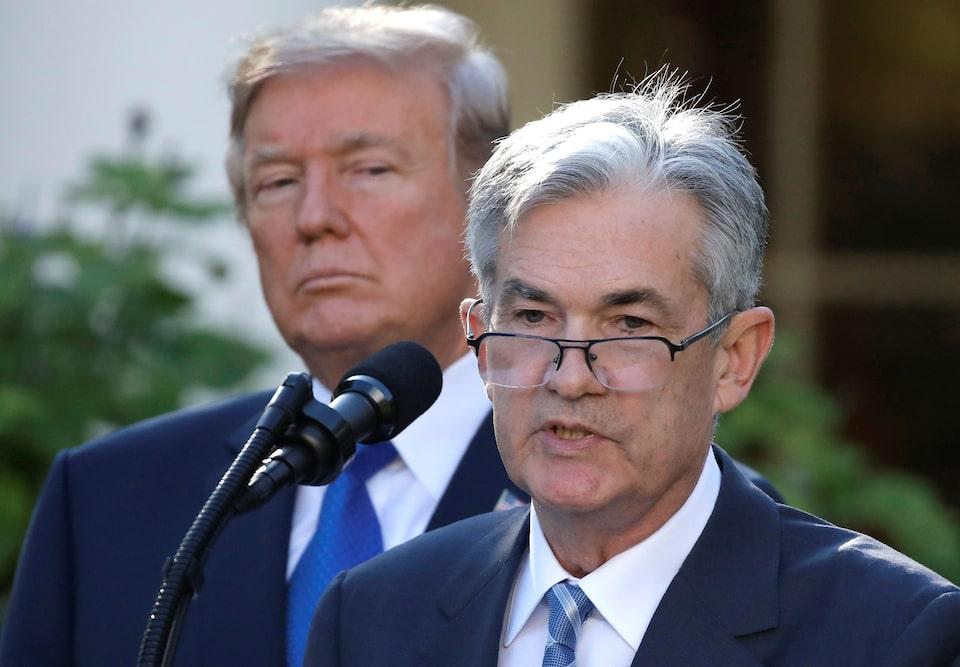
S&P 500 fell briefly by up to 0.7%, following reports that Trump was close to firing Powell Strategists view market reaction as muted Analysts noted that market participants are used to Trump's shifting positions Experts warned that if the administration were to actually remove Powell, more severe volatility could ensue NEW YORK, July 16 (Reuters) - Investors are becoming more measured in their reaction to news about Trump's Washington policy, with Wednesday's whipsawing headlines over Federal Reserve Chair Jerome Powell triggering a reaction that fell short of what could happen if the Fed chair was indeed fired. The S&P 500 briefly fell as much as 0.7% and the dollar sank 0.9% on Wednesday following reports Trump was close to firing Powell. Sign up here. To some investors, the initial knee-jerk moves - soon to be unwound as Trump denied he was planning Powell's ouster from the Fed - seemed relatively shallow and pointed to investors being unwilling to put too much stock in headlines involving Trump administration policy. Part of the reason for the market’s reaction is that investors have learned from experience that news headlines about potential actions by the Trump administration can change rapidly, market participants said. "I think there is a group of people who thought it was a trial balloon," Thierry Wizman, global FX and rates strategist at Macquarie in New York, said. "That it was not serious, that it was just Trump testing the market and that if the market fell too much, he would change his view in any case so there's no reason to bid stocks down excessively," he said. The White House declined to comment on whether Trump was testing the market, instead pointing to his remarks earlier in the day where he said he is not planning to fire Powell even as he unleashed a fresh round of criticism against the central bank chief and declined to completely reject the possibility of ousting him. Trump, who in the past has suggested he could fire Powell, has also at various times said he would not do so. Bloomberg News, which first reported Trump was planning to fire Powell soon, did not immediately respond to a request for comment. "We don’t know if Trump will follow through on the threat," Brian Jacobsen, chief economist at Annex Wealth Management, said. The many twists and turns in U.S. tariff policy since the start of the year have already inured investors to abrupt changes in policy. "Traders and investors have learned to take political posturing with a grain of salt," said Karl Schamotta, chief market strategist at Corpay. The limited reaction, especially in stock markets, also points to some investors seeing Powell's potential ouster as clearing the path for rate cuts, some analysts said. "There is an element of the market that wants to see lower rates in the short term ... they're happy to have the Fed cut," Wizman said. Worries over the Fed's independence notwithstanding, lower rates would reduce borrowing costs for companies, potentially encouraging investment and boosting corporate profits, while also making stocks relatively more attractive compared to lower-yielding bonds and savings. "Perhaps there are some traders who like the idea of lower rates more than the loss of independence," Steve Sosnick, chief strategist at Interactive Brokers, said. 'MINI-TANTRUM' Still, market participants warned that Wednesday's market gyrations, fleeting as they were, offered a glimpse on how global financial markets might react should Powell be ousted. "This morning’s mini-tantrum provided the administration with a clear warning of the negative consequences," Schamotta said. "Today's episode provided a tiny taste of the cataclysmic moves that could unfold if the Trump administration actually moved forward with untethering the world’s monetary anchor," he said. Investors had been on edge for weeks about the prospect of Powell being removed from his job before his term ends next May, as Trump has repeatedly criticized him for not cutting U.S. rates quickly enough. Even if Trump doesn't fire Powell, just nominating a successor - something Trump has said he is considering - would trouble the market, investors said. The nomination of the next Fed Chair so far in advance of the end of Powell's term would create the likelihood of a "shadow" Fed chair who offers potentially clashing views with the sitting central bank leader on monetary policy. This could potentially sow confusion in the market about the outlook for monetary policy, investors said. Such threats to the Fed's perceived independence could push investors to lighten exposure to dollar-denominated assets and revive the worries about investing in America that surfaced earlier this year when Trump first slapped hefty tariffs on global trading partners, strategists said. "This is part and parcel of the thing we've already been growing accustomed to," Macquarie's Wizman said. "It's a theme that has weakened the dollar since the beginning of the year. It's a theme that has caused long-term yields to go up," he said. For now, investors remain on edge about whether Trump will end up firing Powell. "Trump in particular seems to take umbrage at the idea that he doesn't follow through on some of these things. So it wouldn't surprise me if they did. It wouldn't surprise me if they didn't," said Rick Meckler, a partner at Cherry Lane Investments in New Vernon, New Jersey. https://www.reuters.com/business/finance/investors-become-inured-policy-whiplash-powell-headlines-cause-limited-reaction-2025-07-16/
2025-07-16 21:04
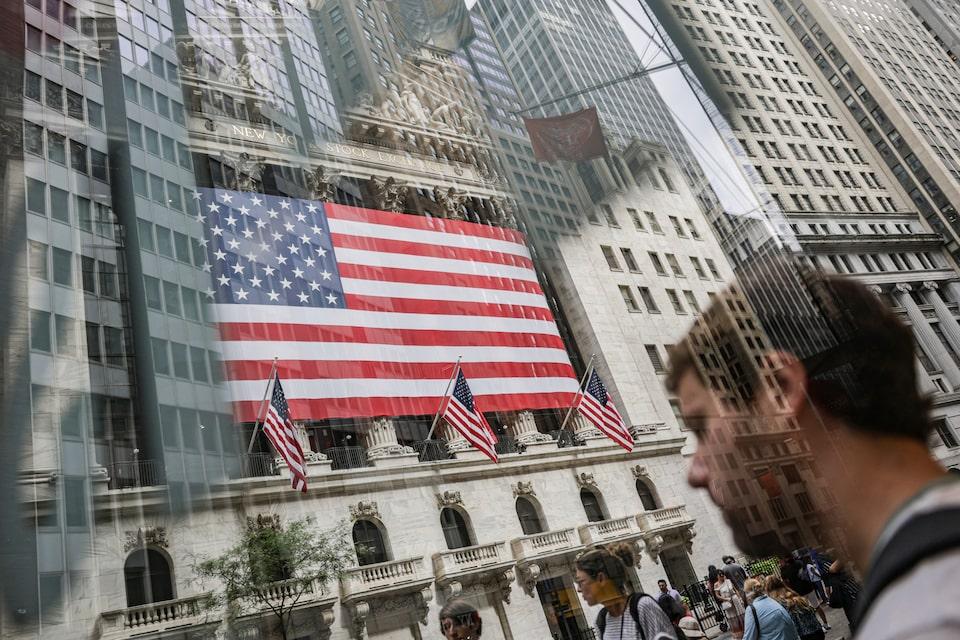
ORLANDO, Florida, July 16 (Reuters) - TRADING DAY Making sense of the forces driving global markets Sign up here. By Jamie McGeever, Markets Columnist A dramatic day on Wednesday ended with Wall Street in the green and the dollar and short-dated Treasury yields lower, although off their earlier extremes, after President Donald Trump denied reports he will soon fire Fed Chair Jerome Powell. More on that below. In my column today I look at Trump's call for 300 basis points of Fed rate cuts and, although it is wishful thinking, why it shines a light on whether Fed policy is too tight, too loose, or maybe just about right. If you have more time to read, here are a few articles I recommend to help you make sense of what happened in markets today. Today's Key Market Moves Trump-Powell drama sizzles, dollar fizzles At around midday in the U.S. session on Wednesday, it looked like six months of verbal attacks on Fed Chair Jerome Powell from President Donald Trump for not cutting interest rates were about to reach boiling point - according to Bloomberg News, Powell would soon be fired. The market reaction was what you might expect - the dollar, stocks, and short-dated Treasury yields fell, and the yield curve steepened. The most notable moves were in the dollar and two-year yield. But Trump swiftly denied the report, insisting that although he had discussed ousting Powell with lawmakers, it was "highly unlikely" he would fire him. Markets recovered their poise, especially stocks, although the rebound in short-dated yields and the dollar was less pronounced. Trump firing Powell would be a monumental event as no president has ever formally dismissed a Fed Chair. But it would come as little surprise. Trump's desire for lower interest rates is ferocious, and he regularly berates Powell for not cutting them. Political interference in monetary policymaking? Yes, but Trump crossed that Rubicon some time ago. Rates traders still expect no change from the Fed on rates later this month and a quarter point cut by October. They added around 10 bps of expected easing into next year's forecasts. Even at the depths of the selloff on Wednesday Wall Street's main indices were never down more than 1%, perhaps reflecting investors' skepticism that Trump really will pull the trigger. But it's noteworthy given that the S&P 500 and Nasdaq had clocked new highs the day before - there's scope for a deep correction if investors want one. The latest twist in the Trump-Powell saga dominated the U.S. session and will likely be the main driver of global markets again on Thursday. But investors have other signposts to guide them, including corporate earnings, tariffs and economic data. On Wednesday, three of America's biggest banks reported results - Bank of America, Morgan Stanley and Goldman Sachs. On Thursday the spotlight turns to Netflix, and before that in Asia, Taiwan's TSMC, the world's main producer of advanced AI chips. Trump boxes in Fed with extreme rate cut calls While almost no one thinks Donald Trump's verbal attacks on Federal Reserve Chair Jerome Powell are a positive development, they have electrified the debate about whether the U.S. president is right that interest rates are too high. Presidential tirades aside, there is a strong case to be made that the fed funds rate should be lower than its current 4.25-4.50% target range. The labor market is beginning to show signs of cracking, 'hard' economic data is softening, and a tariff-led slowdown may be in the offing. On the other hand, economic growth is clocking in at an annualized pace of around 2.5% and not expected to dip much below 2% next year, unemployment is still historically low, the stock market is at a record peak, and other financial assets like bitcoin have also never been higher. And, crucially, core inflation is still almost a percentage point above the Fed's 2% target, suggesting that we may be starting to see the inflationary impact of tariffs. By those measures, policy may be too loose, not too tight. Indeed, Jason Thomas, head of global research and investment strategy at Carlyle, reckons financial conditions are "unusually accommodative", and argues that had the Fed not said in December that policy was 'restrictive', there would be no need to explain why it hadn't cut rates six months later. The president clearly does not agree. Trump is clamoring for borrowing costs to be slashed by 300 basis points. That would take the policy rate closer to 1%, a level usually associated with severe financial market stress, strong disinflationary pressures or a deep economic funk. Or all three. R-STAR GAZING One would be hard-pressed to find many experts who would agree with Trump's call, even those who fall on the dovish side. But then where should rates be? Policymakers typically use forward-looking models and frameworks to inform their decisions. The most famous of these, so-called 'R-Star', comes in for a lot of criticism, as it is theoretical, referring to the inflation-adjusted long-term neutral interest rate that neither accelerates nor slows growth when inflation is at target. This may be a fuzzy concept, but officials look at it, so investors cannot dismiss it completely. There are two benchmark 'R-Star' models, both partly created by New York Fed President John Williams. One currently puts this rate at around 0.80% and the other around 1.35%. If inflation were at the Fed's target 2%, then these models would put the nominal fed funds rate at around 2.80% or 3.35%, respectively. Fed policymakers split the difference in their latest median projections, putting the long-term nominal Fed funds rate right at 3.00%. If these estimates are anywhere close to accurate, the nominal policy target range of 4.25-4.50% now appears to be restrictive, so the path ahead is lower. Rates traders and investors seem to agree. While the latest CPI report has caused jitters at the long end of the yield curve, rates markets are still pricing in more than 100 basis points of easing over the next 18 months. But this has helped fuel the asset price rally, which, ironically, strengthens the argument that policy may be closer to neutral than models suggest. WISHFUL THINKING Powell may have backed the Fed into a corner by maintaining that policy is still restrictive, albeit "modestly" so. These claims signal the Fed will lower rates, but it has not done so, as it is waiting to see if Trump's protectionist trade agenda unleashes inflation. Moreover, it also does not want to appear to be responding to political pressure to cut rates. "Some will say this collision was unavoidable. But the Fed would find itself in a far more defensible position had it embraced a posture of neutrality, pledging to cut or hike as warranted by future developments (including policy shifts)," Carlyle's Thomas wrote on Tuesday. In short, the Fed is in a bit of a bind, and Trump's attacks will only make it worse. His call for 300 basis points of rate cuts may end up being similar to his 'reciprocal tariff' gambit: aim extremely high, settle for something less, and claim victory. The problem, of course, is that monetary policy is not supposed to be a negotiation. What could move markets tomorrow? Want to receive Trading Day in your inbox every weekday morning? Sign up for my newsletter here. Opinions expressed are those of the author. They do not reflect the views of Reuters News, which, under the Trust Principles , opens new tab, is committed to integrity, independence, and freedom from bias. https://www.reuters.com/world/china/global-markets-trading-day-graphics-2025-07-16/