2025-07-16 11:45
Sefcovic to meet US officials for tariff discussions Trump's tariff threats disrupt global trade and markets ASML warns of investment delays due to tariff uncertainty If talks fail, EU tariff list includes Boeing, bourbon, cars European companies expected to report weak earnings BRUSSELS, July 16 (Reuters) - EU trade chief Maros Sefcovic will head to Washington on Wednesday for tariff talks, an EU spokesperson told Reuters, adding that he will meet U.S. Commerce Secretary Howard Lutnick and Trade Representative Jamieson Greer. President Donald Trump has threatened a 30% tariff on imports from the EU from August 1, a level Europe says is unacceptable and would end normal trade between two of the world's largest markets. Sign up here. ASML (ASML.AS) , opens new tab, the world's biggest supplier of computer chip-making equipment, warned on Wednesday that uncertainty in tariff negotiations is spurring chipmakers in the U.S. to delay finalising investments, clouding its outlook for the full year. Its shares sank as much as 7.3% in early trading. The European Commission, which oversees trade for the EU, has prepared to target 72 billion euros ($83.6 billion) worth of U.S. goods - from Boeing (BA.N) , opens new tab aircraft and bourbon whiskey to cars - for possible tariffs if trade talks with Washington fail. The list, sent to EU member states and seen by Reuters on Tuesday, pre-dated Trump's move over the weekend to ramp up pressure on the 27-nation bloc and was a response to U.S. duties on cars and car parts and a 10% baseline tariff. The package also covers chemicals, medical devices, electrical and precision equipment as well as agriculture and food products - a range of fruits and vegetables, along with wine, beer and spirits - valued at 6.35 billion euros. Trump's roll-out of his tariff policies has often been chaotic. His moves have upended decades of reductions in global trade barriers, unsettling financial markets, threatening a new wave of inflation and hitting European businesses hard. European companies are expected to report a drop of 0.7% in earnings and a 3% fall in revenue in the upcoming earnings season covering the second quarter, their weakest in more than a year. Shares in European carmakers, including Germany's Volkswagen, were lower after Renault's profit warning late on Tuesday, which stirred worries about the health of the auto industry as it struggles with 25% U.S. import tariffs. The only acceptable tariff on EU exports to the United States would be zero as the bloc is already facing a detrimental exchange rate, the head of Italy's business lobby said on Wednesday. "The real issue is that, to date, not only do we have to consider the burden of tariffs ... we must add to that the euro's appreciation against the dollar," said Confindustria President Emanuele Orsini. The euro has risen by more than 12% against the dollar since the start of the year. The August 1 deadline gives targeted countries time to negotiate about lower tariff rates. Some economists have also noted Trump's pattern of backing off his tariff threats. ($1 = 0.8610 euros) https://www.reuters.com/business/eu-trade-chief-have-trade-talks-washington-dc-says-eu-spokesperson-2025-07-16/
2025-07-16 11:40
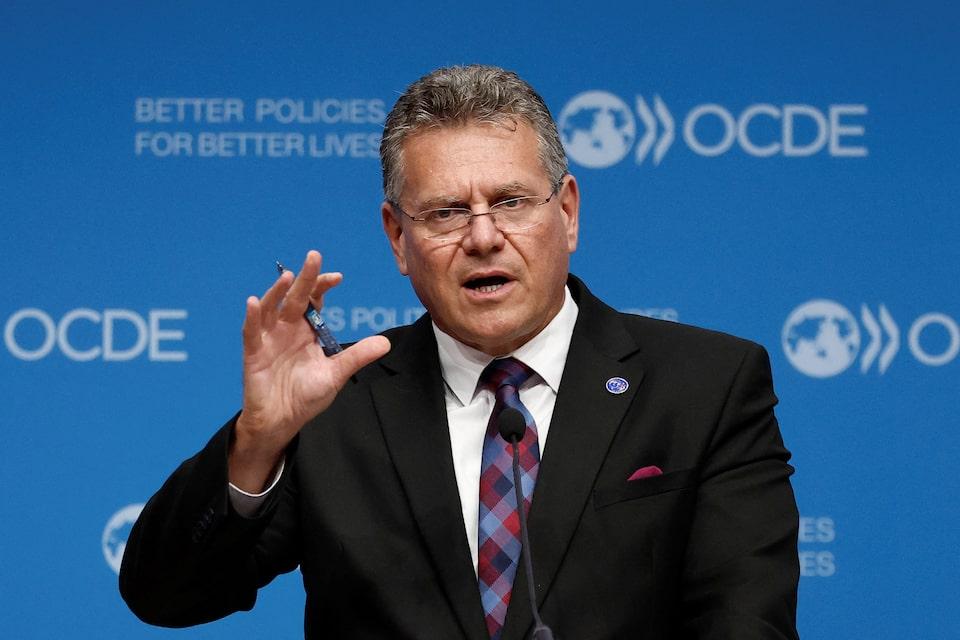
Analysts hold forecasts broadly steady amid geopolitical risks Analysts expect EU carbon prices to rise as emissions cap tightens US tariffs could impact EU industrial output and carbon demand LONDON, July 16 (Reuters) - Analysts have kept their forecasts for prices in the European Union’s carbon market roughly steady with the spectre of tariffs from the United States and weak industrial output weighing on expectations. The EU's Emissions Trading System (ETS) is Europe’s main tool for curbing emissions. It forces manufacturers, power companies and airlines to pay for the carbon dioxide they emit by surrendering carbon allowances. Sign up here. According to a survey of ten analysts, EU Allowances (EUAs) are forecast to average 73.54 euros/metric ton for the third quarter of 2025, slightly down from the 76.10 euros/metric ton forecast made in April. “EU carbon prices have struggled through 2025 due to geopolitical uncertainty and trade turmoil, which have limited upside potential”, said Veyt carbon market analyst Henry Lush. Trade tariff announcements from the United States have stoked fears of stalling economic growth in Europe which could dent industrial output and along with it demand for carbon allowances. The benchmark EU carbon contract traded at 71.30 euros a metric ton on Wednesday, down around 15% from 2025's intra-day peak of 84.50 euros/ton in late January. The average forecast for 2025 was 75.15 euros/ton, slightly up from 74.89 euros/ton. All the analysts surveyed expected carbon prices to rise in the coming years as the cap on the amount of emissions that a sector, or group of sectors, can produce decreases under the ETS. “The market should get substantially tighter from 2026, with both auction and free allocation supply dropping away that year. Investors should start to price in some of that upcoming tightness as we get closer to 2026,” said Energy Aspects analyst Ben Lee. Free allocations are given to businesses to help them compete with international competitors that are not subject to the same carbon costs. However, these will be reduced from next year when the EU launches its carbon border tax forcing importers to pay equivalent carbon costs. The average EUA forecast for 2026 was 91.08 euros/ton, down from 91.37 euros/ton in April. The average forecast for 2027 was 108.70 euros/ton, down from 109.62 euros. https://www.reuters.com/sustainability/climate-energy/analysts-eu-carbon-price-forecasts-steady-us-tariff-concerns-linger-2025-07-16/
2025-07-16 11:39
MILAN, July 16 (Reuters) - Venture Global (VG.N) , opens new tab will supply 2 million metric tons a year of liquefied natural gas to Italian state-controlled energy group Eni (ENI.MI) , opens new tab, the two companies said on Wednesday. The deal is Eni's first long-term contract for LNG coming from the United States after Italian prime minister Giorgia Meloni told President Donald Trump in April that Rome would increase imports of U.S. LNG as a way to improve trade relations with North America. Sign up here. Last month Venture Global said it would supply an additional 0.75 million metric tons per annum of LNG to Germany-based distributor SEFE Energy GmbH, in another deal with a European offtaker. The European Union is currently in negotiations with Washington over 30% trade tariffs on its exports towards North America. "We do not comment on the ongoing negotiations between the EU and the U.S. administration on tariffs," an Eni spokesperson told Reuters, calling Wednesday's agreement "highly advantageous" for both the company and its American partner, which would become an important supplier for the group. Eni said the gas would come from Venture Global's Calcasieu Pass 2 project, under development in Louisiana, starting from the end of the decade. Part of the volume will contribute to the diversification of Europe's gas supplies, the energy giant added. Eni said the deal would support the group's ambitions to grow its LNG portfolio to approximately 20 million tons per annum of contracted volumes by 2030, and to expand its trading business. Italian utility Edison also buys LNG from the United States. https://www.reuters.com/business/energy/venture-global-signs-20-year-contract-supply-lng-italys-eni-2025-07-16/
2025-07-16 11:37
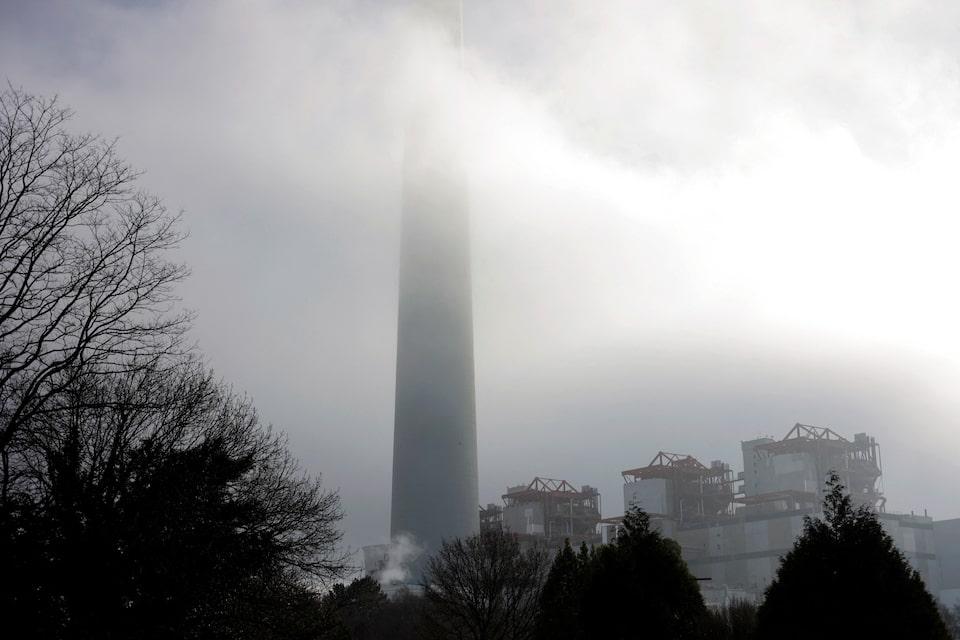
MOSCOW, July 16 (Reuters) - Prolonged high interest rates in Russia may drive mergers and acquisitions of distressed assets, a study by leading law firms showed, though Western-led sanctions and a liquidity shortage among buyers are likely to restrain growth in deals for now. Russia's M&A market grew by just 2% in 2024 to $39.2 billion, the study showed, hampered by interest rates climbing to their highest in more than 20 years at 21% and Moscow tightening exit terms for Western companies selling their assets in the wake of the conflict in Ukraine. Sign up here. Increased investor uncertainty due to trade wars sparked by U.S. President Donald Trump's tariffs has added to M&A market pressure so far in 2025, according to the study, which collated the views of around 20 Russian law and M&A advisory firms. The study noted that 84% of 50 respondents expected a rise this year in the number of deals involving businesses being forced to sell to larger players capable of servicing their high debt burdens. The problems are most acutely felt in capital-intensive industries like real estate, infrastructure and heavy industry, the study said. That could include Western companies still looking to dispose of Russian assets. Russia's benchmark interest rate remains high at 20% after a 1% cut last month and government officials and business leaders are exerting pressure on the central bank to reduce borrowing costs more quickly. Some companies are trying to sell certain projects to reduce their credit load, said Anatoly Klinkov, director of investor relations at A101. "But here, the market is completely on the buyer's side," Klinkov said. "Money is very expensive." With rates so high, buyers face less competition and have increased leverage in negotiations. Some industries, such as the coal sector, have noted rising bankruptcies and entities being forced to close. Major exporters have cut the planned volume of exports they send by rail, a Russian Railways document showed in May, as Russia's economy slows. "In tight monetary policy conditions we will likely observe growth in deals for problem assets and restructuring projects," said Pavel Terentyev of Advance Capital. https://www.reuters.com/markets/europe/high-interest-rates-russia-could-prompt-distressed-asset-ma-surge-study-shows-2025-07-16/
2025-07-16 11:18
MUMBAI, July 16 (Reuters) - India's gold imports in June fell 40% from a year ago to their lowest level in more than two years, as a price rally to a record high sapped demand, a government and two industry officials told Reuters. Imports to India, the world's second-largest gold consumer, fell to 21 tons, the lowest since April 2023, said a government official, who declined to be named as he was not authorised to talk to the media. Sign up here. In value terms, gold imports fell to $1.84 billion in June from $2.48 billion a year ago, the official said. In the past decade, on average, India imported 52.4 tons of gold in June. In the first half of 2025, India's gold imports fell 30% from a year ago to 204.1 tons, the lowest since the first half of 2020, when the COVID-19 outbreak led to lockdown, the trade ministry data showed. The rapid surge in prices has been discouraging retail buyers from making jewellery purchases, said Ashok Jain, proprietor of Mumbai-based gold wholesaler Chenaji Narsinghji. Domestic prices hit an all-time high of 101,078 rupees per 10 grams in June. Gold prices have risen 27% so far this year after rising 21% in 2024. Gold imports would remain subdued even in July, as demand is still tepid because of higher prices, Jain said. Silver imports in June nearly doubled from a year ago to 197 tons, but were significantly lower than the 544 tons imported in May, the government official said. In recent months, Indian investors, traditionally obsessed with stockpiling gold, are increasingly turning to silver , as its returns this year outpaced those of gold. https://www.reuters.com/world/india/indias-june-gold-imports-fall-two-year-low-record-price-dents-demand-2025-07-16/

2025-07-16 11:18
July 16 (Reuters) - France's EDF is weighing options to bring in capital to both its North American and Brazilian renewables businesses, said a company spokesperson on Wednesday, which could include stake sales of as much as 50%. The comments followed a report by Bloomberg News citing people familiar with the matter as saying the state-owned utility was mulling a stake sale in its North American business that could fetch 2 billion euros ($2.32 billion). Sign up here. "We are studying the possibility to open the capital of some of our subsidiaries to partners," said EDF Power Solutions spokesman Mathieu Baratier. EDF's new CEO Bernard Fontana is currently seeking ways to bring in money to finance construction of six new nuclear reactors, and has said he was weighing possible asset sales. Fontana previously told lawmakers that he is looking to prioritise domestic nuclear projects, as the country is looking to shore up its electricity production long-term which mainly comes from its ageing fleet of 57 nuclear reactors. ($1 = 0.8610 euros) https://www.reuters.com/business/energy/edf-mulls-sale-232-billion-stake-north-american-renewables-arm-bloomberg-news-2025-07-16/