2025-07-15 22:19
800 mile line would transmit Kansas wind power to cities Senator: U.S. energy secretary told him he will stop project Farmers say eminent domain will trample on landowner rights WASHINGTON, July 15 (Reuters) - U.S. farmers on Tuesday slammed a project that got an up-to $4.9 billion loan guarantee from former President Joe Biden's administration to transmit electricity from wind and solar farms in the Midwest to cities. The 800-mile (1,290 km) Grain Belt Express transmission project backed by private company Invenergy would transmit power from Kansas to cities in the Midwest and East. Sign up here. Invenergy says the line, the second-longest in U.S. history, would be a national "energy security backbone" connecting four grid regions including the PJM Interconnection, the largest U.S. grid, which covers states from Illinois to New Jersey. The project could also support President Donald Trump's "energy dominance" policy of maximizing energy output. The White House on May 9 praised a $1.7 billion Invenergy investment in the project in a "list of wins" that bolster the U.S. economy and enhance national security. But Garrett Hawkins, the president of the Missouri Farm Bureau, told Reuters that the project would trample on the rights of farmers due to the project filing dozens of eminent domain, or compulsory acquisition, petitions against state landowners. Hawkins said the "sole purpose is to serve its own business interests, and in doing so, profit off the backs of farmers and landowners who have to house their infrastructure for decades to come." His comments came after Senator Josh Hawley, a Missouri Republican, said in a post on X on July 10 that he had a conversation with Trump and Energy Secretary Chris Wright, and Wright had told him that "he will be putting a stop to the Grain Belt Express green scam." Invenergy said it sent a letter to Wright a day later saying Hawley and Missouri Attorney General Andrew Bailey, who has opened an investigation into the project, are declaring "open season on America's ability to build needed energy infrastructure." Invenergy asked Wright to "put this unfounded noise aside and affirm a commitment" to the line. The White House and the Department of Energy did not immediately respond to requests for comment. The project has been in the works for a decade and got the conditional loan guarantee from the Department of Energy's Loan Program Office in November last year. https://www.reuters.com/business/energy/us-renewable-power-transmission-project-under-fire-farmers-2025-07-15/

2025-07-15 21:18
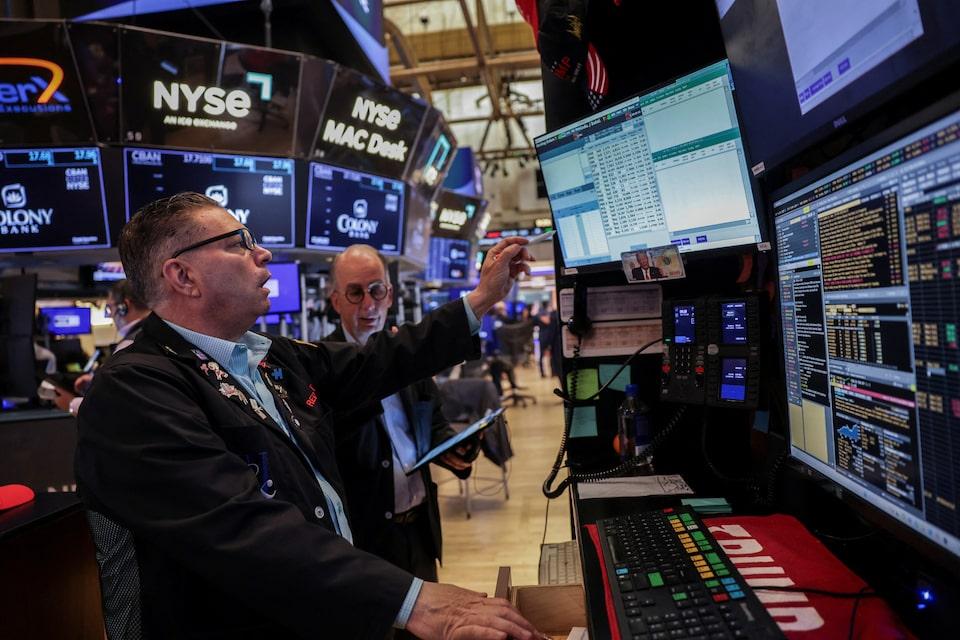
ORLANDO, Florida, July 15 (Reuters) - TRADING DAY Making sense of the forces driving global markets Sign up here. By Jamie McGeever, Markets Columnist The S&P 500 and Nasdaq leaped to new highs on Tuesday thanks to a surge in Nvidia shares, but closed mixed as investors digested a pick-up in U.S. inflation, a raft of major U.S. financial firms' earnings and spiking bond yields around the world, especially in Japan. More on that below, but in my column today I ask whether there is a sense of tariff complacency creeping into markets, as investors increasingly bet on the 'TACO' trade. If you have more time to read, here are a few articles I recommend to help you make sense of what happened in markets today. Today's Key Market Moves Bond blues mar stocks' joy It was a mixed bag on world markets on Tuesday. Two of Wall Street's three main indices, Britain's FTSE 100 and the MSCI World index hit fresh peaks, yet U.S. inflation rose, bond yields marched higher and investors gave a thumbs down to seemingly solid earnings from U.S. financial firms. Equity market strength was mostly in tech, after AI darling and chipmaker Nvidia said overnight it plans to resume sales of its H20 AI chips to China. Hong Kong's tech index got the ball rolling with a 2.8% rise, and tech was the only sector on the S&P 500 to close in the green. But if the market's glass was half full at the start of the day, it was half empty by the end of it. U.S. inflation was broadly in line with expectations, yet investors focused on the upside risks; U.S. bank earnings were solid, but financials were among the biggest decliners. The shadow of higher bond yields is beginning to lengthen as worries over governments' fiscal health, tariff-driven inflation and investor appetite for fixed income assets pick up again. The 30-year U.S. Treasury yield is back above 5.00%, but the eye of the bond market hurricane appears to be in Japan. Investor angst around an Upper House election on Sunday is bubbling up. Prime Minister Shigeru Ishiba's sliding popularity suggests even his modest goal of retaining a majority is out of reach, and defeat could bring anything from a shift in the makeup of Ishiba's coalition to his resignation. Japanese government bond yields are surging, but that's proving to be a headwind for the yen rather than a tailwind as extra pressure on the country's already strained public finances, a straight-jacketed Bank of Japan and stagflation fears more than offset any potential carry for yen investors. The yen slumped to a three-month low on Tuesday, back within sight of the 150 per dollar mark. The raft of economic indicators from China overnight, meanwhile, generally showed activity in June held up better than economists expected, and second quarter GDP growth was slightly stronger than forecasts too. But Beijing is still under pressure to inject more stimulus into the economy. The property bubble continues to deflate, with new home prices falling at their fastest pace in eight months, and more broadly, China's economic surprises index is its lowest in three months. If incoming data is beating forecasts, it is because expectations have been lowered so much. Tariff 'doom loop' hangs over global equities The astonishing rebound in stocks since early April largely reflects investors' bet that U.S. President Donald Trump won't follow through on his tariff threats. But the market's very resilience may encourage the president to push forward, which could be bad news for equities in both the U.S. and Europe. Investors appear to believe that the April 2 "reciprocal" tariffs were mostly a tactic to bring countries to the negotiating table, and Washington's levies will end up being much lower than advertised. Tariffs may end up much higher than they were before Trump's second term began, but the situation will still be better than the worst-case scenarios initially priced in after Trump's so-called "Liberation Day". Monday's equity moves were a case in point. Trump's threat on Saturday to impose 30% levies on imports from the European Union and Mexico - two of America's largest trading partners - was met with a collective market shrug. European and Mexican stocks dipped a bit, but Wall Street closed in the green and the Nasdaq hit a new high. This follows threats in recent days to place a 50% tariff rate on goods imported from Brazil and a 35% levy on goods from Canada not covered under the USMCA agreement. Brazilian stocks have slipped 5%, but Canadian stocks have hit new peaks. The question now is whether the line between complacency and the "TACO" trade - the bet that "Trump always chickens out" - is getting blurred. GETTING STRETCHED The scale of the recovery since April 7 is truly eye-popping. It took the S&P 500 less than three months to move from the April bear market lows to a new all-time high, as Charlie Bilello, chief market strategist at Creative Planning, recently noted on X. This was the second-fastest recovery in the last 75 years, only bested by the bear market recovery in 1982 that took less than two months. On a 12-month forward earnings basis, the S&P 500 index is now near its highest level in years and well above its long-term average. The tech sector, which has propelled the rally, has rarely been more expensive in the last quarter century either. None of that means further gains cannot materialize, and one could argue that the valuations are justified if AI truly delivers the promised world-changing productivity gains. Regardless, it is hard to argue that the rally since April is not rooted in the belief that tariffs will be significantly lower than the levels announced on Liberation Day. If many countries' levies do end up around 10% like Britain's and the aggregate rate settles around 15%, then equity pricing might very well be reasonable. But if that's not the case, growth forecasts will likely have to be revised a lot lower. "We stay overweight U.S. stocks, but don't rule out more sharp near-term market moves. Uncertainty on who will bear tariff costs means yet more dispersion in returns – and more opportunity to earn alpha, or above-benchmark returns," BlackRock Investment Institute analysts wrote on Monday. DOOM LOOP? One concern is that a loop is potentially being created, whereby Wall Street's resilience and strength in the face of heightened trade uncertainty actually emboldens Trump to double down on tariffs. Most analysts still believe cooler heads will prevail, however. Trump's tolerance for equity and bond market stress, and therefore U.S. economic pain, appears "limited", according to Barclays. But if markets have gotten too complacent and Trump does increase tariffs on EU goods to 30%, potential retaliation would risk a repeat of something similar to the post-Liberation Day selloff, sending European equities down by double digits, Barclays warns. It may also be that when it comes to tariffs, investors are focusing so intently on China that not much else moves the dial. This may be short-sighted though. China accounted for 13.4% of U.S. goods imports last year, the lowest in 20 years. In contrast, the U.S. imported $605.7 billion of goods from the European Union, or 18.6% of all imports and the most from any single jurisdiction. As Trump sees it, Europe is "ripping off" America almost as much as China. Bilateral U.S.-China trade last year totaled $582 billion, compared with bilateral U.S.-EU trade flows of $975 billion, U.S. Census data shows. America's $235.9 billion goods deficit with the EU was smaller than its $295.5 billion gaps with China, but that's still comfortably America's second-biggest trade deficit. What could move markets tomorrow? Want to receive Trading Day in your inbox every weekday morning? Sign up for my newsletter here. Opinions expressed are those of the author. They do not reflect the views of Reuters News, which, under the Trust Principles , opens new tab, is committed to integrity, independence, and freedom from bias. https://www.reuters.com/world/china/global-markets-trading-day-2025-07-15/
2025-07-15 21:17
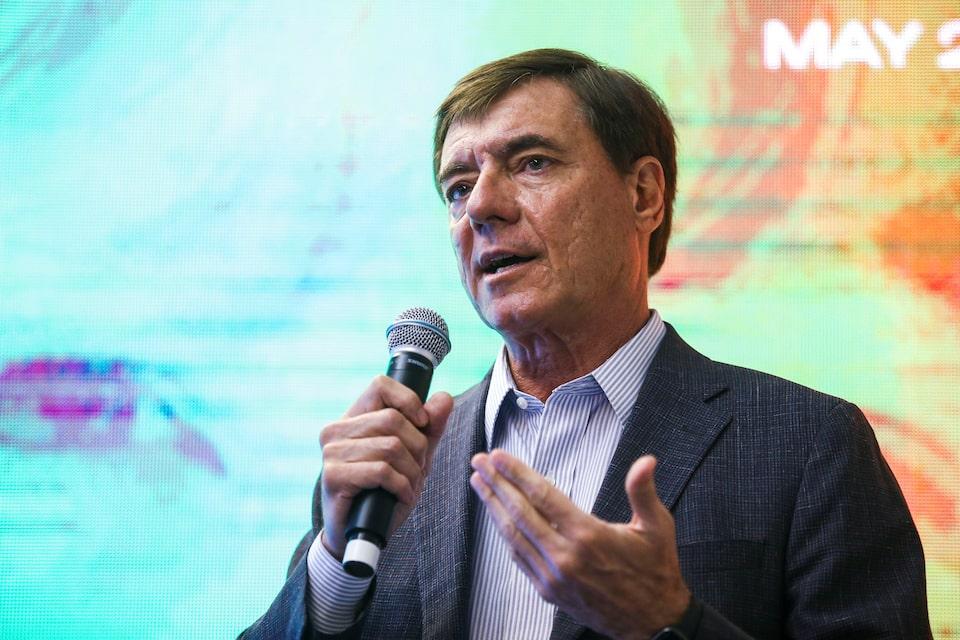
SAO PAULO, July 15 (Reuters) - The 50% tariff that U.S. President Donald Trump plans to impose on Brazilian exports starting in August could hammer the revenue of planemaker Embraer (EMBR3.SA) , opens new tab like the COVID-19 pandemic did, its CEO warned on Tuesday, flagging risks to U.S. partners. Francisco Gomes Neto told reporters the tariffs would amount to a trade embargo on the regional jets it supplies to U.S. airlines and could trigger order cancellations, deferred deliveries and tough consequences for Embraer's U.S. suppliers. Sign up here. Sao Paulo-listed shares in Embraer, which had risen 3% earlier in the day, seesawed during his remarks, lost the gains before ticking back up 0.6%. They have fallen around 10% since Trump announced the tariffs, but are still up 33% so far this year. The U.S. is the main market for Embraer, the world's third-largest planemaker after Airbus (AIR.PA) , opens new tab and Boeing (BA.N) , opens new tab, with U.S. clients buying 45% of the firm's commercial airliners and 70% of its executive jets. Analysts had warned that the Brazilian planemaker would be one of the most affected by the tariffs. "Given the relevance of this market, we estimate that if this (tariff plan) moves on at this magnitude, we will have an impact similar to that of COVID-19 in terms of the decline in the company's revenue," Gomes Neto said. In 2020, when the pandemic ground air travel to a halt, Embraer's revenue plunged around 30% from the previous year. Gomes Neto emphasized that the tariffs would also hurt U.S. suppliers of components such as engines and avionics. "It's a lose-lose situation," he said. Aircraft are among the top U.S. imports from Brazil, along with oil, steel, coffee and orange juice. Embraer forecast the levies would generate an additional cost of around $9 million per airplane exported to the U.S., with potential impacts totaling around 2 billion reais ($360 million) this year. Shipments of E175 narrowbodies, a workhorse of U.S. regional aviation, would become "unfeasible" by the tariffs, Gomes Neto noted, adding that no order had been canceled so far. "It's a very new situation, so everyone is trying to understand this process and working toward reaching a solution within the deadline," the CEO said. In March, Embraer's E175 backlog included 90 firm orders from American Airlines (AAL.O) , opens new tab, 40 from Republic, and 16 from SkyWest, which placed a fresh order in June for another 60 jets. ($1 = 5.56 reais) https://www.reuters.com/business/autos-transportation/us-tariffs-brazil-could-hit-embraer-revenue-like-covid-19-says-ceo-2025-07-15/
2025-07-15 21:13
WASHINGTON, July 15 (Reuters) - The U.S. Department of Agriculture said on Tuesday it would cut funding for a national network of centers that have supported thousands of small- and mid-sized farm and food businesses. The cuts are another hit to farmers from President Donald Trump's effort to shrink the size and cost of the federal government. The administration has previously canceled programs for local foods and food banks and climate-friendly farming, among others. Sign up here. Agriculture Secretary Brooke Rollins said in a statement that the agency was terminating the Regional Food Business Centers program because they were not financially sustainable. Four of the 12 centers will close immediately, and the remaining eight have the option to continue managing existing grants through next May, Rollins said. "USDA will honor existing commitments for over 450 grants to farmers and food businesses to ensure planning decisions on the farm can continue as normal, however stakeholders should not plan on this program continuing," she said. The USDA under former President Joe Biden spent $400 million to open the centers as part of its effort to increase resilience and competition in the U.S. food supply chain. The centers have provided training or technical assistance to more than 5,500 farms and businesses, according to a 2024 progress report. "The USDA has made yet another decision to prematurely end multi-year agreements that are effectively serving the small family farms the administration claims to be the focus of their agenda," said Hannah Quigley, policy specialist at the National Sustainable Agriculture Coalition, a policy and advocacy group. https://www.reuters.com/world/us/us-farm-agency-ends-program-support-small-businesses-2025-07-15/
2025-07-15 20:58
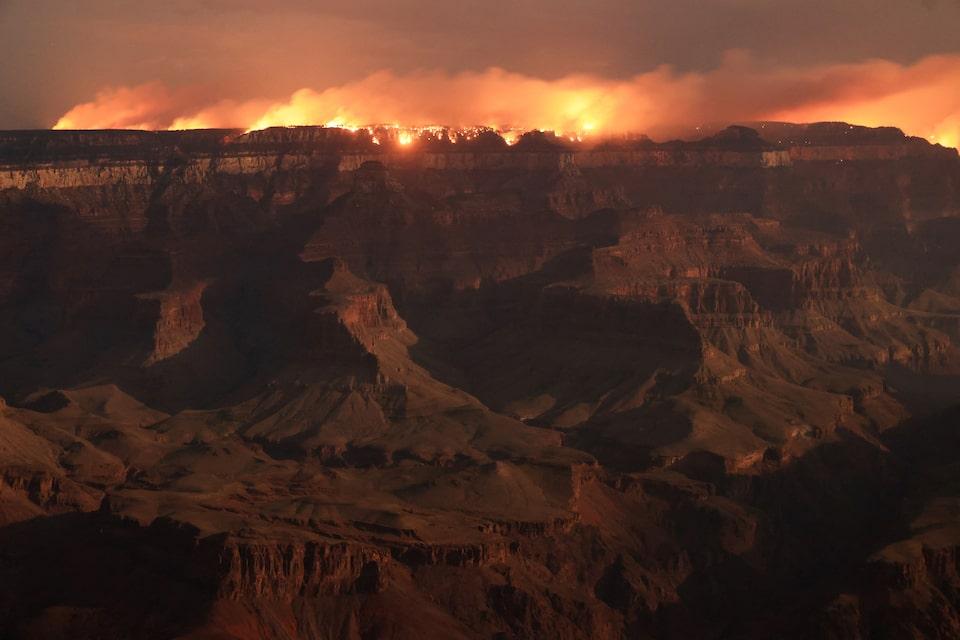
July 15 (Reuters) - A wildfire in tinder-dry forest on the North Rim of the Grand Canyon grew around 50% on Tuesday after it destroyed dozens of buildings, prompting public outrage that it was left to burn for a week before firefighters tried to fully extinguish it. The so-called Dragon Bravo Fire swelled to 8,570 acres (3,468 hectares) after burning the historic Grand Canyon Lodge and 70 other structures, including tourist cabins and park staff housing over the weekend, a spokesperson for the incident team said. Sign up here. Local media reported around 280 National Park Service workers lost their housing in the blaze sparked by lightning on July 4. "It's just like perfect tinder-dry for a fire," said spokesperson Stefan La-Sky of record-low tree moisture in ponderosa pine and fir forest on the North Rim. Arizona Governor Katie Hobbs has demanded an independent investigation into why National Park Service staff let the fire burn during the driest time of the summer in a botched attempt to reduce wildfire risks and improve forest health. The National Park Service said it initially treated the fire with a "confine and contain" strategy to allow for the natural role of fire to reduce fuel accumulations, stimulate new plant growth and help regulate insects and disease. It switched to an "aggressive full suppression strategy" after strong northwest winds on July 11, uncommon to the area, drove the fire towards park buildings on the edge of the canyon, according to the InciWeb U.S. government wildfire site. The blaze was the second so-called managed wildfire on the North Rim in as many decades to have raged out of control. The Warm Fire in 2006 was allowed to burn for weeks following a lightning strike before high winds sent it out of control, briefly trapping hundreds of tourists and park workers before they were evacuated. It went on to burn 59,000 acres (24,000 hectares), much of it severely. The North Rim of the park will remain closed for the rest of the 2025 season, which runs to October, and inner canyon trails and campgrounds are closed until further notice, the National Park Service said. The South Rim of the park, which attracts around 5 million visitors annually, remains open. https://www.reuters.com/business/environment/grand-canyon-fire-that-was-left-burn-swells-50-after-destroying-historic-lodge-2025-07-15/
2025-07-15 20:46
TORONTO, July 15 (Reuters) - A group of Canada's First Nations has launched a constitutional challenge to recently passed laws that would fast-track approval of infrastructure projects like mines and oil pipelines, arguing the measures violate the government's obligations to Indigenous people. The two new laws -- one in the province of Ontario and one at the federal level -- “represent a clear and present danger to the Applicant First Nations’ self-determination rights" and violate the government's obligation to reconcile with Indigenous peoples, according to a notice filed in Ontario Superior Court on Monday. Sign up here. The nine First Nations involved in the lawsuit are located across Ontario and comprise Alderville First Nation, Apitipi Anicinapek Nation, Aroland First Nation, Attawapiskat First Nation, Fort Albany First Nation, Ginoogaming First Nation, Kitchenuhmaykoosib Inninuwug, Oneida Nation of the Thames and Wabauskang First Nation. Parliament passed the federal legislation speedily late last month. It would let the government select infrastructure and resource projects in the "national interest” and then decide whether some laws apply to them. Liberal Prime Minister Mark Carney aims for the law to fulfill a campaign promise to speed up approvals of what he calls nation-building projects, including mines and oil pipelines. The Ontario law, passed in early June, allows the government to declare "special economic zones" that make some projects exempt from other provincial laws. Environmentalists oppose both laws, saying they sidestep legislation meant to mitigate ecological harms while Indigenous groups argue they run roughshod over their rights to self-determination and the government's duty to consult. The national law lets Canada “unilaterally ram through projects without meaningful engagement with First Nations,” the court filing reads. Canada is committed to upholding its commitments and obligations to Indigenous peoples, a spokesperson for Canada's Privy Council Office wrote in an email, adding that Carney will meet with First Nations, Inuit and Metis in coming weeks. "Canada's goal is to pursue projects in the national interest in partnership with Indigenous Peoples," the email said. "Indigenous equity participation in major projects is a central focus of this initiative." The Ontario government said it has begun talks with First Nations aligned with its economic development goals and will continue consultations this summer. https://www.reuters.com/world/americas/nine-canadian-first-nations-launch-constitutional-challenge-major-projects-2025-07-15/