2025-07-15 20:11
July 15 (Reuters) - Scott Sheffield, the founder and former CEO of Pioneer Natural Resources, cannot directly challenge a Biden-era order barring him from ExxonMobil's (XOM.N) , opens new tab board after its acquisition of Pioneer, the Federal Trade Commission said on Tuesday, while adding it would revisit the order regardless. While the FTC's three Republican commissioners voted unanimously to deny Sheffield's bid on procedural grounds, the agency plans to consider his arguments under a rule that lets the commission reconsider prior decisions. Sign up here. FTC Chairman Andrew Ferguson criticized the order last year, which barred Sheffield from Exxon's board over concerns he would coordinate with members of the Organization of the Petroleum Exporting Countries. Ferguson, who was a commissioner at the time, said the order overreached the FTC's authority. The FTC was then led by Democratic Chair Lina Khan. "I stand by my contention that the original decision represented gross and unjust government overreach," Sheffield said on Tuesday. The FTC has been reviewing the order barring Sheffield from Exxon's board, along with a similar order keeping Hess (HES.N) , opens new tab CEO John Hess off Chevron's (CVX.N) , opens new tab board after it announced plans to acquire his company. https://www.reuters.com/business/energy/ex-pioneer-ceo-cannot-challenge-order-barring-him-exxon-board-ftc-says-2025-07-15/
2025-07-15 20:02
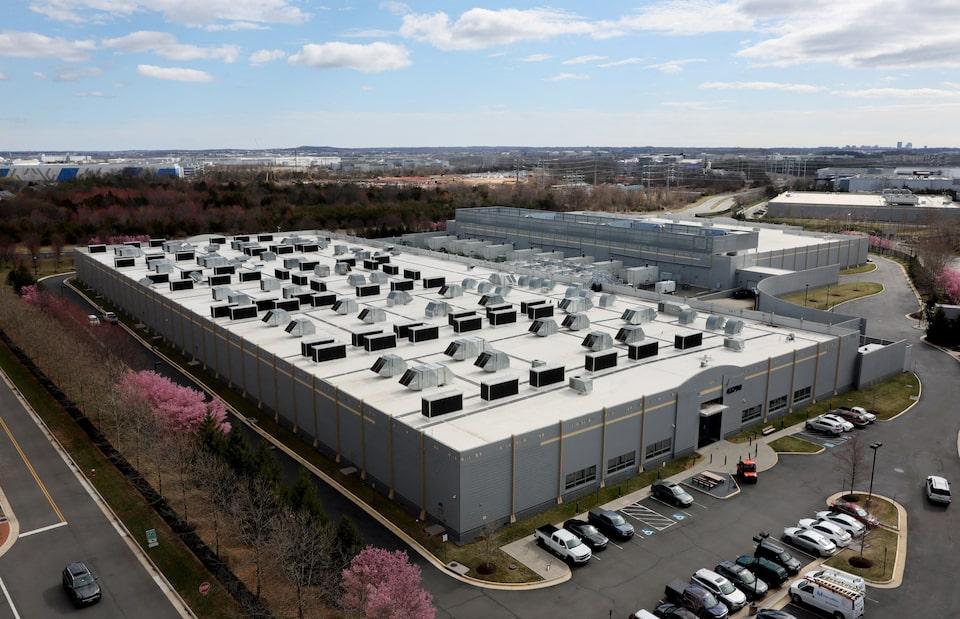
Trump and organizers announce some $90 bln in energy and data center investments in Pennsylvania The event comes as White House prepares executive orders to boost AI and data centers Big Tech is scrambling to access a strained national power grid to power the energy-guzzling data centers PITTSBURGH, Pennsylvania, July 15 (Reuters) - President Donald Trumpjoined executives from some of the largest U.S. tech and energy companies for a summit in Pittsburgh on Tuesday as the administration prepares more measures to power the U.S. expansion of artificial intelligence. Top economic rivals, the U.S. and China, are locked in a technological arms race over who can dominate AI as the technology takes on increasing importance everywhere from corporate boardrooms to the battlefield. Sign up here. The Energy and Innovation Summit at Carnegie Mellon University brought tech executives and officials from top energy and tech firms, including Meta (META.O) , opens new tab, Microsoft (MSFT.O) , opens new tab, Alphabet (GOOGL.O) , opens new tab and Exxon Mobil (XOM.N) , opens new tab, to discuss how to position the U.S. as a leader in AI. Trump and the summit's host, U.S. Senator Dave McCormick, a Republican ally from Pennsylvania, highlighted some $90 billion in artificial intelligence and energy investments in the state. "This is a really triumphant day for the people of the Commonwealth and for the United States of America, we're doing things that nobody ever thought possible," Trump told the attendees. Big Tech is scrambling to secure enough electricity to power the energy-guzzling data centers needed for its rapid expansion of artificial intelligence. Companies began announcing their plans early on Tuesday, with Google inking a $3 billion electricity deal and CoreWeave (CRWV.O) , opens new tab touting a $6 billion AI data center. Google said it secured as much as 3 gigawatts of U.S. hydropower in a deal between the tech firm and Brookfield Asset Management (BAM.TO) , opens new tab that includes initial 20-year power purchase agreements for electricity generated from two facilities in Pennsylvania. Asset management firm Blackstone's (BX.N) , opens new tab President Jon Gray also said they will announce on Tuesday a $25 billion investment in data centers and energy infrastructure in Pennsylvania. The CEOs that attended included Khaldoon Al-Mubarak of Abu Dhabi investment company Mubadala, Rene Haas of Arm (O9Ty.F) , opens new tab, Larry Fink of BlackRock (BLK.N) , opens new tab, Darren Woods of Exxon Mobil, Brendan Bechtel of Bechtel and Dario Amodei of Anthropic. The White House is considering executive actions in the coming weeks to make it easier for power-generating projects to connect to the grid and also provide federal land on which to build the data centers needed to expand AI technology, Reuters previously reported. The administration is also weighing streamlining permitting for data centers by creating a nationwide Clean Water Act permit, rather than requiring companies to seek permits on a state-by-state basis. Trump ordered his administration in January to produce an AI Action Plan that would make "America the world capital in artificial intelligence" and reduce regulatory barriers to its rapid expansion. That report, which includes input from the National Security Council, is due by July 23. Trump is set to mark that deadline with a major speech as part of an event titled “Winning the AI Race,” organized by White House AI and crypto czar David Sacks and his co-hosts on the All-In podcast, a White House official told Reuters. U.S. power demand is hitting record highs this year after nearly two decades of stagnation as AI and cloud computing data centers balloon in numbers and size across the country. The demand is also leading to unprecedented deals between the power industry and technology companies, including the attempted restart of the Three Mile Island nuclear power plant in Pennsylvania between Constellation Energy (CEG.O) , opens new tab and Microsoft. The surge has led to concerns about power shortages that threaten to raise electricity bills and increase the risk of blackouts, while slowing Big Tech in its global race against countries like China to dominate AI. https://www.reuters.com/sustainability/boards-policy-regulation/trump-joins-tech-energy-executives-amid-ai-push-2025-07-15/
2025-07-15 19:52
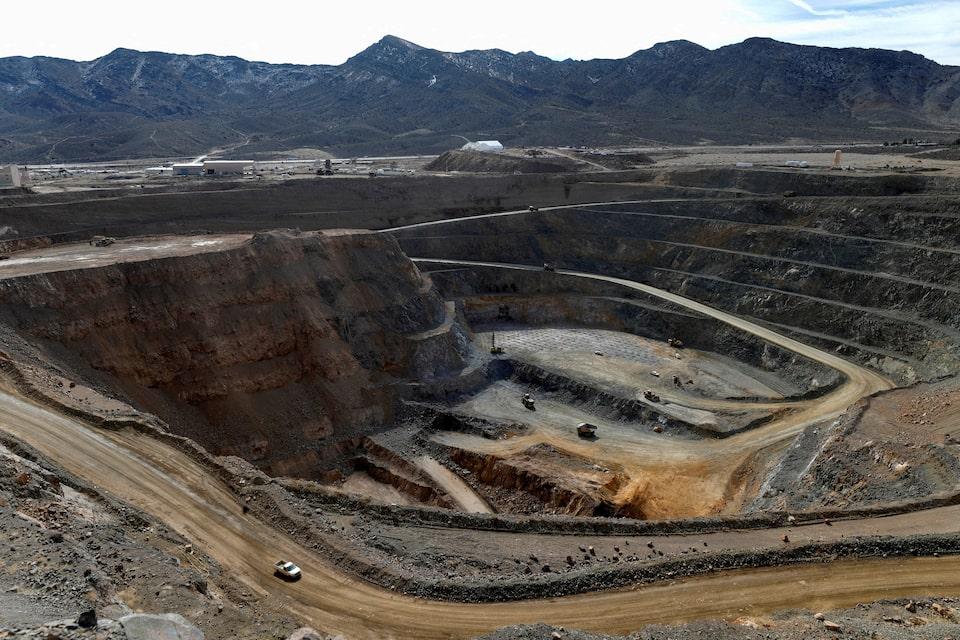
July 15 (Reuters) - The U.S. Department of Defense plans to continue investing in critical minerals projects to ensure a diverse American supply of the building blocks for weapons and many electronics, a defense official told Reuters on Tuesday. The Pentagon signed a multibillion-dollar deal last week to become the largest shareholder in rare earths producer MP Materials (MP.N) , opens new tab and also agreed to several financial backstop measures for the company. Sign up here. The move - which the defense official said reflected a desire to "share the risk" inherent in minerals projects - sparked questions across the mining sector about whether other companies could see similar investments from the U.S. military. The Pentagon has invested almost $540 million into critical minerals projects and "will continue such efforts in accordance with congressional appropriations and statutory authorities," the official said. "Rebuilding the critical minerals and rare earth magnet sectors of the U.S. industrial base won't happen overnight, but (the Pentagon) is taking immediate action to streamline processes and identify opportunities to strengthen critical minerals production," the official added. The U.S. government and military recognize that the country no longer can produce or process many critical minerals, but plans to "take the necessary time and precautions to produce critical minerals and associated products in a safe and responsible fashion," the official said, adding that approach was unlike China's. Chinese mining standards are considered to be lower than those in the United States. The MP deal structure reflects a "unique approach" by the U.S. government to "account for the difficulties in establishing and sustaining production of critical rare earth magnets in a market environment in which China controls much of the supply chain," the official said. The Pentagon investment in MP was undertaken via a Cold War-era law known as the Defense Production Act, as well as its Office of Strategic Capital, the official said. https://www.reuters.com/world/china/pentagon-keep-working-with-us-rare-earths-projects-us-defense-official-says-2025-07-15/
2025-07-15 19:49
July 15 (Reuters) - Pennsylvania electric and gas utility PPL (PPL.N) , opens new tab and Blackstone Infrastructure have formed a joint venture to build natural gas generation stations to power data centers under long-term energy services agreements, the companies said on Tuesday. "We're excited to leverage the powerful expertise that PPL and Blackstone Infrastructure possess to bring much-needed new dispatchable generation online in Pennsylvania to match new data center load," said PPL President and CEO Vincent Sorgi in a statement. Sign up here. The announcement came during the Pennsylvania Energy and Innovation Summit in Pittsburgh, where government, technology, and energy officials announced roughly $90 billion in investments in advancing data centers and other aspects of the artificial intelligence boom. U.S. President Donald Trump was expected to be in attendance. The joint venture, of which PPL owns 51% and Blackstone Infrastructure owns the remaining 49%, will seek to sign long-term energy service agreements with large data center companies, the companies said. No such agreements have been reached yet. "The joint venture is actively engaged with landowners, natural gas pipeline companies and turbine manufacturers, and has secured multiple land parcels to enable this new generation buildout," according to the statement. https://www.reuters.com/business/energy/blackstone-us-utility-ppl-build-gas-power-plants-jv-partnership-2025-07-15/

2025-07-15 19:40
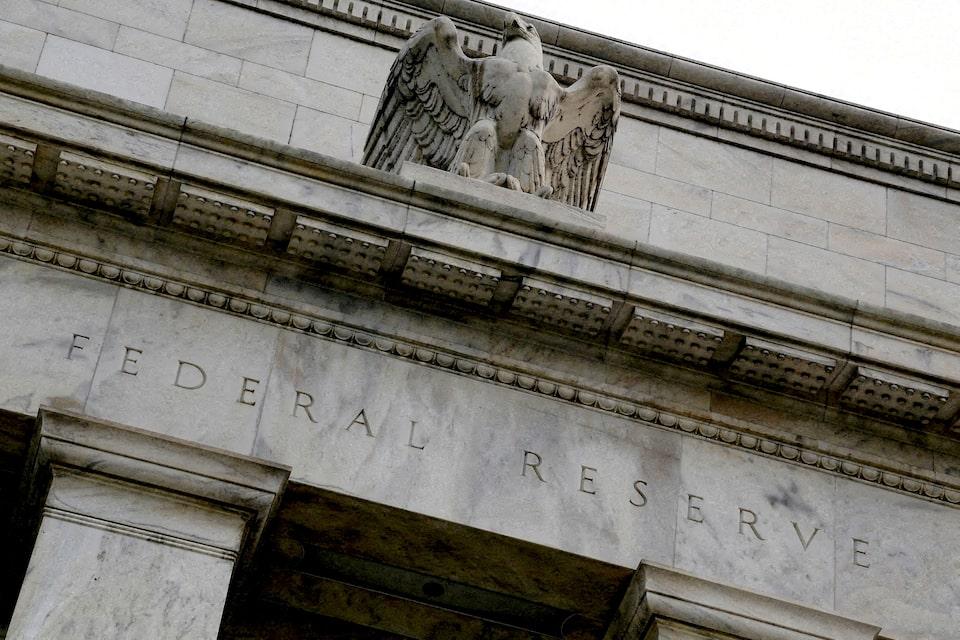
Fed chief Powell cited summer data as key in rates debate Some heavily imported categories showing price impacts Inflation gathered pace in June Trump says prices are low and Fed should cut WASHINGTON, July 15 (Reuters) - Rising prices across an array of goods from coffee to audio equipment to home furnishings pulled inflation higher in June in what economists see as evidence of the Trump administration's increasing import taxes passing through to consumers. Overall consumer prices rose 0.3% in June, a roughly 3.5% annual rate, after a 0.1% increase in May. Sign up here. Economists - and Fed officials - say they were expecting inflation to gather pace this summer as the lagged impact of tariffs gets passed along by businesses, and the June data suggest central bank policymakers in particular may remain reluctant to cut interest rates until more information is at hand. The tariff price shock could ultimately prove a temporary, one-time adjustment. But with the final tariff levels still being considered by President Donald Trump, and steeper levies threatened as of August 1, the inflation outlook remains unsettled. "Today's report showed that tariffs are beginning to bite," said Omair Sharif, head of Inflation Insights, "apparel prices rose, household furnishing prices jumped ... and recreation commodities increased." Those are heavily imported items and the increases were substantial. Prices for audio-video equipment rose 1.1% over the month and have risen 11.1% on a year over year basis, the largest jump ever in a category where globalization had generally meant steady or falling prices. It will likely strike a note of caution for the Fed, which has been facing almost daily criticism from Trump for not cutting interest rates, a step central bankers have been reluctant to take until it is clear where the tariffs will leave the U.S. economy. Yields on U.S. Treasury securities rose to their highest in about a month, and interest rate futures reflected growing uncertainty that the Fed would resume rate cuts in September, with a model from CME group showing that decision was seen a near toss-up after being the baseline expectation for the past month or so. In a speech in Washington Tuesday, Federal Reserve Bank of Boston President Susan Collins warned that she continues to expect the rise in import taxes to push up inflation while pushing down growth and employment. But she added strong balance sheets on both the business and household sides may help absorb the hit and lessen its impact. "The impact of tariffs may be lessened somewhat by an ability for firms to decrease profit margins and for consumers to continue spending, despite higher prices. As a result, the adverse impact of tariffs on labor market conditions and economic growth may be more limited," Collins said. Trump on social media said that consumer prices were "LOW" and repeated his call for the Fed to cut rates. The consumer price level was about 1.2% higher in June compared to December, the last full month before Trump started his second term. White House Press Secretary Karoline Leavitt said the fact that core inflation, which excludes food and energy prices, increased less than expected, "proves that President Trump is stabilizing inflation." Core inflation increased at a 2.9% annual rate in June, slightly below the 3% consensus forecast, but slightly faster than in May. Food and energy costs both increased, pushing headline inflation up to 2.7% from 2.4% the month before. "With increases in categories like household furnishings, recreation, and apparel, import levies are slowly filtering through," wrote Seema Shah, Chief Global Strategist at Principal Asset Management. "It would be wise for the Fed to remain on the sidelines for a few more months at least.” Investors still expect the Fed in September to cut a quarter of a percentage point from the current 4.25% to 4.5% benchmark interest rate maintained since December, but odds of a cut at the upcoming July 29-30 meeting are now below 5%. Powell had earlier pinpointed this summer as the time when the U.S. central bank will learn if inflation is responding to the tariffs applied on trading partners and various industrial sectors. So far the levies were having only a limited impact on inflation, but economists broadly have expected to see them eventually filter into retail prices. "We know there is a lag between implementation and the inflationary effect," said Gregory Daco, chief economist at EY-Parthenon. "Businesses manage imports using different processes ... We have not seen the full-blown effects of tariffs on CPI data ... I would expect to start to see more." CLAWING BACK TARIFF COSTS The June CPI data will likely leave the Personal Consumption Expenditures Price Index the Fed uses for its 2% inflation target well above that goal, with increased uncertainty now that Trump has threatened tariff levels of 30% or more on Mexico, Canada and the European Union, and more actions always possible. The PCE index outside food and energy rose at a 2.7% annual rate in May; recent Fed policymaker projections see it hitting 3.1% by the end of 2025; and the most recent round of tariffs threatened by Trump for August 1 could push it even higher. The new tariff rates "if fully passed through, would add about 0.4 percentage points to the PCE price level," Michael Feroli, chief U.S. economist at JP Morgan, estimated. "Given imperfect pass-through, margin compression, a more likely estimate is 0.2-0.3 points. We think this bolsters the case for the Fed to take a very cautious approach to rate cuts." Daco said there was already "divergence" beginning across a wide swath of goods where prices are rising faster than they did before Trump's initial rounds of tariffs. The price of household furnishings, for example, jumped a full percentage point in June. Prices of those products had been dropping, but reversed course in the spring. Other economists have pinpointed different items that could show where the new import taxes are starting to hit consumer prices. Sharif, the head of Inflation Insights, said the broad category referred to as "recreational commodities," which includes things like toys and audio and visual equipment that are often imported from China, bears watching -- and rose 0.8% in June, twice as fast as in the preceding two months. Outdoor equipment and tools are also items that are heavily imported, and while the pace of price increases had picked up in the spring it fell back in June to 0.2% versus 0.6% in May. Still, "tariff costs are strikingly visible in June’s CPI data," wrote Samuel Tombs, chief U.S. economist for Pantheon Macroeconomics. Excluding autos, prices for other non-food or energy goods rose at the fastest pace since June, 2022, when the Fed was still in a battle to lower pandemic-era inflation. "Prices rose especially sharply for goods which are primarily imported," with prices for appliances, sports equipment and toys all rising nearly 2% on the month, he said. https://www.reuters.com/world/us/feds-inflation-fears-may-start-be-realized-with-june-cpi-data-2025-07-15/
2025-07-15 19:09
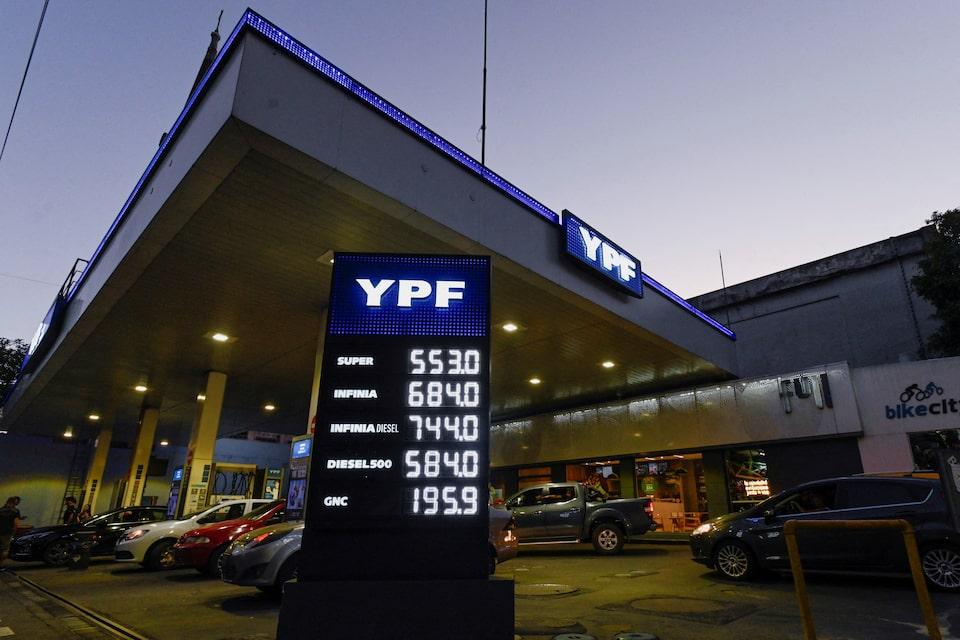
NEW YORK, July 15 (Reuters) - A U.S. appeals court on Tuesday put on temporary hold a judge's order that Argentina turn over its 51% stake in oil and gas company YPF (YPFDm.BA) , opens new tab to partially satisfy a $16.1 billion judgment. The 2nd U.S. Circuit Court of Appeals in Manhattan gave Petersen Energia Inversora and Eton Park Capital Management, which won the judgment, until July 17 to oppose Argentina's bid for a longer stay while the country appeals the turnover. Sign up here. Argentina has until July 22 to reply, and the matter will be reviewed by "the next available" three-judge panel, the appeals court said. The dispute stemmed from Argentina's 2012 seizure of the YPF stake from Spain's Repsol (REP.MC) , opens new tab without making a tender offer to Petersen and Eton Park, which had been minority shareholders. Those shareholders are represented by litigation funder Burford Capital (BURF.L) , opens new tab, which has said it expected to receive 35% and 73% of Petersen's and Eton Park's respective damages. Argentina has warned its economy could be destabilized if it gave up its controlling stake in YPF, the country's largest energy company. The country had faced a July 14 deadline for the turnover, but U.S. District Judge Loretta Preska in Manhattan agreed to delay enforcement so Argentina could seek relief from the appeals court. https://www.reuters.com/business/energy/us-appeals-court-puts-argentinas-51-ypf-stake-turnover-temporary-hold-2025-07-15/