2025-07-15 11:01
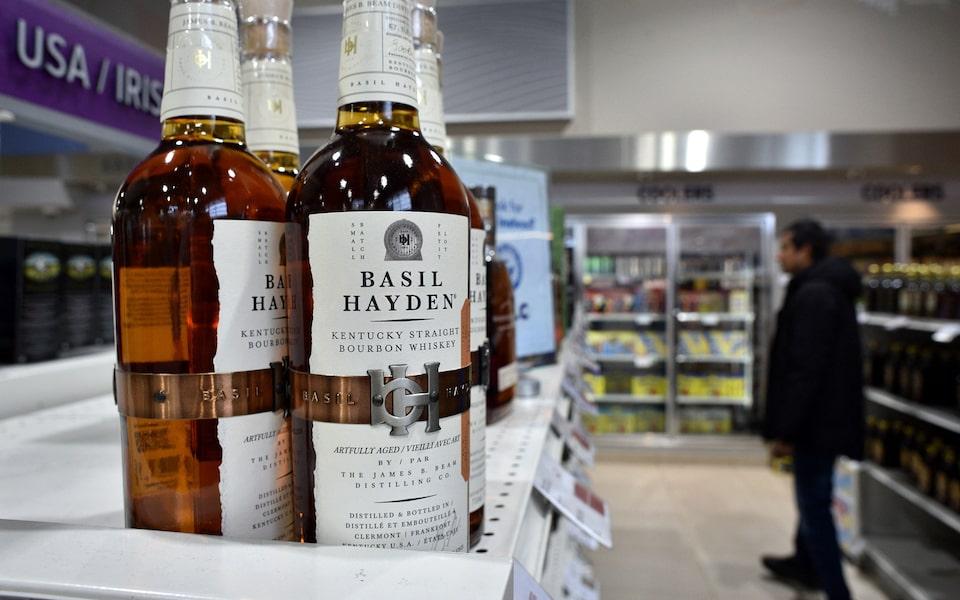
US had nearly $18 billion trade gap with Indonesia last year Trump says tariff letters to smaller countries coming soon European Commission targets $84 billion worth of US imports EU seeking deal but preparing retaliation, trade chief says WASHINGTON/BRUSSELS, July 15 (Reuters) - President Donald Trump on Tuesday said the U.S. would impose a 19% tariff on goods from Indonesia under a new agreement with the Southeast Asian country and more deals were in the works as he continued to press for what he views as better terms with trading partners and ways to shrink a huge U.S. trade deficit. The pact with the relatively minor U.S. trading partner is among the handful struck so far by the Trump administration ahead of an August 1 deadline for tariffs on most U.S. imports to rise again. The accord came as the top U.S. trading partner - the European Union - readied retaliatory measures should talks with Washington fail. Sign up here. As that deadline approached, negotiations were under way with other nations eager to avoid more U.S. levies beyond a baseline 10% on most goods that has been in place since April. Trump's roll-out of the policies has often been chaotic. His moves have upended decades of negotiated reductions in global trade barriers and roiled international financial markets and economic activity along the way. Based on Trump tariff announcements through Sunday, Yale Budget Lab estimated the U.S. effective average tariff rates will rise to 20.6% from between 2% and 3% before Trump's return to the White House in January. Consumption shifts would bring the rate down to 19.7%, but it's still the highest since 1933. Trump outlined an Indonesia deal similar to a pact struck recently with Vietnam, with a flat tariff on exports to the U.S. roughly double the current 10% and no levies on U.S. exports going there. It also included a penalty rate for so-called transhipments of goods from China via Indonesia and a commitment to buy some U.S. goods. "They are going to pay 19% and we are going to pay nothing ... we will have full access into Indonesia, and we have a couple of those deals that are going to be announced," Trump said outside the Oval Office. Trump later announced on his Truth Social platform that Indonesia had agreed to buy $15 billion of U.S. energy products, $4.5 billion of American farm products and 50 Boeing (BA.N) , opens new tab jets, though no time frame was specified. TRUMP: INDIA TALKS MOVING SAME WAY Indonesia's total trade with the U.S. - totalling just under $40 billion in 2024 - does not rank in the top 15, but it has been growing. U.S. exports to Indonesia rose 3.7% last year, while imports from there were up 4.8%, leaving the U.S. with a goods trade deficit of nearly $18 billion. The top U.S. import categories from Indonesia, according to U.S. Census Bureau data from the International Trade Centre's TradeMap tool, last year were palm oil, electronics equipment including data routers and switches, footwear, car tires, natural rubber and frozen shrimp. Susiwijono Moegiarso, a senior official with Indonesia's Coordinating Ministry for Economic Affairs, told Reuters in a text message: "We are preparing a joint statement between U.S. and Indonesia that will explain the size of reciprocal tariff for Indonesia including the tariff deal, non-tariff and commercial arrangements. We will inform (the public) soon." Trump had threatened the country with a 32% tariff rate starting August 1 in a letter sent to its president last week. He sent similar letters to about two dozen trading partners this month, including Canada, Japan and Brazil, laying out tariff rates ranging from 20% to 50%, plus a 50% tariff on copper. Speaking in Pittsburgh on Tuesday, Trump said he favored blanket tariffs over complicated negotiations, but his Treasury Secretary Scott Bessent and Commerce Secretary Howard Lutnick were keen to land more trade agreements. Upon his arrival back in Washington, Trump told reporters that letters would be going out soon for many smaller countries, suggesting they would face a tariff of "a little over 10%." The August 1 deadline gives targeted countries time to negotiate about lower tariff rates. Some economists have also noted Trump's pattern of backing off his tariff threats. Since launching his tariff policy, Trump has clinched only a few deals, falling short of earlier promises to land "90 deals in 90 days." So far, framework agreements have been reached with the United Kingdom and Vietnam, and an interim deal has been struck with China to forestall the steepest of Trump's tariffs while negotiations continue between Washington and Beijing. Trump said talks with India were moving "along that same line," adding, "We're going to have access to India. And you have to understand, we had no access into any of these countries. Our people couldn't go in. And now we're getting access because of what we're doing with the tariffs." EU READIES RETALIATION The breakthrough with Indonesia came as the European Commission, which oversees trade for the EU, prepared to target 72 billion euros ($84.1 billion) worth of U.S. goods - from Boeing (BA.N) , opens new tab aircraft and bourbon whiskey to cars - for possible tariffs if trade talks with Washington fail. Trump is threatening a 30% tariff on imports from the EU from August 1, a level European officials say is unacceptable and would end normal trade between two of the world's largest markets. The list, sent to EU member states and seen by Reuters on Tuesday, pre-dated Trump's move over the weekend to ramp up pressure on the 27-nation bloc and responded instead to U.S. duties on cars and car parts and a 10% baseline tariff. The package also covers chemicals, medical devices, electrical and precision equipment as well as agriculture and food products - a range of fruits and vegetables, along with wine, beer and spirits - valued at 6.35 billion euros. https://www.reuters.com/business/autos-transportation/us-planes-cars-drinks-eu-list-potential-tariffs-2025-07-15/
2025-07-15 10:57
July 15 (Reuters) - India's AWL Agri Business (AWLA.NS) , opens new tab, previously known as Adani Wilmar, reported a nearly 25% fall in quarterly profit on Tuesday, as higher prices of branded palm oil led consumers to opt for cheaper alternatives. Indian consumers operating on tight budgets due to slow wage growth have been increasingly shunning large brands in response to price increases. Sign up here. AWL, which makes the Fortune brand of cooking oil, reported a consolidated net profit of 2.36 billion rupees ($27.51 million) for the first quarter ended June 30. Sales volumes in its mainstay edible oil business, which accounted for four-fifths of its topline, dropped 4% on slow palm oil sales, even as higher prices helped push revenue higher. Volumes in the segment "remained under pressure, largely due to sluggish palm oil sales driven by its relatively higher prices," AWL said, adding it lost market share during the quarter. Overall revenue rose 21% to 170.59 billion rupees. AWL's food business, which sells staples such as rice and pulses, posted a 5% fall in volumes, excluding a one-off impact, as wheat flour sales struggled due to soft demand, stiff local competition and higher prices. Shares fell 2.2% post-results. In the coming quarters, AWL expects sales volumes to rebound, with palm oil prices stabilising and inflation slowing to a more than six-year low last month. "As the inflation comes down ... food is the first product on which consumers are a little more likely to spend liberally," CEO Angshu Mallick told Reuters, adding consumers would now buy more branded foods, including tea and bread. Rival Marico (MRCO.NS) , opens new tab, which sells the Saffola brand of cooking oil, is yet to report results. It said in an update earlier this month that quarterly revenue would grow in the low-20s percentage range on improving rural demand. ($1 = 85.7870 Indian rupees) https://www.reuters.com/world/india/indias-awl-agri-business-posts-profit-fall-muted-consumer-demand-2025-07-15/

2025-07-15 10:51
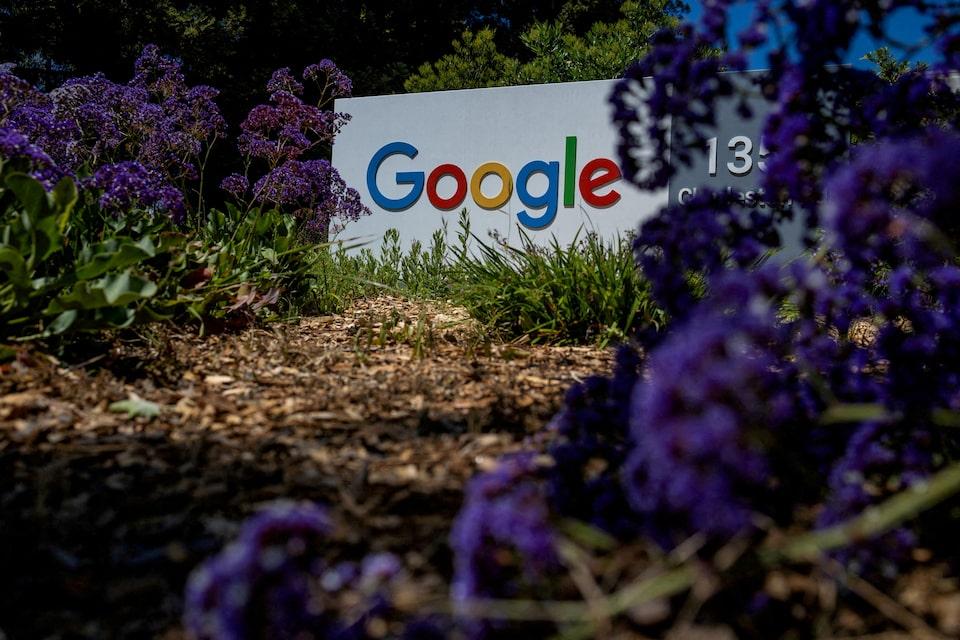
NEW YORK, July 15 (Reuters) - Google has agreed to secure as much as 3 gigawatts of U.S. hydropower in the world's largest corporate clean power pact for hydroelectricity, the company said on Tuesday, as Big Tech pursues the expansion of energy-hungry data centers. The deal between Google and Brookfield Asset Management (BAM.TO) , opens new tab includes initial 20-year power purchase agreements, totaling $3 billion, for electricity generated from two hydropower facilities in Pennsylvania. Sign up here. The tech giant will also invest $25 billion in data centers across Pennsylvania and neighboring states over the next two years, Semafor reported on Tuesday. The technology industry is intensifying the hunt for massive amounts of clean electricity to power data centers needed for artificial intelligence and cloud computing, which has driven U.S. power consumption to record highs after nearly two decades of stagnation. Ruth Porat, president and chief investment officer at Google parent company Alphabet, is expected to discuss the news at an AI summit in Pittsburgh. U.S. President Donald Trump is scheduled to attend the event, where $70 billion in AI and energy investments are expected to be announced. "This collaboration with Brookfield is a significant step forward, ensuring clean energy supply in the PJM region where we operate," Amanda Peterson Corio, Google's head of data center energy, said in a statement. Over roughly the last year, Google has struck several first-of-a-kind power purchase agreements, including for carbon-free geothermal energy and advanced nuclear. The company is also working with the country's largest electricity grid operator, PJM Interconnection, to use AI to speed up the process of hooking up new power supplies to the grid. In the latest deal, Google said it has signed an initial framework agreement with Brookfield, owner of Brookfield Renewable Partners (BEP.N) , opens new tab, which develops and operates renewable energy plants. Its two hydropower sites in Pennsylvania will be upgraded and relicensed as part of the arrangement, the companies said. Google said it plans to expand the deal eventually beyond those sites to other parts of the Mid-Atlantic and Midwest. https://www.reuters.com/sustainability/boards-policy-regulation/google-inks-3-billion-us-hydropower-deal-largest-clean-energy-agreement-its-kind-2025-07-15/
2025-07-15 10:06
MUMBAI, July 15(Reuters) - The Indian rupee edged up on Tuesday, tracking gains in most Asian peers, as the dollar index dipped ahead of a key U.S. inflation reading, which is expected to provide cues on the Federal Reserve's monetary direction. The rupee closed at 85.81 against the U.S. dollar, up 0.2% on the day. Sign up here. While the local currency fleetingly fell below the 86 handle in the previous session, its quick recovery also prompted short wagers on the currency to be liquidated, adding to its upward momentum, traders said. The rupee's range-bound behaviour over the last two weeks has also sparked interest in selling short-term volatility among large corporates and interbank participants, bankers said. The dollar index was down 0.2% at 97.9, with most Asian currencies rising, while the offshore Chinese yuan was little changed. "We expect INR to trade with a strengthening bias in the near term, unless India gets hit by higher tariffs compared to the region," ING said in a note. India is among the few large U.S. trading partners yet to receive a letter from the White House on a country-specific tariff rate. Negotiations between the two nations for a trade deal are currently ongoing. ING expects the rupee to trade at 86.50 against the U.S. dollar in 6 months and decline to 88 in a year's time. The rupee had hit its all-time low of 87.95 in February this year. Data released on Tuesday showed that India's merchandise trade deficit (INTRD=ECI) , opens new tab in June was narrower-than-expected at $18.78 billion. Meanwhile, dollar-rupee forward premiums ticked up ahead of the release of U.S. consumer inflation data later in the day. Economists polled by Reuters have forecast the month-on-month core U.S. CPI to rise 0.3% in June, up from 0.1% in May. The odds of a rate cut by the Federal Reserve in July are under 5%, while September odds are a tad above 60%, as per CME's FedWatch tool. https://www.reuters.com/world/india/rupee-creeps-higher-alongside-most-asian-peers-us-cpi-print-focus-2025-07-15/

2025-07-15 09:54
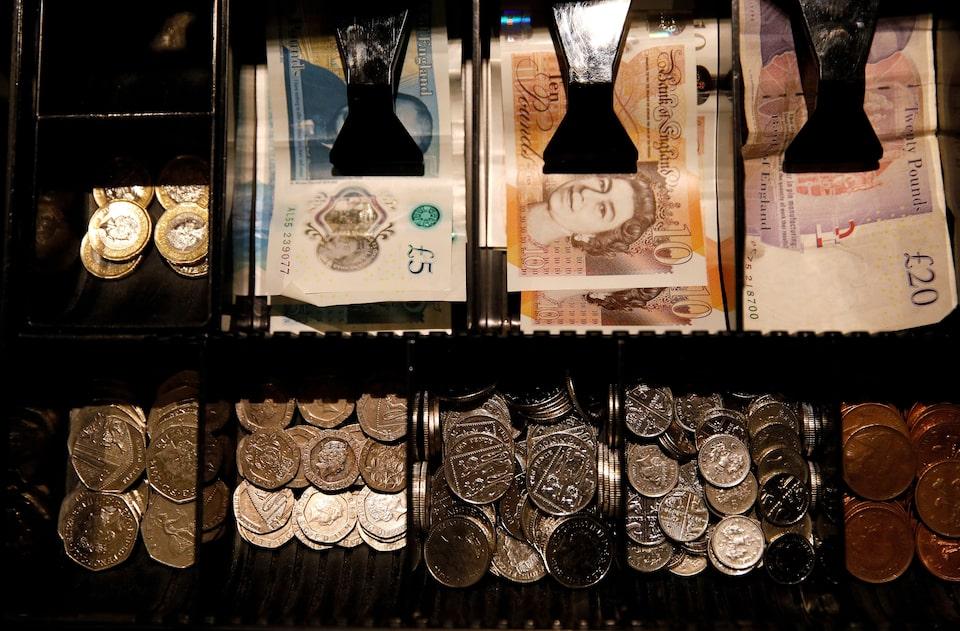
LONDON, July 15 (Reuters) - The pound steadied on Tuesday, following the previous day's slide, in line with a more upbeat tone across the broader markets, ahead of U.S. inflation data and a speech by Bank of England Governor Andrew Bailey later on. Sterling was last at $1.3435, little changed on the day and was similarly steady against the euro , which traded at 86.92 pence. Sign up here. Bailey will give his annual "Mansion House" address to London's financial sector on Tuesday, along with finance minister Rachel Reeves. The pound is still up 7.6% against the dollar this year, but it has lost over 5% in value against the euro, set for its weakest annual performance since 2022, when UK markets were hit by a crisis triggered by an interim budget from former Prime Minister Liz Truss. Losses against the euro have accelerated in recent weeks. In the last two months, sterling has lost over 3.5%. Investor concern over the outlook for the UK economy, which contracted unexpectedly for a second month in a row in May, is building, especially in light of the shrinking fiscal headroom that Reeves has after the government watered down a landmark reform to welfare benefits and passed a bill that blew a hole in its finances. "That round of cuts left a 5 billion-pound ($6.72 billion) hole in public finances, one which the government seems unconfident in fixing with more cuts. All of this means that the pound is under pressure on the fiscal credibility front, not Liz Truss by any means, but a serious drag on sterling's value," Caxton FX strategist David Stritch said. Money markets show traders are looking for at least two quarter-point rate cuts this year from 4.25%, which implies rates at 3.6% by December. Just two months ago, markets showed the implied rate for December was closer to 4%. "Expect Governor Bailey to reiterate a position – similar to the Fed – that faster easing is possible if the labour market deteriorates," ING strategist Chris Turner said in a note. Investors are waiting for U.S. consumer inflation later on Tuesday that could be key in setting expectations for where U.S. rates will head over the coming Federal Reserve meetings. There is also UK consumer inflation on Wednesday that is expected to show price pressures continued to accelerate in June. ($1 = 0.7437 pounds) https://www.reuters.com/world/uk/pound-edges-up-ahead-us-data-bailey-speech-2025-07-15/
2025-07-15 09:50
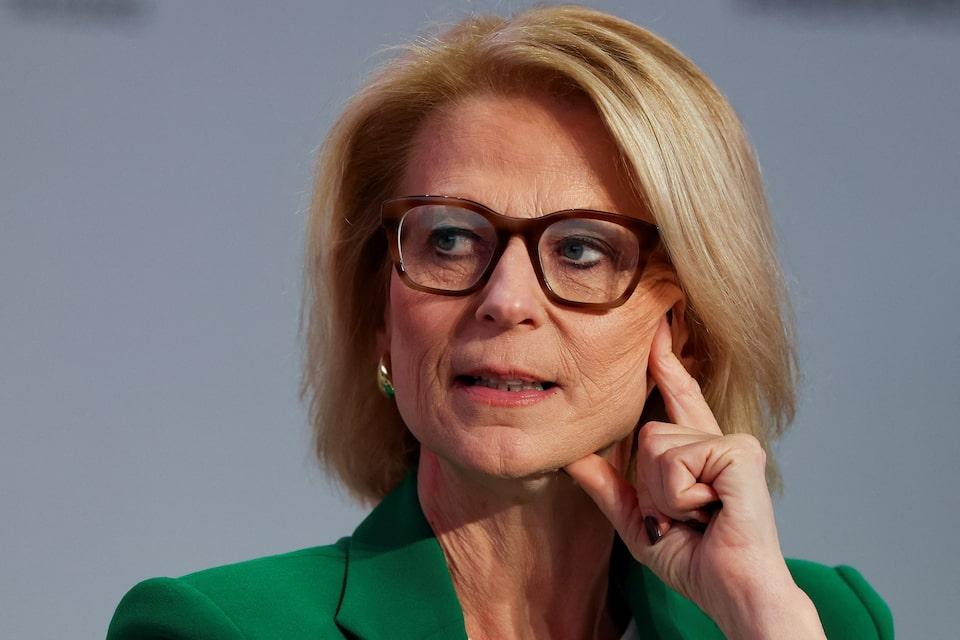
STOCKHOLM, July 15 (Reuters) - A tariff level of 10% is the best that the European Union can expect from negotiations with the United States, Sweden's Finance Minister Elisabeth Svantesson said on Tuesday. "We have to reckon on 10% in any case. That's the lowest we can expect," Svantesson told reporters. Sign up here. Svantesson said uncertainty about tariffs as well as the war in Ukraine and the conflict in the Middle East meant that Sweden's economy remained weak. In June, the government cut its forecast for growth this year to 0.9% - half the 1.8% it expected in May. Nevertheless, Svantesson said the economy was fundamentally strong and robust government finances meant Sweden could easily finance its rapid increase in defence spending, though there would be less room for other reforms in the autumn budget. Think tank NIER reckons the government has room for 34 billion Swedish crowns ($3.54 billion) in unfinanced measures in the upcoming budget bill, which will be published in September. Svantesson said the budget would focus on strengthening households and getting more people into work. "It is not the time for tax hikes, quite the opposite in the current situation," she said. ($1 = 9.6162 Swedish crowns) https://www.reuters.com/markets/europe/swedish-finance-minister-says-10-us-tariffs-lowest-eu-can-expect-2025-07-15/