2025-07-15 05:39
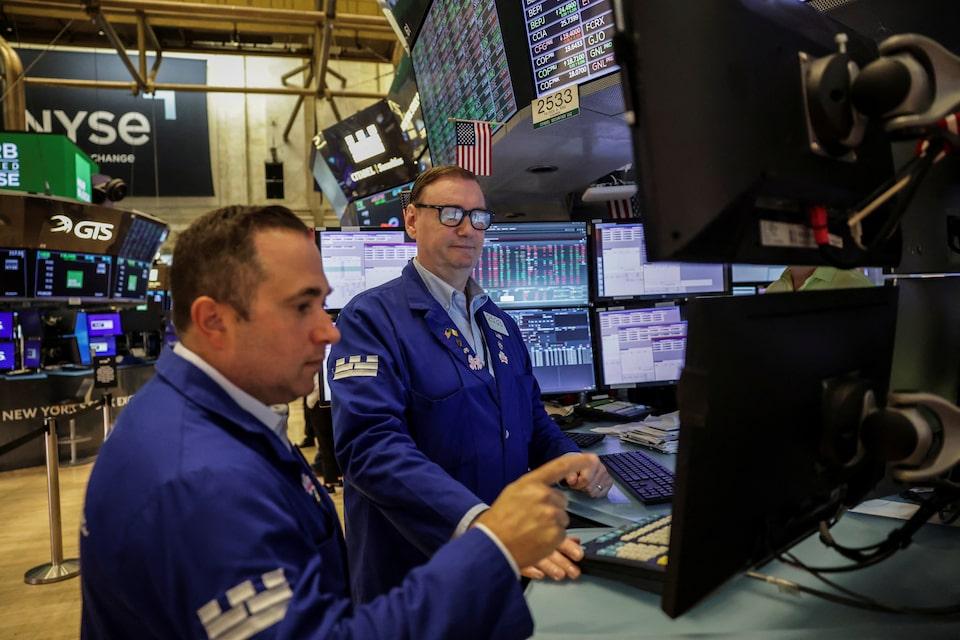
MSCI all country index loses ground after hitting record US inflation higher in June but broadly in line with expectations Dollar rises along with US Treasury yields JPMorgan, Citi results beat expectations, but while Citi rallies JPM drops NEW YORK/LONDON, July 15 (Reuters) - MSCI's global equities index lost ground on Tuesday after touching a record high, while U.S. Treasury yields hit their highest level in more than a month, as investors digested a slight rise in U.S. inflation and took a mixed view of quarterly results from big banks. The latest economic data showed that U.S. consumer prices increased 0.3% in June, in line with forecasts, but the largest gain since January. Prices rose across goods from coffee to audio equipment to home furnishings in what economists saw as evidence the Trump administration's increasing import taxes are being passed through to consumers. Sign up here. The U.S. Federal Reserve has been keeping interest rates steady as it waited for data indicating the impact from tariffs. But after Tuesday's data, traders stuck to their bets that the Fed is more likely than not to cut rates in September, continuing to price around a 60% chance of a move after the data. "You do see tariffs starting to leak into the data. The question is, does it leak even more so in the future and cause inflation to rise," and keep the Fed on hold with rate cuts, said Brent Schutte, chief investment officer of Northwestern Mutual Wealth Management Company. And with the potential for the Trump administration to raise tariffs further in the coming months, the worry is that inflation rises further, according to Schutte. "The more that we layer on, potentially the more impact it has overall," he said. Investors will be carefully monitoring producer price data due on Wednesday, and retail sales data due to be released on Thursday, for signs of an impact from tariffs, according to Schutte. On Tuesday afternoon, however, Boston Federal Reserve President Susan Collins said she is in no rush to change the U.S. central bank's benchmark interest rate amid economic uncertainty, as data suggest that while import tariffs will drive up , it is possible the overall impact may not be as bad as once feared. On Wall Street the Dow Jones Industrial Average (.DJI) , opens new tab fell 436.36 points, or 0.98%, to 44,023.29, the S&P 500 (.SPX) , opens new tab fell 24.80 points, or 0.40%, to 6,243.76 and the Nasdaq Composite (.IXIC) , opens new tab rose 37.47 points, or 0.18%, to 20,677.80. Tech-heavy Nasdaq was boosted by chip stocks including heavyweight Nvidia (NVDA.O) , opens new tab which rallied 4% on Tuesday after the AI chip leader it will resume sales of its H20 chips to China. But MSCI's gauge of stocks across the globe (.MIWD00000PUS) , opens new tab fell 3.21 points, or 0.35%, to 920.25. In Europe, the STOXX 600 (.STOXX) , opens new tab index closed down 0.37%. Also on Tuesday, investors processed the second-quarter earnings season kick-off. Results from JPMorgan Chase (JPM.N) , opens new tab and Citigroup (C.N) , opens new tab beat expectations, but were met with a mixed response. JPMorgan ended down 0.74%, while Citi shares rallied 3.7%. Wells Fargo(WFC.N) , opens new tab shares ended down 5.5% as it cut its 2025 net interest income guidance even as it beat second-quarter profit expectations. S&P 500 profits are expected to rise 5.8% year-over-year, according to LSEG data. The outlook has dimmed since the early April forecast of 10.2% growth, before President Donald Trump launched his trade war. TRADE WAR STILL IN FOCUS U.S. Treasury yields rose after initially slipping following the inflation data, with 30-year yields edging above 5% and hitting their highest level since May 29. The yield on benchmark U.S. 10-year notes rose 6 basis points to 4.487%, from 4.427% late on Monday. The benchmark yield had hit its highest level since June 11. The 30-year bond yield rose 4.3 basis points to 5.0156%. And the 2-year note yield, which typically moves in step with interest rate expectations for the Federal Reserve, rose 5.6 basis points to 3.955%, from 3.898% late on Monday. Trade was also still a major focus after Trump threatened over the weekend to impose 30% duties on the European Union and Mexico from August 1 - above the 20% on the EU he had initially proposed in April. However, Trump said on Monday he was open to further negotiations. Along with tariffs and inflation, investors were focused on the U.S. fiscal and debt outlook as well as the pressure from Trump on Fed Chair Jerome Powell to cut rates, according to Steve Englander, head of global G10 FX research and North America macro strategy at Standard Chartered Bank's New York branch. “There are a lot of balls in the air. It's just that it's unclear how heavy each one of them is, and which one is going to have the biggest impact when it lands,” Englander said. Meanwhile in currencies, the dollar reached a 15-week high against the Japanese yen , strengthening 0.78% to 148.85 yen. The dollar index , which measures the greenback against a basket of currencies including the yen and the euro, rose 0.52% to 98.63. The euro was down 0.52% at $1.1602 while sterling weakened 0.34% to $1.3379. Bitcoin fell 3.05% to $116,556.37 after hitting a record in Monday's session. The cryptocurrency was already lower when the fate of long-awaited legislation in the U.S. Congress was cast into doubt as a procedural vote to consider the measures, aimed at providing clarity to the digital asset industry, was shot down by lawmakers from both parties. Oil prices were lower on Tuesday after Trump's for Russia to end the war in Ukraine and avoid sanctions eased concerns about any immediate supply disruptions. U.S. crude settled down 0.69% or 46 cents at $66.52 a barrel while Brent settled at $68.71 per barrel, down 0.72% or 50 cents on the day. Gold prices inched lower on Tuesday as market participants awaited tariff updates, while the inflation report showed a widely expected increase in U.S. consumer prices in June. Spot gold fell 0.46% to $3,328.07 an ounce. U.S. gold futures fell 0.64% to $3,330.10 an ounce. https://www.reuters.com/world/china/global-markets-wrapup-1-2025-07-15/
2025-07-15 05:01
NAPERVILLE, Illinois, July 14 (Reuters) - While the United States appears well on its way to a record corn crop, the top exporter is not completely immune to yield barriers from here, particularly when it comes to temperatures over the next several weeks. However, Crop Watch observations thus far demonstrate that risks have already emerged for soybeans. Many of the later-planted fields are still trying to establish footing, and all 11 Crop Watch fields are vulnerable to next month’s weather conditions. Sign up here. Weather complaints among the Crop Watch producers have been nearly nonexistent for the past few weeks, and that mostly held true last week. More than 4 inches (10.2 centimeters) of rain fell in Nebraska and western Iowa, keeping soils overly saturated. That storm in western Iowa snapped 30% of corn plants in the Crop Watch field, reducing yield potential. Events like these can chip away at the national yield if they persist, especially as the corn moves toward maturity. A poll I posted on X , opens new tab on Friday suggested that the corn market is trading a yield around 184 bushels per acre, well above USDA's trendline of 181, which would be a record. The difference between those two yields is 260 million bushels, impactful for the balance sheet. Another very small concern would be the cooler temperatures expected for this week, especially in northern areas. Heat is needed to push both crops along at this point, especially in North Dakota where corn and beans got a late, wet start. However, producers are combating yield risks despite low commodity prices. They are putting money into this year’s crop, such as applying fungicides and herbicides, especially with yield prospects looking as strong as they do. STEADY SCORES Average Crop Watch corn yield potential held at 4.07 this week, with slight bumps in western Illinois and South Dakota offsetting the western Iowa decline. Average soybean yield held at 3.48 with a boost in North Dakota balancing a reduction in Kansas. That corn score is on the upper end of ones seen at this point in previous years, but bean yields are relatively low. Average Crop Watch corn conditions held at 4.11 this week, with bumps in North Dakota and Nebraska offsetting the decline in western Iowa. That snapped a six-week streak of weekly corn health improvements, though no decline has been seen yet this year. Average soybean conditions dropped slightly to 3.5 from 3.52 a week ago. Scores dropped in Kansas, but slight improvements were recorded in southeastern Illinois and both Dakotas. The 11 Crop Watch producers have been assigning condition scores to their fields each week on a 1-to-5 scale, similar to the U.S. Department of Agriculture’s system where 1 is very poor, 3 is average and 5 is excellent. Last week they added yield scores, also on a 1-to-5 scale. These reflect producers’ best guesses of current yield potential where 3 is around farm average, 4 is solidly above average and 5 is among the best crops ever. Condition and yield scores may differ since conditions are a visual assessment that do not incorporate yield assumptions. The week ahead is set to feature adequate moisture for most of the Corn Belt, accompanied by mild-to-cool temperatures. This should be favorable for the Crop Watch corn fields, which are approaching the halfway point on pollination. Producers would be concerned if overnight temperatures turned too warm later this month and into August as this can limit grain-filling on the corn. A very extreme version of that was observed in 2010, where early forecasts for record corn yields were slashed in the subsequent months. Current long-range forecasts suggest that warmer-than-average temperatures could prevail in late July and early August for the central, southern and eastern Corn Belt, while the north and far west could be in for a cooler run. Karen Braun is a market analyst for Reuters. Views expressed above are her own. Enjoying this column? Check out Reuters Open Interest (ROI) , opens new tab, your essential new source for global financial commentary. ROI delivers thought-provoking, data-driven analysis of everything from swap rates to soybeans. Markets are moving faster than ever. ROI , opens new tab can help you keep up. Follow ROI on LinkedIn , opens new tab and X. , opens new tab https://www.reuters.com/markets/commodities/crop-watch-yield-threats-still-possible-despite-near-ideal-season-2025-07-14/

2025-07-15 04:32
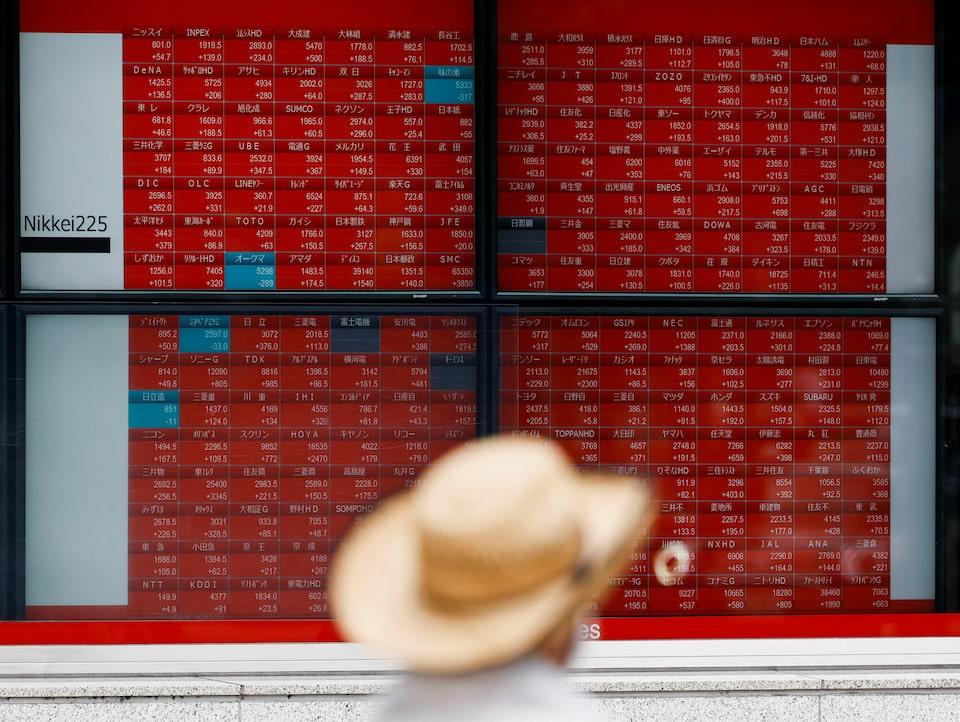
A look at the day ahead in European and global markets from Rocky Swift With markets largely inured to an ever-changing tariff picture, the spotlight turns to Wall Street earnings for clues on how the trade drama is affecting corporate bottom lines. Sign up here. JPMorgan Chase (JPM.N) , opens new tab, Wells Fargo (WFC.N) , opens new tab and Citigroup (C.N) , opens new tab are among heavyweights reporting second-quarter results today. Profits for S&P 500 companies in the second quarter are expected to rise 5.8%, according to LSEG data, down from a forecast of 10.2% on April 1, before U.S. President Donald Trump launched his trade war. Investors are also waiting for U.S. consumer price data for June, looking for any sign of price pressure from tariffs or hints on policy moves by the Federal Reserve. But the main Fed move Trump is gunning for is an early exit by Chairman Jerome Powell, who hasn't given in to the president's wish for "rocket fuel" rate cuts. Bond markets are on edge about whether an investigation into renovations of the central bank's headquarters will serve as fodder to oust Powell. Asian shares and Nasdaq futures got a bounce after Nvidia (NVDA.O) , opens new tab, the $4 trillion behemoth at the forefront of the artificial intelligence investment boom, said it will resume sales of its H20 chips to China. Nvidia CEO Jensen Huang will attend the opening ceremony of China's international supply chain expo on Wednesday, Chinese state TV said on Tuesday. Stock futures in Europe and the broader U.S. market pointed to slight gains at their openings. Key developments that could influence markets on Tuesday: - Germany's ZEW Economic Sentiment for July - Euro zone industrial production data for May - U.S. core consumer price index (CPI) for June - Canada CPI, housing starts for June - U.S. earnings: JPMorgan Chase, Wells Fargo, Citigroup, BlackRock (BLK.N) , opens new tab Trying to keep up with the latest tariff news? Our new daily news digest offers a rundown of the top market-moving headlines impacting global trade. Sign up for Tariff Watch here. https://www.reuters.com/business/finance/global-markets-view-europe-2025-07-15/
2025-07-15 04:06
AI investments drive 64.1% of total deal value in H1 2025 VC fundraising declines 33.7% year-over-year, faces longer timelines Exit activity up 40%, optimism for IPOs and M&A in H2 July 15 (Reuters) - U.S. startup funding surged 75.6% in the first half of 2025, thanks to the continued AI boom, putting it on track for its second-best year ever, even as venture capital firms struggled to raise money, a report from PitchBook on Tuesday showed. Startup funding in the first six months of 2025 jumped to $162.8 billion, marking the strongest performance since the same period in 2021 — the historic peak for venture capital activity. Sign up here. That previous surge came during the era of the Zero Interest Rate Policy (ZIRP), when central banks slashed rates to stimulate economic activity during the COVID-19 pandemic, sending capital into higher-risk assets including venture capital. This year’s boom has been driven largely by major AI investments and bold bets from big tech companies, a wave of activity set off by the debut of ChatGPT in late 2022. In the past three months alone, $69.9 billion was invested in U.S. startups. Standout deals included OpenAI’s $40 billion round and Meta’s (META.O) , opens new tab $14.3 billion purchase of a stake in Scale AI. Other AI deals exceeding $1 billion in the second quarter included significant investments in Safe Superintelligence, Thinking Machine Labs, Anduril, and Grammarly. These deals underscore sustained investor conviction in the AI sector, which accounted for 64.1% of the total deal value and 35.6% of the deal count in the first half of the year. "I think it's downstream of the fact that OpenAI and Anthropic continue to grow at unbelievable rates," said Davis Treybig, partner at VC firm Innovation Endeavors. "If there's even a chance you could see that sort of progress in other domains, whether it's robotics, protein folding models, world models or video models, then there's a lot of people who are going to want to invest a lot of money." HARDER FOR VC FUNDS In contrast, U.S. venture capital fundraising continued to face headwinds, with just $26.6 billion raised across 238 funds in the first half of the year. This subdued environment represents a 33.7% year-over-year decline in capital raised, extending the downward trend from 2024. It is also taking fund managers longer to close new vehicles, with the median time stretching to 15.3 months by the second quarter of 2025 - the longest in over a decade, data shows. The disconnection from the startup market reflects concerns from limited partners on the asset class due to recent underperformance and liquidity constraints. A rebound in exit activity, including IPOs and M&A, has brought a sense of optimism for the remainder of the year. Exit activity in the second quarter was up 40% from last year, as a loosening antitrust environment and a thawing IPO market boost confidence. Sectors aligned with President Donald Trump’s priorities such as AI, national security, defense technology, fintech and crypto dominated IPO interest in the second quarter, the report noted. "The good news is we’re starting to see the tide turn," said Lucas Swisher, co-head of growth investing at tech investment firm Coatue. "IPOs like Coatue portfolio companies Hinge Health and Coreweave have been well received by the market, and there are a dozen companies filed now." https://www.reuters.com/business/us-ai-startups-see-funding-surge-while-more-vc-funds-struggle-raise-data-shows-2025-07-15/

2025-07-15 03:05
Analysts expect a 52% surge in second-quarter profit TSMC benefiting more than other chip foundries from AI boom Earnings call at 0600 GMT on Thursday TAIPEI, July 15 (Reuters) - TSMC (2330.TW) , opens new tab, the world's main producer of advanced AI chips, is expected to post a 52% jump in second-quarter profit to record levels, though U.S. tariffs and a strong Taiwan dollar could weigh on its outlook. Artificial intelligence-related demand continues to boom and while foundry industry revenue will probably grow 17% to 18% this year, sales for TSMC, by virtue of its market-leading position, will likely expand closer to 30%, said Mario Morales, group vice president at research firm IDC. Sign up here. Taiwan Semiconductor Manufacturing Co, the world's largest contract chipmaker and a key supplier to Nvidia (NVDA.O) , opens new tab and Apple (AAPL.O) , opens new tab, is forecast to report net profit of T$377.4 billion ($12.9 billion) for the three months through June 30, according to an LSEG SmartEstimate compiled from 21 analysts. SmartEstimates place greater weight on forecasts from analysts who are more consistently accurate. TSMC has already flagged a rise in second-quarter revenue of 38.6%. Any profit result above T$374.68 billion would mark the company's highest-ever quarterly net income and its sixth consecutive quarter of profit growth. It remains unclear just how much U.S. President Donald Trump's tariffs will affect TSMC. Taiwan was threatened with a 32% reciprocal tariff rate in April but has yet to be notified of an updated figure that some countries have received. Trump also said this month that tariffs on semiconductors are likely to come soon. The company said in June that U.S. tariffs were having some indirect impact, noting they can lead to slightly higher prices, which may in turn weigh on demand. In March, TSMC announced a $100 billion investment in the U.S. alongside Trump at the White House, on top of $65 billion pledged for three Arizona plants - two of which have been built. Another key issue is the Taiwan dollar's 12% appreciation against the greenback so far this year. "The exchange rate is a bigger concern as so much TSMC revenue is in USD," said Dan Nystedt, vice-president at TriOrient, an Asia-based private investment firm. TSMC has said a 1% appreciation in the Taiwan dollar typically reduces its gross margin by 0.4 percentage points. In June, the company said the Taiwan dollar's appreciation had shaved more than 3 percentage points off its gross margin. The company is due to report on Thursday and will provide third-quarter guidance during an earnings call scheduled for 0600 GMT. Shares in TSMC surged some 80% last year but have climbed just 3.7% for the year to date on worries about tariffs and unfavourable currency rates. ($1 = 29.2610 Taiwan dollars) https://www.reuters.com/world/asia-pacific/tsmc-quarterly-profit-seen-soaring-record-trump-tariffs-forex-concern-2025-07-15/
2025-07-15 03:00
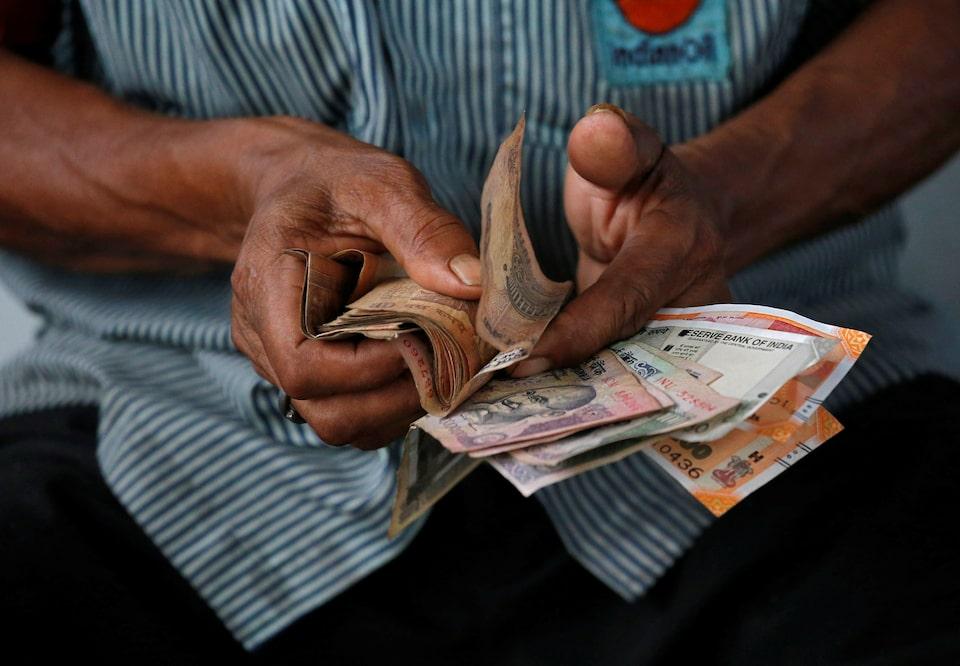
MUMBAI, July 15 (Reuters) - The Indian rupee is expected to hold near the key 86-per-dollar level on Tuesday, with traders awaiting U.S. inflation data that could influence expectations around Federal Reserve rate cuts. The 1-month non-deliverable forward indicated that the rupee will open nearly unchanged from 85.9850 on Monday. The Indian currency spent much of Monday trading in a narrow range around the 86 level. Sign up here. Price action "absolutely suggests" 86-86.10 is a supply zone, a currency trader at a bank said, noting that a large UK-based bank was on offer on USD/INR on Monday. The pair "is well-anchored" around 86, with U.S. tariff uncertainty lingering and Treasury yields inching higher. "I doubt the upcoming U.S. inflation data will shift the tone much," he added. Investors will be watching the June U.S. inflation data due later on Tuesday to gauge how much room the Federal Reserve has to cut rates. Markets are currently pricing in two rate cuts in 2025, with the first widely expected in September. Economists have warned that U.S. President Donald Trump's tariffs could add upward pressure on inflation. The June print will be closely scrutinised for any signs of those effects filtering through to consumer prices. Goldman Sachs said in a note that it expects June core CPI to accelerate to 0.23% on-month, corresponding to a year-over-year rate of 2.93%. It expects moderate upward pressure from tariffs on select categories that are particularly exposed. Looking ahead, the bank said tariffs are likely to deliver a somewhat larger boost to monthly inflation prints. U.S. Treasury yields moved higher before the inflation data, with the 10-year yield hovering near its highest level in a month, lending support to the dollar. Asian currencies were mostly weaker on Tuesday, reflecting cautious sentiment. KEY INDICATORS: ** One-month non-deliverable rupee forward at 86.10; onshore one-month forward premium at 10 paisa ** Dollar index at 98.06 ** Brent crude futures down 0.3% at $69 per barrel ** Ten-year U.S. note yield at 4.44% ** As per NSDL data, foreign investors sold a net $523.6 million worth of Indian shares on July 11 ** NSDL data shows foreign investors bought a net $31.4 million worth of Indian bonds on July 11 https://www.reuters.com/world/india/rupee-dig-its-heels-near-86usd-before-us-inflation-data-test-2025-07-15/