2025-07-11 12:32
PARIS, July 11 (Reuters) - Europe's securities regulator warned crypto companies on Friday not to mislead customers about the extent to which their products are regulated - the latest sign of European authorities trying to limit crypto-related risks. The European Union's crypto regulation, MiCA, includes various measures to protect investors, such as rules around how client assets are safeguarded and requirements for handling complaints, the European Securities and Markets Authority (ESMA) said in a statement. Sign up here. But the practice of crypto asset service providers (CASPs) offering both regulated and unregulated products through the same platform "gives rise to investor protection risks", ESMA said, because customers might not be aware which products do not come with MiCA's protections. "Some CASPs may even use their regulated status under MiCA as a marketing argument and encourage confusion between regulated and unregulated products and services," ESMA said. ESMA said that crypto companies should not use their regulatory status as a "promotional tool" or imply that crypto products and services are regulated if they actually fall outside the scope of the EU's rules. Products and services not regulated by MiCA include direct investment in commodities, such as gold, and crypto-asset lending. Regulators around the world have long been concerned about the risks faced by crypto investors. The collapse of various crypto platforms, including FTX, in 2022, left millions of investors out of pocket. Under the EU's new crypto rules, companies offering crypto services must obtain a CASP licence from a national regulator, which can then be used as a passport to operate across the bloc. ESMA also on Friday issued guidelines about the level of knowledge and competence staff need to have in order to assess crypto companies. ESMA's statements come a day after it published a peer review into Malta's licence-granting process, which found that Malta's Financial Services Authority was not thorough enough in assessing the risk of one particular unidentified crypto company. The review found that while the Maltese regulator had enough expertise and resources to authorise and supervise crypto companies, its authorisation process only "partially" met expectations. The Maltese regulator said in a statement on Thursday that it was proud of its role as an "early adopter" of digital asset regulation and did not directly address ESMA's criticisms. Some regulators had raised concerns in closed-door meetings about the speed with which crypto licences were being granted by some EU member states, Reuters has previously reported. https://www.reuters.com/sustainability/boards-policy-regulation/european-securities-regulator-warns-about-crypto-firms-misleading-customers-2025-07-11/

2025-07-11 12:26
BRASILIA, July 11 (Reuters) - Brazil's finance ministry raised its forecast for economic growth this year, while projecting a slight slowdown in 2026 in face of the central bank's tight monetary policy, a report showed on Friday. The ministry's economic policy secretariat now expects Brazil's gross domestic product to grow 2.5% in 2025, up from the 2.4% estimated in May. For 2026, the forecast was revised down to 2.4% from 2.5%. Sign up here. The fresh estimates do not take into account the 50% tariff on Brazilian goods announced by U.S. President Donald Trump earlier this week, the government said, while noting its effects would be limited. "The impact of the tariffs tends to be of little significance on 2025 growth, although some manufacturing sectors may be particularly hit," the finance ministry added. https://www.reuters.com/world/americas/brazil-raises-forecast-2025-gdp-growth-sees-slowdown-next-year-2025-07-11/

2025-07-11 11:52
LONDON, July 11 (Reuters) - London hedge fund manager Andrew Law's Caxton Associates, which wagers on macro economics, finished June with a 2% positive return, bringing its half-year return to 14%, according to a source familiar with the matter. Tailwinds to the hedge fund's performance included a negative outlook on the UK economy, the source said. By Friday, the firm had not responded to Reuters requests for comment. Sign up here. https://www.reuters.com/markets/europe/caxton-associates-finishes-half-year-with-positive-14-return-says-source-2025-07-11/

2025-07-11 11:45
PARIS, July 11 (Reuters) - France's public health authority said on Friday that more than 100 people had died from drowning between June 1 and July 2 this year, an increase of 58% over the same period last year, blaming it on unusually warm weather at the end of June. Sante Publique, the French authority, said 429 total drownings had occurred in France between June 1 and July 2, an increase of 95% over that period last year. Sign up here. "These increases occurred in a context of high temperatures in the second half of June 2025, which led to an increase in people going to swimming areas to cool off," the agency said in a bulletin. Large swaths of Europe, including France, sweltered over a 10-day heatwave ending July 2. Scientists said 2,300 people died of heat-related causes across 12 European cities during the extreme weather. https://www.reuters.com/business/environment/drowning-deaths-france-spiked-by-58-during-heat-wave-authorities-say-2025-07-11/

2025-07-11 11:43
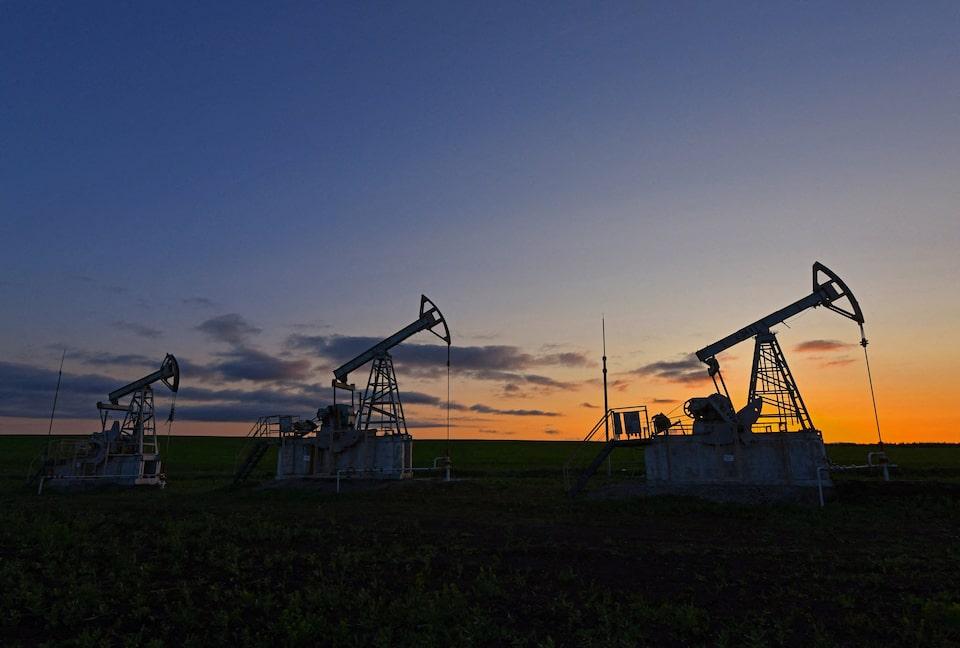
MOSCOW, July 11 (Reuters) - The price of Russia's Urals crude oil remained $2 per barrel below the $60 per barrel limit imposed by Western nations amid weak Brent prices, Reuters calculations based on traders' data showed on Friday. Oil prices edged up on Friday, as investors weighed a tight prompt market against a potential large surplus this year, according to the International Energy Agency, while U.S. tariffs and possible further sanctions on Russia were also in focus. Sign up here. Urals oil cargo loadings from Russia's Baltic and Black Sea ports were priced around $58 per barrel on Thursday on a free-on-board basis, which excludes charter costs and insurance, according to Reuters calculations. Reuters calculates Urals oil prices based on the previous business day's data. Oil prices fell on Thursday as investors weighed the potential impact of U.S. President Donald Trump's tariffs on global economic growth, but prices steadied on Friday. The United States, other Group of Seven countries and Australia imposed the price cap in late 2022, seeking to reduce Russia's revenue from seaborne oil exports as part of wide-ranging sanctions imposed over Moscow's invasion of Ukraine. Under the terms of the cap, suppliers of Russian oil are only able to use Western services such as shipping and insurance when Russian crude trades below $60 per barrel. The European Commission is expected to propose a floating Russian oil price cap as part of a new draft sanctions package, in an attempt to overcome opposition from some member states, four EU diplomats told Reuters this week. The plan to lower the price cap was prompted by a fall in global oil prices, which made the current cap largely irrelevant. The Commission proposed lowering the Group of Seven (G7) nations' price cap from $60 a barrel to $45 a barrel in June in its 18th package of sanctions. Russian Urals oil has been priced below $60 per barrel since April 2, except for a short jump above the price cap level in June on a rally in Brent. The Urals oil price is linked to the Brent price, making it dependent on changes in the benchmark's value. https://www.reuters.com/business/energy/russian-urals-oil-prices-hold-below-price-cap-weaker-brent-reuters-calculations-2025-07-11/
2025-07-11 11:39
BRASILIA, July 11 (Reuters) - The Brazilian government secured 10.2 billion reais ($1.8 billion) in revenue from the first round of tax debt renegotiations with major companies this year, the Treasury's attorney general and the Federal Revenue Service said. As part of the initiative, which is included in a broader effort to reduce Brazil's fiscal deficit to zero by 2025, the government is finalizing technical details to launch another three public notices to renegotiate tax debts, Treasury Attorney General Anelize Almeida told Reuters. Sign up here. The first-round agreements include an immediate collection of 7.6 billion reais and future payments of 2.6 billion reais. These kinds of tax debt transactions were originally created to grant discounts on debt renegotiation for companies in serious financial situations. They were made more flexible by a 2024 regulation that allowed the government to seek agreement with large companies to avoid costly and potentially unsuccessful court actions. "We're moving to a new focus of the transaction, which is the legal criteria and the litigation involved, how much it costs to maintain the litigation," Almeida said. "The economic cost of this litigation is very significant for the government and for the company." The first round primarily involved large banks. Companies agreed to drop judicial and administrative challenges, concluding 188 lawsuits. https://www.reuters.com/world/americas/brazil-collect-18-billion-debt-renegotiation-with-big-companies-2025-07-11/