2025-07-11 06:47
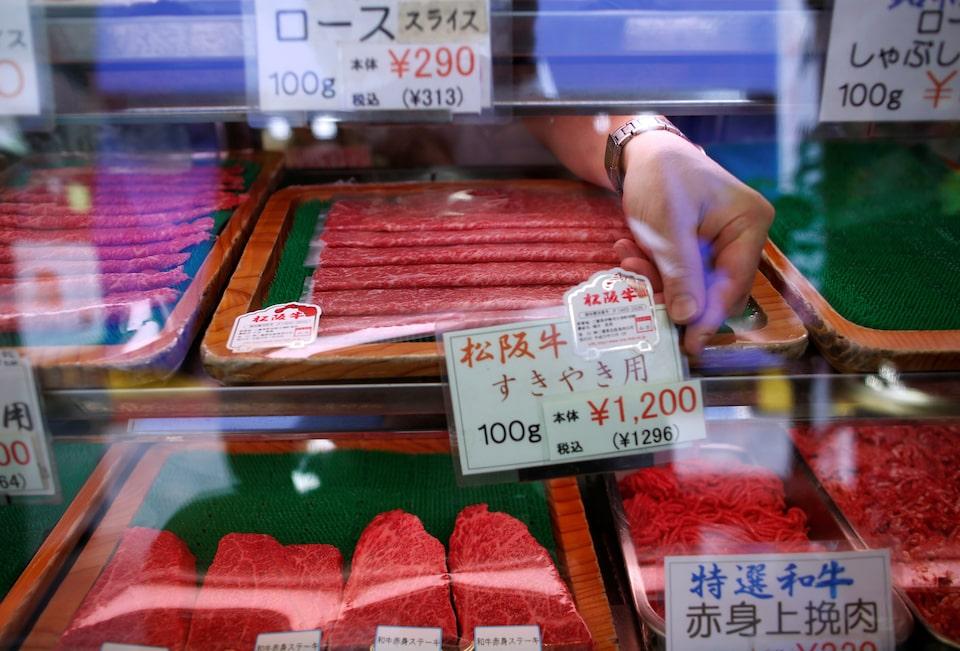
TOKYO, July 11 (Reuters) - Japan's farm ministry said on Friday that an animal health and quarantine agreement with China had come into force, paving the way towards the resumption of Japanese beef exports to China that had been halted in 2001. Beijing has banned beef imports from Japan since an outbreak of bovine spongiform encephalopathy (BSE), popularly known as mad-cow disease, in September 2001. Sign up here. The move comes as Japanese beef producers face higher tariffs for exports to the United States under President Donald Trump's reciprocal tariffs, of 25% and set to take effect on August 1. "Japan will continue discussions with China, including food safety and radiation testing, towards the resumption of Japanese beef exports to China," the ministry said. A government official said the agreement's taking effect was a major turning point for beef trade to resume while adding it was unclear when exports could actually start. China last month announced the resumption of seafood imports from some Japanese regions, ending a nearly two-year blanket ban imposed due to worries over Japan's release of treated wastewater from the Fukushima nuclear power plant. https://www.reuters.com/business/healthcare-pharmaceuticals/japan-china-take-step-towards-resuming-japanese-beef-exports-china-2025-07-11/
2025-07-11 06:24
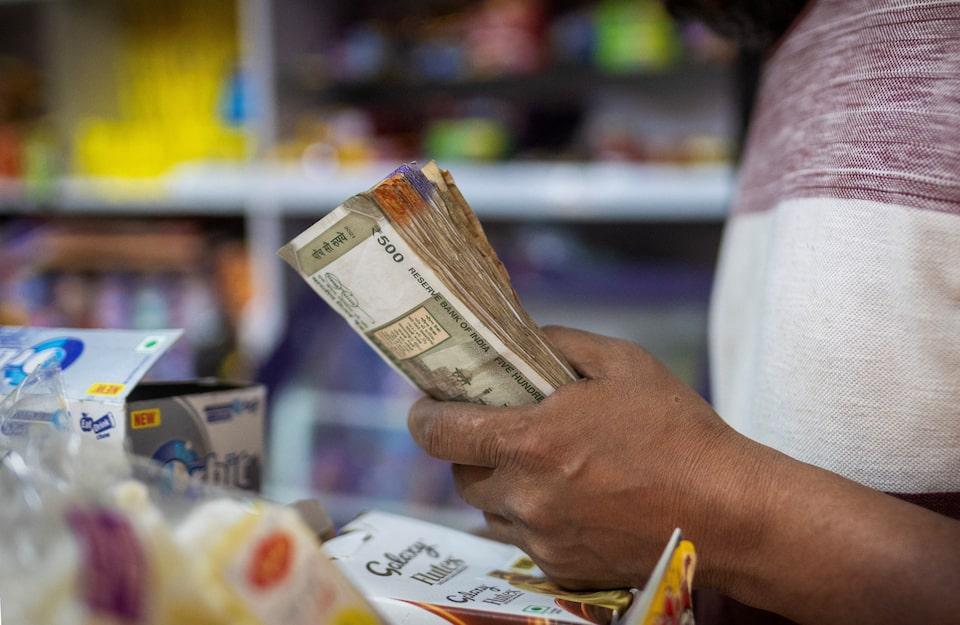
MUMBAI, July 11(Reuters) - The Indian rupee weakened on Thursday on the back of dollar bids from foreign banks and a broadly stronger greenback, after U.S. President Donald Trump continued to up the ante on tariffs by announcing a 35% levy on Canadian imports starting August 1. Traders also pointed to modest portfolio outflows, which contributed to pushing the rupee down to 85.8650 as of 11:30 a.m. IST, down nearly 0.3% on the day. Sign up here. India's benchmark equity gauge, the Nifty 50 (.NSEI) , opens new tab, fell 0.7%, while the country's benchmark 10-year bond was also nursing a modest decline. Asian currencies were trading mixed, with the Chinese yuan edging higher after a stronger-than-expected midpoint fix by the country's central bank. Trump also said he plans to impose tariffs of 15% or 20% on most other trading partners and that the European Union could receive a letter declaring the applicable rate by Friday. While market reaction to tariff threats has become more subdued compared to earlier in the year, analysts reckon that the uncertainty may continue to dampen risk appetite. "Given the current backdrop, the bias for rupee appreciation remains limited. Support near 85.50 continues to hold strong, with a high probability of the pair inching back towards 86.00," said Amit Pabari, managing director at FX advisory firm CR Forex. On the day, the dollar-rupee fix was quoting at a modest premium of around 0.2/0.3 paisa, signalling heightened appetite to buy dollars at the daily reference rate. Dollar sales by a large state-run bank around the 85.90 level, though, helped limit the rupee's losses, a trader at a private bank said. Meanwhile, dollar-rupee forward premiums nudged higher with the 1-year implied yield up 3 basis points at 1.98%, while the 1-month forward premium ticked up to 11.25 paisa. The Reserve Bank of India's aggressive turn towards withdrawing liquidity exerted upward pressure on near-forward premiums, a trader at a Mumbai-based bank said. https://www.reuters.com/world/india/rupee-troubled-by-dollar-uptick-modest-outflows-forward-premiums-nudge-higher-2025-07-11/
2025-07-11 06:10
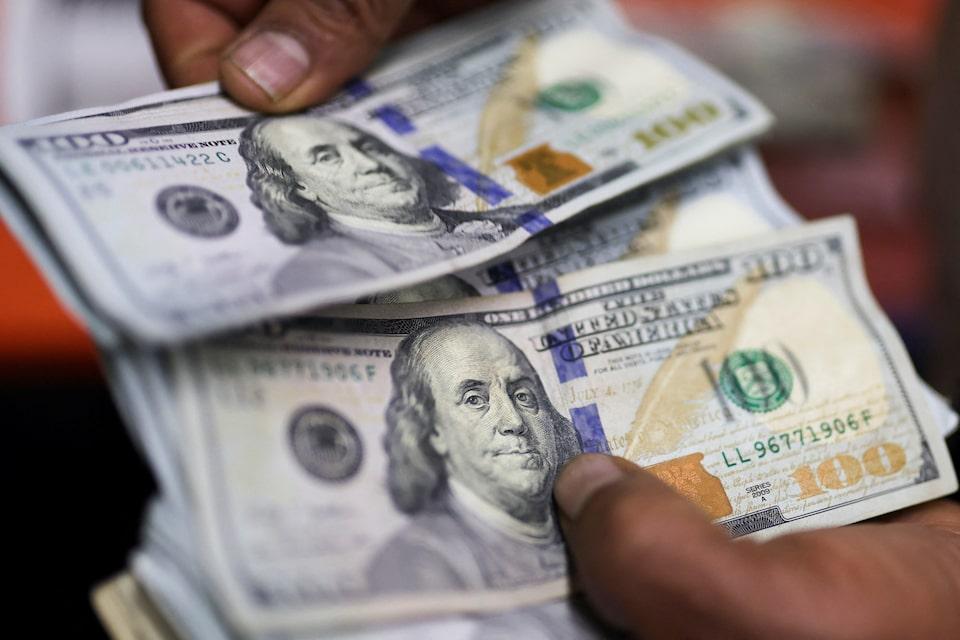
US dollar gains against Japanese yen Canadian dollar slides, euro under pressure Sterling at two-week low after UK economy shrinks in May Bitcoin at record high on renewed regulatory optimism NEW YORK, July 11 (Reuters) - The U.S. dollar rose against major currencies including the yen and euro as President Donald Trump rekindled trade tensions with new tariffs on Canada and other trading partners. Trump issued a letter late on Thursday that said a 35% tariff rate on all imports from Canada would apply from August 1. The European Union was set to receive a letter by Friday. Sign up here. The U.S. president, whose global wave of tariffs has upended businesses and policymaking, floated a blanket 15% or 20% tariff rate on other countries, a step up from the current 10% baseline rate. This week he surprised Brazil, which has a trade surplus with the United States, with duties of 50%, and hit copper, pharmaceuticals and semiconductor chips. "There do appear to be some tariff jitters creeping in once again after Trump floating the blanket tariffs yesterday," Michael Brown, market analyst at online broker Pepperstone in London, said. "Overall the moves that we have seen in the FX space are relatively contained, and recent ranges seem to still be respected for the time being," he added. The U.S. dollar was up 0.79% to 147.4 against the Japanese yen , on track to add nearly 2% for the week - the biggest weekly gain since early December. It was flat against the Swiss franc at 0.79695 franc. The euro was 0.1% lower at $1.1688, after Trump said the European Union could receive a letter on tariff rates by Friday, throwing into question the progress of Brussels' trade talks with Washington. Against the yen, the dollar was up 0.6% to 147.05 yen. The Canadian dollar weakened against its U.S. counterpart and was down 0.11% at C$1.3672, following a knee-jerk fall of more than 0.5% after Trump unveiled the tariff rate. The Brazilian real was 0.26% lower against the dollar. The market reaction to the slew of new tariffs has been largely muted compared to the manic sell-off that followed April's "Liberation Day" announcement, but investors remain on edge over the future of global trade and whether the August 1 deadline is final. While the resurgence of tariff worries was helping support the buck, some traders remained sceptical about the medium-term outlook for the U.S. currency which has come under severe selling pressure this year. "My base case remains for a slow but steady USD depreciation over the medium-term, but we have clearly already fallen a long way, in a short space of time, so there is scope for a bit of a rebound, especially if some of the more recent USD shorts begin to get squeezed," Pepperstone's Brown said. Also supporting the dollar were data suggesting labour market resilience and minutes from the Federal Reserve's latest policy meeting that tempered market expectations for imminent interest rate cuts. The dollar index is down nearly 10% so far this year, on worries that data could soon reflect more widely the damage U.S. policies have had on the world's largest economy. It rose 0.28% to 97.85, on track to notch a weekly gain and snap two consecutive weeks of losses. "USD/CAD has kept most of its gains after a meaningful knee-jerk rally on the announcement, but with those gains coming from the Dollar leg, with cross/CAD generally close to flat versus pre-announcement," Goldman Sachs analysts led by Stuart Jenkins said in an investor note. Elsewhere, sterling was down 0.54% at a two-week low at $1.35050, as data showed Britain's economy contracted unexpectedly for a second month running in May. Cryptocurrencies saw a boost, driven by institutional investor demand and crypto-friendly U.S. policies. Bitcoin advanced 3.7% and scaled yet another record high of $118,832, while ethereum jumped 5.9% to $2,987.15 "The ... new record reflects the resilience of global risk appetite even in the face of Trump tariffs, as well as high optimism over U.S. legislative proposals," DBS FX and credit strategist Chang Wei Liang said. He was referring to measures the U.S. House is set to advance in its upcoming 'Crypto Week'. https://www.reuters.com/world/middle-east/dollar-rises-loonie-falls-trump-announces-new-tariffs-2025-07-11/
2025-07-11 06:05
July 11 (Reuters) - Shares of Australian rare earths miners, including Lynas (LYC.AX) , opens new tab and Iluka Resources (ILU.AX) , opens new tab, soared on Friday after U.S.-based MP Materials' (MP.N) , opens new tab a multibillion-dollar deal with the U.S. government to boost production of rare earth magnets. Lynas Rare Earths, the world's largest rare earths producer outside China, surged as much as 20% to its highest since mid-August 2022 and was set for its best day since April 2020. Iluka skyrocketed 27%, marking its biggest intraday gain ever. Sign up here. The stocks were the top gainers on the benchmark ASX 200 (.AXJO) , opens new tab, which edged higher, as of 0558 GMT. The deal between the U.S. Department of Defense (DoD) and MP Materials lifted sentiment for Australian rare earth firms. It comes on the heels of China imposing restrictions on rare earths, resulting in a 75% drop in rare earth magnet exports from the country last month and forcing some auto companies to suspend production. Rare earths comprise 17 metals used to make magnets that are critical in manufacturing cars, including electric vehicles, some auto parts, weapons, and electronics. As part of the deal, the DoD will become the largest shareholder in MP Materials and guarantee a floor price of $110 per kilogram for the two most popular rare earths, nearly double of current market prices in China. "This signals a strong U.S. push for rare earth magnet independence, lifting upside risk across the rare earth pricing complex. Lynas appears to be the next logical beneficiary of government market support," Jefferies said in a note. "We see the resetting of the pricing metrics for rare earths as delivering material upside potential to Lynas' earnings in the near term and an increased potential for the de-risking of its growth projects via government entity funding." The brokerage upgraded Lynas to "buy" from "underperform" and hiked its price target to A$10 a share from A$6.40. Lynas was last trading at A$9.67. Smaller lithium players Sayona Mining (SYA.AX) , opens new tab and Liontown Resources (LTR.AX) , opens new tab jumped 2.8% and 1.6%, respectively. https://www.reuters.com/world/china/australian-rare-earth-stocks-soar-mp-materials-multi-billion-us-deal-2025-07-11/
2025-07-11 06:05
US stocks end lower Canadian dollar dips after Trump announces tariffs Bitcoin hits record high, gold strong NEW YORK, July 11 (Reuters) - Major stock indexes were slightly lower on Friday as U.S. President Donald Trump's announcement of tariffs on imports from Canada fanned worries about trade tensions, with the Canadian dollar down against the greenback. Investors were also bracing for an announcement from Trump on tariffs on the European Union, a move that will likely trigger a tit-for-tat response from the bloc and inject fresh market uncertainty. Sign up here. Trump said late on Thursday the U.S. would impose a 35% tariff on Canadian imports next month and planned to impose blanket tariffs of 15% or 20% on most other trading partners. Aside from in currency markets, reactions to the tariff news have been milder than in April, when Trump launched his trade war. But that may change if more progress is not made on tariffs soon, said Jake Dollarhide, CEO of Longbow Asset Management in Tulsa, Oklahoma. "I don't think the market can take the forever Trump tariffs on repeat. It's been remarkable the market has been so resilient in the face of the tariffs and all of the changing rules, changing rates, and the pauses, delays, extensions and surprises," he said. "The market may have another tariff meltdown much like April if we don't get more results." Still, he said, stocks could benefit from second-quarter earnings results. "That could be a saving grace for the markets if they start paying attention to earnings again," Dollarhide said. JPMorgan Chase (JPM.N) , opens new tab is due to release results on Tuesday, essentially kicking off the reporting period. The Dow Jones Industrial Average (.DJI) , opens new tab fell 279.13 points, or 0.63%, to 44,371.51, the S&P 500 (.SPX) , opens new tab lost 20.71 points, or 0.33%, to 6,259.75 and the Nasdaq Composite (.IXIC) , opens new tab fell 45.14 points, or 0.22%, to 20,585.53. All three major U.S. stock indexes were down for the week. Shares of Nvidia (NVDA.O) , opens new tab rose 0.5% to a record high, lifting its stock market value to $4.02 trillion. Drone maker AeroVironment (AVAV.O) , opens new tab rose 11% after U.S. Defense Secretary Pete Hegseth ordered a surge in drone production and deployment. MSCI's gauge of stocks across the globe (.MIWD00000PUS) , opens new tab fell 3.85 points, or 0.42%, to 922.37. The pan-European STOXX 600 (.STOXX) , opens new tab index ended down 1.01%. "Today, you're seeing a little bit of a pullback because of the tariffs being announced overnight. It's been three consecutive days of after-market tariff announcements, and they seem to be coming relatively randomly, so you don't know what you're going to get," said Wasif Latif, chief investment officer at Sarmaya Partners. The Canadian dollar weakened 0.25% versus the greenback to C$1.37 per dollar. The dollar index , which measures the greenback against a basket of currencies, rose 0.33% to 97.91. The euro was down 0.15% at $1.1682. Bitcoin hit another record high, and was last up 3.84% to $117,946.74. Crypto investors are betting that policy wins for the industry, expected next week, could invite new investment in the asset class. Earlier in the week, Trump pushed back his tariff deadline of July 9 to August 1 for many trading partners to allow more time for negotiations, but broadened his trade war, setting new rates for a number of countries, including allies Japan and South Korea, along with a 50% tariff on copper. Copper prices slipped on Friday, with three-month copper on the London Metal Exchange 0.4% weaker at $9,664 per metric ton. Spot gold rose 1% to $3,355.89 an ounce, as investors rushed toward safe-haven assets amid the trade tensions. U.S. Treasury yields rose as investors focused on next week’s consumer price inflation report that may show that price growth accelerated in June. The Federal Reserve is expected to keep interest rates on hold as it waits to see the impact of tariffs on price pressures. The yield on benchmark U.S. 10-year notes was last up 7.7 basis points at 4.423%. Interest rate-sensitive two-year note yields climbed 4.4 basis points to 3.912%. Oil prices rose, with the International Energy Agency saying the market was tighter than it seems. Brent crude futures rose $1.72, or 2.5%, to settle at $70.36 a barrel. U.S. West Texas Intermediate crude gained $1.88, or 2.8%, to settle at $68.45. https://www.reuters.com/world/china/global-markets-wrapup-1-2025-07-11/
2025-07-11 05:40
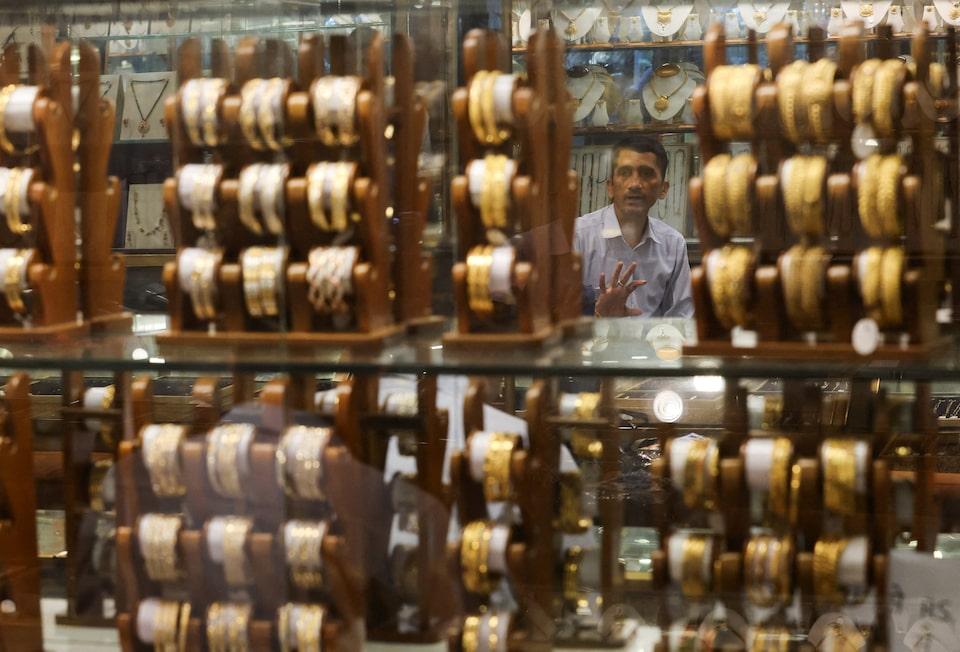
Premiums of $10-$25/oz charged in China Tariff uncertainty fails to boost gold demand in China this week, trader says Discount in India reduces to $8/oz July 11 (Reuters) - Demand for physical gold remained sluggish this week across major Asian markets as price volatility weighed on sentiment, with premiums in China holding firm and discounts in India narrowing. Dealers in top consumer China charged premiums of $10-$25 an ounce over the global benchmark spot price, compared with premiums of $4.2-$33 last week. Sign up here. Spot gold fell to its lowest level in over a week on Wednesday, dipping below the $3,300 mark, before recovering to trade at $3,335 as of 0520 GMT on Friday. U.S. President Donald Trump has broadened his trade war in recent days, announcing new levies on several countries, set to take effect on August 1. This uncertainty has failed to trigger a renewed interest in gold buying in China this week, said Hugo Pascal, a precious metals trader at InProved. China's central bank issued new anti-money laundering and counter-terrorism financing regulations targeting precious metals and gemstone dealers, state news agency Xinhua reported. "(This regulation) will kill some potential demand onshore China," a mainland China-based precious metal trader said, adding gold demand may rise only when prices approach $3,000-$3,100. Meanwhile, Indian dealers' discounts narrowed to up to $8 an ounce, inclusive of 6% import and 3% sales levies, from last week's $14. Discounts are gradually narrowing due to limited supplies, as imports were low in May and June and scrap availability is also restricted, said a Mumbai-based bullion dealer with a private bank. Domestic gold prices traded around 97,300 rupees ($1,133.57) per 10 grams on Friday after hitting an all-time peak of 101,078 rupees last month. Gold demand is typically subdued in India during the monsoon season that spans June to September. In Hong Kong, gold was sold at par to a premium of $1.50, while in Singapore gold traded between at-par prices and a $2.20 premium. In Japan, bullion changed hands at par to a premium of $0.50. ($1 = 85.8350 Indian rupees) https://www.reuters.com/world/china/asia-gold-demand-sluggish-asia-volatile-prices-weigh-sentiment-2025-07-11/