2025-07-11 04:45
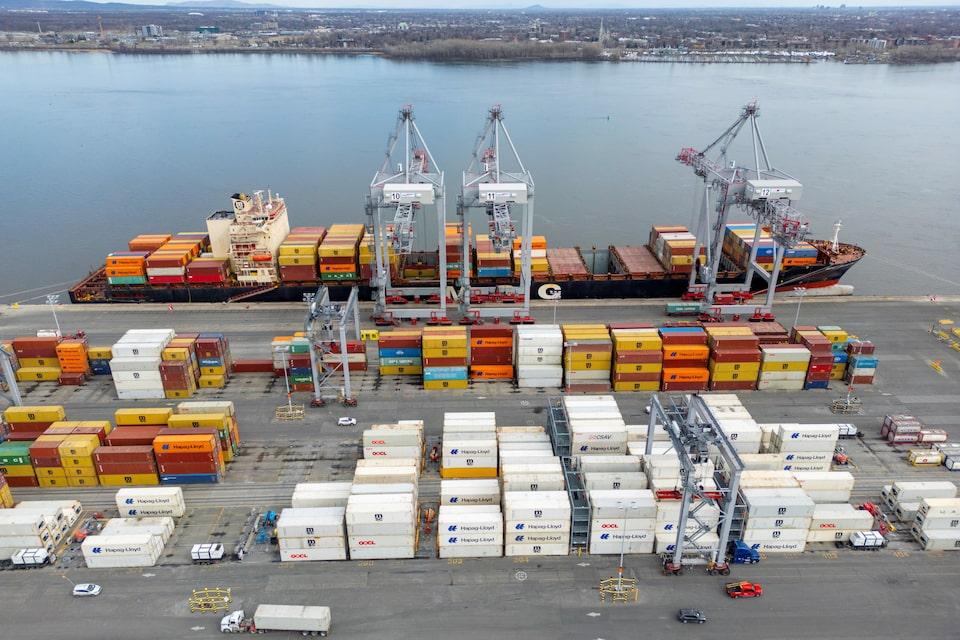
Carve-outs expected for Canadian energy and fertilizers; USMCA goods Trump says he may reconsider, depending on fentanyl flows Carney says will protect Canadian workers and business Markets on edge as EU tariff rate awaited WASHINGTON/OTTAWA, July 10 (Reuters) - U.S. President Donald Trump ramped up his tariff assault on Canada on Thursday, saying the U.S. would impose a 35% tariff on imports next month and planned to impose blanket tariffs of 15% or 20% on most other trading partners. In a letter released on his social media platform, Trump told Canadian Prime Minister Mark Carney the new rate would go into effect on August 1 and would go up if Canada retaliated. Sign up here. In a post on X late on Thursday, Carney said his government will continue to defend Canadian workers and businesses in their negotiations with the U.S. as they work towards that deadline. The 35% tariff is an increase from the current 25% rate that Trump had assigned to Canada and is a blow to Carney, who was seeking to agree a trade pact with Washington. An exclusion for goods covered by the United States-Mexico-Canada Agreement (USMCA) on trade was expected to stay in place, and 10% tariffs on energy and fertilizer were also not set to change, though Trump had not made a final decision on those issues, an administration official said. Trump complained in his letter about what he referred to as the flow of fentanyl from Canada as well as the country's tariff- and non-tariff trade barriers that hurt U.S. dairy farmers and others. He said the trade deficit was a threat to the U.S. economy and national security. "If Canada works with me to stop the flow of Fentanyl, we will, perhaps, consider an adjustment to this letter," Trump wrote. Canadian officials say a miniscule amount of fentanyl originates from Canada but they have taken measures to strengthen the border. "Canada has made vital progress to stop the scourge of fentanyl in North America. We are committed to continuing to work with the United States to save lives and protect communities in both our countries," Carney added in his X post late Tuesday. The prime minister said last month that he and Trump had agreed to wrap up a new economic and security deal within 30 days. EU TARIFFS WORRY Trump has broadened his trade war in recent days, setting new tariffs on a number of countries, including allies Japan and South Korea, along with a 50% tariff on copper. His latest salvo rattled investors anew, with U.S. and European stock futures dipping in Asia on Friday as markets nervously awaited word on what tariff Trump would assign the European Union later on Friday. The potential escalation between the EU and the U.S. is a big deal for financial markets," said Joseph Capurso, head of international economics at the Commonwealth Bank of Australia. "If you get something similar to (the U.S.-China trade war in April), that's going to be very destabilising." In an interview with NBC News published on Thursday, Trump said other trading partners that had not yet received such letters would likely face blanket tariffs. "Not everybody has to get a letter. You know that. We’re just setting our tariffs," Trump said in the interview. “We're just going to say all of the remaining countries are going to pay, whether it’s 20% or 15%. We’ll work that out now,” Trump was quoted as saying by the network. Myanmar's ruling military general has asked Trump to reduce the 40% tariff rate on his country's exports to the U.S. to 10-20% and is ready to send a negotiation team to Washington if needed, state media reported on Friday. The president of the Philippines will meet Trump in Washington this month for the first time and will discuss its 20% tariff, the country's foreign minister said. Canada is the second-largest U.S. trading partner after Mexico, and the largest buyer of U.S. exports. It bought $349.4 billion of U.S. goods last year and exported $412.7 billion to the U.S., according to U.S. Census Bureau data. Carney, who led his Liberal Party to a comeback election victory earlier this year with a pledge to tackle trade challenges with the U.S., had been aiming to negotiate a trade deal with its key trading partner by July 21. Trump, in his letter, did not specifically address how trade negotiations were proceeding, but he said the "tariffs may be modified, upward or downward, depending on our relationship with your Country." Last month, the Carney government scrapped a planned digital services tax targeting U.S. technology firms after Trump abruptly called off trade talks saying the tax was a "blatant attack." https://www.reuters.com/world/us/trump-puts-35-tariff-canada-eyes-15-20-tariffs-others-2025-07-11/
2025-07-11 04:44
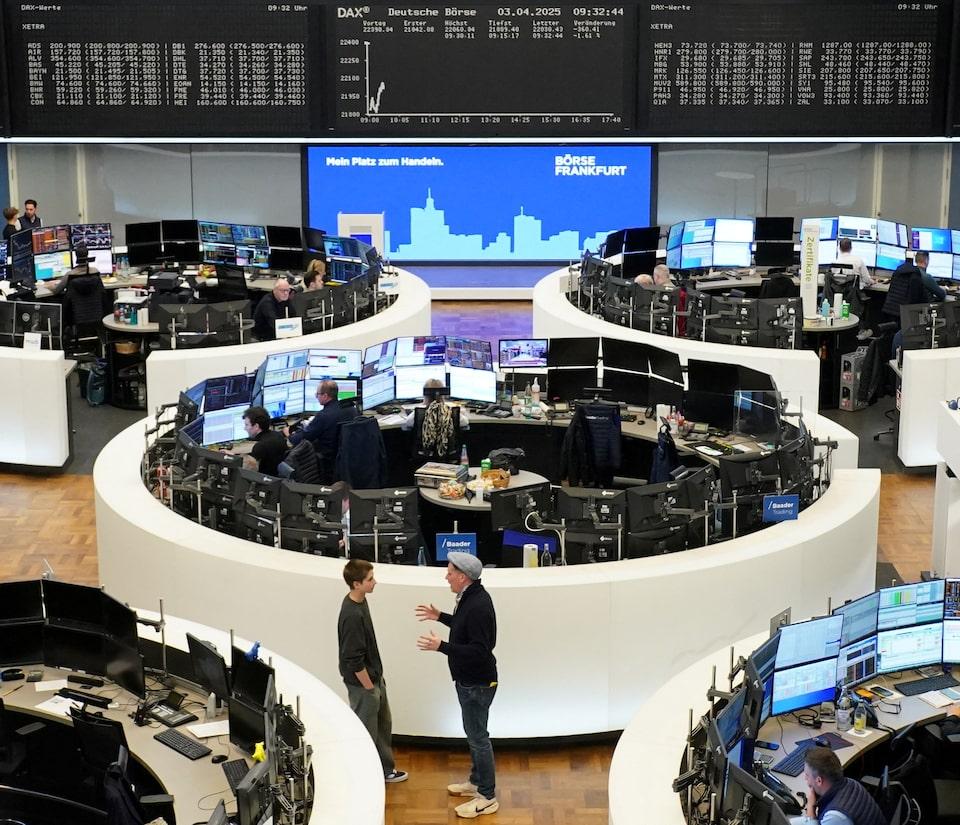
A look at the day ahead in European and global markets from Stella Qiu The markets got a jolt on Friday from what looked likely to be a dull summer day, when U.S. President Donald Trump took to the TV to inject fresh drama into his simmering trade wars and disrupted Wall Street's recent upward drift to record highs. Sign up here. Trump said tariff letters to Canada and Europe would go out "today or tomorrow" and floated the idea that the blanket tariff rates on other countries that do not get a letter could be set at 15% or 20%, a step up from the current 10% baseline rate. Soon afterwards he posted the letter to Canada on social media, specifying that a 35% tariff rate would be imposed on all Canadian goods from August 1. Market nerves were soothed a bit, however, when an administration official clarified that an exclusion was expected for goods covered by the United States-Mexico-Canada Agreement. Wall Street futures skidded 0.8% and EUROSTOXX 50 futures dropped 0.7% before regaining some composure. They were last down about 0.3%. Currency markets also convulsed but, once the dust settled, the dollar was up about 0.3% on the loonie and the euro had slipped 0.2%. The yen, for its part, has been steadily weakening as the prospects dim for a U.S.-Japan trade deal. The dollar was up 0.6% on Friday at 147.12 yen and is headed for a weekly gain of 1.7%, the biggest this year. On the crosses, the yen is down for a seventh straight week on the euro and hit a five-month low on the Australian dollar . With Trump now saying the EU will get a letter, too, investors suspect trade talks between the two are not going very well. EU officials had been saying they were aiming for a deal before August 1. The economic data calendars in Europe and the U.S. are relatively light on Friday, leaving investors to gear up for second-quarter U.S. corporate earnings next week to gauge the impact of Trump's tariffs. In an ominous sign of what may be to come, Uniqlo owner Fast Retailing (9983.T) , opens new tab warned that tariffs will have a significant impact on its U.S. operation later this year, and plans to raise prices to soften the blow. Its shares tumbled almost 7% in Tokyo. Key developments that could influence markets on Friday: -- UK May monthly GDP -- Canadian jobs numbers for June -- Eurozone final CPI for June -- Possible Trump letter on tariffs to the EU https://www.reuters.com/world/china/global-markets-view-europe-2025-07-11/
2025-07-11 04:22
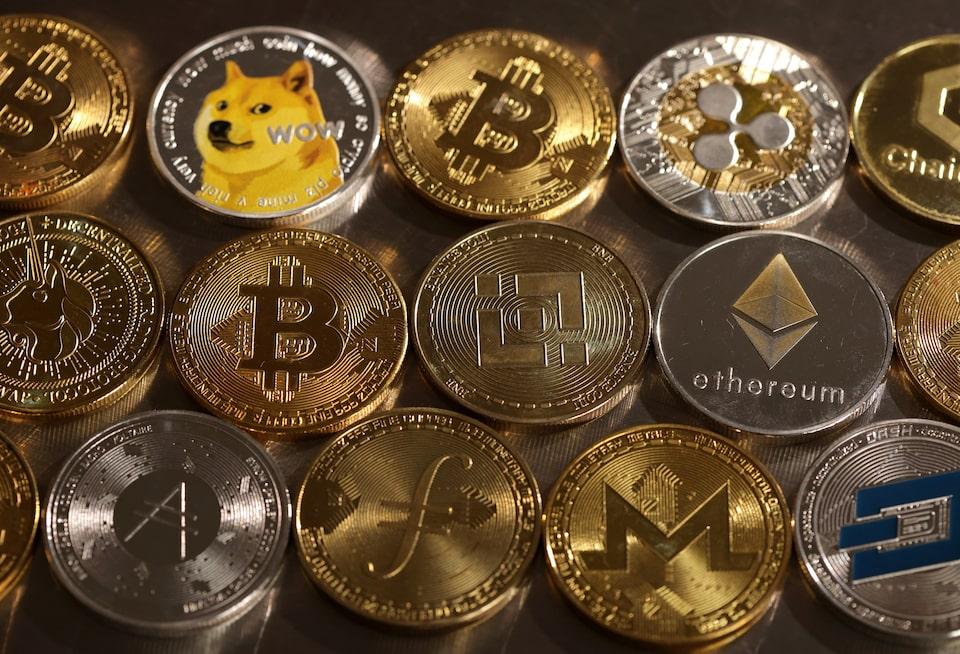
China urged by companies, experts to consider yuan-based stablecoins Mainland China has banned cryptocurrency trading since 2021 Many companies worldwide looking into releasing stablecoins HONG KONG, July 11 (Reuters) - A Shanghai regulator said it held a meeting this week for local government officials to consider strategic responses to stablecoins and digital currencies - a marked shift in tone for China where crypto trading is banned. The Thursday meeting was organised by the Shanghai State-owned Assets Supervision and Administration Commission and follows calls by experts and major companies in China to develop a yuan-pegged stablecoin. Sign up here. We need to have "greater sensitivity to emerging technologies and enhanced research into digital currencies," He Qing, the regulator's director, told the meeting according to a post on the body's official WeChat account. Photos of the meeting showed some 60-70 attendees. Shanghai is China's main international financial hub and often leads pilot programmes for regulatory change. "Given China's strong fintech ecosystem, it has the potential to be a key player in shaping the future of blockchain-based payments," said Nick Ruck, director at LVRG Research. Blockchain-based stablecoins - which are typically pegged to a fiat currency and offer faster and cheaper transactions - have gained much momentum worldwide. One estimate by ARK Investment Management puts the transaction value of stablecoins globally last year at $15.6 trillion, surpassing that of Visa (V.N) , opens new tab. It noted that the value per transaction tends to be much higher. In the U.S., where the legal framework is more developed, more and more companies such as Amazon (AMZN.O) , opens new tab and Walmart (WMT.N) , opens new tab are looking at launching stablecoins. In Asia, South Korea's new government has pledged to allow companies to introduce won-based stablecoins and develop the necessary infrastructure, though the central bank has cautioned that it should be a gradual adoption. E-commerce firm JD.com (9618.HK) , opens new tab and fintech giant Ant Group (688688.SS) , opens new tab are urging China's central bank to authorise yuan-based stablecoins to counter the growing sway of U.S. dollar-linked cryptocurrencies, sources have said. The companies plan to apply for stablecoin licenses in Hong Kong, where stablecoin legislation is scheduled to take effect on August 1. HURDLES At the Shanghai meeting, a policy expert from Guotai Haitong Securities spoke about the history, types and characteristics of cryptocurrencies and stablecoins, and analysed global regulatory frameworks and strategic approaches, the regulator's post said. The expert explained the opportunities and challenges facing stablecoins and offered policy suggestions for digital currency development, the post added. Separately, Yang Tao, the deputy director of the think tank National Institution for Finance and Development, said this week that China should explore the issuance of yuan-based stablecoins in the Shanghai Pilot Free Trade Zone and in Hong Kong simultaneously. Any change in China may not come easily, with the country's capital controls likely to be a key hurdle to the development of stablecoins, market participants have said. The central bank's governor Pan Gongsheng also said last month that the boom in digital currencies and stablecoins poses huge challenges to financial regulation. Mainland China banned cryptocurrency trading and mining in 2021 due to concerns about the stability of the financial system. While the debate around stablecoins in China has heated up of late, the outlook for other cryptocurrencies is less clear. Outside mainland China, non-stablecoin digital currencies continue to increase in popularity with bitcoin climbing to an all-time high above $118,000 on Friday. https://www.reuters.com/business/retail-consumer/major-shift-shanghai-regulator-mulls-policy-responses-stablecoins-2025-07-11/
2025-07-11 02:53
MUMBAI, July 11 (Reuters) - The Indian rupee is poised to open lower on Friday, pressured by dollar's broad strength after U.S. President Donald Trump said he planned to impose blanket tariffs of 15% or 20% on most trade partners. The one-month non-deliverable forward indicated the local currency opening in the 85.70-85.74 range, versus 85.6350 on Thursday. Sign up here. "This slight up move (on dollar/rupee) does not change much in terms of the near-term direction," a currency trader at a bank said. "Interbank will probably wait to see if the up move extends and then will look to fade it. Selling near to 85.90-86.00 has good risk reward, when you consider the recent price action." Tariff headlines lifted the dollar index, putting pressure on Asian currencies. Trump's threat of raising blanket tariffs to 15–20% from the current 10% intensifies concerns about their economic impact. Further, Trump moved to slap a 35% tariff on Canadian goods from August 1, deepening uncertainty around the direction of U.S. trade policy. Throughout the week, Trump has rolled out a series of developments on the U.S. tariffs targeting trading partners, leaving investors to navigate the shifting landscape. So far, the reaction across Asian equities, forex, and rates markets has been largely muted. The rupee itself has not been significantly affected, holding within an 85.50–86.00 range this week - a band that is "broadly in line with expectations," the currency trader said. While the dollar index has risen 0.8% this week, the rally is modest in the context of its 11% decline over the first half of the year. "Our baseline call remains that the dollar will show significantly reduced interest in tariff noise. Data remains a bigger driver, and the potential FX impact of next week's U.S. inflation figures still looks much bigger than trade news," ING Bank said in a note. KEY INDICATORS: ** One-month non-deliverable rupee forward at 85.85; onshore one-month forward premium at 9 paise ** Dollar index up at 97.84 ** Brent crude futures at $68.9 per barrel ** Ten-year U.S. note yield at 4.36% ** As per NSDL data, foreign investors bought a net $78.4 million worth of Indian shares on July 9 ** NSDL data shows foreign investors sold a net $8.6 million worth of Indian bonds on July 9 https://www.reuters.com/world/india/rupee-expected-dip-open-after-trump-mulls-bigger-tariff-stick-2025-07-11/
2025-07-11 00:25
BUENOS AIRES/NEW YORK, July 10 (Reuters) - Argentina on Thursday filed an emergency appeal of a U.S. judge's order that it turn over its 51% stake in oil and gas company YPF (YPFDm.BA) , opens new tab to partially satisfy a $16.1 billion court judgment. Saying "the stakes could not be higher," Argentina told the 2nd U.S. Circuit Court of Appeals in Manhattan that requiring a turnover by Monday would irreparably harm its sovereignty, destabilize its economy and cause the irrevocable loss of a controlling stake in the country's largest energy company. Sign up here. Argentine President Javier Milei has been seeking to bolster foreign currency reserves and rein in soaring inflation, while navigating a heavy debt burden. The country asked that the YPF turnover be put on hold while it appeals. The case centers on Argentina's 2012 seizure of the 51% YPF stake from Spain's Repsol (REP.MC) , opens new tab without making a tender offer to minority shareholders Petersen Energia Inversora and Eton Park Capital Management. In September 2023, U.S. District Judge Loretta Preska in Manhattan ordered Argentina to pay $14.39 billion to Petersen and $1.71 billion to Eton Park. Argentina hasn't, and has been appealing that decision. On June 30, Preska ordered Argentina to turn over the YPF stake within 14 days. The plaintiffs are represented by litigation funder Burford Capital (BURF.L) , opens new tab, which has said it expected to receive 35% and 73% of Petersen's and Eton Park's respective damages. In Thursday's appeal, Argentina also said a YPF turnover would violate international law and comity, and mark a "sea change" in how U.S. courts interact with the rest of the world. "To flip the script, this order is akin to a foreign trial court directing the U.S. government to pack up the gold stored at Fort Knox and ship it abroad based on that court's erroneous interpretation of U.S. law," Argentina said. Argentina asked the appeals court to decide its motion by 10 a.m. EDT on Monday, so it could appeal to the U.S. Supreme Court if necessary. On Thursday evening, Preska said she will decide by Monday whether to put the turnover on hold, and give both sides another three days to appeal. A spokesman for Argentina declined to comment. https://www.reuters.com/legal/litigation/argentina-appeals-us-court-order-transfer-51-ypf-stake-2025-07-10/
2025-07-10 23:18
HOUSTON, July 10 (Reuters) - Oil major Exxon Mobil (XOM.N) , opens new tab told its trading counterparts that it will not buy the Mars crude oil grade until a zinc contamination issue is fixed, two sources familiar with the matter told Reuters on Thursday. Zinc contamination in the Mars crude oil stream has pushed down demand and slashed prices for the flagship crude oil produced off the U.S. Gulf coast, sources said earlier this week. Sign up here. Mars traded at a 10-cent premium on Thursday to crude oil at the Cushing storage hub in Oklahoma, dealers said. It had eased to 10-cent discount earlier in the week compared with a $1 premium at the end of June. Exxon did not respond to requests for comments. Zinc does not typically occur naturally in crude oil and running crude with zinc could lead to damage to refining units and catalysts used in processing oil. https://www.reuters.com/business/energy/exxon-halt-mars-crude-purchases-until-zinc-contamination-fixed-sources-say-2025-07-10/