2025-07-10 12:20
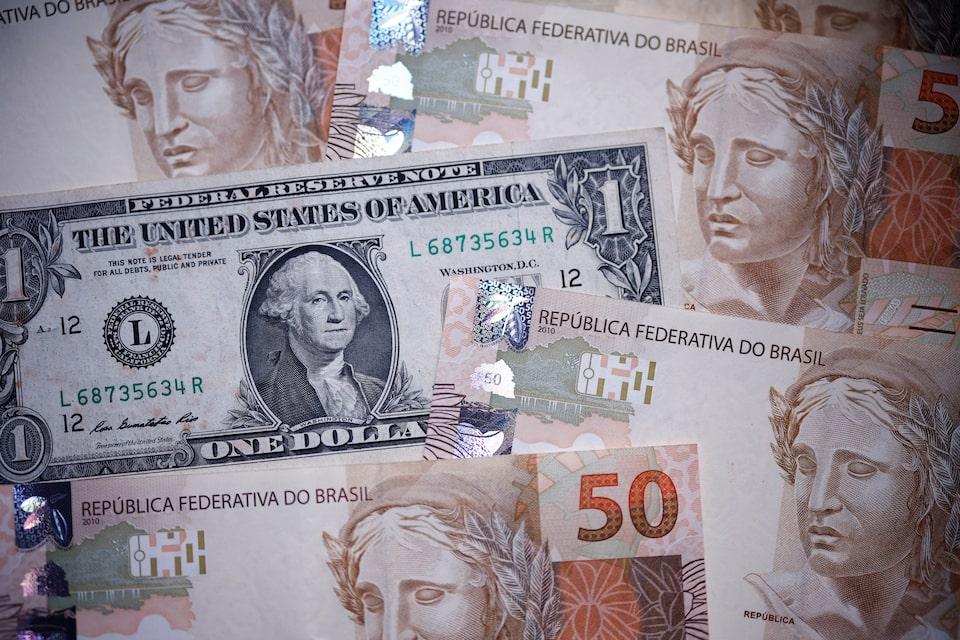
SAO PAULO, July 10 (Reuters) - Brazil's real slipped 2% against the U.S. dollar in spot trading on Thursday, weakening past 5.60 per greenback, after U.S. President Donald Trump said he would impose a 50% tariff on all imports from Latin America's largest economy. Sign up here. https://www.reuters.com/world/americas/brazils-real-weakens-2-after-trump-tariff-announcement-2025-07-10/
2025-07-10 12:18
NEW DELHI, July 10 (Reuters) - Indian Oil Corp (IOC.NS) , opens new tab plans to shut the diesel desulphuriser unit at its 300,000 barrel-per-day Panipat refinery for an upgrade aimed at producing sustainable aviation fuel (SAF) next year, Arvind Kumar, its head of refineries, said on Thursday. The overhaul of the diesel unit is scheduled for late this year or early next year, Kumar told an industry event in New Delhi. Sign up here. India aims to have 1% sustainable aviation fuel (SAF) in aviation fuel by 2027, doubling to 2% in 2028. The refinery's diesel output would not be hit due to the shutdown as the refiner has additional diesel hydrotreaters at the Panipat site. The upgraded unit will process used cooking oil (UCO) to produce 30,000 metric tons per year of SAF, he said. Indian Oil, the country's largest refiner, will also look at upgrading some kerosene-producing units at other refineries to make SAF, he said. He also said that Indian Oil will soon invite bids for a 70,000 tons-per-year green hydrogen plant and a sustainable aviation fuel project. Indian Oil has already awarded a bid to build a 10,000 tons-per-year green hydrogen facility at the Panipat refinery to engineering major Larsen and Toubro (LART.NS) , opens new tab. L&T will build and operate the plant and sell green hydrogen to Indian Oil at 397 Indian rupees ($4.64) per kilogram. India has set a target for refiners to meet half of their hydrogen demand through green hydrogen by 2030, he said. ($1 = 85.6490 Indian rupees) (This story has been corrected to indicate that 300,000 bpd figure refers to the total refinery capacity, not diesel unit capacity, in paragraph 1) https://www.reuters.com/business/energy/indian-oil-upgrade-panipat-diesel-refinery-green-jet-fuel-production-2025-07-10/

2025-07-10 12:09
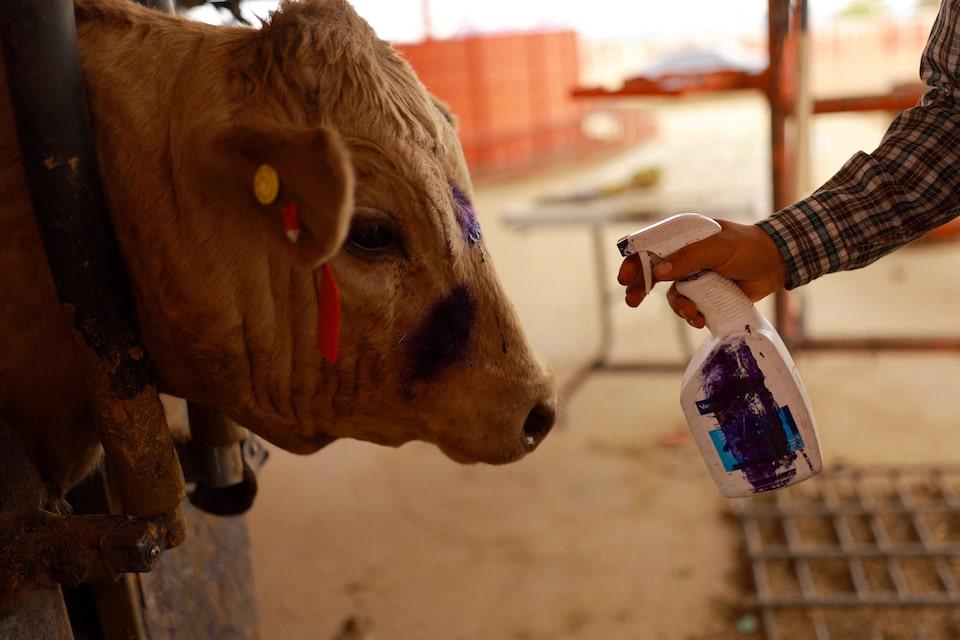
CHICAGO, July 10 (Reuters) - The U.S. Department of Agriculture has again halted imports of Mexican cattle into the United States due to the spread of the damaging livestock pest New World Screwworm in Mexico. Screwworms are parasitic flies whose females lay eggs in wounds on warm-blooded animals, usually livestock and wild animals. Once the eggs hatch, hundreds of screwworm larvae use their sharp mouths to burrow through living flesh, eventually killing their host if left untreated. Sign up here. The USDA said in a statement late on Wednesday that it ordered the closure of livestock trade through southern ports of entry effective immediately following the detection of screwworm about 370 miles south of the border in Ixhuatlan de Madero, Veracruz. The decision was a quick reversal after the USDA said last week it would resume cattle imports from Mexico on Monday at a port of entry in Douglas, Arizona, as part of a phased reopening of the border. Washington suspended cattle imports from Mexico in May as New World Screwworm was detected in farms in Oaxaca and Veracruz, Mexico, about 700 miles from the U.S. border. "We must see additional progress combatting NWS in Veracruz and other nearby Mexican states in order to reopen livestock ports along the Southern border,” USDA Secretary Brooke Rollins said in a statement. https://www.reuters.com/business/healthcare-pharmaceuticals/us-again-halts-cattle-imports-mexico-over-screwworm-pest-2025-07-10/
2025-07-10 11:41
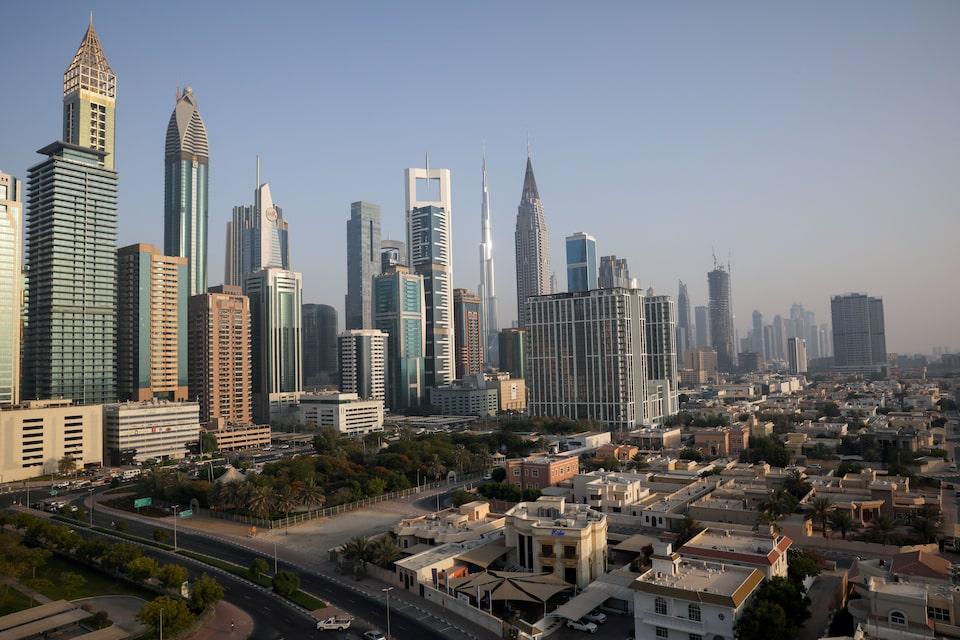
VIENNA, July 10 (Reuters) - The United Arab Emirates could further boost its oil production capacity after 2027 if that is what markets require, its energy minister said on Thursday, signalling a move that could propel the country to the elite club of top five global oil producers. OPEC has granted the UAE a bigger production quota this year after the country argued it was restricting its output too much after it had invested heavily to expand capacity to 4.85 million barrels per day (bpd) from 3 million. Sign up here. The country targets capacity of 5 million bpd by 2027 and Energy Minister Suhail Mohamed al-Mazrouei told reporters it could rise further after 2027. "We can go to 6 million if the market requires," he said, adding that it was not an official target. If such production is reached, the UAE would pump enough to cover just under 6% of global demand. It would also become the fourth-largest oil and liquids producer in the world only behind the United States, Saudi Arabia and Russia, which can pump around 21 million, 12 million and 10-12 million respectively. With output of 6 million bpd, the UAE would overtake 2024 oil production levels of countries such as Canada, China, Iraq and Iran. https://www.reuters.com/business/energy/uae-says-ready-another-oil-capacity-boost-if-markets-require-2025-07-10/
2025-07-10 11:35
BRUSSELS, July 10 (Reuters) - The European Parliament condemned China on Thursday over its export restrictions on rare earths and insisted the European Union must reject any attempts by Beijing to use the restrictions to force concessions from the bloc. Two weeks before an EU-China summit at which rare earths are set to be a key topic, EU lawmakers backed a motion saying that China's action was unjustified and had coercive intent and that its "quasi-monopolistic position" gave it enormous leverage. Sign up here. The European Parliament approved the motion by 523 in favour to 75 against, with 14 abstentions. The motion is non-binding but influential, since the parliament is the EU's only directly elected institution. China, which mines about 60% of the world's rare earths and makes 90% of rare earth magnets used in everything from automobiles to home appliances, imposed restrictions in early April requiring exporters to obtain licenses from Beijing. The parliamentary motion urged China to lift the restrictions, imposed in the midst of a trade war with the United States, while noting that Beijing had established "green lanes" to simplify the process for European companies. China's Foreign Minister Wang Yi downplayed European worries in Berlin last week, saying it was standard practice to control exports of goods that could have a military use, but that Europe's needs could be met if applications were submitted. The EU lawmakers also called on the European Union to back up its 2030 targets for domestic mining and processing critical mineral projects with a specific budget, and to assess minimum required levels of strategic stocks of rare earths. https://www.reuters.com/world/china/eu-lawmakers-rebuke-china-over-rare-earth-curbs-before-summit-2025-07-10/

2025-07-10 11:20
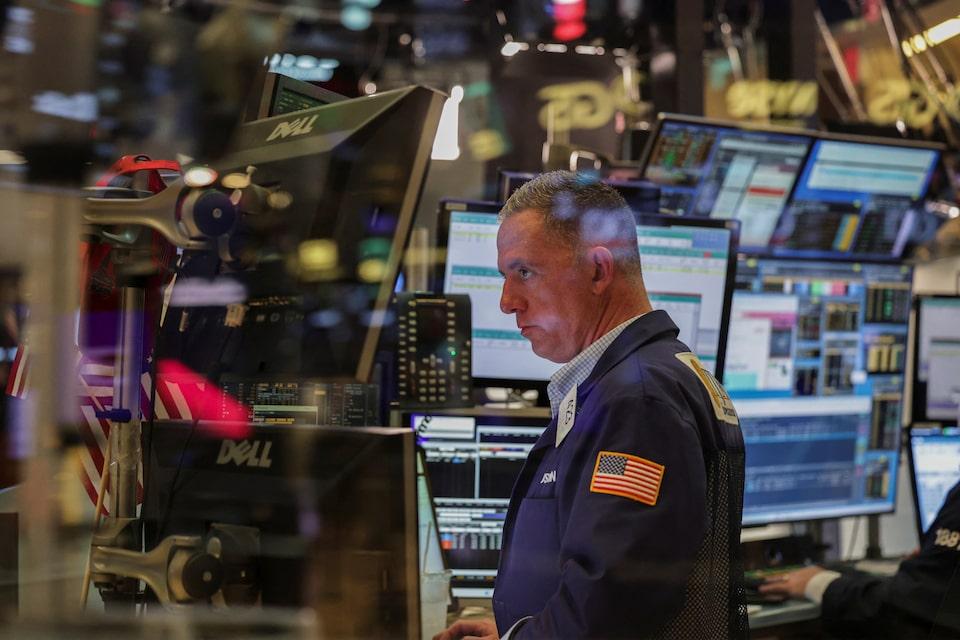
Indexes rise: Dow 0.43%, S&P 500 up 0.27%, Nasdaq 0.09% Nvdia makes history closing with valuation above $4 trillion Bullish Delta update boosts airline sector, transport sector WK Kellogg climbs on report of $3 bln takeover deal with Ferrero July 10 (Reuters) - The S&P 500 and the Nasdaq Composite rose modestly to post record closing highs on Thursday, boosted by an upbeat forecast from Delta Air Lines and a record close for Nvidia while investors shrugged off President Donald Trump's latest tariffs. Delta (DAL.N) , opens new tab shares rallied 12% after the carrier forecast third-quarter and full-year profits above Wall Street estimates. Sign up here. The sector rallied, with United Airlines (UAL.O) , opens new tab adding 14.3% and American Airlines (AAL.O) , opens new tab climbing 12.7%. The Dow Transportation Index (.DJT) , opens new tab, widely considered an economic barometer, hit its highest since late February. Nvidia (NVDA.O) , opens new tab rose 0.7% and closed above the $4 trillion valuation milestone for the first time, the S&P 500's second biggest boost on the day. Initial jobless claims for the week of July 5 came in at 227,000, below the consensus of 235,000 in a Reuters poll. The number marked a seven-week low although data around holidays such as last week's July Fourth can often be volatile. The Delta update and "pretty tame" jobless claims reassured investors, said Mark Luschini, chief investment strategist at Janney Montgomery Scott in Philadelphia. "Collectively that helped to re-insert the risk-on mode that was in full bloom yesterday and carried over to today," the strategist said, adding that investors are "increasingly desensitized" to the potential threat tariffs pose to inflation and unemployment. "At the moment, investors are looking through or not accounting for that threat and won't likely until hard evidence presents itself," said Luschini. The S&P 500 notched its fifth record close since June 27 while the Nasdaq registered its sixth record closing high in the same timeframe. Thursday marked the S&P 500's eighth record close so far in 2025. The Dow Jones Industrial Average (.DJI) , opens new tab rose 192.34 points, or 0.43%, to 44,650.64, less than 1 percentage point below its record close, reached in early December. The S&P 500 (.SPX) , opens new tab gained 17.20 points, or 0.27%, to 6,280.46 and the Nasdaq Composite (.IXIC) , opens new tab gained 19.33 points, or 0.09%, to 20,630.67. Nine of the 11 major S&P sectors advanced. Communication services (.SPLRCL) , opens new tab fell almost 0.5% with technology (.SPLRCT) , opens new tab down 0.1%. Despite Nvidia's record close, megacaps were a mixed bag. Netflix (NFLX.O) , opens new tab, Microsoft (MSFT.O) , opens new tab and Meta (META.O) , opens new tab lost ground. Tesla (TSLA.O) , opens new tab was the S&P 500's biggest boost, rising 4.7%, after the electric vehicle maker announced that its annual shareholder meeting would be in November. A group of investors had urged it to set a date, citing legal obligations. Last week's robust labor market report had sent Wall Street's major indexes to record highs, a rebound from April's sharp sell-off following "Liberation Day" tariff announcements. "You're checking off the uncertainty boxes. You had the big bill that was passed last week. That was a big uncertainty that has been checked off. You're starting to get more clarity on tariffs. It's not done yet but you're starting to get a little more clarity," said Chris Haverland, Global Equity Strategist, Wells Fargo Investment Institute as he noted the market's record levels. "You'll have second quarter earnings season just getting started next week and you'll see how companies are managing through the tariffs." Trump's latest announcements included a new 50% tariff on copper to start on August 1 and a threat of 50% tariff on exports of goods from Brazil to the U.S. He also issued tariff notices to other trading partners. Several countries still await official word from the White House, with investors closely monitoring trade negotiations. Minutes from the Federal Reserve's June meeting, released on Wednesday, revealed that most policymakers anticipate rate cuts this year, viewing the inflationary impact of tariffs as likely to be "temporary or modest." While most investors believe a July rate cut is off the table, the chance of a September cut of 25 basis points is close to 64%, according to CME Group's FedWatch tool , opens new tab. It may take until late this year - or even into 2026 - before the true impact of rising import tariffs on inflation comes into focus, St. Louis Fed President Alberto Musalem said, highlighting why Fed officials are cautious about rate cuts. Among other stocks, WK Kellogg (KLG.N) , opens new tab rallied 30.6% following reports that Italian candy maker Ferrero was nearing a deal to buy the cereal maker. But Conagra Brands (CAG.N) , opens new tab shares sank 4.4% after it forecast annual profit below Wall Street expectations, citing higher tariff-related costs for products, including its Hunt's ketchup, due to levies on imports from China and on metals. Advancing issues outnumbered decliners by a 2.23-to-1 ratio on the NYSE where there were 374 new highs and 36 new lows. On the Nasdaq, 2,602 stocks rose and 1,885 fell as advancing issues outnumbered decliners by a 1.38-to-1 ratio. The S&P 500 posted 29 new 52-week highs and 5 new lows while the Nasdaq Composite recorded 94 new highs and 29 new lows. On U.S. exchanges 18.16 billion shares changed hands compared with the 18.31 billion average for the last 20 sessions. https://www.reuters.com/business/wall-st-futures-ease-after-nvidias-4-trillion-run-data-trade-talks-focus-2025-07-10/