2025-07-10 07:04
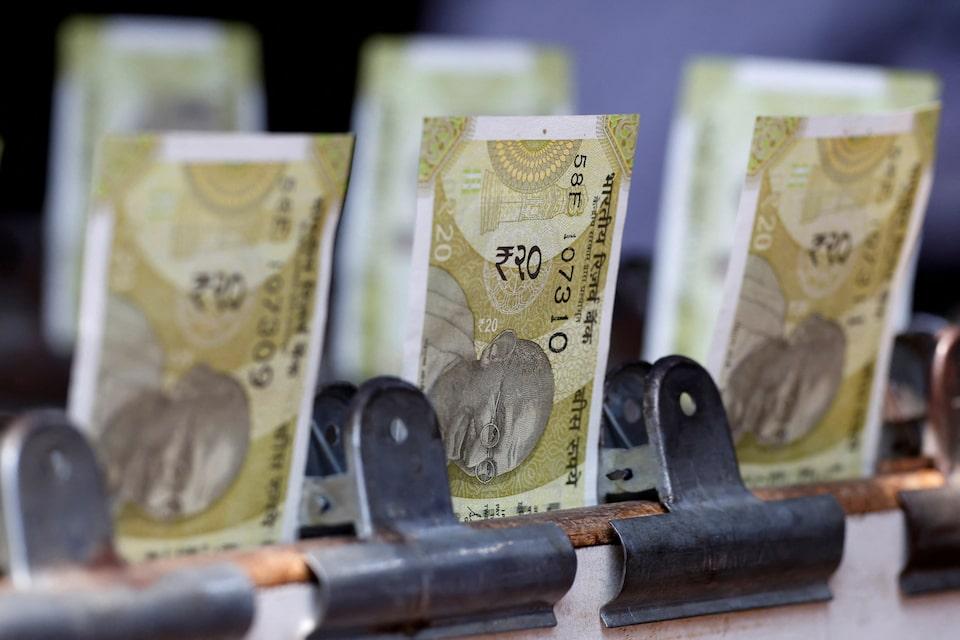
MUMBAI, July 10 (Reuters) - The Indian rupee ticked up on Thursday, tracking regional peers higher, as a fresh round of tariff threats from the White House did little to move the needle for markets with traders expecting the local unit to stick to its familiar range in the near-term. The rupee was at 85.59 as of 12:20 p.m. IST, up 0.1% from its previous close of 85.6725. Sign up here. Traders reckon that the rupee may hover between 85.40 and 86, a range that it has settled into over the last couple of weeks, as they wait for the result of trade negotiations with the United States. Most regional economies have received tariff letters from Trump but India's negotiations with U.S. are still ongoing. A trade delegation is expected to visit the U.S. soon for further talks, an Indian trade official said on Thursday. U.S. President Donald Trump on Wednesday announced a 50% tariff on U.S. copper imports and a 50% duty on goods from Brazil, both to start on August 1. Trump has also dispatched August 1 tariff notices to seven minor U.S. trading partners that exported only $15 billion in goods to the U.S. last year, including a 20% tariff on goods from the Philippines. However, equity and currency markets in Asia appeared to take the latest salvos in their stride, with the MSCI's broadest index of Asia-Pacific shares outside Japan (.MIAPJ0000PUS) , opens new tab up 0.4%. Asian currencies were mostly up between 0.1% to 0.4% while the dollar index steadied just shy of 97.5. While the immediate reaction was muted, ANZ said in a note that an uncertain trade outlook and weaker growth prospects were likely to limit portfolio inflows in the Asian region in the near term. Meanwhile, dollar-rupee forward premiums were little changed on the day, showing little support for an interest rate cut later this month, with most policymakers remaining worried about the inflationary pressures emanating from tariffs. https://www.reuters.com/world/india/rupee-nudges-higher-familiar-resistance-support-levels-tipped-hold-2025-07-10/
2025-07-10 06:59
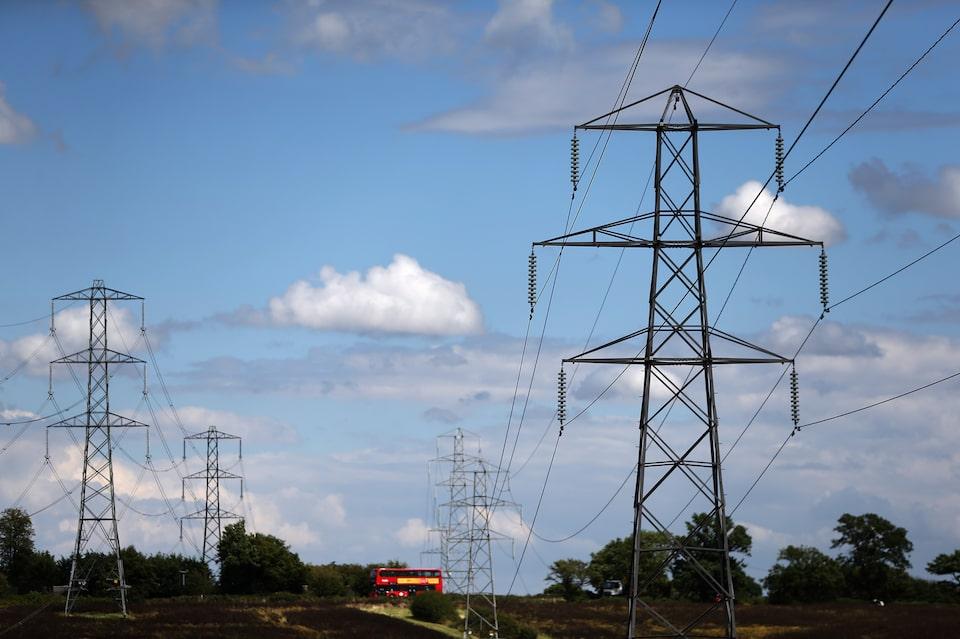
LONDON, July 10 (Reuters) - Britain's government will not move to a zonal system for wholesale energy prices but instead seek to take greater control of the planning process to determine where clean energy infrastructure is built. Britain, which has some of the highest electricity costs in the world, is grappling with how to build new generation in the form of wind or solar farms and transport it to where it is needed across the country. Sign up here. It had considered breaking the country into zones, with a price based on supply and demand, in the hope it would incentivise businesses to locate nearer to renewable energy sources, potentially cutting the cost of transmission. Instead it announced reforms on Thursday that it said would seek to spread out the building of new energy projects around the country, give investors more confidence on where to build and when, and speed up the time it takes to get connections to the power grid. "Our package of reforms will protect consumers and secure investment as we drive to deliver our clean power mission," energy minister Ed Miliband said in the statement. The planned changes, which his department says will bring down energy bills, will see the government take on more responsibility for planning the system. As part of a drive to "rewire Britain and upgrade the country's outdated infrastructure", it is also seeking to reduce the amount it has to pay in constraint payments - compensation paid to electricity generators when they are required to reduce output due to grid limitations. The National Energy System Operator (NESO) estimates that up to 4 billion pounds ($5.4 billion) in constraint payments could be avoided by 2030, if upgrades are completed, the statement said. ($1 = 0.7349 pounds) https://www.reuters.com/business/energy/uk-retains-single-national-wholesale-energy-prices-2025-07-10/
2025-07-10 06:55
ALMATY, July 10 (Reuters) - Kazakh President Kassym-Jomart Tokayev told U.S. President Donald Trump in a letter that he was ready for constructive dialogue on trade issues after Trump slapped fresh 25% reciprocal tariffs on the Central Asian country. Trump launched a new global trade war this week, imposing higher tariff rates on a slew of countries as he continues his "America First" policies. Sign up here. Beginning August 1, goods exported from Kazakhstan to the United States will face a 25% reciprocal tariff. Most of the oil-rich country's exports will continue to be supplied without the new duties. Its key exports - oil, uranium, silver, ferroalloys, tantalum and titanium - are exempted from tariffs, according to the Kazakh trade ministry. Tokayev said in a letter to Trump that the country was ready to continue dialogue with the White House to reach a rational solution to trade issues. "Tokayev expressed confidence in reaching a compromise on the trade issue," the presidential press service said in a statement. The trade turnover between Kazakhstan and the U.S. in 2024 amounted to $4.2 billion, which is 4% higher than in 2023. Kazakhstan's main export commodity to the U.S. is crude oil, which accounts for 56.2% of total supplies, uranium - 16.4%, silver - 12.2%, ferroalloys - 9.5%, tantalum and products made from it - 0.89%. https://www.reuters.com/world/asia-pacific/kazakhstans-leader-tells-trump-that-he-hopes-compromise-new-us-tariffs-2025-07-10/

2025-07-10 06:52
July 10 (Reuters) - Swiss chocolate maker Barry Callebaut (BARN.S) , opens new tab cut its volume guidance for the third time this year on Thursday due to what it described as unprecedented market conditions in the cocoa bean market, as it reported nine-month results in line with market expectations. The world's biggest chocolatier, which supplies key food producers such as KitKat maker Nestle (NESN.S) , opens new tab, expects its sales volume to fall by 7% in the year ending on August 31. Sign up here. It had previously said it expected the cocoa sales volume to fall by a mid-single-digit percentage due to volatility in cocoa bean prices that trade in London at around 5,455 pounds per metric ton . Its shares were down 2.8% at 0618 GMT in premarket, with analysts flagging concerns that the management's low visibility and another profit warning could hurt the investment case and fail to reassure investors on the difficult environment. The low visibility "could also raise question about the company's management information system", analyst Matteo Lindauer from Vontobel said. Despite London cocoa futures falling to an eight-month low on Monday on expectations of a rise in production in South America, industry sources told Reuters that the key West African cocoa producing region was likely to see a 10% decline in the upcoming 2025/26 season. Barry Callebaut also lowered its operating earnings target, saying they would rise by a mid to high single-digit percentage in constant currency this year. In April, it had guided for a double-digit rise. Its sales volume was 1.6 million tonnes in the nine months to the end of May, meeting analysts' average forecast in a company-provided poll, even as they fell 9.5% year-on-year in the third quarter of the financial year. Despite this, revenue increased by a half during the nine-month period, as the chocolatier passed on raw material costs to its customers. (This story has been corrected to say the company has cut its guidance three, not two, times this year, in paragraph 1) https://www.reuters.com/markets/europe/barry-callebaut-lowers-volume-guidance-raw-material-prices-2025-07-10/
2025-07-10 06:39
COPENHAGEN, July 10 (Reuters) - Norway's Equinor (EQNR.OL) , opens new tab has discovered gas in the Skred prospect near the Johan Castberg field in the Barents Sea, the Norwegian Offshore Directorate said on Thursday. Preliminary estimates indicate a discovery of between 0.3 billion and 0.5 billion standard cubic metres of recoverable gas equivalent, corresponding to between 1.9 million and 3.1 million barrels of oil equivalent, the directorate said. Sign up here. The licensees will evaluate the discovery with regard to a possible tie-in to the Johan Castberg field, it added. Equinor is the operator and owns 46.3% of the permit. Vaar Energi holds 30% and Norwegian state-owned oil firm Petoro owns the remaining 23.7%. https://www.reuters.com/business/energy/norways-equinor-makes-gas-find-barents-sea-2025-07-10/
2025-07-10 06:30
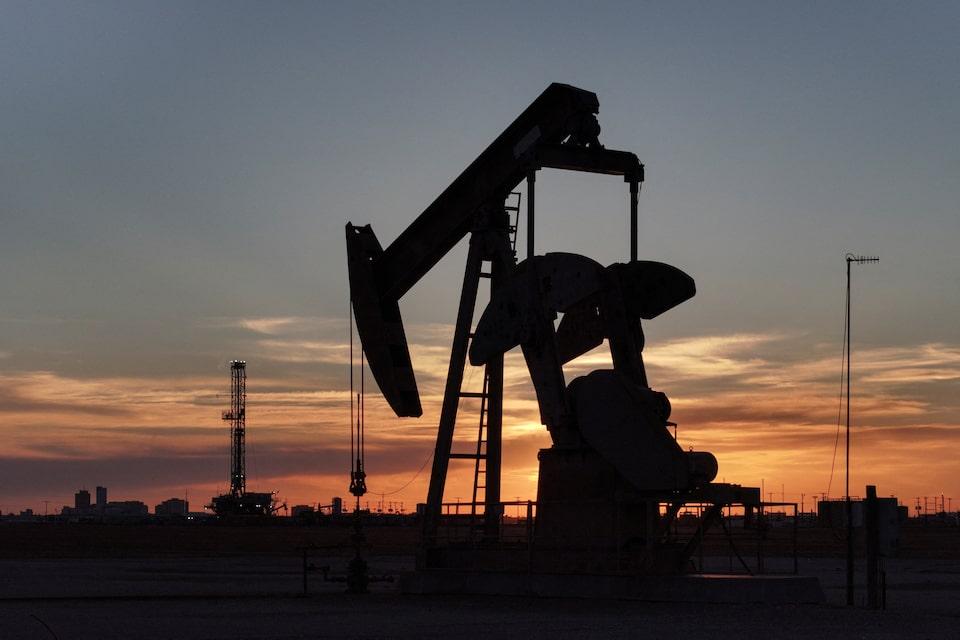
Oil trading 2% down from previous close Threat of 50% tariffs on Brazil, copper cloud growth outlook U.S. held 'frank' talks with Russia on Ukraine peace OPEC+ set for further unwinding of output cuts in September HOUSTON, July 10 (Reuters) - Oil prices fell more than 2% on Thursday, as investors weighed the potential impact of U.S. President Donald Trump's tariffs on global economic growth. Brent crude futures settled at $68.64 a barrel, down $1.55, or 2.21%. U.S. West Texas Intermediate crude finished at $66.57 a barrel, down by $1.81, or 2.65%. Sign up here. On Wednesday, Trump threatened Brazil, Latin America's largest economy, with a punitive 50% tariff on exports to the U.S., pressuring his Brazilian counterpart Luiz Inacio Lula da Silva over Brazil's trial of former President Jair Bolsonaro over charges of plotting a coup to stop Lula from taking office in 2023. On Thursday, Lula called a meeting with ministers, a day after hinting at reciprocal measures in a post on social media. Trump has also announced plans for tariffs on copper, semiconductors and pharmaceuticals. His administration sent tariff letters to the Philippines, Iraq and others, adding to over a dozen letters this week including to powerhouse U.S. suppliers South Korea and Japan. Trump's history of back-pedalling on tariffs has caused the market to become less reactive to such announcements, said Harry Tchilinguirian, group head of research at Onyx Capital Group. "People are largely in wait-and-see mode, given the erratic nature of policymaking and the flexibility the administration is showing around tariffs," Tchilinguirian said. Policymakers remain worried about inflationary pressures from Trump's tariffs, with only "a couple" of officials at the Federal Reserve's June 17-18 meeting saying they felt interest rates could be reduced as soon as this month, minutes of the meeting released on Wednesday showed. Higher interest rates make borrowing more expensive and can slow demand for oil. OPEC+ oil producers are set to approve another big output boost for September, as they complete unwinding voluntary production cuts by eight members and the United Arab Emirates' move to a larger quota. However, OPEC+ indicated it may pause output hikes in October because of a possible peak in oil demand, said Phil Flynn, senior analyst with Price Futures Group. "Earlier fears of reaching 'peak oil' have not materialized, and rising prices incentivize the discovery of new oil sources, both domestically and offshore," Flynn wrote in a note on Thursday. Elsewhere, U.S. Secretary of State Marco Rubio held "frank" talks with Russian Foreign Minister Sergei Lavrov in which he expressed Washington's frustration around a lack of progress in ending the war in Ukraine. Trump said recently he was considering a bill that would impose tougher sanctions on Russia. https://www.reuters.com/business/energy/oil-falls-trumps-expanded-tariffs-cloud-demand-outlook-2025-07-10/