2026-01-23 12:30
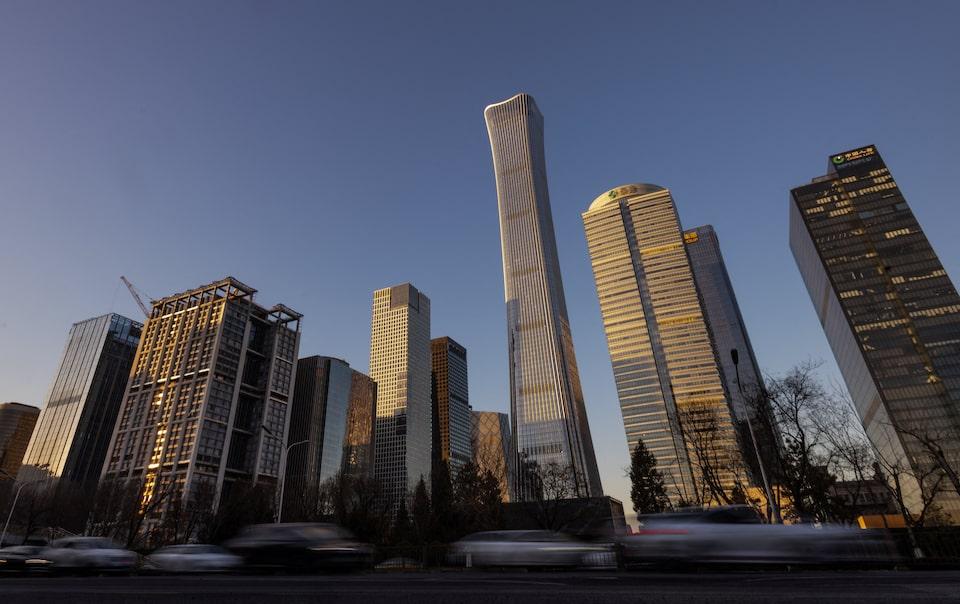
BEIJING, Jan 23 (Reuters) - Foreign direct investment in China totalled 747.7 billion yuan ($107.38 billion) in 2025, down 9.5% year-on-year, data from the commerce ministry showed on Friday. Despite the overall fall, investment from Switzerland, the United Arab Emirates and Britain into China last year increased by 66.8%, 27.3% and 15.9% respectively, according to the ministry. Sign up here. Foreign direct investment in China in 2024 stood at 826.3 billion yuan. ($1 = 6.9631 Chinese yuan renminbi) https://www.reuters.com/world/asia-pacific/foreign-direct-investment-china-slides-95-2025-2026-01-23/
2026-01-23 12:29
ALMATY, Jan 23 (Reuters) - Kazakhstan's energy ministry said on Friday that it had held talks on energy cooperation with the U.S. Department of Energy and the U.S. embassy in the Central Asian country, which is a major energy producer, accounting for around 2% of daily oil supply. In a statement posted on Telegram, the ministry said that the two sides had discussed "the implementation of Kazakhstan's strategic priorities in the oil and gas industry". Sign up here. U.S. oil companies including Chevron (CVX.N) , opens new tab and ExxonMobil (XOM.N) , opens new tab have stakes in Kazakhstan's oilfields. The country's production sharply decreased in recent weeks, after incidents at the Tengiz field took it offline for 7-10 days. Drone strikes on tankers and onshore infrastucture serving the Caspian Pipeline Consortium, which carries the bulk of Kazakhstan's oil exports for loading at the Russian port of Novorossiysk, have further impacted production. Washington has in recent months been deepening ties with Kazakhstan, with U.S. President Donald Trump inviting his Kazakh counterpart Kassym-Jomart Tokayev to join his Board of Peace initiative, and to attend the G20 in Miami in December 2026. https://www.reuters.com/business/energy/us-kazakhstan-energy-ministries-discuss-cooperation-2026-01-23/

2026-01-23 12:23
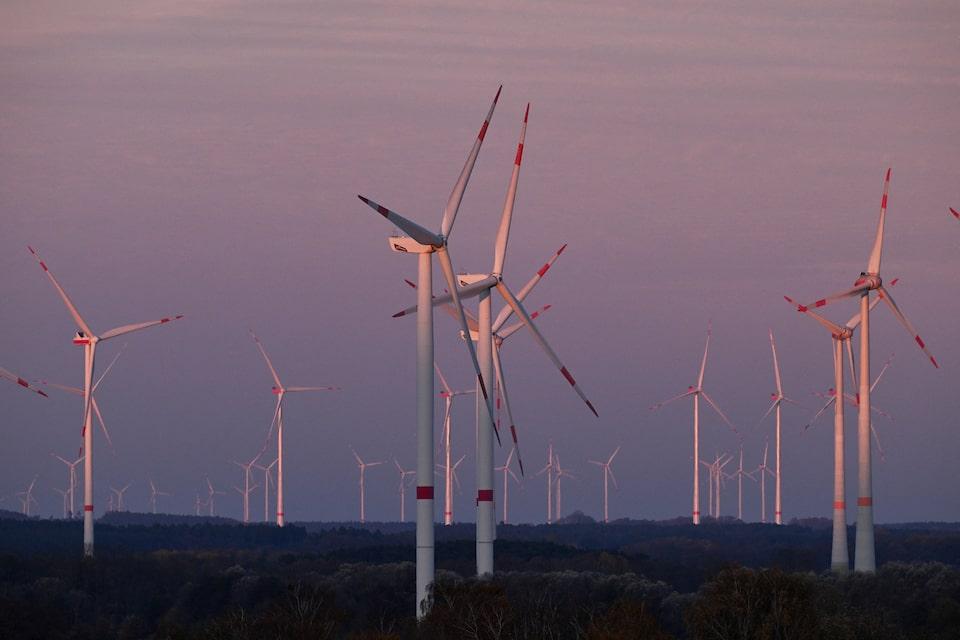
BRUSSELS, Jan 23 (Reuters) - European governments including Germany, Britain and Denmark will reinforce their plans to massively expand wind power projects on Monday, despite U.S. President Donald Trump stepping up criticism of their green energy agenda, a draft declaration due to be signed by government leaders showed. Trump has been openly critical of European countries' efforts to shift to low-carbon energy. Speaking at the World Economic Forum in Davos this week, he described wind turbines as "losers" and said, without providing evidence, that the more wind turbines a country has, the more money that country loses. Sign up here. At a summit in Hamburg, Germany, on Monday, nine European governments will commit to accelerate the expansion of offshore wind power through large-scale, cross-border projects, to hit their overall target for 300 gigawatts (GW) of offshore wind capacity by 2050, according to a draft summit declaration, seen by Reuters. Britain and the participating EU countries will pledge to meet up to 100 GW of this goal via joint cross-border projects, said the declaration, which would also be signed by Belgium, France, Ireland, Luxembourg, the Netherlands and Norway. Expanding offshore renewable energy "will contribute to promoting a stable, secure and affordable energy supply, drive local value creation, strengthen our industries and competitiveness, increase our strategic autonomy and generate jobs," the draft said. Factors including higher costs of capital and components have led to failed wind farm auctions in several North Sea countries. The joint declaration said the governments would also step up their efforts to increase financing for wind projects, potentially including through guarantees from the EU budget, and subsidy frameworks like "contracts for difference" which ensure a power plant receives a steady revenue stream when it is up and running. Wind and solar power produced more electricity than fossil fuels in the EU for the first time last year, indicating the bloc's continued shift towards low-carbon energy despite resistance from some governments. https://www.reuters.com/sustainability/climate-energy/europe-commits-wind-energy-expansion-despite-trump-criticism-draft-shows-2026-01-23/
2026-01-23 12:23
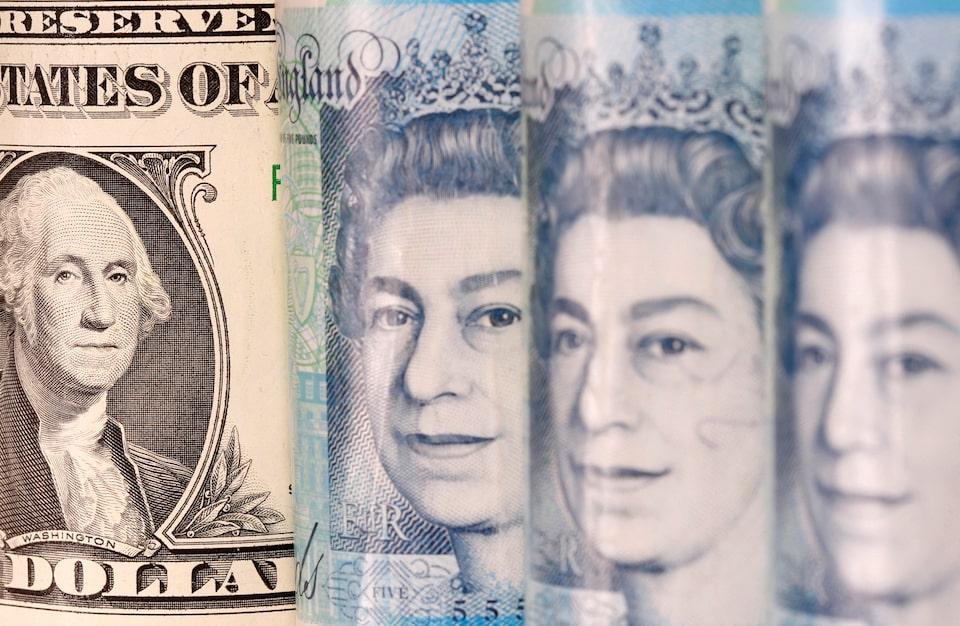
LONDON, 23 Jan (Reuters) - Sterling rose on Friday and was set for its best week against the dollar since August, after stronger-than-expected UK retail sales and business activity figures ended a week of mixed economic data. The British pound was last 0.2% higher at $1.3525 and set for its biggest weekly jump since August with a rise of just over 1%. Sign up here. The euro was down 0.36% at 86.73 pence. UK retail sales rose 0.4% in December, compared to an expected 0.1% decline. While the data was widely received as a positive signal for the UK economy, Jonas Goltermann, deputy chief markets economist at Capital Economics, noted that retail sales figures can be unstable. "Retail sales are a very volatile series, so you get these big, big, big, big positive surprises, very positive or negative," he said. The latest S&P Global UK Composite Purchasing Managers' Index meanwhile rose to 53.9, also above forecasts, to a 21-month high. British businesses reported the fastest upturn since April 2024. Employment in the services sector, however, fell at a faster rate and inflation pressures increased. "The Flash PMI leaping in January gives a further signal that GDP growth is likely to pick up in Q1, as the economy continues to recover from months of pre-Budget anxiety," Elliott Jordan-Doak, senior UK economist at Pantheon Macroeconomics, said in a note. Friday's data, alongside reports earlier in the week that showed the labour market weakened and inflation accelerated, has put the outlook for interest rate decisions by the Bank of England back into focus. The BOE is expected to hold rates steady when it next meets in February. Markets fully price in a quarter-point rate cut by June. https://www.reuters.com/world/uk/sterling-set-best-week-against-dollar-since-august-after-data-boost-2026-01-23/
2026-01-23 12:21
Fire at a power unit on Sunday triggered outage, output shutdown Outage adds pressure amid CPC export bottlenecks CPC working to restore equipment at the terminal JP Morgan says output may not resume this month MOSCOW/LONDON, Jan 23 (Reuters) - Oil production at Kazakhstan's vast Tengiz oil field, one of the world's largest, has not resumed since its operator announced a shutdown on Monday, a spokesperson for Chevron (CVX.N) , opens new tab, which owns 50% of Kazakh oil producer Tengizchevroil (TCO), said on Friday. Production was halted following a fire at a power unit on Sunday. It is unclear what caused the blaze, which a Kazakhstan government commission has been investigating. Sign up here. The incident exacerbated problems for Kazakhstan's oil industry, already challenged by bottlenecks at its main exporting gateway on the Black Sea, which has been damaged by Ukrainian drones. "Tengizchevroil (TCO) confirms that, as a precautionary measure, it has temporarily shut in production at its Tengiz and Korolev oil fields," a Chevron spokesperson said in an emailed statement, reiterating previous statements on the outage. Oil production at the Tengiz oil field could be halted for another 7-10 days, three industry sources told Reuters on Tuesday. JP Morgan said on Friday that Tengiz, which accounts for nearly half of Kazakhstan's production, may remain offline for the rest of the month. It said Kazakhstan's crude output is likely to average only between 1 million barrels per day and 1.1 million bpd in January, compared with a usual level of around 1.8 million bpd. EXPORT TERMINAL STRUGGLES TO RESTORE FLOWS Caspian Pipeline Consortium, which handles around 80% of Kazakhstan's total oil exports, including supplies from Tengiz, has tried to reactivate crucial equipment at the Yuzhnaya Ozereevka terminal on Russia's Black Sea coast, attacked by Ukrainian naval drones on November 29. CPC said on Wednesday that maintenance work on Single Point Mooring-3 (SPM-3) at the terminal was in its final stages. Various sources have said the work has been challenging due to stormy weather. Three SPMs - floating buoys located about 5 km from the terminal near Novorossiysk - are used for offshore tanker loading; usually two are active, with one as a backup. With SPM-3 undergoing planned maintenance and SPM-2 hit by the drone attack in November, Kazakhstan faced an export bottleneck that led to a sharp drop in its oil output. A source familiar with CPC operations told Reuters that a vessel called Nissos Serifos has been assisting work on putting the SPM-3 back into operation. The source said the work is scheduled to be completed on January 26. CPC does not comment on its operational activity. "Our base case remains that the restart will likely occur in early to mid-February; if SPM-3 comes back online sooner, it would be a welcome surprise, but not our expected scenario," JP Morgan said. https://www.reuters.com/business/energy/kazakhstans-tengiz-oil-production-has-not-yet-resumed-chevron-says-2026-01-23/
2026-01-23 11:47
TSX up 0.4% at 33,144.98 Eclipses Monday's record closing high Materials group adds 1.7% as gold hits record high Bausch Health falls 11% after failed late-stage trial Jan 23 (Reuters) - Canada's main stock index rose to a record high on Friday as investors looked past recent geopolitical uncertainty, and soaring commodity prices boosted resource shares. The S&P/TSX Composite Index (.GSPTSE) , opens new tab ended up 142.28 points, or 0.4%, at 33,144.98, eclipsing Monday's record closing high. For the week, the index was up 0.3%, despite a sharp drop on Tuesday that was tied to the threat of new U.S. tariffs on goods from Europe. Sign up here. "Few have been better able to ignore the noise than Canada’s equity market," Doug Porter, chief economist at BMO Capital Markets, said in a note. "The latest surge in metals prices provided support for materials, assisted by the spike in gas and a firming in crude oil." The materials group, which includes metal mining shares, added 1.7%. Silver prices rose above $100 an ounce for the first time, while gold hit another record en route to $5,000/oz as investors piled into safe-haven assets. Barrick Mining's (ABX.TO) , opens new tab efforts to spin off its North American assets will hinge on the company's joint venture partner Newmont, according to documents seen by Reuters and former Barrick executives that demonstrate a reversal of fortunes for two global mining companies. Shares of Barrick were up 3.1%. The price of oil also rose, settling 2.9% higher at $61.07 a barrel, after U.S. President Donald Trump renewed threats against major Middle Eastern producer Iran, raising concerns of military action that could disrupt supplies. Energy (.SPTTEN) , opens new tab gained 1.2% and technology (.SPTTTK) , opens new tab was up 1.4%. The latter was ending a losing streak of eight straight days of declines. Four of the index's 10 main sectors ended lower, including industrials (.GSPTTIN) , opens new tab, which lost 0.7%, and healthcare. Healthcare (.GSPTTHC) , opens new tab ended 2.8% lower, with shares of Bausch Health (BHC.TO) , opens new tab down 11% after the drugmaker's brain dysfunction treatment failed late-stage trials. https://www.reuters.com/business/tsx-futures-steady-investors-take-pause-after-strong-commodities-led-rally-2026-01-23/