2025-07-09 03:08
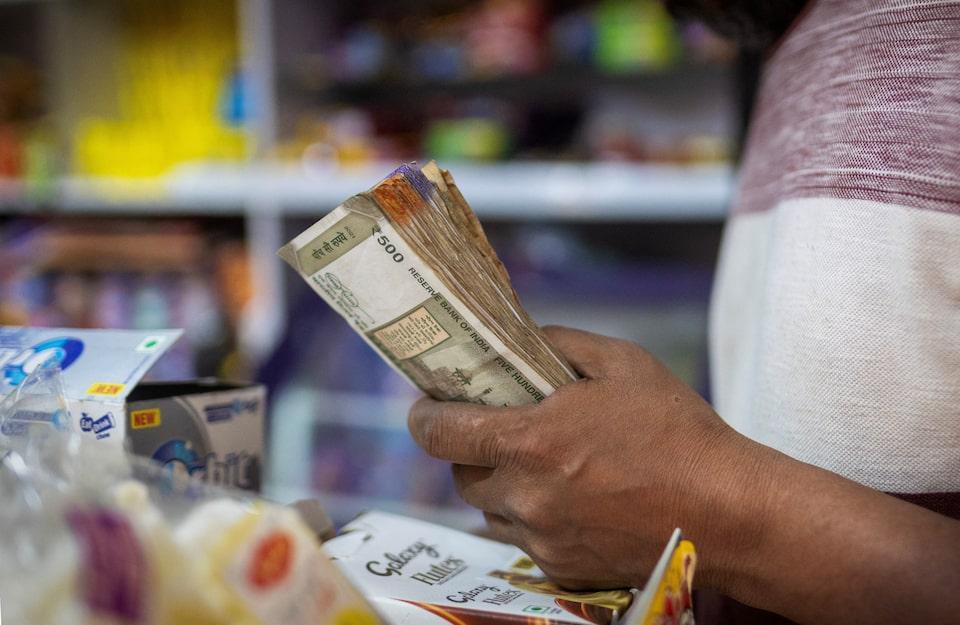
MUMBAI, July 9 (Reuters) - The Indian rupee is poised to open weaker on Wednesday, pressured by a renewed tariff barrage from U.S. President Donald Trump that widened the scope of his trade offensive. The 1-month non-deliverable forward indicated an open in the 85.74 to 85.78 range, versus 85.6950 in the previous session. Sign up here. "Trump keeps dropping headlines that make life tough for EM FX, and the rupee will react in kind," said a Mumbai-based currency trader at a bank. "If flows stay thin, we're heading right back to test the 85.90–86.00 zone", he said, noting that area has consistently acted a support level for rupee in recent sessions, with exporter orders lined up around those levels. Trump said he would impose a 50% tariff on imported copper and introduce long-mulled levies on semiconductors and pharmaceuticals, further ramping up his trade war. Trump threatened of 200% tariffs on drug imports, which he said could be delayed by about a year. A 200% pharma tariff would sharply raise the value-added U.S. tariff on Singapore, with India, Korea, and Malaysia witnessing a notable impact, Barclays said in a note. By contrast, a 50% copper tariff would have only a marginal effect on EM Asia, it said. Further, Trump reiterated a 10% tariff threat on goods from India and other BRICS nations. The measures mark a escalation in Trump’s trade war rhetoric, coming just a day after he targeted 14 U.S. trading partners, including major suppliers like South Korea and Japan, with higher tariffs. Trump’s comments at a White House cabinet meeting risk adding to the uncertainty already roiling the world economy, which has been rattled by the imposed and threatened tariffs. The dollar index rose Wednesday, heading for a third straight daily advance, underpinned possibly by safe-haven demand. Asian currencies slipped, while equity markets across the region posted declines. KEY INDICATORS: ** One-month non-deliverable rupee forward at 85.86; onshore one-month forward premium at 9.5 paise ** Dollar index up at 97.66 ** Brent crude futures at $70 per barrel ** Ten-year U.S. note yield at 4.41% ** As per NSDL data, foreign investors bought a net $322.9 million worth of Indian shares on July 7 ** NSDL data shows foreign investors sold a net $29 million Indian bonds on July 7 https://www.reuters.com/world/india/trumps-tariff-blitz-weigh-indian-rupee-hurts-asia-fx-2025-07-09/
2025-07-09 01:38
WASHINGTON, July 8 (Reuters) - White House economic adviser Kevin Hassett is emerging as a serious contender to be the next chair of the U.S. Federal Reserve, the Wall Street Journal reported on Tuesday, citing people familiar with the matter. Hassett met with President Donald Trump about the Fed job at least twice in June, the report said. Sign up here. Trump has previously said he has three or four people in mind as contenders for the top Fed job. Those reportedly include former Fed Governor Kevin Warsh, Hassett, current Fed Governor Christopher Waller, and Treasury Secretary Scott Bessent. Trump has repeatedly criticized current Fed Chair Jerome Powell for not cutting interest rates and has floated the idea of naming a successor soon. Powell is due to leave office in May 2026. https://www.reuters.com/world/us/white-house-adviser-hassett-emerging-serious-contender-next-fed-chair-wsj-2025-07-09/

2025-07-09 00:07
TOKYO, July 9 (Reuters) - Nissan Motor (7201.T) , opens new tab has suspended production of three vehicle models for Canada at its Tennessee and Mississippi plants amid mutual tariffs imposed by the U.S. and Canada on auto exports, the Nikkei reported on Wednesday. The production halt, which began in May, affects the Pathfinder and Murano SUVs made in Tennessee and the Frontier pickup trucks produced in Mississippi, the report said. Sign up here. Nissan was not immediately able to comment on the report, a spokesperson said. The Trump administration imposed 25% additional tariffs on auto imports in April, prompting Canada to implement retaliatory tariffs. Mazda Motor (7261.T) , opens new tab also halted Canada-bound production at its Alabama plant while boosting production for the U.S. market, the company said in May. While Canada is a relatively small market for Nissan, a suspension of exports would underscore the difficulty facing global automakers from the tariffs. The levies have also added to a deepening crisis at Nissan, which has been badly hit by deteriorating sales and an ageing vehicle lineup. It reported a $4.5 billion net loss in the financial year that ended in March and has declined to disclose a forecast for the current financial year, when it also faces some 700 billion yen ($4.8 billion) in debt coming due. Its debt ratings have been cut to "junk" by all three major credit-rating firms. Reuters reported last month that the automaker has asked some suppliers to allow it to delay payments to free up short-term funds, in a sign of its scramble to boost cash. Nissan does not have factories in Canada. In the last financial year it sold around 104,000 vehicles there, less than half of what it sold in Mexico and a little more than 10% of what it sold in the United States. Overall, Canada accounted for just 3% of Nissan's global sales in the last financial year. Nissan shares were down 2.8% in afternoon trade in Tokyo, underperforming a 0.24% rise in the benchmark Nikkei index (.N225) , opens new tab. https://www.reuters.com/business/autos-transportation/nissan-halts-production-three-models-canada-two-us-plants-nikkei-reports-2025-07-09/
2025-07-08 22:59
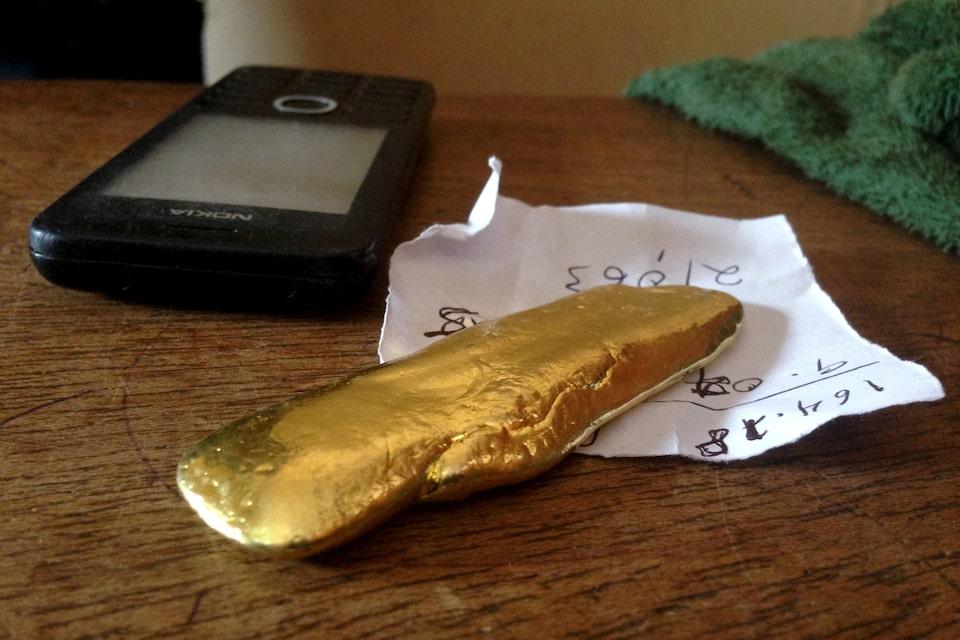
Ghana's first national anti-gold smuggling initiative launched Informants to receive 10% of seized gold's value as incentive ACCRA, July 8 (Reuters) - Ghana President John Dramani Mahama on Tuesday launched a task force backed by security forces to address illegal gold trading, as Africa's top producer seeks to recover billions of dollars lost to smuggling. The task force is Ghana's first national anti-gold smuggling initiative. The government has previously launched efforts to sanitize artisanal mining but these were unsuccessful in curbing illegal extraction and preventing revenue losses that plague most African , opens new tab gold producers. Sign up here. Ghana this year created the new gold board known as GoldBod to centralise gold trading. This has led to record official exports of 55.7 metric tonnes of gold valued at $5 billion in the first five months of 2025, Mahama said at the inauguration of the new task force. "This is money that would not have come back to Ghana because traders would have taken it and kept the foreign exchange outside," Mahama said. To encourage public cooperation with the new anti-smuggling task force, which will involve both soldiers and police officers, informants will receive 10% of the value of gold seized as a result of their tips, Mahama said. Ghana plans to implement a nationwide gold traceability system and transition to refined gold exports by 2026, Mahama added. The country will also seek to capture more value from gold through an assay laboratory, certified by the International Organization for Standardization to guarantee quality, and a specialized manufacturing hub. West African governments are striving to capture more revenue from surging commodity prices. Military-led nations are adopting aggressive policies, including rewriting mining codes, seizing assets and renegotiating contracts, while democracies like Ghana and Ivory Coast are pursuing measured reforms through higher royalties and enhanced revenue-sharing deals. Gold prices have jumped 25% this year to date, and peaked at $3,500 per ounce in April, according to Reuters data. https://www.reuters.com/world/africa/ghana-launches-task-force-curb-gold-smuggling-losses-2025-07-08/
2025-07-08 22:07
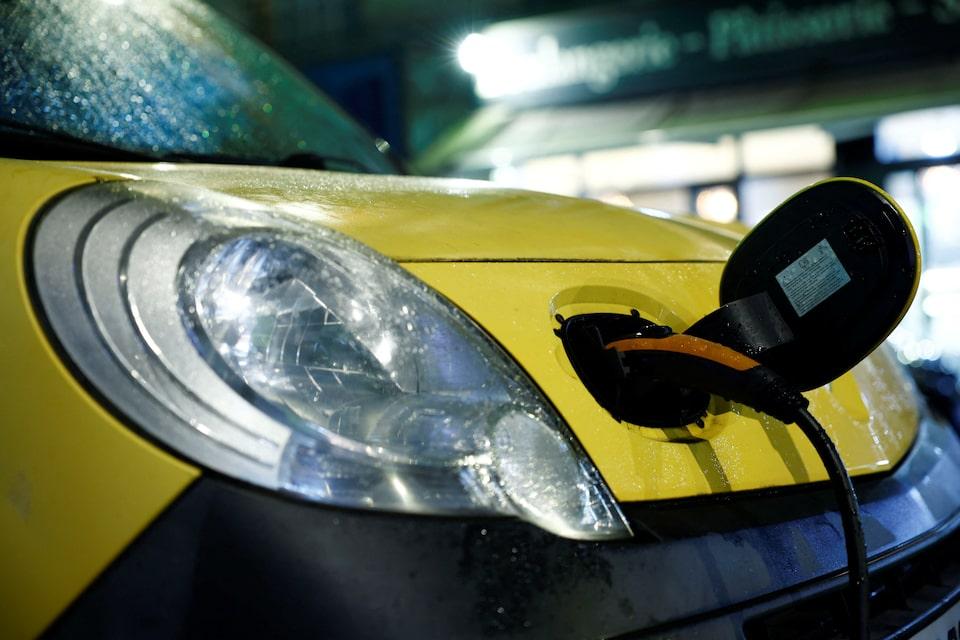
July 9 (Reuters) - Battery electric cars sold in Europe produce 73% less life-cycle greenhouse gas emissions than their gasoline counterparts, according to research firm, the International Council on Clean Transportation (ICCT). Meanwhile, other powertrains, including hybrids and plug-in hybrids, show only marginal or no progress in reducing their climate impacts, the ICCT said. Sign up here. WHY IT'S IMPORTANT European automakers will have longer to comply with EU C02 emissions targets for cars and vans and could reduce potential fines after the European Parliament gave its backing to a softening of the rules. Only battery electric cars can deliver the large-scale emission cuts needed to address Europe's most polluting transport mode, with passenger cars accounting for nearly three-quarters of the sector's emissions, the ICCT said. While hybridization offers some benefits, these reductions are relatively small when compared with the battery electric cars' emissions savings, which makes it insufficient to meet the long-term climate targets, the research company added. BY THE NUMBERS Hybrid and plug-in hybrid cars offer only 20% and 30% lower lifetime emissions than gasoline, respectively, as plug-in hybrids are found to be driven less on electricity than previously assumed, the company said. Europe's electricity mix is decarbonizing faster than expected, ICCT said, adding that by 2025, renewable energy sources are projected to account for 56% of electricity generation in Europe, representing an 18-point increase compared with 2020. KEY QUOTES "Battery electric cars in Europe are getting cleaner faster than we expected and outperform all other technologies, including hybrids and plug-in hybrids," said Marta Negri, researcher at the ICCT. "This progress is largely due to the fast deployment of renewable electricity across the continent and the greater energy efficiency of battery electric cars," she added. https://www.reuters.com/sustainability/climate-energy/battery-electric-cars-produce-73-less-emissions-research-2025-07-08/
2025-07-08 22:07
MADRID, July 9 (Reuters) - Spanish renewable developer Solarig will invest more than 300 million euros ($351.51 million) through the end of the decade to build and operate more than 20 biomethane plants in Italy, it said on Wednesday. The investment will be deployed through the company's biomethane subsidiary Biorig, which is also developing , opens new tab 20 plants in Spain. Sign up here. Biomethane can be produced from organic waste like food scraps or damaged crops. The portfolio in Italy will reach production of 90 million cubic meters a year, or almost 1 terawatt hour every year, the company said, enough to cover consumption for 360,000 Italian households. "Our goal is to become one of the leading biomethane producers in Europe, and to make this business one of Solarig's strategic pillars in the coming years, alongside the development of renewable energy projects," Biorig Director General Manuel Alonso said. ($1 = 0.8535 euros) https://www.reuters.com/sustainability/climate-energy/spains-solarig-invest-more-than-350-million-biomethane-plants-italy-2025-07-08/