2025-07-08 07:40
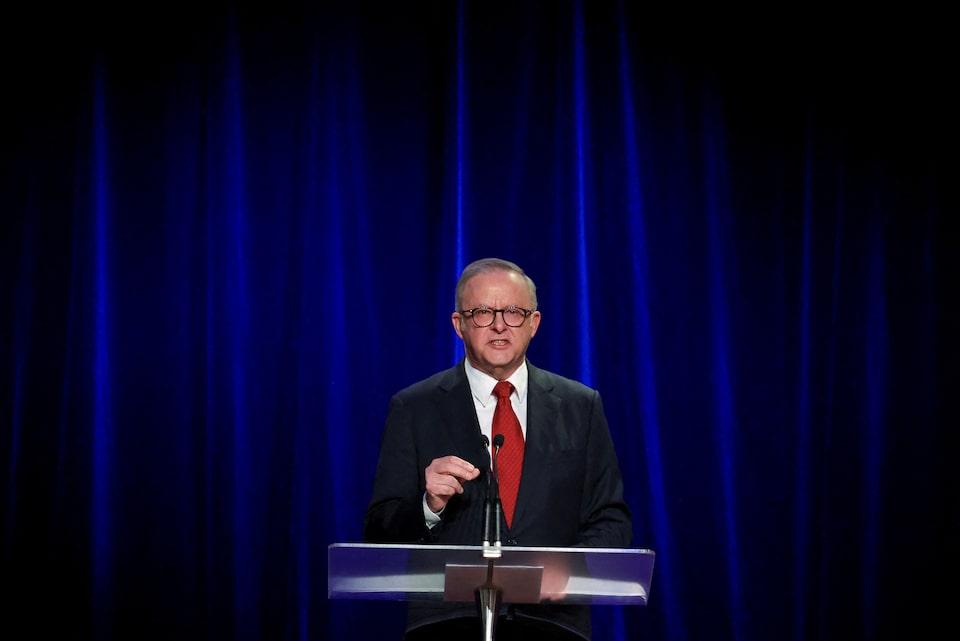
SYDNEY, July 8 (Reuters) - Australian Prime Minister Anthony Albanese said on Tuesday that he would visit China from this weekend as Beijing looks to build on partnerships on AI, green energy and the digital economy. "I look forward to going to Shanghai, Beijing and Chengdu, which I will visit from Saturday," Albanese told reporters in Hobart. He did not give more details about his trip. Sign up here. The Chinese foreign ministry confirmed that Albanese will be visiting the country from July 12 to 18. "China is willing to work with Australia to take this visit as an opportunity to strengthen communication, enhance mutual trust and expand practical cooperation," ministry spokesperson Mao Ning told a regular press conference. This would be Albanese's second visit to China as prime minister, after his re-election in May. Albanese's first visit to Beijing as prime minister in 2023 broke a seven-year freeze in diplomatic ties, and he emphasised the need for communication with China, despite differences between the two trading partners. Albanese's trip comes as China, its largest trading partner, suggested a review of the 10-year-old free trade agreement between the two countries to boost ties in agriculture and mining, and explore growth areas in new technologies. "We are willing to review the agreement with a more open attitude and higher standard," Xiao Qian, the Chinese ambassador to Australia, wrote in The Australian Financial Review on Monday. When asked if Australia would look to expand the free trade deal with China to include AI, Albanese said: "We will determine our policy". https://www.reuters.com/world/china/australias-albanese-confirms-china-visit-beijing-eyes-trade-deal-review-2025-07-08/
2025-07-08 07:39
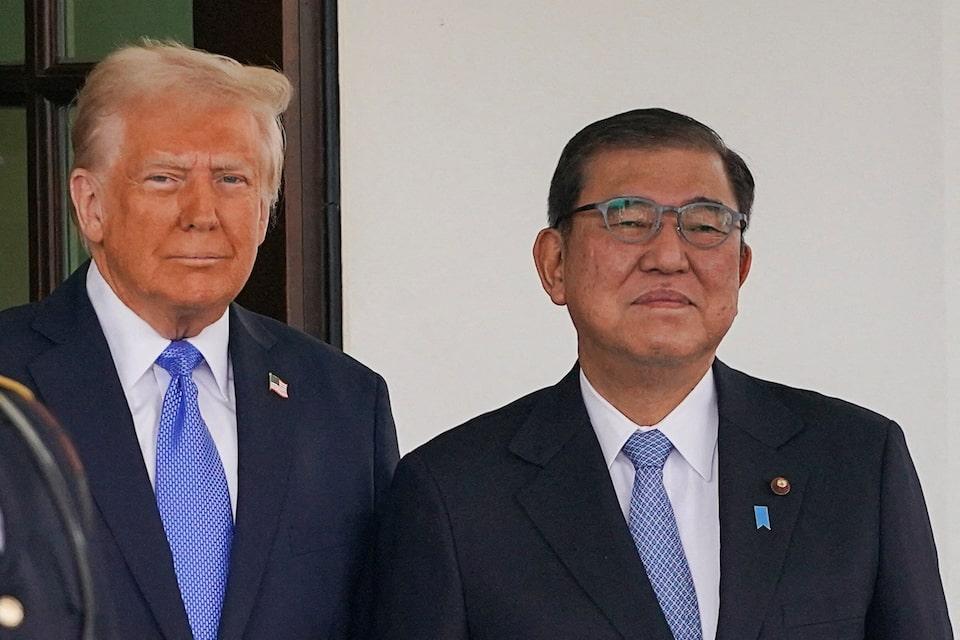
Japan's top trade negotiator says held phone talk with Lutnick Japan, US trying to agree on package of measures, Akazawa says Japan won't sacrifice agriculture for early deal Yen slumps on receding expectations of near-term BOJ rate hike July 20 election may complicate trade negotiation outcome TOKYO, July 8 (Reuters) - Japan's trade deal with the U.S. must include tariff concessions for its vital automobile industry, top trade negotiator Ryosei Akazawa said on Tuesday, after President Donald Trump announced 25% tariffs on goods from Japan starting August 1. Akazawa said he held a 40-minute phone talk with U.S. Commerce Secretary Howard Lutnick, where the two sides agreed to "actively" continue negotiations. Sign up here. "We are trying to agree on a package of measures" ranging from expanded trade, non-tariff barriers and cooperation on key economic security issues, Akazawa said at a news conference. "The two countries must garner trust through sincere dialogue, and reach common ground step by step. Through such a process, my job as negotiator is to agree on a full package as soon as possible." Trump on Monday began notifying trade partners of steep U.S. tariff hikes, but later indicated a willingness to delay implementation if countries made acceptable proposals. He also signed an executive order to put off the tariffs until August 1. Akazawa said Japan had no deadline in mind, including August 1, in reaching a deal with the U.S., and would not sacrifice Japan's agriculture sector for the sake of an early agreement. He also stressed that protecting the automobile sector, a mainstay of Japan's export-reliant economy that is being slapped with 25% tariffs, was among his top priorities. "There's no point striking a deal with the U.S. without an agreement on automobile tariffs," Akazawa said. Uncertainty on tariffs sent the dollar to a two-week high of 146.44 yen on fading expectations of a hawkish quarterly report from the Bank of Japan on July 31, which would have laid the groundwork for an interest rate hike this year. "If the new deadline is set on August 1, the BOJ probably won't be able to say much at the upcoming report in July," said Takeshi Ishida, a strategist at Kansai Mirai Bank. "Market expectations of a near-term rate hike will be rolled back." In a press conference on Tuesday, Finance Minister Katsunobu Kato said he had no plans for now to hold talks on exchange rate matters with U.S. Treasury Secretary Scott Bessent. ECONOMIC IMPACT Japan failed to clinch a deal with the U.S. before the July 9 expiration of Trump's temporary pause on his "reciprocal" tariffs, after it focused on eliminating automobile levies. With an upper house election on July 20, Prime Minister Shigeru Ishiba has said Japan will not make "easy concessions" for the sake of an early deal with Washington. Recent media polls have shown Ishiba's ruling coalition may fail to maintain a majority in the upper house, which could complicate trade negotiations, analysts say. U.S. tariffs also add to woes for Japan's economy, which shrank in the first quarter. "There's now a chance Japan could slide into recession," said Yoshiki Shinke, an economist at Dai-ichi Life Research Institute, who expects 25% tariffs to knock 0.7% point off Japan's annual economic growth. https://www.reuters.com/business/japan-will-continue-trade-talks-with-us-pm-ishiba-says-2025-07-08/
2025-07-08 07:17
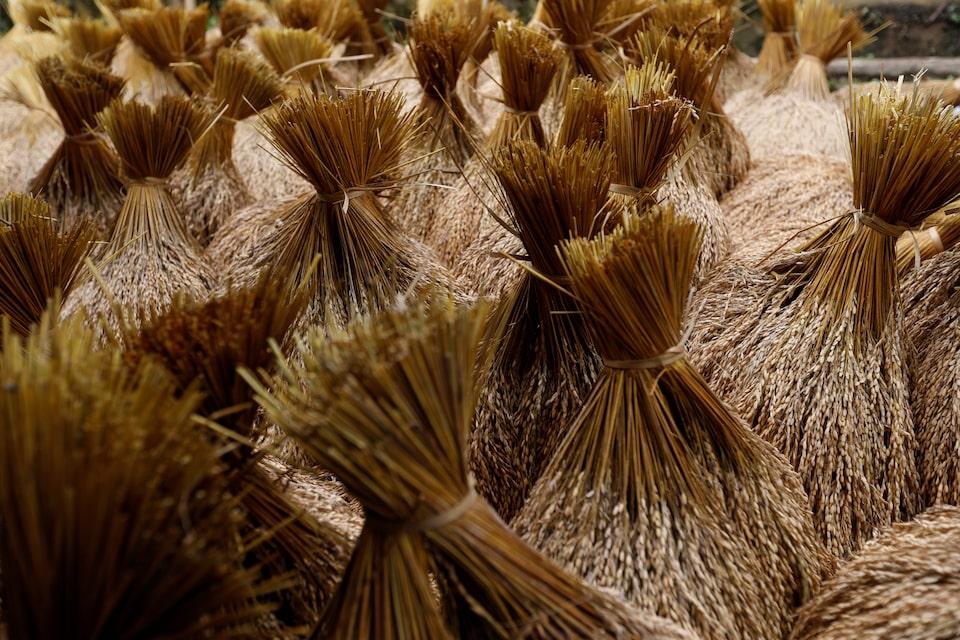
HANOI, July 8 (Reuters) - Vietnam will soon sign an agreement with Indonesia to boost long-term rice shipments, the Vietnamese government said on Tuesday in a statement, after exports plunged in the first half of the year. The statement came hours after Vietnamese Prime Minister Pham Minh Chinh met Indonesian President Prabowo Subianto on the sidelines of the BRICS summit in Brazil. Sign up here. Indonesia has been among Vietnam's key markets for rice, but deliveries in the first half of this year plummeted 97% to 19,000 metric tons. Vietnam is the world's third largest rice exporter after India and Thailand, but Indonesia slashed its purchases partly because of high domestic inventories. The Vietnamese government said the rice trade agreement would contribute to long-term and sustainable rice exports for Vietnam and would "ensure food security for Indonesia." At the meeting, Chinh also said he would instruct Vietnam's trade ministry to work with Indonesian authorities to further open each other's markets. https://www.reuters.com/markets/asia/vietnam-indonesia-agree-sign-rice-trade-deal-shipments-plunge-2025-07-08/
2025-07-08 07:13
Ryanair sees strong bookings, rising prices for summer Recent heatwave has no influence on travel Aims to treble traffic from Warsaw's Modlin airport by 2030 WARSAW, July 8 (Reuters) - Ryanair (RYA.I) , opens new tab said demand for travel this summer was showing no signs of cooling, with strong bookings and rising ticket prices, even as a severe heatwave recently engulfed Europe, Chief Executive Michael O'Leary said on Tuesday. O'Leary reaffirmed the Irish low-budget airline's May forecast, noting it expects to recover most, but not all, of the 7% decline in average fares recorded last year as consumers grappled with high interest rates. Sign up here. "Bookings into summer 2025 are strong, prices are rising," he said, adding that demand for destinations such as Italy, Greece, Spain, the Balearics, the Canaries and Morocco remains robust. The CEO also said market consensus anticipates Ryanair's after-tax profit for the first quarter ending in June to double, stating, "We see no reason to alter or object to that consensus, but we can't comment on that". The company is scheduled to release its first-quarter results on July 21. Addressing concerns over extreme weather, O'Leary described heatwaves as a "temporary phenomenon" that does not seem to be affecting travel patterns this summer. O'Leary, whose airline sources almost all of its aircraft from Boeing (BA.N) , opens new tab, said he was hopeful that commercial aircraft will be exempt from U.S. and EU tariffs, but admitted that "nobody is really sure". Speaking in Warsaw, O'Leary announced plans to treble the number of passengers Ryanair serves at the city's Modlin airport to more than 5 million a year by 2030. The company plans to invest $400 million in Modlin and double the number of aircraft based there to eight from four, while still flying from the city's main airport, Okecie. Air traffic in Modlin had been falling in the last three years due to a dispute with Ryanair over fares, but O'Leary said it would now be "the fastest growing airport in Poland". As part of the deal, Modlin Airport has undertaken to build at least four new passenger check-in desks and four new parking stands by September 2027. https://www.reuters.com/business/aerospace-defense/ryanair-has-strong-bookings-summer-says-ceo-2025-07-08/
2025-07-08 06:37
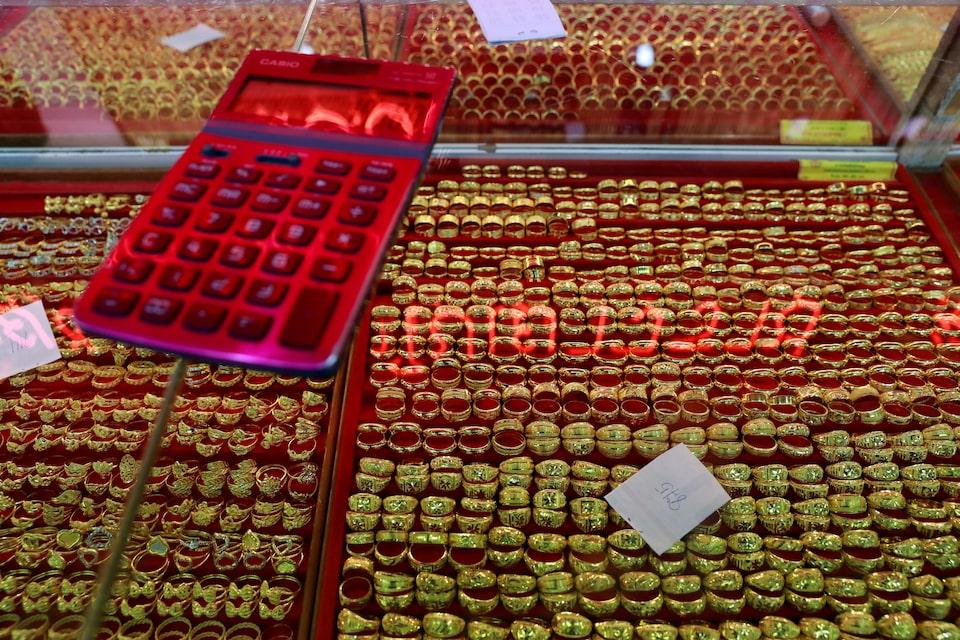
Trump unveils 25% tariffs on Japan, South Korea Higher tariff rates to take effect from August 1 Fed to release minutes from latest meeting on Wednesday July 8 (Reuters) - Gold prices were little changed on Tuesday, caught between safe-haven demand following U.S. President Donald Trump's new tariff proposals for trading partners, including Japan and South Korea, and rising Treasury yields that capped any upside momentum. Spot gold eased 0.1% to $3,331.85 per ounce, as of 0612 GMT. U.S. gold futures was steady at $3,341.80. Sign up here. On Monday, Trump began telling trade partners that sharply higher U.S. tariffs would start on August 1, marking a new phase in the trade war he launched earlier this year, with tariffs on goods from Japan and South Korea set at 25%. The August 1 deadline for implementing the tariffs was firm, Trump said, adding that he would consider extensions if countries made proposals. "Reciprocal tariffs" were capped at 10% until July 9 to allow for negotiations, but only agreements with Britain and Vietnam have been reached so far. "Traders seem relatively unfazed by Trump's tariff letters, and with safe-haven demand largely contained at this point, gold is still just biding its time, waiting for a topside breakout to potentially occur," KCM Trade Chief Market Analyst Tim Waterer said. The higher bond yields and resilience in Asian markets to tariff developments are curbing gold's immediate upside potential, Waterer added. The yield on benchmark U.S. 10-year notes hovered near a two-week high. Higher yields increase the opportunity cost of holding non-yielding bullion. Meanwhile, China warned the Trump administration against reigniting trade tensions by restoring tariffs on its goods next month, and threatened to retaliate against nations that strike deals with the U.S. to cut China out of supply chains. Trump's tariffs have stoked inflation fears, further complicating the Federal Reserve's path to lower interest rates. The minutes of the Fed's June meeting, due on Wednesday, should offer more clues into the central bank's policy outlook. Spot silver held steady at $36.75 per ounce, platinum fell 0.1% to $1,368.93 and palladium rose 0.2% to $1,112.88. https://www.reuters.com/world/india/gold-holds-ground-investors-assess-us-tariff-hike-2025-07-08/
2025-07-08 06:30
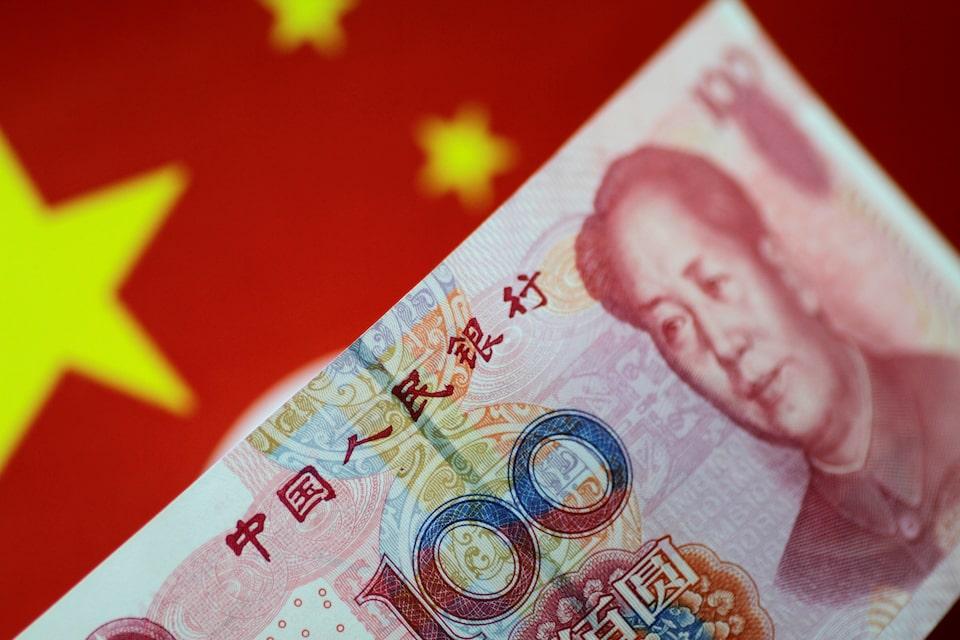
July 8 (Reuters) - Chinese businesses and investors are primed for the yuan to stay steady for now and eventually depreciate as U.S. trade tensions drag on, and a string of measures and hints from monetary authorities suggest they may be on the money. A growing pile of foreign exchange deposits at banks and a rise in currency swaps show Chinese corporates and households are wagering they can exchange their dollars for more yuan if they wait. Sign up here. That conviction, in the face of the U.S. dollar's broad-based slide against most other currencies, is driven for the most part by central bank's efforts to keep the currency steady and even encourage more investment offshore. It also shows the People's Bank of China (PBOC) is in a bind. A sudden yuan move in either direction could trigger a wave of selling of billions of dollars by businesses and households, either to catch better yuan levels or to stave off losses. China's yuan has strengthened 1.5% against the flagging dollar since April 2, when U.S. President Donald Trump announced punishing trade tariffs on scores of countries, leading to market ructions that have eroded confidence in U.S. economic policymaking and the dollar's haven appeal. In the same period, currencies such as the Thai baht , South Korea's won and Taiwan dollar have risen between 6% and 14%. The yuan has spent most of 2025 in a narrow range between 7.15 and 7.35 to the dollar, its weakest levels in 4-1/2-years in trade-weighted terms (.CFSCNYI) , opens new tab. The export sector, comprising a fifth of economic growth, is grappling with higher U.S. import tariffs of as much as 55% going by the latest trade framework agreed between the world's two biggest economies in early June. China was initially singled out with tariffs exceeding 100% and has until August 12 to reach an agreement with the White House to keep Trump from reinstating additional import curbs imposed during tit-for-tat tariff exchanges in April and May. "Considering the external risks from U.S. trade policies, China needs to maintain a very competitive currency with respect to other markets outside the U.S.," said Eugenia Victorino, head of Asia strategy at SEB. PBOC SIGNALS The PBOC did not respond to a Reuters request for comments. Since May, it has managed its daily yuan "guidance" settings to indicate it doesn't desire too much strength in the yuan. It has also signalled willingness for mainland investors to shift some of their money from low-yielding onshore markets to stocks and bonds in Hong Kong, which some analysts suspect is to generate some selling pressure on the yuan. Authorities approved a fresh $3.08 billion quota for domestic institutions (QDII) to invest in overseas assets in June. On Tuesday, the PBOC said the southbound leg of the Bond Connect scheme, which enables institutions on the mainland to access Hong Kong's bond market, will be expanded to brokerages, insurers, mutual funds and wealth managers. China's central bank also surveyed some financial institutions last week asking them about their views on recent U.S. dollar weakness, sources told Reuters on Monday. "The PBOC has been prioritising currency stability for quite some time, so while most of the focus the past couple of years has been on preventing rapid depreciation, this also applies to manage the pace of appreciation as we're now seeing," said Lynn Song, chief economist for Greater China at ING. "My forecast band for this year was set at 7 to 7.4, and I believe it is likely that this band will still hold through the year." Unsurprisingly, rampant dollar hoarding by Chinese businesses has continued, encouraged also by the high yields on U.S. dollar assets. Foreign exchange deposits grew $137.2 billion in the first five months of this year, or 19% year-on-year, to $990.1 billion at end-May, PBOC data showed. Reuters calculations showed the conversion ratio - a gauge that measures households' and corporates' willingness to sell dollars for yuan - has slipped. Wary of missing out on potential gains from yuan depreciation, exporters have turned to currency swaps to temporarily obtain yuan. Commercial banks facilitated $277.5 billion of currency swaps on behalf of their clients between January and May, a 10% increase over the same period last year, according to data from regulators. https://www.reuters.com/business/finance/china-inc-bets-beijing-will-keep-tight-grip-yuan-us-tariff-fears-persist-2025-07-08/