2025-07-07 21:19
July 7 (Reuters) - The U.S. nuclear regulator has allowed utility Vistra (VST.N) , opens new tab to extend the operation of its Perry nuclear power plant by an additional 20 years through 2046, the company said on Monday. The company is currently operating under its initial 40-year license and had submitted its application to the Nuclear Regulatory Commission for renewal in 2023. Sign up here. The U.S. Energy Information Administration expects electricity consumption to hit record highs in 2025 and 2026, fueled by surging demand from data centers supporting Big Tech's AI growth. The 1,268-megawatt Perry facility is the last of Vistra's six nuclear reactors to secure a license extension, enabling all of them to operate for a total of 60 years. https://www.reuters.com/business/energy/vistra-gets-20-year-extension-its-ohio-power-plant-2025-07-07/

2025-07-07 21:09
TRIPOLI, July 8 (Reuters) - Oil Majors BP (BP.L) , opens new tab and Shell (SHEL.L) , opens new tab have made agreements with Libya's National Oil Corp (NOC) to conduct studies for hydrocarbon exploration and development at three Libyan oilfields, NOC said on Monday. Libya, Africa's second-largest oil producer and a member of the Organization of the Petroleum Exporting Countries, has suffered from disruptions to its oil activities due to disputes between armed rival factions over oil revenues that have often led to oilfield shutdowns. Sign up here. Foreign investors have been wary of putting money into Libya, which has been in a state of chaos since the overthrow of Muammar Gaddafi in 2011. However, oil giants like Eni (ENI.MI) , opens new tab, OMV (OMVV.VI) , opens new tab, BP, and Repsol (REP.MC) , opens new tab resumed exploration activities in Libya last year after halting them for a decade. BP will reopen its office in the capital Tripoli during the last quarter of 2025, NOC said in its statement on Monday. It also said it signed a memorandum of understanding with BP to conduct studies to assess the potential for hydrocarbon exploration and production in the Messla and Sarir oilfields, as well as in some surrounding exploration areas. BP will also study broader "unconventional" oil and gas potential within the country, which refers to extracting hydrocarbons trapped in porous rock formations, requiring specialised extraction technologies such as fracking. The British oil major had re-entered Libya in 2007 with an exploration and production sharing agreement covering exploration areas A and B (onshore), and area C (offshore) with NOC, which was later suspended due to a force majeure. In 2022, Eni took a 42.5% stake and assumed operatorship of the agreement, with BP retaining a 42.5% interest and the Libyan Investment Authority holding the remaining 15%. The force majeure was formally lifted in 2023, allowing onshore exploration to resume. Separately, the state oil firm said it agreed with Shell to evaluate hydrocarbon prospects and conduct a comprehensive technical and economic feasibility study to develop the Atshan oilfield and other fields fully owned by NOC. https://www.reuters.com/business/energy/bp-shell-study-hydrocarbon-potential-three-libyan-oilfields-2025-07-07/
2025-07-07 21:03
HOUSTON, July 7 (Reuters) - Exxon Mobil (XOM.N) , opens new tab signaled on Monday that lower oil and gas prices could cut its second-quarter earnings by about $1.5 billion from the previous quarter's level. The earnings snapshot from the largest U.S. oil producer is closely watched for clues on how the broader oil sector will fare when companies begin releasing quarterly results in a few weeks. Sign up here. Benchmark Brent crude prices averaged $66.71 per barrel during the April to June quarter, an 11% decline from the previous quarter, as more crude supply from the OPEC+ group of producers weighed on prices. U.S. natural gas prices declined 9% from the first quarter. Exxon said in the regulatory filing that it will release the final quarterly results on Aug. 1. Wall Street expects Exxon to report adjusted earnings of $1.53 per share for the second quarter, according to estimates compiled by LSEG. The company had posted $6.8 billion in upstream earnings for the first quarter. Its total profit in that quarter was $7.71 billion. https://www.reuters.com/business/energy/exxon-mobil-signals-fall-second-quarter-upstream-profit-regulatory-filing-2025-07-07/
2025-07-07 20:39
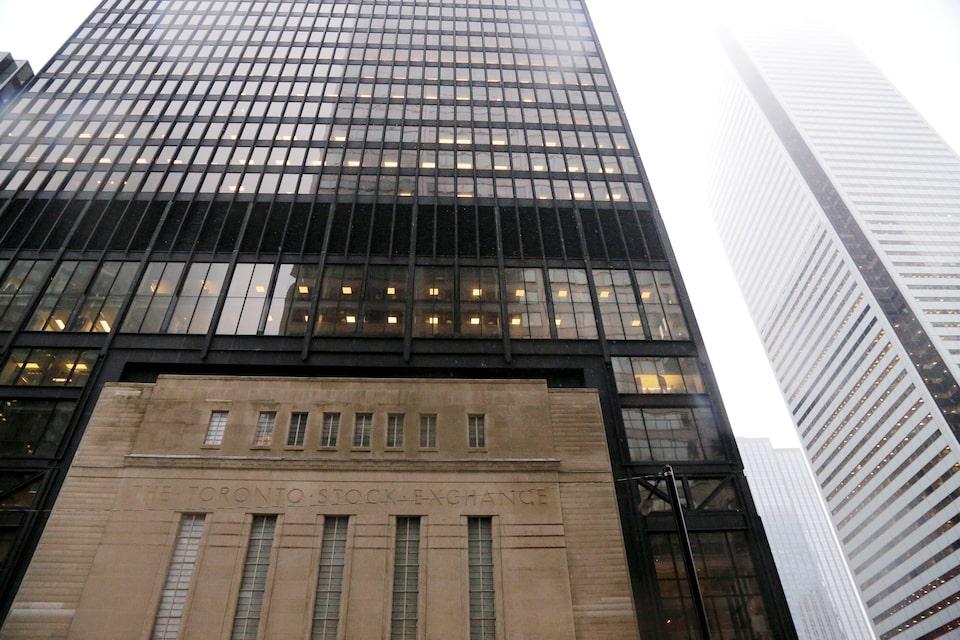
July 7 (Reuters) - Canada's main stock index closed lower on Monday, tracking U.S. markets after U.S. President Donald Trump announced fresh tariffs against Japan and South Korea, sparking trade jitters among Canadian investors. The benchmark S&P/TSX composite index (.GSPTSE) , opens new tab closed down 15.88 points, or 0.06%, at 27,020.28. Sign up here. The TSX turned lower earlier in the day while investors awaited updates on trade developments. The index had posted fresh all-time highs every day last week and touched another record high on Monday before turning red. Wall Street's major indexes closed lower after Trump's tariff announcements. "It's more just a warning that these are friendly countries that are getting to the tariffs, and that's probably a reminder that Canada is not out of the woods yet," said Greg Taylor, chief investment officer at PenderFund Capital Management. "We're starting to see that the tariff (worries) haven't gone away yet fully, that there's still going to be uncertainty around earnings. Investors are saying, 'Well, we've had such big gains. Why don't we hit pause and take some profits?'" Healthcare (.GSPTTHC) , opens new tab stocks fell 0.3% and energy (.SPTTEN) , opens new tab stocks were down 0.6%. Mining (.GSPTTMT) , opens new tab stocks gained 1.2% as gold pared losses after Trump's tariff news, prompting some safe-haven interest. Among individual stocks, ATS Corporation (ATS.TO) , opens new tab was the biggest loser on the TSX, falling 8%, as CEO Andrew Hider is set to leave the company. Sandstorm Gold (SSL.TO) , opens new tab gained 6.2% after Royal Gold (RGLD.O) , opens new tab said it will acquire the company for about $3.5 billion. Horizon Copper (HCU.V) , opens new tab gained 67.7% after Royal Gold announced the acquisition of the company in an all-cash deal worth $196 million. https://www.reuters.com/markets/europe/tsx-futures-rise-us-postpones-tariff-deadline-2025-07-07/
2025-07-07 19:46
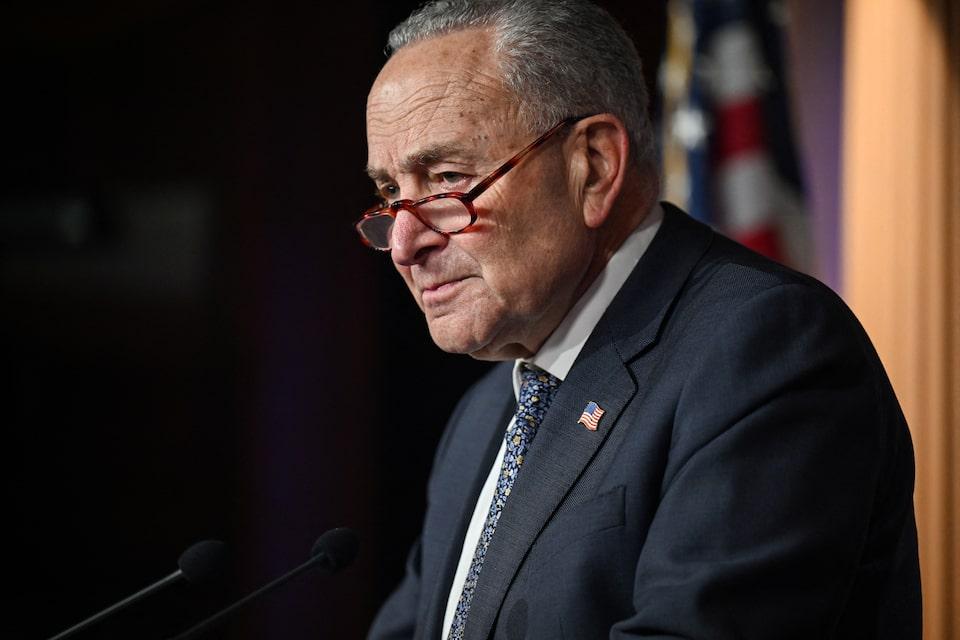
Schumer requests probe into NWS staffing and flood response NWS defends its forecasting amid criticism from Texas officials Trump denies federal cuts affected NWS disaster response DOGE initiative led to early retirements at NWS NWS San Antonio office faced staffing vacancies during flood WASHINGTON, July 7 (Reuters) - The U.S. Senate's top Democrat on Monday asked a government watchdog to investigate whether cuts at the National Weather Service affected the forecasting agency's response to catastrophic and deadly flooding in Central Texas. Senate Democratic Leader Chuck Schumer asked the Department of Commerce's acting inspector general Monday to probe whether staffing vacancies at the NWS's San Antonio office contributed to "delays, gaps, or diminished accuracy" in forecasting the flooding. He asked the watchdog to scrutinize the office's communications with Kerr County officials. Sign up here. The NWS did not immediately respond to a request for comment on Schumer's letter. It defended its forecasting and emergency management in a statement Monday, adding that it assigned extra forecasters to the San Antonio and San Angelo offices over the holiday weekend. A top three leadership role at the NWS's San Antonio office has been vacant since earlier this year after Paul Yura, the U.S. forecasting agency's warning coordination meteorologist , opens new tab for San Antonio, accepted an offer from the Trump administration to retire. Yura's role was to form relationships with local emergency managers and officials, with the goal of building trust in the community before disaster strikes. DOGE, the Trump administration's cost-cutting effort, has been pushing the NWS to cut jobs. It gave hundreds of employees the option , opens new tab to retire early, rather than face potential dismissal. The NWS's San Antonio office is responsible for forecasting the area's weather, collecting climate data and warning the public about dangerous conditions. Texas officials criticized the NWS over the weekend, arguing it failed to warn the public about impending danger. The office sent a stream of flash flood warnings on Thursday and Friday across the digital and radio services it uses to communicate with public safety professionals, according to alert records. The messages grew increasingly urgent in the early morning hours on Friday. The team sent an emergency text message to area cell phones at about 1:14 a.m., calling it a "dangerous and life-threatening situation." Phones must have reception or be near a cell tower to receive that message, said Antwane Johnson, former director of FEMA's public alert team. Mobile coverage is spotty in areas around the Guadalupe River, according to Federal Communications Commission records last updated in December. "Even though those messages were issued, it does not mean it got to the people who needed them," said Erik Nielsen, who studies extreme rain at Texas A&M University. The death toll from the catastrophic floods reached at least 78 on Sunday, including at least 28 children. It is not clear whether the opening for a warning coordination meteorologist contributed to NWS's forecasting and alerts. Jon Zeitler, the office's science and operations officer, also left NWS's San Antonio office around the same time in April, according to his LinkedIn profile. Zeitler was responsible for training new hires. Reuters could not confirm why he exited. The office's other management roles are filled, according to its website , opens new tab. U.S. President Donald Trump on Sunday was asked by reporters about whether federal government cuts hobbled the disaster response or left key job vacancies at the NWS under Trump's oversight. "They didn't," Trump told reporters prior to boarding Air Force One in Morristown, New Jersey. https://www.reuters.com/business/environment/schumer-wants-probe-national-weather-service-response-texas-2025-07-07/
2025-07-07 19:22
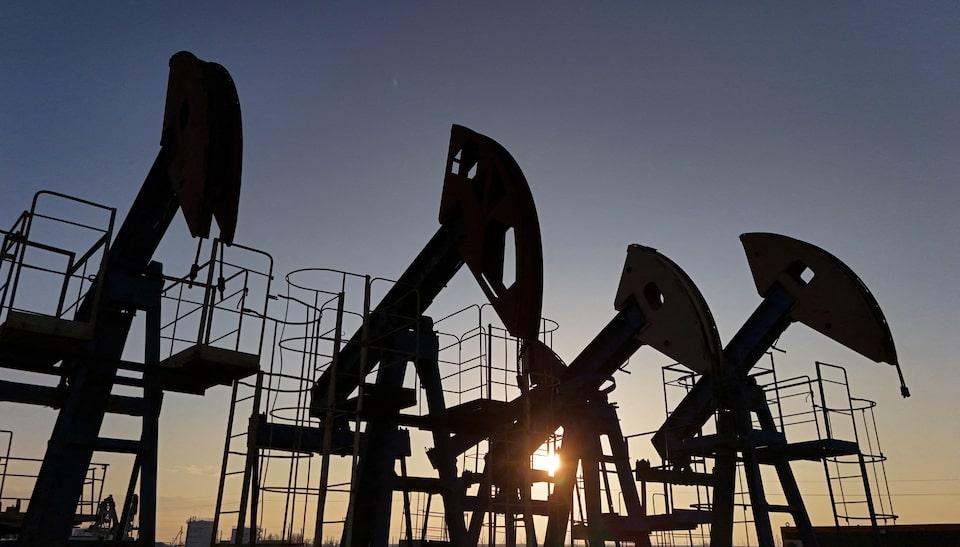
OPEC+ to raise output by 548,000 bpd in August Goldman expects a final 550,000 bpd OPEC+ hike for September US higher tariffs to take effect on August 1 HOUSTON, July 7 (Reuters) - Oil prices rose nearly 2% on Monday as signs of strong demand more than offset the impact of a higher-than-expected OPEC+ output hike for August and fresh concerns about the potential impact of U.S. tariffs. Brent crude futures settled up $1.28, or 1.9%, at $69.58. U.S. West Texas Intermediate crude settled up 93 cents or 1.4%, at $67.93. Early in the session, Brent had fallen as low as $67.22 and WTI's session low was $65.40. Sign up here. "The supply picture definitely looks to be elevating, however, the stronger demand is remaining above expectations as well," said Dennis Kissler, senior vice president of trading at BOK Financial. Travel industry statistics released last week showed that a record number of Americans had been set to travel for the Fourth of July holiday by road and air. On Saturday, the Organization of the Petroleum Exporting Countries and allies in OPEC+ agreed to raise production by 548,000 barrels per day in August, exceeding the 411,000-bpd hikes they made for the prior three months. The OPEC+ decision will bring nearly 80% of the 2.2 million-bpd voluntary cuts from eight OPEC producers back into the market, RBC Capital analysts, led by Helima Croft, said in a note. However, the actual output increase has been smaller than planned so far and most of the supply has been from Saudi Arabia, analysts said. In a show of confidence about oil demand, Saudi Arabia on Sunday raised the August price for its flagship Arab Light crude to a four-month high for Asia. Goldman analysts expect OPEC+ to announce a final 550,000-bpd increase for September at the next meeting on August 3. Oil had also come under pressure as U.S. officials flagged a delay regarding when tariffs would begin, but failed to provide details on changes to the rates that will be imposed. Investors are worried that higher tariffs could slow economic activity and oil demand. The U.S. will make several trade announcements in the next 48 hours, Treasury Secretary Scott Bessent said on Monday, adding his inbox was full of last-ditch offers from countries to clinch a tariff deal before a July 9 deadline. "Although U.S. trade policy is still unfolding, the U.S. is extending deadlines and backing away from punitive tariffs, helping to lift some of the demand gloom in place since April," said Jeffrey McGee, managing director of advisory firm Makai Marine Advisors. Meanwhile, Yemen’s Iran-aligned Houthis said on Monday a cargo ship they struck with gunfire, rockets and explosive-laden remote-controlled boats had sunk in the Red Sea, after their first known attack on the high seas this year. Israeli Prime Minister Benjamin Netanyahu was due to meet with Trump at the White House on Monday, while Israeli officials hold indirect talks with Hamas aimed at reaching a U.S.-brokered Gaza ceasefire and hostage-release deal. Iranian President Masoud Pezeshkian said he believes Iran can resolve its differences with the U.S. through dialogue, but trust would be an issue after U.S. and Israeli attacks on his country, according to an interview released on Monday. https://www.reuters.com/business/energy/oil-rises-strong-demand-outweighs-larger-than-expected-opec-output-hike-2025-07-07/