2025-07-07 19:12
Liberian-flagged bulk carrier Magic Seas attacked on Sunday Attack ended half a year of calm in the Red Sea DUBAI, July 7 (Reuters) - Yemen’s Iran-aligned Houthis said on Monday that a cargo ship they struck with gunfire, rockets and explosive-laden remote-controlled boats had sunk in the Red Sea, after their first known attack on the high seas this year. The ship's Greek operator Stem Shipping told Reuters it had no independent verification. Reuters could also not immediately verify whether the ship had sunk. Sign up here. The Houthis claimed responsibility for Sunday's assault and said they had allowed the 19 crew members to disembark from the Liberian-flagged bulk carrier, the Magic Seas. All crew were rescued by a passing merchant vessel and were expected to arrive in Djibouti later on Monday, Stem Shipping told Reuters. The United Arab Emirates said on Monday it had successfully rescued all 22 people aboard the Magic Seas after an AD Ports Group vessel, Safeen Prism, responded to a distress call from the commercial ship following an attack in the Red Sea. The Magic Seas was taking on water after the attack and remained at risk of sinking, the company’s representative, Michael Bodouroglou, had said earlier. The ship had been carrying iron and fertiliser from China to Turkey. The attack ended half a year of calm in the Red Sea, one of the world's busiest shipping routes, where Houthi attacks from the end of 2023 through late 2024 had disrupted shipping between Europe and Asia through the Suez Canal. The Houthis launched more than 100 attacks on ships in the Red Sea, the Gulf of Aden and the Bab al-Mandab Strait that links them, in what they described as solidarity with the Palestinians after war erupted in Gaza in 2023. But those attacks had halted this year, with the last known to have taken place in December. ISRAELI STRIKES Houthi military spokesperson Yahya Saree said in a televised statement that the vessel was targeted on Sunday after naval forces issued warnings and calls that were ignored by the ship’s crew. He said it was struck using two unmanned boats, five missiles and three drones. According to advisories from the United Kingdom Maritime Trade Operations and British security firm Ambrey, which both monitor security incidents in the area, the vessel was first approached by eight small boats that opened fire and launched self-propelled grenades. Armed guards returned fire. It was later struck by four remote-controlled boats, or Unmanned Surface Vehicles, and targeted with missiles, Ambrey said. "Two of the USVs impacted the port side of the vessel, damaging the vessel's cargo," it said. UKMTO said the strikes triggered a fire onboard. Separately, the Israeli military said on Monday it had struck three Houthi-controlled ports. There was no indication that the Israeli strikes were linked to the attack at sea. During their campaign against shipping, Houthi attackers have sunk two vessels, seized another and killed at least four seafarers. The campaign prompted global shipping firms to reroute vessels around the Horn of Africa, raising global shipping costs and times. The United States and its allies responded last year with air strikes. In June, tensions in the region escalated following a 12-day war between Israel and Iran, which Washington joined with U.S. airstrikes on Iranian nuclear sites. President Donald Trump had announced a halt to U.S. strikes on the Houthis, saying the group had agreed to stop interfering with key shipping routes. (This story has been corrected to remove the reference to the ship being British-flagged, after UAE corrected its post, in paragraph 5) https://www.reuters.com/world/europe/ship-risk-sinking-after-first-houthi-red-sea-attack-this-year-2025-07-07/

2025-07-07 18:57
Lack of agreement to pay bondholders, confusing evaluation criteria worry some participants First bidding round last year failed to please creditors If approved, Gold Reserve group's bid would cover 11 creditors HOUSTON, July 7 (Reuters) - Holders of a defaulted Venezuelan bond, some creditors and bidders that participated in a U.S. auction of shares in the parent of Venezuela-owned refiner Citgo Petroleumfiled objections to the auction's recommended outcome, court documents released on Monday showed. The challenge to the $7.4 billion offer by a group led by a unit of miner Gold Reserve (GRZ.V) , opens new tab could again derail the sale. Citgo, Venezuela's priced foreign asset, has been put on the auction block to pay creditors who lost billions to the South American country's expropriations and defaults. Sign up here. Proceeds from the court-organized auction of PDV Holding are expected to compensate up to 15 creditors fighting since 2017 to recover nearly $19 billion in U.S. courts. The latest bidding round was the second organized to auction the parent of Houston-based Citgo Petroleum after a failed round last year. Last week, a court officer overseeing it recommended an offer by Gold Reserve's subsidiary Dalinar Energy Corporation to Delaware Judge Leonard Stark. If approved, the Gold Reserve group's bid would cover 11 of the creditors, including its own $1.18 billion claim for the expropriation of mining assets in Venezuela. Contrary to other bids, Dalinar's offer did not include an agreement to pay holders of a key defaulted Venezuelan bond collateralized with Citgo equity, which has triggered most of the objections. A lack of clarity about the evaluation criteria also created confusion about the bidding round's goal, the objections filed showed. Gold Reserve and lawyers representing the holders did not immediately reply to requests for comment. BONDHOLDERS IN OR OUT? Some participants view a pact with the bondholders as essential to clear the way for a transfer of the shares to the winning consortium. Others say the holders first need to win in a New York court, where they are fighting since 2019 to have their claim enforced. In a briefing call in late June, Judge Stark told a counsel of court officer Robert Pincus that he was "highly confident" there was going to be further litigation in the case after the bid recommendation, according to a transcript of the call. Pincus oversees the auction as "special master." Stark will receive objections to the recommended bid through July 9. Any competing bidder can also disclose its offer's terms to challenge the winner. A final hearing on the sales process is scheduled for August 18. In parallel, Judge Katherine Polk Failla from the Southern District of New York will hold a hearing on July 10 where the bondholders will seek relief, including through an injunction, to preserve their claim, they said. The Gold Reserve group's proposed transaction "appears designed to interfere with the 2020 bondholders' ability to protect their rights," the bondholders told Stark in a filing on Monday. "The special master conducted a deficient process in which he failed to generate highest and best bids by instead encouraging bids that contemplate transactions that have no meaningful prospect of closing," they added. Another creditor in the Delaware auction, U.S. oil producer ConocoPhillips (COP.N) , opens new tab, told the court it would have insufficient options to select another bidder if the bondholders block Gold Reserve's transaction. ConocoPhillips said this "could render the financing structure for the Gold Reserve bid impossible or impracticable." A $7.3 billion offer by an affiliate of hedge fund Elliott Investment Management was rejected last year by most creditors, creating the need for a new bidding round this year. https://www.reuters.com/business/energy/bondholders-bidders-ready-objections-gold-reserve-groups-citgo-bid-2025-07-07/
2025-07-07 15:39
BRASILIA, July 7 (Reuters) - Brazil plans to return to international debt markets later this year after successful issuances in the first half, Treasury Secretary Rogerio Ceron said in an interview last week, adding that a new sustainable bond is also under consideration. "Brazil has a very favorable risk spread," Ceron told Reuters. "We will definitely remain active in external markets in the second half." Sign up here. Latin America's largest economy raised $2.5 billion in dollar-denominated sovereign bonds in February and $2.75 billion in June. The last time Brazil conducted more than two sovereign bond sales abroad in a single year was in 2014. Ceron acknowledged investor concerns over the country's rising public debt, but noted that similar trends are playing out across major economies. Amid a global reallocation of assets driven by shifts in U.S. economic policy, he said Brazil stands out due to its high share of local-currency debt and elevated real interest rates, an increasingly attractive combination as inflation eases. These factors, he said, have fueled strong capital inflows, reflected in a currency that has gained more than 10% this year, rising corporate bond issuances, more foreign participation in public debt markets and gains in local equities. "There's a significant interest rate differential and a macro environment that makes sharp currency depreciation unlikely, since capital is flowing in. So it's almost a perfect window for non-resident investors to allocate funds here and benefit," Ceron said. With debt rollovers running at about 140% of maturities, well above the historical average around 100%, Brazil's Treasury has ramped up domestic issuance, mainly to capitalize on what Ceron called "a great moment" in the market, while also preparing for potential volatility ahead of the 2026 election. He left open the possibility of revising the Annual Financing Plan (PAF) to extend the current strategy through year-end, with a decision expected next month. "We'll evaluate together whether it's better to maintain the current pace or dial it back to stay within the PAF," Ceron said. Ceron also pointed to last week's successful sale of inflation-linked bonds at yields below 7%, the lowest since last year. Amid a dispute between the government and Congress over a decree raising the IOF tax levied on some financial transactions, the secretary defended the measure as essential to meeting next year's fiscal target. He also stressed the need for congressional approval of an executive measure to harmonize income tax rates on financial investments and impose a 5% levy on currently tax-exempt debt securities. https://www.reuters.com/world/americas/brazil-return-global-bond-market-this-year-treasury-secretary-says-2025-07-07/

2025-07-07 14:42
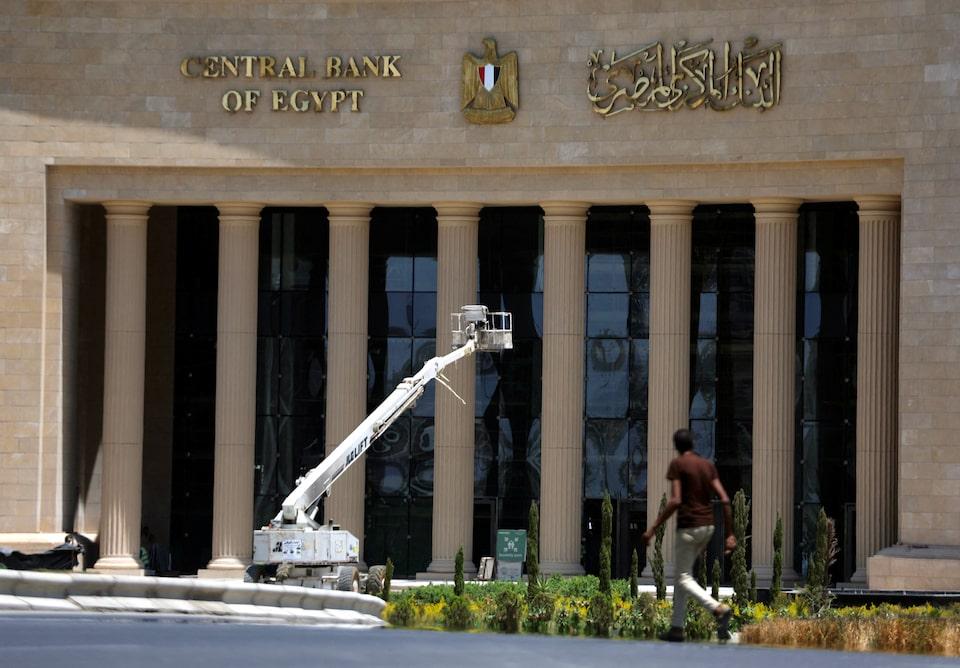
CAIRO, July 7 (Reuters) - The Central Bank of Egypt is likely to leave its main overnight interest rates unchanged on Thursday, pausing a trend of rate reductions following a stubborn increase in inflation over the last few months, a Reuters poll showed. Median forecasts in the poll of 19 analysts indicated the central bank would leave the deposit rate at 24% and the lending rate at 25%. Sign up here. The central bank lowered rates by 100 basis points on May 22 and by 225 basis points on April 17, its first adjustments since March 6, 2024, when it hiked rates and let the currency slide sharply against the dollar, part of an $8 billion International Monetary Fund financial reform package. But after plummeting from 24.0% in January to 12.8% in February, inflation has been steadily creeping back up, reaching 13.6% in March, 13.9% in April and 16.8% in May. "With inflation having increased in May and recent global market turmoil, we think that the CBE will continue with a more measured pace of loosening," said James Swanston of Capital Economics, who predicted a 100 basis points cut. Egypt's central bank had been working to reduce inflation, which has trended downwards from a peak of 38% in September 2023. At its monetary policy committee meeting in April, the central bank said lower inflation had opened the way to further rate cuts. The central bank has been tightening money supply since signing its agreement last year with the IMF, officials and bankers say. M2 growth fell to an annual 25.8% to the end of April from a recent peak of 33.9% to the end of February. While the majority of the analysts polled expected the deposit rate to remain unchanged at 24%, seven forecast a cut of 100 basis points. https://www.reuters.com/world/africa/egypts-central-bank-expected-keep-interest-rates-steady-july-10-2025-07-07/
2025-07-07 14:35
BOGOTA, July 7 (Reuters) - Colombian state oil firm Ecopetrol (ECO.CN) , opens new tab said on Monday it has purchased a wind power project in the northern province of La Guajira from Enel (ENEI.MI) , opens new tab for $50 million. The Windpeshi project will have a capacity of 205 megawatts (MW), which will be added to Ecopetrol Group's self-consumption energy portfolio, the company said in a statement. Sign up here. "We have closed the transaction for around $50 million. The total development will cost about $350 million, which is part of the Group's investment portfolio," Ecopetrol's Chief Executive Ricardo Roa told a press conference. The project, which includes 41 wind turbines of 5 MW each, is projected to deliver an average of 1,006 gigawatt hours (GWh) annually, equivalent to approximately 8% to 9% of the Group's total energy demand, Roa added. The company expects to pick up the project's development before year-end, with operations commencing by 2028. Colombia is aiming to expand renewable energy sources such as solar, wind and geothermal power as part of President Gustavo Petro's push to transition away from fossil fuels. However, many renewable projects, including onshore and offshore wind farms in the country's north, have faced hurdles such as opposition from indigenous communities and regulatory delays. https://www.reuters.com/business/energy/colombias-ecopetrol-buys-wind-power-project-enel-2025-07-07/

2025-07-07 12:40
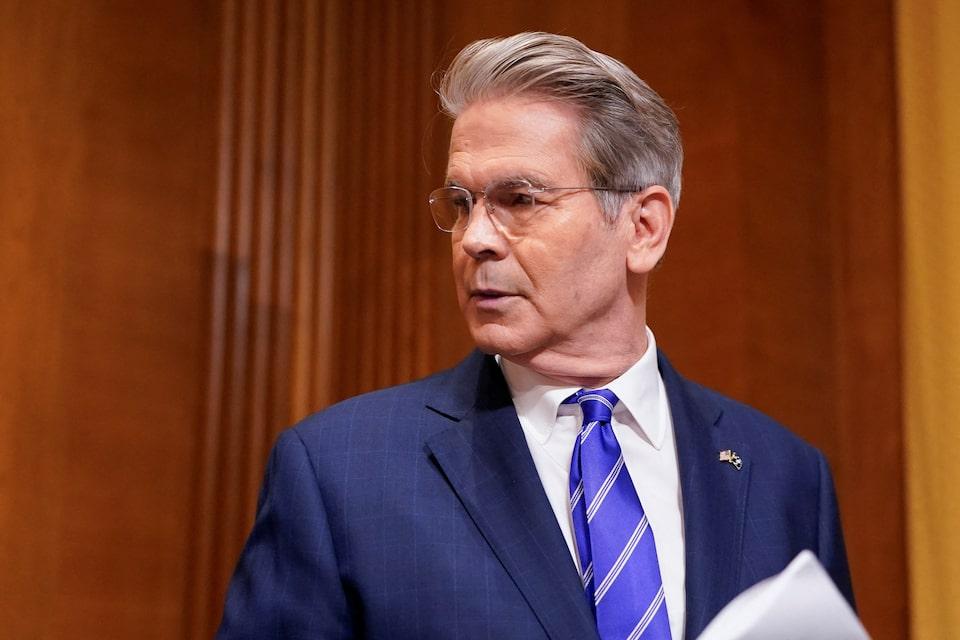
WASHINGTON, July 7 (Reuters) - The United States will make several trade announcements in the next 48 hours, Treasury Secretary Scott Bessent said on Monday, ahead of a U.S. deadline on Wednesday to finalize trade pacts. "We've had a lot of people change their tune in terms of negotiations. So my mailbox was full last night with a lot of new offers, a lot of new proposals," Bessent said in an interview with CNBC. "So it's going to be a busy couple of days." Sign up here. President Donald Trump said the United States would start delivering tariff letters from 12:00 pm ET (1600 GMT) on Monday. The letters would not necessarily provide an ultimatum, according to Bessent. "It's just 'thank you for wanting to trade with the United States of America. We welcome you as a trading partner, and here's the rate, unless you want to come back and try to negotiate,'" he said. Bessent declined to comment on whether negotiations on new ownership of the TikTok short video app, which President Donald Trump said would start this week, would be linked to trade talks. He said he would meet with his Chinese counterpart in the next couple of weeks. "I think there are things for us to do together if the Chinese want to do it, so we will discuss whether we are able to move beyond trade into other areas," he told CNBC. https://www.reuters.com/business/us-make-several-trade-announcements-next-48-hours-treasury-secretary-says-2025-07-07/