2025-07-07 10:17
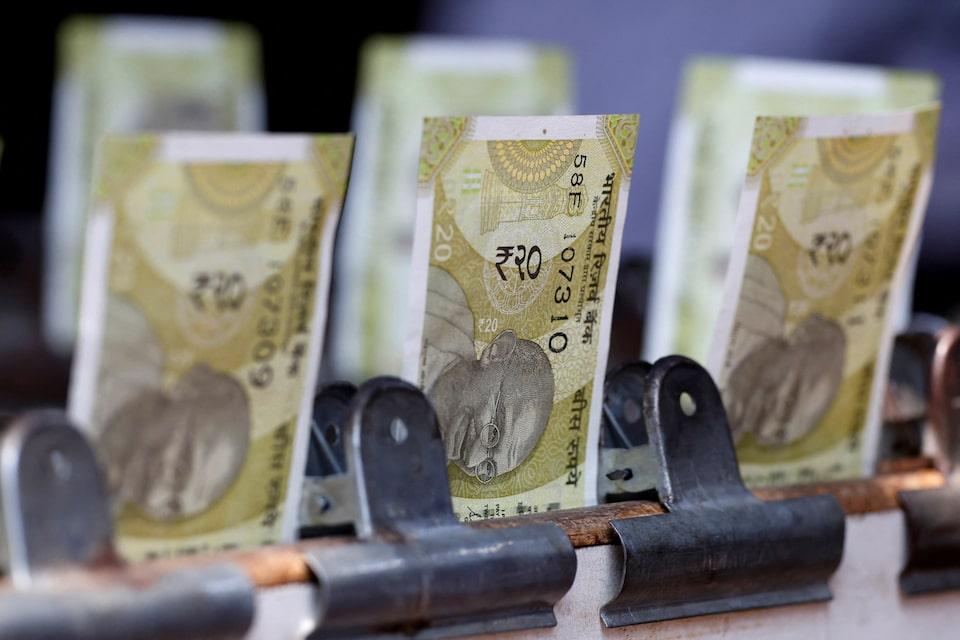
MUMBAI, July 7 (Reuters) - The Indian rupee slumped on Monday as uncertainty about U.S. tariff policies resurfaced with President Donald Trump's threat of a fresh 10% levy on BRICS countries compounding pressure on the local currency alongside peers like South African rand and Chinese yuan. Worries over U.S. trade policies dented risk sentiment across the board, pushing Asian currencies and equities into the red while U.S. equity futures pointed to a weak return from the long weekend. Sign up here. The rupee had declined to a low of 86.0275 per U.S. dollar during the session but pared losses to close at 85.85 per U.S. dollar, down 0.5% on the day, its worst performance since mid-June, when it traded in the shadow of a military conflict between Israel and Iran. In a social media post, President Donald Trump said the U.S. would start delivering tariff letters from 12:00 pm ET (1600 GMT) on Monday. In a separate post, he rolled out a wholly new tariff policy, calling for countries "aligning themselves with the Anti-American policies" of the BRICS developing nations to be charged an extra 10% tariff, with no exceptions to be granted. It was not immediately clear if Trump's tariff threat would derail trade talks with India and other BRICS nations. The South African rand fell 1% after Trump's threat while the offshore Chinese yuan was down 0.2%. The absence of progress on trade negotiations over the weekend has come as a negative surprise for markets with Trump's BRICS remark especially hurting the rupee, said Dilip Parmar, a foreign exchange research analyst at HDFC Securities. Parmar expects the Reserve Bank of India to step in to support the rupee if volatility remains elevated due to uncertainty on U.S. trade policies. On the day, traders also pointed to strong dollar demand from a large local private bank which pressured the local currency. A fall below the 85.80 level triggered stop-losses and accentuated the day's move, a trader at a state-run bank said. He expects the currency to weaken to 86.50 in the near-term in the absence of positive developments on the trade front. https://www.reuters.com/world/india/tariff-worries-trumps-brics-swipe-spark-worst-rupee-fall-three-weeks-2025-07-07/
2025-07-07 09:44
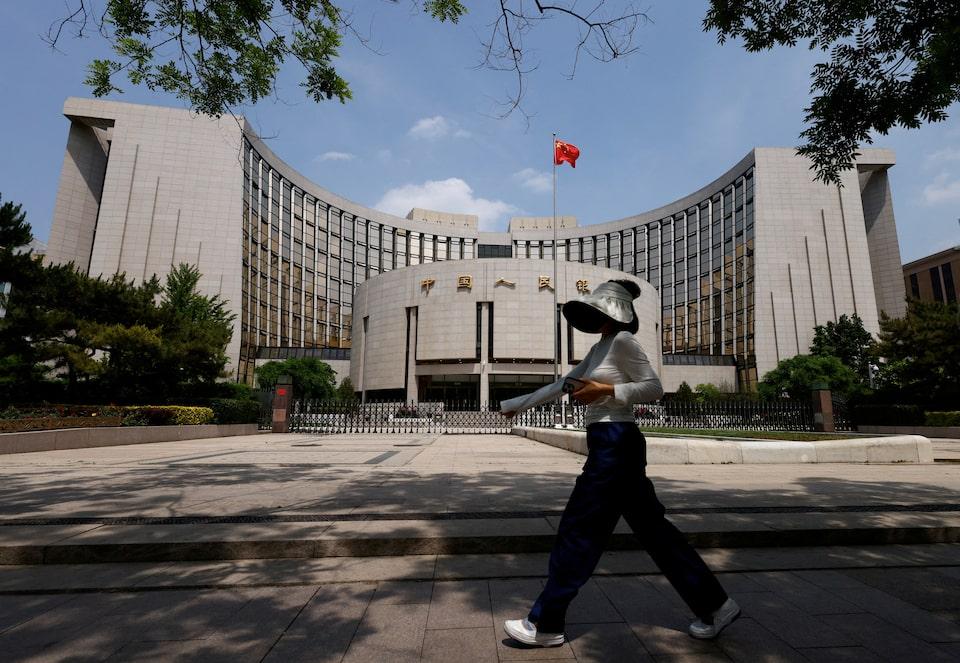
July 7 (Reuters) - China's central bank has asked some financial institutions about their views on recent U.S. dollar weakness, people with knowledge of the matter said. In the survey conducted last week, the People's Bank of China (PBOC) asked questions related to the U.S. dollar's movements and the causes of its recent weakness and outlook for the Chinese yuan exchange rate, the sources said. Sign up here. The PBOC did not immediately respond to Reuters' request for comment. While the PBOC did not explicitly state the purpose of its recent survey, one of the sources said he interpreted it as a sign authorities are concerned about a sharp appreciation of the yuan against the weakening dollar. Another source directly involved in the survey said it seemed to be an assessment of the dollar's outlook as trade negotiations with the U.S. progress. The survey comes days before U.S. President Donald Trump's 90-day pause on tariffs on imports from dozens of countries expires on Wednesday, and a month before a reprieve on triple-digit tariffs on China expires. U.S. trade and economic policies this year have weighed heavily on the dollar. The dollar index , which reflects the U.S. currency's performance against a basket of six others, has had its worst first half of the year since 1973, declining some 11%. It has fallen by 6.6% since April 2 alone. China's yuan has been relatively stable, however, and is up just 1.3% since Trump's April 2 "Liberation Day" tariffs. https://www.reuters.com/business/finance/chinas-central-bank-asks-financial-institutions-about-dollar-weakness-sources-2025-07-07/
2025-07-07 08:22
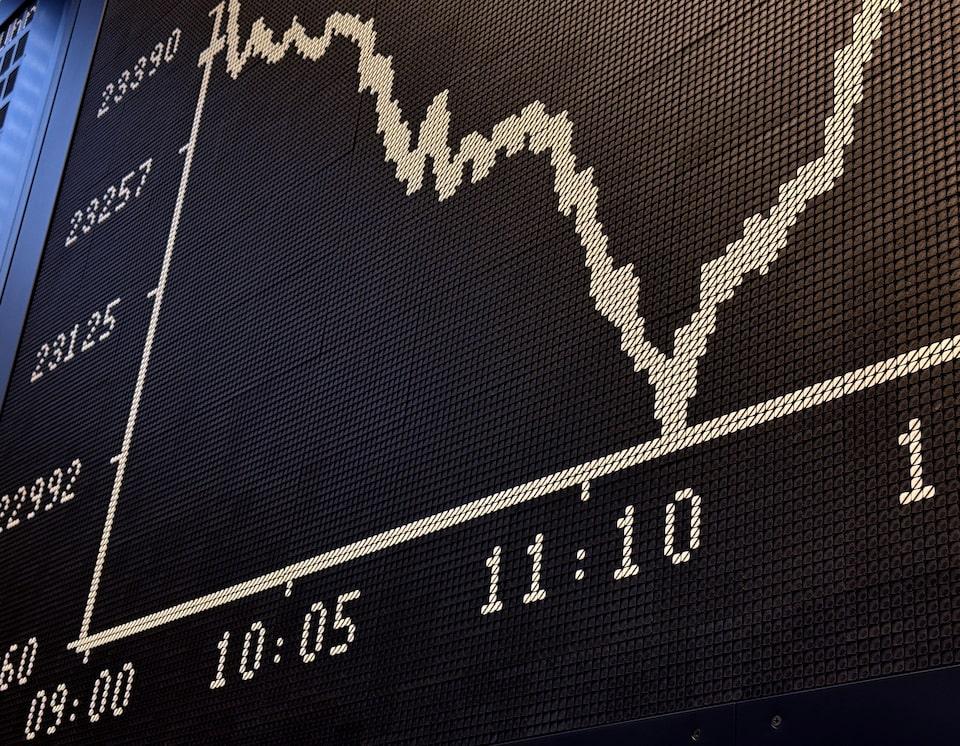
Surging tech stocks led the U.S. rebound Europe bulls confident in higher European GDP growth S&P 500 still lower if priced in euros LONDON, July 7 (Reuters) - European stocks took an early lead in 2025, outperforming Wall Street thanks to erratic U.S. policymaking and Germany's once-in-a-generation fiscal shift, but U.S. markets have caught up. The broad European STOXX 600 index was up 6.6% so far this year, as of Friday's close, compared with 6.8% for the S&P 500. (.STOXX) , opens new tab, (.SPX) , opens new tab Sign up here. In March the STOXX was 10 percentage points ahead, leading European bulls to think this might be their time after years of European markets underperforming Wall Street. Calls for European outperformance still ring true in currencies, however, with the euro up 14% against the dollar year to date. Trade talks and the new U.S. tax-cut and spending law are tests for the rotation out of the U.S. and into Europe, said UBS Asset Management's head of global sovereign markets strategy Max Castelli. "I don’t think U.S. exceptionalism will come back with the same strength and intensity," he said. "But I would not rule out the big period of outperformance of European assets over the U.S. being over." Here's a look at how Europe's performance against the U.S. stacks up. BIG TECH IS BACK Marija Veitmane, head of equity research at State Street Global Markets, said Wall Street shares started bouncing back in mid-April, partly because the "trade war became trade negotiations." But the "real turning point" was corporate earnings season when "tech CEOs stood up and said 'Our earnings are going to be very strong'." Tech (.SPLRCT) , opens new tab accounts for roughly one-third of the S&P 500, (.SPX) , opens new tab and the sector is up 24% since the start of April, even including its plunge when U.S. President Donald Trump announced his tariff plans. Nvidia, once again the world's largest company by market cap, has risen an even more dramatic 45%, and there isn't anything in Europe to match. (NVDA.O) , opens new tab HOLD YOUR NERVE But by no means all investors are rushing back to Wall Street with the S&P 500 at record highs, suggesting valuations are getting stretched. "The tariff announcement showed how fast sentiment can change and how risky these high (U.S.) valuations are," said Madeleine Ronner, senior equity portfolio manager at asset manager DWS, adding that European valuations are more reasonable. And while that gap had been appropriate because of slow corporate earnings growth, "Europe's (earnings per share) is starting to grow again, and the differential is getting smaller, which should be reflected in valuations," she said. DWS sees U.S. and European GDP growth being roughly similar in 2025 and 2026, a further and sustainable boost to European companies' earnings. CAN YOU BUY MORE DEFENCE STOCKS? Investors have snapped up European stocks, but that has centred largely on the same sectors -- defence (.SXPARO) , opens new tab, up 50% this year, and banks (.SX7P) , opens new tab up 28%, suggesting a lack of faith in the broader market. The two account for more than 50% of the return of the STOXX 600, despite making up just 16% of the index, BNP Paribas Exane estimates. That's not surprising as NATO members have agreed to increase defence spending, and massively in the case of Germany. But valuations are stretched. Germany's Rheinmetall (RHMG.DE) , opens new tab trades on a forward price to earnings ratio of more than 50; even Apple (AAPL.O) , opens new tab and Microsoft (MSFT.O) , opens new tab are only around 30. LOVING THE EURO The picture is clearer in currencies, where the euro is at a near four-year high and closing in on $1.20. At the start of the year many analysts predicted the euro would fall below one dollar, thanks to what was then seen as an insatiable demand for U.S. assets. But when this reversed, the euro began to appreciate, a move that grew as foreign holders of U.S. stock and bonds, fearing further dollar weakness, increased their currency hedges. Now the euro is expected to keep gaining even if outflows from the U.S. stop. "Foreigners don't need to sell U.S. assets to weaken the dollar but merely to say 'No thank you' to buying more," Deutsche Bank's head of FX strategy George Saravelos said in a note. CURRENCIES MATTER That currency move also affects equity investors, making European stocks cheaper for U.S. investors and Wall Street more expensive from Europe. The S&P 500 may be at a record high for domestic investors, but priced in euros it's 9% off its February top. "For euro-based investors the currency ate up so much U.S. assets' returns this year," said DWS' Ronner. "If there's another letdown, in euros that gets even worse." On the other hand, the STOXX 600 in local currency terms is still shy of March's record, but priced in dollars it hit an all-time high in late June. https://www.reuters.com/business/finance/european-stocks-2025-outperformance-is-over-dont-forget-euro-2025-07-07/
2025-07-07 07:33
Higher tariffs to kick in on August 1 Trump says letters to go out at noon Monday President slaps new 10% tariff on BRICS countries White House's Hassett says deadline could be extended for some Bessent says some countries 'foot-dragging' on deals MORRISTOWN, New Jersey, July 6 (Reuters) - The United States is close to finalizing several trade pacts in coming days and will notify other countries of higher tariff rates by July 9, President Donald Trump said on Sunday, with the higher rates set to take effect on August 1. Since taking office, Trump has set off a global trade war that has roiled financial markets and sent policymakers scrambling to protect their economies, through efforts such as deals with the United States and other countries. Sign up here. In April Trump unveiled a base tariff rate of 10% on most countries and additional duties ranging up to 50%, although he later delayed the effective date for all but 10% until July 9. The new date offers countries a three-week reprieve. Trump, whose remarks to reporters on Sunday came just before his return to Washington from a weekend golfing in New Jersey, had flagged the August 1 date earlier, but it was unclear if all tariffs would increase then. Asked to clarify, Commerce Secretary Howard Lutnick told reporters the higher tariffs would take effect on August 1, but Trump was "setting the rates and the deals right now." In a posting on his Truth Social website, Trump later said the U.S. would start delivering tariff letters from 12:00 pm ET (1600 GMT) on Monday. In a separate post, he rolled out a wholly new tariff policy, calling for countries "aligning themselves with the Anti-American policies" of the BRICS developing nations to be charged an extra 10% tariff, with no exceptions to be granted. The first BRICS summit in 2009 was attended by leaders from Brazil, China, India and Russia, with South Africa joining later while Egypt, Ethiopia, Indonesia, Iran, Saudi Arabia and the United Arab Emirates were included last year. Trump has close ties to leaders of some of those countries, such as Saudi Arabia and UAE, and has been touting the prospect of a trade deal with India for weeks. On Sunday, BRICS leaders condemned attacks on Gaza and Iran, called for reforms to global institutions and warned that the rise in tariffs threatened global trade. It was not immediately clear if Trump's tariff threat would derail trade talks with India, Indonesia and other BRICS nations, however. Earlier on Sunday, U.S. Treasury Secretary Scott Bessent told CNN's "State of the Union" that several big trade agreements would be announced in the next days, adding that European Union talks had made good progress. Trump would also send letters to 100 smaller countries with which the United States does not have much trade, notifying them of higher tariff rates, he added. "President Trump's going to be sending letters to some of our trading partners saying that if you don't move things along, then on August 1 you will boomerang back to your April 2 tariff level," Bessent said. "So I think we're going to see a lot of deals very quickly." Kevin Hassett, who heads the White House National Economic Council, told CBS's "Face the Nation" program there might be wiggle room for countries engaged in earnest negotiations. "There are deadlines, and there are things that are close, and so maybe things will push back past the deadline," Hassett said, adding that Trump would decide. 'I HEAR GOOD THINGS' Stephen Miran, chairman of the White House Council of Economic Advisers, told ABC News' "This Week" program that countries needed to make concessions to get lower tariff rates. "I hear good things about the talks with Europe. I hear good things about the talks with India," Miran said. "And so I would expect that a number of countries that are in the process of making those concessions ... might see their date rolled." Bessent told CNN the Trump administration was focused on 18 important trading partners that account for 95% of the U.S. trade deficit. But he said there had been "a lot of foot-dragging" among countries in finalizing trade deals. Thailand, keen to avert a 36% tariff, is now offering greater market access for U.S. farm and industrial goods and more purchases of U.S. energy and Boeing (BA.N) , opens new tab jets, Finance Minister Pichai Chunhavajira told Bloomberg News on Sunday. India and the United States are likely to make a final decision on a mini trade deal in the next 24 to 48 hours, local Indian news channel CNBC-TV18 reported on Sunday, with average tariffs of 10% on Indian goods shipped to the U.S., it said. Hassett told CBS News that framework agreements already reached with Britain and Vietnam offered guidelines for other countries. He said Trump's pressure was prompting countries to move production to the United States. The Vietnam deal was "fantastic," Miran said. "It's extremely one-sided. We get to apply a significant tariff to Vietnamese exports. They're opening their markets to ours, applying zero tariff to our exports." (This story has been corrected to show the new date offers a three-week reprieve, in paragraph 3) https://www.reuters.com/world/china/us-close-several-trade-deals-announcements-be-made-next-days-bessent-says-2025-07-06/
2025-07-07 07:23
TAIPEI, July 7 (Reuters) - Typhoon Danas lashed southern Taiwan with record winds and strong rain early on Monday, killing two people and injuring more than 500 in a rare hit to the island's densely populated west coast. Taiwan is regularly struck by typhoons but they generally land along the mountainous and sparsely populated east coast facing the Pacific. Sign up here. Business and schools were shut along the west coast with the storm reaching winds of around 220 kilometres per hour as it tore through the southwestern county of Yunlin after making landfall along Taiwan's southwestern shores late on Sunday. Over 700 trees were felled across western cities and towns and road signs were ripped off and strewn across the streets, government data showed. In the southern city of Tainan, some concrete electric poles were snapped off at their bases while a wooden gate of a major temple collapsed, local television footage showed. Typhoon Danas, at one point listed by Taiwan's weather authority at the second-strongest level, has greatly weakened since and was forecast to hit eastern China later this week. "The typhoon track is rare... the whole of Taiwan will be affected by the wind and rain one after another," President Lai Ching-te said in a post on Facebook, urging citizens to make preparations. Power to nearly 700,000 homes was cut and over 300 domestic and international flights were cancelled, government data showed. The north-south high-speed rail line scaled back services. The National Fire Agency said one person was killed by a falling tree while driving and another died after their respirator malfunctioned due to a power cut. There was no major report of damage in the Tainan Science Park that houses tech giants such as TSMC (2330.TW) , opens new tab. Maritime officials in eastern China's Zhejiang province raised their emergency response to the second-highest level on Monday, according to state broadcaster CCTV. As of 10 a.m. (0200 GMT), 121 passenger vessels and 64 ferry routes had been suspended across the province, CCTV reported. Authorities also halted 181 construction projects, including wind farms, as a precaution. Danas is expected to gradually approach the coastal areas between Zhejiang's city of Taizhou and Fuzhou city in neighbouring Fujian province, according to the China Meteorological Administration. The typhoon is forecast to make landfall along the stretch late on Tuesday. https://www.reuters.com/business/environment/typhoon-danas-lashes-southern-taiwan-with-record-winds-injuring-hundreds-2025-07-07/

2025-07-07 07:13
Investigators say Starovoit likely took his own life Starovoit had held transport brief for barely a year He previously ran the Kursk region next to Ukraine His successor there was embroiled in a corruption case Ukrainian troops seized part of Kursk for months July 7 (Reuters) - Russia's sacked transport minister has been found dead in his car outside Moscow with a gunshot wound and the principal hypothesis is that he took his own life, state investigators said on Monday, hours after President Vladimir Putin fired him. A presidential decree published earlier on Monday gave no reason for the dismissal of Roman Starovoit, 53, after barely a year in the job, though political analysts were quick to raise the possibility that he may have been dismissed in connection with an investigation into corruption in the region he once ran. Sign up here. Reuters could not independently confirm these suggestions, though a transport industry source, who declined to be named due to the sensitivity of the matter, said Starovoit's position had been in question for months due to questions about the same corruption scandal. That investigation centres on whether 19.4 billion roubles ($246 million) earmarked in 2022 for fortifying Russia's border with Ukraine in the Kursk region was properly spent or whether some of that money was embezzled. Russia's Investigative Committee, which probes major crimes, said in a statement it was working to establish the precise circumstances of Starovoit's death. A pistol belonging to Starovoit, who was divorced with two daughters, had been found near his body, various Russian media outlets cited law enforcement sources as saying. Some Russian media, citing law enforcement sources, also said his body had been found with a gunshot wound to the head in bushes near his car, a Tesla, rather than in the car itself. The vehicle was left near a park not far from his home in the Moscow region. Before being appointed transport minister in May 2024, Starovoit had been governor of the Kursk region for nearly five years. Three months after he became transport minister, Ukrainian troops crossed the border into Kursk in the biggest foreign incursion into Russian territory since World War Two and were only pushed out earlier this year after fierce fighting and widespread destruction. In April this year, Starovoit's successor as governor and his former deputy, Alexei Smirnov, was charged with embezzling money earmarked for defence purposes amid accusations that funds intended for border defences had been stolen, leaving Kursk more vulnerable to Ukrainian attack. Various Russian media outlets reported on Monday that Smirnov had told state investigators that Starovoit had also been in on the fraud. Reuters could not confirm that, and a lawyer for Smirnov - who has pleaded not guilty to embezzlement - told the state RIA news agency that he couldn't comment. TRANSPORT CHALLENGES Starovoit's dismissal comes at a time of significant challenges for Russia's transport sector as the war in Ukraine drags on for a fourth year. Russia's aviation sector is short of spare parts and Russian Railways, the country's largest employer, is grappling with soaring interest costs as high rates - needed to curb higher inflation exacerbated by the war - take their toll. Long-range Ukrainian drones also frequently force Russian airports to suspend their activities for safety reasons, sometimes causing major disruption. The Kremlin said Andrei Nikitin, a former governor of the Novgorod region, had been appointed acting transport minister, and it published photographs of him shaking hands with Putin in the Kremlin. Asked about Nikitin's swift appointment, Kremlin spokesman Dmitry Peskov said Putin thought Nikitin had the right professional qualities and experience for the job. The transport ministry declined to comment. At his meeting with Putin, Nikitin spoke about working to digitise Russia's transport industry in an effort to reduce cargo bottlenecks and ensure smoother cross-border flows of goods. ($1 = 78.6955 roubles) (This story has been refiled to fix spacing in paragraph 5) https://www.reuters.com/business/aerospace-defense/russian-president-vladimir-putin-dismisses-transport-minister-starovoit-2025-07-07/