2025-07-07 00:29
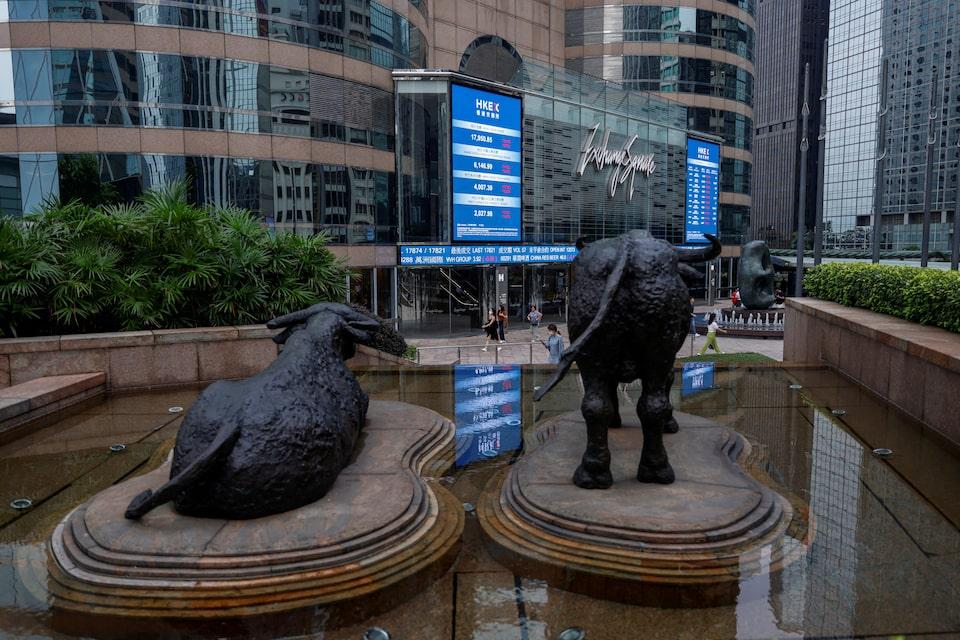
Trump unveils 25% tariffs on Japan, South Korea Longer-dated Treasuries up Tesla shares fall on Musk's political ambition NEW YORK, July 7 (Reuters) - Major stock indexes declined while the dollar strengthened on Monday as U.S. President Donald Trump unveiled sharply higher U.S. tariffs on goods from Japan, South Korea and other countries in the latest development in the U.S. trade war. Longer-dated U.S. Treasury yields rose. Sign up here. Trump on Monday began telling trade partners including Japan and South Korea that the higher U.S. tariffs will start August 1. Trump in April capped all of the so-called reciprocal tariffs with trading partners at 10% until July 9 to allow for negotiations. Only two agreements, with Britain and Vietnam, have been reached. "Trade, inflation and earnings are going to be the next three catalysts that will drive the market higher or lower, depending on how they unfold," said Adam Sarhan, chief executive of 50 Park Investments in New York. "But markets like certainty, and today's news increases the level of uncertainty, hence the selloff," he said. Tariffs are expected to increase prices and to slow down growth, though uncertainty over the ultimate policies may be a bigger drag as it leads businesses to postpone decisions. S&P 500 companies next week are expected to begin reporting results on the second quarter. The Dow Jones Industrial Average (.DJI) , opens new tab fell 422.17 points, or 0.94%, to 44,406.36, the S&P 500 (.SPX) , opens new tab fell 49.37 points, or 0.79%, to 6,229.98 and the Nasdaq Composite (.IXIC) , opens new tab fell 188.59 points, or 0.91%, to 20,412.52. U.S.-listed shares of Japanese automotive companies fell, with Toyota Motor down 4% and Honda Motor off by 3.9%. Also, electric vehicle maker Tesla (TSLA.O) , opens new tab shares fell 6.8% after CEO Elon Musk announced the formation of a U.S. political party named the "American Party." MSCI's gauge of stocks across the globe (.MIWD00000PUS) , opens new tab fell 5.80 points, or 0.63%, to 919.93. The pan-European STOXX 600 (.STOXX) , opens new tab index closed up 0.44%. The yield on benchmark U.S. 10-year notes was last up 5.7 basis points on the day at 4.397%. The interest rate sensitive two-year yield rose 1.9 basis points to 3.901%. The dollar's rise was most notable against the yen. It was up 1.09% at 146.130 . The euro slipped 0.57% to $1.172 having rallied over 13% so far this year. The dollar index , which measures the currency against six major counterparts, rose 0.517% to 97.467, reaching a one-week high. Minutes of the last Federal Reserve meeting are also due this week. Investors are weighing how many times the Fed is likely to cut interest rates this year after jobs data for June on Thursday showed that employers added more jobs than economists had forecast. Oil prices rose as signs of strong demand offset the impact of a higher-than-expected OPEC+ output hike for August and concerns about possible tariff impacts. Brent crude futures rose $1.28, or 1.9%, to settle at $69.58. U.S. West Texas Intermediate crude gained 93 cents or 1.4%, to settle at $67.93. https://www.reuters.com/world/china/global-markets-wrapup-1-2025-07-07/
2025-07-06 23:21
Moratorium on 'Liberation Day' levies ends on Wednesday Higher tariff rates to take effect from August 1 Trump threatens additional tariffs on BRICS nations NEW YORK, July 7 (Reuters) - The dollar rose sharply against other major currencies on Monday, after U.S. President Donald Trump announced new tariffs set to go into effect August 1 for a spate of countries including Japan and South Korea. Trump posted letters to the leaders of several countries on his social media platform, saying that he would impose tariffs of 25% on Japan and South Korea. He also sent letters to the leaders of Malaysia, Kazakhstan, Myanmar, South Africa and Laos, all of which outlined tariffs close to the levels previously announced for each country in April. Sign up here. The dollar's rise was most pronounced against the yen, and was last up 1.09% at 146.130. The dollar was up 0.38% to 0.798 against the Swiss franc on Monday. "There were some country-specific things that were already putting some of these currencies on the back foot," said Brad Bechtel, global head of FX at Jefferies. "But clearly, the news this morning out of the U.S. with Trump and the tariffs is definitely hitting currencies other than the dollar, for a change." The euro slipped 0.57% to $1.172 having rallied over 13% so far this year. Investors are concerned that Brussels might not be able to secure deals with Washington ahead of the deadline as progress on agreements with the European Union has been slow, despite multiple rounds of negotiations. Most U.S. trade partners face the prospect of steeper duties at the end of the 90-day moratorium on U.S. President Donald Trump's "Liberation Day" reciprocal tariffs on Wednesday. Trump has also threatened an additional 10% tariff on nations aligning with what he deemed to be the "anti-American" policies of the BRICS emerging economies. The dollar index , which measures the currency against six major counterparts, rose 0.517% to 97.467, reaching a one-week high. The index extended gains from last week when data reflecting labour market resilience pushed back expectations for imminent monetary policy easing by the Federal Reserve. Still, the index is close to a 3-1/2-year trough and has declined 10% so far this year as investors questioned the safe-haven status of the U.S. currency and reassessed earlier expectations that the U.S. could be spared in the event of a global economic slowdown. Sterling weakened 0.26% to $1.362, but stayed near its strongest level since October 2021. Currencies positively correlated to risk appetite, such as the Aussie dollar and the New Zealand dollar lost 0.79% and 0.74%, respectively ahead of monetary policy decisions in both countries in the coming two days. The Reserve Bank of Australia is widely expected to cut the cash rate by another quarter point on Tuesday, while New Zealand's central bank is predicted to hold rates steady on Wednesday. U.S. policy uncertainty weighing on the dollar "may not be as potent as in early April, but we think this correlation still matters," Paul Mackel, global head of FX research at HSBC said. https://www.reuters.com/world/africa/dollar-pinned-near-multi-year-lows-trump-tariff-deadline-looms-2025-07-06/
2025-07-06 23:14
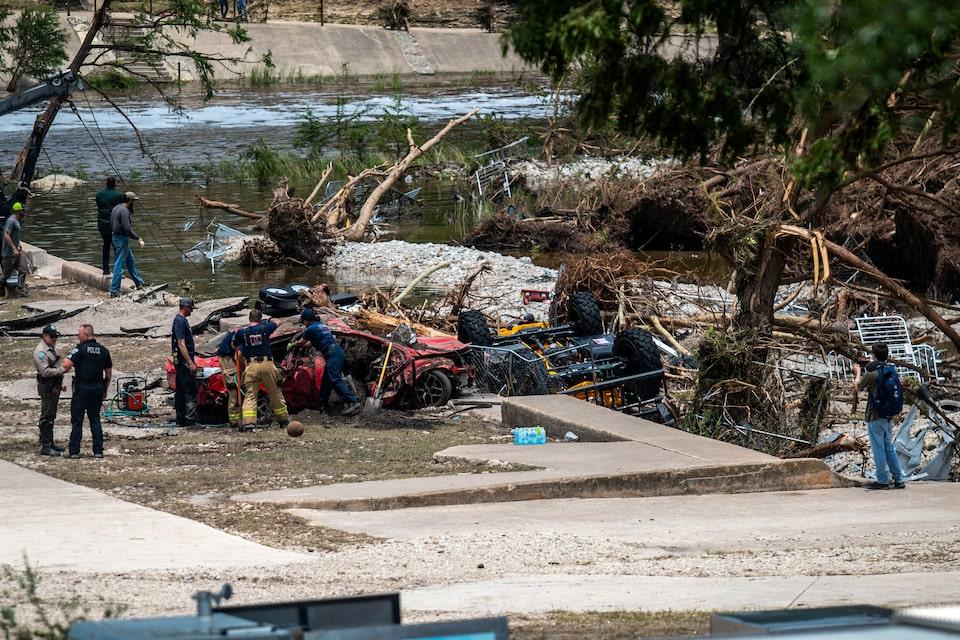
Ten girls and a counselor missing at a summer camp Search for survivors continues amid fears of more flooding Trump plans to visit disaster scene Questions arise over federal response cuts HUNT, Texas, July 6 (Reuters) - The death toll from catastrophic floods in Texas reached at least 78 on Sunday, including 28 children, as the search for girls missing from a summer camp continued and fears of more flooding prompted evacuations of volunteer responders. Larry Leitha, sheriff of Kerr County in Texas Hill Country, said 68 people had died in flooding in his county, the epicenter of the flooding, among them 28 children. Texas Governor Greg Abbott, speaking at a press conference on Sunday afternoon, said another 10 had died elsewhere in Texas and confirmed 41 were missing. Sign up here. President Donald Trump sent his condolences to the victims and said he would probably visit the area on Friday. His administration had been in touch with Abbott, he added. "It's a horrible thing that took place, absolutely horrible. So we say, God bless all of the people that have gone through so much, and God bless, God bless the state of Texas," he told reporters as he left New Jersey. Among the most devastating impacts of the flooding occurred at Camp Mystic summer camp, a nearly century-old Christian girls camp where 10 Camp Mystic campers and one counselor were still missing, according to Leitha. "It was nothing short of horrific to see what those young children went through," said Abbott, who noted he toured the area on Saturday and pledged to continue efforts to locate the missing. The flooding occurred after the nearby Guadalupe River broke its banks after torrential rain fell in the central Texas area on Friday, the U.S. Independence Day holiday. Texas Division of Emergency Management Chief Nim Kidd said the destruction killed three people in Burnet County, one in Tom Green County, five in Travis County and one in Williamson County. "You will see the death toll rise today and tomorrow," said Freeman Martin, director of the Texas Department of Public Safety, also speaking on Sunday. Officials said on Saturday that more than 850 people had been rescued, including some clinging to trees, after a sudden storm dumped up to 15 inches (38 cm) of rain across the region, about 85 miles (140 km) northwest of San Antonio. Kidd said he was receiving unconfirmed reports of "an additional wall of water" flowing down some of the creeks in the Guadalupe Rivershed, as rain continued to fall on soil in the region already saturated from Friday's rains. "We’re evacuating parts of the river right now because we are worried about another wall of river coming down in those areas," he said, referencing volunteers from outside the area seeking to help locate victims. The Federal Emergency Management Agency was activated on Sunday and is deploying resources to first responders in Texas after Trump issued a major disaster declaration, the Department of Homeland Security said. U.S. Coast Guard helicopters and planes were aiding search and rescue efforts. SCALING BACK FEDERAL DISASTER RESPONSE Trump has previously outlined plans to scale back the federal government's role in responding to natural disasters, leaving states to shoulder more of the burden themselves. Some experts questioned whether cuts to the federal workforce by the Trump administration, including to the agency that oversees the National Weather Service, led to a failure by officials to accurately predict the severity of the floods and issue appropriate warnings ahead of the storm. Trump's administration has overseen thousands of job cuts from the National Weather Service's parent agency, the National Oceanic and Atmospheric Administration, leaving many weather offices understaffed, former NOAA director Rick Spinrad said. Spinrad said he did not know if those staff cuts factored into the lack of advance warning for the extreme Texas flooding, but that they would inevitably degrade the agency's ability to deliver accurate and timely forecasts. Trump pushed back when asked on Sunday if federal government cuts hobbled the disaster response or left key job vacancies at the National Weather Service under Trump's oversight. "That water situation, that all is, and that was really the Biden setup," he said referencing his Democratic predecessor Joe Biden. "But I wouldn't blame Biden for it, either. I would just say this is 100-year catastrophe." He declined to answer a question about FEMA, saying only "They're busy working, so we'll leave it at that," Trump said. Homeland Security Secretary Kristi Noem, who oversees FEMA and NOAA, said a "moderate" flood watch issued on Thursday by the National Weather Service had not accurately predicted the extreme rainfall and said the Trump administration was working to upgrade the system. Joaquin Castro, a Democratic U.S. congressman from Texas, told CNN's "State of the Union" program that fewer personnel at the weather service could be dangerous. "When you have flash flooding, there's a risk that if you don't have the personnel ... to do that analysis, do the predictions in the best way, it could lead to tragedy," Castro said. 'COMPLETE DEVASTATION' Katharine Somerville, a counselor on the Cypress Lake side of Camp Mystic, on higher ground than the Guadalupe River side, said her 13-year-old campers were scared as their cabins sustained damage and lost power in the middle of the night. "Our cabins at the tippity top of hills were completely flooded with water. I mean, y'all have seen the complete devastation, we never even imagined that this could happen," Somerville said in an interview on Fox News on Sunday. Somerville said the campers in her care were put on military trucks and evacuated, and that all were safe. The disaster unfolded rapidly on Friday morning as heavier-than-forecast rain drove river waters rapidly to as high as 29 feet (9 meters). A day after the disaster struck, the summer camp, where 700 girls were in residence at the time of the flooding, was a scene of devastation. Inside one cabin, mud lines indicating how high the water had risen were at least six feet (1.83 m) from the floor. Bed frames, mattresses and personal belongings caked with mud were scattered inside. Some buildings had broken windows, one had a missing wall. https://www.reuters.com/sustainability/climate-energy/death-toll-texas-floods-reaches-78-trump-plans-visit-2025-07-06/
2025-07-06 23:08
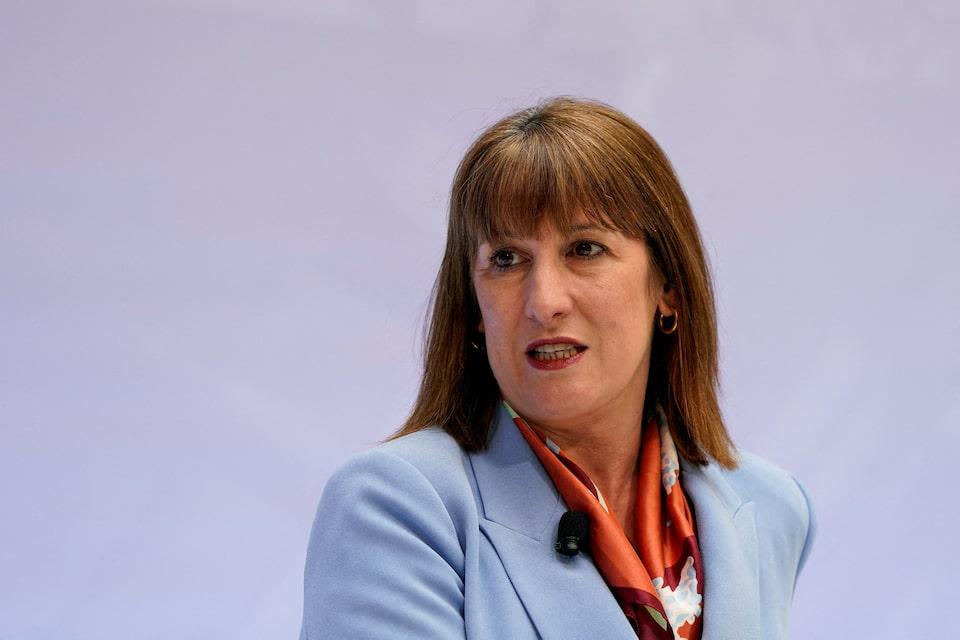
LONDON, July 7 (Reuters) - British finance minister Rachel Reeves will announce on Monday a 28.6 million pound ($39 million) investment by the National Wealth Fund in a carbon capture project that could create jobs in central and northern England. Last year, Britain said it would provide funding of up to 21.7 billion pounds over 25 years to develop carbon capture and storage projects to curb emissions from industry and create new jobs. Sign up here. Britain has a climate target to reach net zero emissions by 2050 and has said CCS will be needed to curb emissions from energy-intensive industrial sectors. On Monday, Reeves will hail the funding as the first step towards the development of a carbon capture pipeline between cement and lime companies in Britain's Peak District, which will store emissions below the Irish Sea, according to a statement from her ministry. "The National Wealth Fund is a force for growth, investing 3 billion pounds into the British economy and securing 12,500 jobs," Reeves said in a statement. "We're modernising the cement and lime industry, delivering vital carbon capture infrastructure and creating jobs across Derbyshire, Staffordshire and the North West to put more money into working people's pockets." Reeves and the rest of Prime Minister Keir Starmer's cabinet are keen to show what the Labour government is doing to change Britain by announcing new projects after being forced into a series of embarrassing U-turns and a major rebellion from within the party over welfare reforms. Those have raised questions about the government' ability to cut spending and about party control. ($1 = 0.7325 pounds) https://www.reuters.com/sustainability/climate-energy/uks-reeves-announces-national-wealth-fund-investment-carbon-capture-2025-07-06/
2025-07-06 22:25
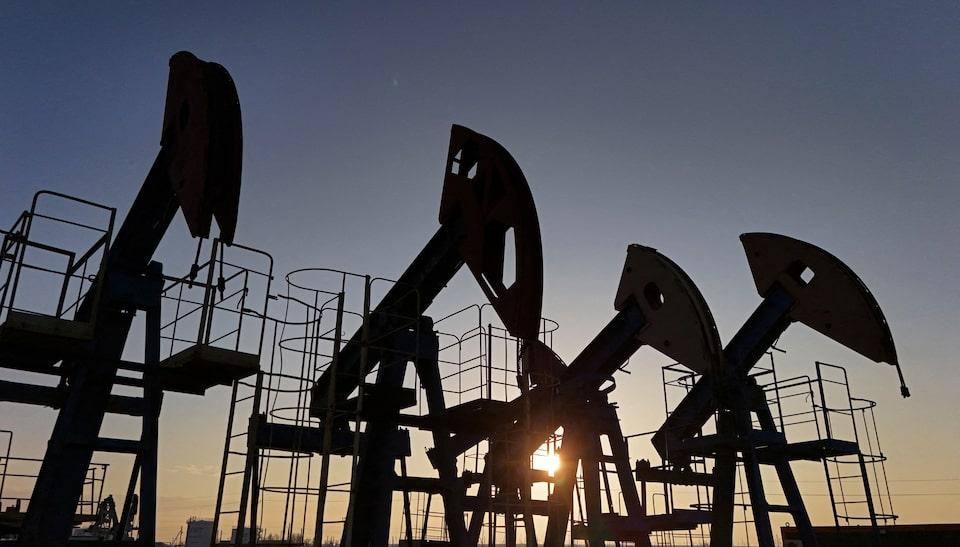
OPEC+ to raise output by 548,000 bpd in August Goldman expects a final 550,000 bpd OPEC+ hike for September US higher tariffs to take effect on August 1 LONDON, July 7 (Reuters) - Oil on Monday shrugged off the impact of OPEC+ hiking output more than expected for August as well as concern about the potential impact of U.S. tariffs, with prices mostly reversing early losses as a tight physical market lent support. The Organization of the Petroleum Exporting Countries and their allies, a group known as OPEC+, agreed on Saturday to raise production by 548,000 barrels per day in August, more than the 411,000 bpd hikes they made for the earlier three months. Sign up here. Brent crude futures fell as low as $67.22 a barrel but by 1145 GMT were up 36 cents, or 0.5%, to $68.66. U.S. West Texas Intermediate crude was at $66.99, down 1 cent, and up from an earlier low of $65.40. "For now, the oil market remains tight, suggesting it can absorb additional barrels," said UBS analyst Giovanni Staunovo. The OPEC+ decision will bring nearly 80% of the 2.2 million bpd voluntary cuts from eight OPEC producers back into the market, RBC Capital analysts, led by Helima Croft, said in a note. However, the actual output increase has been smaller than planned so far and most of the supply has been from Saudi Arabia, they added. In a show of confidence about oil demand, Saudi Arabia on Sunday raised the August price for its flagship Arab Light crude to a four-month high for Asia. Goldman analysts expect OPEC+ to announce a final 550,000 bpd increase for September at the next meeting on August 3. Oil had also come under pressure as U.S. officials flagged a delay on when tariffs would begin but failed to provide details on changes to the rates that will be imposed. Investors are worried higher tariffs could slow economic activity and oil demand. "Concerns over Trump's tariffs continue to be the broad theme in the second half of 2025, with dollar weakness the only support for oil for now," said Priyanka Sachdeva, a senior market analyst at Phillip Nova. https://www.reuters.com/business/energy/oil-slips-1-after-opec-accelerates-output-hikes-2025-07-06/
2025-07-06 20:51
Ship attacked with gunfire and rocket-propelled grenades from small boats, missiles Fire on board after sea drone hit Maritime security sources say ship has taken on water No claim of responsibility; security firm says bears hallmarks of Houthis First such incident reported since April CAIRO/ATHENS, July 6 (Reuters) - The crew of a Greek-operated bulk carrier hit by gunfire, drones and missiles in the Red Sea on Sunday were forced to abandon the vessel and were rescued by a passing ship, maritime security firms said, in an attack they said resembles that of Houthi militants. The assault, off the southwest coast of Yemen, on the Liberian-flagged vessel Magic Seas, was the first such incident reported in the vital shipping corridor since mid-April. Sign up here. The ship was first targeted by gunfire and self-propelled grenades launched from eight small boats, with armed security on the ship returning fire, the United Kingdom Maritime Trade Operations (UKMTO) and British security firm Ambrey said in advisories. Officials at maritime security company Diaplous and Ambrey, in a separate advisory, said the ship was later attacked by four Unmanned Surface Vehicles and targeted with missiles. "Two of the USVs impacted the port side of the vessel, damaging the vessel's cargo," Ambrey added. UKMTO said the attack resulted in a fire onboard. The boat had taken on water and its crew were forced to abandon it, maritime security sources said. The operator, Stem Shipping, confirmed the information to Reuters. All crew were safe after being rescued by a passing merchant vessel, UKMTO said. No one immediately claimed responsibility for the attack, but Ambrey assessed the vessel as meeting "the established Houthi target profile". Sunday's attack occurred 51 nautical miles southwest of Yemen's port city of Hodeidah, the UKMTO and Ambrey said. Tensions in the Middle East remain high over the war in Gaza and after the 12-day Israel-Iran war and airstrikes by the United States on Iranian nuclear sites in June. Yemen's Iran-aligned Houthis launched more than 100 attacks targeting shipping from November 2023, saying they were acting in solidarity with Palestinians over Israel's war with Hamas. During that period, the group sank two ships, seized another and killed at least four seafarers in an offensive that disrupted global shipping, forcing firms to reroute, prompting the U.S. to intensify attacks on the group this year. In May, President Donald Trump announced the U.S. would stop bombing the Houthis in Yemen, saying that the group had agreed to stop interrupting important shipping lanes in the Middle East. https://www.reuters.com/world/middle-east/ukmto-reports-small-vessels-opened-fire-another-vessel-off-yemens-hodeidah-2025-07-06/