2025-07-06 20:40
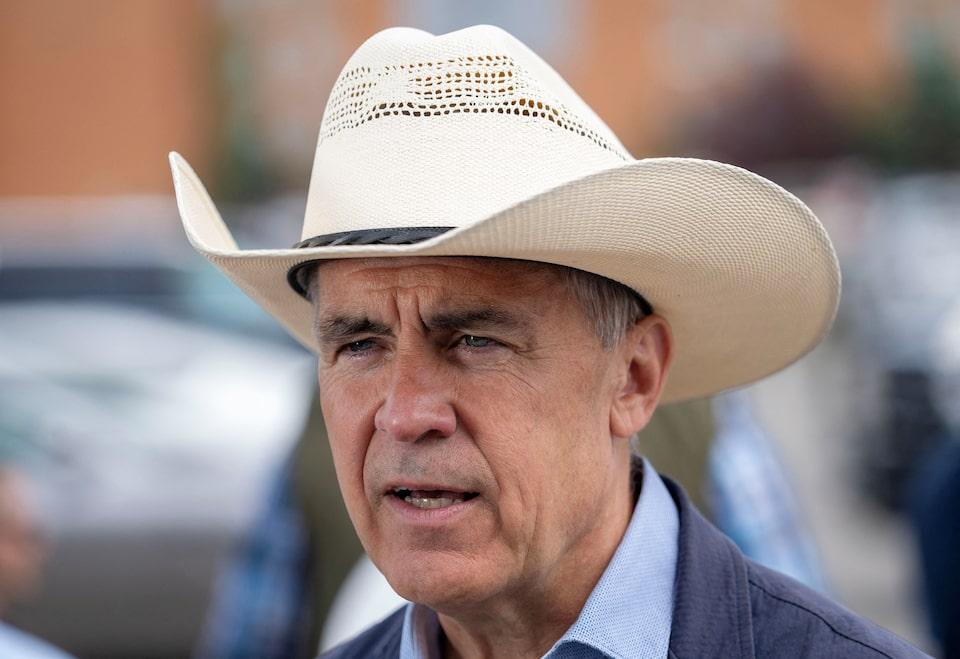
July 6 (Reuters) - A new oil pipeline to the British Columbia coast is highly likely to be included on a list of projects deemed to be of national importance to the Canadian government, Prime Minister Mark Carney told the Calgary Herald newspaper in an interview published on Sunday. "I would think given the scale of the economic opportunity, the resources we have, the expertise we have, that it is highly, highly likely that we will have an oil pipeline that is a proposal for one of these projects of national interest," Carney said in a Saturday interview. Sign up here. The prime minister said that it would be up to the private sector to make the proposal, rather than a "top-down approach" from the government, saying "we want this, we want that." Carney, who was attending the annual Calgary Stampede, also said that he supported a proposed C$16.5 billion ($12.14 billion) carbon capture system for Alberta's oil sands to merit a spot in the list of projects. Carney's comments come weeks after Canada's Senate passed a bill to fast-track approval for natural resource and infrastructure projects. The bill speeds up approval of projects deemed of national interest, potentially including mines and oil pipelines, and eliminates some trade barriers between provinces. Canada is the world's fourth largest oil exporter. The oil and gas initiatives being put on the list come as Canada is trying to wean itself from economic dependence on the United States, where it sends some 75% of its exports. ($1 = 1.3593 Canadian dollars) https://www.reuters.com/sustainability/climate-energy/carney-says-new-oil-pipeline-proposal-canada-is-highly-likely-2025-07-06/
2025-07-06 20:38
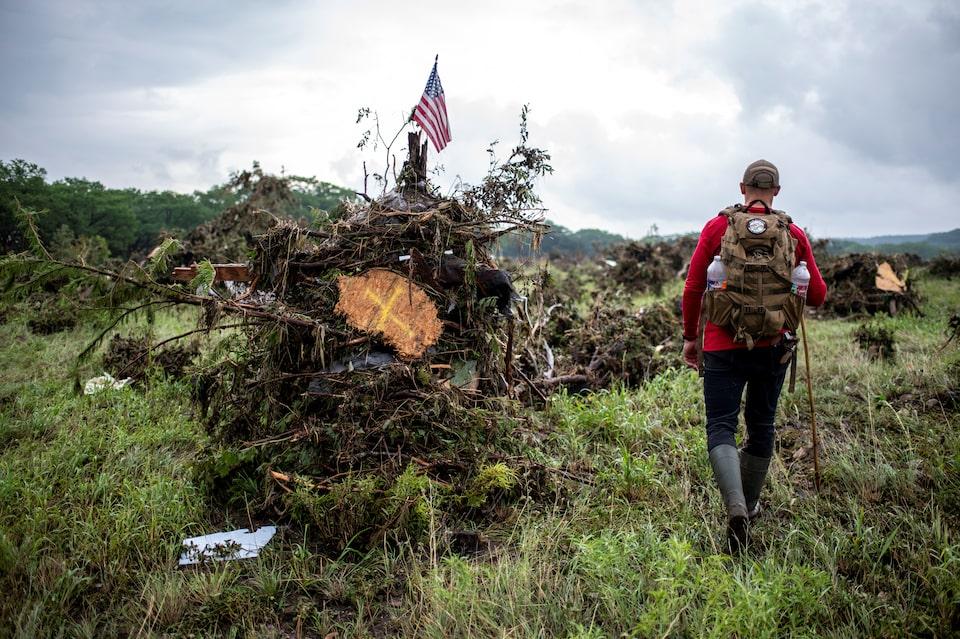
Ten girls and a counselor missing at a summer camp Search for survivors continues amid fears of more flooding Trump plans to visit disaster scene Questions arise over federal response cuts HUNT, Texas, July 6 (Reuters) - The death toll from catastrophic floods in Texas reached at least 78 on Sunday, including at least 28 children, as the search for girls missing from a summer camp entered a third day and fears of more flash flooding prompted fresh evacuations. Larry Leitha, the Kerr County Sheriff in Texas Hill Country, said 68 people had died in flooding in his county, the epicenter of the flooding, among them 28 children. Texas Governor Greg Abbott, speaking at a press conference on Sunday afternoon, said another 10 had died elsewhere in Texas and confirmed 41 were missing. Sign up here. President Donald Trump sent his condolences to the victims and said he would probably visit the area on Friday. His administration had been in touch with Abbott, he added. "It's a horrible thing that took place, absolutely horrible. So we say, God bless all of the people that have gone through so much, and God bless, God bless the state of Texas," he told reporters as he left New Jersey. Among the most devastating impacts of the flooding occurred at Camp Mystic summer camp, a nearly century-old Christian girls camp where 10 Camp Mystic campers and one counselor were still missing, according to Leitha. "It was nothing short of horrific to see what those young children went through," said Abbott, who noted he toured the area on Saturday and pledged to continue efforts to locate the missing. The flooding occurred after the nearby Guadalupe River broke its banks after torrential rain fell in the central Texas area on Friday, the U.S. Independence Day holiday. Texas Division of Emergency Management Chief Nim Kidd said the destruction killed three people in Burnet County, one in Tom Green County, five in Travis County and one in Williamson County. "You will see the death toll rise today and tomorrow," said Freeman Martin, director of the Texas Department of Public Safety, also speaking on Sunday. Officials said on Saturday that more than 850 people had been rescued, including some clinging to trees, after a sudden storm dumped up to 15 inches (38 cm) of rain across the region, about 85 miles (140 km) northwest of San Antonio. Kidd said he was receiving unconfirmed reports of "an additional wall of water" flowing down some of the creeks in the Guadalupe Rivershed, as rain continued to fall on soil in the region already saturated from Friday's rains. He said aircraft were sent aloft to scout for additional floodwaters, while search-and-rescue personnel who might be in harm's way were alerted to pull back from the river in the meantime. The Federal Emergency Management Agency was activated on Sunday and is deploying resources to first responders in Texas after Trump issued a major disaster declaration, the Department of Homeland Security said. U.S. Coast Guard helicopters and planes were aiding search and rescue efforts. SCALING BACK FEDERAL DISASTER RESPONSE Trump has previously outlined plans to scale back the federal government's role in responding to natural disasters, leaving states to shoulder more of the burden themselves. Some experts questioned whether cuts to the federal workforce by the Trump administration, including to the agency that oversees the National Weather Service, led to a failure by officials to accurately predict the severity of the floods and issue appropriate warnings ahead of the storm. Trump's administration has overseen thousands of job cuts from the National Weather Service's parent agency, the National Oceanic and Atmospheric Administration, leaving many weather offices understaffed, former NOAA director Rick Spinrad said. Spinrad said he did not know if those staff cuts factored into the lack of advance warning for the extreme Texas flooding, but that they would inevitably degrade the agency's ability to deliver accurate and timely forecasts. Trump pushed back when asked on Sunday if federal government cuts hobbled the disaster response or left key job vacancies at the National Weather Service under Trump's oversight. "That water situation, that all is, and that was really the Biden setup," he said referencing his Democratic predecessor Joe Biden. "But I wouldn't blame Biden for it, either. I would just say this is 100-year catastrophe." He declined to answer a question about FEMA, saying only "They're busy working, so we'll leave it at that," Trump said. Homeland Security Secretary Kristi Noem, who oversees FEMA and NOAA, said a "moderate" flood watch issued on Thursday by the National Weather Service had not accurately predicted the extreme rainfall and said the Trump administration was working to upgrade the system. Joaquin Castro, a Democratic U.S. congressman from Texas, told CNN's "State of the Union" program that fewer personnel at the weather service could be dangerous. "When you have flash flooding, there's a risk that if you don't have the personnel ... to do that analysis, do the predictions in the best way, it could lead to tragedy," Castro said. 'COMPLETE DEVASTATION' Katharine Somerville, a counselor on the Cypress Lake side of Camp Mystic, on higher ground than the Guadalupe River side, said her 13-year-old campers were scared as their cabins sustained damage and lost power in the middle of the night. "Our cabins at the tippity top of hills were completely flooded with water. I mean, y'all have seen the complete devastation, we never even imagined that this could happen," Somerville said in an interview on Fox News on Sunday. Somerville said the campers in her care were put on military trucks and evacuated, and that all were safe. The disaster unfolded rapidly on Friday morning as heavier-than-forecast rain drove river waters rapidly to as high as 29 feet (9 meters). A day after the disaster struck, the summer camp, where 700 girls were in residence at the time of the flooding, was a scene of devastation. Inside one cabin, mud lines indicating how high the water had risen were at least six feet (1.83 m) from the floor. Bed frames, mattresses and personal belongings caked with mud were scattered inside. Some buildings had broken windows, one had a missing wall. https://www.reuters.com/business/environment/search-texas-flood-victims-enters-third-day-with-more-rain-forecast-2025-07-06/
2025-07-06 18:48
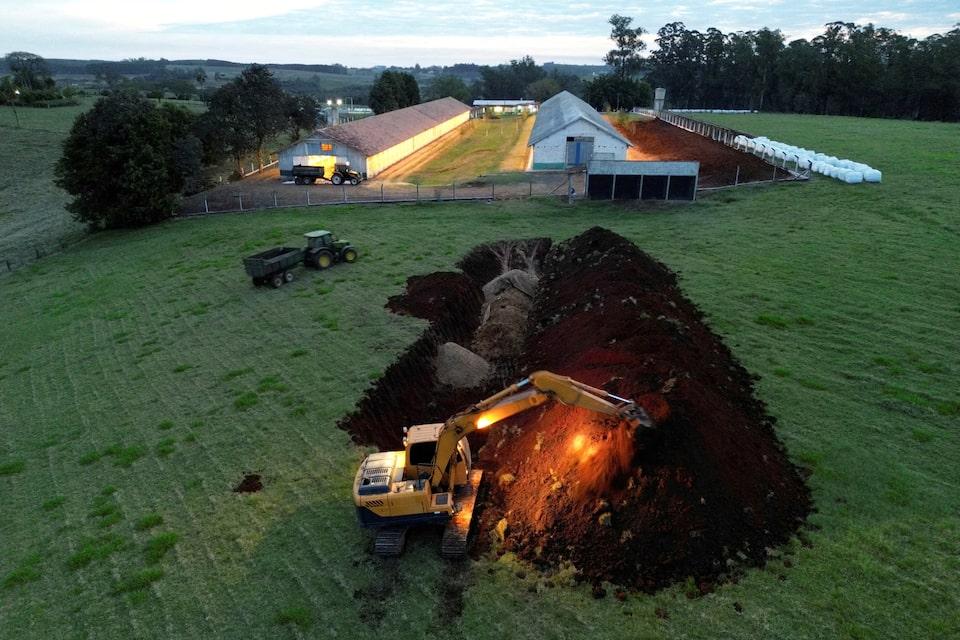
RIO DE JANEIRO, July 6 (Reuters) - China is studying ways to soon lift its ban on imports of chicken meat from Brazil, in place since the South American nation reported a case of bird flu on a commercial farm in May, Brazilian Agriculture Minister Carlos Favaro said on Sunday, citing discussions at the BRICS summit in Rio de Janeiro. Speaking during the event, Favaro said the topic came up in a meeting between Brazil President Luiz Inacio Lula da Silva and Chinese Premier Li Qiang. Sign up here. "I had the opportunity during the bilateral meeting between President Lula and the Chinese premier (to say) that they could already review their position on restrictions," Favaro told reporters, adding that Li said China is now "studying the protocols quickly to resume the purchase of poultry meat." While no timeline for lifting the embargo was discussed, Favaro emphasized Brazil's efforts to recover export markets after over 20 countries imposed bans following the bird flu case in the state of Rio Grande do Sul. Most restrictions were lifted after the World Organization for Animal Health declared the case resolved in late June. Brazilian poultry exports have suffered, with shipments of fresh chicken meat falling 23% in June to 314,000 tons, according to government data. On Thursday, the Agriculture Ministry announced that seven more nations had lifted restrictions, leaving bans in place in nine countries, including China, Malaysia, and Peru. https://www.reuters.com/business/healthcare-pharmaceuticals/china-studies-resuming-chicken-imports-brazil-minister-says-2025-07-06/
2025-07-06 17:46
MILAN, July 6 (Reuters) - One person was killed by a falling tree near Milan, local firefighters said on Sunday, as a powerful storm battered the northern Italian city after days of high temperatures. The 63-year-old woman died in the town of Robecchetto con Induno, west of Milan, as she was returning from a walk with two other people who were injured in the incident and have been hospitalised, the firefighters said. Sign up here. Firefighters have dealt with about 50 incidents so far, with another 37 still pending. Most involve dangerous trees, flooded basements and taverns, and advertising billboards torn down by strong winds. According to Italian news agency Ansa, heavy rains also hit the eastern Veneto region, where bad weather swept areas around the cities of Belluno and Vicenza, as well as parts of Tuscany, where falling trees were also reported. While rain and gales pounded the north, temperatures remained close to 30 degrees Celsius (86 degrees Fahrenheit) in much of southern and central Italy, including in Rome. Much of Europe has sweltered in an early summer heatwave which officials have linked to at least eight deaths on the continent. https://www.reuters.com/business/environment/one-dies-violent-storm-pounding-milan-2025-07-06/

2025-07-06 17:38
Simons set to helm country on cusp of predicted oil boom She leads party founded by former president, fugitive Bouterse Election agreed in coalition deal after May vote Simons' and VP-elect Rusland's inauguration set for July 16 PARAMARIBO, July 6 (Reuters) - Suriname's parliament backed Jennifer Simons as the South American country's first woman president on Sunday, setting the doctor and former parliamentary speaker on course to helm a nation on the cusp of a predicted oil boom. Surinamese lawmakers backed Simons as president six weeks after the ruling party and its top opposition nearly tied in the race for legislative seats, leading to a coalition deal to install Simons as president. Sign up here. Simons' opposition National Democratic Party won 18 seats and current President Chan Santokhi's Progressive Reform Party won 17 seats in the May 25 parliamentary election. Smaller parties won the remaining 16 seats. Suriname's president is elected indirectly. Following the general election, members of the National Assembly vote for the president, and a candidate must secure a two-thirds majority to win the office. "I come into this office to serve, and I will use all my knowledge, strength and insight to make our wealth available to all of our people," Simons, 71, said in a brief speech after lawmakers approved her appointment with a round of applause. Simons vowed to pay special attention to young people and those who have not yet had the best opportunities. "I am very aware of the responsibility now placed on our shoulders, a responsibility compounded for me by the fact that I am the first woman to hold this office," she added. "I do not need many words. My thanks and we will get to work." Incumbent President Chan Santokhi, a 66-year-old former police commissioner who stood for re-election, had faced criticism over a lack of protections for the poorer and more vulnerable sectors of society. Santokhi congratulated Simons on her election and told lawmakers he took responsibility for his shortcomings and hoped he would be remembered for his commitment. He said he would continue to serve the country after the transition as a member of parliament. A COMING BOOM Suriname, a former Dutch colony independent since 1975, is expected to see a surge in revenues from the nation's first big offshore energy development, an oil and gas project led by TotalEnergies (TTEF.PA) , opens new tab. The Gran Morgu project is set to begin production in 2028. Discovered reserves may allow Suriname to compete with neighboring Guyana, whose economy grew 43.6% last year, as a prominent producer. However, campaigning featured little debate about what the next government, which will hold power until 2030, should do with the income. Simons' election was agreed in a six-party deal two days after the parliamentary contest, but was not made official until Sunday's vote. Her inauguration is scheduled for July 16. Suriname's parliament backed Simons for the post by acclamation, alongside National Party of Suriname (NPS) leader Gregory Rusland as her vice president. Simons served as parliamentary speaker for a decade until 2020. She was second in vote tallies behind Santokhi, winning more than 41,700 votes. She is the head of the NDP, founded by former President Desi Bouterse, who dominated Surinamese politics for decades but died a fugitive last year. NDP founder Bouterse left office in 2020, the year after he was convicted in the 1982 murders of 15 government critics. When the conviction was upheld in 2023, Bouterse went into hiding, dying at the age of 79 at an unknown location on Christmas Eve. https://www.reuters.com/world/suriname-parliament-elects-simons-first-female-president-2025-07-06/

2025-07-06 16:42
BERLIN, July 6 (Reuters) - German Economy Minister Katherina Reiche wants to make planned measures aimed at lowering companies' electricity costs more widely available than previously suggested, the Financial Times reported on Sunday, citing people with knowledge of the plan. Earlier this year, Germany's ruling coalition of conservatives and Social Democrats agreed to cut electricity tax to the European minimum for all consumers. Sign up here. But the Finance Ministry's framework budget for 2026 introduced last month limited the planned relief to industry, agriculture and forestry, excluding many companies and consumers, citing financial difficulties. Reiche said last month Germany would present a concrete concept for an industrial electricity price before the summer break and aimed to implement it by the end of the year. The FT said Reiche wants to expand the number of companies eligible for what it called electricity price subsidies to 2,200 from 350. The paper added that the people it cited estimated the cost at 4 billion euros ($4.7 billion) and the measure would fund up to half of firms' electricity costs over three years. Asked for comment by Reuters, the Economy Ministry said in a statement that under newly announced European Union rules up to around 2,200 "energy- and trade-intensive" companies could receive aid to cover up to half their power costs. "The (German) concept is currently being worked on," it added, declining to elaborate. The FT quoted the ministry as saying its scheme would aim to deliver "swift and reliable" aid to the chemical, glass and plastics industries, which have "a far-reaching impact on other sectors through the value chains". ($1 = 0.8490 euros) https://www.reuters.com/sustainability/boards-policy-regulation/german-minister-wants-more-firms-eligible-electricity-relief-ft-says-2025-07-06/