2026-01-23 07:32
Jan 23 (Reuters) - India and the European Union are close to concluding a long-sought free trade agreement (FTA), with an announcement expected on Tuesday at the India–EU Summit in New Delhi. Here are key elements of the trade deal: Sign up here. RATIFICATION AND IMPACT Once signed, and ratified by the European Parliament, a process that could take at least a year, the pact could expand bilateral trade, and lift Indian exports such as textiles and jewellery, which have been hit by 50% U.S. tariffs since late August. However, a vote by EU lawmakers earlier this week to challenge the EU-South America pact in the bloc's top court highlights how parliamentary hurdles could delay or complicate ratification. Investment protection and geographical indications (GIs) are being negotiated separately, narrowing the FTA's focus to goods, services and trade rules. WHY IT MATTERS NOW The pact would be India's ninth trade agreement in four years, reflecting New Delhi's push to secure market access as global trade turns more protectionist. For the EU, the deal supports supply-chain diversification and reduces reliance on China, while tapping India's fast-growing $4.2 trillion economy. GAINS FOR INDIA The EU is among India's top trading partners, along with the United States and China, with total bilateral goods and services trade exceeding $190 billion in 2024/25. India exported about $76 billion in goods and $30 billion in services to the 27-nation bloc. Average EU tariffs on Indian goods are relatively low at about 3.8%, but labour-intensive sectors such as textiles and garments face duties of around 10%, according to Global Trade Research Initiative, a Delhi-based think tank. The FTA would help restore competitiveness lost after the EU began withdrawing tariff concessions under Generalised System of Preferences (GSP) in 2023, on products including garments, pharmaceuticals and machinery, and offset the impact of higher U.S. tariffs. India is also seeking access for its professionals and export of IT services. GAINS FOR EU EU exports to India face much higher barriers, with a weighted-average tariff of about 9.3% on $60.7 billion of goods in 2024/25. Duties are particularly steep on automobiles, auto parts, chemicals and plastics. Tariff cuts would open opportunities in cars, machinery, aircraft and chemicals, while improving access to services, procurement and investment in one of the world's fastest-growing large markets. KEY STICKING POINTS Agriculture and dairy are excluded. India is resisting EU demands to eliminate tariffs on more than 95% of goods, signalling closer to 90%. Autos, wine and spirits remain sensitive. India is considering phased cuts or limited quotas rather than sharp tariff reductions, citing risks to domestic manufacturing. SERVICES AND RULES India wants "data-secure" status under EU data rules, easier movement of professionals and relief from double social security payments. The EU is seeking broader access to India's financial and legal services and commitments on labour, environment and intellectual property - areas where New Delhi prefers flexibility. INDIA'S RED FLAGS Two major concerns are the EU's carbon border levy, which could blunt tariff gains for Indian exporters, and high non-tariff barriers such as regulatory delays, stringent standards and certification costs. WHAT COMES NEXT Analysts say geopolitics and trade shocks have pushed both sides towards a pragmatic, executable compromise. Whether the pact delivers balanced gains will depend on how carbon levies, services mobility and non-tariff barriers are ultimately handled. https://www.reuters.com/sustainability/climate-energy/india-eu-free-trade-pact-whats-agreed-whats-stake-after-years-talks-2026-01-23/

2026-01-23 07:28
LITTLETON, Colorado, Jan 23 (Reuters) - China's electricity output and clean energy technology exports scaled record highs in 2025, LNG and coal imports contracted and crude oil imports nosed higher in another dynamic year for the world's largest power producer and energy consumer. Here's a breakdown of China's key domestic and international energy market impacts as 2026 gets underway. Sign up here. POWER SHIFTS China's imports of liquefied natural gas and coal both took a steep hit in 2025 from the year before as the country's power system gets cleaner and less reliant on fossil fuels. Total imports of LNG were 66.6 million metric tons in 2025, which marked a 11.6 million ton, or 15%, drop from 2024 to the lowest annual import sum since 2022, according to data from commodities intelligence firm Kpler. The downturn in LNG import demand was spurred by reduced industrial activity amid an enduring manufacturing soft patch. That said, China's power generators boosted gas-fired electricity production by 5% in 2025 to a record, which helped underscore total demand for natural gas even as LNG imports sagged. The share of natural gas within China's electricity network dropped to a multi-year low of 2.8%, however, which highlighted that gas retains only a minor role in the electricity sector. China's imports of thermal coal, used in power stations, slumped by 11% or by 40 million metric tons to around 308 million tons last year, Kpler data shows. That was the lowest annual import total since 2022, and comes as power firms seek to reduce coal use in electricity generation and as Beijing seeks to underpin the domestic coal mining sector by managing the phase-down of coal use for power. Imports of metallurgical coal, used by steelmakers, dropped 24% as the country's hobbled construction sector continued to eat into demand for building materials. Imports of coke, used in blast furnaces, rose 45% last year as domestic supplies dried up following a drop in national steel output to seven-year lows. Overall demand for construction-related materials is expected to remain soft in China until its property sector grows again. CLEANING UP While China's appetite for coal and gas contracted last year, domestic generation of clean electricity continued to march higher. Clean electricity supplies were 4,326 terawatt hours (TWh) in 2025, according to think tank Ember, a 15.4% jump from the year before. A 43% surge in solar generation alongside a 14% expansion in wind output were the main drivers of the clean power climb. With the country's mammoth manufacturing sector still operating below capacity due to tepid local and international consumer demand, power firms were able to cut back on coal-fired generation and still lift overall electricity supplies in 2025. Indeed, total electricity output rose by 5% to a record 10,421 TWh, which marked the seventh year in a row that China's total electricity output expanded by at least 4%. Further deployment of largely home-made solar, wind and battery storage systems is expected throughout 2026, which should help sustain China's clean power output momentum through the coming years. CRUDE GROWTH Following a rare year-over-year drop in crude oil imports in 2024, China's crude purchases rose in 2025, denting expectations that its oil imports had entered perpetual decline. Total crude oil imports were 3.75 billion barrels, according to Kpler, which was a 43 million barrel, or 1.1%, gain from the previous year. With demand for refined products holding largely flat last year, much of the imported crude was used to replenish stockpiles, which Beijing views as an essential buffer against rising global geopolitical risk. More stockbuilding is expected through 2026, which alongside any recovery in overall industrial activity could help sustain China's oil import orders going forward. EXPORTED SURPLUS China can also be expected to maintain its strong export pace of electric vehicles, battery storage systems and solar panel components in 2026 and beyond. The world's leading manufacturer of clean energy technologies - which also include parts for wind farms, power grids and heating and cooling systems - produces far more of each category than can be consumed at home. As a result, China's total clean tech exports have blasted to record highs in recent years, surging by more than 20% in 2025 alone to around $222 billion. Batteries were by far the most lucrative earner, generating $82 billion in export receipts, while EV exports were valued at $69 billion. Both were an annual record. China's exports of grid components and heating and cooling equipment also scaled fresh highs in 2025 of around $19 billion and $17 billion respectively, according to Ember. Exports of wind farm parts also hit a new high of about $5 billion, but export sales of photovoltaic solar modules posted an 8% drop to around $30 billion as the global rush into renewables dropped a gear following a years-long surge. Even so, with top markets such as Europe, Southeast Asia and the Middle East expected to continue expanding their clean power networks, China looks set to retain a major influence on nearly all parts of the global energy system in 2026 and beyond. The opinions expressed here are those of the author, a columnist for Reuters. Enjoying this column? Check out Reuters Open Interest (ROI), your essential new source for global financial commentary. ROI delivers thought-provoking, data-driven analysis of everything from swap rates to soybeans. Markets are moving faster than ever. ROI can help you keep up. Follow ROI on LinkedIn , opens new tab and X , opens new tab. https://www.reuters.com/markets/commodities/chinas-power-energy-clean-technology-milestones-2025-2026-01-23/
2026-01-23 07:27
LNG futures to be listed on Shanghai Futures Exchange Contracts could shift market influence to China from West China's LNG imports forecast to rise 12% this year Jan 23 (Reuters) - China is set to offer domestic-listed, yuan-denominated liquefied natural gas (LNG) futures contracts as soon as next month, people with knowledge of the matter said, reducing importer reliance on the West when hedging against price moves. The derivative product will be listed on Shanghai Futures Exchange (ShFE), said the people, declining to be identified as they were not authorised to speak to the media. Sign up here. ShFE and the China Securities Regulatory Commission did not respond to Reuters requests for comment. The bourse has long wanted to offer internationally accessible contracts to raise its global presence and challenge the dominance of foreign pricing benchmarks for major commodities such as nickel and LNG. The aim is to reduce the need for Chinese firms to determine physical contracts using overseas prices while also creating a need for foreigners to trade on ShFE. Moreover, at a time when U.S. trade policies have created unprecedented upheaval, being able to manage prices between domestic entities in a local currency enhances energy security. Shipments of LNG to China, the world's largest importer, slumped last year due to U.S. tariffs, weak industrial demand, and strong domestic and piped gas supply. But global LNG output is set to jump this year, easing supply constraints prevalent since Russia invaded Ukraine in 2022. That could spur demand which in turn will keep prices in check, analysts have said. As such, Chinese imports are likely to rise 12% to 76.5 million metric tons this year, according to Rystad Energy analyst Ole Dramdal. PRICE DISCOVERY China is the single largest purchaser of most commodities yet price discovery happens in other markets, said a senior executive at a global bank. Cutting out dollars with yuan-denominated contracts tallies with comments from investment bank Morgan Stanley on Wednesday about U.S. policies creating a "multipolar world" and eroding the dollar's status as the currency of trade. Meanwhile, China will be able to nurture financial markets around LNG. With the new contracts being yuan-denominated, banks can commoditise the risk by issuing yuan-denominated LNG-linked loans, repurchase agreements and asset-backed securities. China also hopes the initiative will help it challenge foreign pricing hubs, one of the sources said. The largest LNG futures markets revolve around major physical hubs. Henry Hub in the U.S. and Title Transfer Facility in Europe serve as benchmarks alongside the Japan-Korea Marker (JKM). International oil majors, Western traders, Middle Eastern exporters - whoever has a China position would be willing to participate in the yuan-denominated futures contract, analysts said. To trade the contract, foreign companies would need to set up a China-based trading entity. "China needs a benchmark that reflects its own demand and supply. JKM can't do that as it caters mostly to Japan and Korea," said a state gas trader involved in the contract discussions. "We foresee long-term supplies to China, for instance, to factor in Shanghai contracts, rather than be heavily benchmarked to Brent oil." https://www.reuters.com/business/energy/china-offer-lng-futures-soon-next-month-sources-say-2026-01-23/
2026-01-23 07:24
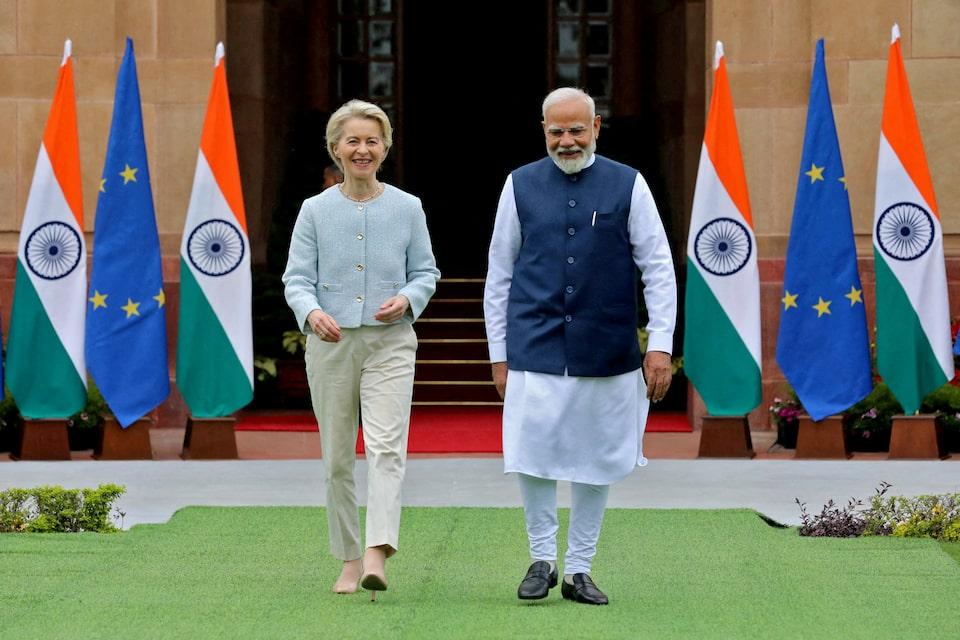
India, EU to announce conclusion of free trade talks Pact to cut tariffs on EU cars, wine; aid textiles, jewellery Deal expected to be announced at January 27 bilateral summit Ratification may take a year; non-tariff barriers persist NEW DELHI, Jan 23 (Reuters) - India and the European Union are expected to announce the conclusion of protracted negotiations for a free trade pact on Tuesday, opening the way for reduced tariffs on European cars and wine and expanded market for Indian electronics, textiles and chemicals, two Indian and EU government sources said. The announcement could follow Indian Prime Minister Narendra Modi's meeting with European Council President Antonio Costa and European Commission President Ursula von der Leyen, who will co-chair an India-EU summit during their visit to India from January 25 to 28, one of the Indian government sources said. Sign up here. If finalised and ratified by the European Parliament, a process that could take at least a year, the trade pact would boost Indian exports such as textiles and jewellery, the official said. Negotiations were relaunched in 2022 after a nine-year pause, gaining traction last year amid rising trade tensions. In August, President Donald Trump doubled tariffs on Indian imports to as much as 50%, among the highest in the world. At the World Economic Forum in Davos on Tuesday, von der Leyen signalled progress, stating the European Union is close to concluding the agreement but acknowledged that additional work remains. The agreement comes days after the EU signed a pivotal pact with the South American bloc Mercosur, following deals last year with Indonesia, Mexico and Switzerland. During the same period, New Delhi finalised pacts with Britain, New Zealand and Oman. The spate of deals underscores global efforts to hedge against the United States as Trump's bid to take over Greenland and tariff threats on European nations test longstanding alliances among Western nations. Bilateral trade between India and the EU totalled $136.5 billion in 2024/25 fiscal year ending March, making the 27-nation bloc one of India's biggest trading partners. "Negotiators are still trying to bridge differences on several sensitive issues, including India's reluctance to sharply cut tariffs on auto imports," an EU government source said. Indian and EU government sources declined to be identified as the matter is not yet public. India's commerce ministry did not immediately respond to an email requesting comment. NON-TARIFF BARRIERS A key concern for New Delhi is a range of non-tariff barriers such as the newly introduced carbon levies on imports of goods including steel, aluminium, cement, with industry experts saying there was little scope for relaxation. Duty-free access to the EU could help offset losses for Indian textile and jewellery exporters in the U.S., Ajay Srivastava, founder of the Delhi-based think tank Global Trade Research Initiative, said, while noting regulatory hurdles remain. "An India–EU FTA would cut tariffs on textiles, garments and leather, letting Indian exporters compete more evenly with Bangladesh and Vietnam," he added. The EU imports nearly $125 billion of textiles annually, where India holds a 5–6% share versus China's 30%, highlighting the potential gains from an FTA amid rising U.S. tariffs. India's autos, electronics, textiles, pharmaceuticals and chemicals are likely to emerge as key beneficiaries of a potential India–EU free trade agreement, according to Jefferies. Some sensitive agricultural items have been excluded from negotiations, an Indian trade ministry official earlier said. https://www.reuters.com/sustainability/climate-energy/india-eu-likely-announce-conclusion-trade-talks-tuesday-2026-01-23/
2026-01-23 06:36
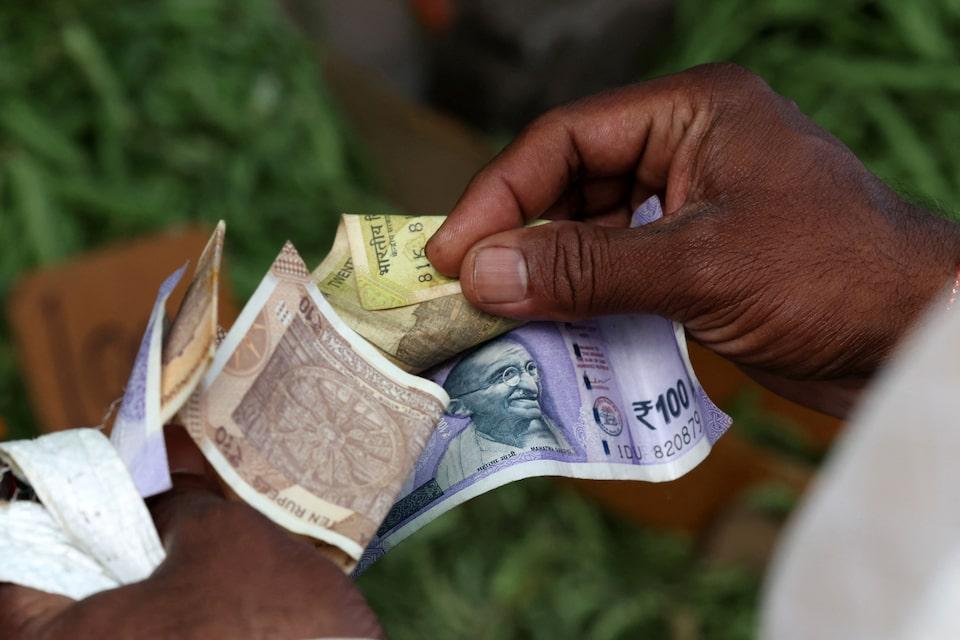
MUMBAI, Jan 23 (Reuters) - The Indian rupee fell to a record low on Friday and posted its steepest weekly decline in six months, weighed by sustained foreign outflows and hedging by importers. The rupee came within a hair's breadth of the 92.00 level on Friday, slipping to an all-time low of 91.9650. Sign up here. The currency then settled at 91.94, down 0.34% on the day, taking its losses to 1.18% for the week and 2.3% for the month. Its underperformance this week was all the more telling considering that most Asian peers managed to post a modest advance against a weakening dollar index amid U.S. President Donald Trump issuing threats over Greenland and later walking them back. "This is largely a repeat of what we saw through most of 2025. The rupee stays under pressure regardless of broader cues," said Kunal Kurani, vice president at Mecklai Financial Services. Pressure on the rupee built steadily through the week and the month, with foreign investors continuing to pare equity exposure while importers and corporate firms stepping up hedging in anticipation of further depreciation. Exporters, meanwhile, slowed dollar sales in the forward market, reducing supply and exacerbating pressure on the currency. Regular intervention by the Reserve Bank of India has helped slow losses, though it has failed to reverse the underlying trend. The central bank stepped in significantly on at least two occasions this week, bankers said, selling dollars in the spot market and conducting buy/sell swaps to manage liquidity. Indian equities have been under pressure amid sustained foreign selling, making it difficult for the RBI to rein in the rupee's decline. The Nifty 50 index slumped 2.5% this week, while foreign outflows from Indian equities in January hit about $3.5 billion. https://www.reuters.com/world/india/rupee-vulnerable-new-all-time-low-skewed-flows-building-bearish-outlook-2026-01-23/
2026-01-23 06:36
Shell CEO sees possible investment decision in 2027 Project capital, operational spending could reach $20 bln-Shell CEO Other Bonga owners are Exxon, ENI CAPE TOWN, Jan 23 (Reuters) - Nigerian President Bola Tinubu has approved "investment-linked" incentives for Shell's (SHEL.L) , opens new tab Bonga South West deepwater oilfield following a meeting with the company's CEO Wael Sawan, who flagged a possible green light for the $20 billion project in 2027. The proposed incentives are the latest in a raft of regulatory reforms in Africa's top crude oil producer as it looks to attract investment to boost oil and gas production. Sign up here. "These incentives are not blanket concessions," Tinubu said in a statement late on Thursday. He said the incentives will be ring-fenced and focused on new capital, incremental production and strong local content delivery. His office did not give further details on what form they would take. "My expectation is clear: Bonga South West must reach a final investment decision within the first term of this administration," Tinubu added. INVESTMENT DECISION LIKELY IN 2027 Shell's Sawan said he hoped to take Bonga South West to a final investment decision in 2027, which could mean around $20 billion in investments from Shell and its partners, according to a video shared on LinkedIn by the president's special energy adviser, Olu Arowolo Verheijen. Half of that would be capital and the other half would come from operating expenses and other spending, Sawan said, adding Shell was also interested in Nigeria's exploration license round. In the past 12 months Shell had invested $5 billion in Bonga North and $2 billion in the HI gas project feeding into Nigeria LNG, Sawan said. Shell took a final investment decision on the Bonga North development in 2024 as it sought to maintain output at its linked Bonga floating production, storage and offloading facility. Last year Shell acquired a stake from TotalEnergies (TTEF.PA) , opens new tab that raised its share in the Bonga oilfield to 65%, underlining its continued interest in offshore Nigeria production after it sold its onshore assets. Other shareholders of Bonga include units of Exxon Mobil (XOM.N) , opens new tab and ENI (ENI.MI) , opens new tab. https://www.reuters.com/business/energy/nigeria-approves-new-incentives-shells-offshore-bonga-south-west-project-2026-01-23/