2025-07-04 12:05
July 4 (Reuters) - The United Nations atomic agency is pulling its inspectors out of Iran over safety concerns, the Wall Street Journal reported on Friday, citing people familiar with the matter. Sign up here. https://www.reuters.com/world/middle-east/un-pulls-nuclear-inspectors-out-iran-safety-reasons-wsj-reports-2025-07-04/

2025-07-04 11:58
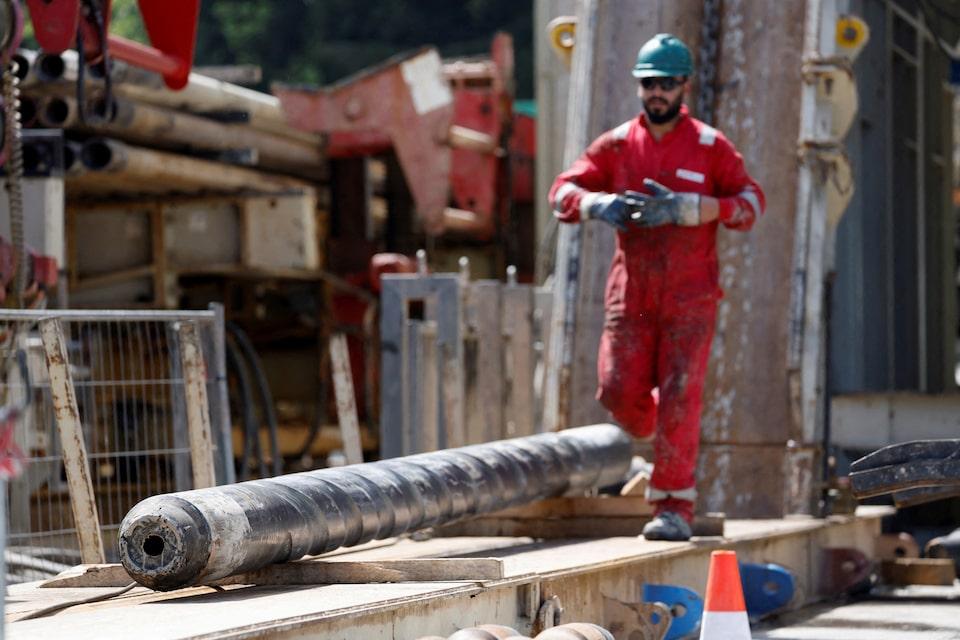
BERLIN, July 4 (Reuters) - Germany's economy ministry presented a draft law on Friday that would accelerate the expansion of geothermal energy projects, as Berlin aims to phase out the use of fossil fuels in heating systems by 2045. Germany possesses some of Europe's largest geothermal reserves, which could cover more than a quarter of its annual heating demand, a study by Fraunhofer Institute showed in 2023. But development has long been stalled by local resistance and regulatory red tape. Sign up here. The new bill offers simplified approval procedures for geothermal facilities, heat pumps, heat storage, and heating pipelines. It would legally designate these projects as being of "overriding public interest", similar to the status given to wind and solar energy, and push for accelerated permitting through changes in mining, water, and environmental laws. It would also give government mining authorities fixed deadlines for project approval procedures and ease restrictions on geothermal exploration. Under the bill, mining authorities would be able to waive a requirement for an operational plan for larger heat generation projects under certain conditions and would be required to respond within set deadlines when notified of planned drilling activities. It also gives them the power to require geothermal companies to provide financial security against potential mining damages related to their projects. The renewed interest in geothermal energy in Germany follows an energy price spike resulting from Russia's 2022 invasion of Ukraine that prompted major municipal utilities — as well as German and international fossil fuel firms — to explore new investment opportunities in the sector. Germany's ambitions to cut greenhouse emissions in the building sector, where heating is the main emissions contributor, has also boosted interest in geothermal energy. The new bill, which the economy ministry hopes will enter into force at the start of next year, must now be approved by Germany's cabinet as well as the lower and upper houses of parliament. https://www.reuters.com/sustainability/climate-energy/germany-proposes-law-speed-up-geothermal-clean-heat-expansion-2025-07-04/
2025-07-04 11:46
Ukraine war has intensified EU farmers had protested against competition from Ukraine grain Traders say Ukraine is likely to find buyers elsewhere BRUSSELS/PARIS, July 4 (Reuters) - The European Union will cut imports of Ukrainian wheat and sugar by up to 80% to address the concerns of its farmers, according to quotas announced on Friday, that are likely to drive Ukraine growers to sell more to markets in Asia and Africa. In a show of solidarity following the start of the Ukraine war in 2022, the EU opened up its food markets and temporarily waived duties and quotas. Sign up here. But as farmers across the bloc protested against a flood of cereals, sugar and poultry from Ukraine, Brussels moved to re-introduce the quotas. Traders say Ukraine has defied expectations by continuing to ship large volumes of grain via the Black Sea, but the war shows no sign of ending and Western support has faltered. The United States paused some missile shipments this week. Officials on Friday said Russia had carried out the worst drone attack of the war. The quotas announced on Friday will be higher than those in the first free trade agreement between the EU and Ukraine in force since 2016, but significantly below the volumes imported over the last three years duty-free. They follow a provisional deal reached on Monday and set the annual quota for wheat at 1.3 million metric tons, a 30% rise from pre-war levels of 1 million tons, a senior EU official said on Friday. It represents a drop of 70-80% from the last three seasons, when the EU imported around 4.5 million tons of Ukrainian wheat in the 2024/25 season to June 30, 6.5 million tons in 2023/24 and 6.1 million tons in 2022/23, according to Commission data. The EU set the quota for Ukrainian sugar at 100,000 tons, up from 20,000 tons before the war, but down from quota-free imports of 400,000 tons in 2022/23 and over 500,000 tons in 2023/24. Ukrainian farm lobby UCAB said on Friday the quotas were too low, calling the proposal a "step back". They should provide relief for European Union farmers, many of whom have suffered from higher costs and stricter environmental rules and who are also concerned by a planned EU deal with South America's Mercosur bloc. Grain traders say competitively priced Ukrainian wheat should be able to find alternative buyers in North Africa and Asia. For barley, the EU's import quota for Ukraine would rise to 450,000 tons from 350,000 tons. That would be in line with what the EU imported in 2024/25, though only about half of the volumes taken in 2022/23 and 2023/24. For poultry, the import quota was increased to 120,000 tons from 90,000 tons. The revised trade agreement between the EU and Ukraine includes 40 goods and still needs to be adopted by a qualified majority of member states. In addition, the agreement allows for individual EU countries to take further measures to safeguard their markets if they are destabilised by quota volumes, the official said. https://www.reuters.com/markets/commodities/eu-raises-import-quotas-ukrainian-wheat-sugar-eu-official-says-2025-07-04/
2025-07-04 11:39
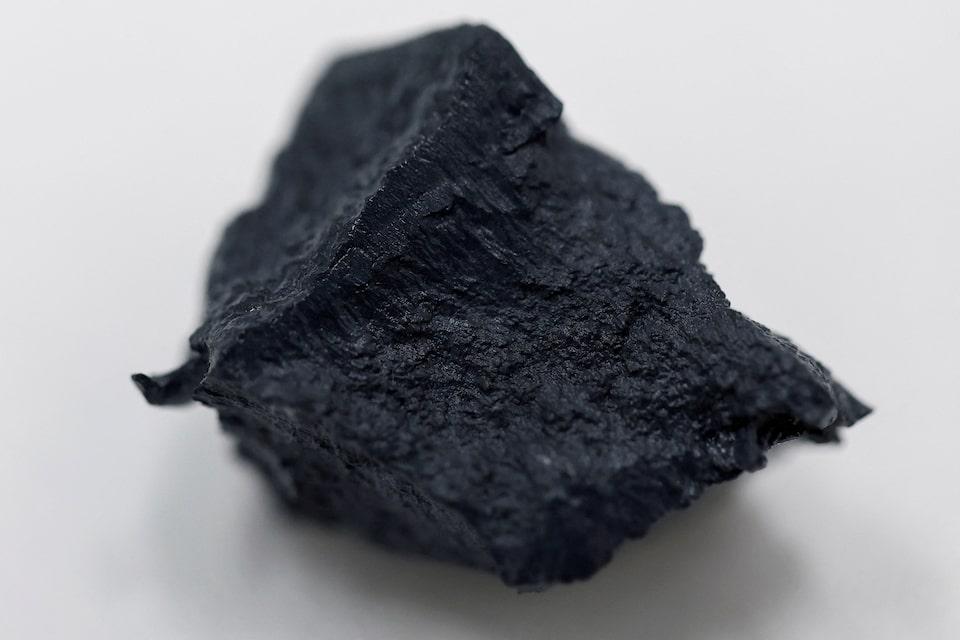
TOKYO, July 4 (Reuters) - Japan will begin test mining for rare-earth-rich mud from the deep seabed off Minamitori Island, some 1,900 kilometres (1,180 miles) southeast of Tokyo, in January next year, the head of the government-backed project said on Friday. Tokyo is seeking to secure stable supplies of critical minerals amid tightening export controls by China, the dominant supplier of rare earths. Global manufacturers are concerned China's decision to curb exports of rare-earths alloys, mixtures and magnets could slow production and disrupt supply chains. Sign up here. "The goal is to secure a domestic supply to enhance national security, rather than to enable private companies to profit from selling rare earths," Shoichi Ishii, program director of the Cabinet Office's national platform for innovative ocean developments told Reuters in an interview. This would mark the world's first attempt to extract mud from the deep seabed for the separation and refining of rare earth elements, he added. The Japanese government is pushing ahead with a national project to develop domestic rare earth production as part of broader efforts to strengthen maritime and economic security. Surveys have confirmed the presence of rare-earth-rich mud at depths of 5,000 to 6,000 meters within Japan's exclusive economic zone (EEZ) near Minamitori Island, Ishii said. The mud is believed to contain dysprosium and neodymium, which are used in electric vehicle motor magnets, as well as gadolinium and terbium, used in various high-tech products, Ishii said. Pipes from a deep-sea exploration vessel operated by the Japan Agency for Marine-Earth Science and Technology (JAMSTEC) will be used to extract the mud, which will then be transported to the mainland for analysis to determine its rare earth content. If successful, the project aims to launch trial operations of a system capable of recovering 350 metric tons of mud per day in January 2027. The project is government-funded, but details on investment size and estimated reserves have not been disclosed. https://www.reuters.com/markets/asia/japan-begin-test-mining-rare-earth-mud-seabed-early-2026-2025-07-04/
2025-07-04 11:32
OPEC+ accelerated output hikes for May, June and July Meeting to decide August output moved to Saturday, sources say August hike of more than 411,000 bpd is possible, sources say LONDON, July 4 (Reuters) - OPEC+ may make an increase in oil output for August at its meeting on Saturday that is larger than the 411,000 barrels per day (bpd) hikes it made for May, June and July, three sources familiar with OPEC+ talks told Reuters. Eight members of the group - Saudi Arabia, Russia, the UAE, Kuwait, Oman, Iraq, Kazakhstan and Algeria - are scheduled to meet online on Saturday to decide their oil output policy for August. Sign up here. OPEC+ made a radical change in policy this year when the eight members started to unwind their most recent output cut of 2.2 million bpd starting in April. They then accelerated the hikes in May, June and July to 411,000 bpd for each month, despite the extra supply weighing on crude prices. Earlier on Friday, other sources told Reuters the group was expected to agree to an increase of 411,000 bpd for August, which remains a possible outcome of Saturday's meeting. All sources declined to be identified by name due to the sensitivity of the matter. The acceleration of the output hikes came after some OPEC+ members, such as Kazakhstan, produced way over their targets, angering other members that were sticking more closely to agreed cuts. Kazakh output returned to growth last month and matched an all-time high, as the Chevron-led (CVX.N) , opens new tab Tengiz field ramped up, a source familiar with the data told Reuters this week. OPEC+, which groups the Organization of the Petroleum Exporting Countries and allies led by Russia, is looking to expand its market share against the backdrop of growing supplies from other producers like the United States. The group pumps about half of the world's oil. As of their decision for July output, the OPEC+ eight have made or announced production increases of 1.37 million bpd. This is 62% of the production cut of 2.2 million bpd that they are unwinding. https://www.reuters.com/business/energy/opec-set-make-another-accelerated-oil-output-hike-saturday-sources-say-2025-07-04/
2025-07-04 11:22
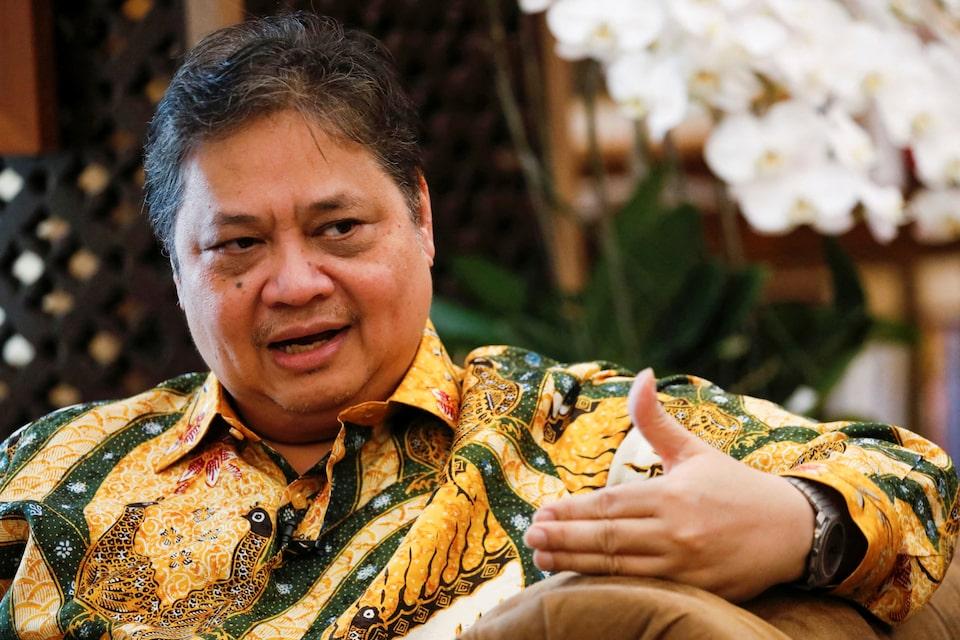
Indonesia to buy 2 million tons of US wheat Jakarta offers near-zero tariffs on key US exports Garuda in talks with Boeing for up to 75 planes purchase Jakarta is facing a 32% tariff in US markets JAKARTA, July 4 (Reuters) - Indonesia has offered to cut duties on key imports from the United States to "near zero" and to buy $500 million worth of U.S. wheat as part of its tariff talks with Washington, its lead negotiator and a wheat industry association said on Friday. Chief economics minister Airlangga Hartarto, who is Indonesia's lead negotiator, also confirmed that state carrier Garuda Indonesia (GIAA.JK) , opens new tab would buy more Boeing planes as part of a $34 billion pact with U.S. partners due to be signed next week. Sign up here. Indonesia, which ran a goods trade surplus of $17.9 billion with the United States in 2024 according to the U.S. Trade Representative, is facing a 32% tariff in U.S. markets and has proposed increasing U.S. imports to facilitate trade talks between the two sides. Airlangga said the Indonesian government has offered to cut tariffs on key American exports, including agricultural products, to near-zero from between 0% and 5% at present. "It will be near zero (tariffs for U.S. main exports), but it will depend as well on how much the tariffs we get from the U.S.," Airlangga said. Garuda's CEO has said it is in discussions with U.S. Boeing (BA.N) , opens new tab to buy up to 75 units of aircraft. Garuda group did not respond to requests for comment on Friday. The wheat purchases are also part of next week's pact with U.S. partners. The chairman of Indonesia's wheat flour mills association, Franciscus Welirang, said its "members will purchase two million tons in total through tenders with a competitive price." "The point is all of the members will buy U.S. wheat," Welirang, who is also a director at Indofood (INDF.JK) , opens new tab, told Reuters. The U.S. counterparts in the wheat deal include Cargill [RIC:RIC:ABNO.UL], Bunge Global SA (BG.N) , opens new tab, Pacificor, Archer-Daniels-Midland (ADM.N) , opens new tab, Columbia Grain International, and United Grain Corporation, Welirang added. U.S. exports to Indonesia include soybeans, petroleum gases and aircraft, Indonesian government data showed. When asked whether the trade talks include military deals, Airlangga said they were "not part of the negotiation". Susiwijono Moegiarso, a senior official with Indonesia's Coordinating Ministry for Economic Affairs, told Reuters that in return, Jakarta has asked the United States for preferential tariffs on its main exports, including electronics, textiles and footwear. "We want them to lower the tariffs (for those goods) as low as possible," he said. Indonesia has also offered the United States opportunities to invest in critical minerals projects, including in the country's abundant resources of copper, nickel and bauxite. https://www.reuters.com/markets/asia/indonesia-offers-buy-us-aircraft-wheat-tariff-negotiations-2025-07-04/