2026-01-22 22:49
Jan 22 - CSX (CSX.O) , opens new tab on Thursday reported fourth-quarter revenue and profit that fell short of market expectations, as weaker industrial demand and lower export coal volumes offset pricing gains and stronger intermodal traffic. U.S. railroad operators such as CSX have been facing softer industrial activity and uneven freight demand, prompting companies to rein in their costs and adjust operations. Sign up here. "Our quarterly results reflect the subdued industrial demand environment and actions taken to adjust our cost structure," CEO Steve Angel said, adding that the company will focus on productivity, cost control and capital discipline in 2026. The Jacksonville, Florida–based company also forecast operating margin expansion of 200 to 300 basis points in 2026 from adjusted 2025 performance, helping shares move 3.2% higher in extended trading. CSX's operating margin was 31.6% for the quarter, up 30 basis points from a year earlier. The company posted revenue of $3.50 billion in the fourth quarter, missing analysts' average estimate of $3.54 billion, according to data compiled by LSEG. Quarterly topline was down 1% from a year earlier, weighed by reduced merchandise volumes and lower export coal revenue. Its net profit of 39 cents per share was also slightly below expectations of 41 cents. However, higher pricing in merchandise and intermodal, an increase in intermodal volumes and increased fuel surcharge revenue helped cushion the decline. Stronger intermodal volumes reflected steadier freight demand and improved network fluidity, while firm merchandise pricing showed CSX's continued ability to pass through rate increases. https://www.reuters.com/business/csx-misses-quarterly-results-estimates-weak-industrial-demand-lower-coal-volumes-2026-01-22/

2026-01-22 22:38
SANTIAGO, Jan 22 (Reuters) - Production at Capstone Copper's (CS.TO) , opens new tab Mantoverde copper and gold mine in northern Chile is largely halted after the mine's desalination plant was shut down amid a nearly three-week labor strike, the company and the mine's largest union said on Thursday. The union said production been halted, but the company said later that oxide production continued but was likely to stop soon. Sign up here. A group of striking workers took over the desalination plant that provides water for the mine, the union said, adding that it had not sanctioned the plant's takeover. Capstone in a statement on Thursday said the takeover had begun on Sunday evening, when individuals entered the desalination plant, 40 km (25 miles) from the mine, and interfered with the plant's electrical system, leading to a disruption of the water supply to Mantoverde. Striking union members are currently preventing access and restart of operations at the desalination plant, Capstone said, adding it was seeking judicial support to regain access to the plant. The company noted that on-site water reserves at Mantoverde were being used for essential services. Sulphide operations were temporarily halted, while oxide operations were expected to continue until tomorrow. At that point they will also be suspended unless the water supply is restored, Capstone said. The strike began on Friday after Union No. 2, the mine's largest, and Capstone failed to reach a collective bargaining agreement. The union, which represents some 645 members, said on Jan. 7 that it expected a lengthy strike. Mantoverde is 70% owned by Capstone and 30% by Mitsubishi Materials (5711.T) , opens new tab. The mine was forecast to produce between 29,000 and 32,000 metric tons of copper cathodes in 2025. https://www.reuters.com/sustainability/sustainable-finance-reporting/chiles-mantoverde-mine-halts-production-amid-labor-strike-2026-01-22/

2026-01-22 22:18
Jan 22 (Reuters) - Ukraine's energy system on Thursday endured its most difficult day since a widespread blackout hit the network in November 2022 and the situation remains "extremely difficult," Energy Minister Denys Shmyhal said. Russia has long targeted Ukraine's energy system in the nearly four-year-old war, but the attacks have intensified in recent months, inflicting heavy damage on networks and knocking out power and heating to large swathes of the population. Sign up here. Two nights of strikes on the capital Kyiv this month have cut power to thousands of apartment buildings. Shmyhal, who is also first deputy prime minister, said the latest difficulties were caused by a series of factors, citing constant shelling as well as damage to generating equipment and transformers. "Today in Ukraine was the most difficult day for the power system since the blackout of November 2022," he wrote. "The situation is extremely difficult. Crews have been obliged to keep resorting to emergency shutdowns." Conditions were most difficult, he said, in Kyiv and the surrounding region and in southeastern Dnipropetrovsk region. A total of 165 emergency brigades were working during the day in the capital, which Shmyhal said had just lived through the 2,000th air raid alert since the Kremlin launched its invasion in February 2022. Their operations were compounded by wintry weather, with night-time temperatures dipping to -10 Celsius (14 Fahrenheit). Kyiv Mayor Vitali Klitschko said 2,600 apartment buildings were still without heat two days after the latest overnight attacks, while 600 buildings have had their heating restored. Power cuts remained in effect, though water supplies were fully restored, he said. President Volodymyr Zelenskiy declared a state of emergency in the energy sector last week and called on the government to come up with a plan to address disruptions. Prime Minister Yulia Svyrydenko said on Thursday after a daily meeting devoted to energy issues that efforts were being made to provide Kyiv residents with alternative energy sources and generators. https://www.reuters.com/business/energy/ukrainian-energy-minister-says-power-system-had-most-difficult-day-since-late-2026-01-22/

2026-01-22 22:14
ORLANDO, Florida, Jan 22 (Reuters) - World stocks leaped on Thursday after U.S. President Donald Trump agreed a framework of a deal on Greenland and withdrew his threat to slap new tariffs on several European nations, while investors also cheered upbeat U.S. economic data. More on that below. In my column today I look at the "Sell America" narrative that is back with a vengeance, and pose the question: will Trump's bellicose policy agenda prompt the world to reduce its $27 trillion "long USA" position? Sign up here. If you have more time to read, here are a few articles I recommend to help you make sense of what happened in markets today. Today's Key Market Moves Today's Talking Points * Return of the 'TACO' trade Trump's climb-down on Greenland and on the threat of new tariffs on Europe probably had several explanations, but one of them is surely the adverse U.S. market reaction earlier this week that saw Wall Street, Treasuries and the dollar all fall sharply together. With mid-term elections looming in November, the affordability crisis is a priority. Mortgage rates are falling but they've not been below 6% since 2022, and more than half of current mortgages are higher than 6% - the last thing Trump wants is a spike in long-term yields and a stock market slump. It seems the "Trump always chickens out" trade is alive and well. * The U.S. growth juggernaut For all the teeth-gnashing over trade wars, inflation, and global geopolitical fractures, the U.S. economy seems pretty robust. Third-quarter GDP was revised up to a 4.4% annualized rate on Thursday, the fastest pace in two years, and sharply up from 3.8% in the second quarter. Fourth-quarter growth looks even stronger, with the Atlanta Fed's GDPNow model currently tracking 5.4%. Figures like these bolster the view that growth and inflation risks are skewed to the upside. And if that's the case, why is the Fed cutting rates? * Bank of Japan meeting The BOJ announces its latest policy decision on Friday. The backdrop could not be more challenging - the yen is languishing at historic lows, the bond market is tanking, long-dated yields have rocketed, and the government wants to accelerate spending. The problem is, offsetting all that with aggressive policy tightening risks torpedoing the bond market. Markets are pricing in a 25-basis-point hike by July and only 20 bps after that - clearly not enough to support the yen. It's a delicate balancing act. What could move markets tomorrow? Want to receive Trading Day in your inbox every weekday morning? Sign up for my newsletter here. Opinions expressed are those of the author. They do not reflect the views of Reuters News, which, under the Trust Principles , opens new tab, is committed to integrity, independence, and freedom from bias. https://www.reuters.com/business/global-markets-trading-day-graphic-2026-01-22/

2026-01-22 21:29
TSX ends up 0.5% at 33,002.70 Materials sector gains 2.2% as gold hits a record high Industrials add 0.7% Celestica shares fall 6.6% Jan 22 (Reuters) - Canada's commodity-linked main stock index rose on Thursday as record-high gold prices boosted metal mining shares and investors cheered upbeat U.S. economic data. The S&P/TSX Composite Index (.GSPTSE) , opens new tab ended up 151.17 points, or 0.5%, at 33,002.70, moving back in reach of the January 19 record closing high. Sign up here. Wall Street's main indexes also climbed on buying tied to the rescinding of U.S. tariff threats on European allies and data that showed U.S. consumer spending up solidly in November and October. "We're right around all-time highs for the TSX ... and there's good reason for that," said Colin Cieszynski, chief market strategist at SIA Wealth Management. "The U.S. economy is doing really well. The Canadian economy is holding its own and if we look at our commodities ... commodity prices are basically supportive for Canada and Canadian resource stocks." Canada is a major producer of oil, as well as base and precious metals. The materials group (.GSPTTMT) , opens new tab, which includes metal mining shares, rose 2.2% as gold pushed above $4,900 per ounce for the first time. The precious metal was powered by ongoing geopolitical tensions, a softer U.S. dollar and expectations of Federal Reserve interest rate cuts. Shares of New Gold Inc (NGD.TO) , opens new tab rose nearly 12% and Seabridge Gold Inc (SEA.TO) , opens new tab shares ended 12.6% higher. Industrials (.GSPTTIN) , opens new tab were up 0.7% and consumer staples (.GSPTTCS) , opens new tab added 0.6%. Five of the 10 major sectors ended lower, including energy (.SPTTEN) , opens new tab. It fell 1.3% as the price of oil settled 2.1% lower at $59.36 a barrel. Technology (.SPTTTK) , opens new tab lost 1.7%, with shares of AI infrastructure company Celestica (CLS.TO) , opens new tab falling 6.6%. https://www.reuters.com/business/tsx-futures-gain-trump-softens-greenland-stance-2026-01-22/

2026-01-22 21:20
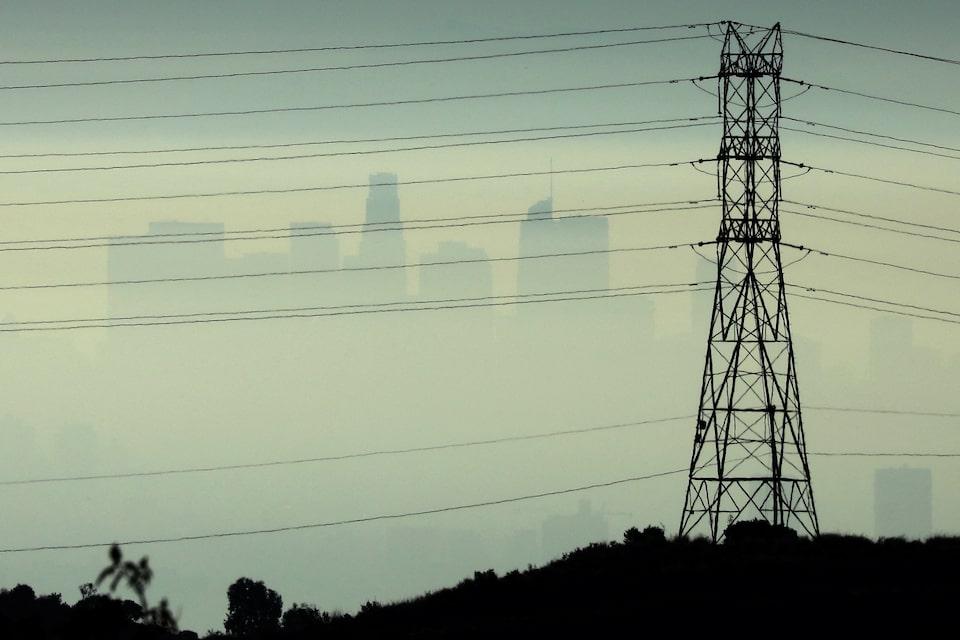
Jan 22 (Reuters) - The U.S. power grid faces an elevated risk of disruption over the next several days as an Arctic blast and reduced gas supplies test the sturdiness of electric infrastructure vulnerable to the around-the-clock demands of data centers. Beginning Friday, an extreme weather pattern of Arctic cold is expected to evolve and bring extremely low temperatures and heavy snow and ice, with the potential to create significant challenges for the electric grid through next week. That was the assessment given on Thursday by the North American Electric Reliability Corporation, the top regulator for power reliability in the United States. Sign up here. Cold weather has already started to reduce gas supplies by freezing oil and gas wells and pipes in several Midwest and Great Plains states . As a result, U.S. natural gas futures soared by a record 63% over the past three days to a six-week high on Thursday on forecasts of extreme cold over the next two weeks. Demand next week is expected to approach last winter's record as homes and businesses crank up their heaters to escape a brutal cold snap, according to power grid operators, analysts and data from financial firm LSEG. Meanwhile, winter electricity demand on the largest U.S. power grid - the PJM Interconnection - is expected to set an all-time record next week. "Peak demand has the potential to exceed 130,000 MW for seven straight days next week, a winter streak that PJM has never experienced," the grid operator said on Thursday in a cautionary alert. "Depending on temperatures, PJM could set a new all-time winter peak load on Jan. 27. And that cold could extend into early February, so PJM is taking additional precautions with its generation and transmission owners to prepare." PJM serves 67 million people in 13 states and Washington, D.C. It has been struggling to keep up with booming demand from the proliferation of Big Tech's power-hungry data centers needed for the rapid expansion of artificial intelligence. In recent years, regional grids, including PJM, have been caught flat-footed by extreme weather. The worst episode happened in Texas in early 2021 when more than 200 people died as the state's main grid lost nearly 50% of its generation capacity. Millions of Texans were left without power, including the family of an 11-year-old boy who froze to death while sleeping in his bed. The Electric Reliability Council of Texas (ERCOT), the state's main grid operator, was criticized in after-action reports for not making sure the system was properly winterized. Since then, stricter state and federal rules have been implemented to require better winter readiness by utilities and grid operators. ERCOT, for example, plans to complete a minimum of 450 inspections this winter season (December–February). As of January 18, 240 inspections had been completed, ERCOT said. But the gap between winter and summer peaks is narrowing, caused by rapid data center growth, said Philip Krein, a grid expert at the University of Illinois Urbana-Champaign. That means utilities have less time to take power plants offline, for example, to perform maintenance. "That makes the grid more vulnerable," Krein said. "The maintenance season is being squeezed like never before." ERCOT and PJM both said they expected they will have enough generation to meet demand this winter. However, ERCOT has forecast there's a slight chance - 1.18% - of a small, controlled blackout on the morning of January 31. ERCOT CEO Pablo Vegas said on Thursday he was confident the Texas grid will be able to handle the demands of cold weather. https://www.reuters.com/business/energy/largest-us-electric-grid-expects-all-time-record-winter-demand-2026-01-22/