2026-01-22 19:31
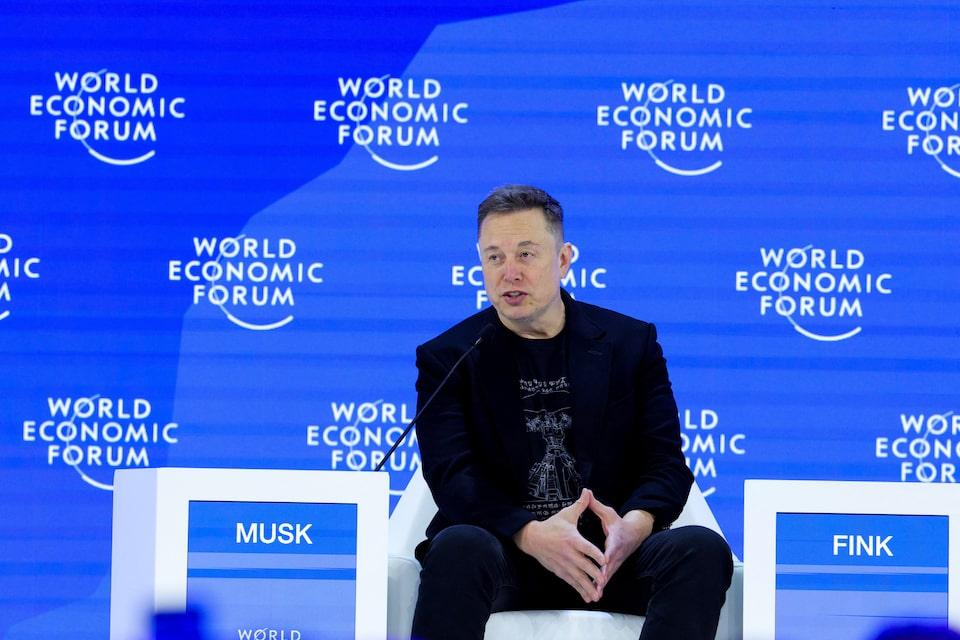
Musk expects Tesla's self-driving tech approval in Europe within weeks Predicts robots will outnumber humans, boosting economic growth Musk, previously critical of WEF as elitist, makes Davos debut DAVOS, Switzerland, Jan 22 (Reuters) - Elon Musk marked his last-minute Davos debut on Thursday with a critique of U.S. solar tariffs and aggressive targets for Tesla, including humanoid robot sales next year, as well as flagging European approval for self-driving tech within weeks. After years of describing the World Economic Forum's annual meeting as elitist, unaccountable and disconnected from ordinary people, the world's richest man was interviewed by World Economic Forum interim co-chair Larry Fink. Sign up here. The BlackRock CEO expressed his admiration for Musk at the start of the wide-ranging discussion, which covered the future of robots and AI, the economic benefits of reusable rockets and Musk's childhood fascination with science fiction. Musk has become more prominent in recent years, driven by his proximity to U.S. President Donald Trump and his stewardship of firms including Starlink-owner SpaceX, social media platform X and artificial intelligence startup, xAI. Breaking ranks with Trump on renewable energy, Musk said the United States could produce enough solar power to meet all of its electricity needs, including booming demand from the proliferation of Big Tech's power-hungry data centers. "You could take a small corner of Utah, Nevada or New Mexico - a very small percentage of the area of the U.S. - to generate all of the electricity that the U.S. uses," he added. "Unfortunately, the tariff barriers for solar are extremely high and that makes the economics of deploying solar artificially high," Musk said. Trump has been openly critical of clean energy sources while encouraging oil majors to drill more for oil and gas. His freeze on approvals for major onshore wind and solar projects has left thousands of megawatts of capacity in limbo at a critical time for the U.S. as it rushes to secure enough power to meet soaring AI-driven requirements. 'WE DON'T WANT TO BE IN TERMINATOR' The interview did not touch on other major geopolitical and economic themes that have dominated the forum this week, including Trump's ambitions for Greenland and Russia's war in Ukraine, focusing instead on technology and robotics. The pair joked about aliens, life on Mars and the "Terminator" film series. "We need to be very careful with robotics. We don't want to find ourselves in a James Cameron movie. Love his movies, but we don't want to be in Terminator, obviously," said Musk, referring to the fictional AI system from the "Terminator" films that becomes self-aware and turns on humanity. Among the highest profile executives speaking at the Swiss mountain resort this week, Musk predicted robots will eventually outnumber humans, leading to a huge economic boom, and joked about traveling to Mars. "People ask me do I want to die on Mars, and I'm like: 'yes, but not on impact','" he said towards the end of the 30-minute session, drawing laughter from the audience. His appearance at Davos comes as g overnments and regulators from Europe to Asia crackdown on sexually explicit content generated by his xAI chatbot Grok on X, launching probes, imposing bans and demanding safeguards, in a growing global push to curb illegal material. https://www.reuters.com/business/davos/musk-speak-davos-thursday-2026-01-22/
2026-01-22 19:25
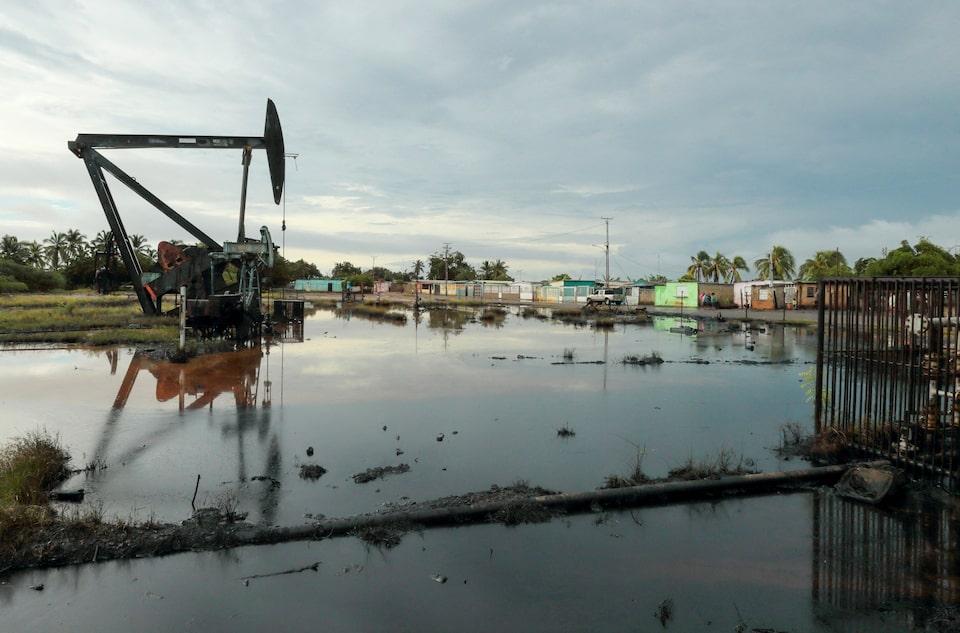
WASHINGTON, Jan 22 (Reuters) - The Trump administration is allowing China to purchase Venezuelan oil but not at "unfair, undercut" prices at which Caracas sold the crude before the U.S. removed President Nicolas Maduro, a U.S. official said on Thursday. While the oil will be sold in the global marketplace, the administration has required that the majority be sold to the United States, the administration official said on condition of anonymity. The U.S. says it will control Venezuela's oil sales indefinitely after seizing Maduro on January 3. Sign up here. "Thanks to President (Donald) Trump’s decisive and successful law enforcement operation, the people of Venezuela will collect a fair price for their oil from China and other nations rather than a corrupt, cheap price," the official said. China has been Venezuela's top oil buyer for years, and the sales helped Caracas repay massive loans to Beijing in debt-for-oil deals. The administration is allowing China to buy the oil at "fair market prices - not the unfair, undercut prices" at which Maduro sold oil to China to pay debts, the official said. U.S. Energy Secretary Chris Wright said last week that the U.S. was receiving about $45 per barrel for Venezuelan oil compared with the roughly $31 Venezuela was getting before Maduro's capture. Trading houses Trafigura and Vitol have sold some 11 million barrels of oil in an initial supply deal between Venezuela and the U.S. of stranded crude, representing about a quarter of the $2 billion agreement. Trafigura completed its first crude sale to a customer in a deal with Spanish company Repsol (REP.MC) , opens new tab while Vitol has negotiated cargoes to U.S. refiners including Valero (VLO.N) , opens new tab and Phillips 66 (PSX.N) , opens new tab and to its refinery in Italy, sources said. China's oil imports from Venezuela are expected to slump starting in February as fewer tankers have managed to leave after the U.S. claimed control of the OPEC producer's sales, traders and analysts said last week. https://www.reuters.com/business/energy/us-allows-china-purchase-venezuelan-oil-not-undercut-prices-maduro-days-official-2026-01-22/
2026-01-22 19:22
Shell has approached potential buyers for Vaca Muerta assets, sources say Shell's assets likely to be valued in billions of dollars, sources say European oil major among earliest backers of Argentine shale play Sale plans follow Shell's exit from Argentina LNG project NEW YORK, Jan 22 (Reuters) - Oil major Shell (SHEL.L) , opens new tab is considering a sale of its assets in Argentina's Vaca Muerta shale play and has approached potential buyers in recent weeks to gauge their interest, three sources familiar with the matter told Reuters. Shell is open to selling some or all of its interests in the highly sought shale oil and gas play, part of Argentina's Neuquen basin, two of the sources said. The assets are likely to be valued in the billions of dollars, they said, adding that a precise estimate was difficult because some of the assets are undeveloped and commodity prices are volatile. Sign up here. The sources, who were not authorized to speak on the record, cautioned that a sale is not guaranteed, and Shell could still choose to hold the assets. Shell declined to comment. A full sale would mark a surprise exit by one of the Vaca Muerta's earliest backers, just as interest in the region is growing due to concerns that other large shale fields, including the top-producing Permian basin of Texas and New Mexico, have peaked. A sale would follow Shell's recent decision to exit Argentina LNG, after Argentina's state oil firm YPF (YPFDm.BA) , opens new tab halved the project's planned capacity. Shell entered Vaca Muerta in 2012 and has since grown its footprint to four majority-owned and operated license blocks, and minority stakes in three other blocks operated by YPF. Shell's production from Argentina was around 15.6 million barrels in 2024, according to its latest annual report. Shell has sold a number of assets since company veteran Wael Sawan was appointed CEO in 2023 and tasked with improving performance after bets on a pivot from oil to renewables failed to pay off. Reuters earlier this week reported that Shell is planning to exit Syria's al-Omar oilfield. Last week, Reuters reported that the oil major is exploring sale options for its LNG Canada stake. ONE OF THE 'MOST COMPELLING' SHALE PLAYS The Vaca Muerta is seeing strong interest from inventory-hungry producers exposed to dwindling potential in North America, said Andy McConn, director of Enverus Intelligence Research. In contrast to the Permian, which has been drilled extensively since the U.S. shale boom began there about two decades ago, only about 8% of the Vaca Muerta is under development. The play is estimated to hold the world's second-largest shale gas and fourth-largest shale oil resources, according to U.S. government statistics. U.S. shale pioneer Harold Hamm's Continental Resources earlier this month acquired minority stakes in four Vaca Muerta blocks from Pan American Energy, calling the region "one of the most compelling shale plays in the world." While output from the Vaca Muerta has grown rapidly in recent years, declining oil prices, high production costs and transportation bottlenecks have threatened to slow the growth. Compared to the Permian, costs to drill a well in the Vaca Muerta are about 35% higher, Mark Nelson, vice chairman of U.S. oil company Chevron said in November. Still, Shell's assets in the region are estimated to break even at Brent oil prices below $50, McConn said. "Such economics and scale screen favorably versus other global shale assets," he said. (This story has been corrected to change Shell's Argentina output to around 15.6 million barrels in 2024, from 15,610 barrels per day, in paragraph 5) https://www.reuters.com/business/energy/shell-considers-exit-argentinas-vaca-muerta-shale-play-sources-say-2026-01-22/
2026-01-22 18:21
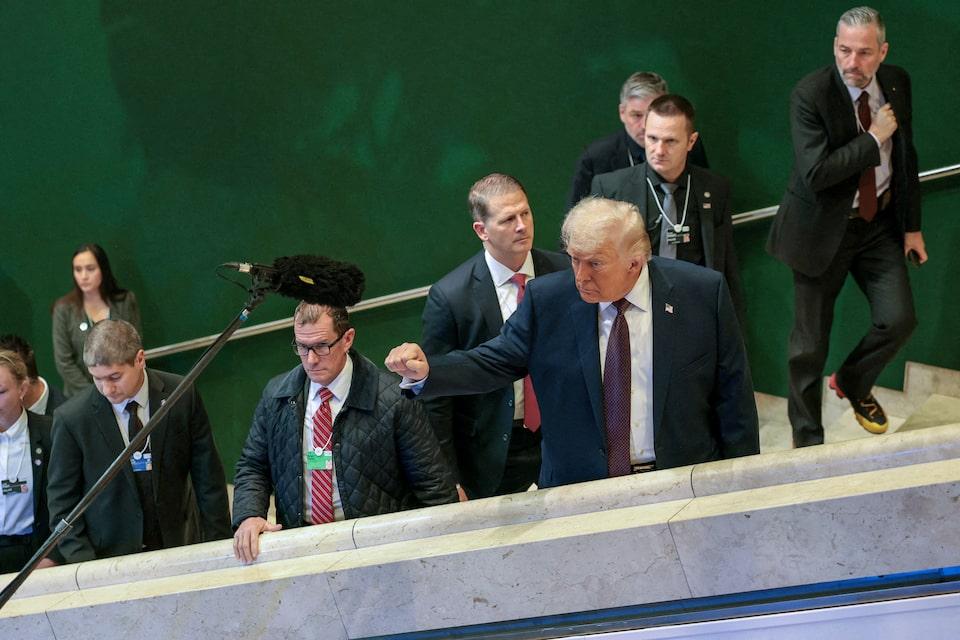
North European investors weighing geopolitical risks Rare for pension funds to view investment decisions publicly US remains investable, but risk premium has gone up - investors LONDON, Jan 22 (Reuters) - Big Northern European investors are increasingly wary of the risks of holding U.S. assets in the face of geopolitical tensions, pensions chiefs told Reuters, a sign of a broadening shift away from the world's biggest financial market. A top investment adviser, three pension funds and a leading industry body said the risk premium attached to holding U.S. assets had also gone up in part because of worries about the nation's finances. Sign up here. Pension industry leaders and investment chiefs from Finland, Sweden and Denmark told Reuters they viewed U.S. foreign policy uncertainty and White House debt levels as a threat to the dollar, U.S. Treasuries and stocks. The Nordic region is home to some of Europe's biggest pension funds by assets. This week two Nordic pension funds, Sweden's Alecta and Denmark's AkademikerPension, said they had sold or were in the process of selling their U.S. Treasuries. While they said the decisions were unrelated to recent events, U.S. President Donald Trump's ambitions for Greenland have revived speculation about Europe responding with financial protectionism to his administration's policies. "We're having a lot of discussions (with clients) around (whether) it is time to tilt away from U.S. assets," said Van Luu, global head of solutions strategy, fixed income and foreign exchange at Russell Investments, which advises retirement schemes. "About 50% of them are considering whether they should do something about it," especially Northern European clients, including in Scandinavia and the Netherlands, he said. Seattle-based Russell advises clients with $1.6 trillion of assets and manages $636 billion directly. The value of the U.S. Treasuries held by Dutch pension fund ABP, Europe's largest, dropped steeply from the end of 2024 to September last year, likely driven by a reduction in holdings. RARE PUBLIC DEBATE Shifts in long-term asset allocation take time to show up and the United States with its strong economy and deep markets remains a draw. U.S. stocks are trading near record highs. U.S. policy uncertainty, however, has pressured the dollar, which fell 10% against major currencies last year amid tariff hikes and other policies, and 30-year U.S. Treasury yields are trading at around 4.9% , near levels reached during the global financial crisis. The Nordic funds have been more vocal about their appetite for U.S. assets than others. Alecta said it had sold most of its U.S. bond holdings because risk associated with U.S. Treasuries and the dollar had increased, while AkademikerPension said it would divest its holdings by the end of the month, blaming weak U.S. government finances. AkademikerPension said the move was not intended as a political statement linked to the rift between Denmark and the United States over Greenland. The public nature of the debate over U.S. assets is unusual for investors, who typically steer away from commenting on any changes that may be linked to current affairs. Their long-term investment decisions tend to look past momentary events. "All of this turmoil is raising some questions about how exposed you should be to the U.S... that is what our members are professionally assessing," said Tom Vile Jensen, deputy director of trade body Insurance and Pensions Denmark. While U.S. policy uncertainty is a risk factor for asset valuations, the funds said they wouldn't withdraw capital for political reasons. "There is certainly no weaponisation of capital. It is not the job of our sector to do that," said Vile Jensen. VERY MUCH INVESTABLE The U.S. remains an investable market but its risk premium has "continued to rise", said Annika Ekman, EVP, Investments at Finland's Ilmarinen, which manages just over 65 billion euros ($76.1 billion). Finnish pension provider Veritas, meanwhile, is adhering to its investing mandates but U.S. policy uncertainty is a risk for the dollar, CIO Laura Wickstrom said. "The higher the unpredictability (goes), then that is a more difficult environment," she said. U.S. policy uncertainty has also contributed to the draw of assets such as gold. Folksam, one of Sweden's largest insurers, told Reuters it sold its U.S. Treasuries in 2024 partly to reduce risks ahead of the U.S. election. "There is a lot of talk right now, but for the time being I believe one should keep a cool head," said Jonas Thulin, CIO at Sweden's AP3, which manages roughly $61 billion of pension assets. ($1 = 0.8546 euros) https://www.reuters.com/business/finance/big-north-european-investors-reassess-us-exposure-geopolitical-risk-mounts-2026-01-22/
2026-01-22 18:18
Jan 22 (Reuters) - (This Jan 22 story has been corrected to state that BitGo received approval, not conditional approval, to convert its state trust bank charter to a national charter in paragraph 11) BitGo (BTGO.N) , opens new tab hit a $2.59 billion valuation after its stock opened 24.6% higher in their New York debut on Thursday, as investors snapped up shares in 2026's first crypto IPO. Sign up here. The crypto custody firm's stock opened at $22.43 a share, above the $18 offer price. BitGo and some of its backers sold 11.8 million shares above the marketed range of $15 and $17 to raise $212.8 million. The listing comes as the crypto IPO window reopens following tepid activity after the U.S. government shutdown late last year. No major crypto-linked issuer went public in the U.S. in the fourth quarter. "BitGo's IPO is the first major bellwether of the market’s appetite for crypto listings in 2026. While Gemini listed near the peak of the crypto market last year, BitGo is going public into the headwinds of the recent selloff," IPOX research associate Lukas Muehlbauer said. A lighter regulatory approach under the Trump administration has boosted sentiment and encouraged several crypto-linked businesses to tap capital markets. Crypto asset manager Grayscale and exchange Kraken are among the industry players seen as near-term IPO candidates. The sector, however, remains volatile after a sharp selloff in the fourth quarter, raising the bar for companies looking to go public. Bitcoin fell 6.4% in 2025, marking its first annual loss since 2022. "Marketing itself as a profitable and regulated "digital asset infrastructure company" instead of a pure token play, BitGo is positioned to be less prone to the day-to-day price movements of bitcoin," Muehlbauer said. Founded in 2013, BitGo is one of the few profitable crypto firms, having reported a net income of $35.3 million in the first nine months of 2025. Last month, BitGo received approval from a top U.S. banking regulator to convert its state trust bank charter to a national charter, allowing it to operate across the country. https://www.reuters.com/business/crypto-custody-firm-bitgos-shares-jump-246-nyse-debut-2026-01-22/

2026-01-22 13:08
Sees improving situation in manufacturing hiring Demand for services, particularly health workers resilient Job hugging workers still reluctant to switch roles DAVOS, Switzerland, Jan 22 (Reuters) - ManpowerGroup (MAN.N) , opens new tab sees the global staffing market stabilising after a difficult 2025 and says improving economic conditions could set up the industry for growth in 2026, despite continuing geopolitical and trade uncertainty. "With an improving economic outlook in Europe and a very strong economic outlook for the United States, there's hope that the staffing industry as a whole can see some opportunities for growth in 2026," CEO Jonas Prising told Reuters at the World Economic Forum in Davos, Switzerland. Sign up here. He declined to give a specific outlook for Manpower, which is due to report its fourth quarter earnings on January 29. Based on broader economic data, he said the overall hiring market was starting to recover after a "tough year" in 2025 in the United States and parts of Europe. Prising said forward-looking indicators, such as PMI data, showed mixed momentum, with U.S. manufacturing still weak but Europe showing tentative improvement. He said there was resilient demand for staff in services, particularly for healthcare workers, while defence-linked activity was also a strong focus for employers due to increased spending on defense and aerospace. By contrast, the automotive industry is "clearly … a pain point" across several markets and is likely to continue to be weak as manufacturers adjust to changing regulations and the switch to electric cars. The U.S. staffing company's recent survey of 40,000 companies across 40 countries showed the overall mood is improving. "Employers are pretty stable in their outlook," Prising said. "They are not seeing an imminent need to radically reduce their workforce, while they also don't see an imminent need to rapidly increase their workforce." However, many workers are also reluctant to switch jobs. "We call it job hugging," Prising said, saying concerns about global economic uncertainty made people want to sit tight and not move. https://www.reuters.com/business/world-at-work/staffing-company-manpower-sees-global-hiring-stabilising-after-tough-2025-2026-01-22/