2026-01-22 12:42
MADRID, Jan 22 (Reuters) - A commuter train collided with a crane in southeastern Spain on Thursday, emergency services said, in the country's fourth rail crash in less than a week. Several people suffered minor injuries in the crash near the port city of Cartagena in Murcia region, authorities added. Sign up here. "The train hasn't been overturned or derailed," a spokesperson for Murcia's emergency services said. The first calls about the crash came in just after noon, they added. Spain is still reeling from Sunday's high-speed train collision in the southern Andalusia region that killed at least 43 people. Two days after that, a commuter train derailed after a containment wall fell on the track due to heavy rain near the city of Barcelona, killing the driver and seriously injuring four passengers. The main train drivers' union called a nationwide strike over safety standards after that and a second collision in the northeastern Catalonia region the same day, Tuesday. On Thursday, Spanish rail operator Adif said traffic on the line in Murcia was disrupted by what it described as "the intrusion into the infrastructure gauge by a crane not belonging to the railway operation". Its message on X did not go into more detail. A later posting said servicexs had resumed on the line. https://www.reuters.com/world/europe/train-crashes-against-crane-southeastern-spain-tve-reports-2026-01-22/

2026-01-22 12:01
FRANKFURT, Jan 22 (Reuters) - Euro area banks might find it hard to finance themselves on the market, particularly in U.S. dollars and other foreign currencies, if high geopolitical uncertainty persists, the European Systemic Risk Board warned on Thursday. The ESRB report came just as tensions between Europe and the United States escalated this week over U.S. President Donald Trump's designs to take over Greenland, a semi-autonomous part of the Kingdom of Denmark. Sign up here. Looking at history, the European Union's top financial risk watchdog found that geopolitical shocks tend to reduce banks' borrowing on the wholesale market, particularly in foreign currencies. This is likely due to the international funding market becoming more expensive at times of stress, as buyers of bank bonds and other such instruments turn more averse to risk. "Looking ahead, a sustained period of uncertainty may test the limits of absorption of bank market wholesale funding, especially for instruments denominated in foreign currencies," the ESRB said. Specifically, the study found a trade-policy uncertainty shock led to a reduction of around 5 percentage points in wholesale funding issuance denominated in U.S. dollars and other currencies excluding the euro. Banks also reduced their borrowing of foreign currencies in the face of rising geopolitical risk and economic policy uncertainty -- by 2 and 6 percentage points respectively. The analysis also showed that sales of bank bonds and covered bonds were more stable following these shocks, while funding through asset- and mortgage-backed securities, as well as short-term debt, was more vulnerable. Finally, the study found banks tend to tighten the supply of credit when U.S. economic policy becomes more uncertain, with a decline of about 4.5% in total lending and an increase of about 90 basis points in interest rates among the banks that are most exposed to the United States. https://www.reuters.com/business/finance/geopolitical-turbulence-may-test-euro-area-banks-forex-funding-risk-body-warns-2026-01-22/

2026-01-22 11:57
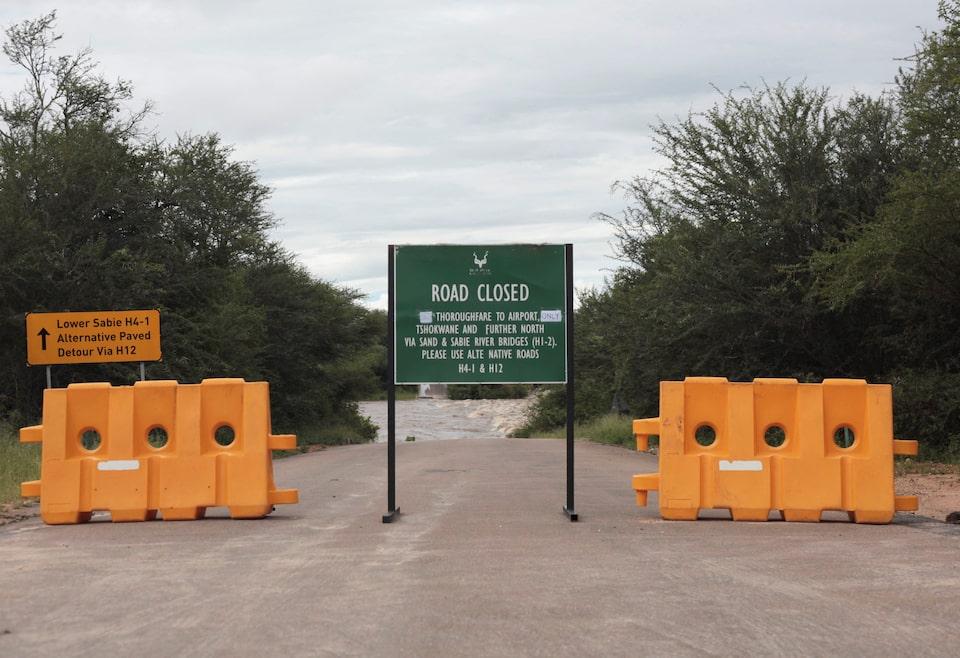
JOHANNESBURG, Jan 22 (Reuters) - Damage from severe floods in South Africa's flagship game reserve Kruger National Park will take years to repair and cost millions of dollars, the environment minister said on Thursday. South African authorities temporarily closed the park last week after several rivers that run through it burst their banks as a result of heavy rains. The park is one of South Africa's main draws for local and foreign tourists. Sign up here. Fifteen tourist camps are still closed, with some completely inaccessible, Minister of Forestry, Fisheries and the Environment Willie Aucamp said. Hundreds of people had been evacuated and no lives were lost. The damage is still being assessed but repairs are estimated to cost more than 500 million rand ($30 million). "The recent floods that we've experienced have had a devastating effect on the park," Aucamp told Reuters. "The indication is that it will take as long as five years to repair all the bridges and roads and other infrastructure." Reuters journalists reached the park last week, finding bridges completely submerged under rushing water, with hippos seen swimming among treetops. Park officials have said they are not too worried about the fate of animals that instinctively move to high ground to escape the floods, although they have warned people living nearby to be careful about crocodiles swept beyond their usual habitats. Flooding in southeastern Africa has become more frequent and severe as climate change makes storms in the adjacent Indian Ocean more powerful. Neighbouring Mozambique is also facing devastating floods that have forced tens of thousands of people to flee their homes in recent days. ($1 = 16.2147 rand) https://www.reuters.com/business/environment/flood-damage-south-africas-kruger-park-will-take-years-fix-2026-01-22/
2026-01-22 11:39
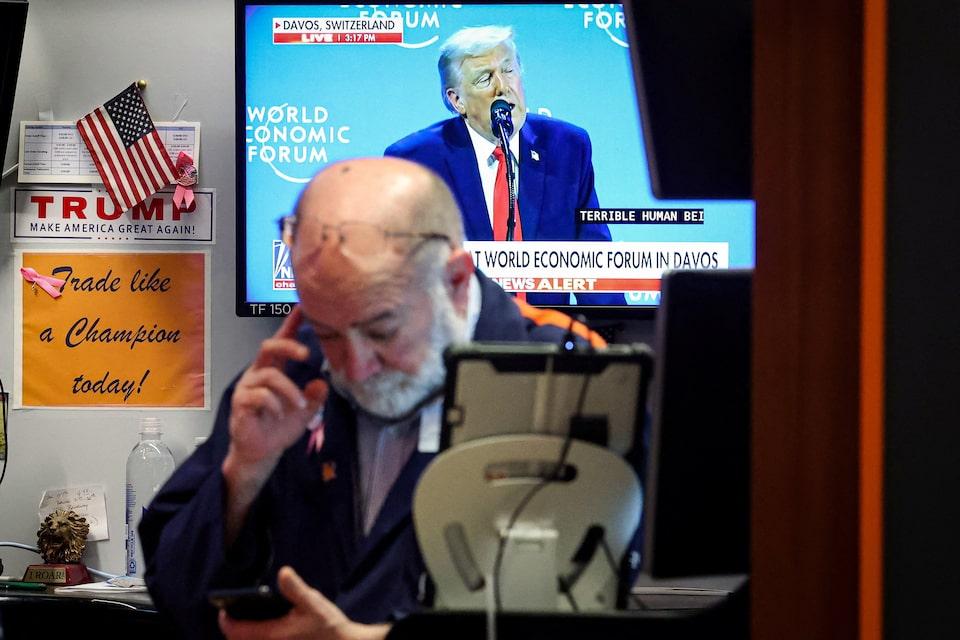
Jan 22 - What matters in U.S. and global markets today By Mike Dolan , opens new tab, Editor-At-Large, Finance and Markets Sign up here. World stocks bounced back after Trump’s U-turn on Greenland tariffs late Wednesday, leaving markets pondering what the whole four-day drama was for – except as a reminder of how erratic U.S. policymaking has become. With Trump in Davos all day Thursday, anxiety remains about the potential for further twists and turns, partly explaining why this week’s losses have not yet all been erased despite the apparent détente. But the February 1 tariff threat has been removed for now. I’ll get into all that and more below. But first, check out my latest column on just how extreme market positioning was to kick off the year - and the risk of mixing rising geopolitical conflict with an already stretched "hyper bull" market. And listen to the latest episode of the Morning Bid daily podcast. Subscribe to hear Reuters journalists discuss the biggest news in markets and finance seven days a week. DAVOS DÉTENTE The pan-European STOXX index was up more than 1% in early trading on Thursday, following the S&P 500’s 1.16% rise yesterday – its biggest in two months – on news of the Greenland deal. The VIX index, or so-called fear gauge, fell back towards baseline levels after hitting a year-to-date high on Tuesday. Gold slipped from Wednesday's all-time high of $4,887.82 per ounce as tensions eased and investors sought riskier assets, but it remains elevated above $4,800 amid the still febrile geopolitical situation. Indeed, details about the deal struck by Trump and NATO secretary-general Mark Rutte remain sparse. While Trump’s sudden shift in tone has defused tensions, European diplomats noted the dispute was not yet resolved and Denmark’s Foreign Minister Lars Lokke Rasmussen reiterated the importance of Danish sovereignty and Greenlandic self-determination. Whatever was agreed, it will not involve a U.S. takeover of Greenland. Trump noted all parties were “very happy” with the deal, which he said touched on security and minerals and would last "forever". Secretary-General Rutte said on Thursday the deal would focus on guarding against Russian and Chinese influence in the Arctic and that NATO allies would have to step up on security in the region. Meantime, Treasury yields retreated, helped by a decent 20-year bond auction and signals from the U.S. Supreme Court on Wednesday that justices would not support Trump’s attempt to fire Fed Governor Lisa Cook. Conservative justice Brett Kavanaugh, for instance, noted that a “low bar” for dismissals by the president would “weaken, if not shatter, the independence of the Federal Reserve”. The Fed is expected to hold rates steady at its January meeting, and investors will get more clues on the policy outlook on Thursday with the release of November’s PCE inflation estimate, the Fed’s preferred inflation gauge. Attention now switches back to the corporate earnings season. Intel tops today’s calendar, with its stock surging 12% on Wednesday ahead of the report. Its fortunes improved last year due to the AI data center boom and the U.S. government’s decision to take a stake in the company. Other chipmakers jumped on Wednesday too, with South Korea's stocks racing ahead on Thursday, now easily making the country’s index the best performer of the year with gains near 20%. Chart of the day Intel shareholders are more optimistic about the company's results than they have been for many quarters. Investors are betting the turnaround CEO Lip-Bu Tan promised is taking root, both because rapid data center buildouts are fueling demand for its traditional server chips and because the U.S. government took a stake in the chipmaker last year. Intel's stock surged another 12% on Wednesday, ahead of its quarterly earnings report due out later today, bringing its gains for the past 12 months to 152%. Today's events to watch * U.S. Q3 GDP revision (8:30 AM EST), weekly jobless claims (8:30 AM EST), November PCE price index (10:00 AM EST) * U.S. Treasury sells 10 year inflation-protected securities, 2-year floating rate notes * U.S. President Donald Trump participates in 'Board of Peace' charter announcement * European Council President Antonio Costa convenes a special EU summit in Brussels * U.S. corporate earnings: Abbott Laboratories, Freeport-McMoRan, General Electric, Intel, Procter & Gamble Want to receive the Morning Bid in your inbox every weekday morning? Sign up for the newsletter here. You can find ROI on the Reuters website , opens new tab, and you can follow us on LinkedIn , opens new tab and X. , opens new tab Opinions expressed are those of the author. They do not reflect the views of Reuters News, which, under the Trust Principles , opens new tab, is committed to integrity, independence, and freedom from bias. https://www.reuters.com/business/finance/global-markets-view-usa-2026-01-22/
2026-01-22 11:39
BERLIN, Jan 22 (Reuters) - The EU's free trade deal with South American countries will probably be applied on a provisional basis as soon as March, an EU diplomat told Reuters on Thursday, despite a looming challenge at the bloc's top court. EU lawmakers dealt a blow to the contentious trade agreement with Brazil, Argentina, Paraguay and Uruguay on Wednesday by referring it to the European Court of Justice, potentially delaying it by two years. Sign up here. "The EU-Mercosur agreement shall be applied provisionally once the first Mercosur country has ratified it," an EU diplomat told Reuters. "That will probably be Paraguay in March," the diplomat added. The EU signed its largest-ever trade pact with the Mercosur members on Saturday after 25 years of negotiations, and the delay has caused dismay among many businesses in Germany and with one of its main backers, Chancellor Friedrich Merz. He told delegates at the World Economic Forum in the Swiss alpine resort of Davos that he regretted the decision by the European Parliament, which meant another obstacle had been erected. "But rest assured: We will not be stopped. The Mercosur deal is fair and balanced. There is no alternative to it if we want to have higher growth in Europe," he said on Thursday. Supporters argue that the deal is important to offset business lost to U.S. tariffs and to reduce reliance on China. Critics, led by France, say it will increase imports of cheap beef, sugar and poultry and undercut domestic farmers. https://www.reuters.com/business/eu-mercosur-deal-likely-take-effect-provisionally-march-says-eu-diplomat-2026-01-22/

2026-01-22 11:38
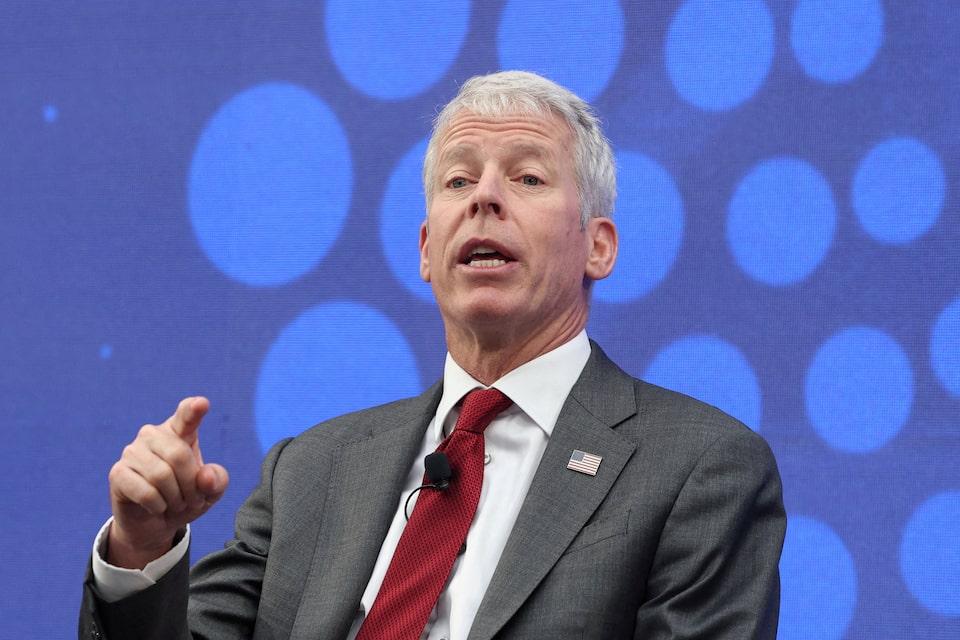
Wright criticises EU and California's green energy policies EU scales back corporate sustainability laws after pressure Occidental exited California due to state regulations, Hollub says DAVOS, Switzerland, Jan 22 (Reuters) - The world needs to more than double oil production, U.S. Energy Secretary Chris Wright said on Thursday, while criticising the European Union and the U.S. state of California for wasting money on what he described as inefficient green energy. In recent years, the World Economic Forum's discussions on energy have centred on ways to boost lower-carbon policies. But during Wright's discussion with energy company Occidental's (OXY.N) , opens new tab CEO Vicki Hollub in Davos, they emphasised that the world will depend on oil for decades to come. Sign up here. Wright said corporate environmental regulations in the European Union posed risks to energy cooperation with the United States. "These regulations could threaten you (U.S. producers) liability-wise to send gas to Europe," Wright said. "We're working with our colleagues here in Europe to remove those barriers." The EU requires importers of oil and gas into Europe to monitor and report methane emissions associated with those imports, in a bid to curb emissions of the planet-warming gas. After months of pressure from companies and governments, the European Union agreed last month to sharply scale back two flagship laws, the Corporate Sustainability Reporting Directive and the Corporate Sustainability Due Diligence Directive. ENERGY-WRONG POLICY Increased natural gas production and investment in LNG export terminals have put the U.S. in a position to replace Europe's imports of Russian gas that were slashed after the start of the conflict in Ukraine in 2022, Wright said. He criticised California's energy policies, which he said resembled Europe's. "If California hadn't pivoted in an energy-wrong policy...how would the residents of California, what would their quality of life be like?" Wright said. California produced 300,000 barrels per day of crude in 2024, according to the latest data from the U.S. Energy Information Administration, almost halving from a decade prior. Its production peaked at 1.1 million bpd in 1985, according to EIA data going back to the early 1980s. Hollub said Occidental exited California because of the state's regulations. In 2014, Occidental spun off its oil and gas assets in the state into a separately traded company and moved its headquarters from Los Angeles to Houston. California is isolated from refining centres along the U.S. Gulf Coast and in the Midwest and can see swings in energy prices. Global oil supply stood at 107.4 million barrels per day last month, according to the International Energy Agency. https://www.reuters.com/sustainability/climate-energy/us-energy-secretary-calls-doubling-global-oil-output-davos-2026-01-22/