2026-01-22 07:33
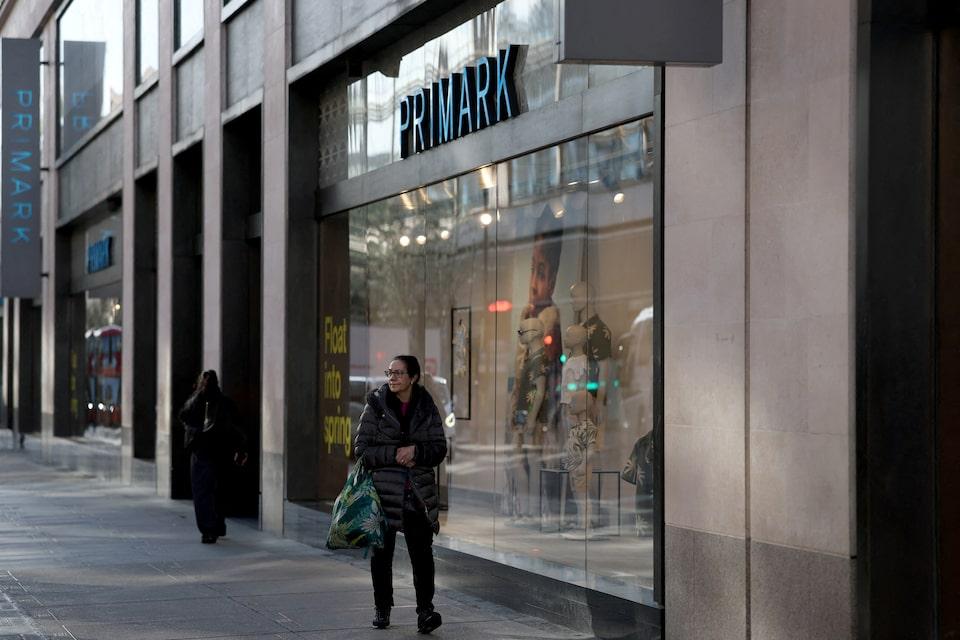
LONDON, Jan 22 (Reuters) - Associated British Foods (ABF.L) , opens new tab, which warned on profit earlier this month, confirmed on Thursday that underlying sales at its Primark clothing business fell 2.7% in the Christmas quarter. When AB Foods issued its profit warning on January 8, it published sales estimates for the 16 weeks to January 3. Final figures were published on Thursday. Sign up here. The warning, which sent AB Foods' shares down 14%, was due to weaker-than-expected Primark sales and subdued demand in the United States for its cooking oils and bakery ingredients. It cast a shadow over the group's plans to separate Primark from its food business - which includes grocery brands such as Ovaltine, Ryvita and Twinings, as well as major sugar, agriculture and ingredients units. The group said in November it was conducting a review of its structure and hoped to decide by April 21 when first-half results are reported. However, CEO George Weston said the "working assumption" was a separation would happen. Thursday's update made some adjustments from the January 8 statement. Total retail revenue was up 4.2% over the 16 weeks versus a previous estimate of up 4%, sugar revenue was down 4.3% versus a previous estimate of down 2%, ingredients revenue was down 2.9%, versus a previous estimate of down 3%, and agriculture revenue was down 4.1% versus a previous estimate of down 4%. Grocery revenue was flat, confirming the previous estimate. https://www.reuters.com/business/retail-consumer/ab-foods-confirms-primarks-christmas-quarter-sales-fell-27-2026-01-22/
2026-01-22 07:28
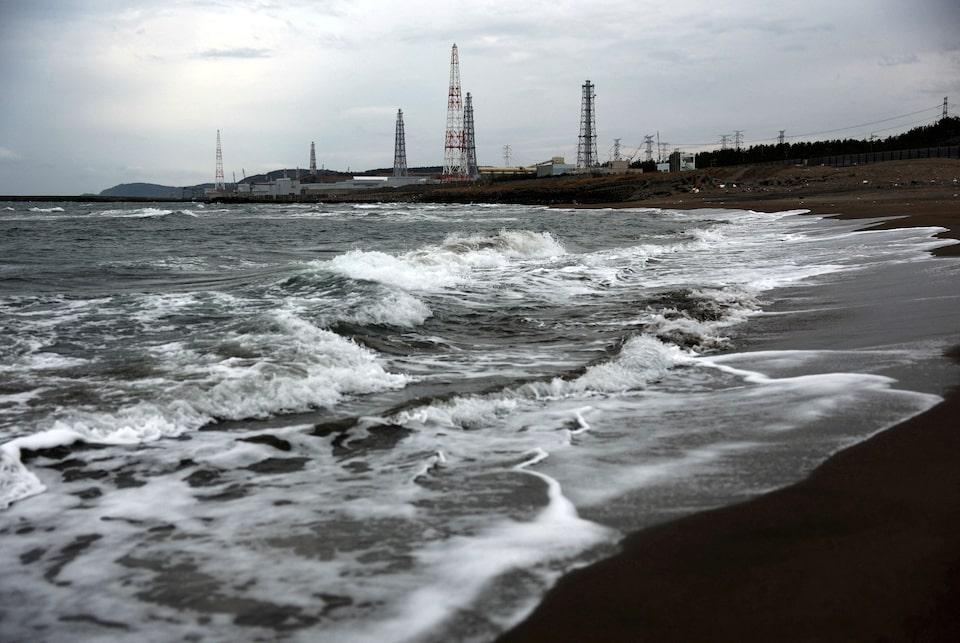
TOKYO, Jan 22 (Reuters) - Tokyo Electric Power (TEPCO) (9501.T) , opens new tab will shut down the No.6 reactor at the Kashiwazaki-Kariwa nuclear power station after a malfunction was detected early on Thursday, a day after the unit went online for the first time in about 14 years. In the early hours of Thursday, an alarm was triggered during work to withdraw control rods from the reactor, the utility said, adding it would halt the reactor to investigate the cause of the malfunction. Sign up here. "I have determined it is necessary to temporarily suspend operations and conduct a thorough investigation into the cause," Takeyuki Inagaki, superintendent of the Kashiwazaki-Kariwa station, told a news conference. Inagaki said TEPCO replaced electrical components in the control rod operation and monitoring panel following the alarm, but the situation did not improve. The duration of the investigation and the schedule for restarting operations have yet to be determined, he said. TEPCO restarted the No.6 unit at Kashiwazaki-Kariwa, the world's biggest nuclear power plant, on Wednesday evening, turning on its first nuclear reactor since the Fukushima disaster in 2011. The process had been delayed from Tuesday as TEPCO investigated another alarm malfunction. As of early Wednesday, the equipment in question was functioning normally, TEPCO said at the time. Shares in TEPCO lost 3.5% on Thursday, underperforming the benchmark Nikkei share average (.N225) , opens new tab, which gained 1.7%. https://www.reuters.com/business/energy/tepco-halt-reactor-kashiwazaki-kariwa-nuclear-power-plant-day-after-resumption-2026-01-22/
2026-01-22 07:09
LONDON, Jan 22 (Reuters) - Global investors began the year drunk on booming growth, record stocks and tech euphoria. Despite Wednesday’s U-turn on the Greenland row, U.S. President Donald Trump's erratic tariff threats should prompt investors to question some of that extreme optimism. This week's sudden market disturbance hinged on fears of escalating transatlantic trade tensions after Trump threatened more tariffs on Europe unless the U.S. was allowed to take over Danish-controlled Greenland. Europe balked at the move, vowing retaliation for any related tariffs. Sign up here. With perhaps half an eye on the resulting debt market jolt at home, Trump abruptly stepped back late Wednesday from the tariff threat, just four days after he announced it - claiming NATO assurances on Greenland security. But the prospect of another year of such brinkmanship and repeated sideswipes at international alliances and trade relations may yet prompt a more careful approach to the overwhelming market consensus that greeted the year. Bank of America conducted its first monthly global funds survey of 2026 just before the Greenland row blew up last weekend. Even so, the results revealed how extreme market positioning and thinking were as the year kicked off. Often viewed as a contrarian signal, the BofA readout on the survey said it was the most bullish in almost five years - even though U.S. and global stocks are already at record highs. With about half of all investors polled seeing a "no landing" for the world economy over the next 12 months - as opposed to a soft or hard landing - global growth optimism was at its highest since July 2021. Funds expecting a global economic "boom" this year were at their highest in four years as well. That's no finger in the wind. In the middle of the Greenland maelstrom, the International Monetary Fund , opens new tab on Monday once again pushed up its global growth forecast for 2026 to 3.3% - as fast as it's been in three years and with little or no slowdown seen in 2027. And some estimates of the U.S. economy are pointing to annualized growth north of 5% , opens new tab in the final quarter of last year. That macro view was amply reflected in the survey's relative asset holdings, with the net number of funds overweight stocks also close to 50% and the highest since just after the U.S. election in late 2024. Overweight holdings of commodities were their highest in more than three years and cyclical bank stocks were the most favored sector. Cash levels had never been lower in the 25 years or so of the survey, putting BofA's overall bull-and-bear gauge at what it called "hyper bull" - a reading that it says warrants an increase in risk hedges and safe havens. Most alarming for contrarians is that almost half of the funds surveyed have not taken out protection against a big stock drawdown over the next three months - the biggest hedge-less count in eight years. LEAPING THE 'HYPER BULL' But this is where the picture gets complicated. Even though cash levels are historically low, investors clearly identified "geopolitical conflict" as the biggest tail risk and portfolios are already brimming with gold to reflect that - so much so that funds identified "long gold" as the most crowded trade in the Street as the precious metal continues soaring to new records. What's more, one potential transmission mechanism of any renewed row with Europe over Greenland is via the bond markets. The prospect of another Trump tariff salvo potentially irks the U.S. inflation picture again, and any retaliation from Europe could even put gigantic European holdings of U.S. Treasuries in the crosshairs. But due largely to their take on blistering world growth, funds are already more underweight bonds than they have been at any point since September 2022 and more than 50% of global investors still think the dollar is overvalued after its losses last year. Fragile bond markets could well be the route to wider market disturbance, but at least asset managers are already shy of fixed income to account for some of that. Long-standing fears of an artificial-intelligence bubble burst may be more impactful. But, even here, the alarm bells seem to have quietened somewhat. The IMF's global economic update seemed relatively sanguine about the durability of elevated tech valuations, citing models that suggest broad equity index overvaluation is still half that at the peak of the dotcom bubble in 2000. However, the IMF did flag that any AI-related earnings disappointment or sudden correction in U.S. megacap tech stocks could be cause for concern for the world economy at large. "Given the decade-long increase in foreign ownership of U.S. equities, this sharp correction could also trigger sizable wealth losses outside the United States and exert a drag on consumption, spreading the downturn more globally," it wrote. And it's the stability of historically unprecedented foreign ownership of U.S. equities and bonds that's increasingly being cited as the biggest risk to this year's outlook - from many angles. A confluence of AI and tech risks with any fracturing of world relations would scare the horses - and the "hyper bull." The opinions expressed here are those of the author, a columnist for Reuters. Enjoying this column? Check out Reuters Open Interest (ROI), , opens new tab your essential new source for global financial commentary. Follow ROI on LinkedIn, , opens new tab and X. , opens new tab Plus, sign up for my weekday newsletter, Morning Bid U.S. and listen to the Morning Bid daily podcast on Apple , opens new tab, Spotify , opens new tab, or the Reuters app , opens new tab. Subscribe to hear Reuters journalists discuss the biggest news in markets and finance seven days a week. https://www.reuters.com/markets/greenland-storm-barrels-into-hyper-bull-market-2026-01-22/

2026-01-22 06:30
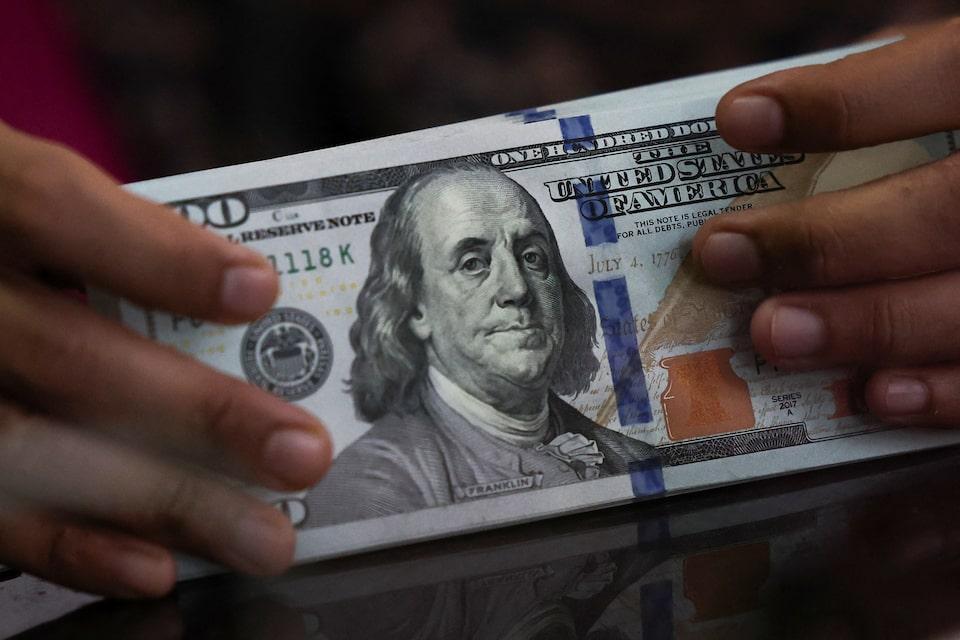
US data shows consumer spending increased in October, November Aussie hits 15-month high as jobs data raises RBA hike prospects Yen still in intervention territory, BoJ hawkish tilt expected Jan 22 (Reuters) - The safe‑haven dollar slipped on Thursday, while risk‑sensitive currencies such as the euro and sterling firmed after President Donald Trump dropped tariff threats and ruled out seizing Greenland by force, helping calm jittery markets. The greenback recovered versus the euro on Wednesday on Trump’s remarks about Greenland, after losing a bit less than 1% between Monday and Tuesday. It was last down 0.49% to $1.1744 per euro , following a 0.35% rebound in the prior session. The dollar weakened 0.69% to 0.7899 Swiss franc . Sign up here. New Personal Consumption Expenditures inflation data - the Federal Reserve's preferred inflation gauge - were unveiled, showing that U.S. consumer spending increased solidly in October and November, likely keeping the economy on track for a third straight quarter of strong growth. Consumer spending, which accounts for more than two-thirds of economic activity, rose 0.5% after rising by the same margin in October, the Commerce Department's Bureau of Economic Analysis said on Thursday. Economists polled by Reuters had forecast consumer spending increasing 0.5% in November. The Australian dollar rose to a 15-month high, buoyed by data showing an unexpected decline in the jobless rate. The yen remained under pressure after Japanese Prime Minister Sanae Takaichi this week called a snap election and pledged measures to loosen fiscal policy. Trump’s threat to levy tariffs on allied nations resisting his ambition to control Greenland had spooked markets, triggering a broad selloff of U.S. assets. Still, some analysts said there was little evidence of a real move out of the U.S. dollar. "This whole argument about European investors selling U.S. assets is very hard to sustain," said Bob Savage, head market strategist at BNY. "This isn't a ‘sell America’ story, it's a risk‑management story," he added. "We’re just seeing more hedging because volatility has risen after being at very low levels at the end of last year." Details of a framework for an agreement on Greenland were not yet known. However, "the most likely outcome is still that the next wave of excitement will pass us by after a brief period of volatility and that the market will refocus on central banks and interest rate differentials," Savage said. AUSSIE SET FOR FOURTH STRAIGHT DAILY RISE The Aussie was last up 1.15% to $0.684, touching its strongest level since October 2024, and headed for a fourth straight daily gain, outperforming even as risk assets came under pressure this week. "The strength of both the Australian and the New Zealand dollar is the latest example that speculation about moves in short-term interest rates in relation to central bank policy remains alive and well," said Jane Foley, senior forex strategist at Rabobank. The Japanese currency weakened 0.07% at 158.42 per U.S. dollar , near last week's 18-month trough of 159.45. Analysts anticipate a hawkish tilt from the Bank of Japan at Friday’s policy meeting to help stabilise the yen, which is trading uncomfortably close to the 159-160 levels that are seen as intervention territory. Japan's super-long-dated government bonds extended gains on Thursday on the expectation that the finance ministry could take some measures to contain further rises in yields. https://www.reuters.com/world/asia-pacific/us-dollar-buoyed-by-trumps-greenland-about-face-aussie-jumps-after-jobs-data-2026-01-22/
2026-01-22 06:20
A look at the day ahead in European and global markets from Tom Westbrook Relief has lifted Wall Street, Asia stocks and European futures as U.S. President Donald Trump did a TACO at Davos, saying he wouldn't take Greenland by force of arms and later posted on social media that tariffs wouldn't be needed either and a deal was in sight. Sign up here. There are no details. So the gains in stocks haven't fully recouped the week's losses and nor have dips in precious metals made much of a dent in the whopping rally that's been ignited while Trump has lit up geopolitical risks from Venezuela to the Arctic. Gold is about $100 an ounce under a record high and up 11% this year, while silver - also off recent record peaks - is up 30%. That's a reasonable indicator that while the TACO acronym - Trump Always Chickens Out - has held true this time, investors won't get too comfortable while he is playing with fire. Deal or no deal, the U.S.-European alliance is at its lowest ebb in 80 years. In Davos, ECB President Christine Lagarde walked out of a dinner during a speech by U.S. Commerce Secretary Howard Lutnick, and U.S. Treasury Secretary Scott Bessent called Denmark "irrelevant". As Canada's Mark Carney noted in reference to the world at large, "We are in the midst of a rupture." Elsewhere the U.S. Supreme Court signalled it is likely to let Fed Governor Lisa Cook keep her job - a fetter on Trump's push to oust her and extend influence over the central bank. Wall Street is pushing back on other fronts, with JPMorgan Chase CEO Jamie Dimon saying Trump's proposal to cap credit card interest rates would be an "economic disaster". Other executives are also sceptical of Trump's interventionist measures aimed at tackling the affordability crisis, and are in talks with the White House to try and soften the rough edges. The Aussie dollar jumped in the Asia session on a stronger-than-expected employment report that has the market seeing a better-than-even chance of a rate hike as soon as next month. And the global AI boom swept up South Korea's KOSPI over the 5,000 mark for the first time. Key developments that could influence markets on Thursday: - World Economic Forum in Davos - U.S. PCE inflation (November) - U.S. earnings, including Procter & Gamble , Intel (INTC.O) , opens new tab, General Electric , Capital One , Freeport-McMoRan https://www.reuters.com/world/china/global-markets-view-europe-2026-01-22/
2026-01-22 06:00
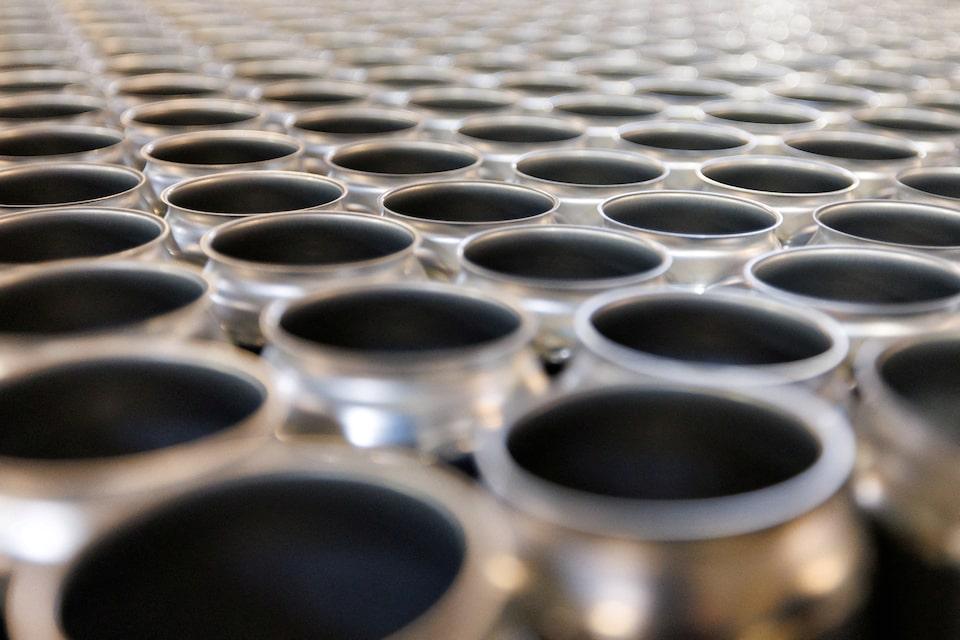
LONDON, Jan 21 (Reuters) - American aluminium buyers are now paying an eye-watering 68% premium over the London Metal Exchange (LME) price to get physical metal. This is of course a direct of result of U.S. President Donald Trump hiking import tariffs from 10% to 25% in March and again to 50% in June. Sign up here. But the premium for physical delivery in the U.S. Midwest is trading another $560 per metric ton over any implied tariff cost, propelling the "all-in" price of aluminium above $5,000 per ton. The country is clearly running short of a metal used across a wide array of industries from automotive and aerospace to construction and packaging. On paper, the record premium for U.S. delivery should attract much-needed supply. In reality, however, things may not be that simple. IMPORTS DOWN, STOCKS SHRINK Tariffs were meant to stimulate domestic primary aluminium production after a prolonged period of decline which left just four operating smelters. The immediate impact has been limited to Century Aluminum's (CENX.O) , opens new tab restart of 50,000 tons of idled capacity at its Mt. Holly plant in South Carolina. The smelter will return to full capacity by June. There are a handful of greenfield projects but these are several years away from producing first metal, even assuming they can compete with Big Tech for long-term power supplies. In the interim, the U.S. remains dependent on imports of primary metal and these have been falling. Volumes were down by 14% in the first 10 months of 2025 relative to 2024. Canada, historically the largest supplier to the U.S. market, started diverting shipments to Europe around May last year. It exported 225,000 tons to the Netherlands, 89,000 tons to Italy and 29,000 tons to Poland between May and October, according to the World Bureau of Metal Statistics. U.S. stocks of primary metal have been sliding. The short time-lag between tariff hikes didn't allow for much preemptive stockpiling and in-country inventory has shrunk from 750,000 tons at the start of 2025 to below 300,000 tons, according to consultancies Harbor Aluminum and Wittsend Commodity Advisors. The elevated U.S. premium is a red warning light that the country needs more aluminium. CROSS-ATLANTIC COMPETITION The problem for U.S. buyers, however, is that Europe is also short of aluminium. European duty-paid premiums have surged from under $200 per ton over LME cash in June to over $340 per ton. The region is being squeezed by a triple supply hit. South32's (S32.AX) , opens new tab decision to mothball the Mozal aluminium smelter in Mozambique due to high power prices removes a key supplier to the European market. Another core supplier, the Grundartangi smelter in Iceland, owned by Century Aluminum, cut production , opens new tab by two-thirds in late October due to equipment failure. It will take an estimated 11-12 months to recover fully. Meanwhile, imports of Russian metal are set to be fully switched off this year in line with the European Union's 16th sanctions package. European buyers were granted a one-year phase-out grace period which expires next month. Rising local premiums are also being underpinned by Europe's Carbon Border Adjustment Mechanism (CBAM), which came into effect this month, lifting the price of imports with higher carbon footprint. CAPPED SUPPLY In times gone by, traders would simply have bought up LME stocks and shipped them to the United States to profit from the premium spike. However, Russian metal accounts for a significant part of LME registered tonnage, 58% as of the close of December, and cannot be imported to the U.S. because of sanctions. Moreover, there is much less aluminium sitting in LME warehouses than in the past, when the global market was characterised by persistent oversupply. Total LME inventory, both registered and stored in the off-warrant shadows, closed 2025 at 669,000 tons, down by 331,000 tons on the start of the year. That speaks to the structural shifts that are playing out in the global market. Chinese operators are now running close to the government's mandated capacity cap, meaning the world's largest producer is at or very close to peak output. Chinese production growth slowed from 4% in 2024 to 2% last year, according to the International Aluminium Institute. Yet smelter margins have been highly profitable. While the aluminium price has been rising, that of intermediate product alumina has cratered. It's the sort of combination that would once have triggered a rush of new and restarted capacity but not any more. China is also importing ever more primary metal. Inbound volumes rose by 19% year-on-year in the first 11 months of 2025. A significant portion came from Russia, which has pivoted away from Western buyers due to sanctions. China's exports of semi-manufactured products, by contrast, fell by 11% over the same period, reflecting the removal of the tax rebate on outbound shipments in December 2024. The global market is tightening, a process that is complicated by the simultaneous fracturing of pricing between regions. FLOW-THROUGH Were the tariff impact on U.S. pricing playing out in isolation, it would be quickly resolved by physical arbitrage. But it's not. There are multiple moving parts in the physical aluminium market and right now they are serving to tighten supply just about everywhere. The elevated cost of aluminium in the U.S. could prove sticky, which is bad news for the ultimate consumer. The Trump administration's extension of 50% tariffs to a wide spectrum of aluminium products in August has kept midstream processors onside but serves to accelerate the flow-through of higher primary metal pricing to the ultimate buyer. U.S. consumers are in for a shock unless imports pick up soon. Andy Home is a Reuters columnist. The opinions expressed are his own Enjoying this column? Check out Reuters Open Interest (ROI), , opens new tab your essential new source for global financial commentary. Follow ROI on LinkedIn, , opens new tab and X. , opens new tab And listen to the Morning Bid daily podcast on Apple , opens new tab, Spotify , opens new tab, or the Reuters app , opens new tab. Subscribe to hear Reuters journalists discuss the biggest news in markets and finance seven days a week. https://www.reuters.com/markets/commodities/metals/us-aluminium-consumers-pay-spiralling-cost-tariffs-2026-01-21/